DIY Indoor Plant Trellis: Easy Step-by-Step Build Guide
Build a simple indoor plant trellis for climbing houseplants with materials, setup steps, support tips and care mistakes.
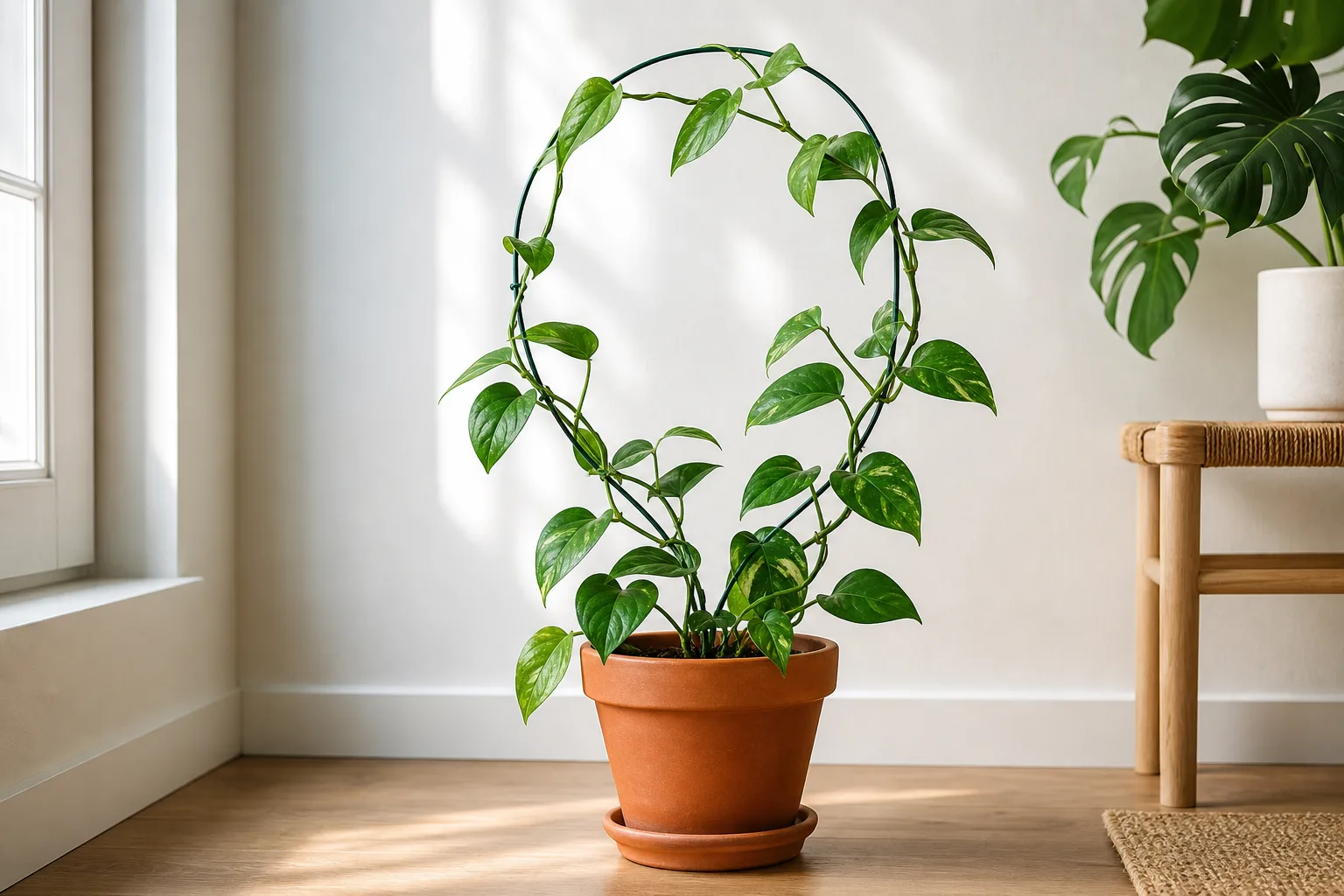
A DIY indoor plant trellis is one of the simplest ways to turn a trailing houseplant into a cleaner, healthier, more vertical display. The goal is not decoration alone. A good trellis gives vining stems somewhere to go, keeps leaves off shelves and floors, improves airflow around crowded growth, and helps you guide the plant before it becomes a tangled knot. The best version is not always the prettiest one online; it is the one that fits the pot, matches the plant’s climbing habit, and stays stable after watering.
Indoor trellises work especially well for plants that naturally climb, trail, twine, or produce aerial roots. Pothos, philodendron, hoya, Monstera deliciosa, syngonium, English ivy, scindapsus, and dischidia can all be trained upward, but they do not all grip support the same way. Some wrap their stems, some lean, some attach with aerial roots, and some need regular tying because they will not hold themselves neatly to a frame. The Royal Horticultural Society explains that different climbers use different attachment methods, and some need tying-in to position stems where you want them to grow. (RHS)
Build the trellis around the plant, not the trend. A tiny heartleaf philodendron does not need a heavy wooden frame that makes the pot unstable. A mature monstera does not belong on a flimsy decorative hoop that bends under thick stems. A hoya can look beautiful on a small wire circle, but the same support may be useless for a plant with heavy leaves and long internodes. Once you understand the growth habit, the right design becomes obvious. For moss-pole builds when aerial roots need moisture, see our DIY moss pole guide.
What an Indoor Plant Trellis Does
An indoor plant trellis is a support structure placed in or near a pot to guide climbing or vining growth upward. It can be made from bamboo, wood, coated wire, stainless steel, string, acrylic, or another plant-safe material. Its job is to hold stems in a chosen shape while leaving enough space for leaves, roots, airflow, watering, and future growth. A good trellis should disappear visually behind the plant over time, but it should not disappear functionally; it still needs to carry the plant’s weight without wobbling.
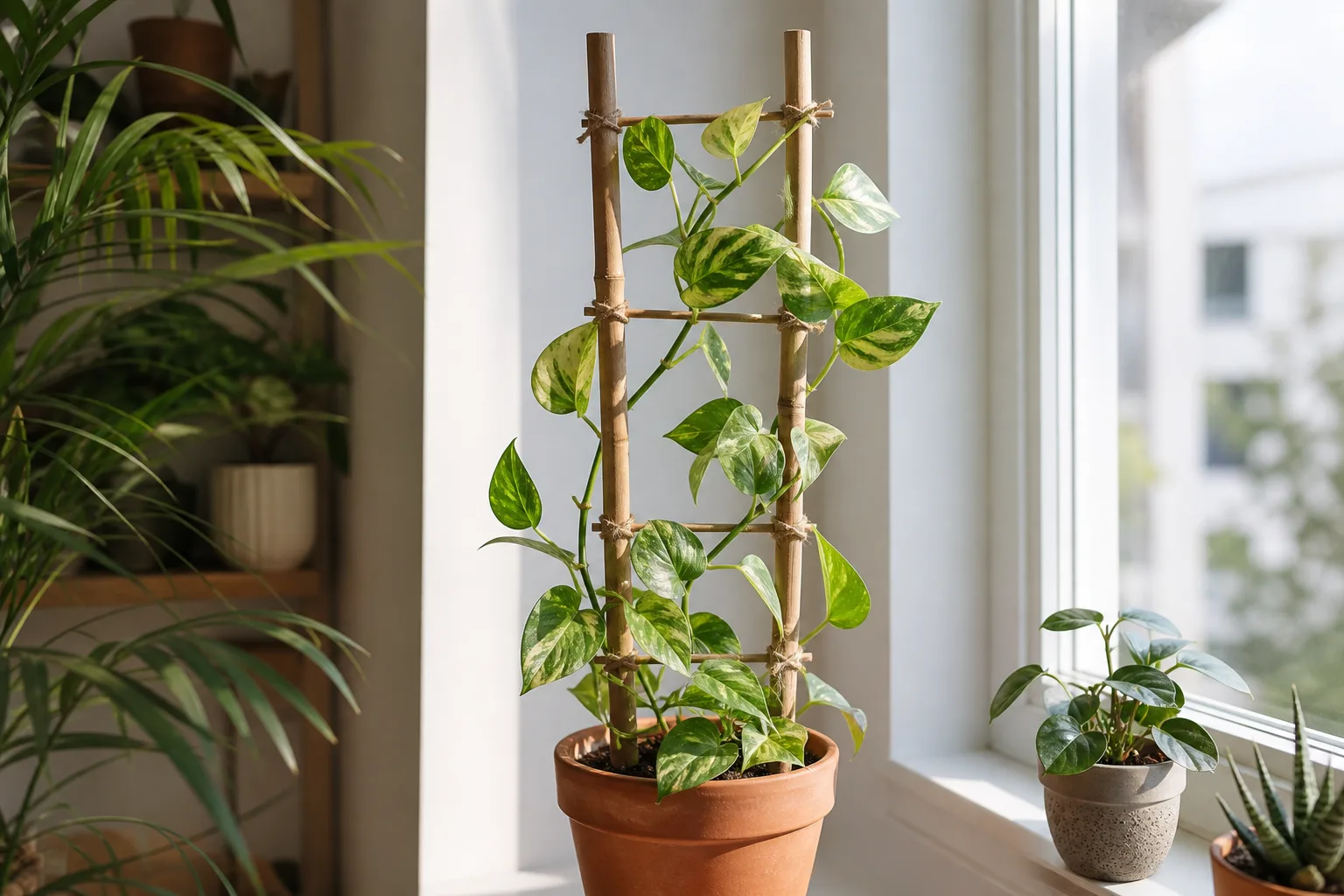
The strongest reason to use a trellis is control. Many indoor vines grow toward light and will stretch across shelves, curtain rods, windows, and nearby plants if left alone. That can look charming for a while, but it often becomes hard to water, prune, inspect for pests, or move the pot. Training stems upward keeps the plant compact enough for indoor living while still allowing natural growth. It is especially useful in apartments, rental homes, office corners, narrow windowsills, and any room where floor and shelf space are limited.
A trellis can also improve the way the plant receives light. When vines trail in a dense pile, older leaves can shade newer growth, and inner stems may become bare. When stems are spread across a frame, each leaf has a better chance of facing the light source. This does not replace proper lighting, but it makes existing light easier for the plant to use. University of Minnesota Extension emphasizes matching houseplant care to light, water, temperature, and humidity; a trellis helps with structure, but it cannot compensate for poor basic care. (University of Minnesota Extension)
Trellis vs Moss Pole vs Stake
| Support type | Best for | Maintenance | Typical cost |
|---|---|---|---|
| Trellis (ladder, hoop, grid) | Pothos, philodendron, scindapsus, hoya, ivy, small monstera | Low-dry frame, occasional tie checks | Low (bamboo + twine) |
| Moss or coir pole | Monstera, climbing philodendrons with aerial roots | Medium-pole moisture, moss replacement | Medium |
| Single stake | One leaning main stem, temporary correction | Very low | Very low |
A trellis spreads vines across a visible shape and is the most flexible DIY option when you care about display. A moss pole mimics a tree trunk and can hold moisture that encourages aerial roots to attach-often better for large monsteras than a smooth wire frame. Penn State Extension notes that monstera is a tropical understory climber whose indoor growth reflects that origin. (Penn State Extension) A single stake works for basic stability but forces all stems to one point and looks awkward once the plant fills out.
Best Plants for a DIY Indoor Trellis
The best plants for a DIY indoor plant trellis are vines and climbers that can be guided without forcing stiff stems into unnatural bends. Young plants train more easily because stems are flexible and growth direction is not fixed. Older plants can still be trellised, but they need slower handling, looser ties, and sometimes pruning before training. If a stem resists bending, do not force it. Support it where it already wants to go, then guide the next new growth.
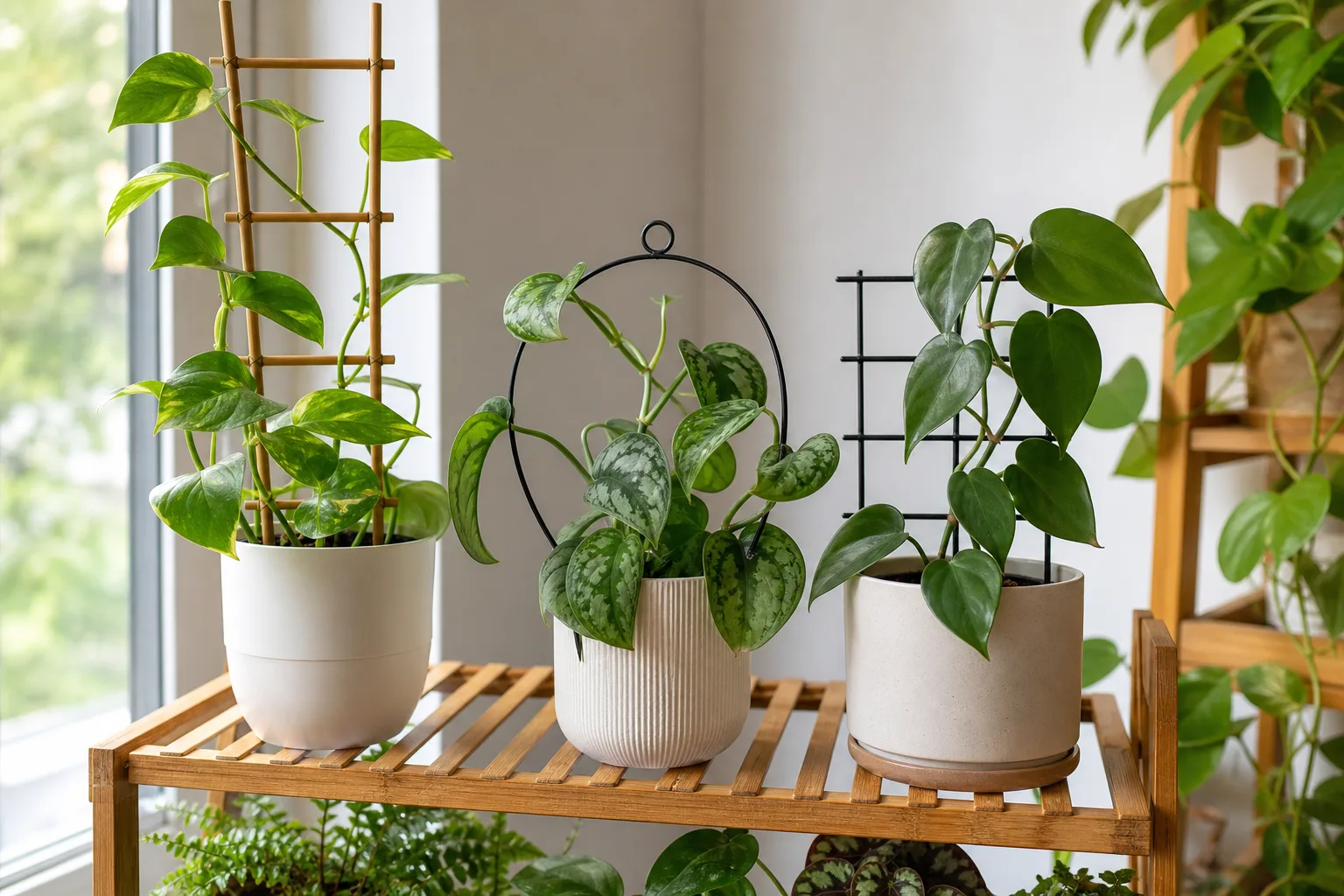
Pothos is one of the easiest plants to train. It has flexible vines, visible nodes, and a forgiving growth habit. It can be wrapped gently around a ladder, hoop, or grid, then tied loosely at intervals. Golden pothos and other Epipremnum forms contain insoluble calcium oxalate crystals; UF/IFAS lists pothos as poisonous with symptoms that include oral irritation and skin irritation when handled. (UF/IFAS Extension) Gloves are sensible when cutting or handling large vines.
Heartleaf philodendron and many trailing philodendrons suit a trellis well because their stems are softer than mature monstera stems. Scindapsus pictus looks especially good on a small ladder because patterned leaves stand out when spaced vertically. English ivy can climb indoors but needs regular trimming because it becomes dense quickly. If pets or children are in the home, placement matters because many common houseplants can cause irritation if chewed. The ASPCA maintains plant toxicity lists and advises contacting a veterinarian or poison control if a pet ingests concerning plant material. (ASPCA)
Hoya is a strong candidate for decorative wire hoops. Many hoyas send out long searching vines before producing fuller leaves along the stem. A hoop gives those vines a route without taking over nearby objects. Do not cut every bare hoya vine just because it looks strange; many later leaf out or bloom from spurs depending on species and care.
Vining Plants That Train Easily
Easy trellis plants usually have flexible stems, moderate leaf weight, and visible nodes where you can tie without crushing growth points. Pothos, heartleaf philodendron, scindapsus, syngonium, hoya, and small English ivy plants fit this group. The cleanest results happen when you install support while vines are still short. Early support reduces awkward bends, bare lower stems, and aggressive pruning later.
These plants do not need heavy trellises. A bamboo ladder, thin wooden grid, or coated wire hoop is usually enough. Keep the support taller than the current plant but not so tall that the pot becomes top-heavy. A 12 cm nursery pot with a 90 cm trellis may look dramatic in photos, but it will likely tip once watered or bumped. Match support to the root ball and container, not just vine length.
Train gradually. Attach main vines loosely and let new growth fill the shape. Rotate the pot every week or two if growth leans strongly toward one window. Keep ties adjustable because stems thicken as they mature.
Plants That Need Stronger Support
Monstera deliciosa, larger philodendrons, mature syngonium plants, and thick-stemmed climbing aroids need stronger support than delicate vines. Stems become heavy, and large leaves act like sails when the pot moves or sits near airflow. Monstera also produces aerial roots-normal structures that help the plant climb in nature. Penn State Extension identifies calcium oxalate crystals as the toxic agent in monstera, so gloves and careful placement are smart when pruning or handling it around pets and children. (Penn State Extension)
For larger plants, anchor the trellis deep into the pot or attach it to a stable external base. A decorative hoop inserted only a few centimeters into loose mix will not hold a mature plant. Use thicker bamboo, hardwood dowels, a rigid ladder frame, or strong metal support. If the plant already leans heavily, repotting may be the safer time to add support so you can place the trellis behind the root ball rather than stabbing through roots.
Strong plants need stronger ties, but not tighter ties. RHS recommends tying climbers in ways that prevent rubbing and damage, including a figure-eight style for heavier stems where the tie crosses between the plant and the support. (RHS) Indoors, the tie should create a cushion, not a choke point.
Choose Materials That Won’t Hurt the Plant
A DIY trellis lives in a damp environment. The lower portion sits in potting mix that gets watered repeatedly, so material must handle moisture, resist rust or rot long enough to be useful, and avoid sharp edges that cut roots or stems. Small material mistakes can become long-term problems because the plant touches the support for months or years.
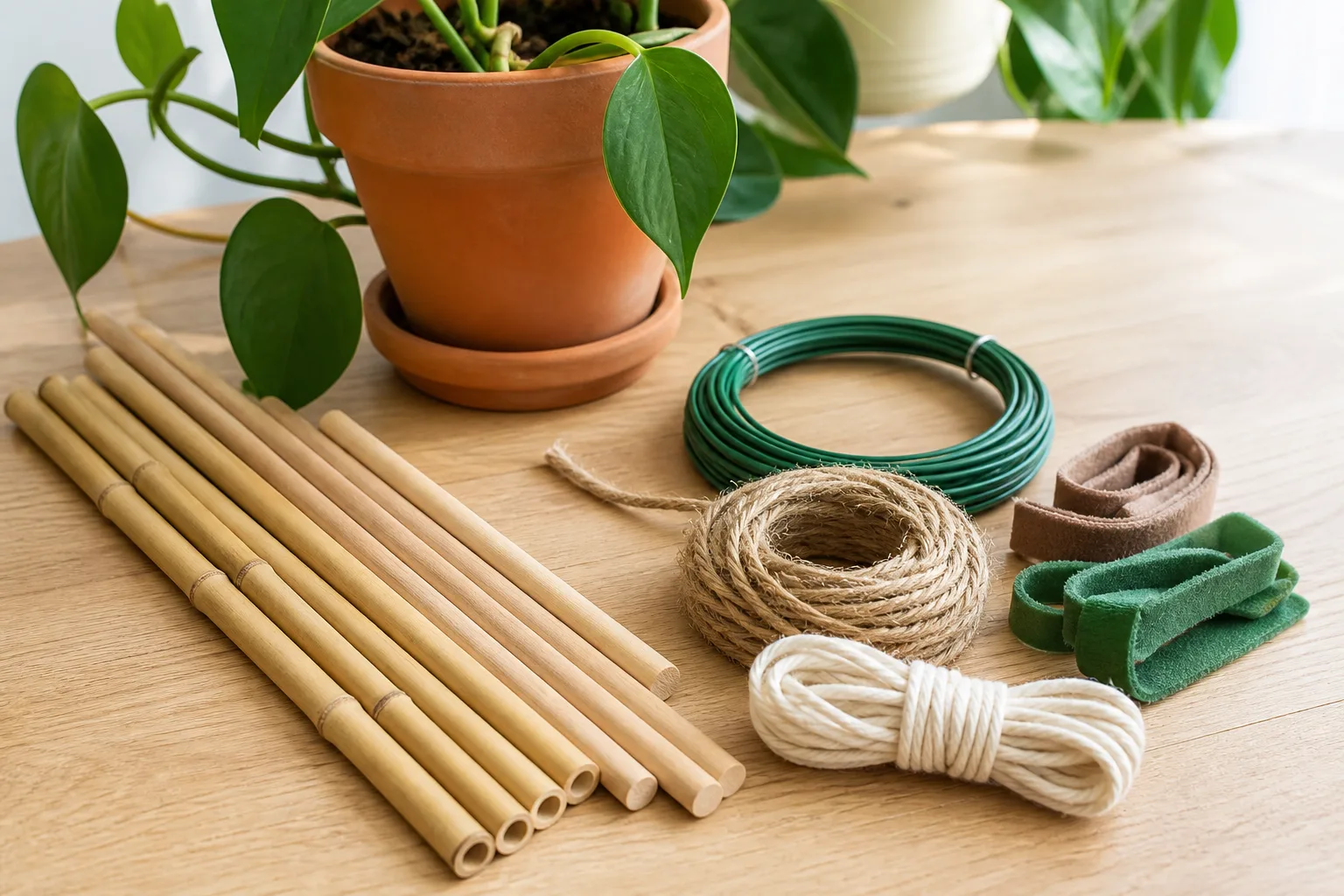
Bamboo is the easiest beginner material-light, affordable, natural-looking, and simple to cut. It works well for pothos, philodendron, scindapsus, ivy, and small hoya plants. Thin stakes can split, mold, or weaken if constantly wet; for heavier plants use thicker canes or move to hardwood or rigid frames.
Wooden dowels or strips make cleaner, more furniture-like trellises. Sand smooth, keep glue away from soil contact areas, and prefer untreated wood over unknown paints or stains near moisture and roots.
Metal works when rust-resistant and smooth. Stainless or coated garden wire is excellent for hoops. Every cut end should be bent inward, capped, or buried safely.
Wood, Bamboo, Metal, String, and Acrylic
| Build | Core materials | Quantities (typical small pot) |
|---|---|---|
| Bamboo ladder | 6 mm bamboo stakes, jute twine, soft ties | 2× 60 cm stakes, 3–5× 18 cm rungs, 3 m twine |
| Wire hoop | 2 mm coated wire, pliers, soft ties | 120 cm wire, 4 ties |
| String shelf trellis | cotton cord, bamboo stake crossbar | 2–3 m cord, 1× 30 cm stake |
A bamboo ladder is the best all-purpose DIY option for most indoor vines. A wooden grid suits wider shelf displays. A wire hoop suits hoya, dischidia, and compact trailing plants. A string trellis helps rental spaces where you cannot drill walls.
Acrylic trellises look clean but give stems little texture, so plants usually need ties. For heavier plants, acrylic must be thick enough not to flex, with a base long enough to anchor properly. String and natural cord support light vines and blend visually but degrade faster when they touch damp soil-inspect and replace as maintenance.
Materials to Avoid Indoors
Avoid unknown coatings, flaking paint, rust, chemical smell, sharp edges, or pressure-treated finishes in the root zone. Old painted wood, rusty wire, and rough scrap can create avoidable problems. If you cannot identify the material or sand it smooth, do not put it in a plant pot.
Avoid overly heavy supports in small plastic nursery pots, especially on high shelves or in homes with pets. If the support is heavy, move the plant into heavier ceramic or terracotta, or use a stable cachepot. Avoid tight metal clips directly on stems; stems expand and a rigid clip can bruise or constrict growth.
How to Size the Trellis for the Pot and Plant
The right trellis size starts with the pot, not the vine length. Long trailing vines may tempt you to build a tall dramatic frame, but the pot must hold that frame upright. The trellis should extend deep enough to resist wobbling without crushing the root ball. If the plant is root-bound, do not force thick supports through the center. Insert around the back edge, repot first, or choose an external support.
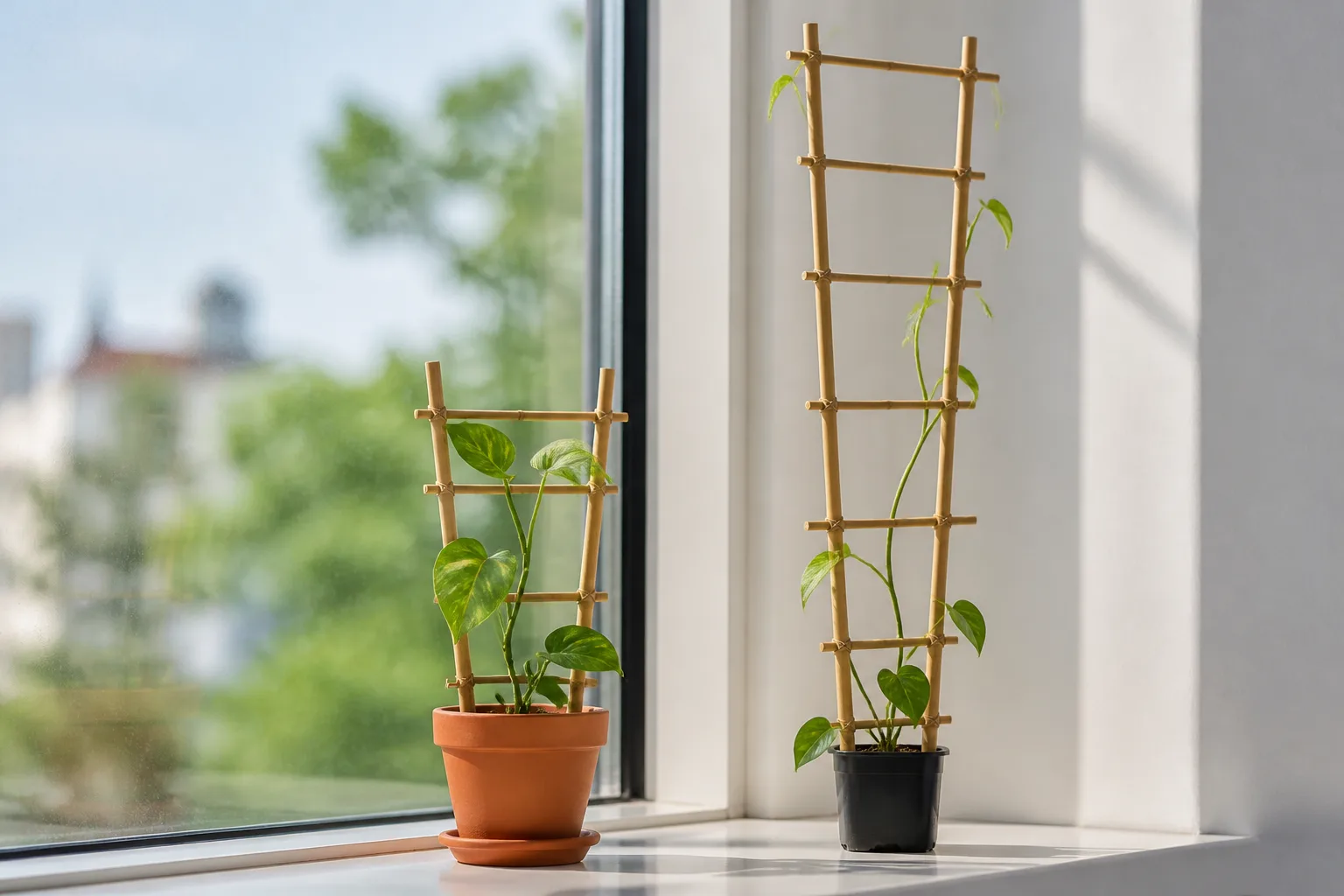
A practical height range for most small and medium indoor vines is 1.5 to 2.5 times the visible height of the pot. A 15 cm tall pot usually works with a trellis around 30 to 45 cm above the soil line. Taller can work if the pot is heavy and wide, but tipping risk increases quickly. Width matters because vines need room to spread; a trellis about two-thirds to the full width of the pot often looks balanced for compact vines.
Depth matters more than many beginners expect. A trellis inserted only into the top few centimeters of soil is decoration, not support. For light vines, aim for several centimeters of stake below the soil line. For heavier plants, install during repotting so mix can firm around the legs. Do not stab blindly into a dense root ball; damaged roots stress the plant, especially combined with heavy pruning or a sudden location change.
Height, Width, and Stability Rules
A good indoor trellis should feel boringly stable before the plant is tied to it. Push it gently from different angles. If it shifts easily, choose a deeper anchor, wider base, heavier pot, or shorter trellis. Do not rely on plant ties to stabilize the structure.
For small plants, start modest and upgrade during repotting. For medium plants, use two or more anchor points-a ladder resists twisting better than a single hoop. For large plants, treat the trellis as part of the repotting plan: place it behind the root mass, add mix around the legs, then firm gently.
Small Pot Formula
For a pot under 15 cm wide, keep the trellis light, narrow, and under roughly 45 cm above the soil line unless the pot sits inside a heavier cachepot. Use thin bamboo stakes, a small wire hoop, or a compact ladder. Keep the widest part close to the pot width. If the vine is longer than the trellis, loop it gently or prune and propagate excess rather than building support the pot cannot safely hold.
This formula is a stability check, not a law. Terracotta handles more height than thin plastic. A plant on a low table can tolerate more risk than one on a high shelf. When in doubt, choose a shorter trellis and train new growth upward over time.
Step-by-Step DIY Indoor Plant Trellis
Before building, look at the plant from all sides. Identify the strongest stems, direction of new growth, the light source, and any brittle or leafless vines that may need pruning. Work when the plant is hydrated but not freshly drenched so stems are flexible without soggy, unstable soil. Clean tools, wash hands, and use gloves when handling plants with irritating sap.
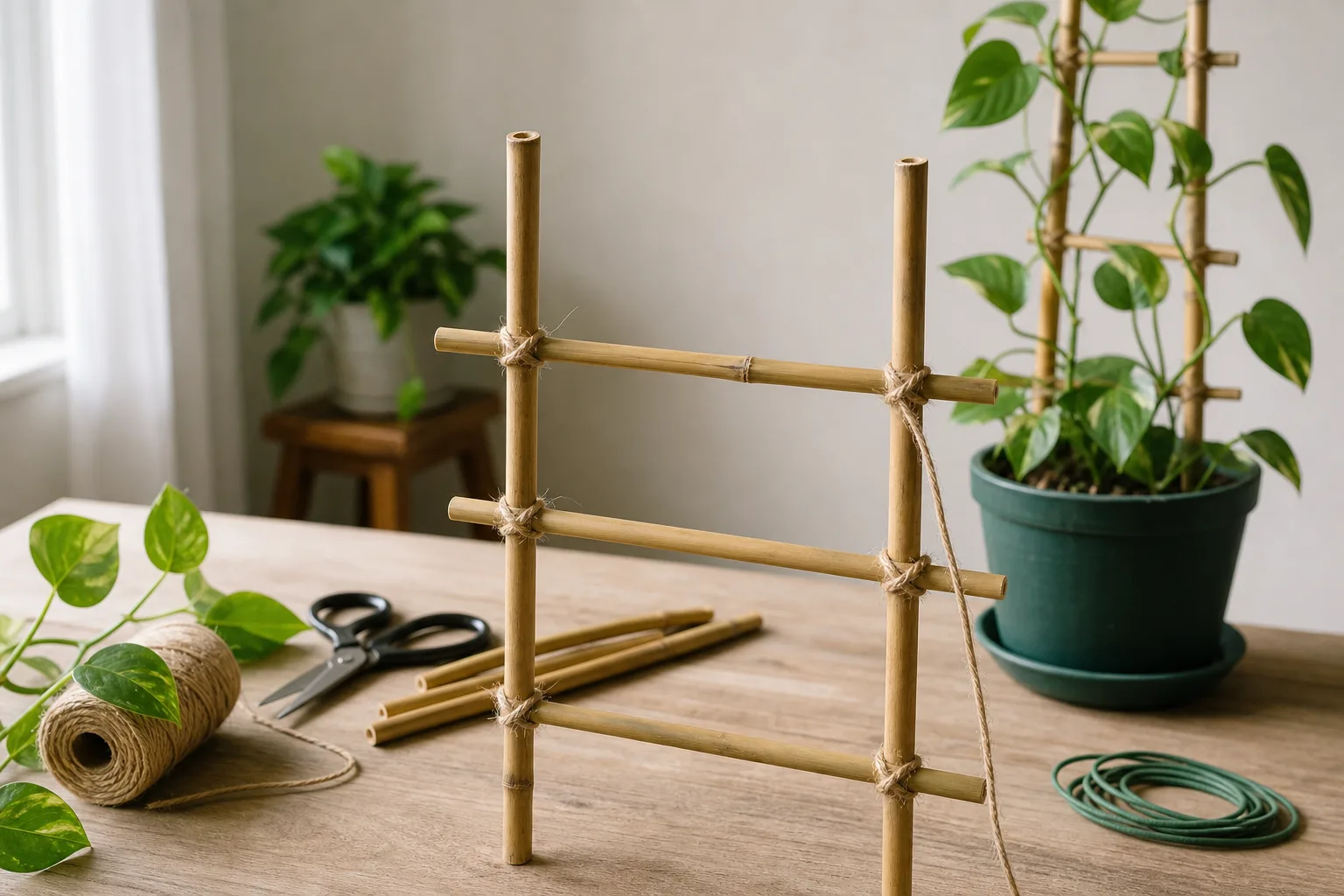
Basic kit for most builds: bamboo stakes or dowels, soft twine, scissors, pruning shears, sandpaper, and flexible plant ties. Wire builds add needle-nose pliers and cutters. Build the trellis first, test it outside the pot, smooth edges, then place it before tying the plant. Install the frame, check stability, then train one stem at a time.
Simple Bamboo Ladder Trellis
A bamboo ladder trellis is the easiest reliable design for pothos, philodendron, scindapsus, English ivy, and small syngonium plants.
Materials (13 cm terracotta pot reference build):
| Item | Spec |
|---|---|
| Vertical stakes | 2× 60 cm bamboo (6 mm) |
| Rungs | 4× 18 cm bamboo |
| Twine | 3 m jute or cotton |
| Ties | 6–8 soft plant ties |
| Time | ~15 minutes |
Steps:
- Lay two vertical stakes parallel on a table. Space rungs evenly-usually three to five-and mark joint positions.
- Tie each rung to both side stakes with jute or cotton twine. Wrap each joint four to six times, knot firmly, trim excess.
- Sand splintered ends. If the finished ladder is 40 cm above soil, total stake length should include 10–15 cm buried in the pot.
- Push both legs into the back half of the pot near the inner wall, not through the densest roots. Firm soil gently and test for wobble from four angles.
- Place main vines along rungs and secure loosely near nodes. Keep a finger-width gap between tie and stem. Loop long vines in broad curves or prune excess for propagation.
This design adjusts easily: add height during repotting, tie two ladders for width, or shorten for shelf limits.
Minimal Wire Hoop Trellis
A wire hoop suits hoya, dischidia, small pothos cuttings, and compact trailing plants.
Materials (10 cm nursery pot, compact hoya):
| Item | Spec |
|---|---|
| Wire | 120 cm coated garden wire (2 mm) |
| Tools | Needle-nose pliers, wire cutters |
| Ties | 4 soft plant ties |
| Finished hoop | ~22 cm diameter above soil |
| Leg depth | ~8 cm |
| Time | ~10 minutes |
Steps:
- Bend smooth rust-resistant wire into a circle, arch, or oval. Twist lower ends together or form two parallel legs. Bend all cut ends inward.
- Match hoop size to pot weight. A small hoya in a 10 cm pot may need only a 20–30 cm hoop; larger hoyas need heavier pots and thicker wire.
- Insert legs near the back wall and press soil around them. If the hoop rotates, add a second leg or secure the base to a short bamboo stake hidden in soil.
- Guide the stem in a broad curve around the shape with two or three tie points only. Do not wrap tightly like thread on a spool. Replace wire early if it flexes under finger pressure before the plant is attached.
Wire trellises reveal uneven circles and sharp bends-take extra minutes to shape neatly before installing.
Wall-Free String Trellis for Shelves
A wall-free string trellis helps when you want vertical growth without drilling. It works on plant shelves, bookcases, and rental homes.
Materials:
| Item | Spec |
|---|---|
| Anchor | Shelf rail or rated removable hook |
| Cord | 2–3 m natural cotton or jute |
| Pot anchor | 30 cm bamboo stake or crossbar |
| Ties | Soft ties at 15–20 cm intervals |
Choose a stable upper anchor. Tie cord from the anchor down to a bamboo stake in the pot or a small crossbar behind the plant. Keep cord taut but not so tight that it pulls the pot sideways. Train vines loosely along the string at intervals. This setup suits pothos and philodendron well but is not for heavy monstera stems. Inspect anchors and cord regularly; do not use where pets or children can pull the setup down.
Training and Maintaining the Plant
Training is ongoing. New vines may ignore the frame and head toward the window. Older stems loosen as leaves shift weight. Ties tighten as stems thicken. Check trellised plants every few weeks during active growth.
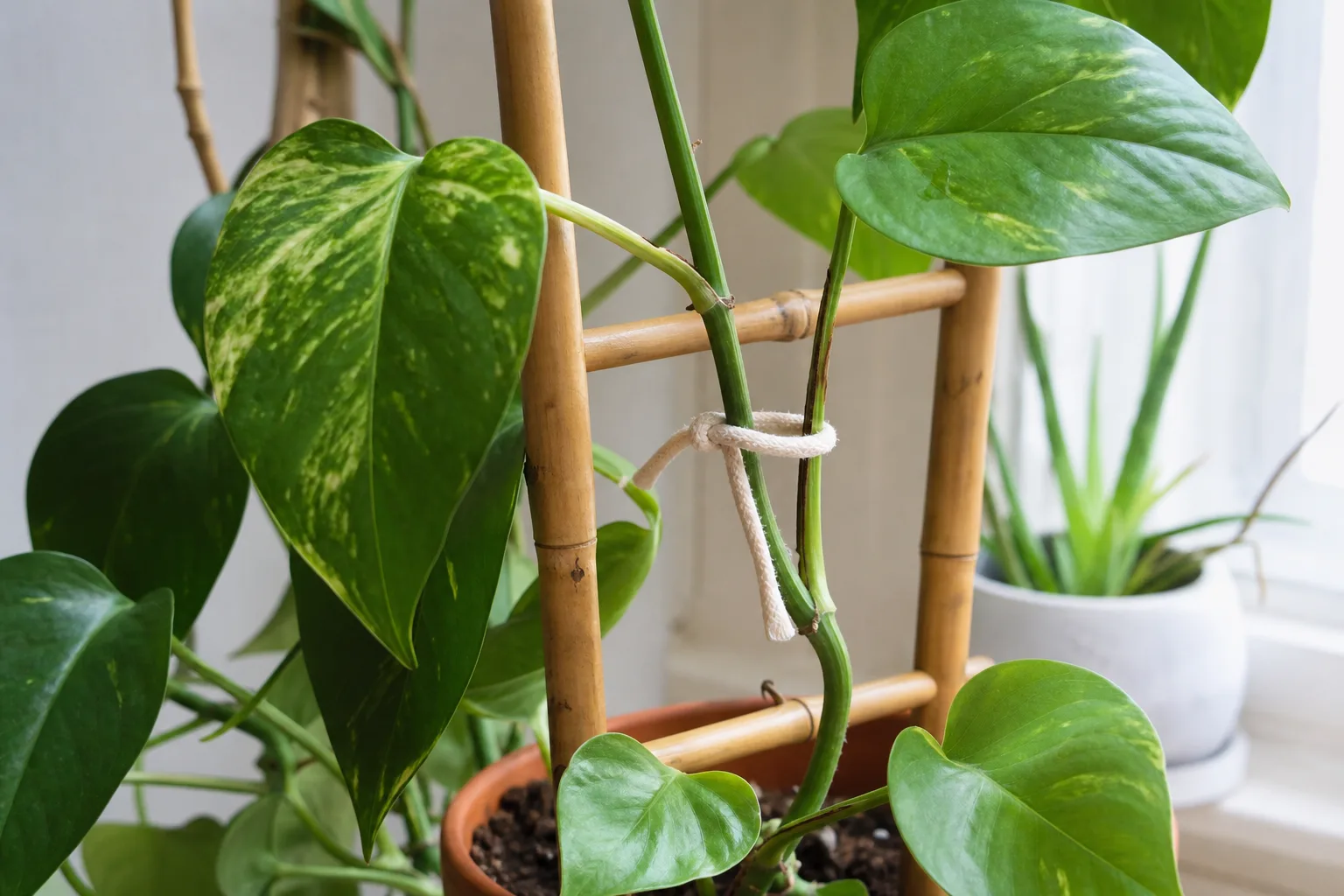
Start with the strongest stems to create structure, then guide smaller vines into gaps. Tie the main vine, not the petiole, because petioles are more delicate. If a section looks crowded, prune rather than forcing more growth into the same spot.
Watering may change after trellising because more leaves face light and airflow. University of Minnesota Extension recommends checking soil regularly and watering when the top inch feels dry for many houseplants while avoiding waterlogged saucers. (University of Minnesota Extension) Trellised pots are harder to carry to the sink, so confirm drainage and empty saucers after watering.
Light still drives growth. Long gaps between leaves usually mean the plant needs brighter indirect light, not a different trellis. Rotate gradually if new growth appears on one side; avoid daily rotation on stressed plants.
Safe Ties, Pruning, and Repotting
Use soft, wide, adjustable ties: cotton cord, jute, soft plant tape, or flexible Velcro plant ties. Avoid thin wire, fishing line, thread, and tight zip ties against stems. For heavier stems, a figure-eight tie creates a buffer between stem and support.
Prune leggy or damaged vines just above a node with clean shears. Many vining houseplants propagate from cuttings, so pruning does not have to feel wasteful. Do not remove too much at once from a stressed plant.
Repotting is the best time to upgrade a trellis. See repotting houseplants for timing and root checks. Remove old support gently, check whether roots wrapped around legs, and place the new trellis before filling all soil. For pet households, a trellis lifts vines higher but does not make a toxic plant safe-keep pothos, monstera, and philodendron out of reach if pets chew foliage.
Common Mistakes and Fixes
Installing too late and forcing mature stems causes cracks on hoya, monstera, and thick philodendron vines. Support the existing shape first, then guide only flexible tips and new growth.
Choosing a trellis for the room, not the plant leads to toppled pots. Match support strength to stem weight, leaf size, pot depth, and growth speed.
Tight ties pinch slowly. Inspect monthly during active growth and loosen before scars form. Never tie around a new unfurled leaf.
Poor anchoring cannot be fixed with more ties. Push deeper if roots allow, add a second leg, use a heavier pot, shorten the trellis, or install properly during repotting.
Overwatering in cachepots after trellising is easy to miss. Extension guidance commonly warns against letting roots sit in water. (University of Minnesota Extension) Check saucers after watering.
Expecting a trellis to fix weak growth sets you up for disappointment. Solve light, water, pests, and root health first, then add structure once the plant can grow into it.
How We Tested These Builds
LeafyPixels tested a 13 cm terracotta pothos pot with the bamboo ladder spec above (40 cm above soil, 12 cm buried legs) and a 10 cm nursery hoya pot with the wire hoop spec (22 cm diameter, 8 cm leg depth). Each build passed a four-direction wobble check on dry soil and again after watering. The ladder remained stable on a windowsill; the hoop required a second wire leg when the initial single-leg insert rotated in lightweight plastic. Tie inspections at two and four weeks showed no stem scarring when ties kept a finger-width gap.
Related guides
- DIY moss pole for climbing houseplants - when aerial roots need a moist vertical surface instead of a dry trellis
- DIY tiered plant stand: complete build guide - display grouped pots before vines need vertical support
- DIY self-watering system: what actually works - reservoir options when trellised pots are harder to move
- How to create a DIY terrarium step by step - enclosed display projects for small plants
- How to water indoor plants the right way - saucer and soil-check habits after trellising
Conclusion
A DIY indoor plant trellis should be simple, stable, and matched to natural growth. For pothos, philodendron, scindapsus, ivy, and syngonium, a bamboo ladder is usually the most practical choice. For hoya and smaller trailing plants, a smooth wire hoop stays clean and works well. For monstera and heavier aroids, use stronger support, deeper anchoring, and soft figure-eight ties.
The best trellis fits the pot, holds its position, avoids root damage, and gives the plant room to grow. Use smooth materials, size conservatively, train gradually, and check ties and stability as vines thicken. Done well, a trellis turns a messy indoor vine into a plant that is easier to care for, easier to display, and better supported for the long term.