Pruning Indoor Plants: When, Where and How to Cut Safely
Learn how to prune houseplants for healthier growth, fuller shape and fewer damaged leaves without stressing the plant.
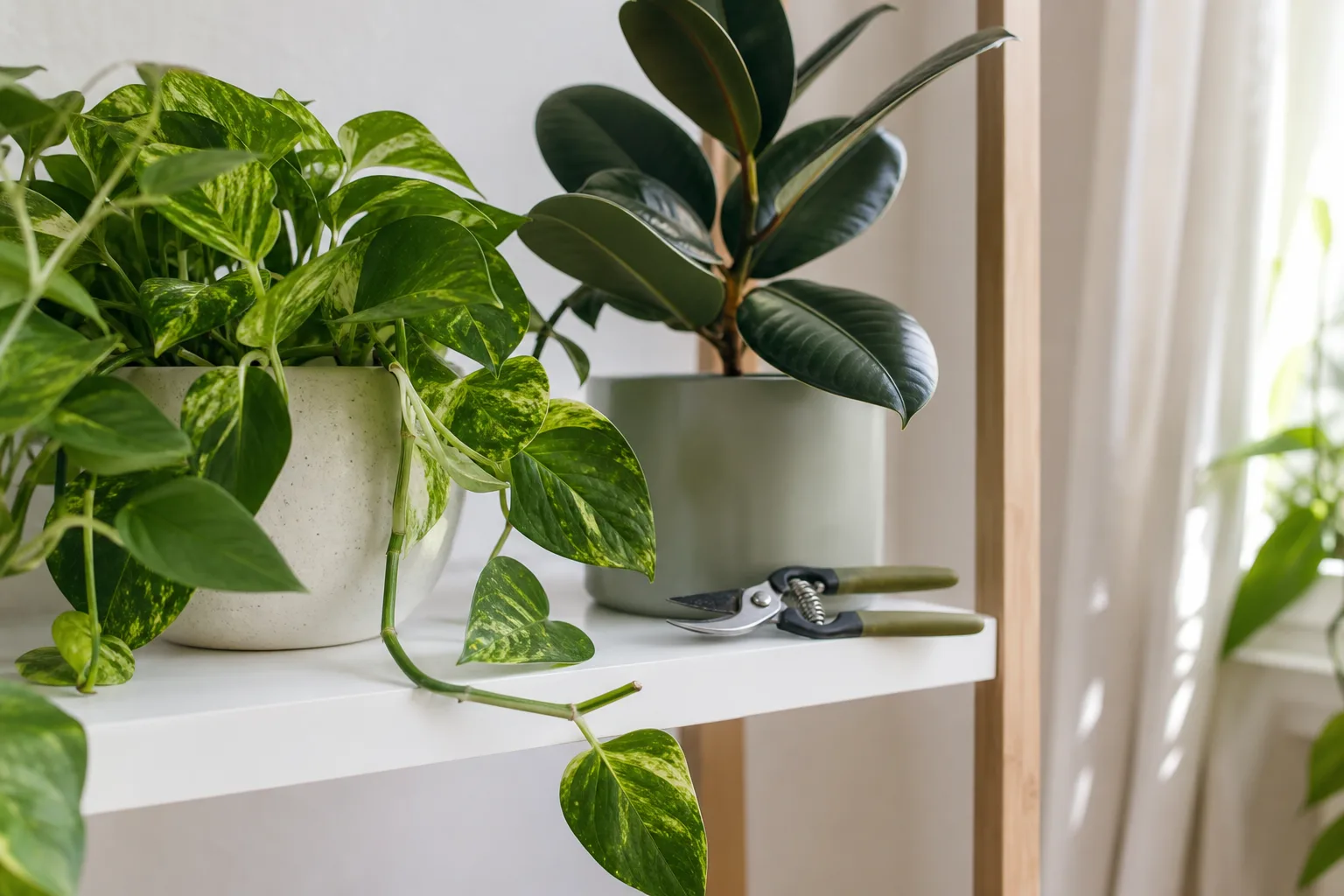
Pruning indoor plants is the selective removal of leaves, stems, flowers, or roots to improve the plant’s health, shape, and future growth. Done well, it keeps a houseplant compact, removes weak growth, encourages branching, and helps you manage plants that have become leggy, lopsided, or crowded. Done badly, it can stress the plant, leave ugly stubs, spread disease, or remove the growth points the plant needed to recover. The difference is rarely expensive tools or advanced skill. It is knowing what to cut, where to cut, when to stop, and what the plant needs afterward.
Most indoor plant pruning falls into four jobs: removing dead or damaged material, shortening long stems, encouraging bushier growth, and shaping the plant so it fits its space. A pothos spilling across a shelf needs a different cut from a rubber plant that has grown too tall, and both need a different approach from a peace lily with yellowing leaves. The right method depends on the plant’s growth habit, not just how messy it looks. A good pruning decision starts with a simple question: are you removing something the plant no longer needs, or are you redirecting healthy growth into a better shape?
What Pruning Actually Does to an Indoor Plant
Pruning changes a plant’s growth signals. Many stems have a dominant growing tip that suppresses side buds lower down the stem; when that tip is removed, nearby lateral buds are more likely to grow. University of Georgia Extension explains this as pruning temporarily breaking apical dominance, which stimulates lateral buds into shoots near the cut. That is why cutting a leggy stem just above a healthy node can make a plant branch instead of continuing as one long, thin vine. (CAES Field Report)
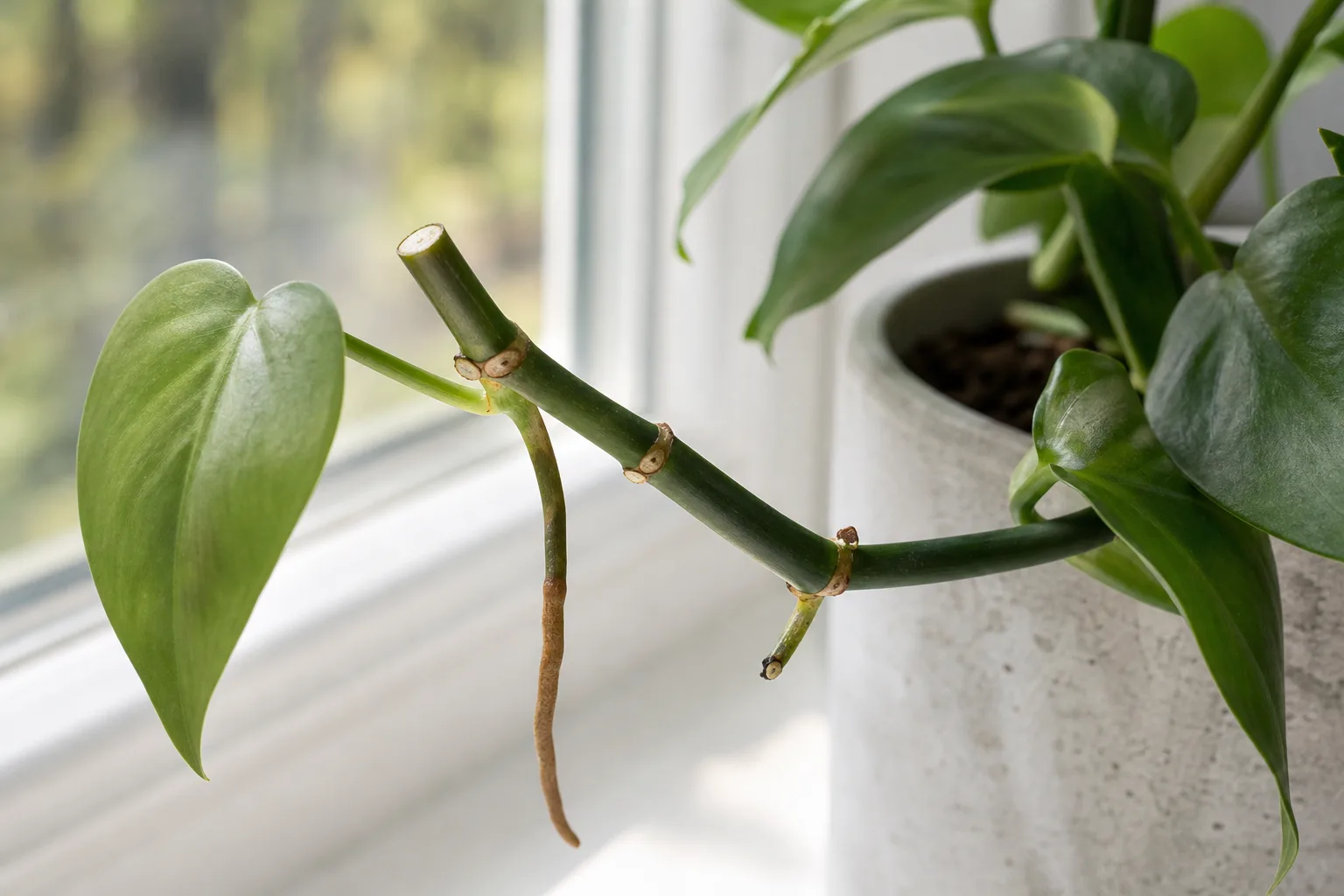
A node is the point on a stem where a leaf, aerial root, bud, or branch emerges. On pothos and philodendron, nodes are usually easy to spot because each leaf grows from one. On woody plants such as ficus or rubber plant, buds may be less obvious, but new growth still usually comes from nodes or dormant buds below the cut. If you cut between nodes and leave a long bare stub, that stub often dries back. If you cut just above a node, bud, or side branch, the plant has a clearer place to restart growth.
Pruning is not the same as randomly trimming leaves to make a plant “look clean.” Pruning usually means removing a stem, branch, vine, cane, flower stalk, or larger section for health, structure, size, or growth control. Trimming is lighter grooming, such as snipping off a brown leaf tip, removing a crispy edge, or tidying a plant’s outline. Pinching removes the soft growing tip of a stem, often with fingers or small snips, to encourage side shoots and denser growth. This distinction matters because people often over-prune when all the plant needed was grooming.
University of Maryland Extension describes pinching as removing one inch or less of new stem and leaf growth just above a node to stimulate lateral growth, while pruning removes a larger branch or section for appearance. (University of Maryland Extension) Pinching is preventive and gentle. Pruning is corrective and more structural. Trimming is maintenance.
For more specific cuts, heading back shortens a stem to a node, bud, or side branch and is useful for making a plant fuller or shorter. Thinning removes an entire stem at its base to reduce crowding. Deadheading removes spent flowers so the plant is not wasting energy on old blooms or seed production. These methods overlap, but naming the job helps you make cleaner cuts.
Pruning also has limits. It cannot fix chronic low light, saturated soil, root rot, pest pressure, or a potting mix that has collapsed. A leggy plant often needs better light as much as it needs pruning. The University of Minnesota Extension recommends trimming leggy stems above a leaf node, but it also frames this as part of broader spring houseplant care, not a magic fix by itself. (University of Minnesota Extension) If the plant keeps stretching after every trim, the real issue is probably light placement, not pruning technique.
The Best Time to Prune Indoor Plants
For most indoor plants, the best time for meaningful pruning is early spring through early summer, when the plant is entering active growth. University of Minnesota Extension notes that early spring is ideal for light pruning because many plants respond quickly and produce new leaves within a few weeks. (University of Minnesota Extension) This timing gives the plant enough light, warmth, and growing-season momentum to seal cuts and replace lost foliage. It also lets you correct winter legginess before the plant spends another season extending weak stems.
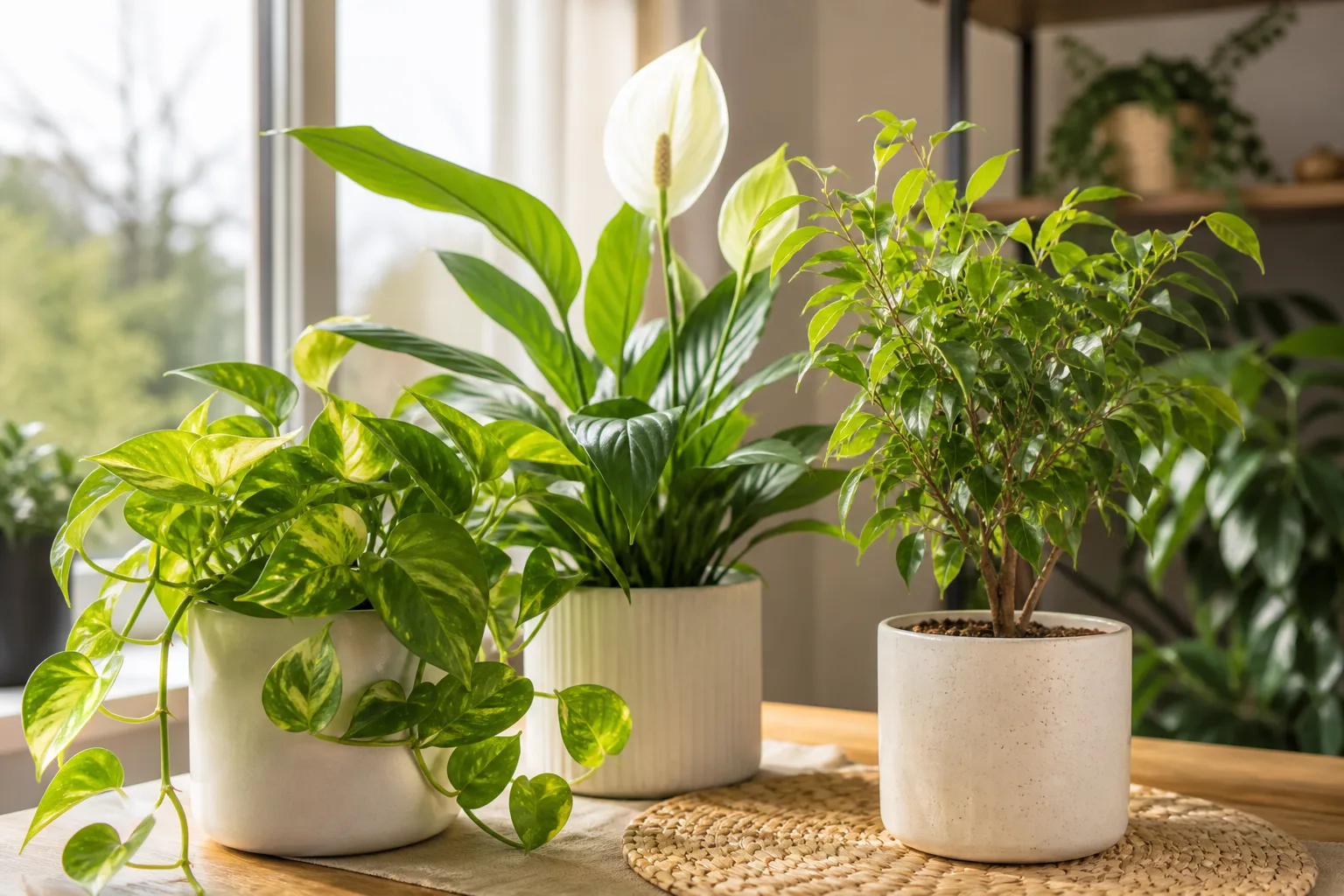
You do not need to wait for spring to remove dead, yellow, mushy, pest-damaged, or diseased growth. That kind of pruning is closer to cleaning and plant health management than shaping. The Royal Horticultural Society notes that older leaves on healthy houseplants naturally turn brown and die back over time, but widespread discoloration can point to cultural problems such as watering, feeding, or poor placement. (RHS) Removing an old yellow leaf is fine, but removing leaf after leaf without fixing the cause is only cosmetic.
Winter pruning requires restraint. Many indoor plants slow down in winter because light levels are lower, even if your home stays warm. Heavy pruning during this period can leave the plant with fewer leaves for photosynthesis and less energy to recover. Light grooming is still reasonable: remove a dead leaf, cut off a rotting stem, or trim a broken vine. Major reshaping is usually better delayed until brighter conditions return, unless the plant is actively growing under strong artificial light.
Flowering houseplants need an extra layer of timing. Some should be pruned after flowering, not before, because cutting at the wrong time may remove developing buds. Others benefit from deadheading spent flowers so the plant looks cleaner and may continue blooming. The safest rule is to identify whether the plant blooms on current growth or older growth before cutting hard. If you are unsure, limit yourself to dead flowers, dead leaves, and clearly damaged stems until you know the plant’s habit.
Tools You Need Before You Cut
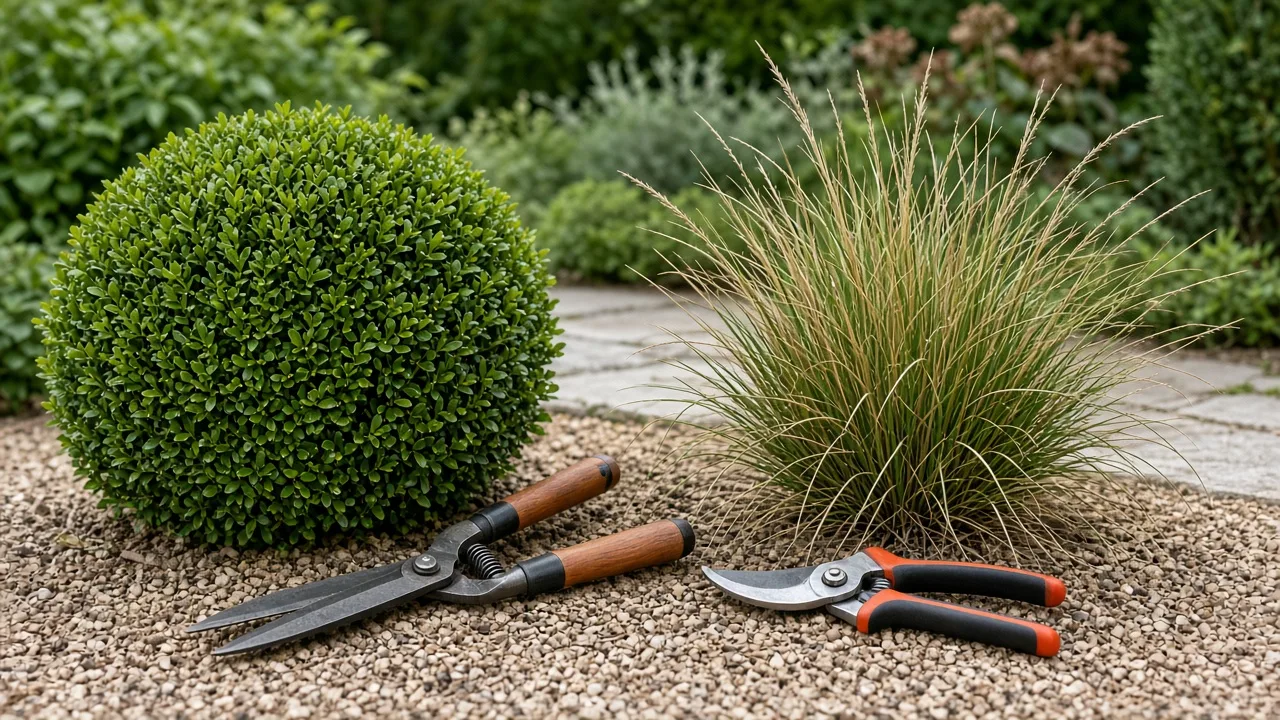
For most indoor plants, you only need a few tools: sharp scissors, fine-tip snips, bypass pruners, gloves if the plant has irritating sap, and a cloth or disinfectant for cleaning blades. Sharp tools matter because crushed stems heal poorly and look ragged. A clean cut is easier for the plant to seal than a torn one. Small houseplants usually need scissors or precision snips, while woody stems on ficus, rubber plant, money tree, or mature dracaena may need bypass pruners.

Tool hygiene matters most when plants are diseased, sticky with sap, pest-infested, or shared across many pots. University of Minnesota Extension warns that pathogens can remain on tools even when they look clean and recommends cleaning and disinfecting garden tools to reduce disease spread. (University of Minnesota Extension) For routine pruning of healthy houseplants, wiping blades before you start and between suspicious plants is a practical baseline. If you cut a plant with rot, leaf spots, bacterial ooze, or pest residue, clean the tool before touching another plant.
Avoid tearing leaves by hand unless the plant naturally releases them. Yellow peace lily leaves, dry pothos leaves, or old spider plant leaves often come away easily when fully spent. But tugging a partly attached leaf can strip tissue down the stem or damage the crown. Use scissors when there is resistance. The goal is to remove unwanted growth without creating a bigger wound than necessary.
Some plants have sap that can irritate skin or damage surfaces. Rubber plants and many euphorbia-type plants release milky latex; some aroids can irritate skin and should not be chewed by pets or children. Wear gloves if you are sensitive, and wipe sap from leaves or stems after cutting. Keep trimmings away from pets unless you know the plant is safe. Pruning is simple, but plant sap is not always harmless.
How to Prune Indoor Plants Step by Step
Good pruning is slow at first and decisive only after you know what you are cutting. Do not start by taking off the longest stem just because it annoys you. Rotate the pot, look at the plant from different angles, and identify the plant’s natural shape. A vining plant may want to trail, climb, or be cut back and replanted into the same pot. A woody plant may need one clean height-reduction cut rather than dozens of tiny trims.

A useful pruning framework is remove, reduce, redirect, or leave it alone. Remove dead or diseased growth. Reduce stems that are too long, sparse, or out of proportion. Redirect growth by cutting above a node facing the direction where you want new growth. Leave healthy leaves alone when they are still feeding the plant, even if they are not perfectly symmetrical. This framework prevents the most common beginner mistake: cutting until the plant looks smaller rather than healthier.
Inspect the Plant Before Making Any Cut
Start by checking the whole plant, not just the messy part. Look at the top growth, underside of leaves, soil surface, stems near the crown, drainage holes, and the side facing the wall. Indoor plants often hide their real problem on the side you do not see. A plant that looks leggy from the front may be growing toward a window. A plant with yellow leaves may have roots staying too wet. A plant with distorted new growth may have pests.
Separate cosmetic issues from health issues. A brown leaf tip on a dracaena is different from a mushy stem base. A single yellow lower leaf on an older pothos is not an emergency. Multiple yellow leaves, wilting despite wet soil, black stem sections, or sticky residue require diagnosis before heavy pruning. The RHS notes that leaf discoloration across much of a houseplant usually points to a cultural problem, often related to watering, feeding, or placement. (RHS)
Once you know what is happening, decide your pruning goal. Are you trying to make the plant fuller, shorter, cleaner, safer, or easier to place near a window? A plant can survive a lot of pruning, but it cannot read your mind. If you do not define the shape you want, you will keep snipping at random until the plant looks uneven. For shaping, it helps to remove a little, rotate the pot, and pause before cutting again.
Remove Dead, Damaged, or Diseased Growth First
Always remove dead, damaged, or diseased growth before shaping healthy stems. Dead leaves no longer feed the plant, and diseased tissue can continue to decline or spread. Cut brown, crispy leaves at the base of their petiole if the whole leaf is dead. If only the tip is brown and the rest of the leaf is green, you can trim the brown portion for appearance, following the natural leaf shape and leaving a thin brown edge instead of cutting into green tissue.
For mushy or rotting stems, cut back to firm, healthy tissue. If the rot reaches the crown or root system, pruning alone will not solve the problem. You may need to unpot the plant, remove rotten roots, refresh the mix, and adjust watering. University of Georgia Extension warns that over-saturated soil can lead to root rot and recommends avoiding water-filled saucers for long periods. (UGA Extension) A clean top will not save a plant whose roots remain suffocated.
For pest-damaged growth, pruning can reduce the pest load but should not be the only response. Remove the worst leaves or stems, then treat the remaining plant appropriately. University of Minnesota Extension notes that many indoor plant insect problems can be managed with nonchemical methods when infestations are minor. (University of Minnesota Extension) After pruning pesty growth, isolate the plant and check nearby plants, especially if the pest is spider mites, mealybugs, scale, or thrips.
Make the Cut Above a Node, Bud, or Branch
For stems you want to shorten, cut just above a healthy node, bud, or side branch. This is the cut that most often makes indoor plants look fuller. University of Minnesota Extension specifically recommends trimming leggy stems just above a leaf node to encourage fuller growth. (University of Minnesota Extension) On vines, choose a node with a leaf or aerial root and cut slightly above it. On woody stems, choose a visible bud, leaf scar, or side branch.
Do not leave long stubs unless the plant type requires it. A long empty stem above a node usually dries out and looks untidy. Cutting too close to the node can damage the bud that would have produced new growth. A small margin above the node is usually enough. Think of the node as the plant’s restart point; your cut should support it, not remove it.
The direction of the node matters. New growth often emerges from the bud nearest the cut, so cutting above an outward-facing node can help open the plant’s shape. This is more obvious on woody plants than on vines, but the principle still helps. If a plant is crowded in the middle, do not keep encouraging growth into the center. Select cuts that direct new growth toward light and open space.
Shape Slowly Instead of Chopping Blindly
Shaping indoor plants is part horticulture and part restraint. Make one or two cuts, rotate the pot, and look again. The Missouri Botanical Garden’s renovation guide for indoor houseplants advises shortening stems and pruning back to a side branch or bud to make a plant bushier. (Missouri Botanical Garden) That kind of shaping works best when you keep the overall structure in mind. You are not giving the plant a haircut; you are deciding which stems should lead future growth.
For a leggy vining plant, cut several long stems back to different lengths instead of cutting all vines at the rim of the pot. Staggered cuts create a more natural shape and encourage growth at multiple points. For a tall rubber plant or ficus, decide whether you want height reduction, branching, or both. Cutting the main stem can encourage branching, but the plant may produce one dominant shoot again. Repeated light shaping over time usually looks better than one dramatic cut.
For dense plants, thinning may be better than shortening. Remove a crowded, weak, crossing, or inward-growing stem at its base so light and air can reach the center. This is especially useful for plants that become tangled or congested. Do not thin so aggressively that the plant suddenly loses most of its leaf area. Leaves are not decoration; they are the plant’s energy system.
Give the Plant the Right Aftercare
After pruning, place the plant where it receives the light it needs to regrow. For many houseplants, that means bright indirect light rather than harsh direct sun. If a plant became leggy because it was too far from light, returning it to the same dark corner will produce the same problem again. Rotate the pot every week or two so new growth develops evenly. University of Georgia Extension notes that plants grow toward light, a response called positive phototropism, and recommends turning indoor plants regularly. (UGA Extension)
Water carefully after pruning. A plant with fewer leaves may use water more slowly for a while, especially if you removed a lot of foliage. Do not assume pruning means the plant needs extra water. Check the soil instead. University of Georgia Extension suggests watering many houseplants only when the soil is dry around a finger-depth check, while also watering less frequently but more deeply when water is needed. (UGA Extension)
Hold fertilizer until you see signs of active growth, unless the plant was already in a strong growing phase and healthy. Fertilizer does not heal cuts; light and healthy roots drive recovery. Too much fertilizer after stress can burn roots or push weak growth before the plant is ready. Penn State Extension notes that many indoor plants benefit from humidity above what heated winter homes typically provide, with exceptions such as cacti and succulents. (Penn State Extension) If your plant is tropical and the air is dry, humidity support may help recovery more than feeding.
A Plant-by-Plant Pruning Guide
The easiest way to prune indoor plants is to group them by growth habit. Plants that grow as vines, canes, rosettes, clumps, woody stems, or flowering shoots respond differently. A cutting strategy that works beautifully on pothos can ruin the look of a snake plant. A hard cut that revives a leggy begonia may be too much for a slow-growing ZZ plant. Before pruning, ask what kind of structure the plant uses to grow.
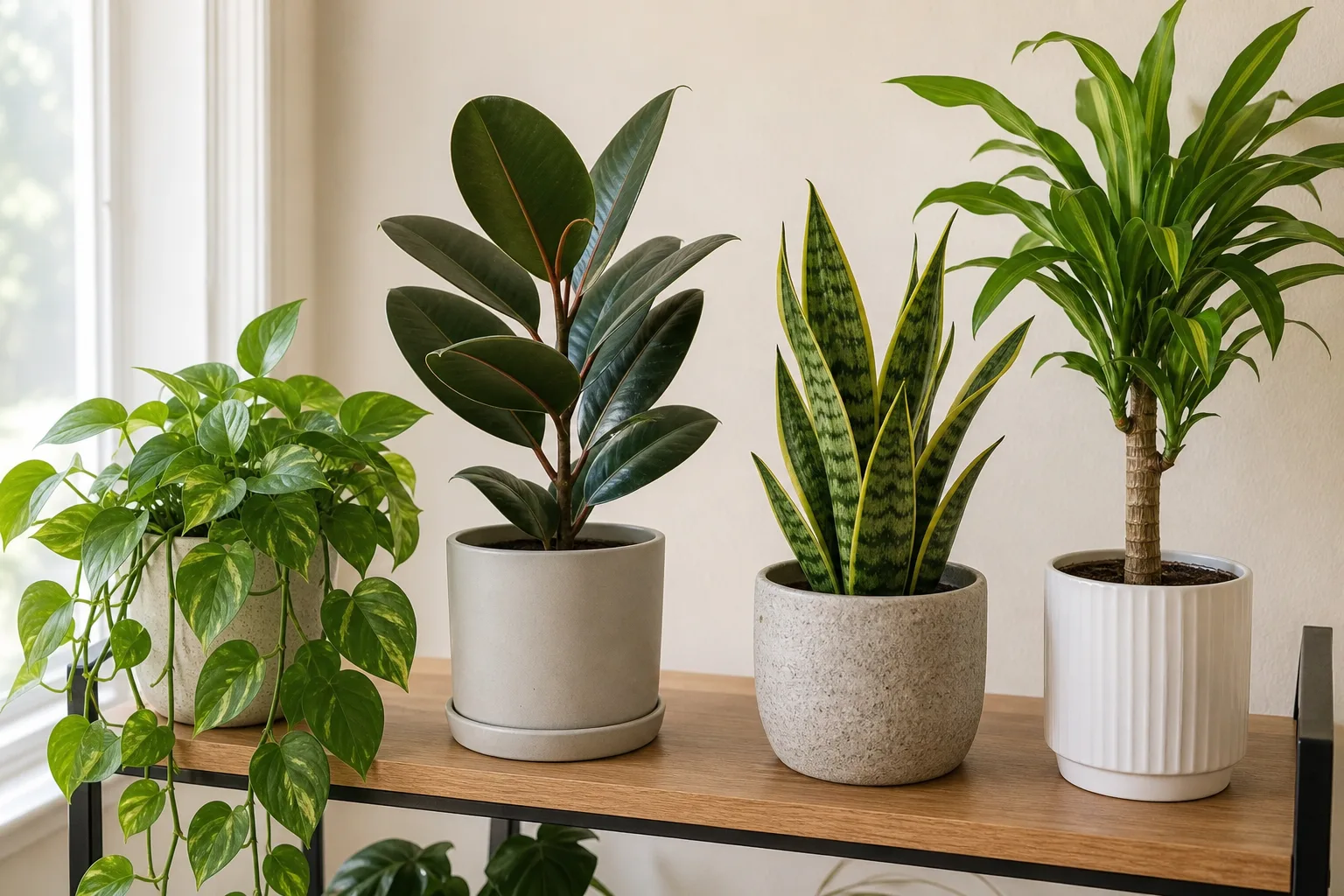
Some plants branch readily after pruning. Others replace old leaves slowly and should be groomed rather than reshaped. Some can be cut back hard if healthy. Others need gradual work over multiple sessions. This is why generic advice like “cut it back by one-third” can be misleading. The safer approach is to match the cut to the plant’s anatomy.
The table below gives practical starting points, but plant health and environment still matter. A strong plant in bright indirect light can recover from more pruning than a weak plant in a dark corner. When unsure, prune lightly, observe the response, and continue later.
| Plant Type | Examples | Best Pruning Method | Avoid |
|---|---|---|---|
| Vining plants | Pothos, philodendron, hoya, tradescantia | Cut above nodes; pinch tips for fullness | Leaving long bare stubs |
| Climbing aroids | Monstera, syngonium, climbing philodendron | Cut node sections; add support | Cutting leaf-only pieces for propagation |
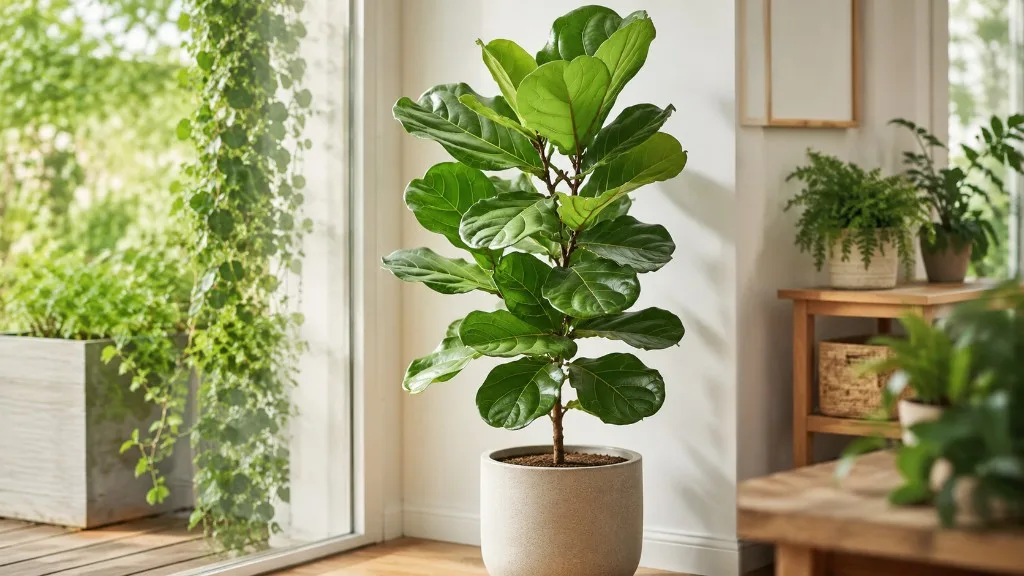
| Upright woody plants | Rubber plant, fiddle leaf fig, schefflera | Prune above nodes or branching points | Heavy winter cuts on weak plants |
| Cane plants | Dracaena, dieffenbachia, yucca | Remove dead leaves/canes; shorten healthy canes carefully | Cutting all canes at once |
| Rosette plants | Echeveria, haworthia, some peperomias | Remove old outer leaves; behead only when needed | Damaging the central crown |
| Ferns | Boston fern, maidenhair fern | Cut dead fronds at the base | Trimming fronds halfway for shape |
| Slow growers | ZZ plant, snake plant | Remove damaged stems/leaves at the base | Cutting leaf tops for neatness |
| Flowering plants | Orchids, anthurium, kalanchoe | Remove spent blooms/stalks as appropriate | Cutting before understanding bloom cycle |
Vining Plants: Pothos, Philodendron, Monstera, and Hoya
Vining plants are usually the most forgiving indoor plants to prune. Pothos, heartleaf philodendron, scindapsus, and many trailing hoyas can be shortened by cutting above nodes. If the plant is sparse at the top and long at the ends, cut some vines back closer to the pot and propagate the healthy cuttings. You can place rooted cuttings back into the original pot to create a fuller look. This works because each healthy node can potentially root or push new growth under the right conditions.
Monstera needs a more deliberate approach because it often has thick stems, aerial roots, and a climbing habit. Cut below a node if you want to propagate a cutting, and cut above a node if you are shortening a stem left on the plant. Do not remove aerial roots just because they look messy unless they are dead or damaged; they are part of the plant’s climbing and support system. If the plant is leaning or flopping, pruning may help, but support from a moss pole, plank, or stake may solve more than cutting alone.
Hoya pruning should be conservative. Many hoyas bloom from persistent flower spurs called peduncles, and removing them can reduce future flowering on that stem. Trim dead or excessively long vines if needed, but avoid cutting every bare-looking tendril just because it has no leaves yet. Hoyas often send out exploratory vines before leaves fill in. With hoya, patience is often better than tidiness.
Woody Indoor Plants: Ficus, Rubber Plant, Money Tree, and Dracaena
Woody indoor plants can be pruned for height, branching, and structure, but their cuts are more visible and slower to disappear. Ficus, rubber plant, money tree, schefflera, and many dracaenas can respond well to selective pruning. Cut above a leaf, bud, or side branch where you want new growth to emerge. If the stem is thick, use clean bypass pruners rather than scissors. A crushed woody stem is more damaging than a clean, angled cut.
Rubber plants can be topped when they become too tall, but the result depends on light and plant vigor. A healthy plant in bright indirect light may push multiple new shoots below the cut. A weak plant in low light may produce one thin shoot or stall. Wipe latex sap after cutting and protect surfaces. If you want a tree-like plant to branch, prune during active growth and give it enough light afterward.
Dracaenas often grow as canes with leaf clusters at the top. If a cane is too tall, it can be cut back, and new shoots may emerge below the cut. This can look dramatic at first because you are left with a bare cane. The plant needs time to push new growth. Do not cut every cane to the same height unless you want a uniform, artificial look. Staggered heights usually look more natural.
Rosette and Crown Plants: Snake Plant, ZZ Plant, Peace Lily, and Ferns
Rosette and crown-forming plants are usually groomed rather than shaped by cutting stems. Snake plants, ZZ plants, peace lilies, calatheas, aglaonemas, and many ferns do not become bushier because you cut leaf tips. They produce new growth from rhizomes, crowns, or the base, not from a shortened leaf blade. If a snake plant leaf is damaged halfway up, trimming the tip may improve appearance slightly, but that cut leaf will not regrow a perfect point. If the leaf is badly damaged, remove it near the soil line.
Peace lilies and similar plants should have yellow or dead leaves removed at the base of the petiole. Spent flowers can be cut down near the base of the flower stalk once they fade. Do not cut healthy leaves just to reduce size unless the plant is genuinely overcrowded or damaged. If the plant is too large, division during repotting is often better than heavy pruning. Repotting and division should be timed carefully because root disturbance is a different kind of stress.
Ferns need gentler grooming. Remove dead fronds at the base, trim brown tips only for appearance, and avoid cutting the crown. Many ferns decline after over-drying, low humidity, or inconsistent watering, and pruning will not fix those conditions. If a fern looks thin, improve moisture consistency and humidity before cutting aggressively. A fern with a healthy crown can replace fronds; a fern with a damaged crown may not recover.
Flowering Houseplants and Indoor Herbs
Flowering houseplants need pruning that respects bloom cycles. African violets are usually groomed by removing old outer leaves and spent flowers rather than cutting the whole plant back. Orchids are more specific: some flower spikes can be cut after blooming, but the right cut depends on the orchid type and spike condition. Anthuriums and peace lilies can have spent flowers removed at the base. For flowering plants, the goal is usually to remove exhausted growth without removing future buds.
Indoor herbs are different because pruning is also harvesting. Basil, mint, oregano, and similar herbs become fuller when pinched or cut above nodes. Avoid stripping all leaves from one stem because the plant still needs foliage to power regrowth. For basil, cutting above a pair of leaves encourages the stem to branch. If herbs are indoors under weak light, pruning may slow decline temporarily but will not replace the need for strong light.
Succulents and cacti need caution. Many do not branch in the same way leafy tropical plants do, and cutting them can leave permanent scars or create rot risk if conditions are damp. Leggy succulents often need more light, not repeated trimming. Some can be beheaded and re-rooted, but that is propagation and renovation, not routine pruning. Let cut succulent stems callus before rooting them, and avoid watering fresh wounds heavily.
Common Pruning Mistakes That Damage Indoor Plants
Most pruning failures come from impatience. The plant looks messy, so the owner cuts too much, too late, or for the wrong reason. A plant with weak roots cannot recover from a hard chop. A plant in a dark corner will regrow weakly after every trim. A plant with pests may spread them if pruners move from pot to pot without cleaning. Pruning is powerful, but it works best as part of care, not as a substitute for care.
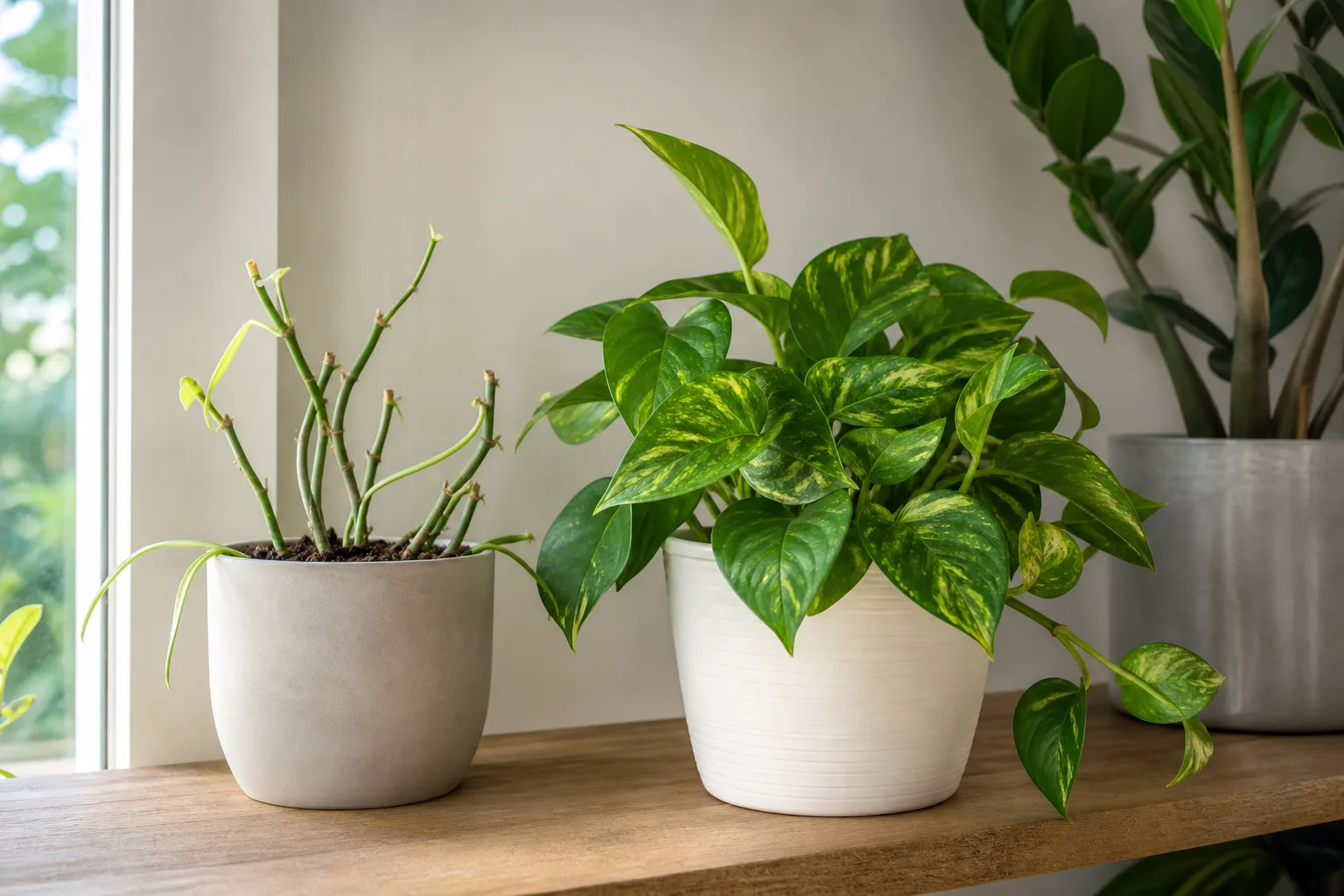
Another mistake is treating every brown or yellow mark as something to remove. Plants naturally shed old leaves, especially lower leaves that no longer receive enough light. Removing fully dead material is fine. But cutting off every imperfect leaf can reduce the plant’s energy supply. If a leaf is more green than damaged, it may still be helping the plant.
Removing Too Much at Once
A good rule for routine pruning is to remove less than you think you need, then reassess after new growth appears. Many common houseplants can tolerate moderate pruning, but heavy cuts are stressful because they remove leaves that produce energy. Some consumer gardening guidance recommends staying around 20 to 30 percent at one time for many houseplants, with exceptions for plants that tolerate harder renovation. (Martha Stewart) That is not a universal botanical law, but it is a useful caution for beginners.
There are exceptions. A severely leggy begonia, coleus, pothos, or tradescantia may benefit from a hard reset if it is healthy and actively growing. A cane plant can sometimes be cut back dramatically and resprout. But a slow-growing ZZ plant, snake plant, cactus, or stressed ficus should not be treated the same way. Recovery speed depends on roots, stored energy, light, season, and species.
If you need a major size reduction, divide the work into stages. Remove dead and weak growth first, then shorten the worst stems. Wait for new growth before making a second round of cuts. This staged approach gives the plant a chance to respond and gives you a chance to correct your plan. Indoor plants are not hedges; they usually look better after thoughtful pruning than after a single drastic chop.
Pruning a Stressed Plant for the Wrong Reason
Do not heavily prune a plant just because it is wilting, yellowing, dropping leaves, or looking sad. Those symptoms often point to watering, roots, pests, temperature stress, or light issues. Pruning may remove damaged leaves, but it will not repair the cause. A plant with root rot needs root care and drying correction. A plant with spider mites needs pest management. A plant stretching toward a window needs better light.
Low light is one of the most common reasons indoor plants become leggy. The stems stretch because the plant is trying to reach enough light. If you prune the stretched growth but leave the plant in the same spot, the new growth will often stretch again. Move the plant closer to suitable light, rotate it regularly, or use a grow light if natural light is poor. Pruning and light correction should work together.
Also avoid pruning immediately after repotting unless the plant needs damaged material removed. Repotting disturbs roots, and pruning removes leaves; doing both heavily at once can create unnecessary stress. If the plant is healthy and vigorous, light shaping during repotting may be fine. For a struggling plant, handle the root issue first and postpone cosmetic pruning. The plant’s recovery capacity is not unlimited.
Using Healthy Cuttings After Pruning
Healthy pruning waste can often become new plants. Vining plants such as pothos, philodendron, monstera, scindapsus, tradescantia, and many hoyas can root from stem cuttings that include nodes. Cut below a node for the cutting, remove any lower leaves that would sit in water or soil, and place the cutting in water or a moist propagation mix depending on the plant. Keep it in bright indirect light and avoid letting the cutting dry out before roots form. Once roots are established, pot it into a suitable mix.
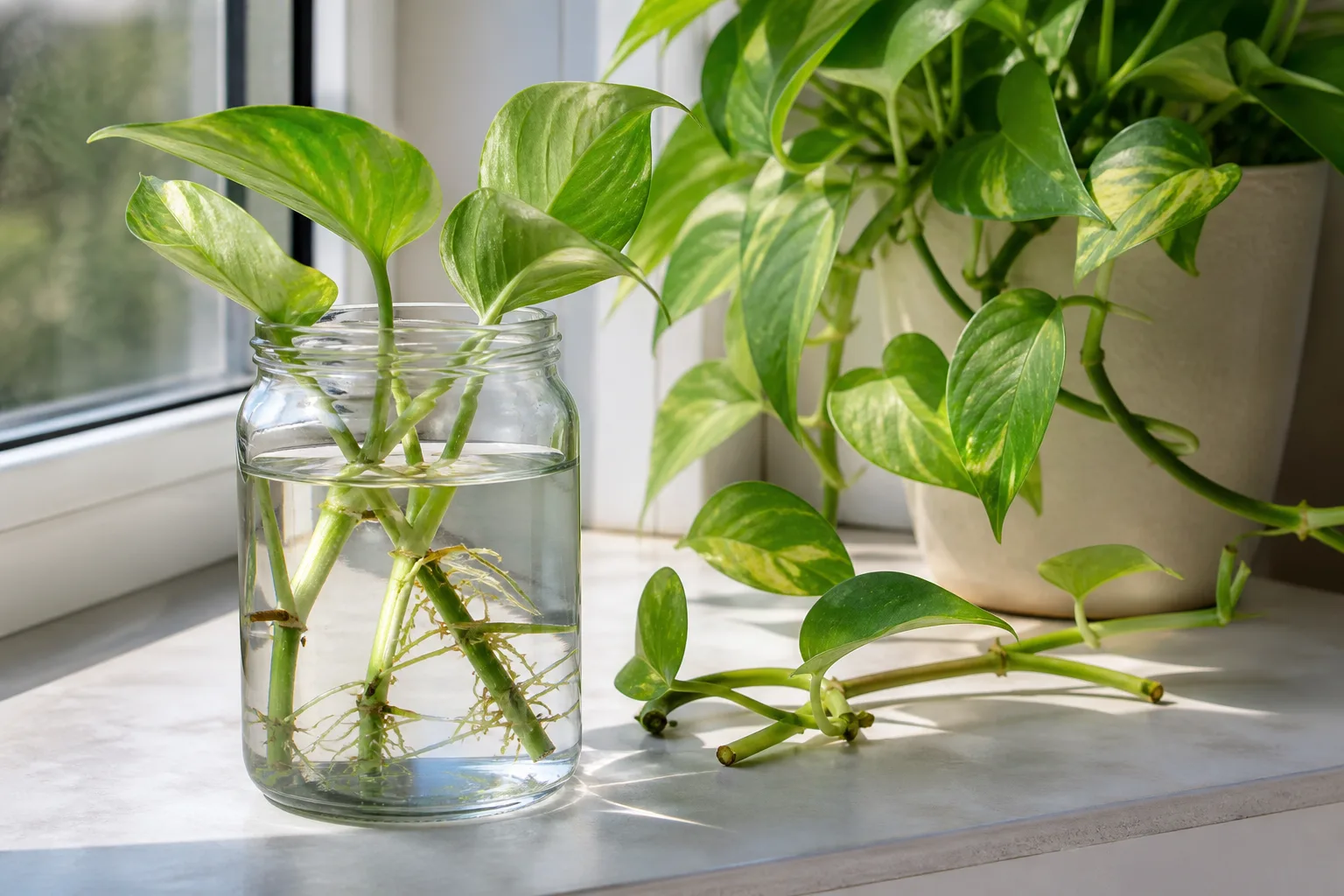
Propagation is also useful for making the original pot look fuller. If a pothos has long bare vines and a thin crown, prune the vines, root the cuttings, and plant several rooted cuttings back into the pot. This creates fullness where pruning alone may not. Some plants look sparse at the soil line because all growth has moved outward. Replanting rooted cuttings near the crown solves that visual problem better than simply shortening the ends.
Not every indoor plant cutting roots easily from a leaf or stem. Snake plants can be propagated from leaf sections, but variegation may not come true depending on the type. ZZ plants can propagate from leaflets or divisions, but slowly. Ferns are usually divided rather than rooted from trimmed fronds. Peace lilies are divided at the crown, not propagated from cut leaves. Before putting every trimming in water, check whether that plant can actually root from the part you removed.
There is also a practical ownership issue: some patented plants cannot legally be propagated for sale without permission. This is mostly relevant if you plan to sell cuttings, not if you are rescuing a personal plant. Still, it is worth knowing if you collect branded or patented cultivars. For ordinary home care, the main point is simple: do not throw away healthy node cuttings from plants that root easily. They are often the easiest way to refresh your indoor garden.
Conclusion
Pruning indoor plants is not about cutting until a plant looks smaller. It is about making specific, useful cuts that remove weak growth, redirect healthy growth, and support the plant’s natural habit. The best cuts are made above nodes, buds, or side branches; the best timing is usually during active growth; and the best results come when pruning is paired with better light, careful watering, clean tools, and patient aftercare. If you remember only one rule, remember this: cut with a purpose, then give the plant the conditions it needs to respond.
Start with dead, damaged, or diseased growth. Then shorten leggy stems, thin crowded areas, or shape the plant slowly. Match the pruning method to the plant type: vines can usually be cut and propagated, woody plants need structural cuts, crown plants need grooming, and slow growers need restraint. Pruning can make a plant fuller, cleaner, and healthier, but it cannot compensate for poor care forever. When you combine good cuts with good conditions, pruning becomes less risky and much more rewarding.