Calathea Watering: Schedule, Soil Checks & Mistakes
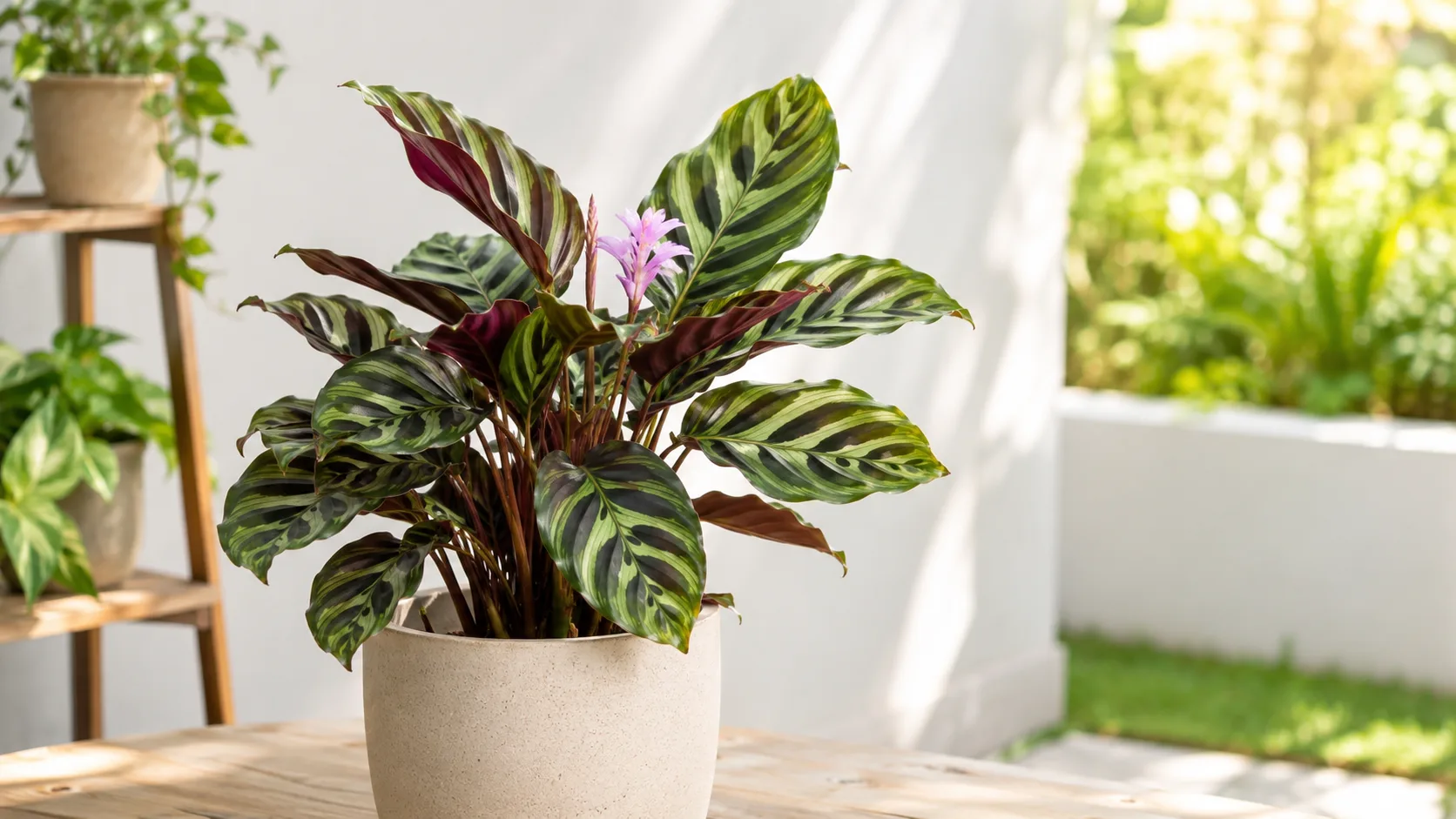
Calathea Watering: Schedule, Soil Checks & Mistakes
Calathea Watering: Schedule, Soil Checks & Mistakes
A Calathea can look perfect in the nursery and fall apart in your living room within weeks - not because you forgot to water it, but because you watered it the wrong way, on the wrong schedule, with the wrong water, or into soil that stayed wet too long. Prayer plants in the Marantaceae family sit in an awkward middle zone: they need more consistent moisture than a pothos or snake plant, but they rot faster than a fern if the mix stays soggy. The leaves fold up at night (nyctinasty), curl dramatically when stressed, and show brown tips from hard water long before the roots fail completely. That makes watering feel personal, even when the fix is usually a better moisture check rather than more attention.
This guide covers the full Calathea watering picture: how often to water without a fixed calendar, the soil checks that actually work, which water to use, top vs. bottom watering, seasonal adjustments, overwatering on Calathea and underwatering on Calathea signs, and the mistakes that keep prayer plants stuck in a cycle of crisp edges and yellow leaves.
The Short Answer: How to Water Calathea Correctly
Water Calathea when the top 1 inch (about 2.5 cm) of potting mix feels just barely dry to the touch - not when a calendar says so, and not when the surface still feels damp. The Royal Horticultural Society recommends keeping compost evenly moist during the growing season and, in autumn and winter, allowing the surface to dry out before rewetting while never letting the compost dry out completely. In practice, that usually means checking every 5 to 7 days in spring and summer and every 10 to 14 days in fall and winter, then watering only when the top layer passes the dry test. A healthy Calathea in a 6-inch pot under Calathea light guide may need water sooner; the same plant in a dim room in January may sit wet for two weeks without needing a drink.
Use room-temperature water - ideally rainwater, distilled water, or filtered water. If you use tap water, let it stand overnight so free chlorine can dissipate, though this does not remove chloramine in all municipal supplies. Water thoroughly until excess drains from the bottom, then empty the saucer or cachepot so roots never stand in runoff. The goal is evenly moist, airy soil - moisture in the root zone with oxygen still moving through the mix - not a permanently wet swamp and not a bone-dry block that pulls away from the pot wall.
Why Calathea Watering Feels Harder Than Other Houseplants
Calathea watering is tricky because the plant sends dramatic leaf signals that do not always match what is happening in the root zone. A prayer plant may curl its leaves from underwatering, overwatering, low humidity, cold drafts, or mineral buildup - and all of those problems can look similar on the foliage. Beginners often respond to curled leaves by adding water when the soil is already wet, or they let the mix dry too far because they fear root rot on Calathea. Both extremes damage the fine roots Calathea depends on for steady moisture uptake.
The plant also lives in a small pot with a moisture-retentive mix. Most Calathea are sold in peat- or coco-based blends with perlite that hold water in the center long after the surface looks dry - or stay damp at the bottom while the top crusts over. That mismatch between what your finger feels at the surface and what the roots experience is the core reason calendar watering fails. A “weekly Wednesday water” might be perfect in July and disastrous in December, or perfect for a plant on a bright east windowsill and too much for one in a shaded bathroom corner.
What Prayer Plant Roots Need From the Mix
In their native tropical forest-floor habitats across Central and South America, Calathea and close relatives like Goeppertia grow in loose, organic soil that stays lightly moist but drains freely after rain. The roots are fine and shallow compared with succulents or trees. They need steady access to moisture without sitting in stagnant water. Indoors, you recreate that balance with a well-draining but moisture-retentive mix - typically a peat-free or coco coir base with perlite or potting grit - in a pot with a drainage hole.
Roots need both water and air. When the mix compacts or stays waterlogged, oxygen drops, fine roots die, and the plant cannot move water to the leaves even though the pot feels heavy and wet. That is the classic trap: wilting leaves with wet soil point to root damage from overwatering, not thirst. Good Calathea watering protects the root zone first; leaf cosmetics come second. Judge the newest unfolded leaves and root-zone moisture before reacting to every brown edge on an older blade.
How Often to Water Calathea Without a Fixed Calendar
There is no universal “water every seven days” rule for Calathea. Frequency depends on light intensity, room temperature, humidity, pot size and material, soil composition, airflow, and seasonal growth speed. A plant pushing new leaves in a warm, bright room transpires faster and may need water every 4 to 6 days in a small pot. The same cultivar in a cool, dim winter room may go 12 to 16 days between thorough waterings because photosynthesis slows and the mix retains moisture longer.
Treat calendar ranges as reminders to check, not commands to water. Check your Calathea twice a week during active growth and once a week in winter. After a few cycles, you will learn your home’s pattern. Some growers never need a schedule at all - they walk past the plant, lift the pot, touch the soil, and water only when the checks align. That habit beats any app notification because it accounts for the weather, your heating cycle, and whether you moved the pot last weekend.
The useful target is consistent moisture without saturation. Calathea should not cycle between desert-dry and flood-wet. Repeated full dry-outs stress roots and make rewetting difficult in peat-heavy mixes. Constant sogginess invites rot, fungus gnats, and winter oedema - water-soaked patches on leaves when the plant cannot transpire fast enough in cool, dim conditions.
The Finger Test, Skewer Method, and Moisture Meters
The finger test remains the most reliable everyday tool because it reads the actual mix, not a guess from leaf color. Press your finger into the soil to about 1 inch (2.5 cm) depth - roughly the first knuckle on most hands. If the mix feels cool and damp, wait. If it feels just barely dry at that depth, water thoroughly. If it is hard, dusty, and pulling away from the pot edge, the plant has gone too dry and needs a careful full soak followed by proper drainage - not a nervous daily splash.
The finger test works best combined with a wooden skewer or chopstick when you want a deeper read without disturbing roots. Insert the skewer near the pot wall, leave it for a minute, and pull it out. Damp residue on the stick means moisture remains below the surface. A clean, dry stick suggests the root zone is ready for water. This is especially helpful in larger pots where the top inch dries faster than the center.
Moisture meters can support your routine, but they are not infallible in loose, peat-based mixes. Salts, uneven probe contact, and chunky perlite can produce false readings. Use a meter as a second opinion, not the final authority. If the meter says “dry” but the pot feels heavy and the skewer comes out damp, trust the pot and skewer.
The Pot Weight Test
The pot weight test is simple and surprisingly accurate once you learn your plant’s rhythm. Lift the pot immediately after a thorough watering, when excess has drained and the saucer is empty. Notice the full weight. Lift it again every day or two as the mix dries. A moist pot feels substantially heavier than a ready-to-water pot. When the weight drops noticeably and the top inch feels just dry, it is time to water. This test prevents watering because the surface looks dry while the root zone is still wet - a common mistake in moisture-retentive mixes that hold water below a dry-looking top.
Best Water for Calathea
The best water for Calathea is clean, room-temperature water low in fluoride, heavy minerals, and sodium. Prayer plants are more sensitive than many common houseplants. Frequent watering with hard or chemically treated tap water can leave mineral deposits in the mix and burn leaf tips and edges even when moisture levels are correct. That is why two Calatheas on the same watering schedule can look different - water chemistry matters.
The RHS notes that all houseplants prefer rainwater because mains tap water contains lime (calcium carbonate) and chlorine, but Calatheas will tolerate tap water left to stand for at least 24 hours so free chlorine can evaporate. Rainwater, distilled water, reverse-osmosis water, or water collected from a dehumidifier are safer long-term choices if your tap water is hard or heavily treated. Avoid softened water, which often contains sodium that accumulates in small pots over months of regular watering.
Temperature matters as much as chemistry. Cold water shocks warm-roots adapted to stable indoor conditions. Let water reach room temperature before applying it. In winter, avoid watering a plant sitting on a cold windowsill with icy tap water - the root zone is already stressed by temperature swings near the glass.
Why Tap Water Causes Brown Leaf Tips
Brown tips on Calathea are not always a watering-frequency problem. They often trace to water quality, low humidity, or fertilizer salt buildup - and sometimes all three at once. Municipal tap water may contain fluoride, which many Marantaceae tolerate poorly when it accumulates through repeated watering. Hard water adds calcium and magnesium that leave white crust on the soil surface and pot rim. If you water correctly by every soil check but tips keep browning on new leaves, switch water sources before changing your schedule again.
Letting tap water stand overnight helps with chlorine but not reliably with chloramine, which many water utilities use because it persists longer. If standing water does not improve new growth after four to six weeks, try rainwater or filtered water for a full growing season and compare new leaf quality. Flush the pot occasionally with plain water until it runs freely from the drainage hole to leach accumulated salts - especially if you fertilize monthly during active growth.
Top Watering vs. Bottom Watering for Calathea
Both methods work for Calathea when the goal is even root-zone moisture and proper drainage afterward. Neither method fixes a bad mix, a pot without drainage, or a calendar schedule that ignores soil dryness.
Top watering - pouring water slowly onto the soil surface until it runs from the drainage hole - is the default for most growers. It flushes salts from the mix, lets you see when the soil is fully saturated, and makes it easy to avoid wetting leaves. Use a narrow-spout watering can and direct water onto the soil, not the foliage. Calathea leaves can develop spots if water sits on them in bright or cool conditions.
Bottom watering - setting the pot in a tray of water and letting the mix wick moisture upward - delivers even moisture through the root zone without leaving the surface soggy. The RHS specifically suggests watering from the base to keep the top of the compost drier as a strategy against fungus gnats, which breed in constantly wet surface soil. Soak until the top inch feels moist, then remove the pot and let it drain fully before returning it to a saucer or cachepot.
Choose bottom watering if you struggle with gnats, if your surface dries unevenly, or if you tend to under-water the center while flooding the edges. Choose top watering when you need to flush salts, when the mix has become hydrophobic and needs direct water contact, or when bottom wicking fails because the root ball has shrunk away from the pot wall. Whichever method you use, the non-negotiable step is the same: never leave the pot standing in water after it has finished absorbing.
Signs You Are Overwatering Calathea
Overwatering is the more common and more dangerous Calathea failure mode indoors - especially in winter, in dim rooms, in oversized pots, or when a decorative cachepot traps runoff. The signs include yellowing leaves that start low on the plant and spread, soft or mushy stems at the soil line, persistent wet soil that never dries within 7 to 10 days, musty or sour smell from the mix, fungus gnats hovering near the surface, and wilting or curling despite wet soil. New leaves may emerge smaller, fail to open fully, or show dark-edged damage.
Overwatering often follows good intentions. You noticed slight curl, assumed thirst, and added water to already-damp soil. Or you kept a weekly schedule through November while the plant slowed growth and the mix stayed wet twice as long. Or you placed a freshly watered pot into a cachepot with no drainage, and the outer vessel became a standing reservoir. Each scenario starves roots of oxygen and damages the fine structures Calathea needs to drink properly.
Timing helps distinguish overwatering from other problems. Overwatering symptoms often follow repeated watering into wet soil, a seasonal schedule that did not adjust, or Calathea repotting guide into too large a container. Damage may be general across the plant rather than one-sided. If several yellow leaves appear while the pot feels heavy and the skewer comes out wet, pause watering and inspect before adding more.
How to Recover a Soggy, Overwatered Calathea
Stop watering immediately and remove standing water from saucers and cachepots. Move the plant to bright indirect light with stable temperature and slightly better airflow. Do not fertilize. Let the mix dry to the appropriate level before the next thorough watering - this may take a week or more in a saturated pot.
If decline continues - more yellow leaves, base softness, sour smell - unpot and inspect roots. Trim mushy brown tissue, repot into fresh, airy mix in a pot only slightly larger than the root ball, and water once lightly. Old yellow leaves will not green up; success means firm new leaves from the center. Do not swing to extreme underwatering after overwatering.
Signs You Are Underwatering Calathea
Underwatering shows up as leaf curl or roll during the day, drooping stems, crispy brown edges and tips, dry, lightweight pot, and mix that pulls away from the pot wall or becomes difficult to rewet. Calathea may fold its leaves more tightly than usual and move less dramatically at night. A single dry episode is usually recoverable with a thorough soak and full drainage. Repeated drought cycles damage fine roots and make the plant react badly when water finally returns - new leaves may brown at the edges even after you correct the schedule.
Underwatering is sometimes misread as a humidity problem. Both cause crisp edges. The distinguishing check is the soil and pot weight. If the top inch is dusty, the pot feels light, and the skewer comes out dry, the plant needs water - even if you run a humidifier. If the soil is wet and the pot is heavy, humidity is the more likely lever for leaf edges, not more water.
When rehydrating a dry Calathea, water thoroughly once and let excess drain. Avoid giving tiny daily sips, which moisten only the top layer and leave the center dry. If the mix has become hydrophobic - water runs down the sides without soaking in - bottom water for 30 to 45 minutes or top water slowly in stages until the root ball absorbs moisture evenly. Trim fully brown leaves only for appearance; they will not recover.
Seasonal Calathea Watering: Spring, Summer, and Winter
Calathea watering changes through the year even indoors because light length and intensity shift with the seasons. In spring and summer - roughly April through September in the Northern Hemisphere - active growth increases water use. Check soil every 4 to 7 days. Water when the top inch is just dry. The plant may consume water faster during heat waves or when air conditioning dries the room.
In fall and winter, growth slows. Lower light means less photosynthesis, less transpiration, and longer dry-down times. The RHS advises allowing the surface of the compost to dry before rewetting in autumn and winter while never letting the compost dry completely. Check every 7 to 14 days. Many Calatheas need water only every 10 to 14 days in a cool, dim room from December through February. The mistake most growers make is keeping the same summer frequency through winter - the mix stays wet, roots suffocate, and oedema or yellowing follows.
Adjust after major environment changes, not only on calendar dates. Moving a plant closer to a window in March increases water use. Moving it away from a heating vent in October may slow drying. Repotting in spring temporarily slows dry-down until roots explore the new mix. Treat seasonal guidance as a starting frame and let soil checks override it.
Winter Oedema and Why Wet Soil in Low Light Is Dangerous
Oedema is a condition where the plant absorbs water faster than it can transpire, causing patchy, water-soaked areas on leaves. The RHS lists oedema as a Calathea problem most likely in winter when compost is too wet. It is not a pest or disease in the usual sense - it is a physiology mismatch. Cool temperatures, short days, and dim light reduce transpiration. If you keep watering on a summer schedule into that environment, the roots keep taking up water the leaves cannot release. Cells burst, leaving brown, corky patches that do not heal.
Prevent winter oedema by reducing watering frequency, keeping the plant in the brightest indirect light available, avoiding cold drafts near windows, and ensuring the mix dries appropriately at the surface before the next drink. If oedema appears, reduce water, improve light if possible, and wait for new growth rather than pruning aggressively. Old damaged tissue remains cosmetic; new leaves tell you whether the balance is restored.
How Light, Humidity, Pot Size, and Soil Change Watering Frequency
Every environmental variable shifts how fast your Calathea dries. Light is the largest driver after season. A plant in medium to bright indirect light photosynthesizes actively and may need water every 5 to 7 days in summer. The same plant in low indirect light may need water half as often because it is essentially resting. When you move Calathea to a brighter spot, check moisture more frequently. When you move it dimmer, extend the dry-down window.
Humidity affects leaf appearance more than soil dry-down speed in most homes, but the two interact. In very dry rooms with heating or air conditioning, soil may dry slightly faster and leaf edges crisp even when moisture is adequate. Humidity targets of 50 to 70% reduce edge burn but do not replace correct watering. Mist the air or use a humidifier for leaves; use soil checks for roots.
Pot size and material change the math immediately. A large pot holds more mix and stays wet longer - a common reason newly repotted Calatheas decline. An oversized pot with unused wet soil around a small root ball is an overwatering trap. A small pot dries fast and may need more frequent checks. Terracotta breathes and dries faster than plastic or glazed ceramic. Cachepots without drainage hide standing water - always empty them after watering.
Soil composition determines how moisture behaves. A heavy peat mix without enough perlite stays wet in the center. A chunky, well-aerated mix dries faster and forgives less neglect. Calathea prefers well-draining but moisture-retentive media with pH around 6.0 to 7.5. If your pot stays wet beyond 10 days in normal indoor conditions, the mix or pot - not the plant - may need adjustment before you change watering habits again.
| Factor | Effect on watering frequency |
|---|---|
| Brighter light / warm room | Faster dry-down; check more often |
| Dim light / cool room | Slower dry-down; water less often |
| High humidity | May reduce leaf crisping; soil checks still required |
| Large or plastic pot | Holds moisture longer; longer intervals |
| Small or terracotta pot | Dries faster; shorter intervals |
| Chunky, perlite-rich mix | Drains faster; more frequent checks |
| Heavy peat mix, low drainage | Stays wet longer; higher rot risk |
Calathea, Goeppertia, and Prayer Plant Relatives: Watering Differences
Most plants sold as “Calathea” belong to genera that have been reclassified - commonly Goeppertia, Stromanthe, and Ctenanthe - but they share Marantaceae watering logic: even moisture, no extremes. The RHS Growing Guide groups these under the Calathea care umbrella and applies the same seasonal watering advice across the group.
Goeppertia makoyana (peacock plant), G. orbifolia, G. roseopicta, and G. rufibarba follow the standard top-inch dry rule, as do Stromanthe sanguinea ‘Triostar’ and Ctenanthe species. Do not assume drought tolerance because a relative looks thick-leaved - G. rufibarba has fuzzy texture but not succulent water storage. Water each pot on its own checks rather than watering the collection on the same day.
Watering a New Calathea in the First Month
New Calathea are stressed from transport and the shift to your home. The first month should be observational - do not repot on day one unless the mix is clearly failing or pests are visible. Learn how fast this specific pot dries in your room before changing anything. Water when the top inch is just dry, using the best water you can provide. Avoid fertilizing until you see stable new growth. If the pot stays wet beyond 10 days, improve light slightly or add airflow before watering again. Fix one variable at a time and wait two weeks before stacking repotting, moving, or feeding.
Ten Common Calathea Watering Mistakes
The most frequent errors are easy to avoid once you know them. Watering on a fixed calendar without checking soil tops the list - seasons, light, and pot size change dry-down speed every month. Using cold or softened tap water causes shock and salt buildup; room-temperature rainwater or filtered water produces cleaner new leaves. Leaving pots in standing water suffocates roots within hours, so empty saucers and cachepots every time. Watering because leaves curl without checking soil leads to overwatering, since curl can mean thirst, rot, humidity, or temperature stress.
Other common missteps: letting soil dry completely between waterings (the top inch can dry, but the root ball should not shrink from the pot wall repeatedly), ignoring winter slowdown when mix stays wet for weeks, overpotting after purchase so small roots sit in unused wet soil, relying on surface appearance alone in peat mixes that stay wet below, giving tiny daily sips instead of thorough watering, and changing water, pot, soil, and location simultaneously so you cannot tell which fix worked.
Conclusion
Calathea watering comes down to one repeatable habit: check the top inch of soil and the weight of the pot, then water thoroughly with good-quality room-temperature water only when the root zone is ready - and always let the pot drain. Spring and summer usually mean checks every 5 to 7 days; fall and winter often stretch to 10 to 14 days in cooler, dimmer rooms. The calendar is a reminder to look, not a command to pour.
Read the root zone, not just the leaves. A light dry pot with a just-dry top inch means water. A heavy wet pot with yellowing lower leaves means wait, improve drainage, and inspect if decline continues. Brown tips on new growth point to water quality or humidity as often as frequency. Winter wet soil in low light invites oedema and rot - slow down when the plant slows down. Get moisture steady and drainage clean, and Calathea stops feeling random. The prayer plant will still fold its leaves at night and fuss about dry air, but the watering side of the relationship becomes predictable - and that is the part you control.
When to use this page vs other Calathea guides
- Calathea overview - Start here for whole-plant context before deep-diving this topic.
- Calathea problems hub - Jump to symptom-specific fix guides when this care topic does not resolve the issue.
- Overwatering on Calathea - Escalate here when watering adjustments are not enough.
- Underwatering on Calathea - Escalate here when watering adjustments are not enough.
- Root Rot on Calathea - Escalate here when watering adjustments are not enough.
Related Calathea guides
- Calathea overview
- Calathea light
- Calathea soil
- Calathea propagation
- Calathea fertilizer
- Calathea repotting
- Overwatering on Calathea
- Underwatering on Calathea
- Root Rot on Calathea
- Wilting on Calathea
- Drooping Leaves on Calathea
- Mold on Soil on Calathea
Related tool
Try the Plant Watering Calculator with calathea pre-selected to estimate needs for your setup.