Drooping Leaves on Calathea: Causes, Checks & Fixes
Quick answer
Evening upward folding on Calathea is usually normal nyctinasty-not a crisis. Daytime limp hang that persists through midday points to stress: wet heavy soil (root rot), dry light pot (underwatering), low humidity, or cold drafts. First step: check the plant at noon, then feel the top inch of mix and lift the pot weight.
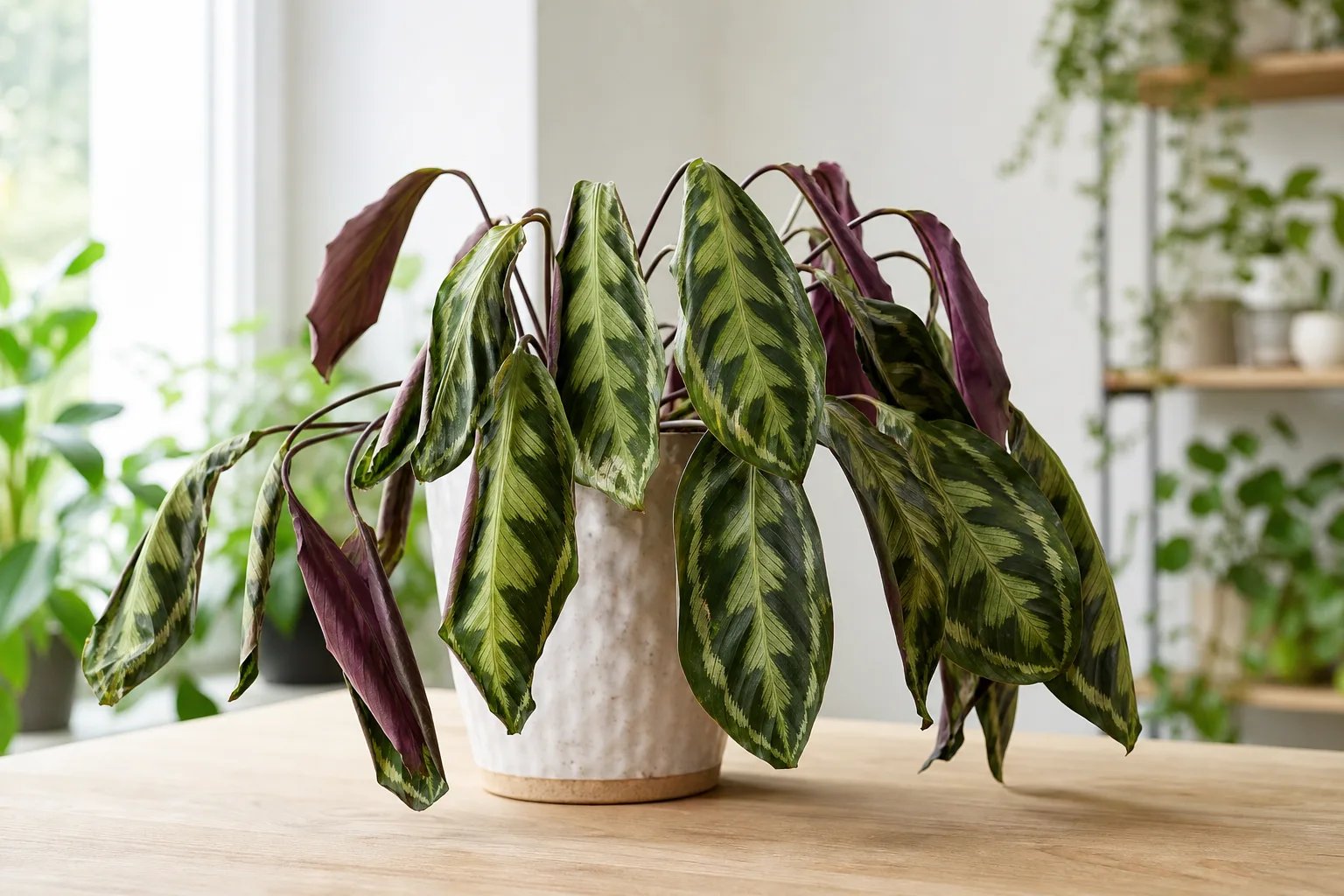
Drooping Leaves on Calathea: Causes, Checks & Fixes
This guide covers drooping leaves on Calathea. See also the general Drooping Leaves guide, watering, and light pages for this plant.
Drooping Leaves on Calathea: Causes, Checks & Fixes
Quick answer
Drooping on Calathea (Calathea / Goeppertia prayer plants) splits into two very different stories. Evening upward folding through nyctinasty is normal Marantaceae behavior-leaves rise at dusk like hands in prayer and lower again by mid-morning. Daytime limp hang that stays flat or floppy through noon usually signals stress: oversaturated roots, drought, dry winter air, cold drafts, or recent relocation shock.
First step: look at the plant at midday, then push your finger into the top inch of mix and lift the pot. Leaves open and upright by late morning with evenly moist soil? You are probably seeing healthy prayer-plant rhythm, not a treatment problem. Leaves still limp at noon on heavy wet soil mean stop watering and check crown firmness before adding more water. A light, dry pot with curled-then-droopy blades needs a measured soak-not a humidity fix.
For genus watering rhythm and the top-inch dry test, see Calathea watering. For wet-soil collapse, see overwatering and root rot. For dry-soil flop, see underwatering. For limp unfurling with adequate moisture, see low humidity.
Normal evening drooping vs. stress drooping
Calathea belongs to the prayer-plant family (Marantaceae). Many species fold leaves upward at night via nyctinasty-specialized cells at the leaf base (pulvini) shift water pressure as light fades, lifting blades into a vertical “prayer” posture. At sunrise the process reverses and leaves return to their daytime angle.
That evening silhouette often alarms new owners because it looks droopy compared with midday. The diagnostic shortcut is time of day:
- Normal: Leaves fold or angle upward after dusk; by late morning they are open, flat or slightly angled, and feel springy when brushed.
- Stress: Leaves stay limp and hanging through midday, sometimes with yellowing, brown crispy edges, or a crown that feels soft.
- Early warning: A Calathea that stops the nightly prayer movement while soil and light seem unchanged often lost turgor before obvious limpness appears-recheck moisture, humidity, and drafts.
Do not mist, repot, or fertilize a plant that only looks “droopy” at 8 p.m. Recheck at noon first.
What drooping looks like on Calathea
Healthy Calathea foliage sits on thin petioles with bold pattern contrast and supple blades. Drooping changes that profile in ways that narrow the cause.
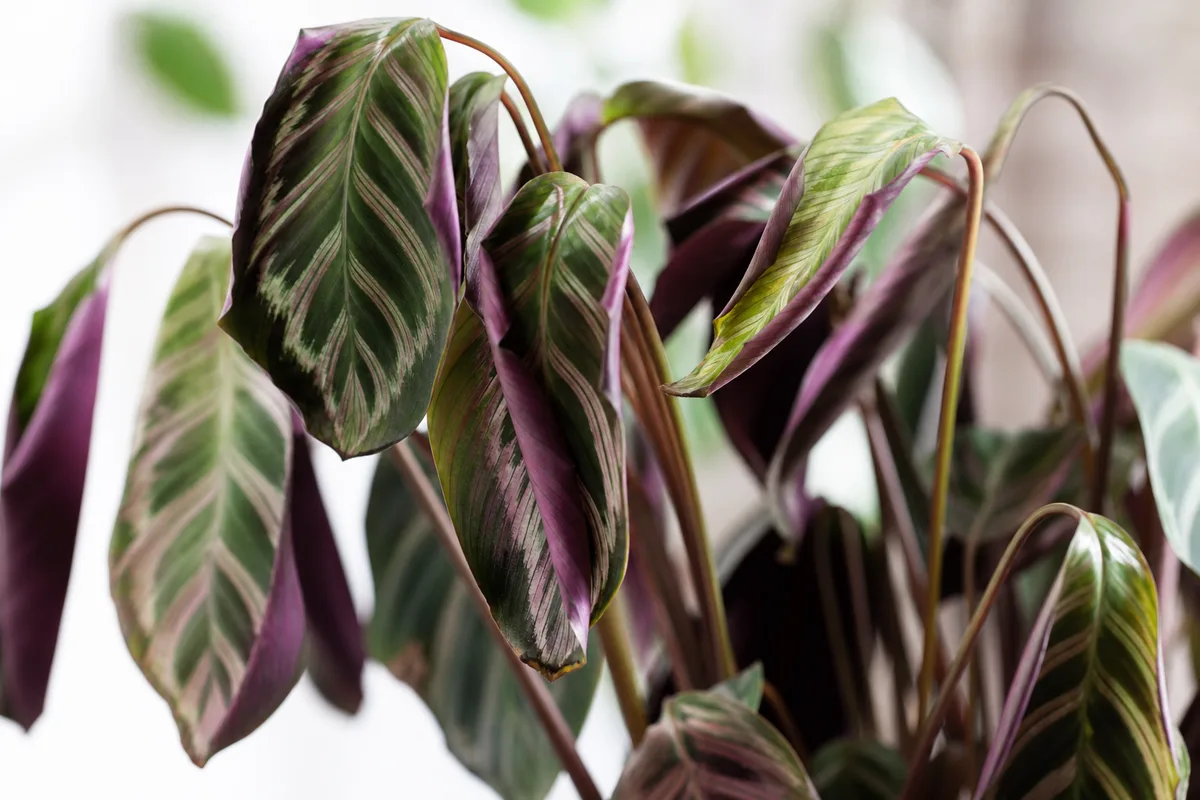
Drooping Leaves symptoms on Calathea - compare with healthy tissue on the same plant.
Evening prayer-fold (normal nyctinasty). Blades angle upward or press together vertically after dark. Stems stay firm. Soil moisture is typical for your routine. By morning, leaves lower to their usual daytime position. No yellowing rush, no sour soil smell.
Wet-soil daytime droop. Lower leaves hang limp while mix stays dark, cool, and heavy for many days. Yellowing often starts on bottom leaves. Pink or white variegation may dull. Fungus gnats may hover near the surface. Crown base can soften if rot advances. This pattern overlaps overwatering and root rot-the leaves droop because damaged roots cannot move water even when the pot is full.
Dry-soil droop. Leaves curl inward at the margins first, then flop limp on a lightweight pot. Surface mix is pale and crumbly. Blades feel thinner but not mushy. Often follows a missed watering, a bright window that dried the pot fast, or winter heat pulling moisture from small nursery pots. See underwatering for the soak-and-drain branch.
Low-humidity droop. Multiple leaves look limp or newly unfurling spears stall half-open while soil moisture is adequate-not soggy. Margins may crisp even when you water correctly. Common in heated rooms where RH drops below 50%. Differs from thirst because the pot still feels moderately heavy. See low humidity.
Cold-draft droop. Sudden limpness after an AC vent, open winter window, or placement near a door. NC State Extension notes that exposure to cold temperatures can cause drooping leaves on Goeppertia species. Leaves may darken or feel cool to the touch. Often recovers within days once warmth and stable air return-unless tissue froze.
Relocation shock. Drooping within the first week after a room change, repot, or shop-to-home move-even when care looks correct. Calathea dislikes sudden environmental shifts. Hold one variable steady and wait before stacking fixes.
Pest-related limpness. Fine webbing, stippling, or dusty undersides from spider mites weaken foliage in dry-canopy conditions. Less common than water or humidity stress but worth ruling out if droop persists despite correct moisture.
Why Calathea leaves droop
Thin Marantaceae leaves transpire quickly from humid rainforest understory origins. They show water and air stress as angle changes and limp hang faster than thick-leaved succulents. Ranked causes for daytime droop:
Overwatering and root decline. Saturated mix drives out oxygen; decaying roots cannot absorb water. Owners see limp leaves and add more water-a classic trap on Calathea. Heavy nursery peat, cachepots without drainage, and calendar watering in cool rooms keep roots wet too long.
Underwatering. Fine root hairs die when mix dries completely. Even a later deep watering cannot restore turgor instantly. Leaf curl often precedes full flop.
Low humidity. RHS guidance lists high humidity as a core Calathea need; dry winter air pulls moisture from leaf edges and can leave blades limp despite moist soil.
Cold drafts and temperature swings. Goeppertia species prefer warm stable conditions roughly 65–75°F with good ventilation and no sudden changes.
Insufficient light weakening stems. Very dim rooms produce soft, stretched growth that droops even when watered correctly-though etiolation looks different from acute flop; see not enough light if petioles stretch without limp collapse.
Normal nyctinasty mistaken for illness. Not a cause to fix-only a pattern to recognize before treating.
Lookalike symptoms to rule out
| What you see | More likely cause | Check next |
|---|---|---|
| Leaves fold upward after dark; open by mid-morning | Normal nyctinasty | No action-recheck at noon tomorrow |
| Limp lower leaves, wet heavy soil, yellow bottom leaves | Overwatering / root rot | Stop water; inspect roots |
| Dry surface, light pot, inward curl then flop | Underwatering | Soak and drain |
| Limp unfurling, moist soil, RH below 50%, crisp margins | Low humidity | Hygrometer + humidifier |
| Sudden flop after vent blast or cold window | Cold draft / chilling | Move to stable warmth |
| Acute whole-plant collapse, soft crown on wet soil | Wilting from root failure | Urgent root inspection |
| Fine webbing on undersides | Spider mites | Rinse + treat; raise humidity |
Drooping vs. wilting on the same genus: This page covers changed hang angle-including normal evening fold and gradual multi-leaf limpness. Wilting covers acute turgor collapse, especially when the crown softens on wet soil. Cross-link both before Calathea repotting guide.
How to confirm the cause
Work through these checks in order. The goal is one confirmed branch before you change watering, humidity, or soil.
- Time-of-day check. Photograph the plant at 8 p.m. and again at noon the next day. Full recovery by late morning strongly suggests nyctinasty. Persistent midday limpness confirms stress droop.
- Top-inch moisture. Insert a finger to the first knuckle. Damp or wet with limp leaves suggests root stress-not thirst. Just-dry at the top inch on a light pot suggests underwatering per Calathea watering guidance.
- Pot weight. Lift the pot. Heavy and cool with limp foliage equals oversaturated mix or dead roots. Light with flop equals dry.
- Leaf pattern. Yellowing from the bottom up on wet soil points to root decline. Even limpness across all leaves on dry soil points to drought. Stuck half-unfurled spears with moist soil point to humidity.
- Crown feel. Press the stem cluster base gently. Firm crown with limp outer leaves is more recoverable. Soft, dark, or collapsing crown on wet mix means escalate to root rot.
- Smell and drainage. Sour odor, water sitting in a cachepot for days, or mix wet a week after watering confirms chronic overwatering habitat.
- Humidity and airflow. Hygrometer beside the canopy: sustained readings below 50% with limp new growth support a humidity branch. Hot or cold moving air on leaves supports draft stress.
- Recent history. Repot within two weeks, new window placement, vacation dry spell, or heater season start narrows cause quickly.
Confirmed nyctinasty: evening fold only, midday open leaves, typical soil moisture, firm crown. Confirmed wet-soil droop: moist mix, yellow lower leaves, mushy roots, or sour smell. Confirmed dry-soil droop: dry top inch, light pot, inward curl. Confirmed humidity droop: adequate moisture, low RH, crisp margins or stuck unfurling.
First fix for Calathea
If leaves are open and firm by noon, do nothing today-you are likely seeing healthy prayer-plant movement.
If leaves stay limp through midday, match the first fix to soil moisture-never guess from leaf angle alone.
Wet, heavy soil branch: Stop watering immediately. Empty saucers and cachepots. Move to Calathea light guide if the plant sits in deep shade-slow evaporation worsens wet soil. Do not fertilize. If limpness continues after the top inch dries, slide the plant out and inspect roots. Trim mushy tissue, repot into airy mix only if rot is confirmed-see root rot.
Dry, light pot branch: Water thoroughly with room-temperature filtered or rainwater until excess drains, then empty the saucer. Do not splash leaves repeatedly. Wait 24 hours before any other intervention.
Adequate moisture, low RH branch: Run a humidifier within 3–5 feet until canopy-level readings hold 50–70% before adjusting watering again. See low humidity.
Cold-draft branch: Move away from vents, doors, and cold window panes. Hold stable warmth in the 65–75°F band and avoid further moves for two weeks.
Relocation shock branch: Hold light, water, and humidity steady. No repot, prune, or feed for at least ten days unless wet rot is confirmed.
Make one correction, then watch the next rolled leaf and noon leaf angle for seven to ten days.
Step-by-step recovery by cause
Overwatering and root stress
Pause water until the top inch dries. Improve airflow and light modestly. When roots are firm and new spears appear, resume watering when the top inch feels just barely dry-never on a fixed calendar. Recovery often shows stable new growth within two to four weeks after root damage is halted; yellowed lower leaves may not green up again.
Underwatering
Soak from top or bottom until the full root ball rewets, then drain fully. A severely dry peat block may need two short soak cycles twenty minutes apart. Perk often begins within hours; full turgor on older leaves may take one to two days.
Low humidity
Add a humidifier first-not misting alone. Grouping with other plants helps marginally. Expect the next unfurling leaf to open cleanly within one to two weeks when RH holds in range.
Cold draft
Relocate once, then wait. Minor chilling injury clears as new growth emerges over one to two weeks. Mushy frozen tissue must be trimmed-those blades will not recover.
Relocation shock
Minimize further changes. Consistent evenly moist growing-season watering without saturation supports re-establishment over two to three weeks.
Recovery timeline
| Cause | First sign of improvement | Full stabilization (typical) |
|---|---|---|
| Mild underwatering | Firmer leaves within hours after soak | 1–3 days |
| Low humidity | Next leaf unfurls without crisp edges | 1–2 weeks |
| Overwatering (no rot) | Mix dries; new spear holds upright | 2–3 weeks |
| Root rot (trimmed) | Firm crown; new rolled leaf | 3–6 weeks |
| Cold draft | No further darkening; new growth | 1–2 weeks |
| Relocation shock | Prayer movement returns; stable new leaf | 2–3 weeks |
Judge success by new growth and noon leaf posture, not by old damaged blades re-firming.
What not to do
Do not fertilize a drooping Calathea before confirming soil moisture and crown firmness. Do not repot, heavily prune, or apply pesticide on the same day you change watering or humidity-stacking shocks obscures which fix worked. Do not add water to a heavy, wet, limp pot because the leaves “look thirsty.” Do not panic-treat normal evening prayer-fold with extra water or mist. Do not move the plant repeatedly while it is stressed-one placement correction per week maximum.
How to prevent drooping leaves next time
- Learn nyctinasty rhythm so evening fold does not trigger unnecessary watering.
- Water when the top inch feels just barely dry, keeping compost evenly moist in the growing season without constant sogginess-details on Calathea watering.
- Hold 50–70% RH at canopy level in heated or air-conditioned rooms.
- Avoid drafts and keep temperatures in the 65–75°F range.
- Use drainage holes and empty saucers within thirty minutes of watering.
- Inspect weekly at midday: soil moisture, new spear angle, and hygrometer reading beat reactive crisis fixes.
When to worry
Escalate immediately if the crown feels soft on wet soil, roots are brown and mushy, soil smells sour, or collapse happened within days while mix stayed saturated-open root rot. Treat sudden whole-plant flop after known freezing exposure as tissue-loss event, not a watering tweak.
Evening-only folding with firm stems and healthy new growth is not a worry signal. Slow improvement after one correct fix is normal; stacking three fixes because leaves still look imperfect usually makes things worse.
Calathea care cross-check
| Care factor | Healthy target | Drooping link |
|---|---|---|
| Watering | Top inch just dry before rewatering | Wet vs dry droop branches |
| Humidity | 50–70% RH at canopy | Limp unfurling on moist soil |
| Temperature | 65–75°F, no drafts | Sudden cold flop |
| Light | Bright indirect, no direct sun | Weak stretch in dim rooms |
| Soil | Moist, well-drained, never soggy | Root-decline limp hang |
| Prayer movement | Folds at night, opens by noon | Absent movement = early stress |
Related Calathea problems
- Wilting - acute turgor collapse vs. gradual droop
- Overwatering - wet-soil limp hang
- Root rot - soft crown escalation
- Underwatering - dry-soil curl then flop
- Low humidity - limp unfurling with adequate moisture
- Calathea watering - top-inch dry test and seasonal rhythm
- Calathea overview - genus hub
When to use this page vs other Calathea guides
- Calathea watering guide - Use for routine moisture checks before assuming drooping leaves is the main issue.
- Calathea problems hub - Browse all 16 common issues on this species.
- Underwatering on Calathea - Different entry point when symptoms overlap with drooping leaves.
- Overwatering on Calathea - Different entry point when symptoms overlap with drooping leaves.
- Root Rot on Calathea - Different entry point when symptoms overlap with drooping leaves.