Best Soil for Calathea: Mix, Drainage & Repotting
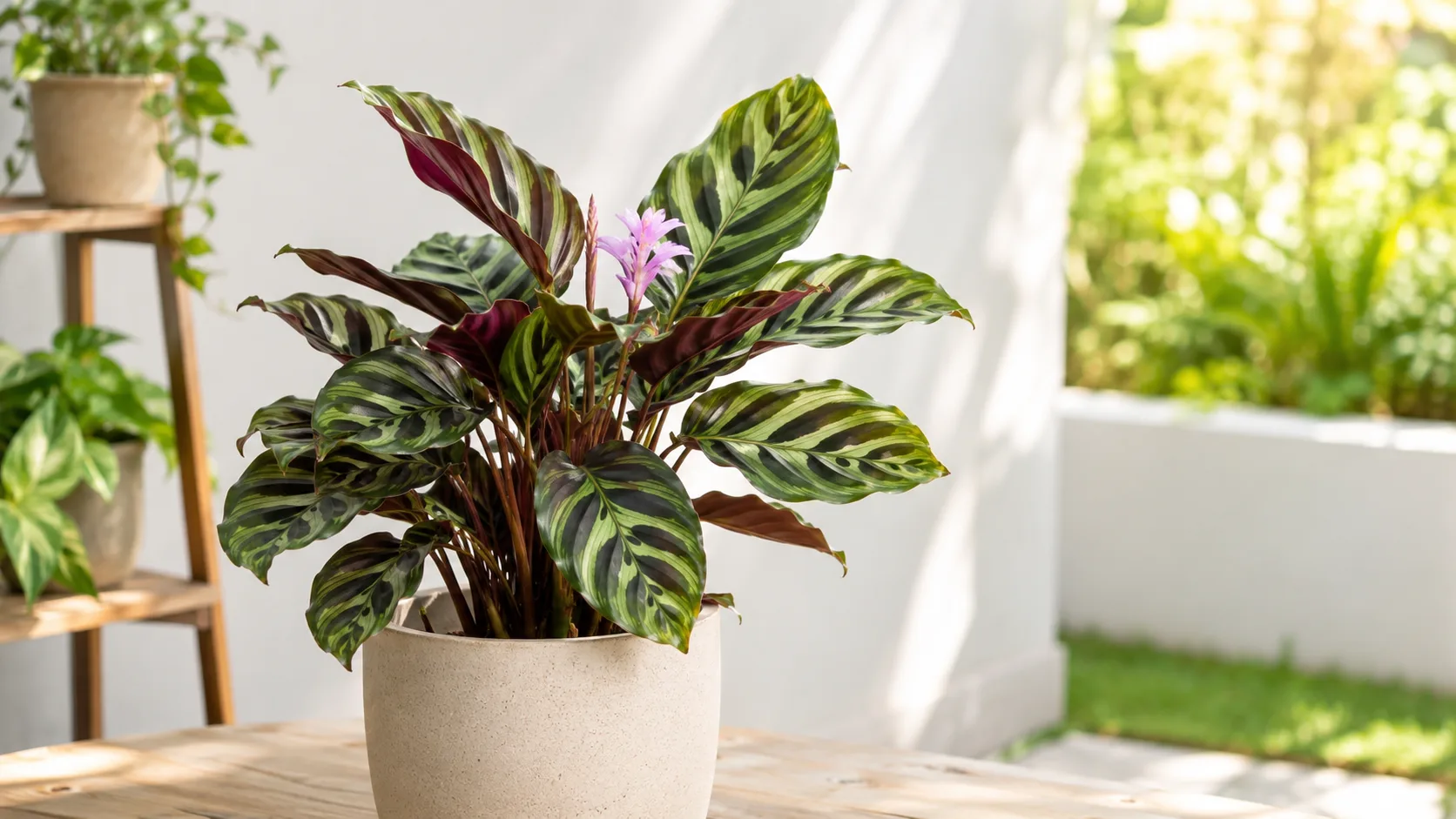
Best Soil for Calathea: Mix, Drainage & Repotting
Best Soil for Calathea: Mix, Drainage & Repotting
Calathea is not asking for “rich soil” in the way outdoor garden plants do. It wants a light, airy, moisture-retentive potting mix that drains fast enough to keep roots breathing but holds enough water that the plant is not swinging between bone-dry and waterlogged every few days. Get that balance wrong and the leaves will tell you long before the roots recover-curling, crisping, yellowing, and stalled growth are all common responses to a root zone that is either suffocating or drying out too sharply.
The best soil for Calathea is usually a peat-based or coco-coir-based mix amended with perlite, orchid bark, and sometimes a small amount of compost or worm castings. NC State Extension notes that Goeppertia ornata-the species many people know as pinstripe Calathea-grows best in moist, well-drained potting mix designed for African violets or a peat-based blend, with good drainage and consistent moisture rather than wet stagnation. That single sentence captures the whole challenge: Calathea wants moisture and oxygen at the same time, which is why standard bagged potting soil often fails without amendment.
What Calathea Soil Needs to Do
A Calathea potting mix has four jobs, and all four matter equally. It must hold the plant upright, retain moderate moisture between waterings, drain excess water quickly, and maintain open air pockets around fine, sensitive roots. When any one of those jobs breaks down, the plant shows stress on the foliage first-because Calathea leaves are dramatic signalers-even though the problem usually started underground days earlier.
Think of the mix as a sponge with holes, not a brick and not a swamp. After you water, excess should leave the pot within seconds through the drainage hole. What remains should feel evenly damp through the root zone, not wet on the bottom and dry on top. NC State Extension describes the ideal Calathea substrate as a moist, well-drained potting mix that holds onto moisture-exactly that dual requirement. If your mix behaves like mud after watering or like dust two days later, the recipe or the pot size needs adjustment before you chase fertilizer or humidity fixes.
Why Rainforest Roots Need a Special Balance
Calathea species evolved in the understory of tropical forests in Central and South America, where leaf litter, organic debris, and constant humidity create a substrate that is moist, airy, and rich in organic matter-but never waterlogged for long. Roots spread through a loose surface layer that drains quickly after rain while staying humid from the surrounding air. Indoor pots cannot replicate that environment perfectly, but a good mix gets close by combining moisture-holding organic material with drainage amendments that mimic the air gaps found in decomposed forest floor.
That native context explains why Calathea reacts badly to both extremes. Pure cactus mix dries too fast and forces the plant into repeated drought stress, which shows up as curling leaves and brown edges. Dense, unamended potting soil stays wet too long, reducing oxygen at the roots and inviting rot. The target is consistent light moisture-the top inch can dry slightly between waterings, but the deeper mix should never go fully dry for extended periods, and it should never sit saturated for days either. Consistency matters more than any single ingredient brand.
The Core Ingredients in a Good Calathea Mix
The easiest way to stop guessing is to think in functions, not product names. Every ingredient should earn its place by doing one job well: holding moisture, creating drainage, adding structure, or supplying slow organic nutrients. Once you understand those roles, adjusting a recipe for your home becomes straightforward instead of mystical.
Peat Moss or Coconut Coir as the Base
Sphagnum peat moss is the traditional base in Calathea mixes because it is lightweight, holds moisture evenly, and provides a familiar structure for fine roots. Peat rewets reliably when fresh and gives the mix a soft, open texture when blended with perlite and bark. The trade-off is acidity-peat can run quite acidic on its own-and environmental concerns around peat harvesting, which leads many growers toward coir.
Coconut coir is the most common peat alternative. It holds moisture well, rewets more easily than dry peat in some cases, and starts closer to neutral pH. Coir works especially well in homes where the mix dries quickly because coir retains water without feeling as dense as compost-heavy potting soil. Either peat or coir can serve as roughly 40–50% of a DIY mix by volume, depending on how fast your pots dry in your climate and how much bark or perlite you add.
Moisten dry peat or coir slightly before mixing. Dry peat can repel the first watering, creating a false impression of good drainage while the root ball inside stays dry. That “water runs down the sides” problem is common with Calathea in fresh peat-heavy mixes and is one reason new growers think they are underwatering on Calathea when they are actually failing to saturate the root zone.
Perlite and Pumice for Drainage and Air
Perlite and pumice are non-negotiable in most Calathea recipes unless you are using a pre-made tropical mix that already contains generous aeration material. Perlite is expanded volcanic glass-those white specks in potting mix-and its job is to create permanent air pockets that keep the root zone from compacting into an oxygen-starved mass. Pumice performs a similar function with slightly more weight, which can help stabilize tall Calathea in shallow pots.
For a standard indoor Calathea, perlite or pumice should make up roughly 20–30% of the mix by volume. If your home is humid, your pots are plastic, or you tend to water heavily, push toward the higher end. If your home is dry and heated, you might use slightly less aeration material and compensate with a bit more coir-but never drop aeration so low that the mix feels dense and sticky when squeezed.
When to Add Orchid Bark
Fine orchid bark or pine bark fines add chunkier structure that improves long-term drainage as the mix ages. Peat and coir break down over months, slowly compacting; bark slows that process by keeping larger pore spaces open. Bark also mimics the forest-floor debris Calathea roots encounter naturally. A useful proportion is 10–20% bark by volume in a DIY blend.
Be cautious with sphagnum moss as a primary ingredient. Long-fiber sphagnum holds a lot of water and can stay wetter than beginners expect, especially in deep pots or self-watering setups. A small amount mixed into a bark-perlite blend is fine; using sphagnum as the dominant base is a common path to root rot on Calathea unless you are experienced with how it behaves in your specific pots.
Best DIY Calathea Soil Mix Recipes
No single recipe is perfect for every home, but a few starting points cover most situations. Mix by volume using a scoop or cup, not by weight. Pre-moisten the base, blend thoroughly in a clean tub, and run the drainage test below before potting a prized plant.
Simple Starter Mix for Most Homes
This is the mix I would start with if I were setting up a new Calathea today:
- 2 parts peat moss or coconut coir
- 1 part perlite or pumice
- 1 part fine orchid bark or pine bark fines
- A small handful of worm castings or compost per quart of mix (optional but helpful)
That ratio-essentially 50% base, 25% perlite, 25% bark, plus a light nutrient boost-matches what multiple experienced growers and references converge on. NC State Extension recommends a peat-based or African violet mix with good drainage for Goeppertia ornata. The goal is not precision to the gram; the goal is a mix that feels springy, drains in a few seconds, and stays lightly moist for several days in your pot.
If you want a slightly simpler version with fewer ingredients, 2 parts peat or coir plus 1 part perlite is a legitimate minimum that many growers use successfully. Add bark when you notice the mix compacting within a few months or when water starts sitting on the surface before soaking in.
Adjusting the Recipe for Dry or Humid Conditions
Your home environment should change the recipe, not just the watering calendar. In dry, heated rooms where pots lose moisture quickly, increase the coir or peat fraction slightly-perhaps to 55% base-and keep perlite around 25% with bark at 20%. You are giving the mix a little more water-holding capacity without sacrificing drainage entirely.
In humid homes, poorly ventilated rooms, or plastic pots that dry slowly, shift the other direction: keep the base at 40%, push perlite to 30%, and use 20–30% bark. More aeration material compensates for slower evaporation and reduces the time roots spend in low-oxygen conditions. If you are recovering from root rot, use an even airier rescue mix: 2 parts perlite, 1 part bark, 1 part coir, with no heavy compost until the plant re-establishes.
Can You Use Regular Potting Soil for Calathea?
Not on its own. Regular all-purpose potting soil is usually too dense for Calathea roots in indoor containers. Most bagged mixes are formulated for a wide range of houseplants and outdoor containers, which means they often contain fine peat, composted forest products, and wetting agents that hold water longer than Calathea prefers-especially in plastic pots without strong airflow.
That does not mean you must throw away the bag on your shelf. You can lighten regular potting soil by blending it with equal parts perlite and a handful of bark. A practical shortcut is 1 part potting soil, 1 part perlite, 1 part orchid bark. Test drainage before using it. If water still sits on top for more than ten seconds after a full watering, add more perlite or bark until the mix passes the timing test described below.
Cactus or succulent mix is the opposite problem: too fast-draining and too lean for Calathea on its own. If that is what you have, blend it with coir or peat at roughly 1 part cactus mix to 2 parts coir, then add perlite until the texture feels open. Garden soil should never go into a Calathea pot indoors-it compacts, harbors pests and pathogens, and behaves unpredictably in containers.
Store-Bought Options That Actually Work
If mixing is not your thing, look for African violet potting mix, tropical houseplant mix, or aroid blend products. NC State Extension specifically mentions African violet or peat-based mix for Goeppertia ornata, which reflects how similar these plants’ root needs are. Even with a specialty bag, inspect the texture: if it looks dark, fine, and dense with only a few perlite flecks, lighten it with 30–40% extra perlite or bark before potting.
Choose reputable brands with consistent peat or coir quality over discount mixes that use coarse, uneven peat and break down within a few months. Fresh mix should smell earthy, not sour or chemical. If a bag has been sitting open and dried into a brick, rehydrate it thoroughly before use or buy fresh stock-hydrophobic old mix causes more Calathea problems than most growers realize.
Soil pH, Minerals, and Water Quality
Calathea tolerates a slightly acidic to neutral pH range, generally between 5.5 and 7.5, with many growers targeting roughly 6.0 to 7.0 for indoor pots. Most quality peat-based and coir-based potting mixes already fall within or near this range, so exact pH testing is optional for most hobbyists unless the plant repeatedly declines despite good light and watering.
What matters more in daily practice is mineral sensitivity. Calathea leaves often react to fluoride, chlorine, and salt buildup in tap water and fertilizer with brown tips and edges that look like a humidity problem but are actually root-zone or water-quality stress. If you see crusty white deposits on the soil surface, leaf margins burning despite adequate humidity, or slowed growth after regular feeding, flush the pot by running water through until it drains freely, or refresh the mix at Calathea repotting guide rather than adding more fertilizer.
Use filtered, distilled, or rainwater if your tap water is hard or heavily chlorinated. Letting tap water sit overnight helps chlorine dissipate but does not remove minerals. Soil choice interacts with water quality: a dense mix that stays wet concentrates salts near the roots faster than an airy mix that flushes more cleanly with each watering.
How to Test Drainage Before You Pot
Before you commit a Calathea to a new mix, run a quick drainage test that takes less than five minutes and prevents months of guessing. Fill a small nursery pot with your moistened blend, water it thoroughly as you would the plant, and time how long water takes to run from the drainage hole.
A good Calathea mix drains in roughly 3 to 8 seconds after a full watering. If water pools on the surface for more than ten seconds or drips sluggishly, the mix is too dense-add perlite or bark and test again. If it drains in under two seconds and the mix feels almost gritty, it may dry too fast for Calathea; increase the coir or peat fraction slightly. This test matters more than any ingredient label because your home’s humidity, pot material, and watering style all change how the same recipe behaves.
Also squeeze a moist handful. It should hold together briefly and then crumble apart. A sticky ball that stays clumped means too little aeration. A mix that will not hold together at all means too much perlite for Calathea’s moisture needs unless you water very frequently.
The One-Minute Drainage Check
Once the plant is potted, you can monitor drainage in the living pot without repotting. After watering until runoff appears, lift the pot and check the saucer within a minute-water should arrive promptly, not trickle out ten minutes later. Stick a finger or dry chopstick into the drainage hole area after watering; it should feel moist but not dripping wet. If the bottom stays soggy while the top dries, the mix has stratified or compacted, and refresh is due even if the plant has not outgrown the pot.
Watch how many days the pot takes to reach the “ready to water” stage where the top inch is dry but lower mix is still slightly cool and damp. For most indoor Calatheas in a correctly sized pot, that cycle is roughly 5 to 10 days depending on season. If the pot stays wet for two weeks in normal light, the mix, pot size, or watering volume-not the plant’s thirst-is the problem.
Choosing the Right Pot for Calathea
Soil only works when the pot cooperates. Drainage holes are non-negotiable for long-term Calathea care. No mix, however perfect, can compensate for a pot that traps water at the bottom. Decorative cachepots are fine only if the inner nursery pot can drain freely and you empty excess runoff after every watering.
Size matters as much as holes. Choose a pot only 1–2 inches (2.5–5 cm) wider than the current root ball when repotting. Calathea prefers being slightly snug rather than swimming in empty wet mix. An oversized pot holds moisture around unused soil, keeping the root zone oxygen-poor while the outer mix stays wet and the inner root ball dries unevenly. Depth should match the root habit: Calathea has a reasonably deep rhizome system, so a shallow bowl-shaped pot often causes faster drying and instability for taller varieties.
Terracotta dries faster and can help heavy-handed waterers; plastic retains moisture longer and suits dry homes. Glazed ceramic behaves somewhere in between. Match pot material to your mix and habits rather than to aesthetics alone. If you use terracotta in a dry room, you may need slightly more coir in the mix; if you use plastic in a humid room, lean airier.
When to Repot Calathea
Calathea does not need annual repotting just because the calendar changed. Repot when there is a clear root-zone reason: roots circling out of drainage holes, the mix drying out in under three days because the root mass fills the pot, visible breakdown of the soil (compaction, sour smell, white mold on the surface that returns after scraping), or recovery from root rot requiring fresh airy mix.
Refresh the soil every 2 to 3 years even if the plant has not outgrown the pot, because peat and coir decompose, bark breaks down, and the structure that kept roots breathing slowly collapses. Spring and early summer-when the plant is entering active growth-are the best repotting windows. Avoid repotting a stressed, drooping plant unless the soil itself is clearly the cause (sour smell, constant wetness, visible rot). Fix the immediate crisis first, then repot when stable.
Step-by-Step Repotting Without Shock
Water the Calathea 24 hours before repotting so the root ball holds together and roots are less brittle. Choose a pot one size up with drainage holes. Pre-moisten your new mix and run the drainage test. Gently slide the plant out, inspect roots, and trim any brown, mushy, or hollow sections with clean scissors-healthy Calathea roots should be firm and white or pale tan.
Loosen the outer edge of the old root ball with your fingers rather than stripping all old soil away. Removing every particle shocks fine roots and extends recovery time. Place a layer of new mix in the bottom, position the plant so the rhizome sits at the same depth it was before (never bury the crown deeper), and fill around the sides with fresh mix. Tap the pot gently to settle; do not pack the mix tightly.
Water lightly to settle the soil, then place the plant in bright, indirect light with stable humidity for the first week. Skip fertilizer for 4 to 6 weeks after repotting-the fresh mix and worm castings usually provide enough nutrients, and roots need time to heal before feeding. Some leaf curl or minor droop in the first week is normal; persistent decline usually means the mix is too wet, the pot is too large, or damaged roots were not trimmed enough.
Common Calathea Soil Mistakes to Avoid
The most repeated error is using dense, unamended potting soil in a large decorative pot with no drainage strategy. That combination suffocates roots slowly, and Calathea responds with yellow leaves that send growers toward more watering-the opposite of what the plant needs.
Rocks or gravel at the bottom of the pot do not improve drainage; they raise the water table and reduce usable root space. Proper drainage comes from airy mix and a drainage hole, not from a reservoir of stones. Similarly, oversized pots are not generous-they are risky. Extra soil holds extra water without extra roots to use it.
Another common mistake is repotting into wet, cold soil immediately after buying the plant. Quarantine new Calatheas, learn their drying rhythm in the existing mix, and repot only if the current soil is clearly failing or the plant is root-bound. Stacking repotting, fertilizing, and location changes on day one creates multiple stress variables you cannot diagnose.
Watch for hydrophobic, compacted old mix that repels water. If water runs down the inside wall of the pot while the center stays dry, top-dressing will not fix it-repot into fresh, pre-moistened mix. Finally, do not assume a self-watering pot solves Calathea care. Self-watering systems can work with an airy mix and healthy roots, but they fail quickly when paired with dense soil or a plant already suffering from rot.
Conclusion
The best soil for Calathea is a balanced, airy, peat- or coir-based mix that holds light moisture without staying swampy-typically built from roughly half base material, a quarter perlite or pumice, and a quarter fine bark, adjusted for your home’s humidity and your pot material. Standard potting soil and pure cactus mix both miss the mark without amendment, but either can be adapted if you prioritize drainage and test the blend before potting.
Run the drainage timing test, match pot size to the root ball, repot in spring when the mix breaks down or roots outgrow the container, and treat water quality as part of soil performance-not a separate issue. Calathea will never be the easiest houseplant, but a root zone that breathes and stays evenly moist removes the single most common reason these plants struggle indoors. Get the mix right, and light, humidity, and watering become much easier to calibrate.
When to use this page vs other Calathea guides
- Calathea overview - Start here for whole-plant context before deep-diving this topic.
- Calathea problems hub - Jump to symptom-specific fix guides when this care topic does not resolve the issue.
- Root Rot on Calathea - Escalate here when soil adjustments are not enough.
- Mold on Soil on Calathea - Escalate here when soil adjustments are not enough.
Related Calathea guides
- Calathea overview
- Calathea watering
- Calathea light
- Calathea propagation
- Calathea fertilizer
- Calathea repotting
- Root Rot on Calathea
- Mold on Soil on Calathea
- Calathea problems
Related tool
Try the Soil Mix Calculator with calathea pre-selected to estimate needs for your setup.