Underwatering on Calathea: Causes, Checks & Fixes
Quick answer
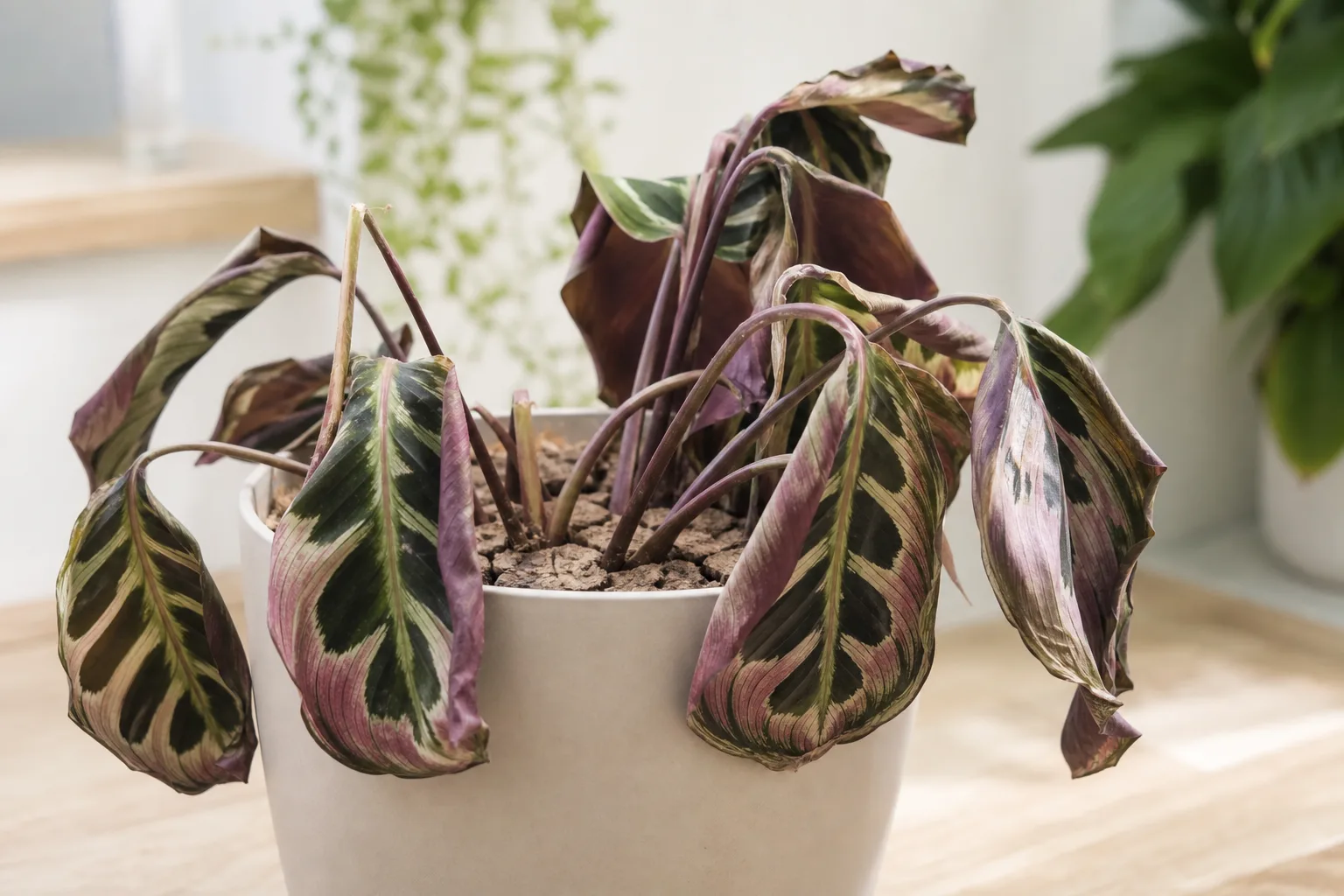
Underwatering on Calathea shows as a light pot, dry mix several centimetres down, and leaves that curl or droop without firm new growth. First step: bottom-water in room-temperature filtered or rainwater until the mix is evenly moist, then drain fully.
Underwatering on Calathea: Causes, Checks & Fixes
This guide covers underwatering on Calathea. See also the general Underwatering guide, watering, and light pages for this plant.
Underwatering on Calathea: Causes, Checks & Fixes
Quick answer
Calathea is a prayer plant that evolved on humid forest floors-it wants evenly moist soil, not cycles of flood and drought. When the root ball dries too far, large patterned leaves lose turgor first: they droop, curl inward, or fail to open fully during the day even though nyctinasty still makes them fold at night.
First step: bottom-water the pot in room-temperature filtered or rainwater until the mix is evenly moist throughout, then let it drain completely. Do not pour daily sips from the top while the core stays dry-that is the most common reason underwatered Calathea never fully recovers.
What underwatering looks like on Calathea
Early drought stress on Calathea is easy to miss because the plant can look fine in the morning and wilt by afternoon. Watch for these patterns:
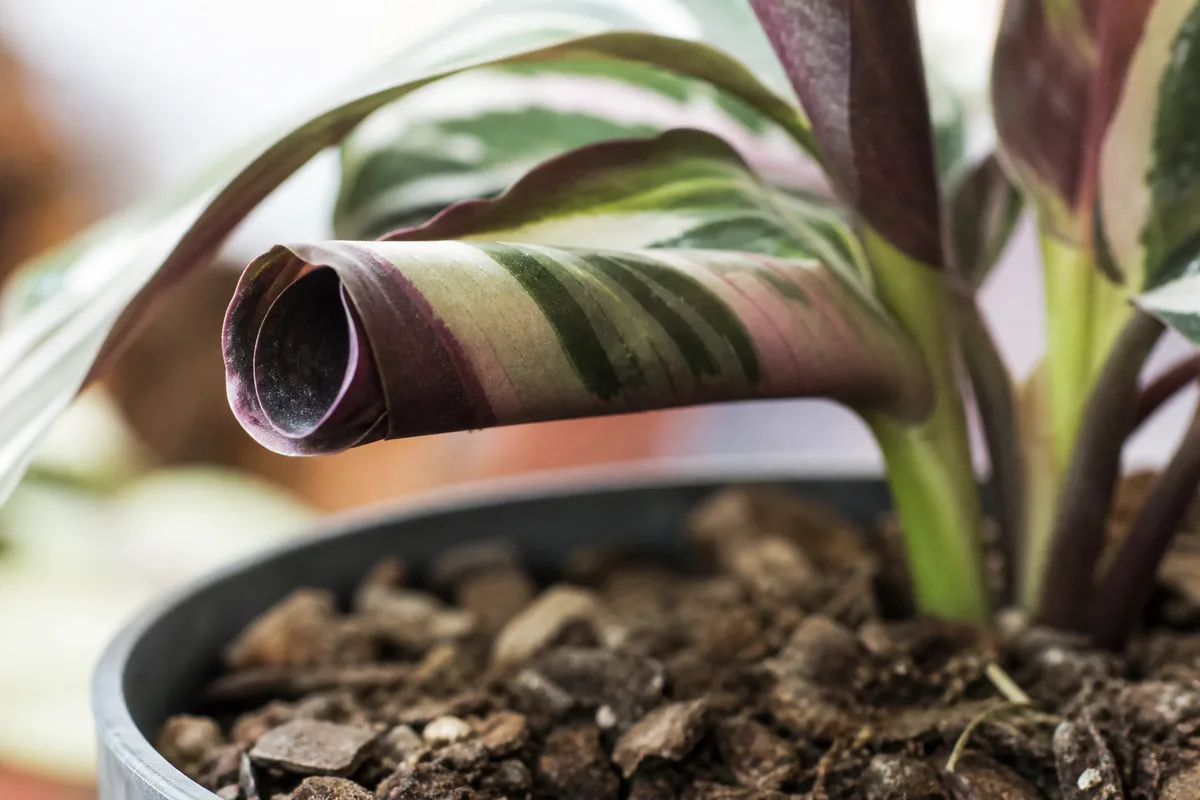
Inward-rolling patterned leaf and dry mix at depth - a light pot and limp daytime posture confirm drought, not overwatering.
- Inward leaf curl - leaves roll into tight tubes to reduce water loss; on a thirsty Calathea the curl stays even in daytime light
- Drooping or limp stems - petioles lose stiffness and the plant looks collapsed rather than upright
- Dry, lightweight pot - the container feels much lighter than it does an hour after watering
- Soil pulling away from the pot wall - the mix shrinks when bone dry, and water runs down the gap without soaking the root ball
- Crispy brown edges on new damage - severe drought browns margins; older brown tips from tap water or low humidity may already be present
- Slow or stalled new leaves - unfurling leaves stick, tear, or stay small when roots cannot supply steady moisture
Unlike overwatering on Calathea, underwatered Calathea usually has dry mix at depth, firm pale roots if you inspect, and no sour smell from the pot. Yellow lower leaves with constantly wet soil point away from drought and toward root stress instead.
Why Calathea gets underwatered
Calathea belongs to Marantaceae-the prayer plant family-and shares the same moisture expectations as Maranta. In nature it grows on shaded tropical forest floors where soil stays damp and humidity stays high. Brooklyn Botanic Garden notes that Calatheas do not like to dry between waterings and that inconsistent watering produces more crispy leaves than most growers expect.
Several home-care habits push Calathea into chronic drought:
Watering on a calendar. A fixed weekly schedule ignores how fast your pot dries. Small pots in Calathea light guide, warm rooms, or near heating vents can need water every few days; the same plant in a cool shaded corner may need less. UF/IFAS recommends allowing the potting-media surface to dry slightly before watering while keeping the medium uniformly moist-not wet-for interiorscape Calathea.
Light sips instead of deep soaks. Pouring a cup on the surface while the root ball is dry often channels water down the pot sides. The top looks briefly damp; the centre stays dry. Missouri Botanical Garden warns that frequent small waterings can leave the top soggy and the bottom bone dry.
Hydrophobic peat mix. Calathea soil blends heavy in peat or coco coir can repel water once they have dried hard. Water runs through without rewetting fine roots-especially common after a vacation or a skipped watering week.
Fear of overwatering after past rot. Many growers swing too far the other way. Calathea does need drainage and should never sit in a full saucer, but letting the entire root ball go dry for days stresses the plant as much as chronic sogginess stresses roots.
Low humidity speeding water loss. UF/IFAS lists 40–60% relative humidity as the range where Calathea maintains appearance indoors. Below that, leaves transpire faster than roots can replace water, so the plant looks thirsty even when you watered recently. Dry air alone does not make the pot light-but it worsens curl and crisping when soil moisture slips.
Root-bound or undersized pots. A dense root ball in a small container dries out in a day or two during active spring and summer growth, especially when new leaves are unfurling.
How to confirm the cause
Work through these checks before you change anything else:
- Pot weight - Lift the pot. Very light means dry; heavy and cold means wet.
- Moisture at depth - Insert a finger 2–3 cm into the mix, or use a moisture meter partway down. Surface dampness with a light pot suggests dry core or hydrophobic mix.
- Leaf response test - If soil is dry, bottom-water thoroughly. Wilted leaves from drought often improve within hours once the root zone is rewetted-Calathea leaves should begin to unfurl the same day if roots are still healthy.
- Edge texture - Limp leaves with soft, unbrowned edges fit underwatering. Crispy brown margins on otherwise moist soil often implicate low humidity or fluoride in tap water more than drought alone.
- Smell and roots - If the pot is heavy, smells sour, or roots are brown and mushy when you tip the plant out, suspect overwatering or root pathogens-not underwatering. UF/IFAS lists wilted Calathea leaves as a symptom of drought stress or root pathogens; the soil moisture check separates the two.
- Recent care history - Travel, a new bright window, Calathea repotting guide into a smaller pot, or switching to a lighter mix all increase drying speed.
Confirmed underwatering requires dry mix at depth plus limp or curling leaves. Suspected underwatering with wet soil means look elsewhere first.
First fix for Calathea
Bottom-water the pot in room-temperature filtered, distilled, or rainwater until the mix is evenly moist, then drain all excess.
Set the nursery pot in a basin or sink with 2–5 cm of water. Leave it until the surface of the mix feels moist-often 20–45 minutes for a standard houseplant pot. Remove the pot, let it drain until the saucer stays empty, and do not leave the plant standing in water overnight.
Bottom watering helps rewet a dry root ball without flooding leaves, which matters on Calathea because fluoride in tap water can cause dead spots near leaf margins. Use water that has sat out overnight only if your tap is low in fluoride and chlorine; filtered or rainwater is safer for this genus.
Do not fertilize, repot, or prune heavily on day one. One thorough rehydration tells you whether the problem was simple drought.
Step-by-step recovery
After the first bottom-water:
- Repeat only when the top 2 cm of mix begins to dry - match the rhythm in your Calathea care guide rather than watering daily out of panic.
- If water runs straight through, soak the pot: bottom-water twice in one session, or top-water slowly in stages while the mix accepts moisture.
- Move the plant out of hot direct sun while it recovers. Calathea wants bright indirect light; extra heat dries stressed pots faster.
- Raise humidity to 50–70% with a humidifier if edges crisp while soil stays moist. Grouping plants helps slightly; misting alone is unreliable for this genus.
- Trim only fully brown leaf sections once turgor returns. Do not cut green tissue hoping to force new growth.
- Inspect roots if the plant wilts again within days of a good soak - repeated collapse with wet soil suggests rot or damaged roots, not ongoing drought.
Hold fertilizer until new growth looks firm for at least two weeks. Feeding drought-stressed roots can burn tender tissue.
Recovery timeline
Mild underwatering often shows visible improvement within a few hours to one day after a proper soak-leaves uncurl and stems stiffen. Moderate stress may take two to five days before new unfurling leaves look normal.
Brown or crispy edges on existing leaves will not revert to green; they are permanent damage. Judge recovery by upright posture, successful leaf unfurling, and fresh growth from the centre-not by old blemishes.
If the plant stays limp 48 hours after evenly moist soil, or new leaves emerge stunted and torn, fine roots may have died during the dry spell. That is slower to reverse and may require repotting into fresh mix after trimming dead roots-only if inspection confirms damage.
Lookalike symptoms to rule out
Overwatering and root rot on Calathea also cause drooping on Calathea-the leaves look equally sad. The difference is soil: wet, heavy mix, yellowing lower leaves, and mushy roots mean stop watering and inspect-not soak again.
Low humidity produces brown crispy edges and sometimes curl even when soil moisture is adequate. A humidifier response within days, without changing watering, points to air moisture-not drought.
Tap-water fluoride or chlorine damage browns leaf margins in a pattern that can resemble drought crisping. UF/IFAS identifies fluoride toxicity as a cause of dead spots near Calathea leaf margins. Switch water quality before assuming you are underwatering.
Normal nyctinasty - Calathea leaves fold upward at night and open by day. Night folding alone is not underwatering. Worry when leaves stay rolled all day or fail to lift in morning light.
Heat or cold stress near vents, radiators, or cold windows can wilt leaves without dry soil. Check placement and temperature (roughly 18–27°C / 65–80°F indoors) alongside moisture.
Mistakes to avoid
Do not drench daily after one dry spell-that swings Calathea into overwatering and root rot, which wilts the same way drought does.
Do not mist instead of watering soil. Roots need moisture in the mix; misting raises humidity briefly but does not rehydrate a dry root ball.
Do not assume drooping always means thirsty. Missouri Botanical Garden notes that wilted leaves can indicate soil that is too dry or too wet-watering a rotting plant makes decline worse.
Do not use cold tap water on a stressed Calathea. Room-temperature filtered or rainwater reduces shock and fluoride injury.
Do not repot on day one unless the mix has gone hydrophobic and will not accept water after two thorough soaks. Unnecessary repotting adds stress when simple rehydration would work.
How to prevent underwatering next time
Build a check habit tied to the pot, not the calendar:
- Feel the top 2 cm of mix every few days until you know your plant’s rhythm in its current spot
- Lift the pot before you water; light means drink, heavy means wait
- Water thoroughly when needed so moisture reaches the whole root zone, then empty the saucer
- Use filtered or rainwater to avoid edge burn that masks your moisture diagnosis
- Keep humidity near 50–70% so leaves lose water less aggressively between waterings
- Repot when root-bound in spring if the pot dries out in one or two days every cycle
- Adjust for season - active growth in warm months uses more water; winter slows uptake even though Calathea does not go fully dormant indoors
Brooklyn Botanic Garden recommends checking Calathea twice weekly until you learn its watering cycle. That frequency prevents both drought and the panic overwatering that often follows.
When to worry
Treat as urgent when:
- The plant collapses suddenly with dusty dry soil throughout the pot
- Leaves stay tightly rolled 24 hours after a confirmed thorough soak
- The plant perks up after watering, then wilts again within days-possible root death from earlier drought
- New leaves emerge torn, stuck, or fail to open while the centre looks weak
- Soil will not rewet after two bottom-water sessions-hydrophobic mix may need repotting
Calathea rarely dies from one missed watering if you catch it early. Repeated dry cycles, especially in low humidity, strip fine roots and make the plant vulnerable to rot when you finally soak it too often out of guilt.
If most of the crown is brown and soft, or roots are largely dead on inspection, recovery may not be realistic. A healthy division with intact roots is sometimes a better salvage path than saving a collapsed parent plant.
Conclusion
Underwatered Calathea tells you clearly once you read the pot: light weight, dry mix at depth, and leaves that curl or droop without a wet-soil explanation. Bottom-water with good-quality water, drain fully, and wait for unfurling before you change anything else. Match future watering to how fast your specific pot dries-not a generic schedule-and keep humidity steady so leaf curl reflects soil truth, not dry air alone.
When to use this page vs other Calathea guides
- Calathea watering guide - Use for routine moisture checks before assuming underwatering is the main issue.
- Calathea problems hub - Browse all 16 common issues on this species.
- Wilting on Calathea - Different entry point when symptoms overlap with underwatering.
- Brown Tips on Calathea - Different entry point when symptoms overlap with underwatering.
- Yellow Leaves on Calathea - Different entry point when symptoms overlap with underwatering.