Yellow Leaves on Calathea: Causes, Checks & Fixes
Quick answer
Yellow leaves on Calathea prayer plants most often trace to soil that stays wet too long, fluoride and minerals in tap water, or humidity below 50%-not a missing nutrient. First step: feel whether the top inch of mix is damp or dry, and note whether only one bottom leaf is fading while new center growth stays green.
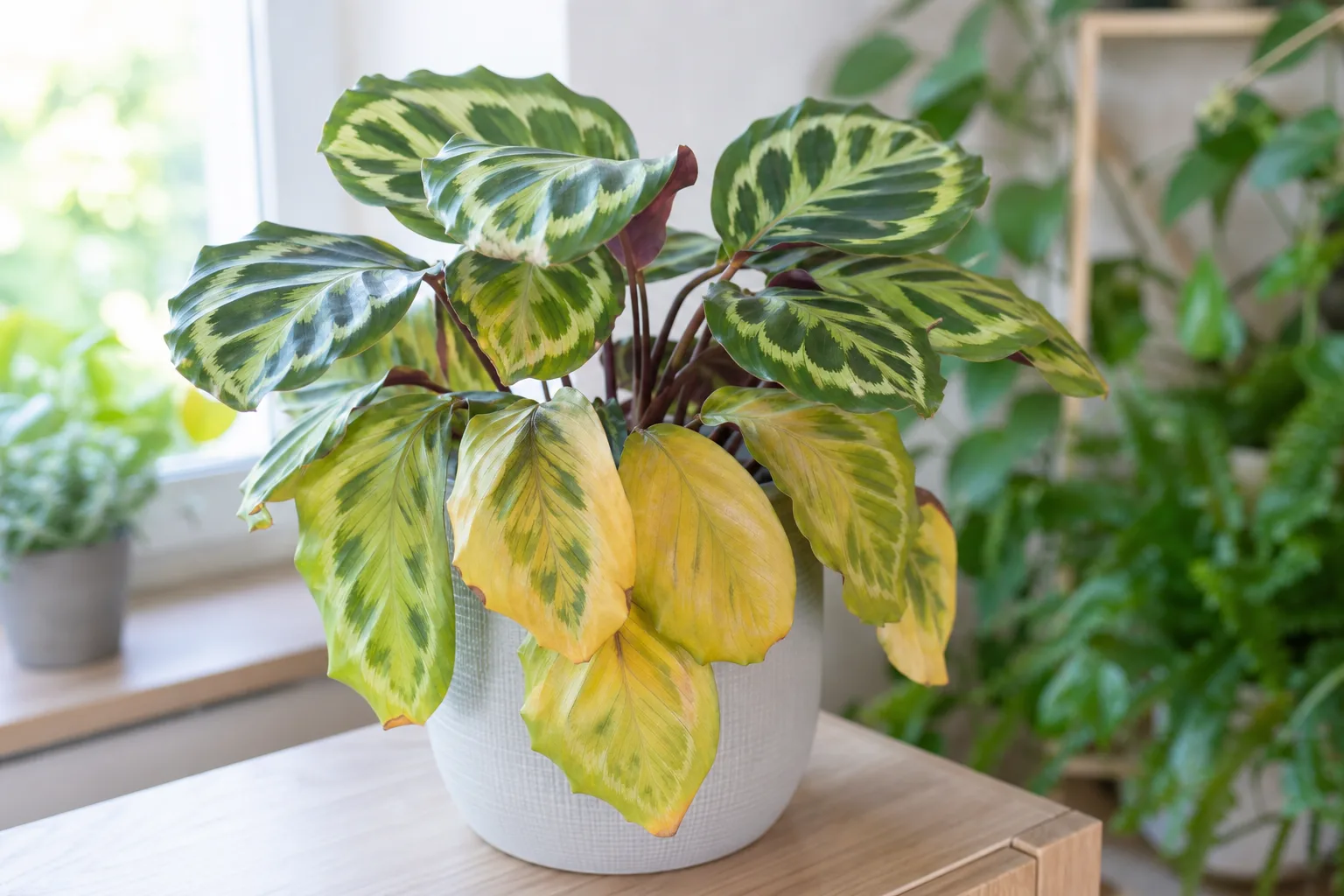
Yellow Leaves on Calathea: Causes, Checks & Fixes
This guide covers yellow leaves on Calathea. See also the general Yellow Leaves guide, watering, and light pages for this plant.
Yellow Leaves on Calathea: Causes, Checks & Fixes
Quick answer
Yellow leaves on Calathea and close relatives in the Marantaceae family (Calathea, Goeppertia, Ctenanthe, Stromanthe) are a stress signal, not one diagnosis. Prayer plants carry thin leaf tissue that shows watering, water-quality, and humidity mistakes faster than thicker-leaved houseplants like pothos or snake plants. Yellowing most often means soil stayed wet too long, tap water stressed the foliage, winter dry air damaged margins, or one spent lower leaf is aging out naturally.
First step: check moisture through the top inch (2.5 cm) of mix before you change anything else. Push your finger deep enough to feel whether that zone is still damp. Cold, heavy, wet mix means pause watering-not fertilizer. Dust-dry mix with a lightweight pot points toward underwatering instead. See the Calathea overview for baseline water, humidity, and filtered-water guidance.
Separate normal lower-leaf aging from stress yellowing before Calathea repotting guide or feeding. Calathea is judged by clean new spears and firm painted leaves-not by keeping every old bottom leaf green forever.
What yellow leaves look like on Calathea
Calathea’s signature is patterned blades that fold upward at night (nyctinastic movement) and emerge from a central crown as rolled spears. Yellowing appears in patterns that point to different causes:
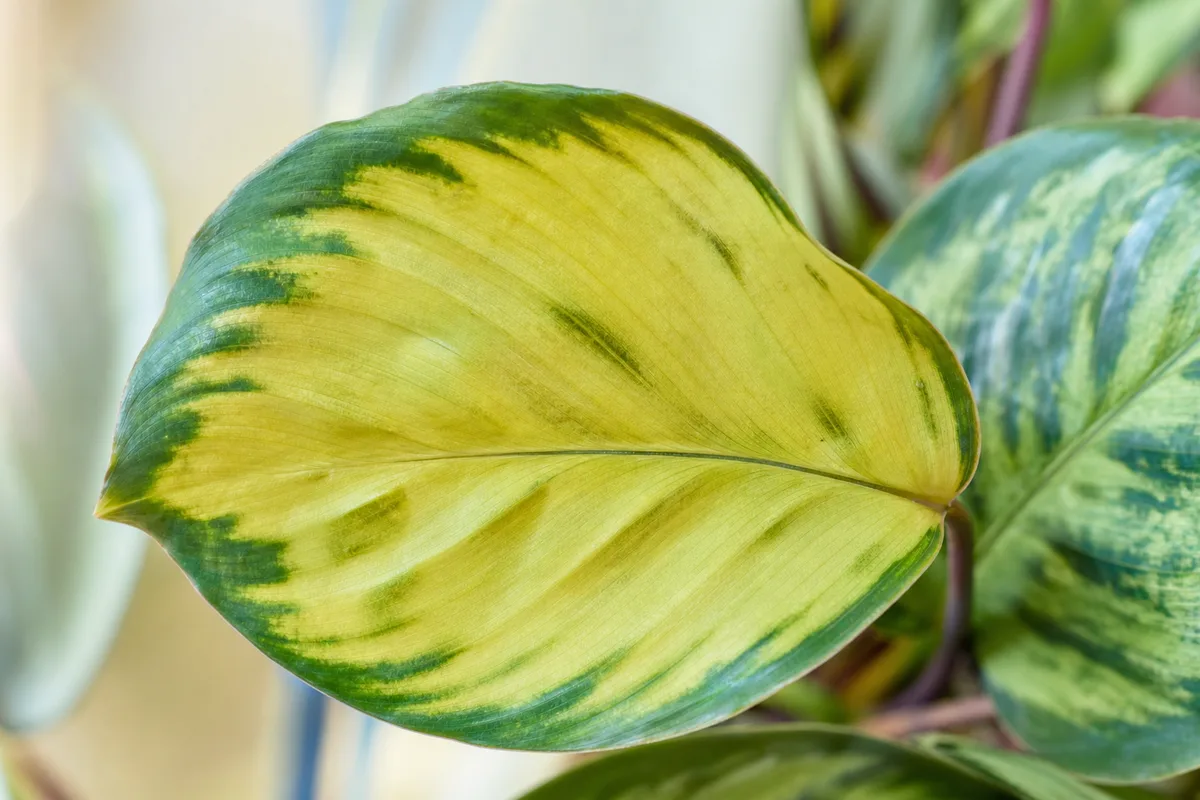
Yellow Leaves symptoms on Calathea - compare with healthy tissue on the same plant.
- Normal aging - One or two oldest bottom leaves fade from green to yellow over weeks or months while new center spears stay firm with intact patterning. On a slow-growing Calathea, losing a lower leaf now and then is expected turnover.
- Overwatering stress - Multiple lower leaves turn uniform yellow or pale green. Petioles may feel limp even though soil is wet. The pot stays heavy days after watering, and you may notice a sour smell from the mix.
- Tap-water / mineral stress - Yellow-green or pale margins on newer leaves, often with brown crispy tips on the same blade. Damage spreads slowly on leaves formed while you water with straight tap water-distinct from sudden whole-leaf collapse.
- Low humidity / dry air - Crisp tan edges on the central unfurling spear or outer margins while petioles stay firm and soil dries on a normal schedule. Damage clusters near vents, radiators, or sunny winter windows-not random whole-leaf yellowing.
- Low light fade - Smaller, paler new leaves with washed-out patterning; soil stays wet longer because the plant uses less water in deep shade. Yellowing may climb from lower leaves while the crown looks weak-not the same as one bottom leaf aging slowly.
- Spider mite stippling - Fine yellow or tan speckles on leaf surfaces, often with gritty texture or fine webbing on undersides. Mites exploit warm, dry air and stressed Calathea foliage.
- Cold-draft shock - Sudden yellowing or translucent patches on leaves nearest a leaky winter window, AC vent, or exterior door-often on one side of the plant while the rest looks fine.
- Underwatering - Less common, but chronic drought yellows margins first, then whole blades. Soil pulls from pot sides and feels bone-dry through the top half; the pot feels noticeably light.
Worry when yellowing climbs toward the center, pairs with wet soil and soft tissue, or strips pattern from new spears-not when one spent bottom leaf fades slowly on an otherwise firm plant.
Why Calathea gets yellow leaves
Overwatering is the leading indoor cause
Calathea prefers evenly moist, well-drained mix-not constant sogginess. When the root zone stays saturated, roots lose oxygen and the plant sheds older leaves first, which shows up as lower leaves turning yellow while the crown still looks intact. This pattern worsens in cool, dim winter rooms where evaporation slows. Watering on the same summer schedule in January keeps rhizomes wet for days-a common path from yellow leaves to root rot. Heavy mix, blocked drainage holes, oversized pots, and saucers left full of runoff all extend wetness beyond what prayer plants tolerate. For the full wet-soil diagnostic path, see overwatering on Calathea.
Tap water and fluoride sensitivity
Marantaceae foliage is sensitive to fluoride and harsh minerals in tap water. The Goeppertia genus guide advises watering with distilled or rainwater instead of tap water. UF/IFAS lists fluoride toxicity among physiological problems that cause dead spots near Calathea leaf margins. Illinois Extension notes that tap water contains fluoride and causes leaf tip burn on many plants. Chronic exposure often precedes broader yellow-green fading on new growth. Tap-water stress often overlaps with brown tips-edge yellowing and tip burn on the same blade-while roots remain firm and soil moisture is normal.
Low humidity and winter heating
Calathea evolved on the humid floor of tropical rainforests. Indoors, central heating can hold relative humidity far below what thin Marantaceae leaves tolerate. The RHS notes that browning of Calathea leaf tips and edges is usually a result of low humidity. Dry air rarely yellows whole blades overnight; it produces crisp margins and stuck unfurling spears that can look like general decline if you do not inspect the crown. Do not compensate for dry air by watering more-soggy rhizomes plus dry vents is a common double stress. See low humidity on Calathea for the full dry-air pattern.
Low light slows dry-down
In very dim placement, Calathea produces pale, smaller new leaves and uses less water-so mix that would dry in a week under bright indirect light may stay damp for two weeks in a dark corner. That makes a normal watering habit effectively become overwatering. Pair any light correction with a moisture check per our light guide.
Cold drafts and temperature swings
The RHS advises keeping Calathea at 16–21°C (61–70°F) and positioning plants away from draughts and direct sources of heat. Sustained cold air on wet rhizomes can yellow tissue quickly-especially on leaves pressed against single-pane winter glass.
Spider mites on stressed foliage
Warm, dry winter air plus stressed Calathea leaves invites stippling that progresses to yellow patches. Mites are a confirmed-cause branch, not the default for plain lower-leaf yellowing-inspect leaf undersides before spraying. See spider mites on Calathea.
Natural lower-leaf senescence
Because new leaves emerge from the central crown as rolled spears, the oldest blades at the bottom eventually yellow and drop. On a healthy Calathea, this happens gradually-one leaf at a time-with firm new growth above. Lower leaves on rosette houseplants often yellow first as part of normal aging. Removing fully yellow leaves keeps the base tidy and makes new problems easier to spot.
Underwatering (less common)
The Goeppertia genus guide notes that curling or yellow leaves may result from underwatering. Chronic drought yellows margins first, then whole blades, with bone-dry mix and a lightweight pot. See underwatering on Calathea if dry-down is the issue.
Lookalike symptoms to rule out
Before repotting or spraying, rule out these common misreads on prayer-plant foliage:
| Pattern | Likely cause | Key differentiator on Calathea |
|---|---|---|
| One bottom leaf yellowing slowly, firm new spears | Normal aging | Months-long fade; crown still vigorous |
| Multiple lower leaves yellow, wet heavy soil, limp petioles | Overwatering / root stress | Pot stays damp days; see overwatering |
| Yellow-green margins + brown tips, normal soil moisture | Tap-water / mineral burn | Newest leaves affected; see brown tips |
| Crisp edges on unfurling spear, firm petioles, near vents | Low humidity | Crown damage before older blades; see low humidity |
| Fine stippling + webbing on undersides | Spider mites | Gritty texture; see spider mites |
| Pale small new leaves, wet soil in dim corner | Not enough light | Pattern fade plus slow dry-down; see not enough light |
| Limp leaves, bone-dry mix, light pot | Underwatering | Whole-plant droop; recovers after one full drink |
| Soft crown, sour soil, collapsing petioles | Advanced root rot | Escalate same week; see root rot |
| Yellowing on window-facing side only after a move | Cold draft or direct sun | One-sided damage; relocate away from glass or hot sun |
If wet soil and multiple yellow lower leaves appear together, treat watering and drainage first-not humidity gadgets alone.
How to confirm the cause
Work through this inspection in order:
- Moisture through the top inch - Damp upper inch means pause watering. Dust-dry with a lightweight pot suggests underwatering. Cold, soggy mix at depth confirms overwatering risk.
- Pot weight and drainage - Lift the pot before and after watering. A heavy pot many days later confirms slow dry-down. Check that drainage holes are open and saucers are empty within 30 minutes of watering.
- Which leaves are affected - Bottom only, slowly = aging likely. Multiple lower leaves quickly + wet soil = overwatering likely. Edge yellow with brown tips on new growth = tap water likely. Central spear crisp while soil is normal = low humidity likely.
- Water source - Note whether you use straight tap, filtered, rain, or distilled. Chronic edge issues on new leaves strongly implicate minerals or fluoride.
- Humidity and placement - Place a hygrometer at leaf height for 24 hours. Below 40–50% near vents supports dry-air stress. Above 55% with wet soil makes root stress more likely than humidity alone.
- Pest spot-check - Inspect leaf undersides for stippling, webbing, or gritty texture. Confirm mites before treating; dry air and mites often overlap in winter.
Confirmed overwatering shows at least two signs: wet mix at depth, yellowing lower leaves, and a heavy pot that is not drying on schedule.
Root spot-check (if wet soil + spreading yellow)
Gently slide the plant partway out of the pot. Firm pale roots support a dry-down fix. Mushy brown roots confirm rot and need trimming before recovery-see root rot.
First fix for Calathea
Check whether the top inch of mix is damp or dry-then pause watering if it is still wet.
That single moisture read breaks the wet cycle behind most Calathea yellow leaves. Do not compensate with fertilizer, a humidity marathon, or an immediate repot unless roots are already mushy.
After the read:
- If wet: stop watering until the top inch dries and the pot lightens. Move to bright indirect light if the plant sits in deep shade-slow evaporation worsens soggy mix. Empty saucers after every drink per our watering guide.
- If dry and lightweight: give one full draining soak, then return to the normal dry-down trigger (top inch dry).
- If edges yellow on new growth but soil moisture is normal: switch to rain, distilled, or filtered water before changing fertilizer or repotting.
- If central spear shows crisp margins with normal soil: relocate away from vents and run a humidifier targeting 50–60% or higher at leaf height-see low humidity.
Remove fully yellow leaves at the petiole base with clean scissors. Partially green blades can stay-they still photosynthesize while the plant recovers.
Make this one correction first. Wait two weeks before stacking repotting, feeding, or pest treatments unless roots are clearly rotting or mites are confirmed.
Step-by-step recovery
Match follow-up steps to what you confirmed:
Overwatering (wet soil, firm crown):
- Let the top inch of mix dry before the next drink-not a fixed calendar.
- Adjust winter frequency; Calathea often needs longer intervals in cool, dim months.
- Improve airflow and ensure drainage holes are clear.
- Watch for new spears unfurling clean for two consecutive weeks.
Tap-water stress (edge yellow + brown tips, normal moisture):
- Switch to rain, distilled, or filtered water for every drink and for humidifier tanks if you use one.
- Hold fertilizer until new growth looks stable for two weeks.
- Trim fully spent yellow leaves; damaged margins on old blades will not repair.
Low humidity (crisp spear edges, firm petioles, hygrometer below 50%):
- Move at least one metre from heating vents and radiators.
- Run a humidifier at 50–60% or higher at leaf height.
- Do not water more to compensate for dry air.
Spider mites (confirmed stippling or webbing):
- Rinse leaf undersides in the shower or with a gentle spray.
- Isolate from other plants; follow our spider-mite guide.
- Raise humidity as prevention after treatment starts-dry air invites reinfestation.
Low light fade (pale new leaves, slow dry-down):
- Shift to bright indirect light-east window, filtered south or west, or supplemental LED.
- Pair the light fix with corrected watering; dim corners keep soil wet longer.
Normal aging:
- Snip off fully yellow bottom leaves.
- No watering or light change needed if new spears stay firm with vivid pattern.
Recovery example
A Medallion that yellowed through winter after tap-water-only watering and dry forced-air heat showed three limp yellow lower leaves with firm crown spears still green. The owner switched to filtered water, moved the pot away from a heating vent, and ran a room humidifier holding 65% RH at leaf height-without increasing watering frequency. Eighteen days later, a new prayer-folded leaf unfurled with clean margins. Old yellow blades were trimmed; they did not re-green. The fix was water quality plus humidity, not fertilizer.
Recovery timeline
Fully yellow leaves do not turn green again. They drop or can be removed. Judge recovery by healthy new leaves from the center-firm texture and intact pattern that holds for two to three weeks:
- Mild overwatering - Yellowing often stops within one to two weeks once soil oxygen returns. New spears unfurl within two to three weeks.
- Tap-water stress - Edge damage on old leaves is permanent; new blades should open cleaner within three to four weeks after switching water.
- Low humidity - Old crisp margins do not regreen; the next spear should open without stuck edges within one to two weeks at 50–60%+ RH.
- Spider mites - Stippling stops spreading after treatment; new growth should emerge clean within two to four weeks.
- Advanced root rot - Recovery takes longer and may be partial. If the crown softens or new leaves keep yellowing after dry-down and root trim, the plant may not be saveable.
Signs of improvement: pot weight drops on a normal schedule, new spears unfurl with strong patterning, and yellowing does not climb toward the center. Signs of worsening: sour smell, soft stems, yellowing on new growth, or soil that never dries.
What not to do
Do not water more because leaves look limp when soil is already wet-that deepens root stress on Calathea rhizomes.
Do not fertilize a yellowing, wet-rooted plant. Salt buildup from overfeeding can also yellow foliage and burn painted margins.
Do not repot on day one unless roots are mushy or drainage has failed. Repotting a waterlogged plant into a bigger pot often makes drying slower.
Do not mist heavily as a humidity fix on Calathea’s thin leaves-frequent misting can leave mineral spots and wet foliage overnight; use a humidifier instead.
Do not assume yellow leaves always need more light when soil is soggy-fix moisture first, then reassess placement.
Do not ignore tap water while chasing humidity or fertilizer. Edge yellowing on new growth often clears only after a water-quality change.
How to prevent yellow leaves on Calathea
Prevention comes down to matching water, air, and light to what Marantaceae prayer plants actually need:
- Water on dryness, not calendar - Check the top inch every time. Active growth may mean every 5–7 days; cool months often mean 7–10 days or longer in low light.
- Use rain, distilled, or filtered water - The RHS recommends rainwater for all houseplants because mains tap water contains lime and chlorine; Calatheas will tolerate tap water left to stand 24 hours so chlorine can evaporate, but that does not remove fluoride in all supplies.
- Hold humidity at 50% minimum, 60%+ when unfurling - Humidifier, pebble tray, or bright bathroom placement per our low-humidity guide.
- Keep bright indirect light - Enough to maintain pattern intensity and predictable dry-down; avoid direct hot sun on painted blades.
- Keep temperatures stable - Avoid cold drafts and sudden swings near windows and vents.
- Remove spent lower leaves promptly - Makes new yellowing visible early on crown foliage.
- Inspect leaf undersides monthly in winter - Catches spider mites before stippling spreads.
When to worry
Treat yellow leaves as urgent when:
- Many leaves yellow within a week, not one bottom leaf over months.
- Soil smells sour or stems feel soft at the soil line.
- New center spears yellow or fail to unfurl while older leaves also decline.
- The plant collapses despite moist soil-roots may be failing to absorb water.
A single yellow bottom leaf on an otherwise stable Calathea with normal dry-down is routine. Widespread yellowing with wet soil is not-inspect roots the same week.
Calathea care cross-check
If yellow leaves keep returning after you adjust watering, compare your routine to what prayer plants need:
| Checkpoint | Healthy target | Yellow-leaf risk when wrong |
|---|---|---|
| Soil moisture | Top inch dry before watering | Wet mix for days after each drink |
| Water quality | Rain, distilled, or filtered | Tap fluoride on new leaves |
| Humidity | 50% minimum; 60%+ at unfurl | Winter vents; stuck central spears |
| Light | Bright indirect | Dim corner + wet soil, or direct sun bleach |
| New growth | Clean unfurling spears with vivid pattern | Pale, small, or rapidly yellowing crown leaves |
| Temperature | Stable; no cold drafts | Winter window + wet rhizomes |
| Pot and mix | Drainage holes open; airy mix | Oversized pot, saucer water, heavy soil |
Fix the condition that fails this check before adding fertilizer, repotting for size, or treating for pests you have not confirmed.
Cultivar notes
Most yellow-leaf causes and fixes are identical across Calathea cultivars. Use cultivar-specific pages when leaf shape or pattern makes symptom matching easier:
- Calathea Medallion yellow leaves - round painted blades, purple reverses
- Calathea Orbifolia yellow leaves - large round silver-striped leaves
- Calathea Rattlesnake yellow leaves - lance-shaped patterned blades
- Calathea Peacock yellow leaves - makoyana feather pattern
- Calathea Roseopicta yellow leaves - painted oval leaves with pink tones
Start on this genus page for shared Marantaceae mechanics; open a cultivar guide only when you need morphology-specific pattern matching.
Conclusion
Yellow leaves on Calathea are a diagnostic puzzle, not a single fix. Thin Marantaceae tissue telegraphs wet soil, tap-water minerals, dry winter air, and normal lower-leaf turnover in different patterns-match the pattern before you repot, feed, or buy gadgets. Check the top inch of mix first, then branch to water quality, humidity, or light based on what you confirmed. Old yellow blades rarely re-green; firm new spears with intact pattern are the real recovery signal. Keep that routine through heating season and use the Calathea overview when symptoms overlap with watering, humidity, or light stress.
Related Calathea problems
Yellow leaves overlap with several sibling guides on this genus:
- Overwatering - wet soil, limp leaves, sour mix
- Low humidity - crisp spear edges, vent-clustered damage
- Brown tips - tap-water and mineral margin burn
- Root rot - mushy roots escalation
- Spider mites - stippling and webbing
- Watering and light - prevention rhythm
- Calathea overview - full care hub
When to use this page vs other Calathea guides
- Calathea watering guide - Use for routine moisture checks before assuming yellow leaves is the main issue.
- Calathea problems hub - Browse all 16 common issues on this species.
- Overwatering on Calathea - Different entry point when symptoms overlap with yellow leaves.
- Underwatering on Calathea - Different entry point when symptoms overlap with yellow leaves.
- Not Enough Light on Calathea - Different entry point when symptoms overlap with yellow leaves.