Brown Tips on Calathea: Causes, Checks & Fixes
Quick answer
Brown tips on Calathea often come from fluoride and minerals in tap water, humidity below 50%, or cold drafts near windows and vents. First step: switch to rainwater or filtered water for two weeks and place a hygrometer beside the pot-watch whether new unfurling leaves open with clean edges.
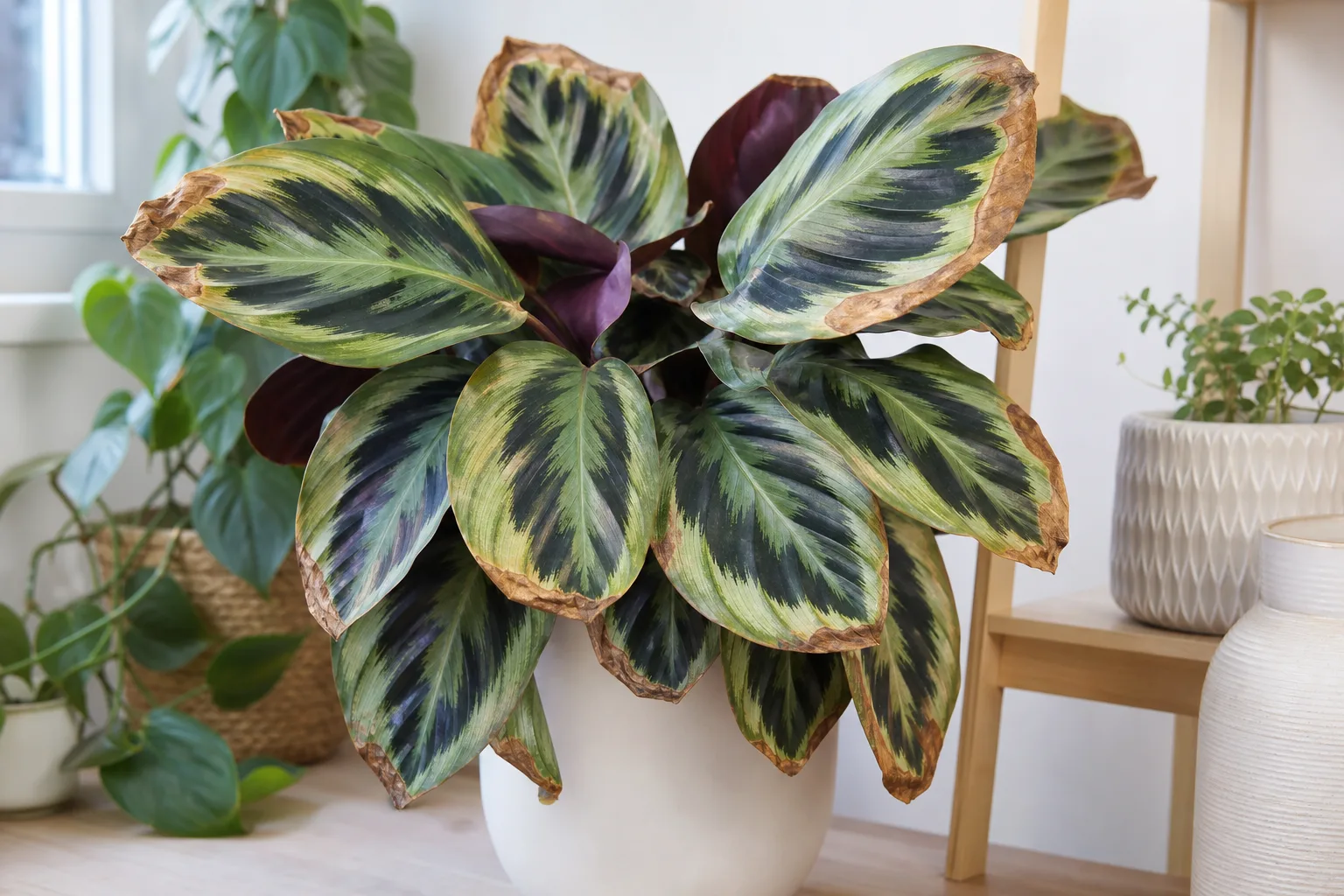
Brown Tips on Calathea: Causes, Checks & Fixes
This guide covers brown tips on Calathea. See also the general Brown Tips guide, watering, and light pages for this plant.
Brown Tips on Calathea: Causes, Checks & Fixes
Quick answer
Brown tips on Calathea and close relatives in the Marantaceae family (Goeppertia, Ctenanthe, Stromanthe) usually trace to fluoride and minerals in tap water, humidity below 50%, or cold drafts near windows and vents-not a mysterious disease. Prayer plants carry thin leaf tissue that shows marginal damage before roots fail, so tip burn often appears while the rest of the plant still looks mostly green.
First step: switch to rainwater, distilled, or filtered water for two weeks and place a hygrometer within 12 inches of the canopy. Watch whether the next unfurling leaves open with clean edges. The RHS notes that browning of Calathea leaf tips and edges is usually a result of low humidity, but hard or fluoride-treated tap water browns margins even when humidity is acceptable-see the Calathea watering guide for water-quality detail.
Why Calathea gets brown tips
Calathea evolved in warm, humid rainforest understories across Central and South America. Indoors, three environmental stresses converge on the same symptom-crispy leaf margins-more often than on thicker-leaved houseplants like pothos or snake plants.
Tap-water minerals and fluoride. Municipal water may contain fluoride, chlorine, chloramine, and calcium that accumulate in leaf margins through repeated watering. Illinois Extension notes that tap water contains fluoride and causes leaf tip burn on many plants. The RHS recommends rainwater for all houseplants because mains tap water contains lime and chlorine; Calatheas will tolerate tap water left to stand 24 hours so chlorine can evaporate, but that does not remove fluoride or chloramine in all supplies.
Low indoor humidity. Winter heating and air conditioning drop relative humidity to 25–40% in many homes-far below what thin Marantaceae leaves prefer. Missouri Botanical Garden culture notes that plants need high humidity and leaves may brown in low humidity. Dry air pulls moisture from leaf tips faster than roots replace it.
Cold drafts and heat blasts. The RHS advises keeping Calathea at 16–21°C (61–70°F) and positioning plants away from draughts and direct sources of heat. A plant in a humid room can still crisp when forced air blows across leaves nightly.
Less common contributors: fertilizer salt buildup after heavy feeding, underwatering that concentrates minerals at drying tips, and direct sun scorch on a window-facing blade. Those look different once you inspect soil, light direction, and feeding history.
What brown tips look like on Calathea
Brown tips on prayer plants have a recognizable pattern once you separate cosmetic edge burn from root failure or pest damage.
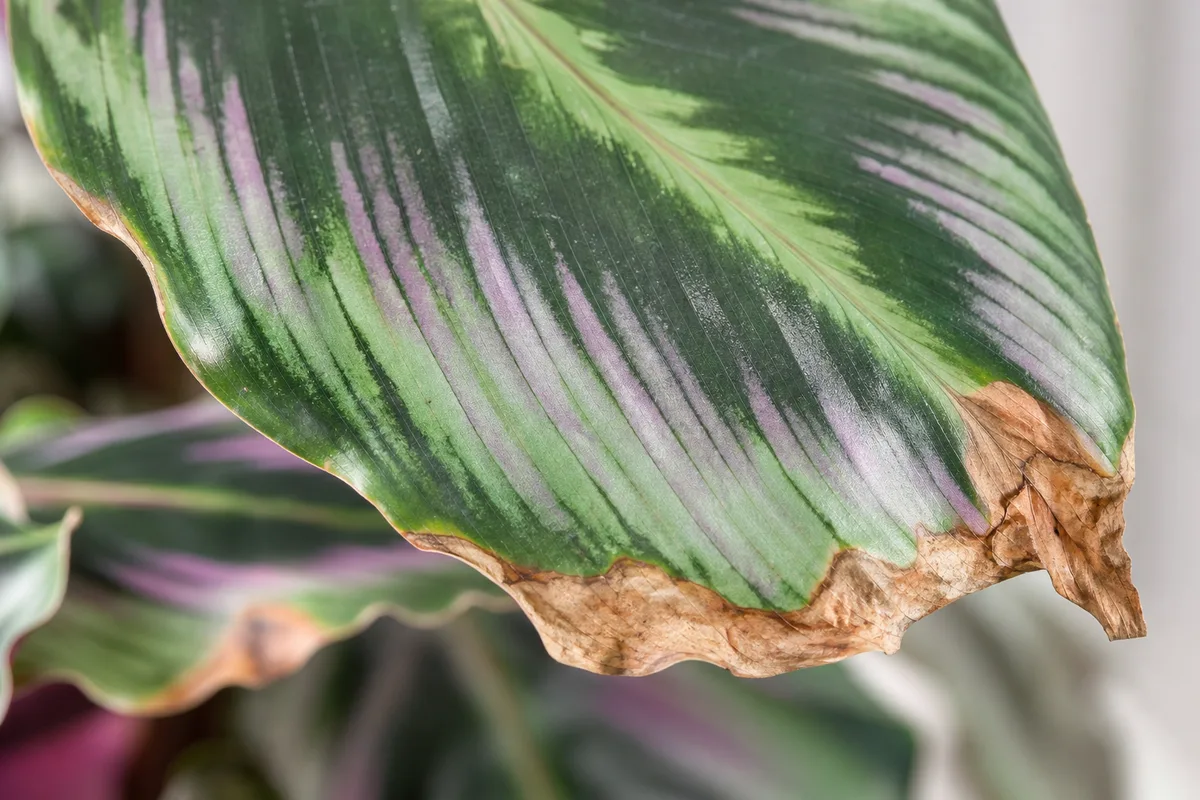
Brown Tips symptoms on Calathea - compare with healthy tissue on the same plant.
Classic tip burn (water or humidity):
- Narrow tan-to-dark-brown band at the very tip or along the wavy leaf margin
- Papery, dry texture on an otherwise green, firm leaf
- Often worse on older outer leaves while the center still pushes new growth
- May coincide with white crust on soil surface or pot rim from hard water
Dry-air signature:
- Browning along both margins of multiple leaves, not just one point
- New leaves slow to unfurl or emerge with crisp edges already damaged
- Worsens in late fall through early spring when heating runs constantly
- Soil moisture feels normal; stems stay firm at the base
Draft or cold-glass damage:
- Crisping concentrated on leaves nearest a leaky winter window, AC vent, or radiator
- One side of the plant may look worse than the other
What tip burn is not: uniform yellowing with wet soil (overwatering on Calathea), dramatic daytime curl with bone-dry mix (underwatering), bleached patches on the window side only (sun scorch), or stippling with fine webbing (spider mites). For whole-margin crisping without isolated tip bands, also read low humidity on Calathea.
Lookalike symptoms to rule out
| Pattern | Likely cause | First direction |
|---|---|---|
| Crispy tips only; firm stems; soil moist | Tap-water minerals or low humidity | Water switch + hygrometer |
| Tips plus margins on many leaves in winter | Low humidity | Humidifier; see low-humidity guide |
| Leaf curl, light pot, dry soil 1–2 in down | Underwatering | Thorough soak; see underwatering |
| Yellow leaves, wet soil, soft base | Overwatering | Stop watering; check roots |
| Bleached patch on window-facing side | Too much direct sun | Move to Calathea light guide |
| Tips after monthly full-strength feed; white soil crust | Salt / fertilizer burn | Flush pot; dilute fertilizer |
| Stippling + webbing on undersides | Spider mites | Rinse and treat; raise humidity |
How to confirm the cause
Work through these checks in order. One change at a time makes it easier to read the plant’s response over the next two weeks.
-
Water source audit - Note whether you use straight tap, softened water, or standing overnight tap. Switch to rainwater, distilled, or filtered water for a full two-week trial. The RHS allows tap water left 24 hours for chlorine, but if tips persist after standing water, escalate to rainwater or filtered water. Never use softened water with sodium on Calathea.
-
Hygrometer at canopy height - Place a digital hygrometer within 12 inches of the top leaves. Readings below 40% with margin crisping strongly support low humidity even when water is fine. Target 50–60% for recovery; many growers run 60% through winter heating season.
-
Draft and heat map - Stand beside the pot and feel for moving air from vents, fireplaces, and exterior doors. Move the pot at least 3–4 feet from forced-air registers and inward from single-pane winter glass before buying more hardware.
-
Soil moisture cross-check - Press your finger 1 inch into the mix. Calathea prefers evenly moist compost in growth season with the surface allowed to dry slightly before rewetting in winter. Tips with wet, heavy soil suggest a different problem; tips with dust-dry soil and curled leaves mean fix watering first.
-
New-growth watch - The decisive test is the next unfurling leaf. Clean margins on new tissue confirm your fix; repeated damage on fresh leaves means another cause still active.
-
Feeding history - If you fertilized at full label strength or skipped flushing for months, leach the pot with plain water until drain runs clear before feeding again.
You have likely confirmed water or humidity stress when new unfurling leaves stay clean for two weeks after a water switch and canopy RH holds near 50%, with firm stems and appropriate soil moisture.
First fix for Calathea
Apply one correction at a time so you can judge new leaf quality. The branch below matches what you confirmed.
If tap water is the likely driver
Switch water source immediately and water thoroughly with room-temperature rainwater, distilled water, or filtered water. Continue your normal soil dry-down check-do not add extra water because tips are brown. Expect the next one or two new leaves to show the clearest response within two to four weeks.
If humidity is below 40% at the canopy
Run a small room humidifier several hours daily in the same room, aimed into ambient air rather than directly on foliage. Supplement with a gravel tray-wide tray, stones, water just below the stone surface, pot on top, never submerged-as the RHS describes for Calathea humidity. Bathrooms help only when light is bright enough; see low humidity on Calathea for full RH targets.
If drafts or heat vents are the culprit
Relocate the pot once to a stable spot away from moving air and cold glass. Avoid shuffling the plant repeatedly-each move stresses prayer-plant roots and foliage.
Cosmetic trim (after the fix is in place)
Snip dead tips with clean scissors, following the natural leaf edge. Brown tissue does not re-green; trimming is optional and for appearance only.
Recovery timeline
Damaged leaf tissue is permanent. Brown or crispy tips will not turn green again. Judge success by stopped spread to healthy tissue and clean margins on newly unfurled leaves.
- After water switch: First clean unfurling leaf often appears within two to four weeks once minerals stop accumulating.
- After humidifier or draft fix: Margin crisping on new growth usually stabilizes within two to three weeks when canopy RH holds near 50–60%.
- Older leaves: May keep brown tips indefinitely; remove them only if more than half the blade is dead.
If three consecutive new leaves open with clean edges, consider the brown-tip problem controlled. Keep monitoring through the rest of heating season.
What not to do
- Do not increase watering because tips are brown-roots may already be moist, and soggy soil invites rot on Calathea.
- Do not use softened water-sodium accumulates in small pots over months.
- Do not assume misting replaces a humidifier for winter dryness; mist raises RH briefly and can leave wet leaf surfaces in stagnant air.
- Do not fertilize a stressed plant before water and humidity stabilize.
- Do not stack Calathea repotting guide, heavy pruning, and pesticide on the same day as a water or humidity overhaul.
How to prevent brown tips on Calathea
- Use rainwater or filtered water long term-match the routine in the Calathea watering guide.
- Run a hygrometer through heating season and act when canopy RH drops below 40%.
- Keep stable placement away from vents and cold glass once the plant acclimates.
- Water when the top inch feels just dry, with room-temperature water and full drainage-never let roots stand in saucer water.
- Flush the pot occasionally with plain water to leach salts if you fertilize monthly during active growth.
- Inspect new unfurling leaves weekly so tip damage is caught while the fix is a water or humidity tweak-not a repot.
When to worry
Treat as urgent if brown damage spreads to most new leaves within a week, stems soften at the soil line, soil smells sour, or fine webbing appears on undersides-those patterns point past cosmetic tip burn toward root rot on Calathea, overwatering, or spider mites.
Lower urgency: a few crispy tips on older outer leaves while stems stay firm, soil moisture is appropriate, and new growth is still emerging. Fix water and humidity before escalating to repotting.
Conclusion
Brown tips on Calathea are frustrating but usually environmental-not a death sentence. Thin Marantaceae leaves telegraph tap-water minerals, dry winter air, and draft stress at the margins before the whole plant collapses. Switch water, measure humidity at the canopy, and move away from vents; then watch new unfurling leaves for the real verdict. Old tips stay brown, but clean new growth means you found the right lever-keep that routine through heating season and link back to everyday Calathea care when symptoms overlap with humidity or watering stress.
When to use this page vs other Calathea guides
- Calathea watering guide - Use for routine moisture checks before assuming brown tips is the main issue.
- Calathea problems hub - Browse all 16 common issues on this species.
- Low Humidity on Calathea - Different entry point when symptoms overlap with brown tips.
- Underwatering on Calathea - Different entry point when symptoms overlap with brown tips.
- Overwatering on Calathea - Different entry point when symptoms overlap with brown tips.