Yellow Leaves on Calathea Roseopicta: Causes, Checks & Fixes
Quick answer
Yellow leaves on Calathea Roseopicta usually mean watering imbalance, low humidity, tap-water stress, or natural aging of older leaves on the clumping crown. First step: probe the top 1 inch of mix and read humidity at the plant - wet soil with limp yellow lower leaves needs a watering pause; moist soil with crisp edges and RH below 50% needs a humidifier, not more water.
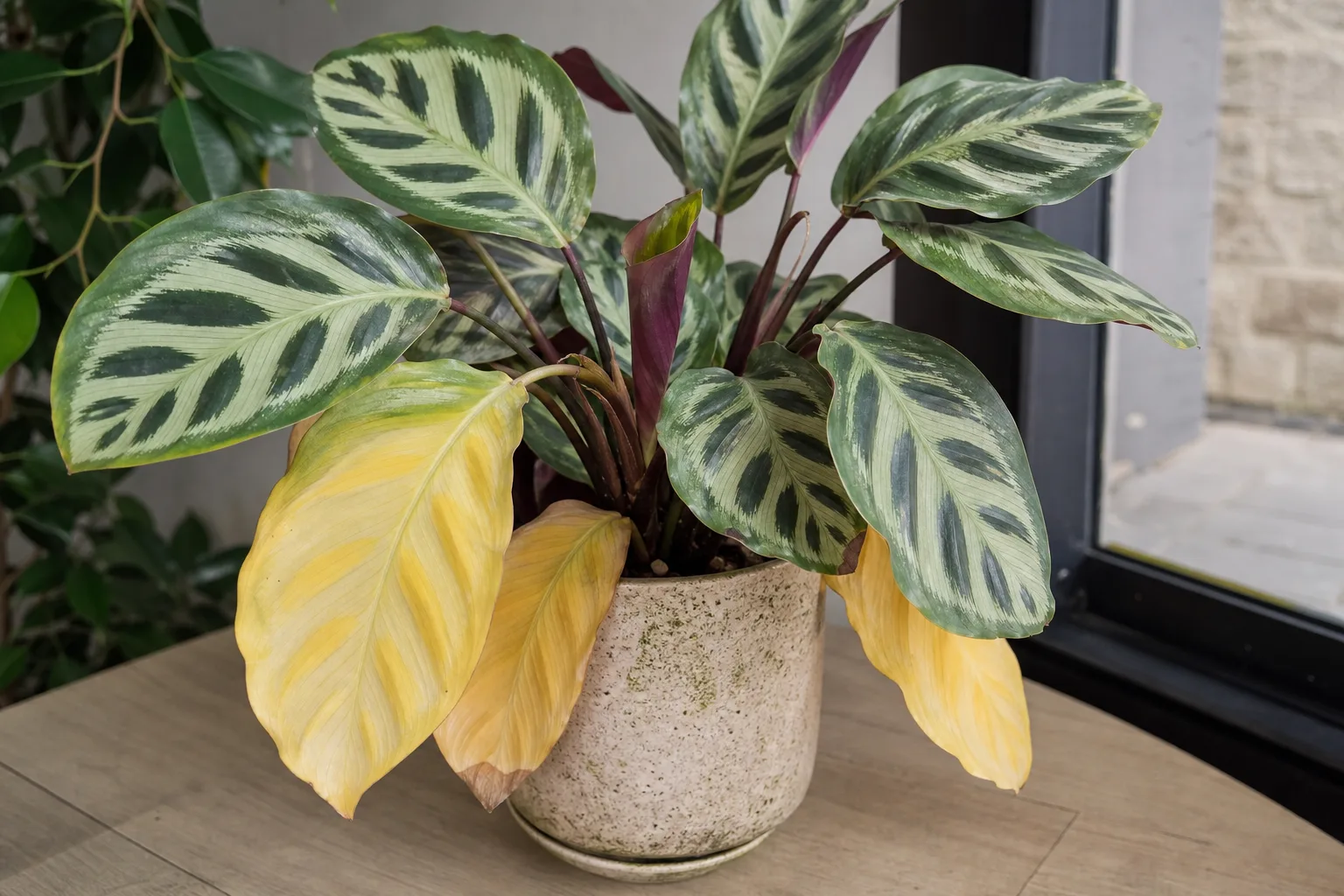
Yellow Leaves on Calathea Roseopicta: Causes, Checks & Fixes
This guide covers yellow leaves on Calathea Roseopicta. See also the general Yellow Leaves guide, watering, and light pages for this plant.
Yellow Leaves on Calathea Roseopicta: Causes, Checks & Fixes
Quick answer
Yellow leaves on Calathea Roseopicta (Goeppertia roseopicta, rose-painted calathea) are a stress signal, not one diagnosis. This clumping Marantaceae species evolved on the humid rainforest floor - it needs evenly moist soil, above 60% humidity, filtered water, and stable warmth. When any of those slip, the broad painted leaves yellow in patterns that point to different fixes.
First step: probe the top 1 inch (2–3 cm) of mix and place a hygrometer at canopy height before you change fertilizer, repot, or add more water. If soil is wet and heavy with soft yellow lower leaves, pause watering until the upper layer begins to dry. If soil is moist but relative humidity reads below 50% and painted margins look crisp, raise humidity with a humidifier - not extra irrigation.
Separate normal outer-base leaf aging on the clumping crown from stress yellowing before you stack treatments.
What yellow leaves look like on Calathea Roseopicta
Roseopicta forms a compact clump of upright stems from rhizomes - not a single rosette. Each elliptical leaf carries deep green with pink, cream, or rose brushstroke bands. Yellowing shows up in distinct patterns:
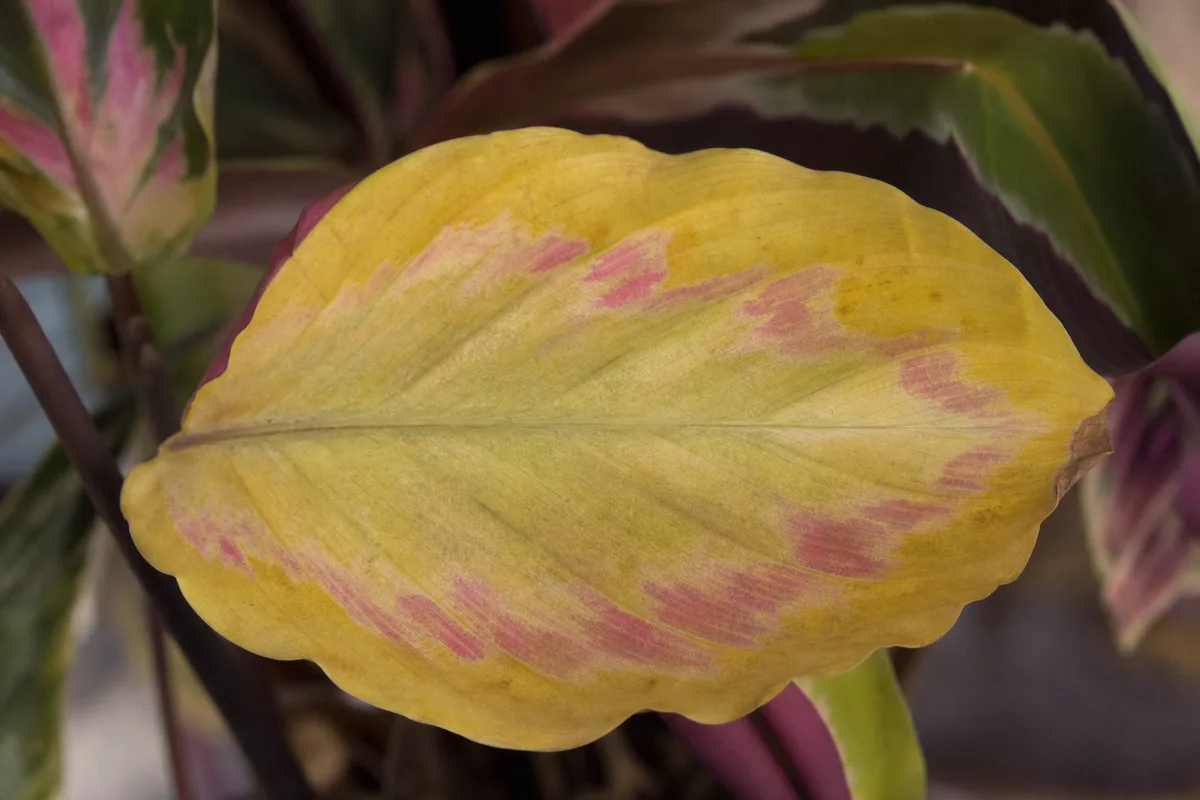
Yellow lower leaf fading at the clump base while center growth stays painted - stress yellowing pattern.
- Normal aging - One or two oldest leaves at the outer base of the clump fade from green to yellow over weeks while new center leaves stay firm with vivid painted contrast. On a slow-growing prayer plant, losing a bottom leaf now and then is expected turnover.
- Overwatering stress - Multiple lower leaves turn uniform yellow or pale green while soil stays wet and the pot feels heavy days after watering. Leaves may feel limp despite moisture. Sour smell, fungus gnats, or black splotches suggest advancing root stress - see the overwatering and root rot guides.
- Underwatering - Crisp yellow or brown leaf edges first, then whole blades yellow. Soil pulls from pot sides, the pot feels very light, and leaves curl tightly during daylight - not just the normal evening fold.
- Low humidity - Yellow-bronze or crisp painted margins with moist soil and RH below 50%. Daytime curl while the mix is evenly damp points to dry air, not thirst - detailed on the low-humidity page.
- Tap-water and salt stress - Margins and tips yellow or brown while moisture looks correct. Fluoride and minerals in tap water damage roseopicta faster than tougher houseplants. Overlap with brown tips is common.
- Insufficient light - New and upper leaves wash pale yellow-green with longer petioles and weaker pink or cream contrast. The plant reaches toward the brightest source.
- Too much direct sun - Bleached or scorched yellow patches on the sun-facing side of painted leaves while the shaded side stays greener.
- Cold drafts - Sudden yellowing or water-soaked patches after nights below about 60°F (15°C) near cold glass, AC vents, or frequently opened doors.
- Repotting shock - Widespread limp yellowing one to two weeks after division or repotting, often with moist but not rotten mix.
- Spider mites - Fine stippling and webbing on leaf undersides in dry air; yellowing follows feeding damage rather than plain moisture stress.
Worry when yellowing climbs toward new center growth, pairs with wet sour soil, or hits several leaves within a week - not when one outer-base leaf fades slowly on an otherwise stable clump.
Why Calathea Roseopicta gets yellow leaves
Overwatering is the most common indoor trigger
Roseopicta needs moist but not soggy soil. When the mix stays saturated, roots lose oxygen and stop functioning - lower leaves yellow first while the crown may still look intact. Calendar watering, oversized pots, heavy peat mix without perlite, and saucers left full of runoff all keep this species wet longer than its fine, shallow roots tolerate.
The problem worsens in cool, dim rooms where evaporation slows. Winter watering on a summer schedule is a frequent path from yellow lower leaves to root rot.
Underwatering on a moisture-loving species
Unlike drought-tolerant succulents, roseopicta cannot survive long dry cycles. Letting the whole root ball go bone dry yellows edges, curls leaves during the day, and stresses painted new growth. Owners who fear overwatering sometimes swing too far toward drought - especially after reading generic “let soil dry completely” advice that does not fit Marantaceae.
The correct band is even moisture: water when the top 1 inch begins to dry, not when the entire pot is dust-dry. See the watering guide for the full rhythm.
Low humidity yellows painted margins
Roseopicta loses water through large thin leaves whenever room air drops below about 50% RH - common in heated winter homes. Dry air yellows or bronzes the painted bands and encourages daytime curl even when soil moisture is correct. Below the 60% threshold NC State Extension recommends, edge damage appears before the whole plant collapses.
Do not interpret humidity curl as thirst. Adding water to moist soil deepens overwatering risk while the real fix is raising ambient humidity.
Tap water, fluoride, and salt buildup
NC State Extension advises rainwater or distilled water for rose-painted calathea because fluoride in tap water causes foliage to turn brown - and margin damage on painted leaves often precedes wider yellowing. Chlorine and accumulated fertilizer salts produce similar edge stress. UF/IFAS commercial calathea data links dead spots near leaf margins to fluoride toxicity.
If yellowing is margin-first with otherwise moist soil and decent humidity, switch water type before assuming the plant needs more fertilizer.
Light at both extremes
Inadequate light fades bright leaf coloring and produces pale, yellow-green new growth with weak brushstroke contrast. Direct sunlight scorches the painted surface into bleached yellow patches. Roseopicta wants bright, indirect light - enough to hold vivid patterns without harsh rays on the leaves.
Cold drafts and temperature swings
Stable 65–75°F (18–24°C) suits this tropical species. Exposure below about 60°F (15°C) disrupts root function and leaf metabolism. Winter windowsills, AC vents blowing on the canopy, and sudden cold snaps after warm days yellow leaves overnight - often with a water-soaked look before they dry yellow.
Repotting and division shock
Spring division of rhizomatous roots is the standard propagation method, but each rhizome section needs time to re-establish fine roots. Transplant shock shows as limp yellowing across several leaves one to two weeks after repotting even when moisture is managed carefully. Stable humidity above 60% and filtered light speed recovery.
Natural lower-leaf senescence
New painted leaves emerge from the center of each stem in the clump. The oldest leaves at the outer base eventually yellow and drop. On a healthy plant this is gradual - one leaf at a time - with firm new growth above showing strong color. Snip fully yellow leaves to keep the base tidy.
Spider mites in dry air
Dry indoor conditions favor spider mites on calatheas. Stippling and fine webbing on undersides weaken leaves until they yellow. Raising humidity and rinsing foliage addresses both the pest pressure and the environmental trigger.
Lookalike symptoms to rule out
| What you see | Soil moisture | Typical RH | Likely cause | First check |
|---|---|---|---|---|
| Soft yellow lower leaves, heavy wet pot | Wet, sour possible | Any | Overwatering / root stress | Pause water; inspect roots |
| Crisp yellow edges, light pot | Dry 2+ inches down | Any | Underwatering | Soak root ball; see underwatering |
| Crisp painted margins, daytime curl | Moist | Below 50% | Low humidity | Hygrometer + humidifier |
| Margin yellow-brown, moist soil | Moist | 50%+ possible | Tap water / salts | Filtered water; see brown tips |
| Pale washed upper leaves, long stems | Moist | Any | Too little light | Move to bright indirect |
| Bleached patches sun-side only | Moist | Any | Direct sun scorch | Filter light |
| One bottom leaf, slow fade | Normal cycle | 60%+ | Normal aging | Remove spent leaf |
| Stippling + webbing | Moist or dry | Low | Spider mites | Rinse leaves; raise RH |
| Limp yellow 1–2 weeks post-repot | Moist, not rotten | Any | Transplant shock | Stable humidity; wait |
If wet soil and multiple yellow lower leaves appear together, treat watering and drainage before fertilizing or repotting for size.
How to confirm the cause
Work through this inspection in order:
- Moisture at 1 inch depth - Cool and damp at the second knuckle means wait before watering. Dry and crumbly at that depth with a light pot suggests underwatering. Wet and heavy days after the last drink points to overwatering.
- Humidity at canopy height - Read a hygrometer beside the plant at midday. Below 50% with crisp painted margins implicates dry air even when soil is moist.
- Water type and salt crust - White crust on soil surface, brown tips on older leaves, or recent switch from filtered to hard tap water supports mineral stress.
- Which leaves are affected - Outer base only, slowly = aging likely. Multiple lower leaves quickly + wet soil = overwatering likely. Pale upper/new growth = light issue. Margin-first with good moisture = water quality or humidity.
- Temperature and placement - Cold glass, AC or heat vents, recent move to a drafty spot? Night temperatures below 60°F (15°C) support cold stress.
- Root spot-check (if wet soil + spreading yellow) - Gently slide the plant partway out. Firm pale roots support a dry-down fix. Mushy brown roots with sour smell confirm rot - escalate to the root rot path.
Confirmed overwatering needs at least two signs: wet mix at depth, yellowing lower leaves, and a pot that is not drying on schedule.
First fix for Calathea Roseopicta
Match your first action to what step 1 and 2 showed - do not stack every fix at once.
- Wet soil + yellow lower leaves: Stop watering until the top 1 inch begins to dry. Empty the saucer. Do not fertilize.
- Moist soil + RH below 50% + crisp margins: Run a humidifier within 3–5 feet until readings hold at 60% or higher. Do not add water.
- Dry soil + light pot + crisp curl: Water thoroughly until a little runs from the drainage hole, then empty the saucer. Use room-temperature filtered or rainwater.
- Margin burn with moist soil and adequate RH: Switch to filtered or distilled water and skip fertilizer until new growth looks clean.
Remove fully yellow leaves at the base with clean scissors. Partially green leaves can stay - they still photosynthesize while the plant recovers.
Make this one correction first. Wait two weeks before repotting, feeding, or pest sprays unless roots are clearly mushy or mites are confirmed.
If roots are mushy
When a spot-check finds brown, slimy roots and sour-smelling mix, escalate immediately: unpot, trim dead roots, let cut surfaces dry briefly, and repot into fresh well-draining mix. Hold water for seven to ten days after repotting. That path is for confirmed rot - not for a single aging bottom leaf.
Step-by-step recovery
Match follow-up steps to what you confirmed:
Overwatering (wet soil, firm crown):
- Let the top 1 inch dry between waterings - not the whole pot to dust-dry.
- Move to bright indirect light if the plant sits in deep shade; slow evaporation worsens wet soil.
- Clear drainage holes and stop leaving saucers full.
- Watch for new center leaves unfurling with clean painted patterns for two consecutive weeks.
Underwatering (dry soil, light pot):
- Soak the root ball thoroughly once; let excess drain completely.
- Adjust to the top-1-inch dry-down rhythm from the watering guide.
- Do not let the entire root ball go bone dry again between cycles.
Low humidity (moist soil, RH under 50%):
- Run a humidifier until RH holds at 60% or higher.
- Move away from heating vents and dry AC airflow.
- Group with other humidity lovers only as a supplement - not a substitute for a humidifier in sub-40% rooms.
Tap water / salt stress:
- Switch to rainwater, distilled, or filtered water for every drink.
- Flush the mix once with plain water if white crust sits on the surface - then resume normal even-moisture watering.
- Hold fertilizer until new leaves open cleanly.
Cold stress:
- Move to a stable 65–75°F (18–24°C) spot away from vents and cold glass.
- Remove severely damaged leaves; do not water heavily while the plant is cold-stressed.
Repot shock:
- Keep humidity above 60% and light bright but filtered.
- Maintain even moisture without saturating the mix.
- Expect new painted growth within three to four weeks if roots are firm.
Normal aging:
- Snip off fully yellow outer-base leaves.
- No watering or light change needed if new growth stays firm and the pot dries on a healthy schedule.
Recovery timeline
Fully yellow leaves do not turn green again. They drop or can be removed. Recovery is measured by new growth from the center:
- Mild overwatering - Yellowing often stops within one to two weeks once soil oxygen returns. New painted leaves emerge within two to three weeks.
- Low humidity - Margin damage on old leaves is permanent, but new unfurling leaves look cleaner within two to four weeks of stable 60%+ RH.
- Tap-water stress - Edge yellowing on existing leaves remains; new growth improves within three to four weeks on filtered water.
- Cold shock - Damaged leaves may drop; new growth resumes after stable warmth within two to four weeks.
- Advanced root rot - Recovery takes longer and may be partial. If the crown softens or new leaves keep yellowing after dry-down and root trim, the plant may not be saveable.
Signs of improvement: pot weight drops on a normal schedule, new leaves hold vivid brushstroke color, evening nyctinasty returns, and yellowing does not climb toward the center. Signs of worsening: sour smell, soft stems, yellowing on new growth, or soil that never dries.
What not to do
Do not water more because leaves look limp when soil is already wet - that deepens root stress on roseopicta.
Do not let the whole pot dry completely between drinks thinking calatheas need drought cycles. Even moisture with a brief top-layer dry-down is the target.
Do not add water to fix humidity curl when the mix is already moist - raise RH instead.
Do not fertilize a yellowing, stressed plant. Salt buildup can also yellow foliage and burn painted margins.
Do not repot on day one unless roots are mushy or drainage has failed. Repotting a waterlogged plant into a bigger pot often makes drying slower.
Do not move roseopicta into direct sun to “help it recover.” Bright indirect light is the ceiling.
Do not ignore cold placement while fixing watering. Wet soil plus cold air is the fastest route from yellow leaves to crown decline.
How to prevent yellow leaves on Calathea Roseopicta
Prevention comes down to matching the four variables this species actually needs:
- Water on dryness at 1 inch, not calendar - Check every time. Active growth may mean every 5–10 days; winter often stretches to 10–14 days in cool rooms.
- Keep humidity at 60% or higher - Humidifier beats misting for sustained RH.
- Use filtered or rainwater - Reduces fluoride margin damage that precedes yellowing.
- Bright indirect light - Enough to hold painted contrast; never direct midday sun.
- Stable 65–75°F (18–24°C) - No cold glass or AC drafts on the canopy.
- Well-draining, moisture-retentive mix - Perlite or bark in the blend; drainage holes always open.
- Remove spent outer-base leaves promptly - Makes new problems easier to spot early.
When to worry
Treat yellow leaves as urgent when:
- Many leaves yellow within a week, not one bottom leaf over months.
- Soil smells sour or stems feel soft at the soil line.
- New center growth yellows while older leaves also decline.
- The plant collapses despite moist soil - roots may be failing to absorb water.
- Fine mite webbing spreads while humidity stays low - pest and environment need simultaneous correction.
A single yellow outer-base leaf on an otherwise stable roseopicta with normal moisture and 60%+ RH is routine. Widespread yellowing with wet soil is not - inspect roots the same week.
Calathea Roseopicta care cross-check
If yellow leaves keep returning after you adjust watering, compare your routine to what this species needs:
| Checkpoint | Healthy target | Yellow-leaf risk when wrong |
|---|---|---|
| Soil moisture | Top 1 inch dry before watering; even moisture below | Wet mix for days, or whole pot bone dry |
| Humidity | 60–80% RH at canopy | Winter heat below 50%; margin yellow without thirst |
| Water type | Rainwater, distilled, or filtered | Fluoride margins spreading to yellow blades |
| Light | Bright indirect; no direct sun | Pale yellow new growth, or scorch patches |
| Temperature | 65–75°F (18–24°C); above 60°F minimum | Cold glass and AC drafts after warm days |
| Pot and mix | Drainage open; peat-perlite-bark blend | Oversized pot, saucer water, dense soil |
Fix the condition that fails this check before adding fertilizer, repotting for size, or treating for pests you have not confirmed.
Related Calathea Roseopicta guides
- Calathea Roseopicta overview - full humidity, light, and watering baseline
- Overwatering - wet soil with limp yellow lower leaves
- Root rot - escalation when roots are mushy
- Low humidity - crisp margins with moist soil
- Brown tips - fluoride and salt overlap
- Underwatering - dry pot with crisp curl
- Watering - even-moisture rhythm and soil checks
- Spider mites - stippling in dry air