Root Rot on Calathea Roseopicta: Causes, Checks & Fixes
Quick answer
Root rot on Calathea Roseopicta starts when fine feeder roots sit in soggy mix too long-stop watering, empty all standing water, and unpot to inspect roots before repotting. Trim mushy tissue, repot into fresh airy mix, and judge recovery by firm new painted leaves from the center, not old yellow blades.
Root Rot on Calathea Roseopicta: Causes, Checks & Fixes
This guide covers root rot on Calathea Roseopicta. See also the general Root Rot guide, watering, and light pages for this plant.
Root Rot on Calathea Roseopicta: Causes, Checks & Fixes
Quick answer
Root rot on Calathea Roseopicta - botanically Goeppertia roseopicta, sold as rose-painted calathea on cultivars such as Dottie, Medallion, and Rosy - is almost always a watering and drainage failure, not a mysterious disease. Fine, shallow Marantaceae feeder roots on a horizontal rhizome suffocate when air is pushed out of soggy peat or coco mix for days. The near-definitive sign on this painted prayer plant: limp or wilted foliage while the pot stays heavy and cool, often with black splotches on lower painted leaves that will never recover their brushstroke pattern.
First step: stop watering immediately, slide the nursery pot out of any cachepot, pour out all standing water, and unpot to inspect roots before repotting or fertilizing. Trim mushy tissue with clean shears, let cut surfaces air-dry briefly, then repot into fresh airy mix in a pot matched to the trimmed root ball-not a size up.
This page is the emergency escalation from overwatering on Calathea Roseopicta. For day-to-day moisture rhythm, filtered water, and black-blotch early warnings, see Calathea Roseopicta watering. For repot mix ratios and drainage tests, see soil and the repotting guide.
Root rot vs. overwatering on Roseopicta
These two URLs overlap by design-but they answer different moments:
| Stage | What you see | Start here |
|---|---|---|
| Wet soil, yellow lower leaves, no mushy roots yet | Chronic sogginess, declining slowly | Overwatering - pause water, drain vessels, adjust rhythm |
| Wet-soil wilt, sour smell, mushy roots on inspection | Roots already failing | This page - trim, repot, humidity-supported recovery |
| Black splotches on painted leaves with firm roots | Early wet-soil stress before full rot | Overwatering first; unpot if symptoms spread |
| Crisp brown margins, moist soil, firm roots | Fluoride or salt stress | Brown tips - not more water |
Use the overwatering guide when you catch saturation before roots turn mushy. Use this page when inspection confirms decay-or when wet-soil collapse will not stop after several dry days.
Why Calathea Roseopicta gets root rot
Rose-painted calathea evolved on shaded Amazon forest floors where rain is frequent but roots still breathe in loose, organic soil. NC State Extension describes the indoor goal as consistently moist but never waterlogged soil - a narrower band than most beginner houseplant advice allows. The Missouri Botanical Garden notes that Goeppertia roseopicta is a compact, rhizomatous evergreen with fine roots that spread horizontally rather than plunging deep. They absorb water quickly but die faster than drought-tolerant roots when oxygen is pushed out of saturated mix.
Several conditions push Roseopicta from chronic sogginess into rot:
Repeated watering into wet soil. Calendar watering through winter is the top failure mode. Mix that dried in five to seven days in summer may stay saturated for two to three weeks in a cool north window at 18°C (64°F). UF IFAS lists wilted Calathea leaves as a symptom of drought stress or root pathogens - soil moisture and root firmness separate the two.
Collapsed peat and oversized pots. Roseopicta fine roots suffocate first in degraded, compacted peat at the bottom of the pot while the surface crusts dry. A pot too large for the rhizome mass holds unused wet mix in the center long after the top inch looks ready to water.
Cachepots and standing saucers. Decorative outer pots without drainage trap runoff. Roots standing in water for any length of time can rot - tip away excess from cover pots after every watering.
Low light and cool rooms slowing evaporation. Broad painted leaves can look briefly intact while fine roots drown below. Winter overwatering in dim rooms strips feeder roots before upper foliage yellows widely.
Responding to curl with more water. When soil is already damp, curl means root stress, not thirst. Adding water worsens oxygen loss - see the wet-soil curl paradox in the overwatering guide.
Roseopicta is less forgiving than rattlesnake calathea for watering mistakes because a single black water spot or browned painted band ruins the whole leaf permanently - cosmetic damage persists even after roots recover.
NC State Extension notes that overwatering can cause root rot on Goeppertia roseopicta, and the plant is intolerant of wet soil, dry soil swings, and low humidity - all of which stress the same fine root zone.
What root rot looks like on Calathea Roseopicta
Early rot is easy to miss because painted leaves still look striking from a distance. Watch for these progression patterns:
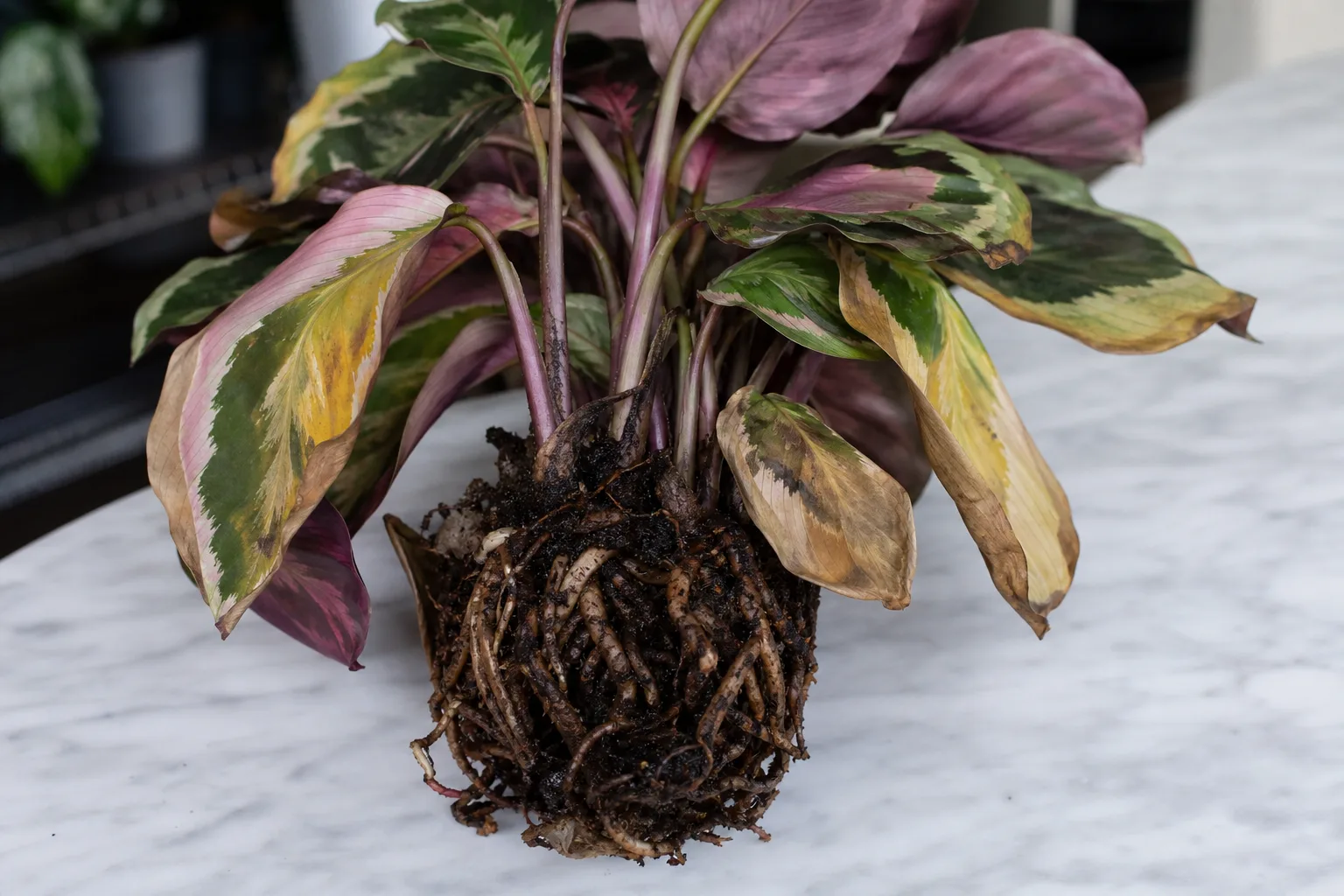
Black splotches on painted Roseopicta leaves with limp lower foliage - wet-soil wilt despite heavy moist mix.
- Yellowing lower leaves that appear soft or droopy rather than crisp - often starting at the bottom while the crown still looks intact on the clumping rhizome
- Black splotches on painted foliage - dark patches on soft tissue, more common on Roseopicta than on rattlesnake calathea; these marks are permanent and differ from crisp fluoride edge burn
- Limp or wilted foliage despite moist, heavy soil - the classic wet-soil wilt paradox on a prayer plant
- Sour or swampy smell when you lift the pot or probe near drainage holes
- Stalled or rotted new center leaf - an unfurling painted roll sticks, browns at the base, or emerges small and dull before lower leaves yellow widely
- Loss of normal nyctinasty - healthy roseopicta folds foliage up in the evening and reopens by morning when roots are stable; severely stressed roots disrupt that rhythm
- Soft stem tissue at the soil line - crown beginning to collapse as roots fail
- Fungus gnats hovering near the surface - see fungus gnats on Calathea Roseopicta for the wet-soil companion pest
Advanced cases show mushy stems at the soil line, leaves that turn brown and collapse, and black or translucent roots on inspection. Painted rose bands mask root failure longer than thin-leaf plants because broad blades hold water in their tissue briefly - do not wait for widespread collapse before unpotting.
Lookalike symptoms to rule out
| What you see | Likely cause | First check |
|---|---|---|
| Limp leaves, heavy wet soil, black splotches, mushy roots | Root rot (this page) | Stop water; unpot and trim |
| Heavy wet soil, no mushy roots yet, declining slowly | Overwatering precursor | Pause water; drain vessels |
| Light dry pot, inward curl, soil pulling from pot wall | Underwatering | Soak and drain fully |
| Crisp brown edges, moist soil, RH below 50% | Low humidity or fluoride burn | Humidifier and filtered water before more irrigation |
| Black soft splotches on wet mix only | Root stress / advancing rot | Root inspection - not tap-water margins alone |
| Yellow lower leaves only, firm roots, appropriate moisture | Yellow leaves - nutrient or age | Root inspection still wise |
| Acute whole-plant flop within hours on wet soil | Wilting / advancing rot | Crown firmness + root inspection |
The wet-soil wilt paradox is the core Roseopicta confusion: curl on dry mix usually means add water; curl on wet mix means stop water and check roots. Missouri Botanical Garden notes that a wilted appearance with moist soil can indicate damaged roots - the plant cannot absorb water even when surrounded by it.
UF IFAS links dead spots near leaf margins to fluoride in irrigation water - distinguish crisp margin burn on firm roots from soft black blotches on wet, sour mix.
How to confirm the cause
Work through this unpot inspection checklist before changing anything else:
- Stop watering and empty all saucers, cachepots, and trays for at least several days unless the crown is actively softening - then proceed to unpot immediately.
- Pot weight - A heavy, cool pot long after the last watering suggests saturation at depth. Compare against your post-watering baseline from the watering guide.
- Smell - Musty or sour odor from drainage holes or when you lift the nursery pot from a cachepot.
- Crown feel - Gently press the rhizome cluster at soil level. Firm crown with limp outer leaves is more recoverable. Soft, dark, or collapsing tissue on wet mix confirms escalation.
- Gently unpot - Knock the plant out of its container. Brush away loose mix without tearing healthy roots.
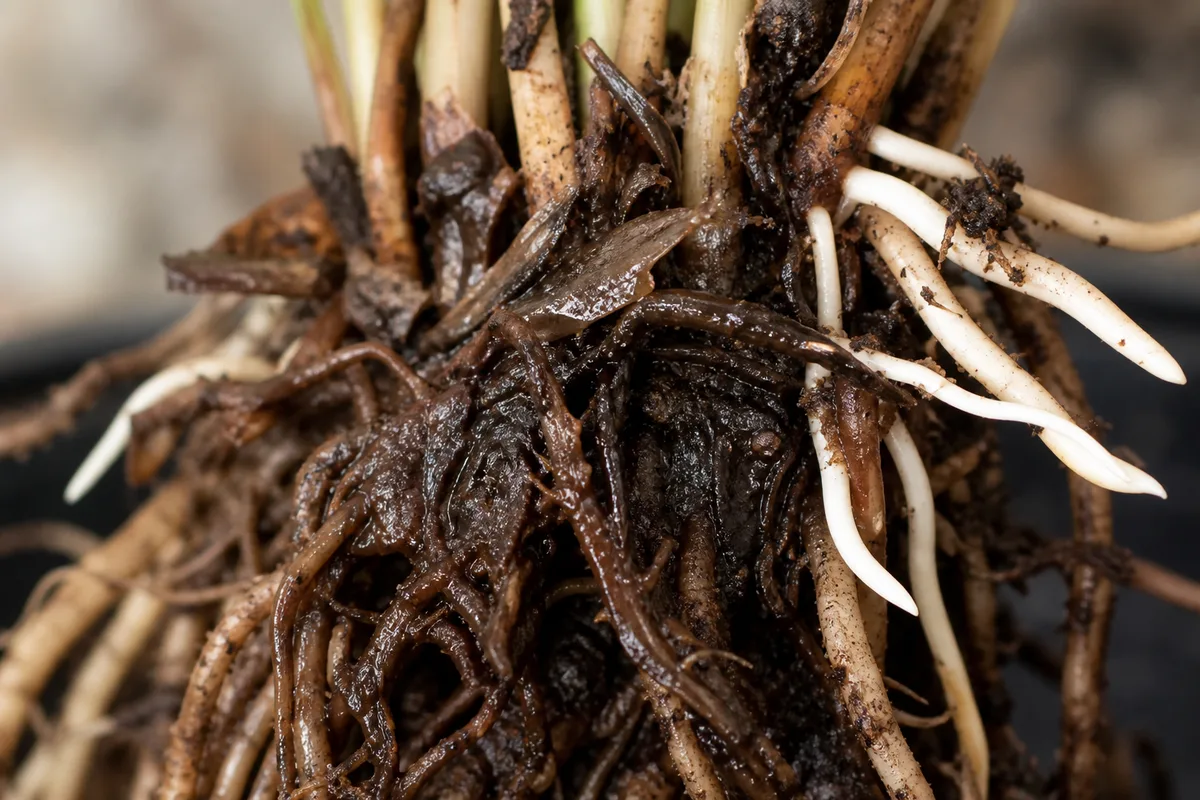
- Root appearance - Healthy root tissue should be firm and pale with thin feeder roots; rotted roots are mushy, brown, black, or translucent and may smell sour.
- New leaf check - Pull back any stuck center roll gently. Brown mush at the base of an unfurling painted leaf on wet mix confirms rot has reached the growth point.
- Recent care history - Repeated watering into wet soil, repotting into a much larger container, winter calendar watering, or leaving the pot in standing water after bottom-watering.
Confirmed root rot requires mushy or discoloured root tissue plus declining foliage - not bone-dry soil. If roots are firm and pale but leaves yellow, look toward yellow leaves or overwatering without full rot.
First fix for Calathea Roseopicta
Stop watering and unpot to inspect roots - do not repot blindly or fertilize.
If inspection confirms rot, move to the numbered emergency protocol below. If roots are mostly firm with only a few dark tips, trim those sections, improve drainage, and resume the top 1–2 inch dry-down rhythm without repotting into a larger container.
Make one change at a time: trim bad roots, let cut surfaces air-dry for a few hours in shade, then repot into fresh well-drained mix. Do not stack hydrogen peroxide rinses, fungicide drenches, and immediate heavy watering on the same day unless an extension agent recommends it for your situation.
Important: “Stop watering” does not mean letting the entire root ball go bone dry during recovery. Roseopicta still needs evenly moist - not saturated - soil between drinks once the emergency trim-and-repot is complete.
Step-by-step emergency repot protocol
Use this sequence when mushy roots dominate - aligned with the Calathea Roseopicta repotting guide emergency section:
- Prepare tools - Clean sharp scissors or pruning shears, fresh airy mix (see mix section below), a pot with a drainage hole matched to the trimmed root ball - not larger - and room-temperature filtered or rainwater.
- Remove the plant - Gently slide it from the pot. If roots circle tightly, loosen the outer edge with your fingers; do not yank leaves - painted blades tear easily.
- Rinse lightly - Run lukewarm water over roots to expose damage. Skip aggressive scrubbing that tears healthy tissue.
- Trim all mushy tissue - Cut back to firm, pale root material. Remove black, slimy, or hollow sections entirely. Sterilize blades between cuts if rot is extensive.
- Inspect the rhizome - Firm horizontal rhizome tissue can recover; soft, dark, or hollow crown tissue at the soil line may be fatal. Do not divide the rhizome while rot is active - division wounds invite reinfection; see propagation only after stable recovery.
- Air-dry briefly - Let trimmed roots sit in shade for two to four hours so cut surfaces callus slightly. Do not leave the plant out so long that roots desiccate.
- Repot into fresh mix - Fill the bottom of the pot, centre the plant at the same depth as before, and backfill lightly with a chopstick. Do not bury the crown.
- Water once lightly - Enough to settle mix around roots, not a full drench that re-saturates a traumatized zone. Let excess drain fully.
- Humidity support - Maintain at least 60% relative humidity and stable 65–75°F (18–24°C) so repot stress does not stall recovery in dry heated air.
- Resume dry-down rhythm - Wait until the top 1–2 inches feel just barely dry before the next thorough watering. Judge recovery by firm new painted leaves from the center, not by old yellow blades.
Recovery mix for repot
Use a light, moisture-retentive but well-drained blend aligned with the Calathea Roseopicta soil guide:
| Ingredient | Proportion | Role |
|---|---|---|
| Peat- or coir-based potting soil | 40% | Organic base, even moisture |
| Coconut coir or peat moss | 20% | Moisture buffering |
| Coarse perlite or pumice | 20% | Drainage channels, air space |
| Orchid bark | 10–15% | Structural aeration |
| Worm castings (optional) | 5–10% | Gentle nutrition |
A simpler ratio - 2 parts coco coir, 1 part perlite, 1 part potting soil plus a handful of bark - also works for recovery. NC State Extension recommends moist, well-drained peaty potting mix amended with perlite or vermiculite for Goeppertia roseopicta.
Do not upsize the pot during recovery. Extra soil volume holds more water and slows dry-down. Do not repot into dense garden soil or a container without drainage. Discard sour old mix; do not reuse it.
Recovery timeline and what to expect
Recovery is judged by firm new painted leaves unfurling from the center with clean pink or cream contrast and stable pot weight - not by old yellow leaves re-greening. Damaged painted blades rarely recover; black splotches and browned bands are permanent even when the plant survives.
- Mild rot with mostly firm roots after light trim - Stabilization within one to two weeks after repot and corrected watering; first firm new leaf in two to four weeks in warm Calathea Roseopicta light guide at 65–75°F (18–24°C)
- Moderate rot with heavy root trim (30–50% removed) - Four to eight weeks before consistent new center growth; expect continued lower-leaf yellowing while roots repair underground
- Severe rot with firm rhizome but more than half roots mushy - Six to twelve weeks possible in stable conditions with humidity above 60%; winter slows recovery
- Soft crown or fully rotted center leaf - Often fatal; salvage may require a healthy division with intact roots if one exists - but do not divide while rot is active
Example recovery arc: A Medallion cultivar in a cool north window at 18°C (64°F) on collapsed peat showed wet-soil wilt, black lower splotches, and roughly 40% mushy roots after winter calendar watering. After trim to firm tissue, repot into the amended mix above in the same-size pot, humidity dome holding 65% RH, and top-1-inch dry-down checks, the first unfurling center leaf with clean painted bands appeared in about four weeks at 22°C (72°F). Old damaged leaves were removed; recovery was judged on new growth only.
Signs of improvement: firm rhizome at the soil line, new painted leaves unfurling with vivid pattern, pot weight that drops predictably between waterings, return of normal nyctinastic movement on healthy new blades, and no spread of yellowing up the clump.
Signs the problem is worsening: spreading soft tissue at the crown, wilt on wet soil after repot, sour smell returning within days, or no new growth after eight weeks in good light and humidity.
Cool winter rooms plus wet soil accelerate rot on slow-evaporating Marantaceae pots - expect longer recovery intervals from autumn through early spring even with correct care.
What not to do
- Do not keep watering because leaves look wilted when soil is already wet - that deepens root failure on fine feeder roots.
- Do not fertilize until new growth resumes; stressed roots cannot use nutrients safely when oxygen is low.
- Do not repot into garden soil, a larger pot, or a container without drainage hoping it will dry faster.
- Do not leave the plant in the same sour mix without trimming damaged roots - anaerobic conditions remain.
- Do not divide the rhizome during active rot - open wounds on wet mix invite reinfection.
- Do not swing to extreme underwatering after rot out of fear - NC State Extension still requires consistently moist soil between drinks; just not constant saturation.
- Do not mist heavily instead of fixing drainage - surface moisture does not replace root-zone oxygen and can worsen fungus gnats.
- Do not reuse unsterilized pots or sour-smelling mix - pathogens persist in degraded organic media.
How to prevent root rot next time
Prevention on rose-painted calathea is rhythm, mix, and vessel management - not luck:
- Water when the top 1–2 inches feel just barely dry - a partial dry-down, not bone-dry pots or permanently wet surfaces. Use finger depth, skewer residue, and pot weight from the watering guide.
- Empty saucers and cachepots within 30 minutes of every watering. Never let roots wick into standing water.
- Use airy mix and a pot matched to the rhizome mass - see soil for ratios and drainage tests.
- Adjust for winter - saturated mix in cool dim rooms may need ten to twenty-one days before the appropriate dry threshold; never water on a fixed calendar.
- Keep humidity at least 60% so leaf stress does not push you toward reflex watering.
- Use filtered or rainwater when possible - fluoride in tap water browns margins and can mask wet-soil symptoms on painted foliage.
- Catch overwatering early - see overwatering on Calathea Roseopicta before rot sets in.
Treat chronic overwatering as the precursor problem; this page is the emergency deep-dive when roots have already failed. The genus-level Calathea root rot page covers shared Marantaceae mechanics - this URL adds Roseopicta-specific painted-leaf diagnostics and recovery detail.
When to worry / division salvage
Treat as urgent when:
- The rhizome or crown feels soft at the soil line while mix stays wet
- Soil smells sour or rotten and remains saturated despite stopping water
- The plant collapsed within days on a heavy wet pot without a cold-draft explanation
- Most roots are mushy on inspection and decline continues after trim-and-repot
- A new center leaf rots before unfurling on wet mix - early prayer-plant rot signal
- Nyctinasty stops entirely on new growth paired with wet heavy soil and yellow lower leaves
Rose-painted calathea rarely dies from one extra watering if you catch saturation early. Repeated watering into wet soil - especially in winter - strips fine roots and invites Pythium and related pathogens that thrive in wet, poorly drained mix.
If most of the crown is brown and soft, or roots are largely dead with no firm rhizome tissue, recovery may not be realistic. A healthy division with intact roots is sometimes the only salvage path - but wait until rot is fully trimmed and the survivor has been stable in fresh mix for several weeks before attempting division per the propagation guide.
Related Calathea Roseopicta problems
- Calathea Roseopicta overview - species care hub
- Overwatering - wet-soil precursor before roots fail
- Watering - rhythm, filtered water, black-blotch early warnings
- Soil - mix ratios and drainage tests for recovery repot
- Repotting - routine and emergency rhizome handling
- Underwatering - dry curl lookalike
- Wilting - acute collapse on wet or dry soil
- Yellow leaves - lower-leaf progression on wet mix
- Fungus gnats - wet-soil secondary pest
- Brown tips - tap-water confounders on moist soil
- Low humidity - crisp edges vs rot wilt
- Calathea root rot (genus) - shared Marantaceae mechanics
When to use this page vs other Calathea Roseopicta guides
- Calathea Roseopicta watering guide - Use for routine moisture checks before assuming root rot is the main issue.
- Calathea Roseopicta problems hub - Browse all 16 common issues on this species.
- Overwatering on Calathea Roseopicta - Different entry point when symptoms overlap with root rot.
- Yellow Leaves on Calathea Roseopicta - Different entry point when symptoms overlap with root rot.
- Wilting on Calathea Roseopicta - Different entry point when symptoms overlap with root rot.