Mold on Soil on Calathea Roseopicta: Causes, Checks & Fixes
Quick answer
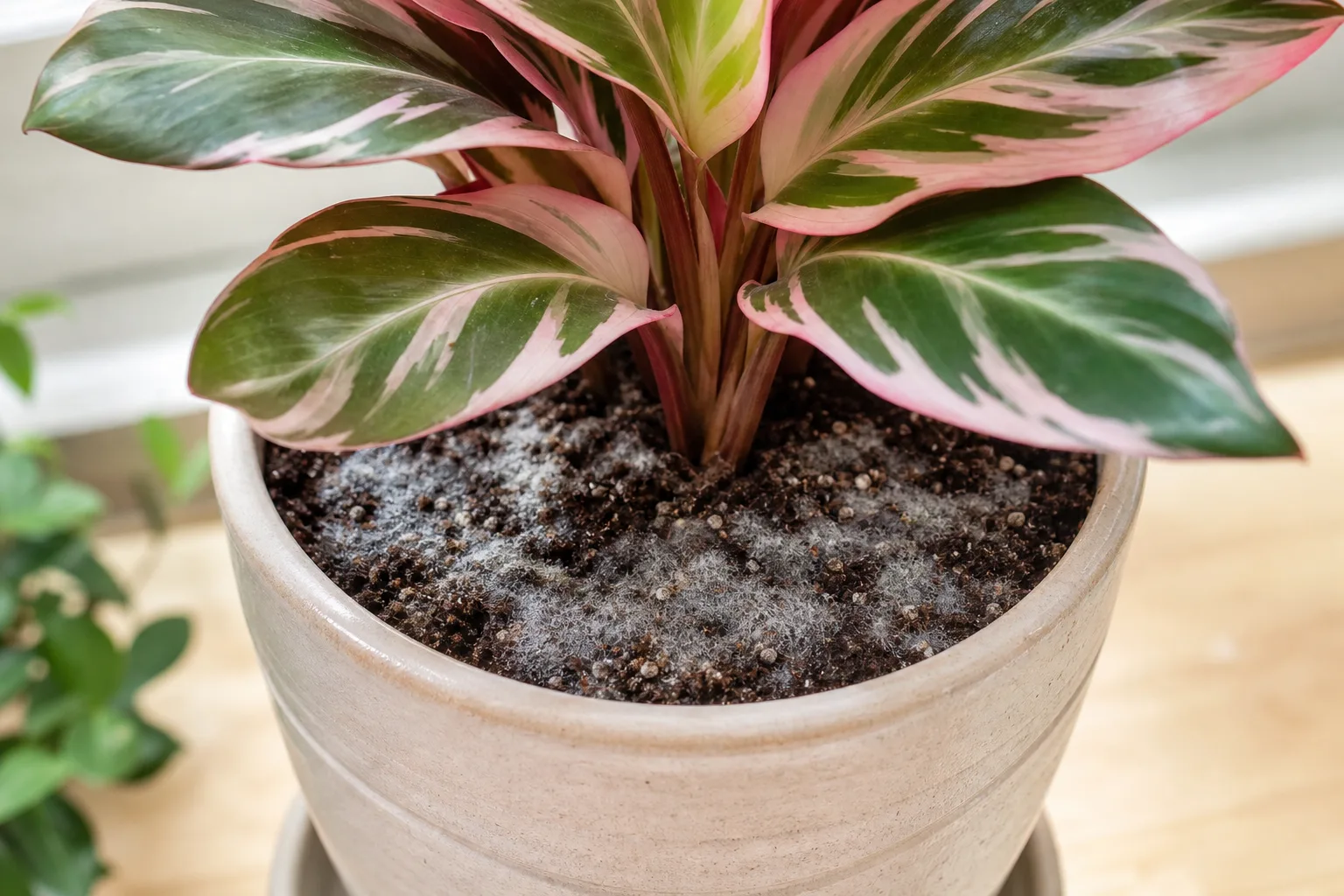
Fluffy white or gray mold on Calathea Roseopicta's soil surface means the top layer is staying wet too long-often from watering on a calendar instead of checking the pot. First step: press the top 2 cm of mix; if it feels damp and the surface is fuzzy, scrape off the mold and let that top layer dry before the next drink.
Mold on Soil on Calathea Roseopicta: Causes, Checks & Fixes
This guide covers mold on soil on Calathea Roseopicta. See also the general Mold on Soil guide, watering, and light pages for this plant.
Mold on Soil on Calathea Roseopicta: Causes, Checks & Fixes
Quick answer
White or gray fuzzy growth on the soil surface of Calathea Roseopicta (rose-painted calathea, Goeppertia roseopicta) is almost always saprophytic mold feeding on organic matter in a persistently damp top layer. It is ugly, but it rarely attacks living roots directly. What it does tell you is that the surface of your potting mix is staying wet longer than this plant can safely tolerate-even though Roseopicta genuinely wants evenly moist, well-drained soil below.
First step: check the top 2 cm of mix with your finger before you water again. If that layer is still damp and fuzzy mold is visible, scrape off the top 1–2 cm of affected soil, discard it, and pause watering until the surface feels dry to the touch. Do not reach for fungicide first. Fix the moisture rhythm, then watch whether new leaves keep opening with clean painted markings.
What mold on soil looks like on Calathea Roseopicta
On Roseopicta, mold usually appears as a fine white or gray fuzz across the soil surface, sometimes in patches around the crown or under overlapping leaves. You may notice it after a stretch of heavy watering, during cool winter weeks when the plant drinks less, or in a dim corner where the mix dries slowly.
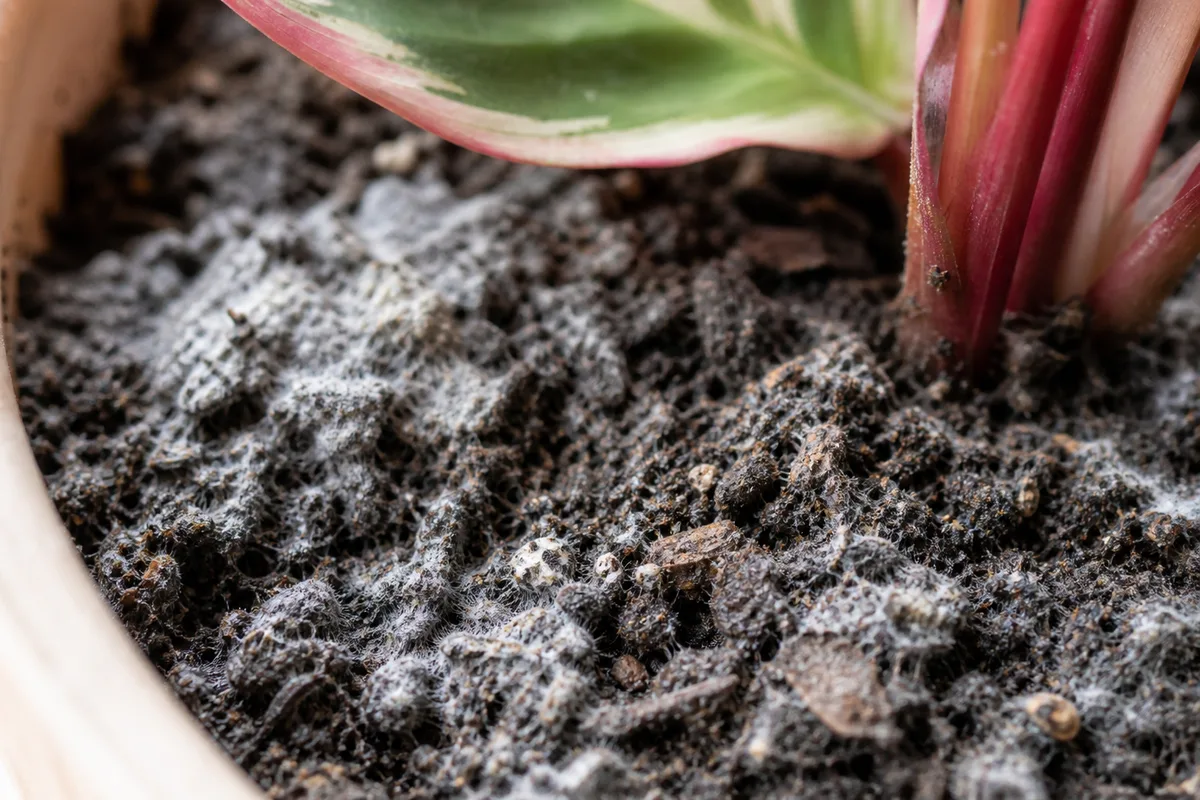
Fine white or gray saprophytic mold on the soil surface - indicates the top layer has stayed damp too long, not a leaf disease.
The plant itself often still looks stable. Painted leaves may continue opening from the center, and existing brown tips from tap water or low humidity do not mean mold has infected the foliage. That separation matters: mold on soil is a substrate problem, not a leaf disease like powdery mildew.
Other clues that often appear together:
- The soil surface stays visibly dark and damp for several days after watering
- A faint musty smell when you move the pot
- Small black fungus gnats hovering near the soil after you water
- Decaying leaf bits, peat fines, or bark chips sitting on the surface
If stems are firm, new growth is still rolling out, and only the soil looks wrong, you are likely dealing with harmless surface fungus-not crown rot.
Why Calathea Roseopicta gets mold on soil
Roseopicta sits in an awkward middle zone for soil moisture. NC State Extension describes it as needing moist, well-drained peaty mix with humidity above 60% and temperatures around 65–75°F. That profile encourages steady transpiration-but only when light, warmth, and airflow are balanced. When any of those slip, the same moisture-loving setup leaves the top layer wet while roots below barely drink.
These are the most common Roseopicta-specific triggers:
Watering on schedule instead of checking the pot. Your care card may say every 5–7 days in growth season and 7–10 days in winter, but a plant in low light, a cool room, or a humidifier-heavy corner uses far less water. UMN Extension notes that wilt with wet soil often signals root trouble from chronically damp mix-not thirst. On Roseopicta, the earlier warning is a moldy surface before leaves yellow.
Moisture-retentive mix without enough structure. Roseopicta wants organic, moisture-holding soil, but dense peat that compacts over time holds a wet cap at the surface. Perlite or bark helps drainage; without it, the top stays soggy even when you water modestly.
Low light slowing water use. Roseopicta needs bright filtered light to keep leaf contrast sharp. In shade, growth slows, stomata move less water, and the same watering volume keeps the surface damp. Mold follows.
Winter slowdown. Cooler temperatures and shorter days reduce uptake. If you keep summer watering volume through winter, the mix stays wet longer. Colorado State Extension links this seasonal pattern to fungus gnat outbreaks in persistently moist media-the same habitat surface mold prefers.
Organic debris on the soil. Spent Roseopicta leaves that curl down and rest on the mix decay quickly in a humid room. Saprophytic fungi feed on that material. The mold is the recycler; the debris is the fuel.
Oversized pots. A small root ball in a large wet reservoir means the surface area stays damp for days after each watering, especially in a moisture-retentive blend.
Overhead watering onto fuzzy leaves can also knock debris and moisture onto the soil surface, but the core issue is almost always surface wetness lasting too long, not random bad luck.
How to confirm the cause
Work through these checks in order before repotting or spraying:
- Surface moisture - Touch the top 2 cm. Still damp three or more days after watering confirms slow drying.
- Pot weight - Lift the container. Heavy with a fuzzy surface means excess retained water; very light with mold suggests old spores on now-dry mix (less urgent).
- Crown firmness - Press the base gently. Firm tissue supports cosmetic mold. Soft, collapsing stems mean investigate roots.
- Leaf pattern - New leaves opening with faded pattern or widespread yellowing with wet soil points beyond mold. Isolated old edge crisping is usually water quality or humidity, not soil fungus.
- Smell - Musty is common with surface mold. Sharp sour or swampy suggests anaerobic wet soil and possible root decline.
- Gnats and debris - Flying gnats plus decaying leaves on the surface confirm a wet, organic-rich top layer. Colorado State Extension notes gnats develop in moist growing media feeding on fungi and decaying matter.
- Light and season - Low light, cool room, or winter rest with unchanged watering strongly implicates culture over disease.
If the plant is firm, smells only faintly musty, and mold is limited to the soil surface, treat it as a moisture-and-airflow correction, not a rescue repot.
The first fix to try
Scrape off the visible mold and let the top layer dry before you water again.
Use a spoon or small trowel to remove the top 1–2 cm of fuzzy soil and discard it in the trash-not the compost pile, where spores can spread. Add a thin layer of fresh, dry potting mix if the surface looks depleted. Then move the pot to a spot with bright filtered light and gentle airflow for a few days so the top can dry.
Do not water until the surface feels dry and the top 2 cm is beginning to dry-the same checkpoint Roseopicta uses for its normal rhythm. When you do water, use filtered or rainwater and water thoroughly until excess drains out. Empty the saucer so the pot never sits in standing water. Missouri Botanical Garden warns that waterlogged soil cuts off oxygen to roots; preventing that rebound matters more than killing surface fuzz.
That single correction-remove mold, dry the cap, drain properly-solves most Roseopicta mold cases without repotting.
Step-by-step recovery
If the first fix does not hold, work through these steps in order:
1. Clean the surface daily
Pick off fallen leaves and organic debris before they mold. Roseopicta’s older leaves often lay against the soil in a rosette; those are prime mold food.
2. Recalibrate watering to the pot, not the calendar
Water only when the top 2 cm is beginning to dry. In winter or dim placements, that may mean 10–14 days between drinks even if summer rhythm was weekly. UMN Extension recommends feeling the top few inches and judging pot weight rather than following a fixed schedule.
3. Improve light without scorching pattern
Move Roseopicta to brighter filtered light so it uses water steadily. Direct sun burns the pink and cream bands first-indirect brightness is the target.
4. Address fungus gnats if present
Let the top 1–2 inches dry between waterings, use yellow sticky traps for adults, and consider a Bacillus thuringiensis israelensis soil drench if larvae persist. UMN Extension lists drying the surface as the primary gnat control-aligned with mold prevention.
5. Refresh the top layer or repot if mold returns fast
If white fuzz reappears within a week after scraping, replace the top inch with fresh mix or repot into a slightly chunkier blend with perlite or fine bark. Keep the same pot size unless roots clearly fill the container.
6. Bottom-water temporarily if overhead splashing is an issue
Set the pot in a tray of water for 15–30 minutes so the plant absorbs from below while the surface stays drier. UMN Extension notes bottom-watering can keep the surface less hospitable to gnats and fungi.
Skip cinnamon, hydrogen peroxide, and fungicide sprays unless mold is chronic and cultural fixes have failed. They mask symptoms without fixing the wet cap that Roseopicta keeps recreating in humid rooms.
Recovery timeline
Days 1–3: After scraping and drying the surface, visible mold should stop spreading. The pot will feel lighter as the top layer dries.
Week 1–2: If watering rhythm now matches how fast the pot dries, mold should not return. Watch for a new rolled leaf emerging from the crown-that is the best health signal on Roseopicta.
Weeks 3–4: Fungus gnat numbers should drop as the surface stays drier between waterings. Old leaves with previous brown tips will not repair; judge success by clean new patterning.
Beyond one month: Persistent mold means the mix, pot size, or placement still holds surface moisture. Repot with better structure or increase light before assuming the plant is diseased.
Surface mold leaves no permanent scar on foliage. Damage only accumulates if wet soil progresses to root stress-yellowing, crown softness, or stalled new growth.
Lookalike symptoms
Powdery mildew or leaf spot grows on leaf tissue, not soil. Roseopicta can get leaf spots when water sits on leaves or airflow is poor. Mold on soil stays on the substrate.
Mineral crust or water deposits look chalky and hard, not fuzzy. Common with hard tap water-another reason Roseopicta prefers filtered water.
Green algae on the pot rim needs constant light moisture and often low light. Fix is similar-dry the surface and brighten indirect light-but algae is photosynthetic green, not white fuzz.
Root rot wilts the plant while soil stays wet and may smell sour. Stems soften at the base. Mold alone without crown mush is not rot.
Mistakes to avoid
- Drenching with fungicide for harmless surface mold while keeping the soil wet
- Watering on the old summer schedule through winter or after moving to lower light
- Leaving spent leaves on the soil in a high-humidity room
- Assuming humidity excuses a wet surface-Roseopicta wants humid air, not a soggy soil cap
- Repotting immediately on day one when a scrape-and-dry fix has not been tried
- Using straight tap water-fluoride and chlorine stress foliage and do not fix mold; UGA Extension lists Calathea among plants sensitive to fluorine and chlorine in irrigation water
- Choosing a much larger pot to “give roots room,” which keeps more mix wet longer
Calathea Roseopicta care cross-check
Mold is a moisture signal. These baseline checks keep the painted leaves worth saving:
| Checkpoint | Target for Roseopicta |
|---|---|
| Watering | Top 2 cm beginning to dry; evenly moist below, never waterlogged |
| Water type | Filtered or rainwater |
| Light | Bright filtered-enough to maintain leaf contrast, no direct sun |
| Humidity | 60% or higher in air, not standing water in the saucer |
| Mix | Moisture-retentive but well-draining peaty blend with perlite or bark |
| Temperature | Roughly 65–80°F; slow growth in cool rooms needs less water |
When mold appears, one of these has drifted-most often watering frequency relative to current light and season.
How to prevent mold next time
- Check the top 2 cm before every watering; skip the drink if still damp
- Remove fallen leaves from the soil surface weekly
- Keep bright filtered light so the plant transpires steadily
- Use a pot with drainage holes and empty the saucer after watering
- Refresh or repot when peat-heavy mix compacts and the surface stays wet
- Match winter watering to slower uptake-lighter, less frequent drinks
- Run a humidifier for air humidity rather than misting the soil surface repeatedly
Prevention on Roseopicta is less about sterilizing soil and more about never letting the top cap stay wet for days while the rest of the care profile stays humid and warm.
When to worry
Treat mold as urgent when:
- It returns within a week after scraping and drying
- Stems feel soft or collapse at the soil line
- Yellowing spreads to new leaves while the pot stays heavy
- The mix smells sour, not just musty
- Fungus gnats persist after four weeks of surface drying and traps
- New growth stops entirely and old leaves droop despite wet soil
A single patch of white fuzz on firm plants with continuing new leaves is a course correction, not a death sentence. Roseopicta is sensitive to sloppy watering, but surface mold caught early rarely kills an otherwise healthy plant.
Conclusion
Mold on Calathea Roseopicta’s soil is your pot telling you the surface has been wet too long for current light, season, and mix. Scrape the fuzz, let the top dry, water with filtered water only when the top 2 cm is ready, and keep bright filtered light. Judge recovery by the next clean painted leaf-not by old edge damage.
Related Calathea Roseopicta guides
- Calathea Roseopicta overview - species care hub
- Watering - top-2-cm dry-down rhythm
- Overwatering - wet-soil collapse patterns
- Root rot - escalation when stems soften
- Fungus gnats - flies sharing wet surface habitat
- Brown tips - tap-water confounders vs surface mold
- Mold on soil (Calathea genus) - shared prayer-plant basics
Related tool
Use the Plant Problem Diagnosis Tool to narrow causes for mold on soil on this plant before changing multiple variables at once.