Watering Calathea Roseopicta: Schedule, Soil Checks &
Watering Calathea Roseopicta: Schedule, Soil Checks & Mistakes
Watering Calathea Roseopicta: Schedule, Soil Checks & Mistakes
Why Calathea Roseopicta Watering Is Different From Most Houseplants
Calathea Roseopicta watering is not a simple “once a week” job because Calathea roseopicta - now classified botanically as Goeppertia roseopicta - evolved on the shaded floor of tropical forests in northwestern Brazil, where rain is frequent but roots still breathe in loose, organic soil. The plant, sold as rose-painted calathea or medallion prayer plant depending on cultivar, belongs to the Marantaceae family alongside other prayer plants that fold their leaves at night through nyctinasty. That forest-floor heritage means the root system is built from fine, shallow feeder roots that absorb water quickly but suffocate easily when air is pushed out of soggy mix for days at a time.
Most beginner houseplant advice assumes you can let soil dry halfway down before watering. Calathea roseopicta sits in a narrower band: growers and botanical references including NC State Extension describe the goal as consistently moist but not waterlogged soil. Let the top 1 to 2 inches (roughly 2.5 to 5 cm) begin to dry, then water thoroughly. That is a partial dry-down, not a full drought cycle. Swing too far toward bone-dry pots and you get curling, crisp edges, and stressed fine roots. Swing toward permanently wet mix and you invite yellow lower leaves, black leaf blotches, mushy stems, and root rot on Calathea Roseopicta.
Rose-painted calathea also reacts to water chemistry faster than many tough foliage plants. The University of Florida IFAS Extension notes that calatheas are sensitive to fluoride in irrigation water, which can cause dead spots near leaf margins - a problem that develops alongside chronic water stress in plants watered with hard tap water. Fluoride, chlorine, and mineral salts can brown leaf margins even when moisture levels are technically correct. Combine that sensitivity with the plant’s need for above 60% humidity per NC State Extension and stable temperatures between about 65 and 75°F (18–24°C), and you can see why two pots of Calathea Roseopicta in the same home may need different schedules. Watering connects directly to light exposure, pot volume, mix texture, and air moisture - not to a calendar date alone.
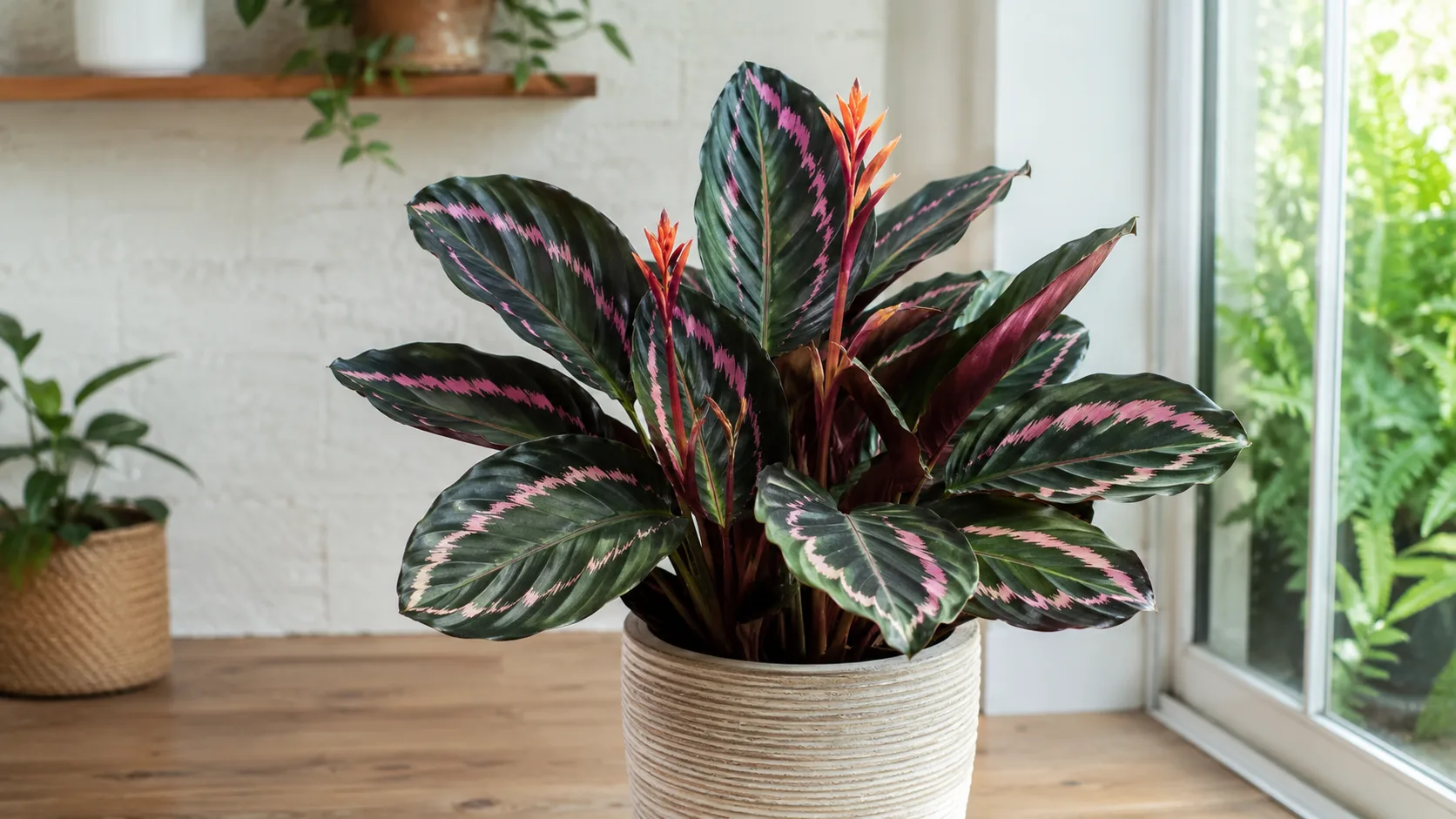
What makes Roseopicta especially unforgiving is the painted foliage display. Cultivars such as Dottie, Medallion, and Rosy carry rounded leaves with pink, cream, or rose bands on dark green - and a single browned edge or black water spot ruins the whole leaf permanently. Roseopicta is less tolerant of careless watering than rattlesnake calathea because edge damage interrupts the entire painted pattern rather than a narrow striped blade. That visual penalty is why soil checks matter more here than on hardier prayer plants.
How Often to Water Calathea Roseopicta
There is no universal day count that works in every room. As a starting range during active growth, many healthy indoor rose-painted calatheas need water roughly every 5 to 10 days in spring and summer, and every 10 to 14 days in fall and winter - but only when the top layer of mix has reached the right dryness and the pot no longer feels heavy with moisture. NC State Extension advises keeping the mix moist but not soggy or wet - check soil first, schedule second.
Your actual interval depends on variables you can observe. A plant in a bright east window with warm air and a small pot may hit the dry threshold in four or five days. The same cultivar in a dim corner, cool room, or oversized container after Calathea Roseopicta repotting guide may take two weeks or longer between drinks. New growth is your proof: if leaves unfurl cleanly with strong pink or cream contrast and the clump keeps producing upright stems, your current rhythm is probably close. If you are constantly rescuing curled leaves, trimming yellow bases, or watching black spots spread on lower foliage, the frequency - or the check method - needs adjustment before you change fertilizer or repot.
Treat published day ranges as reminders to inspect, not commands to pour. Set a phone alert every five days if that helps you remember, but let the finger, skewer, or pot-weight result decide yes or no. Calathea roseopicta punishes autopilot watering more than occasional careful delay; recovering from dry stress is often faster than recovering from rotted roots, though repeated drought still damages the painted leaf display over time.
Growing Season vs. Winter Frequency
From late winter through early fall, rose-painted calathea usually photosynthesizes steadily indoors and transpires more water through its broad, patterned leaves. During this growing season, the top inch or two dries faster and roots actively pull moisture to support new leaf rolls. Expect shorter gaps between waterings, but still verify each time.
In late fall and winter, shorter days and cooler room temperatures slow growth. The plant still needs water - it does not go fully dormant like a deciduous outdoor tree - but the root zone stays wet longer after each session. Stretch the interval and allow a slightly deeper dry-down in the top layer before watering again. Never let the entire root ball turn dusty and shrink away from the pot walls; winter means less frequent, not neglected. If heating dries the air sharply, leaf tips may crisp even when soil moisture looks fine, which is a humidity signal rather than an automatic cue to water more.
The Best Soil Moisture Checks Before You Pour
The most reliable Calathea Roseopicta watering decision comes from reading the root zone, not from leaf color alone and not from whether the surface looks pale or dark. Surface mix dries first in almost every pot. A crust can look dry while the center still holds plenty of moisture - the classic setup for overwatering on Calathea Roseopicta a plant whose owner “checks” only with a glance.
Build a consistent routine using one or more of three checks before every watering decision. Over a few weeks, you will learn how your specific container weight feels at “ready to water” versus “still hydrated.” That learned sense beats any generic app schedule because it accounts for your peat-perlite ratio, pot material, and room conditions.
Finger Test, Skewer Test, and Pot Weight
The finger test is the fastest method. Insert your index finger to the second knuckle - about 1 to 2 inches - near the pot rim, not only in the center. If the mix feels cool and slightly damp, wait. If it feels dry and crumbly at that depth with only faint coolness below, it is time to water. On very dense or peat-heavy mixes, the surface can stick to your skin when dry; feel for temperature and resistance, not color alone.
The wooden skewer test helps when you are unsure about deeper moisture or when the pot is too tight to fit a finger comfortably. Push a dry bamboo skewer or chopstick through a drainage hole upward, or down from the top along the inside wall. Pull it out after thirty seconds. Moist mix clings and darkens the wood; dry mix leaves little residue. This is especially useful after repotting into a larger pot, when the top may dry while the middle stays saturated.
Pot weight is the check experienced Calathea growers trust most. Lift the pot right after a thorough watering and notice the heft. Lift again before each future session. A pot that still feels substantially heavy relative to your baseline usually has adequate moisture throughout. A pot that feels noticeably light for its size - with the top inch dry - is ready for a full drink. Plastic pots make weight differences obvious; ceramic pots take longer to learn, but the relative change still matters.
A moisture meter can supplement these checks if you calibrate it for your mix. Treat readings as one data point, not gospel - cheap meters misread chunky bark and can lag in dense peat. Wipe the probe between uses and insert near the root ball, not only at the surface.
What “Consistently Moist” Actually Means for Rose-Painted Calathea
“Consistently moist” is one of the most misunderstood phrases in houseplant care because it sounds like the soil should never dry at all. For Calathea roseopicta, it means the middle and lower root zone stay lightly hydrated between waterings while the upper layer breathes briefly before the next drench. Think of a wrung-out sponge: damp throughout, not dripping and not desiccated.
After a proper watering, water moves through the mix, hydrates fine roots, and excess drains away. Over the next several days, the top layer loses moisture to evaporation and leaf transpiration. Roots still access water below. When the upper zone reaches the dry threshold, you repeat the cycle. Problems start when growers interpret “moist” as daily sprinkles or constantly wet surface - that keeps the crown area humid without flushing salts and leaves the lower profile stagnant.
Rose-painted calathea is not a bog plant and not a succulent. It cannot sit in pooled saucer water for days, and it cannot survive months of drought without losing foliage quality. The painted leaves - dark green with pink or cream bands, often with burgundy undersides - show stress quickly when that balance fails. Consistent moisture supports the nightly leaf folding that indicates a healthy prayer plant; severely dry or rotted roots disrupt that rhythm even if some older leaves still move.
Step-by-Step: How to Water Calathea Roseopicta Cleanly
Use this sequence whenever checks say the plant is ready. Adjust volume to pot size, but keep the logic the same: full saturation, full drainage, no standing water.
First, prepare room-temperature water. Cold tap water straight from the pipe can shock tropical roots and worsen leaf curl. Let cold water sit out for several hours or overnight if you cannot filter it - which also helps some chlorine dissipate, though it does not remove fluoride.
Water slowly and evenly across the soil surface until you see excess flowing from the drainage holes. That flush ensures the entire root ball rewets; partial top watering leaves dry pockets in older, root-filled mixes. Continue until the stream runs clear-ish, not only a few drips - a light cupful on a dry surface is not enough.
Let the pot drain for 10 to 20 minutes on a rack or over the sink. Then empty the saucer or cachepot completely. Never return a rose-painted calathea to a decorative outer pot still holding runoff. If you use a pebble tray for humidity, keep the water level below the bottom of the inner pot so roots are not wicking into standing water.
Avoid routinely drenching the leaf crown if your tap water is hard or if airflow is poor - water on folded young leaves can leave spots on the painted surface. Aim at the soil. If foliage is dusty, wipe leaves separately rather than using watering day as a shower unless you have soft water and good ventilation.
After watering, note the pot weight again so your future checks stay calibrated. If the mix surface stays wet for more than three or four days in normal indoor conditions, the problem is usually soil compaction, insufficient light, or a pot too large - not insufficient watering frequency.
Water Quality: Tap, Filtered, Rain, and Distilled
Calathea roseopicta is sensitive to fluoride, chlorine, and mineral salts in many municipal tap supplies. NC State Extension recommends rainwater or distilled water and warns that tap water containing fluoride will cause foliage to brown. The University of Florida IFAS Extension specifically flags calatheas as plants where fluoride in irrigation water causes dead spots near leaf margins - a separate problem from drooping, but one that develops alongside chronic water stress in hard-water homes.
Practical options rank from best to acceptable for most growers. Collected rainwater is excellent if pollution and storage cleanliness are managed - use within a reasonable time and keep containers covered to avoid mosquito breeding outdoors. Reverse-osmosis or charcoal-filtered water removes much of what causes tip burn. Distilled water works but can be expensive for large collections; alternating with filtered water is fine. Tap water left overnight helps chlorine off-gas but not fluoride; the Royal Horticultural Society recommends this partial fix when distilled water is impractical, though it is not a complete solution for fluoride-sensitive species.
Salt buildup from any water source still accumulates in peat mixes over months. If leaf tips brown despite good moisture and humidity, flush the pot occasionally by watering heavily twice in succession with clean water, letting it drain fully each time - once or twice per year is enough for most indoor pots. If crust whitens the soil surface, consider refreshing the mix at repotting rather than increasing fertilizer, which adds more salts.
Temperature matters as much as purity. Lukewarm water matches the root zone and avoids the sudden contraction that makes fine roots temporarily less efficient at uptake. In winter, do not use water cold enough to chill the pot.
Signs You Are Overwatering Calathea Roseopicta
Overwatering is the faster killer for rose-painted calathea because rotted fine roots cannot recover as easily as leaves can rehydrate from one dry episode. Watch for yellowing lower leaves that appear soft or droopy rather than crisp, brown or black mushy stems at the soil line, and a sour or swampy smell when you lift the pot or probe near drainage holes. Soil that stays wet on the surface for a week in a typical indoor environment - without extreme cold or dark - is a red flag.
Roseopicta can also show black splotches on leaves when overwatered - a symptom reported more often on Calathea Roseopicta overview than on rattlesnake calathea. Those dark patches differ from the crisp brown edges of drought or hard water; they spread on soft tissue and often appear on lower or inner leaves first. Leaves may curl upward or downward in confusing ways when roots fail. Unlike drought curl, which often pairs with light, dry mix and a noticeably lighter pot, rot-related stress can show wilting with wet soil because damaged roots cannot transport water even though the mix holds plenty.
If several stems feel soft at the base and new leaves emerge small or rotted before unfurling, stop watering immediately and inspect roots after letting the mix dry slightly. Overwatering clusters appear when low light slows evaporation, when oversized pots hold unused wet mix, when cachepots trap runoff, when soil has compacted and water runs down the sides without rewetting the root ball, or when a grower interprets “moist” as “water every Tuesday regardless.” Rose-painted calathea in a decorative pot without drainage is especially vulnerable; surface leaves may look fine for weeks while roots decline below.
Signs You Are underwatering on Calathea Roseopicta Calathea Roseopicta
Underwatering usually announces itself earlier and more visibly. Leaf curl - especially along the edges of the painted blades - drooping stems, and dry, lightweight pot are classic signs. The mix may pull away from the pot sides or feel hard on top. Older leaves may turn crispy at the margins while remaining attached, and new leaves can stall halfway out of their rolls, sometimes opening with dull or faded pattern color because the plant lacked moisture during development.
Prayer plants show normal daily movement when healthy: leaves often sit more horizontal by day and fold upward at night. Severe underwatering disrupts that rhythm; foliage stays limp or curled through the evening. By the time stems are fully limp, the plant is already stressed - your goal is to water when the top layer dries, not when the whole clump collapses.
One dry cycle rarely kills Calathea roseopicta if you rehydrate thoroughly and let excess drain. Repeated drought is worse: fine roots die back, and the plant may react badly when water finally returns, showing yellow leaves as it reallocates resources. Do not fix chronic underwatering with tiny daily sips that never reach the lower root zone; give a full watering, then return to proper dry-down checks.
Underwatering can mimic low humidity - both cause edge crisping - but dry soil and pot weight confirm the primary issue. If soil is appropriately moist and tips still brown, look at humidity, airflow, and water chemistry before adding more water.
Seasonal Watering Adjustments Through the Year
Indoor rose-painted calatheas follow your room’s seasons more than outdoor weather. Day length, heating, air conditioning, and plant growth phase shift dry-down speed month to month even when the pot never moves. Adjust by changing how often you reach the dry threshold, not by changing the threshold itself - the top 1 to 2 inches should still guide you.
Spring often brings new growth and faster water use as light increases and temperatures stabilize. Check a day or two earlier than you did in midwinter. Summer may add air-conditioning dryness, which increases transpiration even when soil dries at a similar rate - watch leaves, not only the calendar. Fall transitions require discipline: many growers overwater because leaf drop or slower growth makes them nervous, but roots need less frequent saturation as metabolism slows.
In spring, as new painted leaves emerge from the clump center, maintain even moisture without keeping the mix soggy and recalibrate pot weight after winter’s longer intervals. Summer heat can dry small pots quickly under Calathea Roseopicta light guide - verify moisture every few days, but never skip the finger or weight check because “it’s hot outside.” Winter is the danger zone for overwatering in dim rooms - reduce frequency substantially, keep the plant out of cold drafts below about 65°F (18°C), and pair reduced watering with stable humidity so leaf tips do not crisp from dry air while roots sit idle in wet mix. If you move Calathea Roseopicta outdoors for summer shade in warm zones, wind and brighter filtered light increase demand; acclimate gradually and inspect daily the first week.
Pot Size, Soil Mix, and Drainage Effects on Watering
The pot is part of the watering system. Calathea roseopicta forms a compact clump roughly 12 to 20 inches tall and 8 to 12 inches wide at maturity in a container, with shallow-to-medium rooting compared with many trees. A pot one size larger than the root ball - with a drainage hole - dries at a predictable rate. An oversized pot after an eager repot holds a ring of wet mix the roots never touch, creating chronic soggy conditions despite careful top checks.
Mix texture controls retention and oxygen. Rose-painted calathea wants moisture-retentive but well-draining soil: peat or coco coir with perlite and often a little orchid bark, in the pH 6.0–7.5 range described in botanical and nursery references. Dense garden soil or straight peat without aeration stays wet too long. Overly gritty cactus mix dries so fast that you chase constant drought in a heated room.
Terracotta breathes and dries faster; glazed ceramic and plastic retain moisture longer - adjust interval, not volume. Cachepots and double pots must not become reservoirs. After every watering, empty the outer layer. Rocks at the bottom of a pot do not fix poor mix; they shorten the effective root zone and can raise the water table inside the container.
If water runs straight through dry, compacted mix without soaking in - hydrophobic soil - bottom-water briefly in a basin until the surface darkens, then resume top watering on schedule. Long term, refresh or loosen compacted mix rather than watering daily to compensate.
How Light and Humidity Change Your Watering Schedule
Light drives water use. Every time you move Calathea Roseopicta closer to a bright filtered window or under a grow light, transpiration increases and the top layer dries faster. Roseopicta needs bright indirect light to keep its pink or cream contrast strong - but that same light increases watering demand compared with a dim corner. Move it to a low-light hall and the opposite happens - the same calendar schedule that worked near the east window will overwater the plant within two weeks. Judge by soil checks after any placement change, and expect a two- to three-week learning period while you recalibrate.
Humidity does not replace root moisture, but it changes how leaves look after watering. Above 60% relative humidity per NC State Extension, rose-painted calathea leaves unfurl more cleanly and edge browning from dry air decreases. Below that - common with winter heating - tips may crisp even when you water correctly. Mist increases ambient moisture briefly but does not hydrate roots; a humidifier or pebble tray supports foliage while you maintain proper soil cycles separately.
Temperature swings matter too. Hot afternoon sun on a west window can dry a small pot in two days; a cold draft from a window or AC vent slows root activity and extends wet time. Stable 65–80°F supports the even moisture balance this species prefers indoors.
Bottom Watering vs. Top Watering for Prayer Plants
Top watering - saturating from above until drainage runs free - is the default best practice for Calathea roseopicta because it flushes salts and rewets the entire profile. Most growers should top water on a normal schedule once checks indicate readiness.
Bottom watering - setting the pot in a basin of water for twenty to thirty minutes so mix wicks moisture upward - helps when mix has dried unevenly, when a slightly root-bound plant channels water down the sides, or when you are cautiously rehydrating after a dry spell without flooding the crown. Let the pot sit only until the surface darkens; remove, drain fully, and do not leave standing in the basin overnight.
Bottom watering alone, repeated exclusively, can accumulate salts at the soil surface over time because salts are not flushed downward. Alternate with occasional top flushes if you bottom water regularly. For rose-painted calathea, think of bottom watering as a recovery tool, not the main rhythm.
Watering After Repotting, Division, or Stress
Freshly repotted or divided Calathea roseopicta has disturbed fine roots and often more mix than the root ball immediately uses. Water once thoroughly after repotting to settle soil and eliminate air pockets, then let the mix dry slightly longer than usual before the next session - often a few extra days - while roots colonize new space. Oversized pots after division are a common post-repot rot trigger; match container to clump size.
After shipping or a cold exposure, do not drench a stressed plant “to help it recover.” Give moderate moisture when the top layer dries, keep humidity stable, and avoid fertilizer until new growth resumes. Leaf curl after repotting may be transplant shock rather than thirst; confirm weight before adding more water.
When propagating by division, each section needs roots and several stems. Water the new pots lightly after setup, then follow the same dry-down rules once the initial settle-in watering has drained. Covering with plastic raises humidity for establishment but increases fungal risk if soil stays soggy - vent and monitor moisture inside the tent.
Common Calathea Roseopicta Watering Mistakes
The mistakes that damage rose-painted calathea most often are predictable and fixable. Watering on a fixed calendar without checking soil tops the list - rooms change; plants do not read calendars. Leaving runoff in saucers or cachepots is second - roots cannot breathe in a submerged bottom layer even if the surface looks fine. Using cold or hard tap water produces chronic tip burn that growers misdiagnose as underwatering, leading to more water on already wet roots.
Misting instead of watering keeps leaves briefly damp while roots dry; mist supports humidity, not hydration. Daily tiny cups prevent full root-zone saturation and encourage shallow, weak root growth. Repotting into huge containers “so I don’t have to water as often” backfires in low light. Ignoring light changes after moving a plant causes sudden over- or under-watering when habits stay fixed.
Watering foliage at night in cool, still air can prolong leaf wetness and invite spotting on painted surfaces - water soil in morning or midday when possible. Assuming curl always means dry leads to rot when roots are dead and mix is wet - always pair leaf signals with soil and weight. Buying a stressed plant and drowning it on arrival is common; acclimate with moderate moisture checks instead of a rescue flood.
Mistake: Watering on a Calendar Instead of Soil
Calendar watering feels organized, but it ignores the variable that actually matters: whether the top 1 to 2 inches have dried enough for another full drink. A rose-painted calathea watered every Sunday may be perfect in March and drowning by November in the same spot because winter light dropped and heating cycles changed dry-down speed.
Replace the calendar rule with a check reminder. Same day each week if you need structure - but the action is inspect, then maybe water. Track outcomes in a notes app for a month: date, weight feel, water yes/no, leaf appearance. You will quickly see your personal interval range, which is more accurate than any blog’s day count.
Troubleshooting When Leaves Do Not Match the Soil
Real-world confusion happens when leaves curl but soil is wet. That often means root damage from past overwatering, partial dry pockets in a root-bound pot while the probe spot reads moist, or cold root shock - not a need for more water. Inspect drainage, smell the mix, and consider gently sliding the root ball out to check for brown, mushy roots versus firm white ones.
Brown tips with moist soil usually point to low humidity, hard water, fertilizer salts, or direct sun - not drought. Fix air moisture and water quality before increasing irrigation. Yellow leaves with dry soil may mean alternating drought stress or natural senescence of older lower leaves; remove fully yellow blades and stabilize moisture going forward.
Black splotches with wet soil strongly suggest overwatering or fungal stress from stagnant mix - reduce watering, improve airflow, and confirm drainage. Wilting after a correct watering can indicate heat stress or rapid light increase, not failed watering. No nyctinastic movement with otherwise green leaves may mean severe root issue or extreme dryness - check both extremes. When multiple variables changed at once - new pot, new window, new water - change one input and wait ten days before judging.
If problems persist after four to six weeks of corrected watering, compare your routine with the plant’s light and soil needs. Watering fixes what watering broke; it cannot fix a pebble tray mistaken for a drainage strategy or a pot with no holes.
Conclusion
Watering Calathea roseopicta well comes down to reading the top 1 to 2 inches of soil, giving a full drench with clean, room-temperature water, and letting the pot drain completely before it returns to its spot - then adjusting frequency as light, season, pot size, and humidity shift. Rose-painted calathea is less forgiving of soggy roots than of a short dry spell, and its painted foliage shows every mistake on the leaf surface long after roots recover. Check weight and moisture before you pour, empty every saucer, use filtered or rainwater when tips brown despite good care, and treat leaf curl as a prompt to investigate rather than an automatic command to water. Master that cycle and the pink-banded leaves, burgundy undersides, and nightly prayer-plant fold stay intact without the dry-wet swings that strip pattern color and invite rot.
When to use this page vs other Calathea Roseopicta guides
- Calathea Roseopicta overview - Start here for whole-plant context before deep-diving this topic.
- Calathea Roseopicta problems hub - Jump to symptom-specific fix guides when this care topic does not resolve the issue.
- Overwatering on Calathea Roseopicta - Escalate here when watering adjustments are not enough.
- Underwatering on Calathea Roseopicta - Escalate here when watering adjustments are not enough.
- Root Rot on Calathea Roseopicta - Escalate here when watering adjustments are not enough.
Related Calathea Roseopicta guides
- Calathea Roseopicta overview
- Calathea Roseopicta light
- Calathea Roseopicta soil
- Calathea Roseopicta propagation
- Calathea Roseopicta fertilizer
- Calathea Roseopicta repotting
- Overwatering on Calathea Roseopicta
- Underwatering on Calathea Roseopicta
- Root Rot on Calathea Roseopicta
- Wilting on Calathea Roseopicta
- Drooping Leaves on Calathea Roseopicta
- Mold on Soil on Calathea Roseopicta
Related tool
Try the Plant Watering Calculator with calathea-roseopicta pre-selected to estimate needs for your setup.