Underwatering on Calathea Roseopicta: Causes, Checks & Fixes
Quick answer
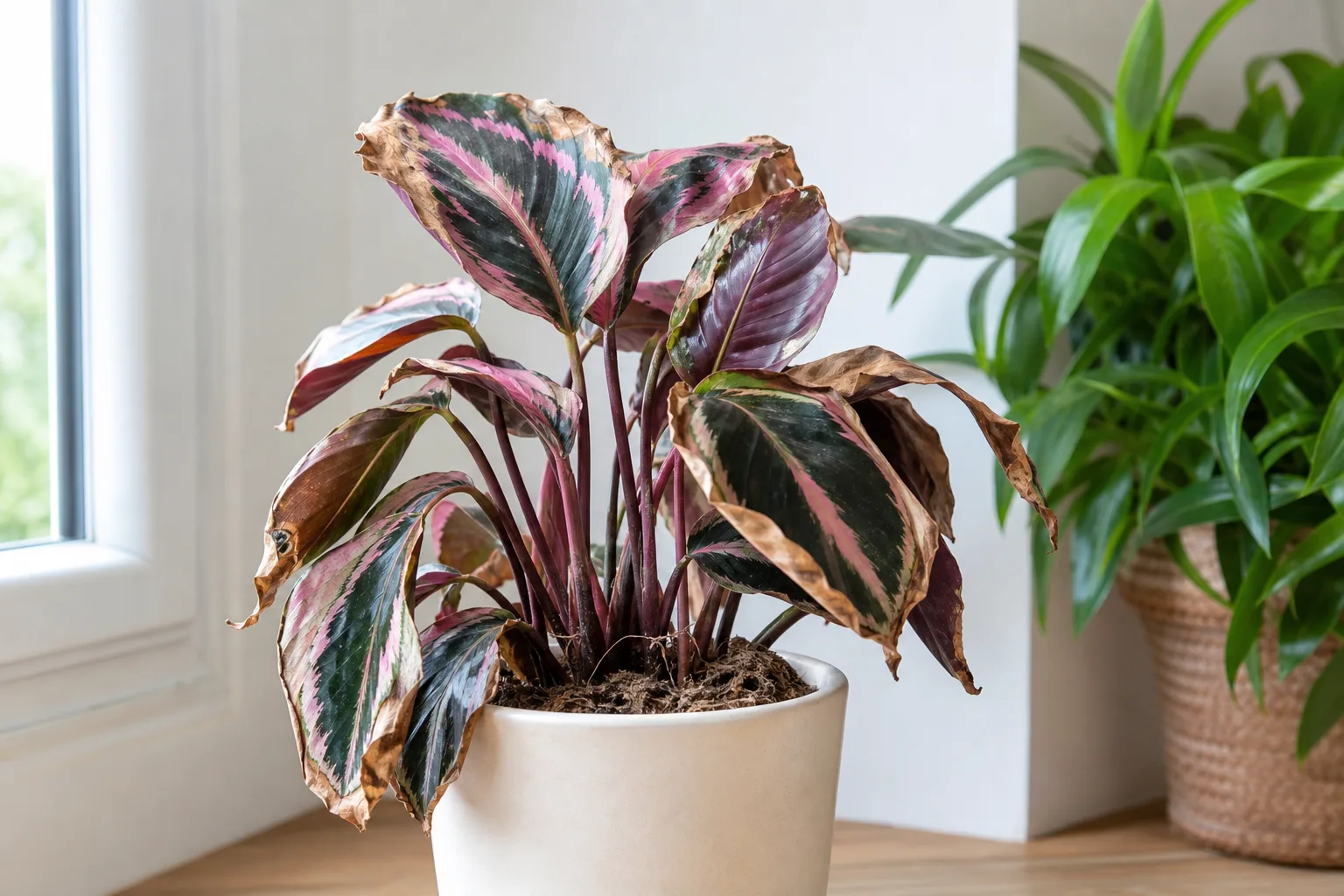
Underwatering on Calathea Roseopicta shows as curled or limp leaves, a very light pot, and dry mix below the surface. First step: soak the root ball thoroughly with room-temperature filtered or rain water, then drain completely.
Underwatering on Calathea Roseopicta: Causes, Checks & Fixes
This guide covers underwatering on Calathea Roseopicta. See also the general Underwatering guide, watering, and light pages for this plant.
Underwatering on Calathea Roseopicta: Causes, Checks & Fixes
Quick answer
Underwatering on Calathea Roseopicta means the root zone stayed dry too long for a plant native to tropical regions that evolved in consistently moist tropical forest soil. The painted leaves curl, droop, or crisp at the margins; the pot feels light; and the mix is dry well below the surface.
First step: give one thorough soak with room-temperature filtered or rain water until water runs from the drainage holes, then let the pot drain completely. Do not sprinkle the surface daily - Roseopicta has fine, shallow feeder roots that need the entire root ball rehydrated at once.
What underwatering looks like on Calathea Roseopicta
Rose-painted calathea shows drought stress on its broad, patterned leaves before the whole plant collapses. Common signs include:
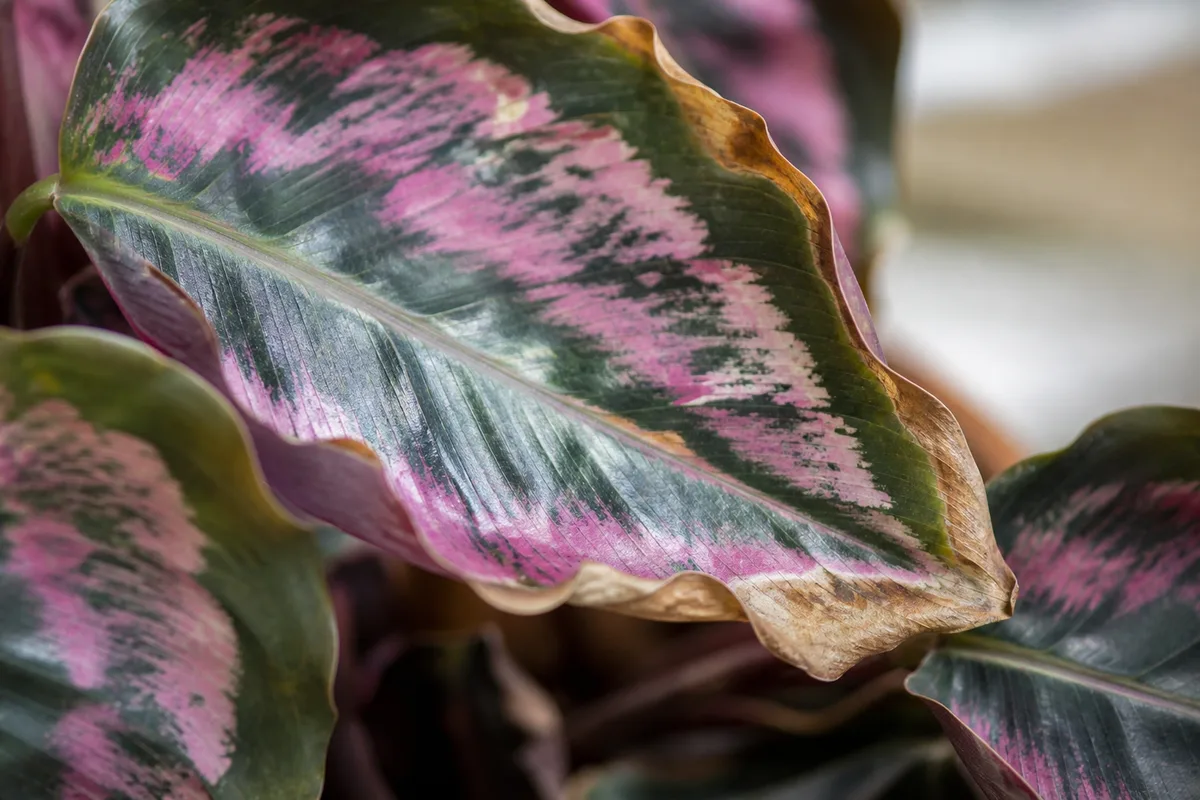
Curled rose-painted calathea leaf with crisp brown edges on the painted bands - compare with firm, fully patterned foliage on the same plant.
- [Curled or drooping leaves on Calathea Roseopicta](/plants/calathea-roseopicta/drooping-leaves/) during the day that do not match normal night prayer movement
- Crisp brown edges or tips on the painted bands - on Roseopicta, one browned margin ruins the whole leaf display
- Dry, pale, or dusty surface mix that may have shrunk away from the pot walls
- A very light pot when lifted
- Slowed or stalled new leaf rolls - the plant stops pushing fresh painted foliage when roots cannot access water
Unlike overwatering on Calathea Roseopicta, the soil is dry and airy, not cool and heavy. Roots, if you tip the plant out, are usually firm and pale, not brown and mushy. There is no sour smell from the mix.
Do not confuse drought curl with low humidity alone. Dry air can crisp edges even when soil moisture is adequate. Underwatering usually pairs dry soil at depth with limp or tightly curled foliage. If the top inch feels dry but the pot still feels heavy and leaves only show edge browning, humidity or tap-water minerals may be the main issue - not a full drought cycle.
Why Calathea Roseopicta gets underwatered
Calathea roseopicta - now classified as Goeppertia roseopicta - is a rainforest floor plant with fine, shallow feeder roots built for frequent moisture in loose, organic soil. It tolerates a brief partial dry-down in the top layer, but not a bone-dry root ball. Several patterns push Roseopicta into chronic drought indoors:
Fear of overwatering. Calatheas are famous for rotting in wet mix, so many owners swing too far the other way and let pots go dry for weeks. Roseopicta needs moist but not soggy or wet soil - a narrower band than succulents or snake plants.
Calendar watering in the wrong season. A schedule that works in bright summer may leave the pot dry too long in dim winter rooms - or vice versa when a plant moves to a warmer, brighter spot and transpires faster. The interval must follow soil dryness and pot weight, not a fixed day count.
Fast-drying placement. Small pots on sunny windowsills, near heating vents, or in dry air above 60% room humidity lose moisture quickly. Roseopicta is less forgiving of careless watering than rattlesnake calathea because edge damage interrupts the entire painted pattern on each leaf.
Hydrophobic, peat-heavy mix. When dry peat pulls away from the pot edge, water can run down the sides without soaking the root ball. The surface may look briefly damp while the center stays dry - a setup that looks watered but is not.
Root-bound or undersized pots. A crowded root ball in a small container can dry out in a few days during active growth, especially when new leaves are unfurling and pulling extra water.
How to confirm the cause
Work through these checks before soaking:
- Pot weight - Lift the container. A pot that feels noticeably light for its size usually needs water. Compare it to how heavy it felt right after your last thorough watering.
- Finger or skewer test at 1 to 2 inches - Insert your finger to the second knuckle near the pot rim. Dry, crumbly mix at that depth with wilted leaves supports underwatering. Cool, damp mix means wait.
- Shrink gap - Mix pulled away from the pot wall signals prolonged dryness and may need a soak, not a light top watering.
- Stem and root check - Soft stems at the soil line with wet mix suggest rot, not drought. Firm stems with dry mix fit underwatering.
- Recent routine - Travel, a skipped week of checks, or reduced watering after yellow leaves (which may have been overwatering, not underwatering) often explains sudden collapse.
- Humidity context - Below 50% room humidity can crisp edges on its own. If soil is dry and air is dry, both need attention - but rehydrate roots first.
If the pot is heavy, soil is wet several inches down, and lower leaves are yellowing, rule out overwatering and root rot on Calathea Roseopicta before adding more water. Wilting with wet soil means damaged roots, not thirst.
First fix for Calathea Roseopicta
Soak the entire root ball once with room-temperature filtered or rain water.
Place the pot in a sink or shower. Water slowly until the mix is saturated and excess drains freely from the bottom. If water runs straight through dry, gap-shrunk mix, bottom-water: set the pot in a basin of water so the mix wicks upward for 30 to 45 minutes, then lift it out and let it drain fully.
Use filtered, distilled, or rain water - tap water fluoride and minerals can brown margins even after a correct soak. Never use cold water straight from the tap; room temperature avoids root shock.
Do not fertilize, repot, or prune heavily the same day. One thorough rehydration is the first fix. Wait until the top 1 to 2 inches begin to dry again before the next full watering.
Step-by-step recovery
After the initial soak:
- Drain completely - Empty the saucer within 30 minutes. Roseopicta hates wet feet, but the problem today is dryness, not drainage.
- Move out of harsh stress - Shift the plant away from direct sun, heating vents, or cold drafts while it recovers. Bright filtered light and stable room temperature support rehydration.
- Raise humidity if air is dry - A humidifier targeting 60% or higher helps leaves regain turgor alongside moist soil. Misting alone does not replace root-zone water.
- Wait 24 to 48 hours - Leaves should begin to uncurl and firm up if roots were healthy. No change with still-dry inner mix means the first soak did not penetrate - repeat bottom-watering.
- Resume normal rhythm - Water again only when the top 1 to 2 inches feel dry and the pot lightens. During active growth, that may be every 5 to 10 days; in winter, longer gaps are fine if the root ball never goes fully dry.
- Trim only fully dead tissue - Brown crispy edges will not green up. Remove leaves that are mostly brown for hygiene once new growth looks stable.
If the plant perks up then wilts again within days on moist soil, inspect roots for rot or pest damage rather than assuming more drought.
Recovery timeline
Mild dehydration: Leaves often regain turgor within 24 to 48 hours after a proper soak. You should see less curling and firmer stems.
Moderate stress: Edge browning and older yellow leaves may persist for weeks. Judge recovery by new growth, not by old damaged tissue.
Severe or repeated drought: Fine roots can die back over multiple dry cycles. Recovery may take several weeks with no new growth until roots rebuild. If the crown stays firm and new leaf rolls appear by mid-spring, the plant is salvageable.
Worsening signs: Continued collapse after two thorough soaks, softening stems, or widespread leaf loss without new rolls points past simple underwatering - inspect roots and growing conditions.
Lookalike symptoms
- Low humidity - Crisp edges with adequately moist soil and a heavy pot; fix humidity and water quality before soaking again.
- Overwatering / root rot - Limp leaves with wet, heavy soil, yellow lower leaves, or sour smell; stop watering and inspect roots.
- Tap water damage - Brown tips and margins with otherwise correct moisture; switch to filtered or rain water.
- Too much direct light - Faded or scorched pattern bands, not drought curl; move to filtered indirect light.
- Normal nyctinasty - Roseopicta folds leaves upward at night; daytime drought curl looks tighter and pairs with dry soil.
- Cold draft stress - Drooping without dry soil; stabilize temperature before changing watering.
What not to do
Do not water daily in small sips after one dry spell - that keeps the surface damp without flushing salts and can swing you into overwatering. Avoid cold tap water and hard tap water on stressed foliage. Do not fertilize a drought-stressed plant; salts on dry roots cause burn. Do not mist instead of soaking - roots need soil moisture, not a brief leaf shower. Do not assume all drooping is underwatering without checking soil moisture; wet-soil wilt needs the opposite fix.
How to prevent underwatering next time
Build a habit around pot weight and the top 1 to 2 inches of mix, not a calendar. During active growth, many indoor Roseopictas need water roughly every 5 to 10 days; in cooler, dimmer months, stretch the interval but never let the whole root ball turn dusty and shrink from the pot walls.
Keep filtered or rain water at room temperature ready. Maintain humidity at 60% or higher so leaf edges do not crisp while you are still learning the right Calathea Roseopicta watering guide. Use a moisture-retentive but well-draining peaty mix with perlite so the root zone holds water without staying soggy.
Check weekly when the plant is stable; check every few days when it is in a bright window, small pot, or pushing new painted leaves. Roseopicta rewards boring consistency - one full soak when dry, full drainage after, and no long drought cycles during growth season.
When to use this page vs other Calathea Roseopicta guides
- Calathea Roseopicta watering guide - Use for routine moisture checks before assuming underwatering is the main issue.
- Calathea Roseopicta problems hub - Browse all 16 common issues on this species.
- Wilting on Calathea Roseopicta - Different entry point when symptoms overlap with underwatering.
- Brown Tips on Calathea Roseopicta - Different entry point when symptoms overlap with underwatering.
- Yellow Leaves on Calathea Roseopicta - Different entry point when symptoms overlap with underwatering.
Related Calathea Roseopicta guides
- Calathea Roseopicta overview
- Calathea Roseopicta watering
- Calathea Roseopicta light
- Calathea Roseopicta soil
- Wilting on Calathea Roseopicta
- Brown Tips on Calathea Roseopicta
- Yellow Leaves on Calathea Roseopicta
- Overwatering on Calathea Roseopicta
- Drooping Leaves on Calathea Roseopicta
- Calathea Roseopicta problems