Wilting on Calathea Roseopicta: Causes, Checks & Fixes
Quick answer
Wilting on Calathea Roseopicta is sudden loss of leaf firmness - first check whether the mix is wet or dry at 1 to 2 inches deep. Dry soil with a light pot means underwatering; wet heavy soil with limp leaves means root decline. First step: confirm soil moisture and pot weight before adding water or letting the mix dry.
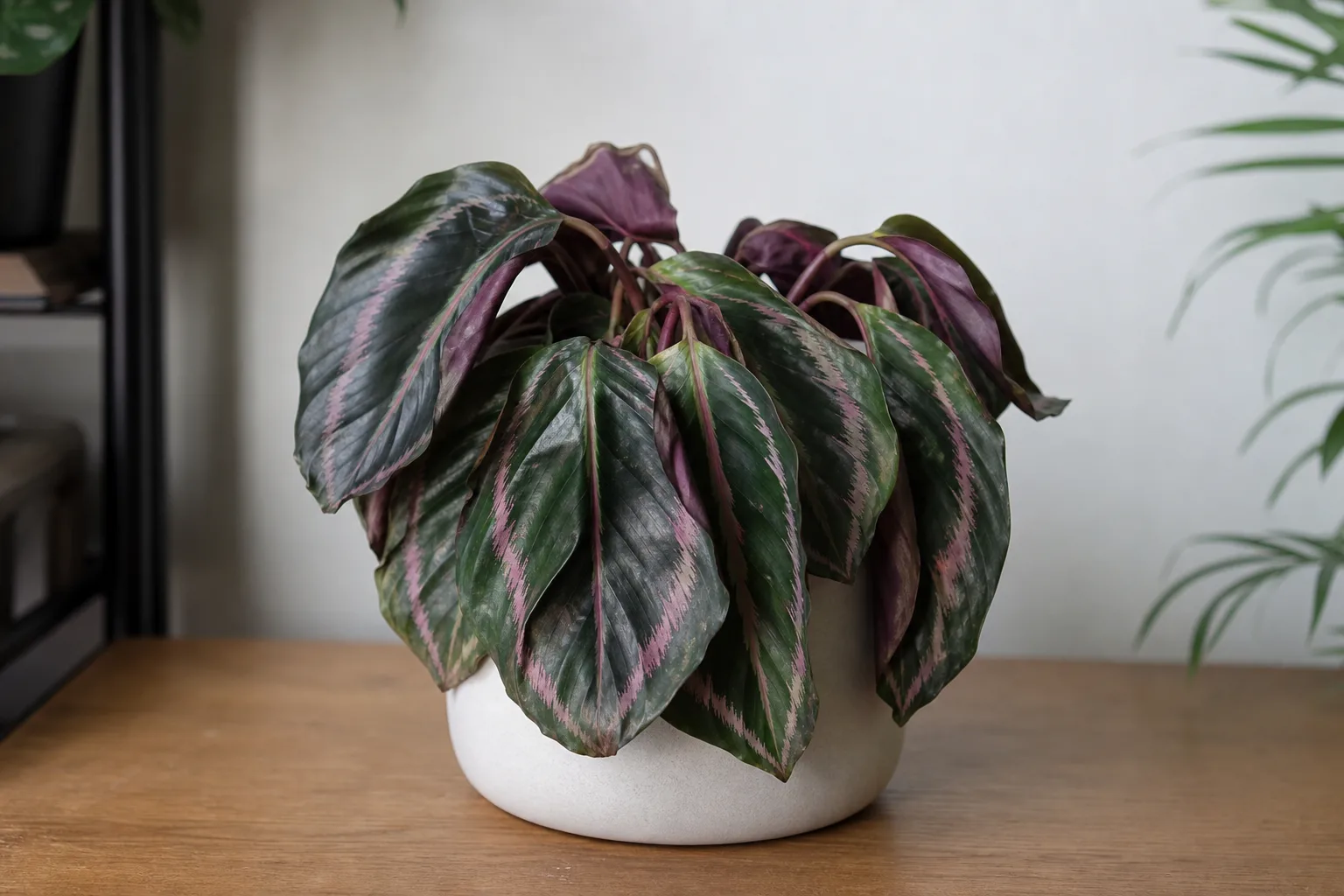
Wilting on Calathea Roseopicta: Causes, Checks & Fixes
This guide covers wilting on Calathea Roseopicta. See also the general Wilting guide, watering, and light pages for this plant.
Wilting on Calathea Roseopicta: Causes, Checks & Fixes
Quick answer
Wilting on Calathea Roseopicta is acute loss of turgor - painted leaves hang limp, stems soften, and the whole clump looks collapsed rather than merely relaxed. On this rainforest understory Marantaceae plant, the same limp look can come from opposite causes, so your first job is a wet-vs-dry fork, not more water by reflex.
First step: stick your finger 1 to 2 inches into the mix and lift the pot. A light pot with dry, crumbly soil points to underwatering - one thorough soak with filtered water is the fix. A heavy pot with cool, damp soil and limp leaves points to root oxygen loss or rot - pause watering and see overwatering or root rot. If soil moisture looks fine but leaves wilt midday, check humidity and draft exposure before changing watering again.
Do not confuse crisis wilt with normal evening prayer movement. Roseopicta folds leaves upward at night through nyctinasty - healthy, reversible, and unrelated to root failure.
Wilting vs. evening droop on rose-painted calathea
Calathea roseopicta - botanically Goeppertia roseopicta - is a prayer plant that raises and lowers leaves on a daily rhythm tied to light change. That nyctinasty looks dramatic but is normal: leaves stand more upright in evening and lower during the day.
Pathological wilt differs in timing and texture:
| Signal | Normal nyctinasty | Crisis wilt |
|---|---|---|
| When it shows | Evening into night; eases by morning | Midday or constant over multiple days |
| Leaf feel | Firm, smooth fold along pulvinus | Soft, limp, sometimes crispy margins |
| Soil cue | Moist appropriate mix | Very dry or wet heavy mix |
| New growth | Leaf rolls unfurl cleanly | Rolls stall, brown, or abort |
| Whole plant | Only leaf angle changes | Stems lose rigidity; clump collapses |
If you only notice folding after sunset and the plant looks fine by breakfast, no fix is needed. If leaves stay limp during daylight - especially with dry or soggy soil - use the diagnostic path below. This page covers acute wilt; gradual limpness without sudden collapse is covered on drooping leaves.
What wilting looks like on Calathea Roseopicta
Rose-painted calathea shows wilt on its broad, patterned leaves before the crown fails. Because each leaf is a display piece, even partial collapse ruins the ornamental look - which is why owners often panic and overwater wet pots.
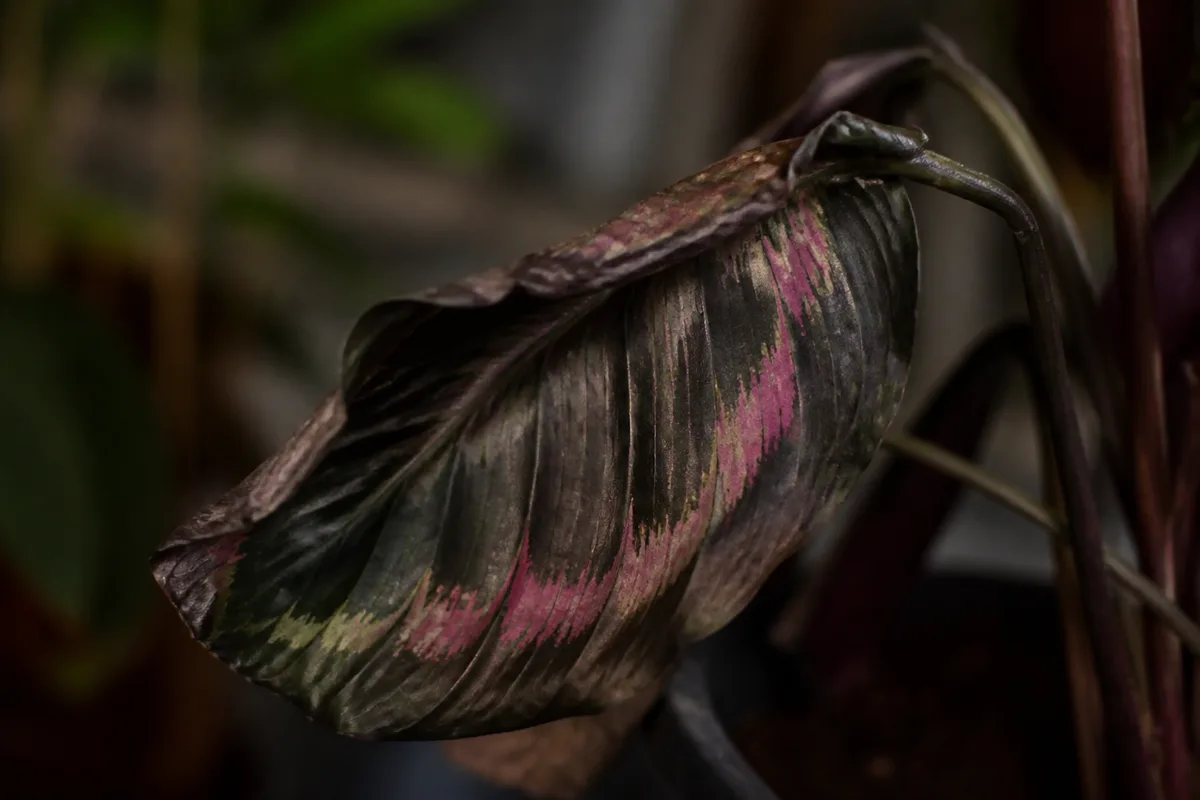
Limp collapsed painted leaf on roseopicta - acute wilt with loss of leaf firmness.
Cultivar note: Medallion, Dottie, and other dark-band cultivars show wilt just as clearly as the species type - one limp painted leaf interrupts the whole contrast pattern, so owners often mistake wet-soil wilt for thirst and water again. The wet-vs-dry fork matters more on these display cultivars because a single collapsed leaf is permanently visible until you prune it.
Common wilt patterns on roseopicta:
- Limp, hanging painted leaves with stems that bend instead of holding upright
- Inward curl or roll tighter than normal daytime posture - often paired with dry mix when drought is the cause
- Soft yellow lower leaves with wet, heavy soil when roots are failing despite moisture
- Midday collapse that returns each afternoon in dry winter air even when soil moisture is technically adequate - overlaps with low humidity
- Sudden wilt after a heat spike or vent blast - leaves desiccate faster than roots can supply water
- Fine webbing on undersides with stippling - spider mites exploit stressed, dry-canopy conditions
Wet-soil wilt often includes a sour smell, fungus gnats, or black blotches on lower foliage. Dry-soil wilt includes a feather-light pot, mix shrunk from pot walls, and crisp brown edges starting on painted margins.
Why Calathea Roseopicta wilts
Roseopicta evolved on the tropical forest floor with fine, shallow feeder roots that need steady moisture and oxygen at the same time. Wilting means the water pathway from roots to leaves broke down somewhere in that chain.
Underwatering and dry root ball
When the root zone dries too long, cells lose turgor and painted leaves collapse. Roseopicta is less forgiving of drought than rattlesnake calathea because edge damage on one painted leaf ruins the whole display. Hydrophobic peat that shrinks from pot walls can leave the center dry even after a light top watering - classic false recovery.
Overwatering and root oxygen loss
Saturated mix pushes air out of pores; roots stop functioning and leaves wilt despite wet soil. Wilting with moist soil often indicates damaged roots, not thirst. Cool dim rooms slow evaporation and make this common on roseopicta kept in heavy peat.
Low humidity and heat or draft stress
Large thin leaves transpire heavily. When room relative humidity falls below about 50%, or when hot air from a register hits the canopy, water loss can outpace uptake even with moist soil - see low humidity. Drafts from AC or cold windows add the same stress; keep calatheas away from draughts and radiators.
Pests and root damage
Spider mites, mealybugs, and root rot all reduce the plant’s ability to move water. Wilt plus stippling, sticky residue, or mushy roots needs the pest or rot pathway, not another blind watering.
Tap-water stress compounding wilt appearance
Fluoride and minerals in tap water brown margins on calatheas. Brown crispy edges can look like drought wilt, but the fix is water quality and humidity - not always more volume. Review brown tips if margins brown while soil moisture is correct.
Wet soil vs. dry soil: 60-second check
Before any fix, run this fork:
- Lift the pot - Noticeably light for its size → dry-side wilt likely. Heavy and hard to lift → wet-side wilt likely.
- Finger or skewer at 1 to 2 inches - Dry and crumbly → drought path. Cool, damp, dark mix → stop watering path.
- Smell and drain - Sour odor or water sitting in saucer for days → root stress from excess moisture.
- Time of day - Evening-only fold with firm tissue → nyctinasty. Midday limp with soil clues → true wilt.
- Newest leaf roll - Stalled or brown unfurling confirms active stress, not old damage.
| Pot weight | Soil at 1–2 in. | Likely cause | First direction |
|---|---|---|---|
| Light | Dry | Underwatering | One full soak |
| Heavy | Wet, cool | Overwatering / root decline | Pause water; inspect if needed |
| Moderate | Moist | Low humidity / heat / pests | Hygrometer + pest check |
| Light | Wet surface, dry core | Hydrophobic dry patch | Bottom soak |
| Heavy | Wet + yellow lower leaves | Root rot precursor | Root inspection |
How to confirm the cause
Work through these steps in order - make one conclusion before changing care:
- Record soil moisture and pot weight at midday, not just after you watered yesterday.
- Compare to your watering baseline - roseopicta wants moist but not soggy or wet soil; top 1 to 2 inches should dry between drinks.
- Check humidity at canopy height - below 50% with moist soil implicates dry air; target 60% or higher for recovery.
- Scan for vents, AC, and hot glass within 3 feet (1 m) of the pot.
- Inspect leaf undersides for webbing, dots, or mealy white clusters.
- Gently tug a stem - firm crown with dry soil fits drought; soft base with wet soil fits rot.
- Review recent changes - Calathea Roseopicta repotting guide, fertilizer, or a moved pot often trigger temporary wilt.
Confirmed dry-side wilt: light pot, dry mix at depth, firm roots if sampled. Confirmed wet-side wilt: heavy pot, wet mix, yellowing or smell, limp leaves. If both humidity is low and soil is dry, rehydrate roots first, then raise RH - do not skip the soil check.
First fix for Calathea Roseopicta (by confirmed cause)
One clear first action per branch - do not stack repot, fertilizer, and pesticide the same day.
If soil is dry (underwatering wilt)
Give one thorough soak with room-temperature filtered or rain water until water runs from drainage holes, then let the pot drain completely. If water runs through gap-shrunk mix without soaking the center, bottom-water for 30 to 45 minutes and drain again. Full protocol: underwatering guide.
If soil is wet (overwatering or root decline)
Stop watering immediately. Move the plant to bright filtered light - not direct sun - and empty any standing saucer water. Let the top inch dry before reassessing. If limp leaves continue on wet mix for more than a week, follow the root rot unpot inspection checklist - trim mushy tissue only after you confirm it on the roots, not from leaf appearance alone. Wet-soil dry-down details: overwatering.
If soil is moist but leaves wilt midday (humidity or heat)
Run a humidifier within 3 to 5 feet (1 to 1.5 m) until readings hold at 60% or higher, and move the pot off vent paths. Do not add extra water to fix dry-air wilt. See low humidity.
If pests are present
Shower leaf undersides with room-temperature water and isolate the plant. Keep humidity high while you treat - mites thrive in dry air. Follow spider mites or mealybug guidance before fertilizing or repotting.
Make one care correction at a time so you can read the plant’s response over the next week.
Recovery timeline and success signs
Dry-side wilt: Leaves often regain turgor within 24 to 48 hours after a proper soak. Painted margins that crisped will not green again - watch for new leaf rolls opening cleanly.
A typical dry-side recovery: a feather-light 6-inch roseopicta with gap-shrunk mix and midday limp leaves regained firmness within 36 hours after one filtered-water soak and drain - the next central leaf roll opened with intact pink bands two days later, while older crisped margins stayed brown.
Wet-side wilt: Improvement may take several days to weeks once oxygen returns to the root zone. Judge recovery by new growth, not old limp tissue.
Humidity-related wilt: Less afternoon collapse within one to two weeks of stable 60%+ RH at canopy level.
Worsening signs: Continued collapse after two correct soaks (dry path) or after a full dry-down (wet path), softening crown, black stem bases, or widespread leaf loss without new rolls - inspect roots and consider whether the specimen is salvageable.
Lookalike symptoms
- Drooping leaves - Gradual limpness over weeks, not sudden midday collapse; often chronic care drift.
- Low humidity - Crisp painted margins with moist soil and RH below 50%.
- Underwatering - Dry soil, light pot, drought curl; this wilt page routes you there when the fork confirms dryness.
- Overwatering - Wet soil, yellow lower leaves, sour smell; wilt despite moisture.
- Normal nyctinasty - Evening fold only, firm leaves, appropriate soil moisture.
- Not enough light - Faded patterns and weak new growth, not acute turgor loss.
- Tap-water fluoride - Brown tips with otherwise correct moisture; see brown tips.
What not to do
Do not water a wet, wilted pot because leaves look tired - that deepens root oxygen loss. Do not assume all wilt is drought without the finger test. Do not fertilize a collapsed plant; salts on stressed roots worsen damage. Do not mist instead of soaking when soil is dry - roots need mix moisture, not a leaf shower. Do not move wilted roseopicta into direct sun to “perk it up”; painted bands scorch quickly. Do not repot, prune heavily, and spray pesticide on the same day - stack one intervention, wait, then reassess.
How to prevent wilting next time
Build habits around the Calathea Roseopicta overview baseline:
- Water when the top 1 to 2 inches of mix begin to dry, using filtered or rain water - check watering guide for seasonal rhythm.
- Keep humidity at 60% or higher near the canopy during heating and AC seasons.
- Avoid vent and draft paths; stable 65–75°F (18–24°C) rooms suit roseopicta best per NC State guidance.
- Use moisture-retentive, well-draining mix from the soil guide - never let a pot sit in standing water.
- Lift the pot every few days during active growth so dry or wet extremes never surprise you.
- Inspect new leaf rolls weekly - clean unfurling is early proof your wilt-prevention rhythm works.
When wilting is urgent
Treat as same-day urgent if:
- The crown feels soft while soil is wet - possible advancing rot.
- Stems blacken at the soil line or smell sour.
- Every leaf collapses within 24 to 48 hours without an obvious heat event.
- Dry soil stays hard after two soak attempts - feeder roots may be dead or mix is hydrophobic throughout.
- Spider mite webbing spreads on new growth while the plant is already limp.
Escalate to the root rot unpot and trim protocol rather than repeated guessing. If the root ball is mostly firm and you catch dry wilt early, roseopicta often recovers with one correct soak and stable humidity.
Related Calathea Roseopicta problems
Use this page as the acute wilt hub; follow cause-specific deep dives when you know the branch:
- Underwatering - dry-soil wilt and soak protocol
- Overwatering - wet-soil wilt and dry-down
- Root rot - mushy roots and salvage decisions
- Low humidity - midday wilt with moist soil
- Drooping leaves - gradual limpness vs. acute wilt
- Watering - moisture rhythm and filtered water
- Calathea Roseopicta overview - full care baseline
When to use this page vs other Calathea Roseopicta guides
- Calathea Roseopicta watering guide - Use for routine moisture checks before assuming wilting is the main issue.
- Calathea Roseopicta problems hub - Browse all 16 common issues on this species.
- Underwatering on Calathea Roseopicta - Different entry point when symptoms overlap with wilting.
- Overwatering on Calathea Roseopicta - Different entry point when symptoms overlap with wilting.
- Root Rot on Calathea Roseopicta - Different entry point when symptoms overlap with wilting.
Related Calathea Roseopicta guides
- Calathea Roseopicta overview
- Calathea Roseopicta watering
- Calathea Roseopicta light
- Calathea Roseopicta soil
- Underwatering on Calathea Roseopicta
- Overwatering on Calathea Roseopicta
- Root Rot on Calathea Roseopicta
- Drooping Leaves on Calathea Roseopicta
- Yellow Leaves on Calathea Roseopicta
- Calathea Roseopicta problems