Spider Mites on Calathea Roseopicta: Causes, Checks & Fixes
Quick answer
Spider mites on Calathea Roseopicta show as fine yellow stipples across painted pink and burgundy leaf bands, plus delicate webbing on undersides when winter heating drops humidity below 60%. First step: isolate the pot and rinse every leaf underside with lukewarm filtered water before applying horticultural oil every five to seven days for three cycles.
Spider Mites on Calathea Roseopicta: Causes, Checks & Fixes
This guide covers spider mites on Calathea Roseopicta. See also the general Spider Mites guide, watering, and light pages for this plant.
Spider Mites on Calathea Roseopicta: Causes, Checks & Fixes
Quick answer
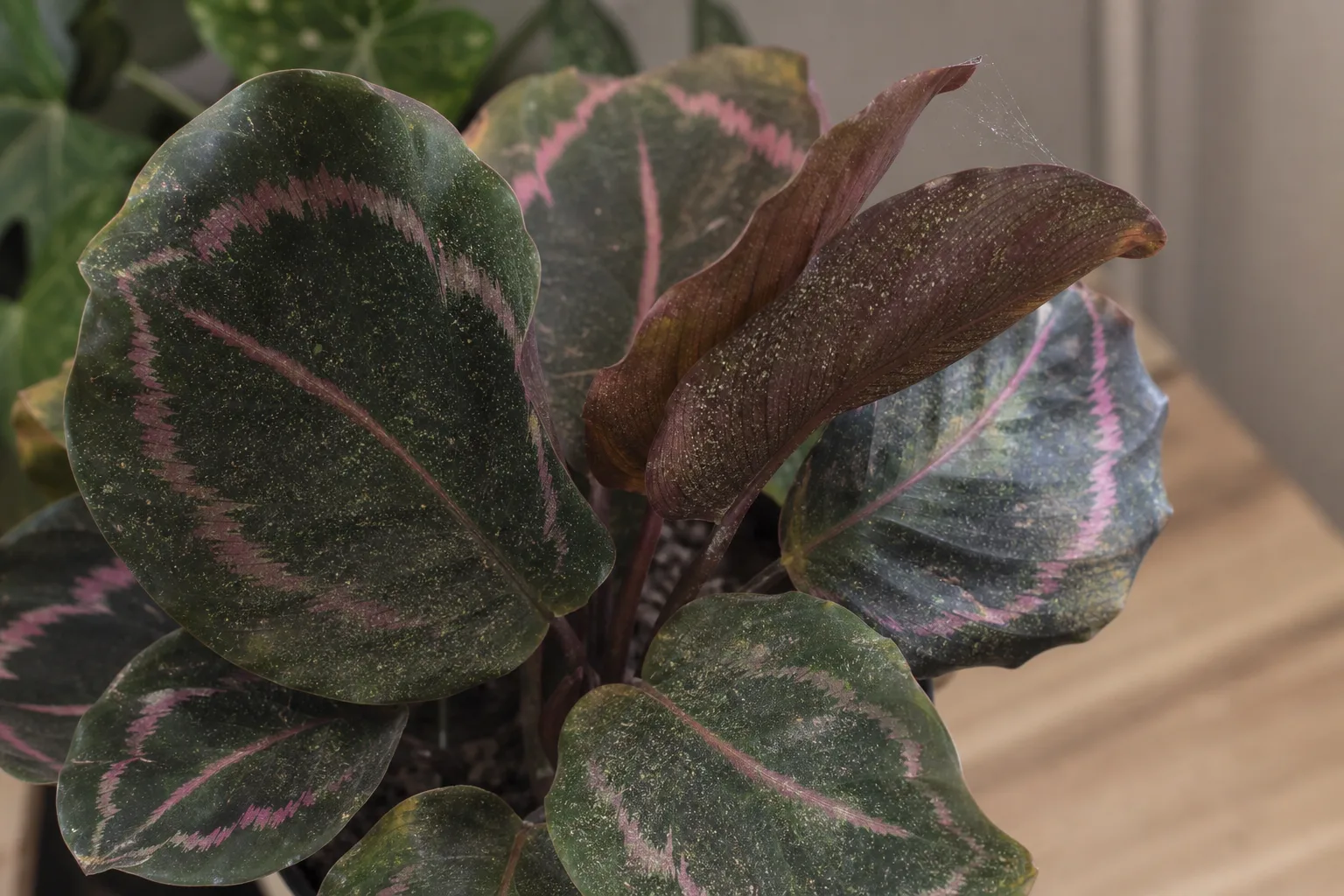
Spider mites on Calathea Roseopicta (Goeppertia roseopicta, rose-painted calathea) attack the undersides of smooth, patterned leaves, leaving fine yellow stipples that interrupt the pink, cream, and burgundy bands before bronzing spreads across the medallion surface. Delicate webbing at petiole bases and along leaf margins appears once colonies establish-often after winter heating beside an east window drops room humidity well below what this humidity-loving Marantaceae needs.
First step: move the pot away from neighboring plants, then rinse every leaf underside with lukewarm filtered or rain water to knock down active mites before you confirm the pest and schedule oil or soap treatments. Roseopicta folds its leaves upward at night; check undersides in the morning when foliage is flat and webbing is easiest to spot.
If you own a different Calathea cultivar with an open canopy, start with the general Calathea spider mites guide for shared prayer-plant biology. This page is the painted-leaf deep-dive for Roseopicta’s pink-band stippling, fluoride lookalikes, and oil spot-test sensitivity.
What spider mites look like on Calathea Roseopicta
Spider mites are tiny arachnids that pierce leaf tissue on undersides, creating chlorotic spots that read as stippling on the painted surface. On Roseopicta, watch for:
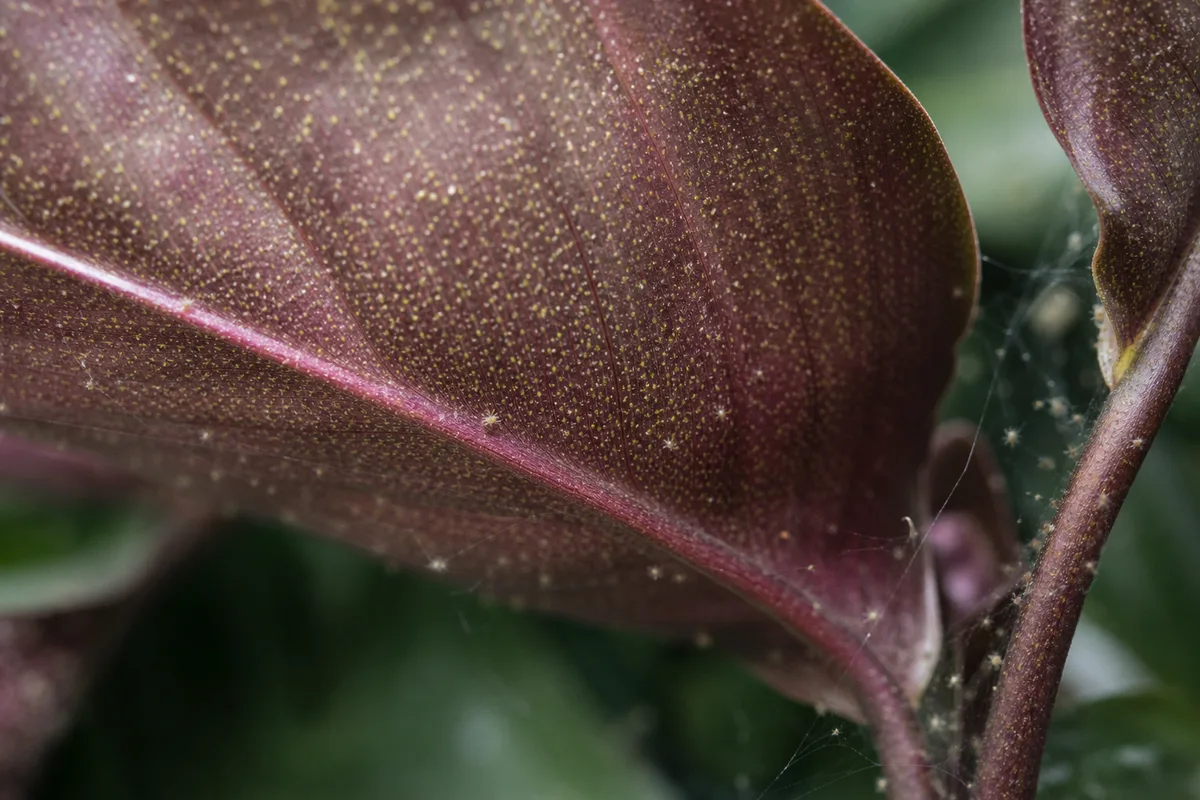
Yellow stippling on painted Roseopicta leaf bands with fine webbing at the petiole - spider mite feeding damage.
- Fine yellow or white pinpricks scattered across pink, cream, and dark green zones-feeding damage often shows first on the lighter painted bands where contrast makes stippling obvious
- Bronze or grayish cast on older medallion leaves where colonies have fed for weeks; painted margins may dull before the whole blade bronzes
- Delicate silk webbing along leaf undersides, petiole bases, and the central rosette-not the cottony white wax of mealybugs
- Crisp, curled edges on heavily infested shoots; premature yellowing on lower leaves in advanced cases
- Slowed unfurling when the next painted leaf emerges already stippled while soil moisture and light look normal
Roseopicta is a pattern-first plant. Even light stippling on one fresh medallion leaf is visually obvious because it breaks the rose-colored midrib and feathered markings that define the cultivar. Mites hide on undersides and in the tight junction where leaf stalks meet the rhizome-top-down watering and casual glances miss colonies until webbing appears. Lift each leaf from below with a flashlight; stippling on burgundy undersides is sometimes easier to spot than on the painted top surface.
Cultivar crown note: Medallion and Dottie share Roseopicta’s painted bands but differ in crown density-Dottie’s tighter rosette packs more overlapping blades at the rhizome, so webbing can hide longer between folded night leaves than on slightly more open Medallion crowns. Inspect the tightest leaf junctions first on compact Dottie pots.
Do not confuse hard-water mineral spots or dust on smooth Roseopicta leaves with mite stippling. Residue sits on the surface and wipes off; feeding damage is embedded in the tissue and does not rub away cleanly.
Photo check: Use a phone macro on the lighter pink or cream band of a suspect leaf-compare scattered pinhead stipples and fine silk at the petiole base against symmetric brown margins from fluoride burn on older blades. Original symptom photos for this cultivar are pending for a future update.
Why Calathea Roseopicta gets spider mites
Mites are listed among common pests on Goeppertia roseopicta alongside mealybugs, aphids, and scale. Outbreaks on Roseopicta rarely appear from bad luck alone. These indoor paths are most common:
Winter heating plus dry air near windows. Spider mites thrive in warm, dry conditions. Roseopicta placed beside a radiator, forced-air vent, or sunny glass in a room below 50% relative humidity loses leaf moisture faster, which favors mite reproduction. The same east-window spot that supports painted foliage in summer becomes a dry microclimate from November through March when furnaces run.
Humidity below what Roseopicta needs for healthy growth. This cultivar requires humidity above 60% to prevent brown tips, edge crisping, and leaf curl. Chronic low humidity stresses the plant and overlaps with mite-friendly air-see the low-humidity guide for the full diagnostic path. Correcting RH alone will not clear an active infestation, but leaving air dry guarantees reinfestation after treatment.
Hitchhiking on new plants or shared shelves. Mites enter collections on nursery stock, pruning tools, or plants summered outdoors. Most houseplant pests arrive on newly purchased plants or those brought inside after warm weather. Roseopicta grouped with other Marantaceae, ferns, and alocasia on one humidity tray gives mites short crawl distances between pots.
Nightly leaf movement hides early colonies. Roseopicta folds leaves upward at dusk like other prayer plants. Webbing and stippling on undersides are easiest to inspect in the morning after foliage lies flat-waiting until evening checks means you may miss silk threads tucked against folded blades.
Mites do not live in Roseopicta soil the way fungus gnat larvae do. If you see stippling and webbing only on foliage, repotting is not your first move.
How to confirm spider mites (six-step checklist)
Work through these checks before spraying anything:
- Check placement first. Note whether the pot sits near a heater, sunny window, or AC vent in a dry winter room-mite risk rises in that microclimate.
- Inspect in the morning. Examine leaf undersides and petiole bases when prayer-plant foliage is flat, not folded upward for the night.
- Look for stippling plus webbing together. Either sign alone can mislead; the combination on smooth Roseopicta foliage is the mite fingerprint.
- Run the paper-tap test. Hold white paper beneath the leaves and strike the foliage sharply-slow-moving specks confirm live mites; dirt and mineral dust do not crawl.
- Use magnification on painted zones. A 10x hand lens on the lighter cream or pink bands reveals pinprick damage before bronzing spreads across the whole medallion.
- Rule out lookalikes. No cottony wax means not mealybugs; edge-only browning without stippling points to low humidity or brown tips from tap water.
Confirmed mites warrant treatment. Suspected stippling without moving specks or webbing may be environmental-fix humidity and watering rhythm before stacking pesticides.
Stippling vs. fluoride vs. humidity decision table
| What you see | Likely cause | Urgency | First action |
|---|---|---|---|
| Scattered pinpricks across pink/cream bands plus silk on undersides | Spider mites | Treat now | Isolate and rinse all undersides today |
| Symmetric brown margins on oldest leaves, no dots or webbing | Fluoride brown tips | Cosmetic; fix water quality | Switch to filtered water; no pesticide needed |
| Even crisp edges on multiple leaves, no moving specks | Low humidity | Correct soon; not an emergency | Run humidifier toward 60%+; recheck for mites weekly |
| Pinpricks plus crisp edges in a dry heated room | Mites and dry air | Treat now | Rinse for mites first; raise RH in parallel |
| Stippling on the only unfurling medallion leaf | Spider mites at crown | Urgent | Isolate immediately; rinse spear and undersides before it fully opens |
The most common misdiagnosis on Roseopicta is confusing winter edge crisping or fluoride burn on painted margins with mite stippling. Low humidity and tap-water minerals brown firm leaf edges without the scattered pinprick pattern mites leave across the medallion surface.
Lookalike symptoms on Roseopicta
| What you see | More likely cause | Why on Roseopicta |
|---|---|---|
| Papery brown tips on oldest leaves, no stippling or webbing | Low humidity below 50% near vents | Edge damage without scattered pinpricks across painted bands |
| Symmetric brown margins on older leaves, moist soil | Brown tips from fluoride in tap water | Margin-only damage; no crawling specks on paper test |
| Fine yellow pinpricks plus silk on undersides | Spider mites | Feeding across pink, cream, and green zones with webbing |
| Silvery streaks or black specks on new growth | Thrips | Scraping damage with slender mobile insects; mites crawl slowly and leave fine silk |
| White cottony clusters in leaf axils | Mealybugs | Static wax masses, not moving pinprick stippling |
| Yellow lower leaves on wet soil | Overwatering or root stress | No insects on crown; soil stays heavy |
First fix for Calathea Roseopicta
Isolate the plant and wash mites off with lukewarm filtered or rain water.
Move the pot to a sink or shower away from other Calatheas, Stromanthe, and Maranta on the same shelf. Support the rosette with one hand and rinse leaf undersides and petiole bases with a gentle but firm stream. Spraying foliage with water removes many spider mites when you cover all surfaces. Cover the soil surface with foil or plastic if needed so mix does not wash out. Your goal is zero live mites on the surfaces you can reach.
Roseopicta has smooth, glossy patterned leaves-not fuzzy trichomes-so rinsing is safe when water drains off and the plant returns to bright indirect light the same day. Pat excess moisture from the crown so water does not sit in folded leaf bases overnight, which can encourage fungal spotting on humidity-loving Marantaceae foliage. Do not follow the rinse immediately with oil or soap the same day unless the label allows it; give the plant overnight to recover.
After the first rinse knocks down populations, apply horticultural oil or insecticidal soap labeled for spider mites. Coat stems, leaf undersides, and petiole bases until solution drips. Repeat every five to seven days for at least three cycles-most miticides do not kill eggs, so one pass rarely clears a rosette where mites shelter at the rhizome crown.
Bag the pot loosely during indoor spraying if ventilation is poor. Keep treated plants out of direct sun while wet; hot sun on oiled Roseopicta leaves can dull painted patterning or cause temporary marking.
Step-by-step recovery
Once isolation and the first rinse are done, escalate only as needed:
- Raise humidity toward 60% to 70% RH - Run a humidifier near the plant or group pots to build a stable microclimate. Pebble trays help margins but rarely sustain Roseopicta’s needs alone in heated winter rooms. Humidity correction supports recovery; it does not replace contact treatment.
- Spot-test oil or soap on one older leaf - Wait 24 hours. If the test leaf dulls or shows edge marking, switch to insecticidal soap at label dilution or rely on repeated rinses plus humidity for light infestations.
- Repeat rinse or spray every five to seven days - Plan two to three weekly passes minimum; warm rooms may need the shorter five-day interval. Continue until two inspections one week apart show no live mites and no new stippling.
- Inspect neighbors on the same shelf - Treat or monitor any Marantaceae, fern, or alocasia that shared the humidity tray. Mites crawl between touching leaves in dry air.
- Hold fertilizer until new growth looks clean - Resume light feeding only after two weeks with no mites on fresh leaves. Nitrogen flushes on a stressed Roseopicta slow pattern recovery on the next medallion unfurl.
- Prune only when necessary - Remove a single heavily webbed leaf if spray cannot reach the colony inside a tight curl. Do not strip the crown; Roseopicta needs active shoots to push clean painted foliage.
For growers avoiding repeated oil sprays indoors, predatory mites such as Phytoseiulus persimilis can control twospotted spider mites in greenhouses and interior plantscapes. Relative humidities greater than 60% are required for predator survival, especially through the egg stage-pair releases with a humidifier in heated winter rooms. Release per supplier instructions at the first sign of stippling; predators work best before colonies blanket the crown.
Recovery timeline
Expect visible mite numbers to drop within one to two treatment cycles if you reach undersides and repeat on schedule. Full clearance often takes two to four weeks indoors because overlapping generations hatch between sprays.
Signs recovery is working:
- No live mites on the paper-tap test after two checks one week apart
- Webbing stops appearing at petiole bases and undersides
- The next medallion leaf unfurls with normal pink and cream contrast and minimal stippling
- Stippling does not spread to newly expanded leaves
Signs the problem is worsening:
- Webbing covers multiple leaves and the central shoot
- New leaves emerge small, bronzed, or permanently dull across the painted surface
- Matching stippling appears on untreated plants on the same shelf
- Rinse-only treatment for more than two weeks without reduction in moving specks
Heavily stippled or bronzed leaves will not fully regain perfect patterning. Judge success by clean new foliage from the rhizome crown, not by repairing old blades.
Recovery snapshot: In a typical winter case, raising a room humidifier to 65% at leaf height, rinsing undersides every five days, and applying labeled horticultural oil on days 5 and 12 cleared webbing before the next medallion leaf opened with clean pink bands on day 24-outer stippled blades stayed marked, but the newest painted leaf showed full contrast .
Mistakes to avoid
- Skipping isolation - treating one Roseopicta while mites crawl to neighboring prayer plants on the humidity tray
- Using homemade dish soap - high risk of leaf burn on sensitive Calathea foliage; use products labeled for plants
- One-and-done spraying - a single pass rarely clears eggs and hatchlings
- Heavy oil films on patterned leaves - can dull painted surfaces or stress foliage; spot-test and apply at label dilution in indirect light
- Letting rinsed foliage sit wet in a cold draft overnight - increases fungal spotting risk on Marantaceae; dry the crown before evening in a warm room
- Assuming insecticides labeled for insects will kill mites - mites need miticides, horticultural oil, or insecticidal soap labeled for spider mites
- Repotting on day one - mites live on foliage, not in mix; repotting stacks stress without addressing the pest
How to prevent spider mites next time
- Target 60% to 70% RH through winter with a humidifier rather than relying on pebble trays alone in heated rooms
- Weekly morning underside checks during heating season-Roseopicta’s folded-night habit makes AM inspection the best routine
- Quarantine new plants for 14 days and run at least one paper-tap test before placing them near Roseopicta
- Keep pots off radiator ledges and away from forced-air vents that create hot, dry microclimates
- Rinse dust from leaves monthly during inspection; clean foliage makes early stippling visible on painted bands sooner
- Inspect after outdoor summer breaks if houseplants move outside; mites hitchhike back indoors on leaves and stems
When to worry
Most established Calathea Roseopicta survive spider mites if you isolate early, rinse undersides, raise humidity, and repeat contact treatment until colonies stop. Consider escalation if:
- Webbing covers the central growing point and new leaves stop unfurling cleanly for three or more weeks despite treatment
- Matching damage spreads to multiple plants in the collection despite isolation
- Oil and soap spot tests cause severe marking and mite populations remain high-consult a local extension office for labeled miticide options appropriate for indoor use
A single stippled medallion leaf is cosmetic. A crown that stops producing clean painted new growth for a month after repeated treatment may need division from any healthy side shoots, or replacement if the rhizome is fully compromised-though that outcome is uncommon when action starts at the first stippling on a fresh leaf.
For genus-level mite biology and treatment tiers shared across calatheas, see spider mites on Calathea. This page focuses on Roseopicta morphology-painted pink and cream bands, prayer-plant nightly folding, fluoride margin lookalikes, and smooth-leaf rinse and oil spot-test sensitivity.
FAQs
Is stippling on my Roseopicta’s pink edges spider mites or fluoride burn?
Fluoride and tap-water minerals usually brown only the outer margins of older leaves without scattered pinpricks across the painted surface-see our brown-tips guide. Spider mites leave fine yellow stipples scattered across pink, cream, and green zones, often with silk threads on undersides. Tap a suspect leaf over white paper: slow-moving specks confirm mites; static edge browning does not crawl.
What humidity level stops spider mites on Calathea Roseopicta?
Target 60% to 70% relative humidity while you treat. Roseopicta already needs high ambient moisture for healthy painted foliage, and dry air below roughly 50% RH accelerates mite reproduction near heaters and sunny windows. A humidifier is more reliable than a pebble tray alone for this cultivar; pair humidity correction with weekly underside rinses during winter heating season.
Can I use neem oil on Calathea Roseopicta for spider mites?
Neem and horticultural oils can work on mites, but Roseopicta’s smooth patterned leaves are sensitive to heavy oil films and hot direct sun after spraying. Spot-test one older leaf, apply at label dilution in bright indirect light, and prefer insecticidal soap if the test leaf shows dulling or marking within 24 hours. Never stack oil and rinse on the same day unless the label allows it.
Will damaged Calathea Roseopicta leaves recover from spider mites?
Heavily stippled or bronzed leaves will not regain perfect pink and cream patterning-the scarred tissue stays cosmetic. Roseopicta pushes new medallion leaves from the center, so judge recovery by clean unfurling growth and no fresh webbing at weekly checks, not by repairing old blades. Expect two to four weeks of consistent treatment before the next painted leaf opens without stippling.
When is spider mites urgent on Calathea Roseopicta?
Treat immediately when webbing spreads across multiple leaves, stippling reaches the only new shoot unfurling, or neighboring Marantaceae on the same shelf show matching damage. Mites reproduce fastest in hot dry air and can stall a humidity-loving Roseopicta for months if left through winter. Isolate before handling other prayer plants on the humidity tray.
Should I use this page or the genus Calathea spider mites guide?
Use this Roseopicta page when you need painted-band stippling checks, fluoride margin lookalikes, prayer-plant morning inspection timing, and oil spot-test cautions on smooth patterned leaves. Use the genus Calathea spider mites hub for shared Marantaceae biology, general prayer-plant folding behavior, and treatment tiers that apply across multiple calathea cultivars.
Related Calathea Roseopicta guides
- Calathea Roseopicta overview - baseline care for painted foliage and humidity
- Low humidity on Calathea Roseopicta - edge crisping and curl without mites
- Brown tips on Calathea Roseopicta - fluoride and tap-water margin damage lookalike
- Watering Calathea Roseopicta - stable moisture during pest recovery
- Mealybugs on Calathea Roseopicta - cottony pest lookalike on the same cultivar
- Spider mites on Calathea (genus hub) - general prayer-plant mite guidance for non-Roseopicta cultivars