Calathea Roseopicta (Medallion) Fertilizer Guide
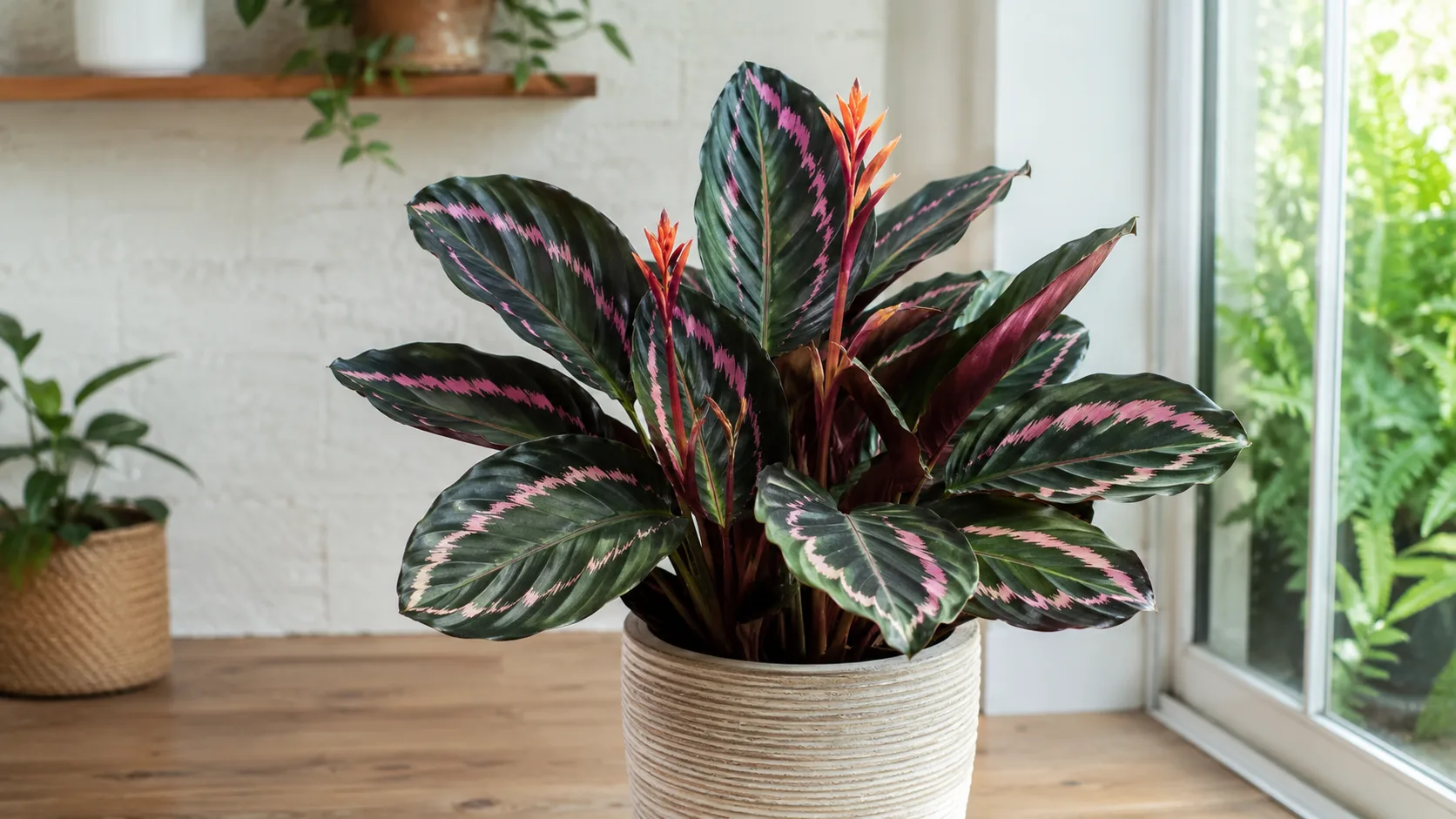
Calathea Roseopicta (Medallion) Fertilizer Guide
Calathea Roseopicta (Medallion) Fertilizer Guide
If you bought a Calathea Medallion and searched for medallion fertilizer advice, you are already looking at the right species. Medallion, Dottie, Illustris, and other rose-painted labels are cultivars of Goeppertia roseopicta - the same rhizomatous prayer plant with round leaves, burgundy undersides, and brushstroke pink or cream bands. Feeding rules do not change because the nursery tag used a cultivar name instead of the botanical one. What does change is how quickly you see mistakes: on rose-painted foliage, a single browned margin or washed-out pink band ruins the whole leaf display long before the plant looks “sick.”
Calathea roseopicta fertilizer success is conservative timing tied to real growth, not calendar guilt. For most indoor pots, that means a balanced or slightly nitrogen-lean liquid formula at quarter to half label strength, applied about once every four weeks from mid-spring through early fall, always onto moist soil using the same filtered or rainwater you rely on for everyday watering. Pause entirely in late fall and winter unless strong grow lights keep new leaf rolls forming. If pink margins crisp, white crust appears on the mix, or new leaves unfurl with burnt edges, stop feeding, flush salts, and wait - rose-painted calathea recovers from a skipped month far faster than from a salt crisis.
Quick Answer for Busy Growers
When: Feed when you see fresh lime-green leaf rolls unfurling - typically March through September indoors. NC State Extension recommends fertilizing once a month during spring through summer. RHS aligns with monthly feeding April through September and no feed October through March.
What: Water-soluble 10-10-10 or 3-1-2 houseplant liquid diluted to quarter strength (half strength at most for experienced growers who flush monthly). Commercial calathea production uses a 3-1-2 N-P-K ratio at controlled nitrogen levels per UF IFAS EP285.
How: Water with plain water first if the top layer is dry, mix feed in room-temperature water, apply evenly until a little drains, discard saucer runoff within 30 minutes.
Stop when: Winter slowdown, four to six weeks after repotting, six weeks after bringing a new nursery plant home, any tip burn, pest stress, or white salt crust.
Why Rose-Painted Calathea Needs Restraint, Not Rescue Feeding
Rose-painted calathea grows from rhizomes that push patterned leaves on short upright stems. Those leaves are the product - dark green centers framed by pink, cream, or silver brushwork on cultivars like Medallion and Dottie. Fertilizer does not paint that pattern from nothing. It replaces macronutrients that watering, root growth, and continuous leaf production pull from peaty potting mix over months in a closed container.
Missouri Botanical Garden describes Goeppertia roseopicta as needing uniformly moist, well-drained peaty mixtures during the growing season, with reduced watering in winter when growth typically slows. The entry does not emphasize heavy feeding - which matches grower experience: rose-painted calatheas tolerate lean soil better than concentrated synthetic salts sitting in a 6-inch plastic pot.
Native to Western South America and Western Brazil, this understory species evolved with thin feeder roots, steady moisture, filtered light, and modest nutrients from leaf litter - not label-strength houseplant concentrates. Label rates on many bottles assume thicker-rooted plants like pothos. Full strength on roseopicta often damages root tips within days; brown leaf margins follow one to two weeks later as osmotic stress blocks water uptake. University of Maryland Extension links excessive fertilizer to brown leaf tips, marginal necrosis, wilt despite wet soil, and white crust on potting media.
Think of feeding as maintenance for an already stable plant - bright indirect light, 60%+ humidity, even moisture, gentle water chemistry. If the plant looks dull, fix placement and humidity before increasing nitrogen. Rose-painted calathea is sensitive to hard tap water and low humidity; both show on leaf edges before roots complain loudly.
Cultivars Share One Species - Medallion Is Not a Separate Plant
Retail tags often sell G. roseopicta ‘Medallion’ as if it were its own species. Botanically it is not. NC State Extension lists cultivars including ‘Medallion’ (silver-striped dark green upper surface, purple underside), ‘Dottie’ (dark green with pink central vein and feathering), ‘Cynthia’, ‘Rosy’, and ‘Surprise Star’ - all the same species with different pigment patterns. One feeding schedule applies to every cultivar in the clump.
If you landed here from a “medallion fertilizer” search, treat this page as the species + cultivar hub for rose-painted calathea nutrition. You do not need a different NPK because the tag said Medallion instead of roseopicta.
Medallion vs. Dottie Under Feed Stress
Cultivars do not need different bottles - they show damage on different parts of the pattern first. Medallion carries wide pink or cream bands around a dark green center; salt burn and fluoride damage often appear as crisp brown on the colored margin while the center still looks green - devastating because the band was the whole point. Dottie is darker overall with pink vein accents; stress may read as dull pink feathering on new leaves or small burnt notches along the central vein before the whole leaf fades.
Illustris and similar silver-striped forms react like Medallion: contrast loss on new unfurling leaves usually means light or water quality, not hunger. When diagnosing pale new growth, compare the newest leaf only to the previous generation. If older leaves still show strong patterning but the newest roll is washed out, check light intensity and moisture rhythm before increasing fertilizer.
When to Fertilize: Active Growth vs. Winter Rest
Feed when the plant is actively producing new rolled leaves and extending stems. Stop when growth slows sharply - even if foliage stays evergreen in a heated room.
Rose-painted calatheas keep leaves through winter, which tricks owners into summer feeding schedules in December. Lower light, cooler rooms, and shorter days reduce new shoot rate even when old leaves stay upright. Feeding on a July rhythm in January is a common path to soluble salt buildup in moist winter soil.
Spring and Summer Window
Start feeding when fresh lime-green leaf rolls appear at the crown - usually mid-spring through late summer. In bright east or north windows, growth may run March through October. During this window, monthly quarter-strength feed suits most pots. Growers who flush salts every four to six weeks can try half strength every two to four weeks if new leaves keep unfurling cleanly.
Brighter summer placement - still no direct sun, which bleaches pink margins - may increase water use slightly. Continue feeding while new leaves form; adjust frequency, not concentration.
Fall Taper and Winter Pause
Taper in early to mid-fall. One practical pattern: a final quarter-strength feed in early fall, then no fertilizer from late fall through winter. University of Maryland Extension notes indoor plants do not need fertilizer in winter because reduced light and temperature slow growth, and winter feeding can harm some plants.
Exception: a plant under strong grow lights that keeps producing new shoots all winter may take quarter strength every six to eight weeks - watch closely for salt crust. Even then, skipping winter feeds is safer than forcing growth with nutrients.
Best Fertilizer Type and NPK for Patterned Foliage
The best Calathea roseopicta fertilizer for most homes is a complete water-soluble houseplant formula with a slight nitrogen lean. You want nitrogen for green backdrop and pattern contrast, phosphorus for root function, potassium for stress tolerance, and micronutrients (iron, magnesium) on the label for foliage that shows chlorosis when traces are missing.
Avoid shopping by the word “Calathea” on the bottle unless you trust the brand’s dosing guidance. A standard indoor foliage formula used conservatively beats a “heavy feeder” product applied at label strength.
Urea-Free and 3-1-2 Options
A 10-10-10 or 20-20-20 diluted to quarter or half strength is a practical default. UF IFAS EP285 specifies 3-1-2 N-P-K water-soluble fertilizer for commercial calathea fertigation, with growers monitoring electrical conductivity and reducing feed when readings exceed safe ranges. That production ratio - slightly higher nitrogen relative to phosphorus and potassium - supports leafy expansion behind rose-painted markings.
Many experienced prayer-plant growers prefer urea-free or low-urea liquids because urea nitrogen can convert to ammoniacal forms that temporarily acidify the root zone; fine calathea roots are less forgiving of concentrated nitrogen pulses than pothos roots. If your bottle lists urea as the primary nitrogen source, dilute extra conservatively and flush more often.
UF IFAS EP285 also ties leaf spotting and reduced foliage color to plants taking up too much potassium and recommends correcting with 3:1:2 fertilizer rather than bloom-boosting high-phosphorus formulas. Excess phosphorus in combination with other stressors can contribute to spotting and chlorosis in production - another reason to avoid “bloom booster” feeds on a foliage cultivar like Medallion.
Liquid formulas win for dose control in small pots. Slow-release pellets pressed into a 6-inch container can release nitrogen in a hot zone near the rhizome while the rest of the pot stays lean - unpredictable with evenly moist soil preferences. If you mixed slow-release at repotting, skip liquid feeding for two to three months.
Skip foliar feeding as default; residue on patterned leaves can burn in brighter light. Skip fertilizer-plus-pesticide combos for routine care. The ASPCA lists Calathea species as non-toxic to cats and dogs, but concentrated fertilizer solution and crusty soil are not safe for pets to ingest.
Organic options - diluted fish emulsion, worm-casting tea, seaweed - work at quarter strength or weaker if you already use them successfully. They vary by batch, can attract fungus gnats if overapplied, and are not inherently safer if applied too strong or too often.
How Much: Quarter Strength and Worked Examples
If you remember one number, make it quarter strength - half strength at the absolute maximum for a healthy plant in bright indirect light with no salt history.
Rose-painted calatheas sit among the more salt-sensitive houseplants. Their fine roots plus preference for moist soil punish overdosing quickly. Cutting the label rate to one-quarter is the safest default for monthly feeding during active growth.
Worked example: if the bottle says 1 teaspoon per gallon for indoor plants, use ¼ teaspoon per gallon at monthly intervals, or ½ teaspoon per gallon if you feed every two weeks and leach salts monthly. Measure - different products use different scoops.
For a final fall feed, quarter strength is enough. Go weaker still if you see white crust, Brown Tips on Calathea Roseopicta after feeding, or an oversized pot that stays wet for days. Test half strength monthly only when new growth is pale on otherwise perfect light, water, and fresh mix - and watch the newest Medallion band first.
How Often: Frequency Table by Situation
Frequency follows growth rate and salt management, not guilt about “doing enough.”
| Situation | Suggested frequency | Strength |
|---|---|---|
| Active growth, bright indirect light | Every 4 weeks | Quarter label strength |
| Active growth, moderate light | Every 4–6 weeks | Quarter label strength |
| Experienced grower flushing monthly | Every 2–4 weeks | Half label strength |
| Early fall, slowing growth | Once, then pause | Quarter strength |
| Winter indoors, typical room | Skip | - |
| Winter under grow lights, new shoots | Every 6–8 weeks | Quarter strength |
| After repotting into fresh mix | Wait 4–6 weeks | Then quarter strength |
| New nursery plant quarantine | Wait 6 weeks | Then start schedule |
| Recovering from over-fertilizing | Pause 8–12 weeks | Flush; resume quarter strength |
NC State Extension recommends rainwater or distilled water because fluoride in tap water browns foliage. If you already use filtered or rainwater, fertilizer salts become the main added mineral source - another reason to stay conservative and flush regularly.
Step-by-Step Safe Feeding Routine
Safe feeding is order of operations:
- Check calendar and plant - confirm active growth window and new leaf rolls. Winter with no growth: stop here.
- Inspect for salt crust or tip burn - white residue means flush, not feed.
- Moisten soil if needed - water with plain filtered or rainwater if the top 2 cm is dry; feed the next day if still in window. Never pour fertilizer onto dry soil.
- Mix at quarter strength in room-temperature water.
- Apply slowly across soil surface, not over the leaf crown, until a little drains.
- Discard drainage within 30 minutes.
- Mark the date so you do not double-feed in an enthusiastic week.
Leach with plain water every four to six weeks during the feeding season on weeks you skip fertilizer - especially with synthetic liquids and filtered water only.
Deficiency vs. Salt Burn vs. Hard Water vs. Low Humidity
Brown margins on rose-painted calathea are not automatically a fertilizer problem. Use this decision path before changing your feed:
Salt burn / over-fertilizing: Crispy tips on newer leaves or shortly after a feed; white or yellow crust on soil or pot rim; wilt despite moist soil; stunted new growth with burnt edges on the smallest unfurling leaf. University of Maryland Extension describes osmotic stress from high soluble salts - drought-like symptoms when soil is wet. Fix: stop feed, flush, pause 8–12 weeks.
Fluoride / hard tap water: NC State Extension warns tap water fluoride browns foliage; margins may crisp even with modest feeding. Fix: switch to rainwater, distilled, or filtered water; flush; do not increase fertilizer.
Low humidity: Even margins on multiple leaves, often with daytime curl; worse near heating vents in winter. Humidity below 60% per NC State stresses foliage independently of nutrients. Fix: humidifier, pebble tray, grouping - see overview humidity notes.
True deficiency (uncommon): Gradual uniform paleness on new leaves only, smaller successive leaf sizes, slow unfurling in peak summer despite correct light and moisture - after a year in depleted mix with no feeding. Fix: resume quarter-strength monthly for one season; never jump from nothing to half strength overnight.
Pattern fade without crisping: Usually too much light or too little light, not NPK. Medallion pink bands wash out in direct sun and dull in dim corners before fertilizer helps.
Flushing After Over-Fertilizing
If you suspect burn, stop fertilizing immediately and leach the soil.
- Move the pot to a sink or tub; remove cachepots.
- Run room-temperature filtered or distilled water through steadily for two to three minutes - roughly three to four times pot volume.
- Let drain fully; do not sit in runoff.
- Repeat once the same week if crust is heavy or tips browned sharply after a recent feed.
- Pause all fertilizer 8 to 12 weeks while new roots form.
- Resume quarter strength monthly only when healthy leaf rolls unfurl without burnt edges.
Trim crispy tips aesthetically if you wish - they will not green up, but trimming does not replace flushing. If crust is thick, roots smell sour, or wilt repeats after flushing, repot into fresh mix per the repotting guide and skip feed another four to six weeks.
Seasonal and Situational Pauses
Summer AC: Lower humidity can slow growth - do not compensate with stronger fertilizer. Keep quarter strength monthly only if new leaves still form.
Relocation: Wait two weeks after a major move before feeding so the plant is not handling relocation stress and nutrient uptake at once.
Filtered-water-only households: The pot depends on you for nearly all minerals - light feeding during growth is appropriate, but flushing remains mandatory because synthetic salts still accumulate.
After repotting: Commercial mixes often hold starter fertilizer. Wait four to six weeks unless repotted into clearly inert mix with hunger on perfect care.
After pest or drought stress: Stabilize with plain water and humidity; nutrients do not replace pest control.
New plant quarantine: Nursery stock is often over-fertilized for display. Give six weeks of plain water and stable humidity before your conservative schedule - pair with the overview first-month checklist.
Fertilizer Within the Full Roseopicta Care Stack
Fertilizer is the last lever, not the first. Rose-painted calathea shows water, light, and humidity stress on leaf edges before roots complain.
Light: Medium to bright indirect light drives nutrient demand. Dim corners need less feed; bright east windows may need the monthly quarter-strength schedule but not higher concentration. Direct sun fades Medallion pink bands - fix placement before chasing nutrients.
Water: Top 2 cm beginning to dry, typically every 5–7 days in growth season, with filtered or rainwater. Hard tap plus fertilizer creates a double mineral load. See the full watering guide.
Humidity: Target 60% or higher. Low humidity crispens margins independently of feed.
Soil: Moisture-retentive, well-drained peaty mix, pH 6.0–7.5 per NC State - details in the soil guide.
Temperature: 65–75°F (18–24°C) supports steady metabolism; pause feeding when cold-stressed below about 61°F (16°C).
For the full species picture - pests, propagation by rhizome division, seasonal calendar - start at the Calathea Roseopicta overview.
Common Mistakes
Feeding the calendar, not the plant. March 1 means nothing if the plant is recovering from repotting.
Full label strength. Calathea roots are not pothos roots. Quarter strength exists for a reason.
Fertilizing dry soil. Salts concentrate at the root surface and burn fine tissue.
Winter feeding because leaves are green. Evergreen foliage ≠ active growth.
Slow-release pellets in small pots. Localized burn zones near rhizomes.
Chasing brown tips with more fertilizer. Usually salts, water, or humidity.
Skipping flushes. Especially with synthetic liquids and pure water - salts accumulate in closed pots.
Stacking stress events. Repotting, moving, pruning, and feeding the same week compounds shock.
When in doubt, skip a month. Rose-painted calathea tolerates lean seasons better than salt crises that take half a year of leaf turnover to erase visually.
Conclusion
Before your next feed, run a cultivar quick-check: new leaf rolls forming? Soil moist, not waterlogged? No white crust? Using gentle water? Humidity near 60%? Light bright but indirect? If any box fails, fix that layer first.
When the stack is stable, feed Goeppertia roseopicta - Medallion, Dottie, or any rose-painted cultivar - with quarter-strength balanced or 3-1-2 liquid about monthly in active growth, flush salts on off weeks, and pause in winter. Watch the newest painted band and the soil surface more than the calendar. Clean pattern on fresh unfurling leaves means your restraint is working; crisp margins mean flush, wait, and resume weaker - not louder.
When to use this page vs other Calathea Roseopicta guides
- Calathea Roseopicta overview - Start here for whole-plant context before deep-diving this topic.
- Calathea Roseopicta problems hub - Jump to symptom-specific fix guides when this care topic does not resolve the issue.