Not Enough Light on Calathea: Causes, Checks & Fixes
Quick answer
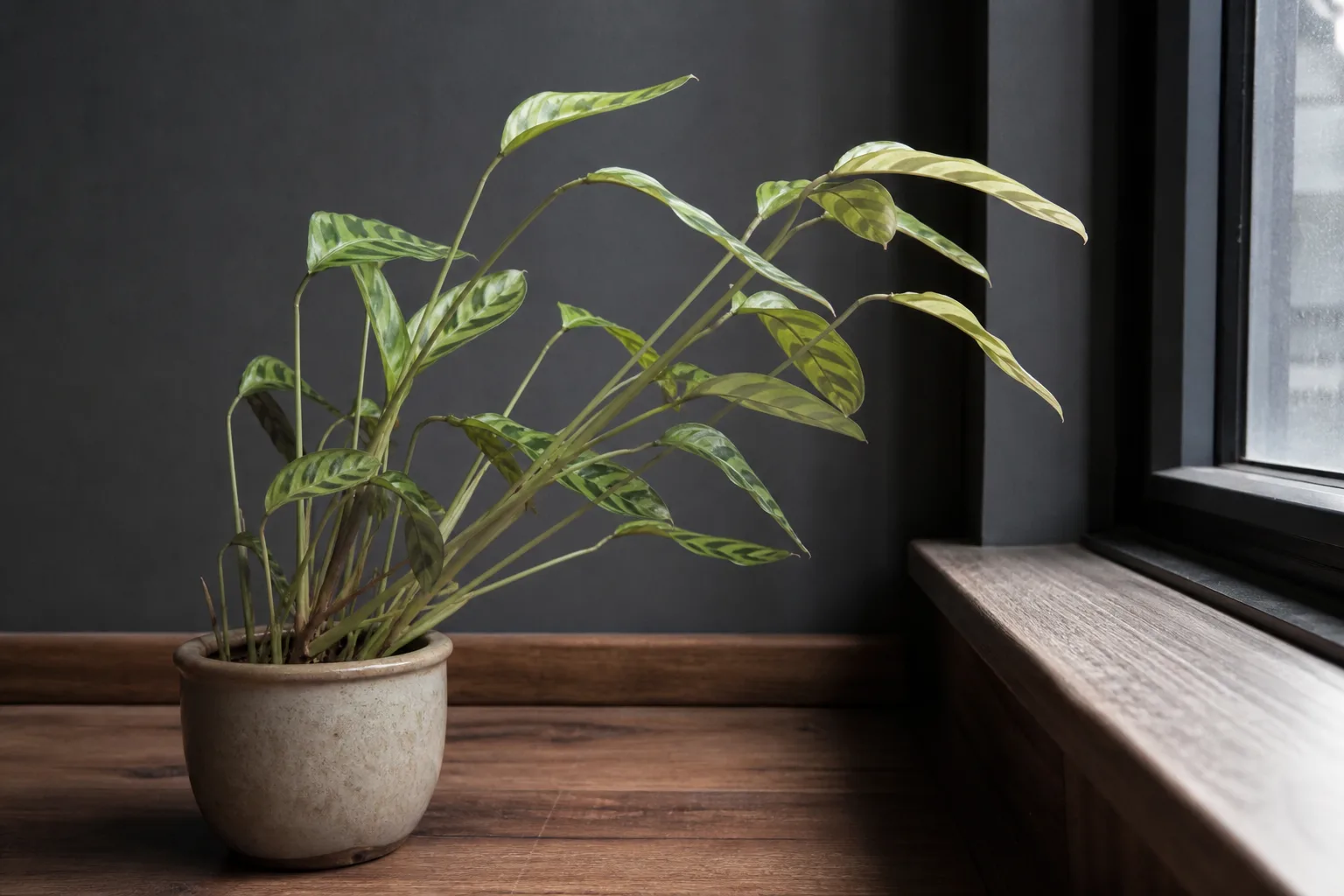
Calathea in insufficient light stretches toward windows, fades leaf patterns, and grows slowly while soil stays wet too long. First step: move the pot one to three feet from the brightest north- or east-facing window and run the hand-shadow test at midday.
Not Enough Light on Calathea: Causes, Checks & Fixes
This guide covers not enough light on Calathea. See also the general Not Enough Light guide, watering, and light pages for this plant.
Not Enough Light on Calathea: Causes, Checks & Fixes
Quick answer
Calathea without enough light does not die overnight - it survives just long enough to fool you. The plant stretches toward the brightest direction, opens smaller new leaves with washed-out patterns, slows or stops its nightly leaf folding, and lets potting mix stay wet for days because it is photosynthesizing too slowly to use water. None of that looks like a crisis at first, which is why low light is one of the most underdiagnosed problems on this genus.
First step: move the pot one to three feet from the brightest north- or east-facing window in your home. Run the hand-shadow test at midday - hold your hand an inch above the foliage. You want a soft, blurred shadow, not almost no shadow at all. If the best window still fails the test, add a full-spectrum LED grow light 12 to 18 inches above the canopy for 12 to 14 hours daily. Do not repot, fertilize, or increase watering while repositioning light.
Why Calathea runs out of usable light indoors
Calathea species evolved as shade-adapted rainforest understory plants. They need filtered brightness - enough energy to maintain bold leaf patterns and steady rhizome growth - but not open-sky direct sun. Indoors, that translates to medium to bright indirect light at the leaf surface, not ambient room brightness three meters from a window.
The gap between what human eyes read as “bright enough” and what Calathea actually receives is large. Light intensity drops sharply with distance from the glass. A north-facing room that feels adequately lit to you may deliver well below what keeps variegation sharp through winter. Interior shelves, hallway tables, and bathroom corners away from windows often sit in the 25 to 75 foot-candle range - survivable briefly, but below the 150 to 200 foot-candles where Calathea maintains its best indoor appearance.
Seasonal shifts matter too. Winter shortens day length and lowers sun angle. A placement that worked in July may underfeed the plant by January even though you never moved the pot. Sheer curtains, tinted glass, overhangs, and dirty panes cut usable light further. Calathea does not adjust automatically - it responds with stretched growth, faded patterns, and slower water uptake.
Low light also sets up secondary failures. When photosynthesis slows, the plant uses less water. Growers who keep the same five-to-seven-day Calathea watering guide from a brighter season end up with chronically wet compost - a direct path to yellow lower leaves and root stress on a genus already sensitive to overwatering on Calathea.
What not enough light looks like on Calathea
Low light on Calathea has a recognizable pattern if you watch new growth instead of old cosmetic leaves.
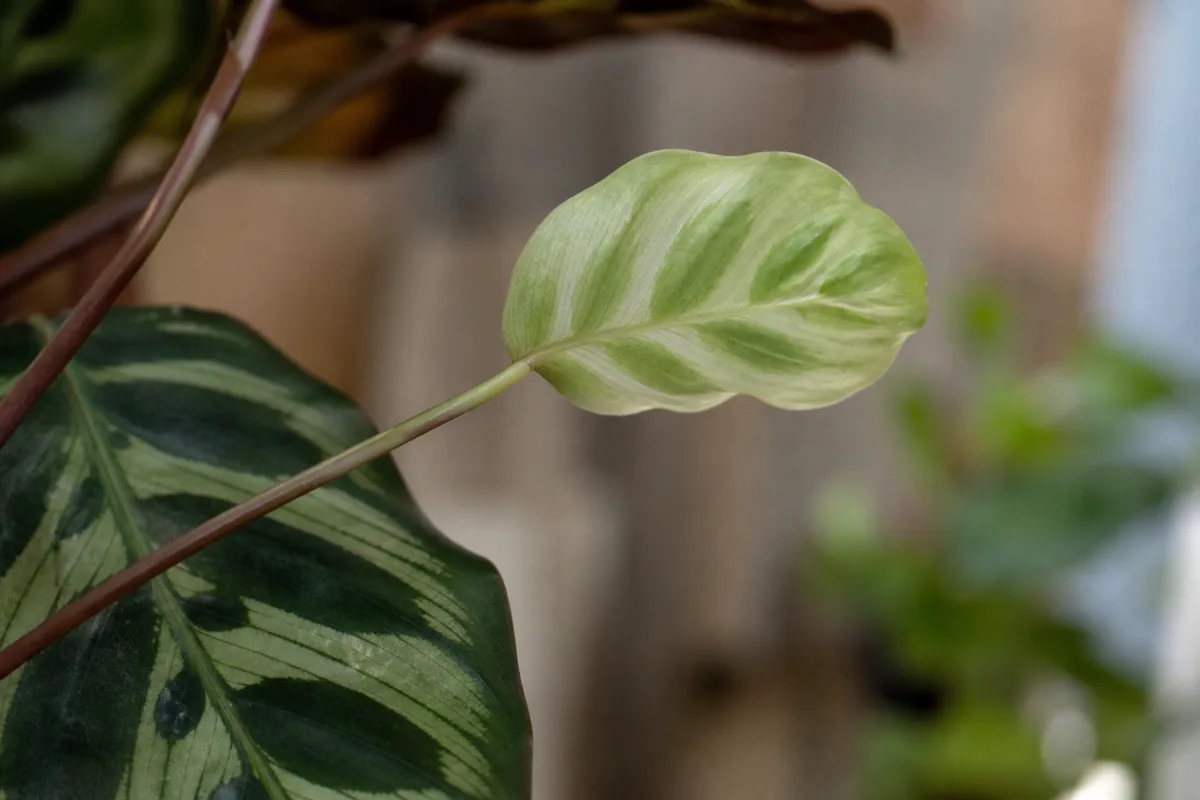
Stretched thin petiole and smaller pale new leaf with washed-out pattern contrast - compare with older leaves that formed in brighter light.
Stretched, thin petioles. New leaves emerge on longer, thinner stems with wider spacing between nodes - the same spindly, leggy stretch low-light houseplants develop when reaching for more brightness. The plant looks taller and looser than when you bought it, even though total leaf count has not increased much.
Smaller, paler new leaves. The newest rolled leaf opens smaller than the one before it. Pink stripes, silver markings, and dark green contrast blur toward uniform pale green. Highly variegated cultivars like Fusion White or orbifolia fade fastest because they have less chlorophyll buffer.
Leaning and one-sided growth. Calathea tilts toward the nearest window or lamp. Stems on the shaded side stay shorter; the plant develops a permanent lean unless you rotate the pot weekly.
Reduced or absent nyctinastic movement. Healthy Calathea folds leaves upward at night. In dim light, movement weakens - leaves stay flatter, droop more during the day, or fold inconsistently. That shift is easy to miss until you compare against a well-lit plant.
Slow growth with wet soil. The pot stays heavy for days after watering. New leaves take weeks to unfurl. Growth stalls in winter more than temperature alone would explain.
No flowers indoors. Most Calathea rarely bloom inside regardless of light, so absent flowers is not a low-light signal. Focus on petiole length, pattern contrast, and new leaf size instead.
How to confirm the cause
Work through these checks in order before changing water, fertilizer, or pot size.
- Hand-shadow test. At midday, hold your hand one inch above the lowest leaves between plant and window. A faint, soft-edged shadow means bright indirect light - the target. Almost no shadow means too dim. A sharp dark shadow means direct sun - too intense for most Calathea unless it is brief morning east exposure.
- New growth quality. Compare the last two leaves that opened. If each is smaller, paler, or on a longer stem than the previous one, light is the prime suspect.
- Lean direction. Consistent tilt toward one window within days of rotating the pot confirms phototropism from insufficient even brightness.
- Soil dry-down speed. Press the top two centimeters of mix. If it stays wet four to five days after watering while the plant shows no root-rot smell or mushy stems, low photosynthesis may be slowing water use - especially if the same pot dried faster last summer.
- Rule out lookalikes. Yellowing with soft stems and sour soil points to overwatering or root rot on Calathea first. Even marginal brown crisping on all sides of leaves points to low humidity or water quality. Uniform bleaching on the window-facing side only points to too much sun, not too little.
Confirmation test: Move the plant one to three feet from the brightest safe window (or add a grow light) and change nothing else for two weeks. If the next new leaf opens on a shorter petiole with sharper patterning, low light was the limiter.
First fix for Calathea
Move the pot one to three feet from an unobstructed north- or east-facing window - the brightest spot where direct midday or afternoon sun never strikes the leaves.
That single placement change addresses the most common cause without stacking stress. North- or east-facing windows deliver steady bright indirect light year-round in the Northern Hemisphere. East windows add two to four hours of gentle morning sun followed by bright indirect light the rest of the day - usually the best overall match for patterned Calathea cultivars.
If your brightest window is south- or west-facing, do not place Calathea on the bare sill unless winter daylight is very short. Instead, set the pot four to six feet back from the glass or behind a sheer curtain so the plant receives brightness without scorching direct sun.
When architecture offers no usable window - interior offices, north rooms with small glass, or winter days below nine hours - hang a full-spectrum LED grow light 12 to 18 inches above the tallest leaves. Run it 12 to 14 hours on a timer. Introduce it gradually over a week if the plant has been in very dim light for months.
After moving, hold watering steady for the first week, then adjust. Brighter filtered light increases transpiration; you may need to water slightly sooner in spring and summer. Do not compensate for dim light by watering less on a plant you have just moved brighter - read the soil daily until you learn the new rhythm.
Step-by-step recovery
Once the plant is in brighter indirect light, recovery is measured by new leaves, not old ones.
Week 1–2: Rotate the pot a quarter turn every few days so all sides receive light. Wipe dust from leaves with a soft damp cloth - dusty foliage absorbs less light from an already marginal window. Do not fertilize, repot, or prune heavily.
Week 3–4: Watch the newest rolled leaf. Success looks like a shorter petiole, faster unfurling, and sharper pattern contrast compared with the leaf before the move. Night folding should become more consistent.
Week 5–8: If new growth is compact and well patterned, you can trim one or two of the most stretched old leaves for appearance - optional, not required. Old etiolated petioles will not shorten; they remain as permanent evidence of the dim period.
If no improvement: The new spot may still be too dim. Move six inches closer to the window, add a grow light, or check whether a curtain, blind, or neighboring building blocks more light than you assumed. If new growth stays pale in a confirmed bright-indirect spot, investigate spider mites or root health before blaming light alone.
Recovery timeline
Expect visible improvement in new growth within two to four weeks after a meaningful light increase. The first new leaf after a move may still show some stretch if the plant was severely etiolated - judge the second and third leaves for the true trend.
Old stretched petioles and faded mature leaves do not revert. They stay long and pale until you trim them or they age out naturally. That permanent tissue is normal and not a sign the fix failed.
Severe long-term dim placement - many months on a dark shelf - can leave a sparse, top-heavy plant even after light improves. Division and Calathea repotting guide in spring can reshape an established clump, but only after several weeks of stable new growth confirm the light problem is solved.
Lookalike symptoms on Calathea
Several common Calathea problems overlap with low light. Separating them saves you from wrong fixes.
Overwatering and root rot also cause yellow lower leaves, limp stems, and stalled growth. The difference is soil smell and texture - sour, wet mix that never dries, with soft brown roots when inspected. Low light slows dry-down but roots stay firm and white when you have not been overwatering. If wet soil pairs with yellowing, improve light and let the top two centimeters dry before the next watering.
Low humidity causes crisp brown leaf edges and margins on multiple sides of the leaf, often without stretching. Low light causes stretch and pattern fade first; crisping from dry air is more even around leaf margins. Both can coexist - fix light before chasing humidity alone.
Too much direct sun bleaches or crisps the window-facing side of leaves while the shaded side still looks green. Low light fades the whole plant uniformly and stretches stems toward the window. If only one side is damaged, pull back from direct sun rather than moving darker.
Nutrient deficiency can pale leaves, but deficiency usually develops gradually across all leaves in adequate light. Interveinal yellowing in bright windows points to feed or pH issues. Small pale leaves on long stems in a back corner point to light.
Mistakes to avoid
Do not jump a dim Calathea straight onto an unfiltered south or west sill to “fix” stretch in one afternoon. Sudden intense sun bleaches patterned leaves faster than low light weakened them. Increase brightness gradually over seven to fourteen days if moving substantially brighter.
Do not over-fertilize to wake up a dim plant. Without enough light, Calathea cannot use extra nitrogen efficiently. Salt buildup from feeding a stressed plant yellows foliage and compounds the problem.
Do not keep the same watering calendar after a light change. Plants in brighter filtered light dry faster; plants still in dim corners need longer intervals. Calendar watering without checking soil is how low-light Calathea ends up with wet roots.
Do not confuse survival with health. Calathea can linger for months in a decorative dark corner with slowly declining pattern quality. Move it before stretch and root stress accumulate.
Do not rely on room lamps for the plant. Standard bulbs raise ambient brightness for human eyes but deliver little usable photosynthetic light at the leaf surface. A dedicated full-spectrum grow light positioned over the canopy is the correct supplement.
How to prevent low light next time
Place Calathea where light hits the leaves, not where the pot matches the bookshelf. The hand-shadow test takes thirty seconds and prevents months of slow decline.
Rotate the pot a quarter turn weekly during active growth so stems do not lean permanently toward one window. Clean window glass inside and out seasonally - grime can cut transmitted light more than growers expect.
Track seasonal shifts. When days shorten in late autumn, move the plant closer to the brightest filtered window or extend grow-light hours. When spring sun strengthens against south or west glass, pull the pot back or add a sheer curtain before bleaching starts, not after.
Pair light awareness with watering. When you move Calathea brighter, expect faster dry-down and check soil more often. When winter reduces light, let the surface dry slightly longer before rewetting - guidance for Calathea warns against overwatering in winter when growth slows.
Choose placement with cultivar sensitivity in mind. Heavily white-variegated types need softer, steady filtered light and show low-light fade fastest. Darker varieties like rattlesnake plant tolerate slightly brighter positions but still etiolate in true dim corners.
When to worry
Low light alone rarely kills Calathea quickly. Escalate when stretch pairs with chronic wet soil, multiple yellow leaves at once, soft stems at the base, or a sour smell from the pot - inspect roots and reduce watering while improving light in the same week.
If the plant produces no new leaves for three or more months in a confirmed dim spot despite adequate humidity and careful watering, the rhizome may be exhaustively weak. Improve light immediately, hold fertilizer, and reassess in four weeks. A clump with no new growth after light correction may need division of firm rhizome sections in spring rather than waiting on a bare stem to recover.
When the only available location fails the hand-shadow test year-round, commit to a grow light on a timer rather than accepting slow decline. Calathea is not a snake plant or ZZ plant - poor, weak growth from low light will not self-correct on leftover room brightness alone.
When to use this page vs other Calathea guides
- Calathea watering guide - Use for routine moisture checks before assuming not enough light is the main issue.
- Calathea problems hub - Browse all 16 common issues on this species.
- Leggy Growth on Calathea - Different entry point when symptoms overlap with not enough light.
- Slow Growth on Calathea - Different entry point when symptoms overlap with not enough light.
- Yellow Leaves on Calathea - Different entry point when symptoms overlap with not enough light.