Leggy Growth on Calathea: Causes, Checks & Fixes
Quick answer
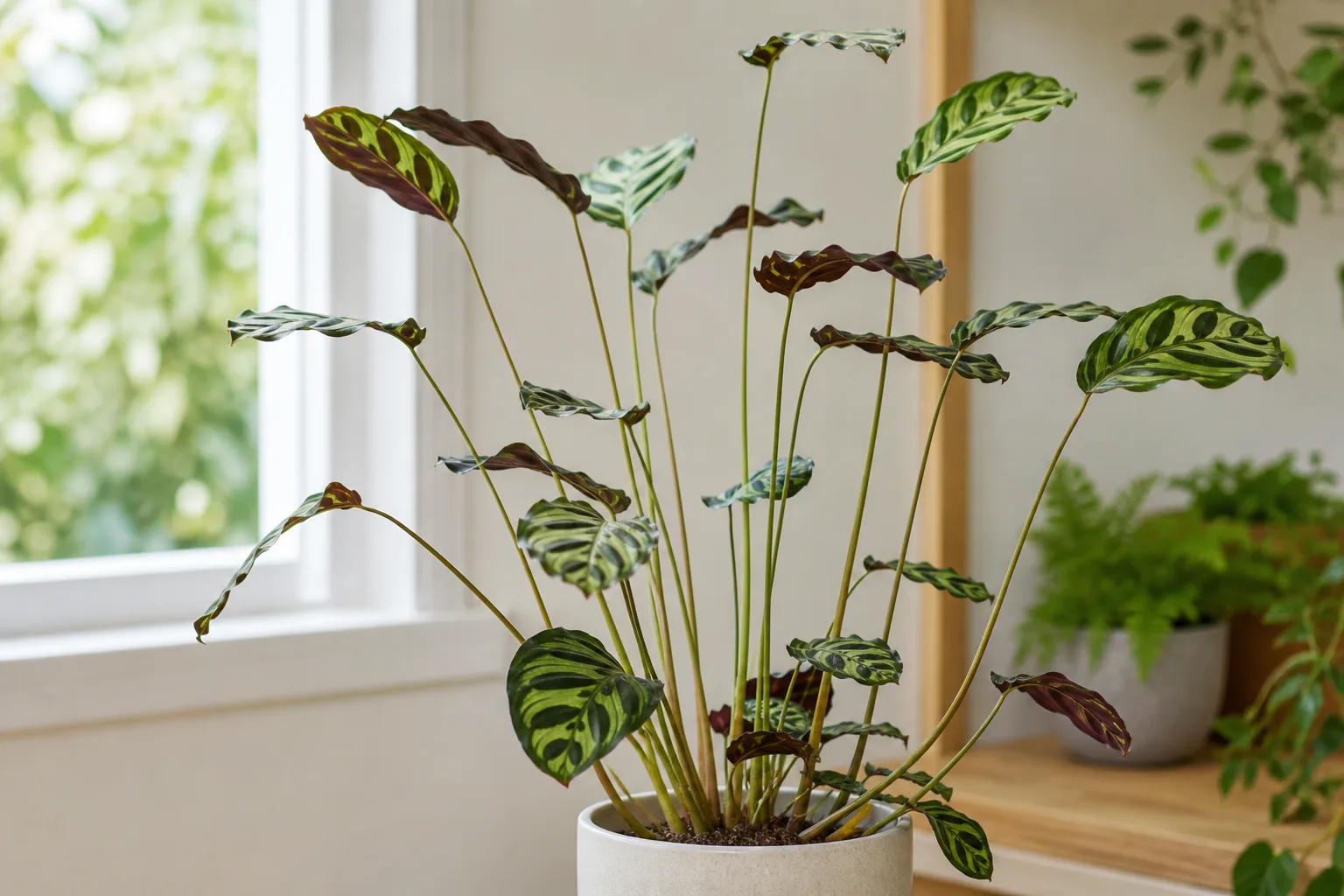
Leggy growth on Calathea is etiolation: new leaves open on long thin petioles with wider spacing, the clump leans toward the brightest window, and variegation fades on stretched tissue. First step: compare petiole length on the last two rolled leaves and move the pot one to three feet from the brightest north- or east-facing window while running the hand-shadow test at midday.
Leggy Growth on Calathea: Causes, Checks & Fixes
This guide covers leggy growth on Calathea. See also the general Leggy Growth guide, watering, and light pages for this plant.
Leggy Growth on Calathea: Causes, Checks & Fixes
Quick answer
Leggy growth on Calathea (Calathea / Goeppertia prayer plants) is etiolation-the plant stretches toward usable light, leaving long thin petioles, wider spacing between new leaves, window lean, and washed-out variegation on the newest blades. Indoor plants become spindly or leggy when they stretch to reach for more light. Calathea evolved as a shade-adapted rainforest understory plant that needs filtered brightness-not open-sky direct sun-but dim corners still trigger the same stretch response as on any houseplant.
First step: compare petiole length on the last two leaves that opened and move the pot one to three feet from the brightest north- or east-facing window while running the hand-shadow test at midday. Do not repot, fertilize, or remove multiple leaves on the same day you change light. For the full shadow test, wet-soil trap, grow-light specs, and broader low-light symptom set, see not enough light on Calathea-this page focuses on stretch diagnosis, permanent petiole elongation, rhizome-crown pruning timing, and rejuvenation after light correction.
Leggy growth vs not enough light vs slow growth
These Calathea problem pages overlap, but each answers a different search question:
| What you see | Most likely issue | Start here |
|---|---|---|
| Long thin petioles, lean toward window, small pale new leaves, loose open clump | Leggy growth (etiolation) | This page |
| Faded patterns overall, weak night folding, wet soil in dim rooms, stalled growth | Not enough light (broader light deficiency) | Not enough light |
| Little new length for weeks, tight spacing but no fresh rolled spears | Slow growth (roots, season, nutrients) | Slow growth |
| Yellow lower leaves, sour wet soil, soft stems | Overwatering / root stress | Overwatering |
Leggy Calathea still pushes new rolled leaves-often on visibly longer petioles-but each blade sits farther from the crown and the clump leans toward the brightest source. The not-enough-light guide covers the full sparse-canopy picture including dull color and the wet-soil trap; leggy growth zeroes in on petiole elongation and window lean as the signature stretch pattern and when to prune stretched leaves at the rhizome after compact new growth confirms the fix.
What leggy growth looks on Calathea
Healthy Calathea grows as a compact foliage clump with moderately short petioles and bold leaf patterning. Leggy etiolation breaks that pattern on new growth from the last month-older leaves may still look acceptable from a brighter past.
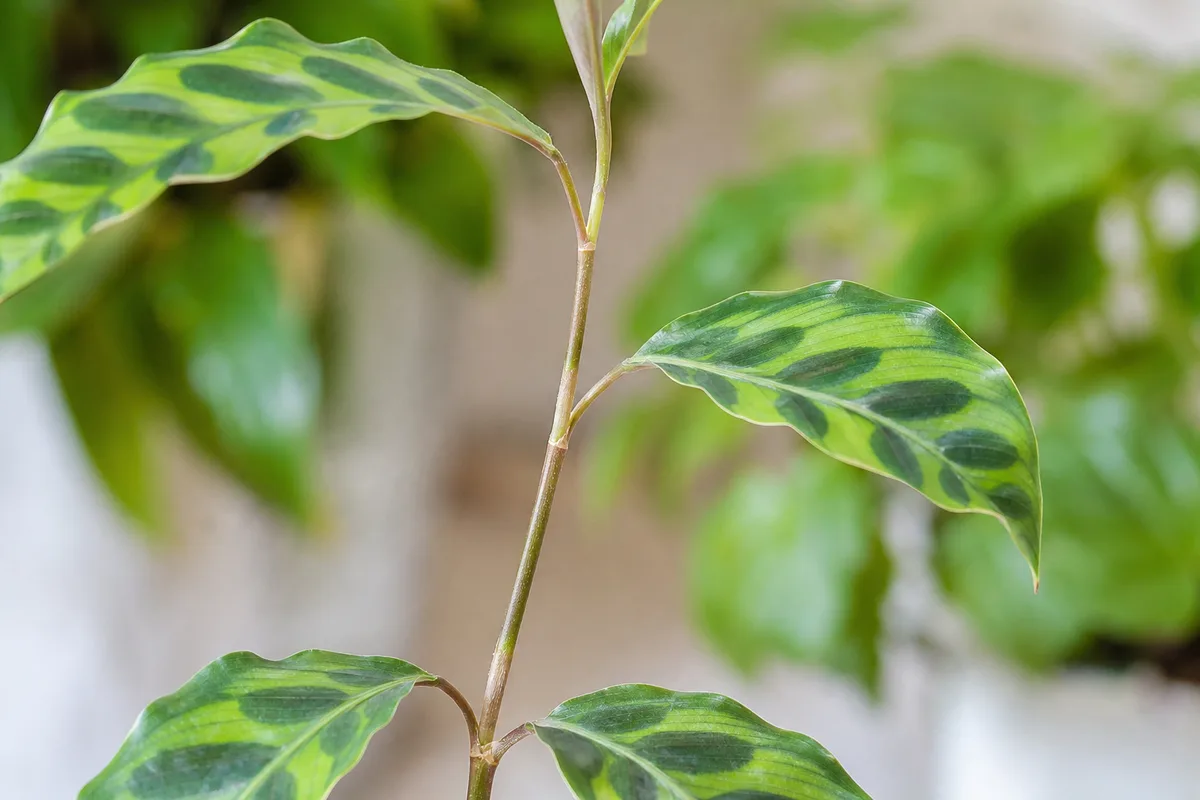
Leggy Growth symptoms on Calathea - compare with healthy tissue on the same plant.
Watch for these stretch signatures:
- Stretched, thin petioles - new leaves emerge on longer, thinner stems with wider spacing between rolled spears; the plant looks taller and looser than when you bought it
- Smaller, paler new leaves - the newest blade opens smaller than the one before it; pink stripes, silver markings, and dark green contrast blur toward uniform pale green; heavily variegated cultivars fade fastest
- Strong lean toward the nearest window or lamp; stems on the shaded side stay shorter unless you rotate weekly
- Reduced nyctinastic movement - healthy Calathea folds leaves upward at night; in dim light, movement weakens and leaves stay flatter or droop more during the day
- Slow soil dry-down - the pot stays heavy for days after watering because photosynthesis slowed in low light
- Loose, open silhouette - the clump loses its tight prayer-plant shape even though leaves are still green
Compare the last two leaves that opened. If each sits on a longer petiole with less pattern contrast than leaves from six months ago, you are looking at etiolation-not normal lower-leaf aging alone.
What leggy usually is not:
- Bleached or crispy patches on the window-facing side only - too much direct sun, not too little; see Calathea light needs
- Crisp brown edges on multiple leaf margins - low humidity or water quality; stretch and pattern fade come first in true dim light
- Sudden limp collapse with sour wet soil - overwatering or root rot, not stretch alone
- Fine webbing on leaf undersides - spider mites on weakened indoor growth
Why Calathea gets leggy
Calathea is a filtered-light prayer plant, not a low-light survivor like a snake plant or ZZ plant. Most foliage plants need bright indirect light indoors at the leaf surface-not ambient room brightness three meters from a window. When intensity drops, the plant triggers shade avoidance: petioles elongate, new blades stay small, and the clump leans toward the brightest source instead of building compact patterned foliage.
Ranked causes on Calathea:
Insufficient light (most common). Middle-of-room shelves, hallway tables, bathroom corners away from windows, north rooms at mid and high latitudes, dirty glass, closed sheers, and short winter days all cut usable energy. Light intensity drops sharply with distance from the glass. Human eyes adapt to dim rooms; Calathea does not. Interior spots often sit well below the 150 to 200 foot-candles where Calathea maintains its best indoor appearance.
The low-light overwatering trap. Dim Calathea uses less water. Soil that stays wet too long stresses roots, yellows lower leaves, and mimics a watering problem while stretch continues. Fixing water without improving light often fails; the not enough light guide walks through this pairing in detail.
Uneven light exposure. One-sided window light produces stretch on the shaded side while the sunward side stays fuller. Rotation fixes lean but not underlying dim placement.
Seasonal light drop. A placement that worked in July may underfeed the plant by January even though you never moved the pot. Winter stretch is common unless you move closer to glass or add grow-light hours.
Heavy fertilizing in dim light. Nitrogen pushes soft elongated foliage when light cannot support dense tissue. Feed cannot substitute for bright indirect light on calatheas.
How to confirm the cause
Work through these checks before repotting, fertilizing, or pruning stretched leaves:
- Hand-shadow test. At midday, hold your hand one inch above the lowest leaves between plant and window. A faint, soft-edged shadow means bright indirect light-the target. Almost no shadow means too dim. A sharp dark shadow means direct sun-too intense for most Calathea unless it is brief morning east exposure.
- Petiole comparison. Compare the last two leaves that opened. If each sits on a longer, thinner stem with less pattern contrast than the previous one, light is the prime suspect.
- Lean direction. Consistent tilt toward one window within days of rotating the pot confirms phototropism from insufficient even brightness.
- Soil dry-down speed. If the top two centimeters stay wet four to five days after watering while stems stay firm and there is no sour smell, low photosynthesis may be slowing water use-especially if the same pot dried faster last summer.
- Night folding quality. Weakened or absent leaf folding on an otherwise healthy-looking plant strengthens the low-light diagnosis when paired with stretch.
- Rule out lookalikes. Yellowing with soft stems and sour soil points to overwatering first. Uniform bleaching on the window-facing side only points to too much sun. See the lookalike table below.
Confirmation test: Move the plant one to three feet from the brightest safe window (or add a grow light) and change nothing else for two weeks. If the next new leaf opens on a shorter petiole with sharper patterning, low light was the driver of leggy growth.
First fix for Calathea
Move the pot one to three feet from an unobstructed north- or east-facing window-the brightest spot where direct midday or afternoon sun never strikes the leaves.
That single placement change addresses the most common cause without stacking stress. North- or east-facing windows deliver steady bright indirect light year-round in the Northern Hemisphere. If your brightest window is south- or west-facing, set the pot four to six feet back from the glass or behind a sheer curtain so the plant receives brightness without scorching variegated leaves.
When architecture offers no usable window, hang a full-spectrum LED grow light 12 to 18 inches above the tallest leaves and run it 12 to 14 hours on a timer. Introduce it gradually over a week if the plant has been in very dim light for months.
After moving, hold watering steady for the first week, then adjust. Brighter filtered light increases transpiration; you may need to water slightly sooner in spring and summer. Do not stack repotting, heavy pruning, and fertilizer on the same day you fix light.
Full window-placement workflow, acclimation after a dark corner, and grow-light parameters live on not enough light on Calathea and Calathea light needs.
Step-by-step recovery after you add light
Once placement improves, recovery is about new rolled leaves, not reversing old stretch.
- Wait 7–14 days before judging failure unless acute leaf scorch appears-pull back and filter the window if bleaching shows on shade-formed leaves.
- Rotate the pot a quarter turn every few days so all sides receive light evenly.
- Wipe dust from leaves with a soft damp cloth-dusty foliage absorbs less light from an already marginal window.
- Watch the next two or three rolled spears for shorter petioles, faster unfurling, and sharper pattern contrast compared with leaves before the move.
- Adjust watering after you know the new dry-down rate. Brighter correct light usually means faster drying; dim light means less frequent watering. See Calathea watering.
- Do not fertilize until new growth looks stable for several weeks.
If new leaves stay small and stretched after an honest bright-indirect move, the spot is still too dim or the grow light is too weak-move six inches closer to the window or increase fixture intensity before assuming disease.
Recovery timeline
Leggy stress on Calathea improves slowly because the plant must grow new leaves to show the fix.
| Milestone | What to expect |
|---|---|
| 1–2 weeks | Lean may slow; night folding may become more consistent. |
| 2–4 weeks | The newest rolled leaf should open on a shorter petiole with sharper patterning. |
| 5–8 weeks | If new growth is compact, you can optionally trim one or two of the most stretched old leaves for appearance. |
| One season | Severe long-term dim placement may leave a sparse top-heavy clump even after light improves-division in spring can reshape after several weeks of stable new growth. |
Stretched petioles from months in shade do not shrink back. Judge success by new growth spacing, leaf size, and pattern contrast-not old stems. The first new leaf after a move may still show some stretch if the plant was severely etiolated-judge the second and third leaves for the true trend.
When to prune stretched Calathea leaves
Pruning does not shorten existing petioles-it removes permanent stretch tissue so the clump looks compact again. On Calathea, that means cutting at the rhizome crown near soil level, not mid-petiole. This is the main reason this page exists separately from the not-enough-light guide.
Wait until two or three new leaves prove compact spacing in the corrected bright-indirect spot before removing multiple stretched outer leaves. RHS calathea guidance recommends dividing overcrowded calatheas in spring; the same season is safest for planned live-leaf removal on a stressed clump.
Pruning workflow:
- Confirm light is fixed first - pruning before brighter placement removes photosynthetic tissue the plant still needs and does not stop further stretch in the same dim spot.
- Remove fully yellow or collapsed leaves anytime at the petiole base with sterilized snips.
- For cosmetic stretch only, cut the longest outer petioles flush at the rhizome crown once new compact growth is stable-limit removal to about one-third of healthy foliage per session during active growth.
- Avoid heavy live-leaf grooming in winter or on the same day you repot or move homes; Calatheas react to combined insults with dramatic curl and drop.
- Consider division in spring if the clump is severely top-heavy after months of dim placement-each section needs several leaves and firm rhizome tissue.
Mid-stem stubs stay visible permanently and can hold moisture against the crown. Always cut flush at the base. Full tool safety, rhizome anatomy, and division steps live on Calathea pruning.
Lookalike symptoms to rule out
Several Calathea problems overlap with leggy stretch without enough light being the whole story.
| Pattern | More likely cause |
|---|---|
| Stretch + pale small new leaves, soil dries slowly | Leggy growth / low light (primary) |
| Yellow leaves with wet soil deep down in a dim corner | Overwatering / root stress |
| Crisp brown edges on multiple leaf margins | Low humidity or water quality |
| Bleached crispy patches on window-facing side only | Too much direct sun-see Calathea light |
| Little new length for weeks, tight but stalled spears | Slow growth from roots or season |
| Fine webbing on leaf undersides | Spider mites on weakened growth |
Overwatering is the most common misread because dim Calathea does stay wet longer. If you increase light but keep watering as if the plant were in a bright summer window, you can solve stretch while creating root stress.
Mistakes to avoid
- Pruning stretched leaves before light improves - you remove tissue the plant needs while rebalancing and may trigger more stretch on remaining shoots in the same dim spot.
- Jumping a dim Calathea straight onto an unfiltered south or west sill to fix stretch in one afternoon. Sudden intense sun bleaches patterned leaves faster than low light weakened them.
- Over-fertilizing to wake up a stretched plant without fixing light. Without enough brightness, Calathea cannot use extra nitrogen efficiently.
- Keeping the same watering calendar after a light change - plants in brighter filtered light dry faster; plants still in dim corners need longer intervals.
- Confusing survival with health - Calathea can linger for months in a decorative dark corner with slowly declining pattern quality.
- Mid-petiole cuts on stretched leaves - stubs do not regrow replacement blades; cut at the rhizome crown only.
- Removing all stretched leaves at once - spread live-leaf removal across several weeks during active growth.
How to prevent leggy growth next time
Place Calathea where light hits the leaves, not where the pot matches the bookshelf. The hand-shadow test takes thirty seconds and prevents months of slow decline.
Rotate the pot a quarter turn weekly during active growth so stems do not lean permanently toward one window. Clean window glass inside and out seasonally-grime can cut transmitted light more than growers expect.
Track seasonal shifts. When days shorten in late autumn, move the plant closer to the brightest filtered window or extend grow-light hours. When spring sun strengthens against south or west glass, pull the pot back or add a sheer curtain before bleaching starts.
Pair light awareness with watering. When you move Calathea brighter, expect faster dry-down and check soil more often. When winter reduces light, let the surface dry slightly longer before rewetting-RHS warns against overwatering in winter when growth slows.
Choose placement with cultivar sensitivity in mind. Heavily white-variegated types need softer, steady filtered light and show low-light fade fastest. Darker varieties tolerate slightly brighter positions but still etiolate in true dim corners.
When to worry
Leggy stretch alone is a slow cosmetic decline, not an overnight crisis. Escalate your response if:
- Soil stays wet for a week or more with multiple yellow leaves and soft stems-inspect roots and reduce watering while improving light in the same week
- No new leaves for three or more months in a confirmed dim spot despite adequate humidity and careful watering-the rhizome may be exhaustively weak
- New leaves bleach or curl after a move-you may have overshot into direct sun; filter or pull back
A Calathea that stretches but stays firm with reasonable dry-down is telling you the truth: it needs more filtered brightness, not emergency surgery. Poor, weak growth from low light will not self-correct on leftover room brightness alone.
Related Calathea guides
- Not enough light on Calathea - shadow test, placement trial, wet-soil trap, and full low-light recovery workflow
- Calathea light needs - window placement, grow lights, and acclimation after winter indoors
- Calathea pruning - rhizome-crown cuts, one-third rule, and division for severely stretched clumps
- Slow growth on Calathea - when stretch is fixed but new spears still stall
- Calathea care overview - watering rhythm, humidity, and cultivar sensitivity