Slow Growth on Calathea: Causes, Checks & Fixes
Quick answer
Slow growth on Calathea often means new leaves stall half-unfurled, open smaller than the last, or stop appearing for weeks while the rhizome clump stays the same size. First step: confirm the season, run the hand-shadow test at midday, and press the top two centimeters of mix - dim light with chronically wet soil is the most common indoor stall.
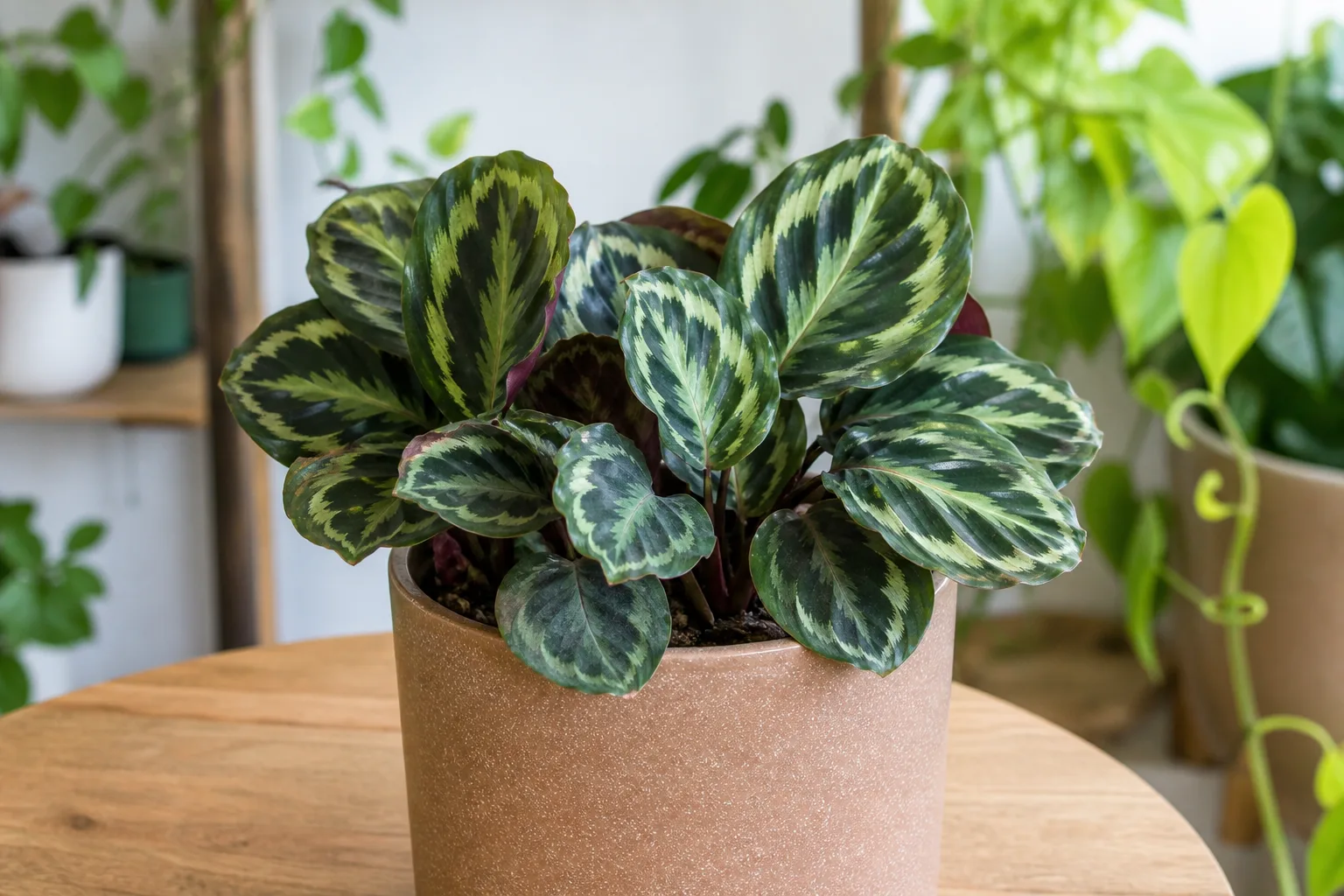
Slow Growth on Calathea: Causes, Checks & Fixes
This guide covers slow growth on Calathea. See also the general Slow Growth guide, watering, and light pages for this plant.
Slow Growth on Calathea: Causes, Checks & Fixes
Quick answer
Slow growth on Calathea (Calathea / Goeppertia prayer plants) is not one disease - it is a stall signal from the rhizome. Healthy clumps push new rolled leaves from the soil line on a seasonal rhythm; stressed plants keep the same leaf count for months, open blades smaller than the previous ones, or leave new spears stuck half-unfurled for weeks.
The pattern that fools growers most often: a Calathea in a dim corner with soil that stays wet for days. Low photosynthesis slows water uptake, yet the same weekly watering continues - roots sit in cool, oxygen-poor mix while the rhizome stops dividing. That chain is specific to shade-adapted tropical foliage, not generic “underwatering on Calathea houseplant” logic.
First step: note the calendar month, run the hand-shadow test at midday one inch above the foliage, and press the top two centimeters of potting mix. If it is winter and stems are firm with no yellowing cluster, expect natural rest. If it is spring or summer, the shadow test shows almost no shadow, and mix stays wet - move the pot one to three feet from the brightest north- or east-facing window before changing water, fertilizer, or pot size. See not enough light for the full light branch.
For genus watering rhythm, see Calathea watering. For stuck unfurling with dry margins, see low humidity. For stretch vs. stall, see leggy growth.
What slow growth looks like on Calathea
Calathea grows from an underground rhizome - a horizontal stem that produces leaves at intervals along the clump. When growth is healthy, you see a new rolled spear emerge from the soil, unfurl over one to two weeks, and expand to match or slightly exceed the previous leaf. Slow growth breaks that rhythm in recognizable ways.
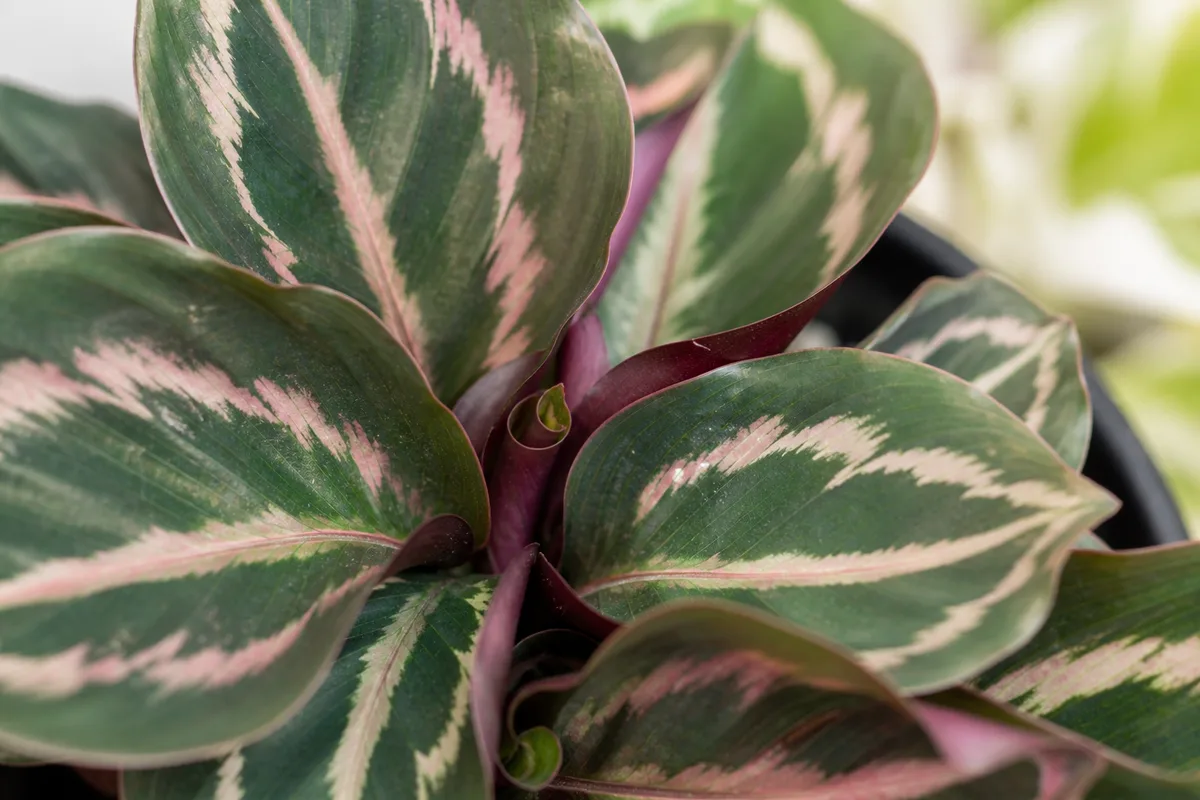
Slow Growth symptoms on Calathea - compare with healthy tissue on the same plant.
Stalled or partial unfurling. A new leaf stays rolled or opens only halfway for three or more weeks. The spear may look dry at the tip or tear along the margin while older leaves still appear green. This pattern often pairs with low humidity or cultural stress rather than total plant collapse.
Smaller successive new leaves. Each new blade opens shorter and narrower than the one before it, even without obvious stretch. Pattern contrast - pink stripes, silver bands, dark green zones - looks washed out on the newest growth.
Static clump size. No new spears appear for six to twelve weeks outside winter rest. The pot looks the same from month to month while soil weight and leaf count do not change.
Weakened nyctinasty. Healthy Calathea folds leaves upward at night. Growth stress often dulls that movement before leaves yellow - leaves stay flatter through the evening or fold inconsistently.
Slow growth with wet soil. The pot stays heavy four to five days after watering while no new leaf develops. That combination points to low photosynthesis or root decline, not a simple thirst signal.
No change in a dim room despite “regular care.” Calathea can linger for months in decorative shade with gradually smaller new growth. Survival is not active growth.
Why Calathea grows slowly - normal pace vs. problem
Normal seasonal slowdown
Calathea is a tropical perennial, not a year-round sprint grower indoors. Growth typically slows in autumn and winter when day length drops and room temperatures cool. During rest, the plant may produce zero new leaves for several weeks while existing foliage stays firm, patterns hold, and nightly folding continues. Reduce watering in winter when growth slows - let the surface dry slightly longer before rewetting, but never let the full root ball go bone dry.
Active growth usually resumes in late winter or spring when light hours increase. Expect the first new spear within two to four weeks after conditions improve.
Cultural limits that stall the rhizome
Insufficient light. Calathea evolved as a warm, humid rainforest understory plant. Indoors it needs bright filtered light at the leaf surface - not ambient room brightness meters from a window. RHS lists poor, weak growth from low light levels, especially on Goeppertia species. Dim light reduces photosynthesis, which slows both leaf expansion and rhizome division.
Low humidity. Thin Marantaceae leaves lose water through transpiration. When relative humidity drops below about 50% at canopy level, new spears desiccate before they finish unfurling even if soil moisture is correct. NC State Extension recommends about 60% humidity for pinstripe calathea and related Goeppertia indoors.
Cool temperatures and drafts. Rhizome activity needs stable warmth. Room temperatures of 65 to 75°F support best growth. Windowsills below that range in winter, air-conditioning blasts, or sudden cold drops stall new leaves.
Chronically wet soil. Overwatering or unchanged watering calendars in dim light keep roots in saturated mix. Oxygen-starved roots cannot fuel new growth even when the plant looks merely “slow.”
Root-bound pots. Established clumps exhaust nursery pots over two to three years. Circling roots with little fresh mix left slow water and nutrient uptake. Spring division or Calathea repotting guide into one size larger restores pace - but only after confirming light and humidity are adequate.
Pest drain before visible damage. Spider mites, mealybugs, and scale sap vigor while leaves still look mostly green. Fine webbing on undersides or sticky residue on new growth often appears after weeks of slowed spears.
Tap-water mineral stress. Fluoride in tap water can brown leaf edges and stress new tissue on sensitive cultivars. Growth may stall while margins crisp - overlapping with low humidity symptoms.
Lookalike symptoms to rule out
Several Calathea problems share stalled growth. Separating them prevents wrong fixes.
| Pattern | Likely cause | Key differentiator |
|---|---|---|
| Long thin stems, lean toward window, pale stretch | Leggy growth / low light | Petioles elongate; plant gets taller and looser |
| Static clump, firm stems, wet soil in dim corner | Low light + overwatering rhythm | No stretch; soil stays heavy; see not enough light |
| Half-unfurled spear, crisp margins, moist soil | Low humidity | Damage on leaf edges; hygrometer below 50% |
| Yellow lower leaves, sour smell, mushy roots | Root rot | Active decline, not slow pace alone |
| Fine webbing, stippled undersides | Spider mites | Vigor drops before obvious leaf loss |
| No new leaves Dec–Feb, firm foliage, cool room | Winter rest | Normal; do not repot or feed seeking growth |
Leggy vs. stalled: Leggy Calathea stretches toward light - longer petioles, wider spacing, lean. True slow growth without stretch means the rhizome stops producing spears or opens them smaller while the overall silhouette stays compact.
How to confirm the cause
Work through this checklist in order. Change one variable at a time after you identify the prime suspect.
- Season check. Is it late autumn through early spring in the Northern Hemisphere? If yes, and stems are firm with no yellowing cluster or sour soil, assume partial dormancy before treating culture as broken.
- Hand-shadow test. At midday, hold your hand one inch above the lowest leaves between plant and window. A soft, blurred shadow means adequate bright indirect light. Almost no shadow means too dim - the top growth limiter for most indoor stalls.
- Soil moisture and dry-down speed. Press the top two centimeters. Wet for four or more days after your last watering in a dim spot suggests slow photosynthesis or overwatering. Bone-dry through the full ball suggests drought stress - less common on Calathea but possible in bright dry rooms.
- Hygrometer at canopy height. Read RH for 24 hours beside the pot. Below 50% with stuck unfurling points to humidity. See low humidity for fixes.
- Temperature and drafts. Note proximity to AC vents, single-pane winter glass, and doors. Sustained exposure below 65°F stalls rhizome activity.
- Pest scan. Inspect leaf undersides and new spear crevices with a phone light. Webbing, dots, or cottony clusters mean pests are draining growth energy.
- Root spot-check (when indicated). Slide the plant partly out of the pot only if soil stays soggy despite reduced watering, multiple lower leaves yellow, or no growth for three months in confirmed good light and humidity. Firm white roots support waiting; brown mushy roots require the root rot branch.
Confirmation test: After your leading fix - brighter filtered light, humidifier, or corrected watering - watch only the next one or two new spears over four to six weeks. Faster unfurling and larger blade size confirm the diagnosis.
First fix for Calathea
The first action depends on what the checklist shows. Do not stack repotting, fertilizer, pruning, and pesticide on the same day.
When light fails the hand-shadow test (most common)
Move the pot one to three feet from the brightest north- or east-facing window - or add a full-spectrum grow light 12 to 18 inches above the canopy for 12 to 14 hours daily. Hold watering steady for the first week, then adjust as brighter light increases transpiration. Full placement guidance lives on not enough light.
When light passes but humidity reads below 50%
Run a humidifier within three to five feet until canopy-level RH holds in the 50 to 70% band. Do not compensate with extra watering. Details on low humidity.
When soil stays wet in a dim or bright spot
Stop watering until the top two centimeters dry. Calathea needs moist - not constantly saturated - mix. If yellowing spreads on wet soil, inspect roots the same week you reduce water. See overwatering and root rot.
When pests are confirmed
Isolate the plant and rinse leaf undersides thoroughly. Confirm active mites or mealybugs before spraying. Pest drain can stall growth weeks before leaves look badly damaged - see spider mites.
When roots circle a tight pot in spring with good culture
Repot or divide in spring into moist, well-drained peaty mix one size larger - only after light and humidity are already in range. Winter repotting on a stalled plant adds unnecessary shock.
When it is winter and culture checks out
Wait. Provide stable warmth, slightly reduced watering, and no fertilizer. Resume active-care adjustments when spring growth resumes.
Recovery timeline by season and severity
| Situation | First sign of improvement | Typical full stabilization |
|---|---|---|
| Low light corrected in spring | Next spear unfurls faster within 2–4 weeks | 2–3 new leaves for trend confirmation |
| Humidity raised above 50% | Next leaf opens without torn edges | 1–2 weeks per spear |
| Overwatering corrected (roots firm) | Soil dries on schedule; new spear holds upright | 2–4 weeks |
| Root rot trimmed | Firm crown; one new rolled leaf | 4–8 weeks |
| Winter rest | First spring spear | Late Feb–Apr depending on climate |
| Post-repot spring division | Stable prayer movement; one new leaf | 3–6 weeks |
Judge success by new spear size, unfurl speed, and restored nyctinasty - not by old leaves enlarging. Damaged or undersized mature leaves do not grow to match healthier predecessors. Trim cosmetic damage only after two stable new leaves confirm the fix.
Severe long-term dim placement or root decline can leave a sparse clump even after conditions improve. Division of firm rhizome sections in spring reshapes the plant - but only after several weeks of stable new growth prove the limiting factor is solved.
What not to do
Do not fertilize a stalled Calathea to “wake it up” - especially in dim light or wet soil. Without adequate light and root function, nitrogen salts accumulate and yellow foliage further.
Do not repot in winter seeking growth when the plant is resting. Repotting during natural slowdown stacks shock on top of dormancy.
Do not increase watering when growth slows in a dim corner. Slower photosynthesis means slower water use - the classic path to root stress on a genus that already dislikes soggy mix.
Do not confuse winter rest with decline. Firm stems, intact patterns, and absent but healthy old leaves during short days are normal. Soft crown, spreading yellow on wet soil, and sour mix are not.
Do not treat half-unfurled spears with more water when the hygrometer reads dry. That pattern is humidity or air movement - not thirst.
Do not apply three fixes at once because the plant “has not grown in months.” One correction, then four to six weeks of observation on the next spear.
How to prevent slow growth next time
Place Calathea where bright filtered light reaches the leaves, not where the pot fits the shelf. Run the hand-shadow test seasonally - winter sun angle and dirty glass change usable light more than growers expect. See Calathea light for placement baselines.
Hold 50 to 70% RH at canopy level through heated winters. A hygrometer beside the pot beats guessing from room averages.
Match watering to light and season. Evenly moist mix in spring and summer; slightly longer dry intervals on the surface in winter when growth slows. Lift the pot weight before every pour - calendar watering in changing light is how slow growth pairs with wet roots.
Keep temperatures in the 65 to 75°F band and away from AC blasts and cold window glass.
Inspect leaf undersides weekly during active growth. Catching spider mites early prevents month-long vigor drain.
Repot or divide every two to three years in spring before roots circle tightly - fresh mix restores uptake without waiting for visible decline.
Use rainwater or distilled water if tap water browns tips on your cultivar - mineral stress compounds humidity and light limits.
When to worry
Slow growth alone rarely kills Calathea quickly. Escalate when stall pairs with soft crown on wet soil, multiple yellow leaves in one week, sour smell from the pot, or no new growth for three or more months in summer after confirmed bright indirect light and humidity above 50%.
If the hand-shadow test passes, humidity holds, watering is balanced, and spears still abort repeatedly, inspect roots and pests the same week - do not cycle fertilizer types hoping for a magic response.
When the only available location fails the shadow test year-round, commit to a grow light on a timer. Calathea is not a snake plant - poor weak growth from low light will not self-correct on leftover room brightness.
For acute collapse rather than slow pace, see wilting. For stretch-heavy stagnation, see leggy growth.
Related Calathea problems
- Not enough light - primary growth limiter indoors
- Leggy growth - stretch vs. true stall
- Low humidity - stuck unfurling on moist soil
- Root rot - wet-soil growth stop
- Spider mites - vigor drain before heavy damage
- Calathea watering - rhythm matched to growth pace
- Calathea light - placement and seasonal shifts
- Calathea overview - genus hub
When to use this page vs other Calathea guides
- Calathea watering guide - Use for routine moisture checks before assuming slow growth is the main issue.
- Calathea problems hub - Browse all 16 common issues on this species.
- Not Enough Light on Calathea - Different entry point when symptoms overlap with slow growth.
- Leggy Growth on Calathea - Different entry point when symptoms overlap with slow growth.
- Yellow Leaves on Calathea - Different entry point when symptoms overlap with slow growth.