Yellow Leaves on Calathea Peacock: Causes, Checks & Fixes
Quick answer
Yellow leaves on Calathea peacock (*Goeppertia makoyana*) are a symptom, not one diagnosis. First step: check whether the top 1–2 inches of mix are wet or dry, read humidity at canopy height, and note which leaves yellow-lower uniform fade on a heavy pot points to wet roots; margin yellow on moist soil often means dry air or tap water.
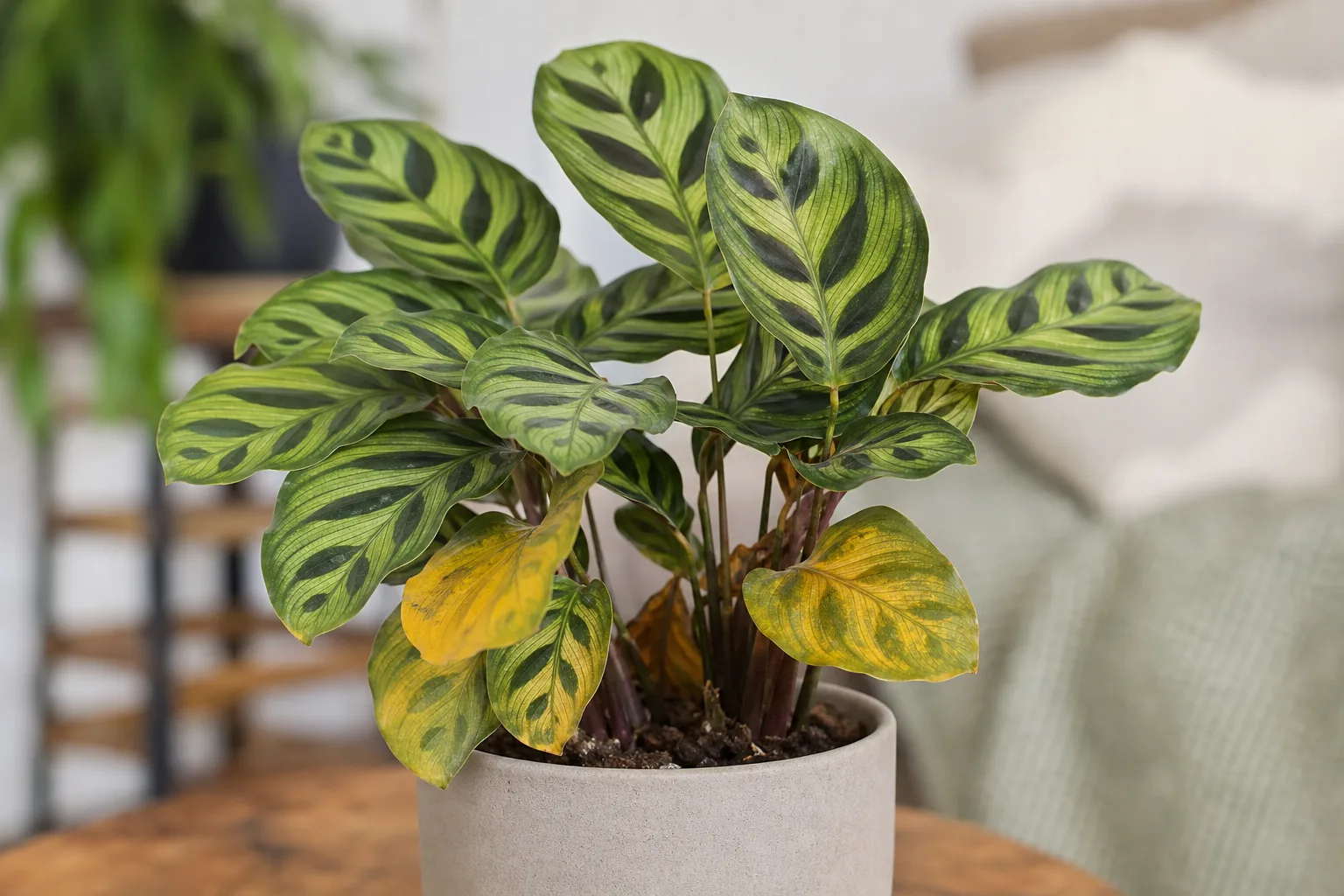
Yellow Leaves on Calathea Peacock: Causes, Checks & Fixes
This guide covers yellow leaves on Calathea Peacock Plant. See also the general Yellow Leaves guide, watering, and light pages for this plant.
Yellow Leaves on Calathea Peacock: Causes, Checks & Fixes
Quick answer
Yellow leaves on Calathea peacock - botanically Goeppertia makoyana, sold as Calathea makoyana or cathedral windows - are a symptom, not one diagnosis. This prayer plant evolved on shaded Brazilian forest floors with fine, shallow roots, steady humidity, and loose organic soil. Indoors, yellowing most often traces to wet soil suffocating roots, dry winter air, tap-water fluoride and minerals, insufficient Calathea Peacock Plant light guide, or one aging bottom leaf-and overwatering and underwatering can both yellow lower leaves, which makes a quick soil-and-weight check essential.
First step: press your finger into the top 1–2 inches of mix near the pot rim, lift the pot to feel weight, and place a hygrometer at canopy height. A heavy, cool pot with multiple soft yellow lower leaves points to overwatering or root stress. A very light pot with curled leaves and dusty dry mix points to underwatering. Margin yellow or pale panels on moist soil with RH below 50% often means low humidity or tap-water chemistry-not thirst. One bottom leaf fading slowly while new peacock-pattern spears stay firm usually means normal senescence.
Do not fertilize, repot, or flood the pot on day one. Match the first fix to what you confirm. This page is the cultivar-specific yellowing hub for peacock plant; for genus-wide patterns see yellow leaves on Calathea. Related guides: watering, overwatering, low humidity, brown tips, root rot, underwatering, and spider mites.
Why Calathea makoyana yellows differently from easy houseplants
Peacock plant sits in a narrow moisture band that confuses beginners. NC State Extension describes the goal as consistently moist but never waterlogged soil-let the top 1–2 inches begin to dry, then water thoroughly. That is a partial dry-down, not permission to drought the whole root ball and not an excuse to keep the surface wet daily.
Fine Marantaceae feeder roots absorb water quickly but suffocate when air is pushed out of soggy mix for days. When those roots fail, lower leaves yellow even though the soil still feels damp-the classic “wilting on wet soil” trap. Swing the other way toward bone-dry pots and the same broad patterned leaves curl, crisp, and yellow from drought stress instead.
Makoyana also needs at least 60% humidity and stable temperatures roughly 65–75°F (18–24°C). Winter heating lowers room humidity while cool dim rooms slow how fast mix dries-so yellowing in January often involves both dry air and stale wet soil, not a single cause. Tap water with fluoride can pale or burn margins on thin leaves before roots show any trouble.
That biology is why generic “allow soil to dry” or “water weekly” advice fails on peacock plant. Yellow leaves here require reading leaf position, soil moisture at depth, pot weight, humidity at canopy, and water source together.
What yellow leaves look like on Calathea peacock
Yellowing on makoyana follows recognizable patterns tied to peacock-pattern leaf architecture-cream and pale green panels beside dark green blotches on thin tissue.
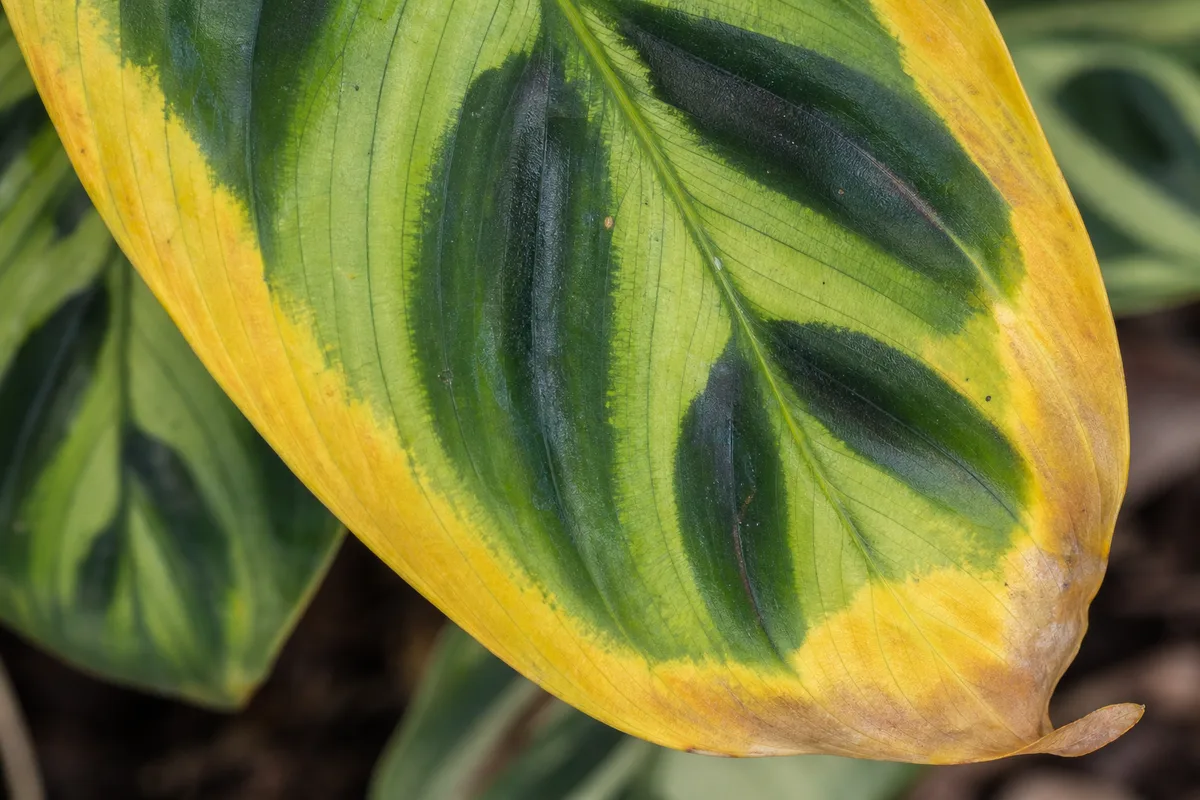
Yellow Leaves symptoms on Calathea Peacock Plant - compare with healthy tissue on the same plant.
Overwatering and root stress:
- Multiple lower leaves turn soft yellow or pale green while mix stays wet or cool at depth
- Limp petioles and failure to open fully during the day-not just normal evening nyctinastic folding
- Pot feels heavy for days; surface may crust dry while the core stays saturated
- Sour smell, fungus gnats, or soft tissue at the soil line in advancing cases
Underwatering:
- Inward curl or droop with light pot and hard dry mix 1–2 inches down
- Yellowing may follow crisp brown edges on pale panels
- Whole clump looks thirsty despite occasional surface sprinkles
Low humidity (often winter):
- Margin or panel yellowing on leaves that otherwise feel firm, with soil still evenly moist
- New spears brown or yellow at tips before fully unfurling
- Worse on leaves nearest heating vents, fireplaces, or bright winter windows
Tap-water and mineral stress:
- Pale yellow-green wash or brown-tipped margins on patterned panels while watering rhythm looks correct
- May overlap with humidity damage-both are common on Marantaceae indoors
- Tap water contains fluoride that causes leaf tip burn on many tropical houseplants
Low light:
- Overall pale yellow-green tone across several leaves; long petioles lean toward the brightest window
- Soil stays damp 10+ days in summer because metabolism is too slow to use water-mimics overwatering
- See not enough light on Calathea peacock
Cold drafts:
- Yellowing or crisping concentrated on leaves nearest leaky winter glass, AC vents, or radiators
- One side of the clump often looks worse than the other
Spider mites:
- Fine stippling on undersides, then yellow patches and webbing-common after a dry spell
- See spider mites on Calathea peacock
Normal aging:
- One or two oldest bottom leaves fade slowly over months while new centre spears stay patterned and firm
- No sour soil, no rapid spread up the stem, no collapse of the crown
What yellow tissue will not do: fully yellow blades do not re-green. Judge recovery by new unfurling leaves, not old colour.
Why Calathea peacock gets yellow leaves
| Cause | Why it fits makoyana | Typical leaf pattern |
|---|---|---|
| Overwatering | Fine shallow roots die in saturated peat-coco mixes, especially in cool dim rooms | Soft yellow lower leaves; wet heavy pot |
| Underwatering | Forest-floor roots need steady moisture; full drought yellows and curls broad leaves | Curl + light pot; dry top 1–2 in |
| Low humidity | Thin patterned leaves lose water fast; species listed intolerant of low humidity | Margin/panel yellow on moist soil |
| Tap water | Fluoride and minerals accumulate in sensitive monocot margins | Pale panels, brown tips, yellow margins |
| Low light | Slow metabolism leaves soil wet longer; chlorosis on weak growth | Overall pale yellow-green; damp soil |
| Cold drafts | Tropical understory plant; chill damages leaf tissue | One-sided yellow/crisp near vent or glass |
| Spider mites | Thrive in warm dry air; stippling precedes yellow patches | Scattered yellow with stippling/webbing |
| Calathea Peacock Plant repotting guide stress | Shallow roots dislike disturbance; watering misread after move | Yellowing 1–2 weeks after repot |
| Normal aging | Clump sheds oldest fans as new spears emerge | Single bottom leaf over months |
| Salt buildup | Heavy fertilizer without flushing concentrates minerals | Tips/margins after frequent feeding |
Lookalike symptoms to rule out
| What you see | Likely cause | Where to read more |
|---|---|---|
| Yellow lower leaves, heavy wet pot, limp stems | Overwatering / root stress | Overwatering |
| Yellow with curl, very light pot, dry mix | Underwatering | Underwatering |
| Margin yellow on moist soil, RH below 50% | Low humidity | Low humidity |
| Pale panels, brown tips, good humidity | Tap-water minerals / fluoride | Brown tips |
| Pale wash, soil wet 10+ days, dim corner | Low light | Not enough light |
| Rapid yellow + sour soil + soft crown | Root rot | Root rot |
| Stippling + webbing on undersides | Spider mites | Spider mites |
| One old bottom leaf, firm new spears | Normal aging | Trim spent leaf; no crisis |
How to confirm the cause
Work through this inspection in order. One primary fix at a time makes the plant’s response readable over the next two to three weeks.
-
Soil moisture at 1–2 inches - Insert your finger to the second knuckle near the pot rim. Cool damp mix means wait before watering. Dry crumbly mix at that depth with a light pot supports underwatering. Damp mix 7+ days after the last drink with yellow lower leaves supports overwatering-see UF IFAS guidance to let the potting media surface dry slightly before watering Calathea.
-
Pot weight - Lift right after a thorough watering once to learn the heavy baseline. A pot still substantially heavy with yellow limp leaves on wet soil points to root stress, not thirst.
-
Leaf position and speed - Single slow bottom leaf versus multiple leaves yellowing within a week. Spread up the stem on saturated mix warrants root inspection.
-
Humidity at canopy - Place a hygrometer within 12 inches of the top leaves. Readings below 50% with margin yellow on moist soil support a humidity fix before repotting.
-
Water source - Note tap, softened, filtered, or rainwater. Softened sodium water and fluoride-heavy tap both damage Marantaceae margins.
-
Light and drafts - Confirm bright indirect exposure without direct sun on patterned leaves. Feel for moving air from vents and cold glass within three feet.
-
Pest check - Inspect leaf undersides with a phone light for stippling, webbing, or moving dots.
-
New-growth watch - The next unfurling spear is the decisive test. Clean new patterned tissue confirms your fix; repeated damage means another cause is still active.
You have likely confirmed the primary cause when one branch below matches your inspection and new centre growth stabilizes within two to three weeks.
First fix for Calathea peacock
Apply one correction first-not fertilizer, repot, and a shower on the same day.
If soil is wet and the pot is heavy
Stop watering, empty all standing water from saucers and cachepots, and let the top 1–2 inches dry before the next thorough drink. Do not fertilize. If yellowing continues after appropriate dry-down, inspect roots before watering again. Full wet-soil protocol: overwatering on Calathea peacock.
If soil is dry and the pot is light
Water thoroughly with room-temperature filtered or rainwater until excess drains, then empty the saucer. Verify the entire root ball rewets-not a small cup on a crusted surface. See underwatering if curl returns within days.
If humidity is below 50% at canopy
Run a humidifier near the plant and measure RH at leaf height. Misting alone rarely sustains the 60% target NC State recommends through a heating season. Do not flood the pot to compensate for dry air.
If tap water is the likely driver
Switch to rainwater, distilled, or filtered water for two weeks while holding your normal top-inch dry-down rhythm. Watch the next unfurling leaf for clean margins.
If only one bottom leaf is fading slowly
Trim the spent yellow leaf at the base once it is mostly yellow. No repot or fertilizer needed if new spears stay firm.
If stippling or webbing is present
Rinse undersides and isolate the plant before treating mites. Raise humidity-dry air and mites often pair. See spider mites.
If light is dim and soil stays wet
Improve bright indirect light first (gradually if the plant lived in deep shade), then reassess watering interval. Fixing light often corrects the slow-metabolism overwatering trap without repotting.
Recovery timeline
Fully yellow leaves usually drop within one to three weeks; they will not re-green. After the correct fix:
- Overwatering correction: firm new spears within two to four weeks once mix dries on schedule and roots recover
- Underwatering: perk and unfurl within several days to one week after a full soak
- Humidity or water-quality fix: next one or two new leaves show the clearest improvement in two to four weeks
- Normal aging: no spread once the spent leaf is removed
Judge success by new centre growth and stable pot weight, not by old blade colour. Worsening signs: crown softening, sour soil staying wet, or most leaves yellowing within a week-escalate to root inspection and root rot guidance.
What not to do
- Do not fertilize a yellowing stressed peacock plant to “green it up”-salt buildup can yellow margins further
- Do not increase watering when yellowing comes from wet soil, fluoride on already-moist mix, or low humidity
- Do not repot on day one unless roots are mushy, mix is sour, or the plant is severely root-bound-transplant shock yellows foliage too
- Do not rely on misting alone for winter humidity; it does not sustain canopy-level RH
- Do not place in direct sun to fix pale leaves-patterned makoyana blades scorch quickly
- Do not ignore rapid multi-leaf yellowing with wet soil-that pattern can advance to crown rot within days
How to prevent yellow leaves on Calathea peacock
- Water on evidence: top 1–2 inch dry-down, pot weight, and seasonal stretch in winter-see Calathea peacock watering
- Hold humidity near 60% through heating season with a humidifier, not occasional mist
- Use rainwater, distilled, or filtered water to reduce fluoride and mineral margin damage
- Keep bright indirect light without direct sun on patterned leaves
- Stay away from vents and cold glass; maintain roughly 65–75°F (18–24°C)
- Remove spent lower leaves promptly so pests cannot hide in dying tissue
- Flush the pot occasionally if you fertilize regularly, to prevent salt buildup
When to worry
Act within days if:
- The crown feels soft at the soil line
- Most leaves yellow within a week on saturated, sour-smelling mix
- New spears rot before opening on wet soil
- Fine webbing and stippling spread despite humidity fixes
Those patterns point past a simple dry-down or humidifier adjustment. Unpot, inspect roots, and follow root rot escalation if tissue is mushy.
Lower urgency: one aging bottom leaf, slight winter margin yellow that clears on the next spear after a water switch, or pale colour that improves within two weeks of better light.
Related Calathea peacock problems
- Calathea peacock overview - species care hub
- Watering - moisture band, filtered water, seasonal rhythm
- Overwatering - wet-soil yellow lower leaves
- Underwatering - dry curl lookalike
- Root rot - mushy roots and repot escalation
- Low humidity - margin yellow on moist soil
- Brown tips - tap-water and fluoride overlap
- Spider mites - stippling then yellow patches
- Not enough light - pale chlorosis trap
- Wilting - acute collapse on wet or dry soil
- Yellow leaves on Calathea (genus) - broader prayer-plant patterns
When to use this page vs other Calathea Peacock Plant guides
- Calathea Peacock Plant watering guide - Use for routine moisture checks before assuming yellow leaves is the main issue.
- Calathea Peacock Plant problems hub - Browse all 16 common issues on this species.
- Overwatering on Calathea Peacock Plant - Different entry point when symptoms overlap with yellow leaves.
- Underwatering on Calathea Peacock Plant - Different entry point when symptoms overlap with yellow leaves.
- Not Enough Light on Calathea Peacock Plant - Different entry point when symptoms overlap with yellow leaves.
Related Calathea Peacock Plant guides
- Calathea Peacock Plant overview
- Calathea Peacock Plant watering
- Calathea Peacock Plant light
- Calathea Peacock Plant soil
- Overwatering on Calathea Peacock Plant
- Underwatering on Calathea Peacock Plant
- Not Enough Light on Calathea Peacock Plant
- Root Rot on Calathea Peacock Plant
- Calathea Peacock Plant problems