Overwatering on Calathea Peacock Plant: Causes, Checks &
Quick answer
Overwatering on Calathea makoyana shows as a heavy wet pot, soft yellow lower leaves, and limp patterned foliage despite damp soil-roots suffocate in soggy mix. First step: stop watering, empty all standing water from saucers and cachepots, and let the top 1–2 inches dry before the next drink.
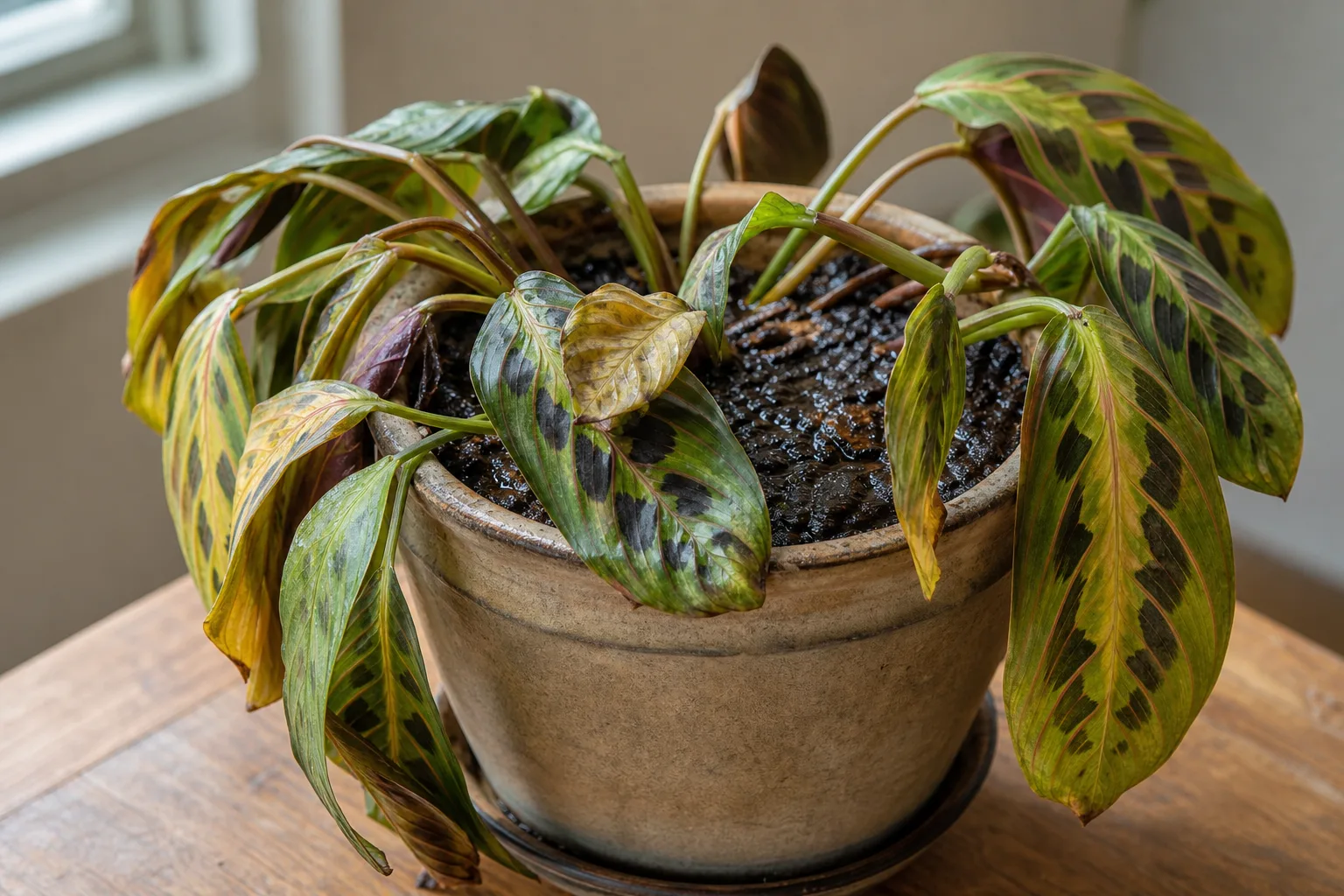
Overwatering on Calathea Peacock Plant: Causes, Checks & Fixes
This guide covers overwatering on Calathea Peacock Plant. See also the general Overwatering guide, watering, and light pages for this plant.
Overwatering on Calathea Peacock Plant: Causes, Checks & Fixes
Quick answer
Overwatering on Calathea peacock - botanically Goeppertia makoyana, sold as Calathea makoyana or cathedral windows - means the root zone stays wet too long. Fine, shallow feeder roots suffocate when air is pushed out of soggy mix for days. The classic trap: limp or curled patterned leaves with a heavy, cool pot even though the surface looks damp.
First step: stop watering, slide the nursery pot out of any cachepot, pour out all standing water, and let the top 1–2 inches of mix dry before the next thorough drink. Do not fertilize. If leaves keep yellowing or the crown softens after the mix dries appropriately, inspect roots before watering again.
This page is the wet-soil diagnostic deep-dive for peacock plant. For watering rhythm, filtered water, and seasonal schedules, see Calathea peacock watering. Related collapse patterns: root rot, wilting, yellow leaves, and fungus gnats.
Why Calathea makoyana gets overwatered
Peacock plant evolved on shaded Brazilian forest floors where rain is frequent but roots still breathe in loose, organic soil. NC State Extension describes the indoor goal as consistently moist but never waterlogged soil - a narrower band than most beginner houseplant advice allows. Let the top 1–2 inches begin to dry, then water thoroughly. Swing toward permanently wet mix and fine roots die faster than drought-tolerant succulents can tolerate.
Several habits push makoyana into chronic sogginess:
Responding to curl with more water. Broad patterned leaves curl from underwatering, overwatering, low humidity, and cold drafts - and all can look similar. When soil is already damp, curl means root stress, not thirst. Adding water worsens oxygen loss in fine Marantaceae roots.
Calendar watering through winter. Growth slows from autumn onward. Mix that dried in five to seven days in summer may stay wet for two to three weeks in a cool, dim office. UF IFAS recommends allowing the potting media surface to dry slightly before watering Calathea species - but winter rooms slow that dry-down dramatically.
Oversized pots and heavy peat-coco mixes. Nursery peacock plants often arrive in moisture-retentive blends. A pot too large for the root ball holds water in the center long after the surface looks dry - or stays damp at the bottom while the top crusts over. The finger test at the top inch can mislead when the core is saturated.
Cachepots and standing saucers. Decorative outer pots without drainage trap runoff. Roots standing in water for any length of time can rot - tip away excess from cover pots after every watering.
Low light and cool rooms slowing evaporation. Peacock plant in a shaded corner transpires less through its broad leaves. Water applied on the same schedule as a bright-window plant accumulates. Winter overwatering in dim rooms is the top failure mode on this cultivar.
Bottom-watering without draining. Soaking from below works when you remove the pot and let it drain fully. Leaving a nursery pot sitting in a full tray overnight recreates the cachepot trap.
What overwatering looks like on Calathea peacock
Early overwatering is easy to miss because patterned leaves still look green. Watch for these patterns:
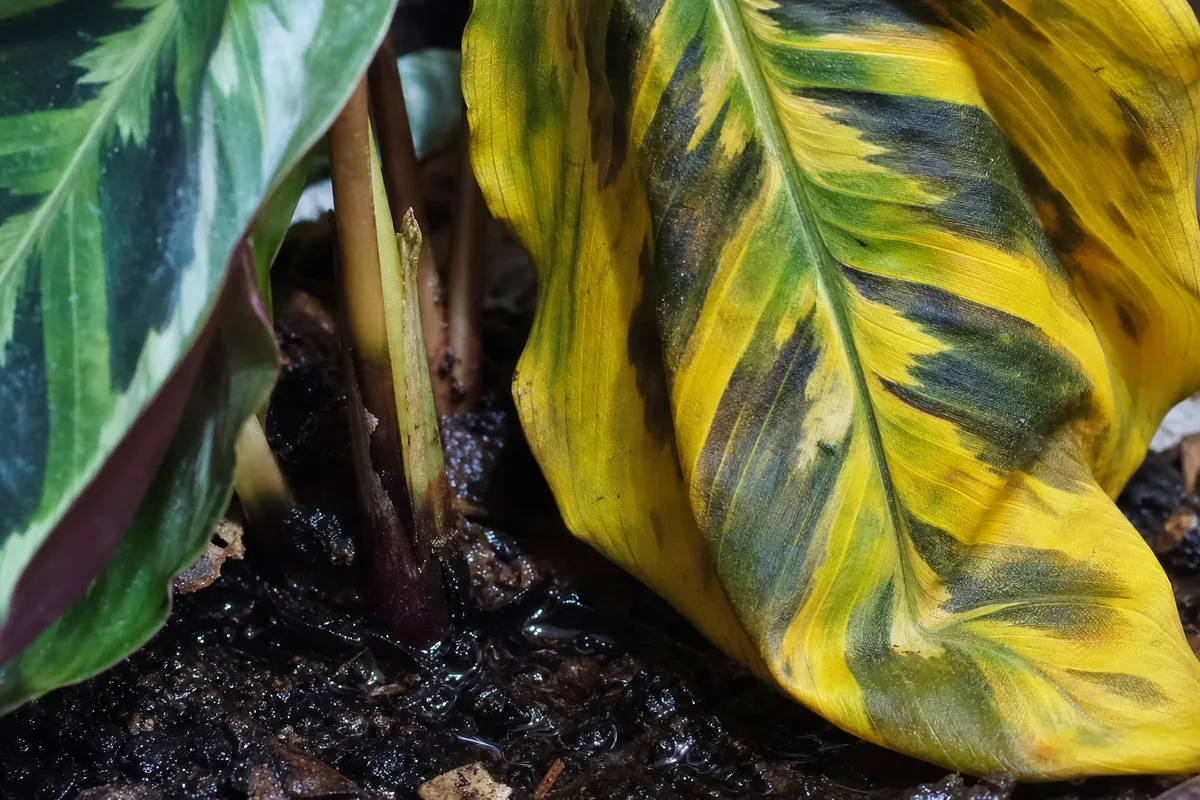
Overwatering symptoms on Calathea Peacock Plant - compare with healthy tissue on the same plant.
- Limp or drooping leaves while soil is wet - petioles lose stiffness even though the pot feels heavy and cool
- Inward curl or failure to open fully during the day - stress curl on saturated mix, distinct from normal nyctinastic evening folding
- Yellowing lower leaves - often starting at the bottom and spreading upward while mix stays damp; see yellow leaves on Calathea peacock for progression detail
- Soft stem tissue at the soil line - crown beginning to collapse as roots fail
- Soil wet 7+ days - surface stays dark and cool without drying to the appropriate level in normal indoor conditions
- Musty or sour smell from the mix - decaying organic matter and stressed roots
- Fungus gnats hovering near the surface - they thrive in continuously wet soil
- Stalled or damaged new leaves - unfurling spears stick, tear, or emerge smaller when roots cannot support growth
Unlike underwatering, overwatered peacock plant has heavy wet mix at depth, possible sour smell, and mushy roots if you inspect. A light dry pot with crisp edges points away from this diagnosis toward underwatering on Calathea peacock.
Overwatering vs. underwatering vs. low humidity
| What you see | Likely cause | First check |
|---|---|---|
| Limp leaves, heavy wet soil, yellow lower leaves | Overwatering / root rot | Stop water; inspect roots |
| Light dry pot, inward curl, soil pulling from pot wall | Underwatering | Soak and drain |
| Crisp brown edges, moist soil, RH below 50% | Low humidity | Humidifier before more water |
| Evening upward fold, firm by mid-morning | Normal nyctinasty | No action if daytime posture is healthy |
| Acute whole-plant flop within hours on wet soil | Wilting / advancing rot | Crown firmness + root inspection |
| Fine webbing on leaf undersides | Spider mites | Rinse + treat; do not overwater |
The wet-soil curl paradox is the core peacock plant confusion: curl usually means add water on dry mix, but curl on wet mix means stop water and check roots. Missouri Botanical Garden notes that wilted appearance with moist soil can indicate damaged roots - the plant cannot absorb water even when surrounded by it.
Brown leaf tips on moist soil often point to fluoride in tap water or low humidity rather than drought - see brown tips on Calathea peacock before adding more water.
How to confirm overwatering
Work through these checks before changing anything else:
- Pot weight - Lift the container. Heavy and cold long after the last watering suggests saturation. Very light means look toward drought instead.
- Top 1–2 inch moisture - Press a finger to the second knuckle near the pot rim. Damp or wet with limp leaves points to root stress, not thirst. Align with Calathea peacock watering guidance: water when this layer is just barely dry, not on a fixed calendar.
- Skewer or chopstick test - Insert near the pot wall, wait a minute, pull out. Damp residue deep in the pot while the surface looks dry confirms retention in peat-heavy mix.
- Smell - Musty or sour odor from drainage holes or when you lift the nursery pot from a cachepot.
- Fungus gnats - Small dark flies near the soil surface after prolonged dampness.
- Crown feel - Gently press the stem cluster at soil level. Firm crown with limp outer leaves is more recoverable. Soft, dark, or collapsing tissue on wet mix means escalate to root rot steps.
- Recent care history - Repeated watering into wet soil, Calathea Peacock Plant repotting guide into a much larger container, moving to a dim room without adjusting schedule, or leaving the pot in standing water after bottom-watering.
Confirmed overwatering requires wet mix at depth plus declining foliage - yellow lower leaves, limpness, or curl that does not match a dry pot. Suspected overwatering with bone-dry soil means look elsewhere first.
First fix for Calathea peacock
Stop watering immediately and remove all standing water from saucers, cachepots, and trays.
Slide the nursery pot out of any decorative cover. Pour out trapped runoff. Set the plant in Calathea Peacock Plant light guide with stable room temperature and modest airflow - do not move it to hot direct sun, which adds stress on thin patterned leaves.
Let the mix dry to the appropriate level before the next thorough watering. On a heavily saturated pot, that may take one to three weeks depending on pot size, mix, and room conditions. The top 1–2 inches should feel just barely dry - not hard and dusty - before you water again.
Do not fertilize a waterlogged plant. Do not repot into a larger container “to help drying.” Do not prune healthy green leaves hoping to force recovery. One pause-and-drain cycle tells you whether the problem was simple overwatering or advancing root damage.
Root inspection and repot branch
If decline continues after the mix has dried appropriately - more yellow leaves, worsening limpness, sour smell, or soft crown - unpot and inspect roots.
- Gently remove the plant from its container and brush away loose mix.
- Look for brown, black, or mushy roots versus firm, pale, healthy tissue.
- Trim dead roots with clean scissors. Keep as much healthy root mass as possible.
- Repot into fresh, airy, well-draining mix in a pot only slightly larger than the trimmed root ball, with a drainage hole.
- Water once lightly so the new mix settles. Then resume the dry-down rhythm from Calathea peacock watering.
UF IFAS lists wilted Calathea leaves as a symptom of drought stress or root pathogens - soil moisture and root firmness separate the two. If more than half the root system is mushy or the crown is fully soft, recovery may not be realistic. A healthy division with intact roots is sometimes a better salvage than saving a collapsed parent plant.
Recovery timeline
Mild overwatering caught early often stabilizes within one to two weeks once soil oxygen returns and you stop adding water to wet mix. Outer leaves may remain limp or yellow - they will not green up again.
Moderate root damage on peacock plant can take three to six weeks before new centre growth looks firm and unfolds with clean pattern color. Old yellow leaves may continue to decline while roots repair underground. Broad leaves transpire heavily - recovery is slower than on narrow-leaf Calathea cultivars in the same pot size.
Judge recovery by:
- Firm new patterned leaves unfurling from the crown
- Stable pot weight that drops predictably between waterings
- No spread of yellowing up the plant
- Firm crown at the soil line
- Return of normal nyctinastic movement on healthy new blades by evening
If the plant perks up briefly after the mix dries, then wilts again when you resume normal watering, fine roots may still be compromised - re-inspect before returning to a generous schedule.
Mistakes to avoid
Do not add water because leaves curl without checking soil first - that is the most common way peacock plant owners turn mild sogginess into rot.
Do not fertilize a stressed, waterlogged plant. Roots cannot absorb nutrients safely when oxygen is low.
Do not repot into a bigger pot during recovery. Extra soil volume holds more water and slows dry-down.
Do not mist heavily instead of fixing drainage - surface moisture does not replace root-zone oxygen and can worsen fungus gnats.
Do not swing to extreme underwatering after overwatering out of fear. NC State Extension still requires consistently moist soil between drinks - just not constant saturation.
Do not ignore cachepots - even one thorough top-watering into a pot sitting in a full outer vessel can leave roots submerged for days.
How to prevent overwatering next time
Build a check habit tied to the pot and season, not a calendar:
- Feel the top 1–2 inches every few days until you learn your plant’s rhythm in its current spot
- Lift the pot before watering - heavy means wait, appropriately light means drink
- Empty saucers and cachepots within 30 minutes of every watering
- Adjust for winter - allow the surface to dry before rewetting, but never let the whole root ball go bone dry
- Use a pot with drainage and avoid sizing up until roots fill the current container
- Match light to watering - plants in dim rooms need less frequent drinks than those in bright indirect light
- Keep humidity at least 60% during dry seasons so leaf stress does not push you toward reflex watering
For filtered water, bottom-watering technique, seasonal schedules, and the full moisture-check routine, use the Calathea peacock watering guide - this problem page focuses on diagnosis and recovery, not day-to-day rhythm.
When to worry
Treat as urgent when:
- The crown feels soft at the soil line while mix stays wet
- Soil smells sour or rotten and remains saturated
- The plant collapsed within days on a heavy wet pot without a cold-draft explanation
- Mushy roots dominate on inspection - see root rot on Calathea peacock for full escalation
- Fungus gnats persist despite drying the surface - larvae may indicate deep decay
Peacock plant rarely dies from one extra watering if you catch saturation early. Repeated watering into wet soil - especially in winter - strips fine roots and makes the plant vulnerable to pathogens.
If most of the crown is brown and soft, or roots are largely dead, recovery may not be realistic. Propagating a healthy division with intact roots is sometimes the only salvage path.
Conclusion
Overwatered Calathea peacock tells you clearly once you read the pot: heavy weight, wet mix at depth, and patterned leaves that limp or curl without a dry-soil explanation. Stop watering, drain every vessel, and let the top 1–2 inches dry before the next drink. If decline continues, inspect roots before you reach for the watering can again. Match future watering to how fast your specific pot dries in its spot - not a generic schedule - and use the watering guide for prevention depth.
Related Calathea peacock problems
- Calathea peacock overview - species care hub
- Watering - rhythm, filtered water, seasonal checks
- Root rot - mushy roots and repot escalation
- Underwatering - dry curl lookalike
- Wilting - acute collapse on wet or dry soil
- Drooping leaves - gradual hang vs acute wilt
- Yellow leaves - lower-leaf progression on wet mix
- Low humidity - crisp edges on moist soil
- Brown tips - fluoride and tap-water confounders
- Fungus gnats - wet-soil secondary pest
When to use this page vs other Calathea Peacock Plant guides
- Calathea Peacock Plant watering guide - Use for routine moisture checks before assuming overwatering is the main issue.
- Calathea Peacock Plant problems hub - Browse all 16 common issues on this species.
- Root Rot on Calathea Peacock Plant - Different entry point when symptoms overlap with overwatering.
- Yellow Leaves on Calathea Peacock Plant - Different entry point when symptoms overlap with overwatering.
- Wilting on Calathea Peacock Plant - Different entry point when symptoms overlap with overwatering.
Related Calathea Peacock Plant guides
- Calathea Peacock Plant overview
- Calathea Peacock Plant watering
- Calathea Peacock Plant light
- Calathea Peacock Plant soil
- Root Rot on Calathea Peacock Plant
- Yellow Leaves on Calathea Peacock Plant
- Wilting on Calathea Peacock Plant
- Fungus Gnats on Calathea Peacock Plant
- Mold on Soil on Calathea Peacock Plant
- Drooping Leaves on Calathea Peacock Plant
- Calathea Peacock Plant problems