Spider Mites on Calathea Peacock: Causes, Checks & Fixes
Quick answer
Spider mites on Calathea peacock cause pale stippling across feather markings and fine webbing when winter heating dries the air below what this Marantaceae needs. First step: isolate the plant and rinse every leaf underside with lukewarm water before applying any spray.
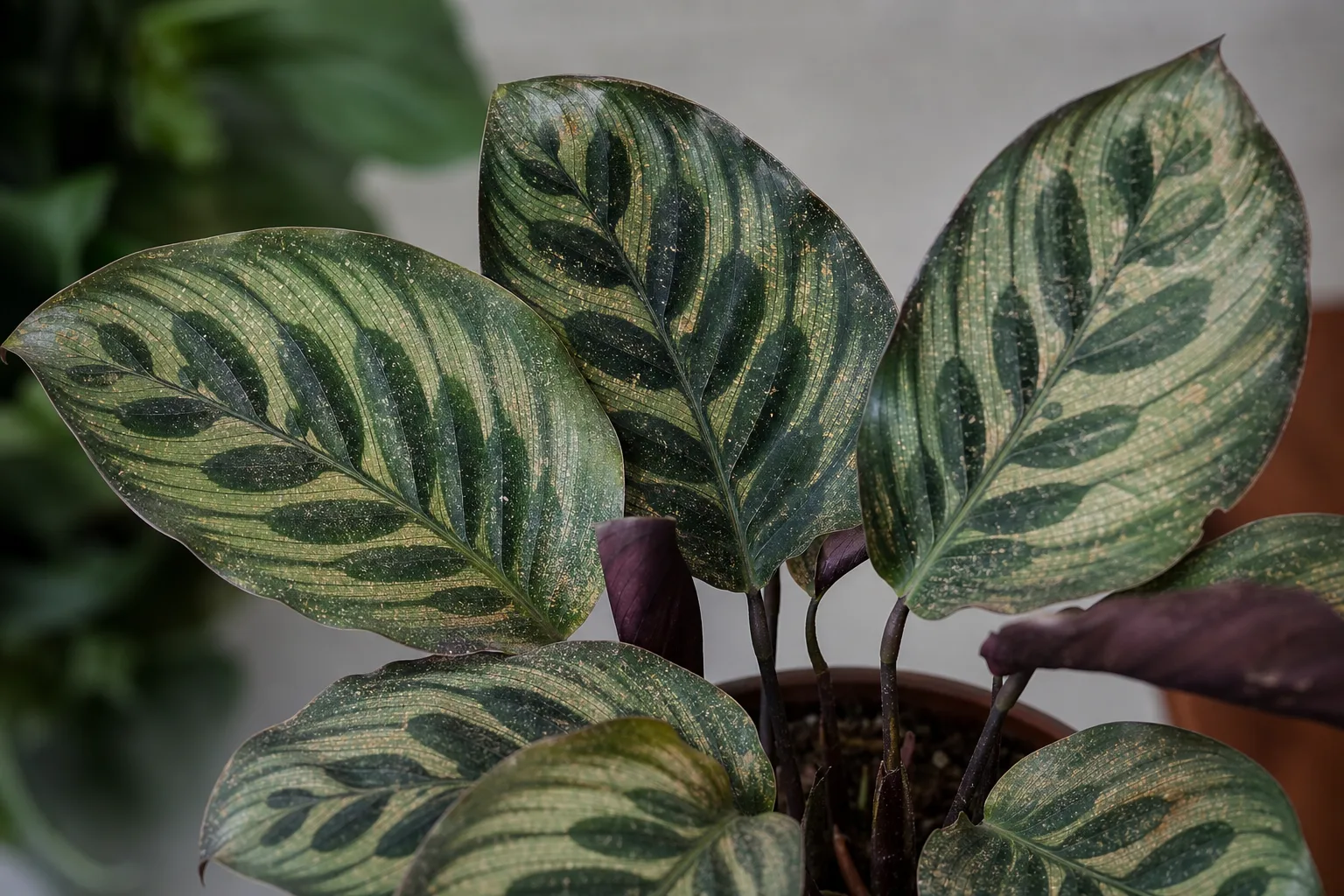
Spider Mites on Calathea Peacock: Causes, Checks & Fixes
This guide covers spider mites on Calathea Peacock Plant. See also the general Spider Mites guide, watering, and light pages for this plant.
Spider Mites on Calathea Peacock: Causes, Checks & Fixes
Quick answer
Spider mites on Calathea peacock (Goeppertia makoyana) almost always trace to dry, warm indoor air-not random bad luck. The two-spotted spider mite thrives in the same winter conditions that stress Calathea Peacock Plant overview: heating vents, humidity below 60%, and leaves that look fine from above while undersides dry out.
On peacock calathea, feeding shows up as pale stippling across the cream-and-green feather pattern, dulling of pink-tinged zones, and eventually fine silk webbing at petiole joints. Mites hide on the purple undersides long before damage is obvious from the top.
First step: isolate the plant and rinse every leaf underside with lukewarm water. Knock down live mites and webbing before reaching for soap or oil. One rinse is not a cure-eggs hatch in cycles-but isolation plus a thorough wash is the correct opening move.
What spider mites look like on Calathea Peacock
Peacock calathea has smooth, thin, patterned foliage-not fuzzy or pubescent leaves. Mite damage breaks up the ornamental pattern quickly because pale cream zones have less chlorophyll buffer than solid green panels.
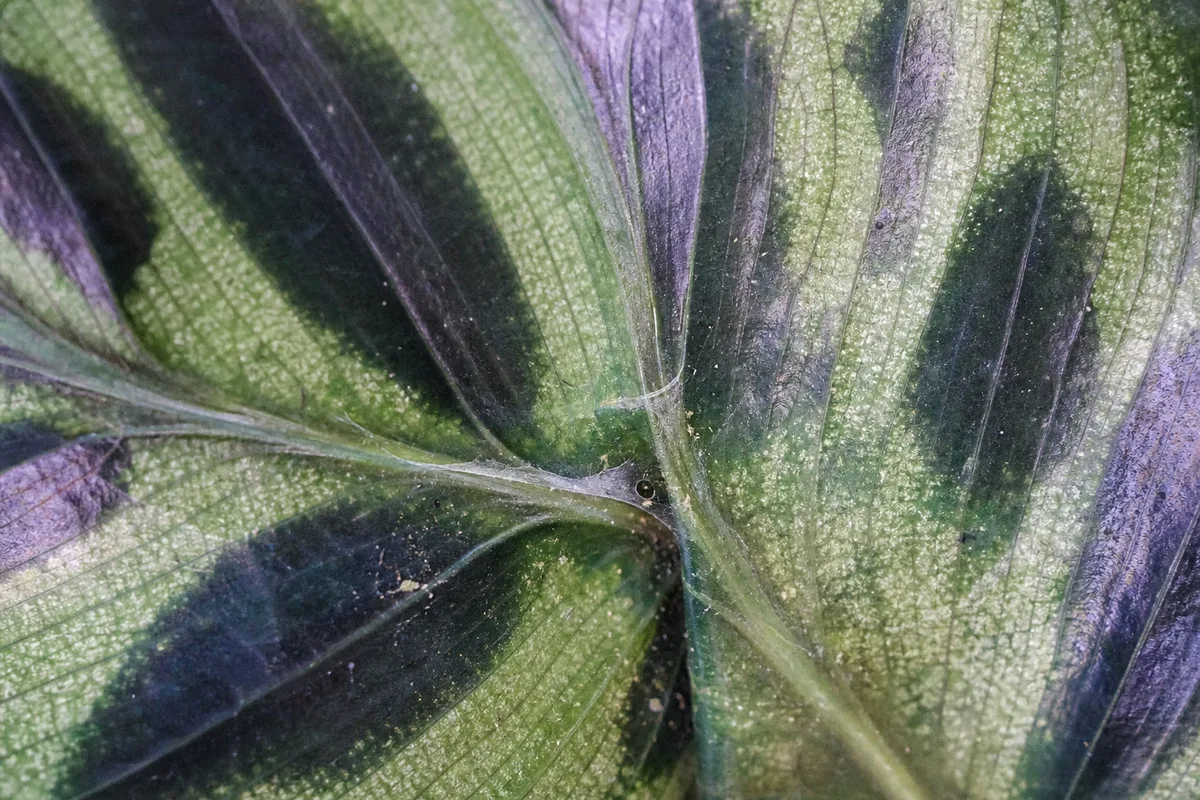
Spider Mites symptoms on Calathea Peacock Plant - compare with healthy tissue on the same plant.
Early signs:
- Tiny yellow or white dots scattered across green and cream feather markings
- Pink-tinged pattern areas turning dull or slightly bronzed
- Leaves looking dusty or washed-out even after gentle wiping
- Slight curling at margins when feeding is heavy, sometimes mistaken for low humidity alone
Established infestation:
- Fine silk threads between petioles, at leaf bases, or along the central crown
- Amber eggs, whitish cast skins, or black fecal specks on purple undersides
- Newest rolled leaves opening with stippling already present
- Webbing visible without magnification on stem joints
The paper-tap test: Hold white paper under a leaf and tap firmly. Moving specks that smear red-brown when crushed are spider mites. Mites are eight-legged arachnids, not insects.
Damaged patterned tissue does not fully restore its peacock contrast. Judge recovery by clean new leaves and stopped spread, not by old stippled patches reverting.
Why Calathea Peacock gets spider mites
Peacock calathea evolved in Brazilian rainforest understories where humidity stays high and light is filtered. Indoors it wants bright indirect light, consistently moist soil, and high humidity-often 60% or more. When winter heating drops room RH below 40%, two problems stack:
- The plant is stressed - pattern edges crisp, growth slows, and thin leaves are less resilient to piercing pests.
- Mites reproduce faster - warm, dry air shortens their life cycle and lets populations double within days.
Calathea peacock grows from a central crown with overlapping leaves. Mites colonize purple undersides first, hidden beneath the feather pattern you admire from above. Crowded shelves of Marantaceae-maranta, stromanthe, rattlesnake calathea-let mites walk or drift on silk threads from pot to pot. RHS notes spider mites among common pests on calathea indoors.
Other triggers:
- Placement near radiators, forced-air vents, or winter sun that dries leaf edges
- Letting soil go bone dry while air stays hot and dry
- Bringing home an infested plant without quarantine
- Skipping underside checks because top-surface pattern still looks acceptable
Spider mites are not proof you failed at watering alone. They exploit the gap between what peacock calathea needs and what many homes provide in January.
How to confirm the cause
Work through these checks before spraying:
- Stippling pattern - Uniform tiny dots across multiple patterned leaves points to mites. Single yellow leaves with wet soil suggest overwatering instead.
- Underside inspection - Lift leaves and check purple surfaces with a hand lens. Look for moving specks, webbing, eggs, and cast skins along veins.
- Paper-tap test - Confirms live mites versus dust or hard-water mineral deposits.
- Humidity reading - A hygrometer near the pot below 40% RH in winter strongly supports mite-friendly conditions on a humidity-loving plant.
- Neighbor check - Inspect every Marantaceae on the same shelf before assuming the problem is isolated.
- Lookalike rule-out - Thrips leave silvery scars and black specks; mealybugs form white cottony clusters on stems; low humidity alone causes crisp brown edges without stippling dots or webbing.
Confirmed spider mites: stippling plus live specks or webbing on undersides, often in dry winter air.
First fix for Calathea Peacock
Isolate the plant and rinse every leaf underside thoroughly with lukewarm water.
Move the pot away from healthy Marantaceae. Support each leaf as you rinse-peacock calathea crowns are sensitive to rot if water sits in the central fold for hours. Tilt the pot so runoff drains freely; do not let rinse water pool overnight in the crown.
After the rinse:
- Wipe undersides gently with a soft cloth to remove webbing
- Increase humidity with a humidifier-not misting alone, which can spot patterned leaves
- Set yellow sticky traps at pot level to monitor adult numbers
Wait 48 hours, then reassess. If mites persist, apply insecticidal soap or horticultural oil to undersides on a seven- to ten-day repeat schedule for at least three cycles to catch newly hatched eggs. Test one leaf first-soap can spot thin calathea foliage in direct sun.
Do not fertilize during active infestation. Stressed peacock calathea does not need nutrients while fighting pests.
Step-by-step recovery
- Day 1: Isolate, rinse undersides, increase humidity, set sticky traps
- Days 3–5: Re-rinse or apply soap/oil if live mites remain; inspect neighbors
- Days 7–14: Second treatment cycle; confirm no new webbing
- Weeks 3–6: Third cycle if needed; watch new unfurling leaves for clean pattern
- Ongoing: Weekly underside checks through winter heating season
Recovery success: no new stippling on unfurling leaves, webbing gone, sticky traps catching fewer adults each week.
Lookalike symptoms
| Pattern | Likely cause | Key check |
|---|---|---|
| Uniform stippling + webbing | Spider mites | Paper-tap test, purple undersides |
| Crisp brown leaf edges, no dots | Low humidity | Hygrometer below 50%, no webbing |
| Yellow leaves on wet soil | Overwatering | Heavy pot, sour smell |
| Silvery trails, black specks | Thrips | Shake leaf over paper |
| White cotton on stems | Mealybugs | Visible clusters at nodes |
Mistakes to avoid
- Spraying only the patterned top surface-mites live underneath
- One rinse or one soap application-eggs survive and hatch
- Treating without isolating-mites spread across Marantaceae shelves overnight
- Using heavy oils on every leaf in hot sun-can burn thin peacock foliage
- Misting instead of humidifying-water spots can permanently dull cream pattern zones on smooth leaves
- Assuming wilt means thirst-check for mites when pattern dulls in dry winter air
Care cross-check during recovery
While fighting mites, keep peacock calathea in its comfort zone without overcorrecting:
- Light: Bright indirect-see our light guide
- Water: Consistently moist but not soggy-see watering
- Humidity: Target 60%+ with a humidifier near the plant, not just a pebble tray
- Soil: Well-draining peat-based mix that does not stay anaerobic-see soil
How to prevent spider mites next time
- Run a humidifier in winter when room RH drops below 50%
- Quarantine new plants for two weeks before placing near Marantaceae collections
- Inspect purple undersides weekly during heating season
- Keep peacock calathea away from radiator and vent blast zones
- Treat neighboring plants at first sign-mites rarely stay on one pot
When to worry
Escalate if webbing covers the crown, new leaves fail to unfurl cleanly after three treatment cycles, or mites reappear on multiple Marantaceae within a week. Severe infestations on a shared shelf sometimes require discarding the worst plant to protect the rest of the collection. For chronic dry-air stress that invites mites, also address low humidity and brown tips as part of long-term prevention.
When to use this page vs other Calathea Peacock Plant guides
- Calathea Peacock Plant watering guide - Use for routine moisture checks before assuming spider mites is the main issue.
- Calathea Peacock Plant problems hub - Browse all 16 common issues on this species.
- Low Humidity on Calathea Peacock Plant - Different entry point when symptoms overlap with spider mites.
- Slow Growth on Calathea Peacock Plant - Different entry point when symptoms overlap with spider mites.