Slow Growth on Calathea Peacock Plant: Causes, Checks &
Quick answer
Calathea peacock is a slow to moderate clumping grower; one or two new patterned leaves per active season is healthy. First step: note the season, measure humidity at leaf height, and compare newest leaf size to older foliage before changing fertilizer or repotting.
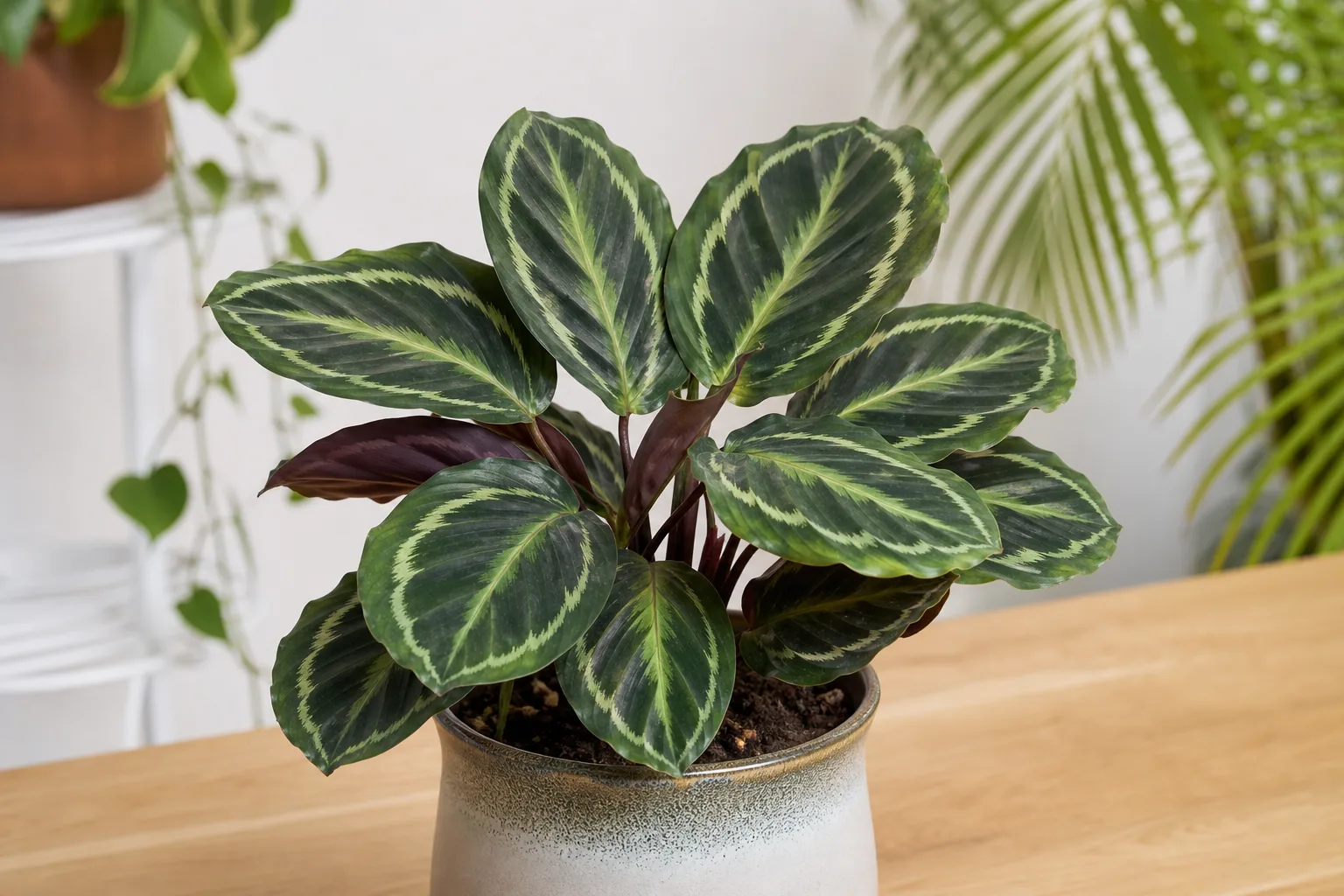
Slow Growth on Calathea Peacock Plant: Causes, Checks & Fixes
This guide covers slow growth on Calathea Peacock Plant. See also the general Slow Growth guide, watering, and light pages for this plant.
Slow Growth on Calathea Peacock Plant: Causes, Checks & Fixes
Quick answer
Calathea peacock - accepted name Goeppertia makoyana, though most pots still say Calathea makoyana - is a clumping, rhizomatous prayer plant that reaches roughly 1 to 2 feet tall indoors. It is a slow to moderate grower, not a pothos that adds length every week. Many owners worry when a peacock plant looks unchanged for months, but baseline slowness is normal.
First step: run a growth audit before changing anything. Note the calendar month, count how many new patterned leaves unfurled in the last three months, measure relative humidity at leaf height, and compare the newest blade size and pattern contrast to the previous one. Winter dormancy, post-division pause, and inherent clumping pace explain many stalls. Warm-season stagnation with zero new spears usually points to low humidity, insufficient light, root-bound rhizomes, cool drafts, or chronic wet soil-not a dead plant.
Do not repot, fertilize, and move to a new window on the same day. Our Calathea peacock overview covers baseline care; this page focuses on whether your plant’s pace is normal or fixable.
What slow growth looks like on Calathea peacock
Slow growth on peacock plant means little or no new tissue production, not one outer leaf aging naturally. Learn the species-specific pattern:
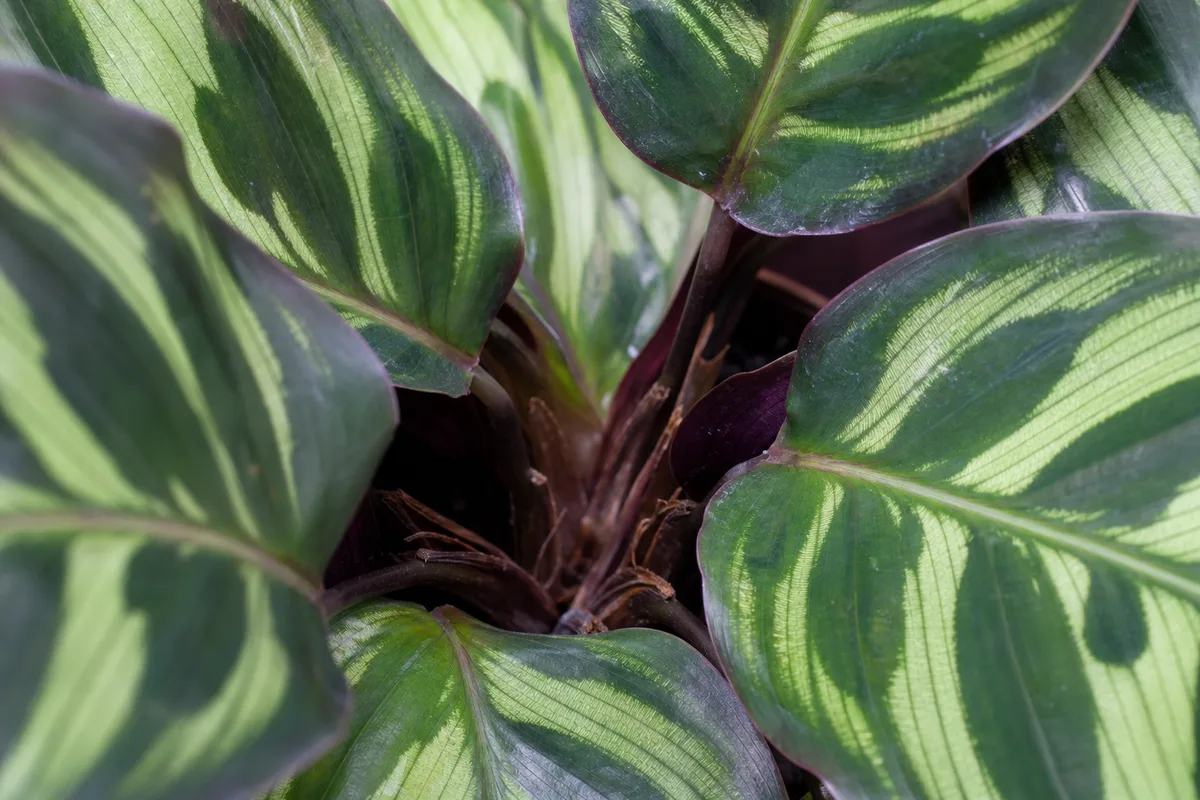
Slow Growth symptoms on Calathea Peacock Plant - compare with healthy tissue on the same plant.
Normal active-season growth:
- One or two new patterned leaves opening every four to eight weeks in spring through early fall when light and humidity align
- Each new blade matches or slightly exceeds the size of the previous leaf, with crisp cream-and-green peacock markings
- The clump thickens at the base through rhizome expansion rather than tall vining
- UF IFAS lists moderate growth rate for this species under filtered light and high humidity
- Nighttime leaf folding (nyctinasty) stays strong; daytime posture is open and firm
Slow-growth signals (problem, not rest):
- No new spear at the crown for three or more months during March through September despite firm existing leaves
- Progressively smaller new leaves with washed-out or weak peacock patterning
- New spears that stall rolled at the center for weeks without unfurling
- Zero offset shoots from the rhizome for an entire warm season on a mature clump
- Soil stays damp two or more weeks without new growth-common when low light slows water use
- Faded pattern on every new leaf for several weeks while the plant otherwise looks alive
Seasonal pause (normal, not a problem):
- Winter slowdown from late fall through February: little or no new leaf activity while older foliage stays firm
- Two to four weeks of pause after routine spring repotting while roots settle
- Six to ten weeks after rhizome division before the first new shoot-expected transplant shock if humidity holds above 60%
Is slow growth normal on Calathea peacock?
Yes - within bounds. NC State Extension describes makoyana as a clumping perennial reaching 1 to 2 feet tall with a moderate indoor pace. Think in seasons and leaves, not daily change.
| Season | What healthy growth usually looks like |
|---|---|
| March–May | New spears resume as days lengthen; pattern on fresh leaves stays vivid |
| June–August | Steady unfurling-roughly one leaf every four to eight weeks in good conditions |
| September–November | Growth may slow as light drops; one late-season leaf is still normal |
| December–February | Winter rest-zero new leaves for six to ten weeks is common |
Offset production is a strong growth signal. A mature clump in adequate light and humidity should occasionally send new shoots from the rhizome. A plant that opens no new leaves and produces no offsets for twelve months in a bright, humid room is stalled-not merely “calathea slow.”
Distinction from leggy growth: When stems stretch, petioles lengthen, and the clump leans toward one window, the primary issue is usually light-not general slow growth. See leggy growth on Calathea peacock when stretch dominates the picture.
Why Calathea peacock growth stalls
1. Low humidity below 60% RH
Makoyana evolved in the humid rainforests of Espírito Santo, Brazil. NC State Extension recommends at least 60% humidity and notes the species is intolerant of low humidity. Below about 50% RH, the plant may survive on existing leaves while new spears stall, open smaller, or show faded patterning before brown tips appear on older foliage. Full dry-air workflow: low humidity guide.
2. Insufficient light limiting photosynthesis
Peacock plant wants bright, indirect sun or partial shade. Inadequate light makes foliage color fade and slows new leaf production. Dim rooms also keep soil wet longer, compounding root stress. Light intensity drops sharply as you move away from windows. When faded new leaves and wet soil pair together, see not enough light.
3. Winter dormancy and short days
The most overlooked cause is calendar, not care failure. Cooler rooms and shorter photoperiod from October through February slow metabolism. Combined with reduced watering needs, the plant can look unchanged for weeks without being sick. Do not repot, fertilize, and relocate simultaneously in January in response to stillness.
4. Root-bound rhizome and depleted mix
Makoyana spreads through horizontal rhizomes that eventually circle a pot. When roots fill the container, water runs through without soaking, salts accumulate, and center growth stalls despite green leaves. NC State notes division every two years can restore vigor. Repot timing: repotting guide.
5. Chronic overwatering in low light
The classic calathea trap: dim placement plus frequent watering. Roots in oxygen-poor wet mix stop absorbing-growth pauses while leaves still look superficially fine. Overlap with overwatering and root rot.
6. Cool temperatures and draft stress
Stable indoor temperatures between 65 and 75°F (18 and 24°C) support active growth. Cold window glass, AC streams, and winter drafts slow rhizome activity. A cool draft plus wet soil can stall growth without obvious wilt.
7. Post-division or repot shock
Calatheas dislike root disturbance. A two-to-four-week pause after repotting is normal; division may need six to ten weeks before the first new shoot if humidity stays high. Repeated repotting hoping to “wake up” a plant usually deepens the stall.
8. Nutrient timing-not hunger as a first guess
After years without repot or feed, pale small new leaves in bright humid conditions with firm roots may indicate depleted mix. Makoyana is a light feeder-diluted monthly feed in active growth only. Never fertilize a dormant or stressed clump. Full timing: fertilizer guide.
9. Tap-water mineral stress on new unfurling
Fluoride in tap water can brown leaf margins on makoyana. New spears may stick partially open or emerge smaller when minerals accumulate-even when humidity and light are otherwise acceptable. Switch to filtered or rainwater and flush salts before assuming the plant needs more fertilizer.
How to confirm the cause
Work through these checks in order-each narrows the list before you stack treatments:
- Season check - Note the month. December through February pause with firm leaves and stable soil is normal if mix is not sour.
- New leaf count - Photograph the crown. In March through September, zero new spears in twelve weeks suggests a limiter beyond baseline slowness.
- Humidity at canopy - Hygrometer at leaf height. Below 50% RH strongly points to humidity stall even without brown tips yet.
- Newest leaf quality - Compare the last three unfurling leaves. Declining pattern contrast and shrinking blade size point to light before fertilizer.
- Window distance - Appropriate light supports healthy foliage growth indoors. Beyond about 2 meters from usable glass is often survival light, not growth light. Full placement: light guide.
- Soil moisture at depth - Finger or skewer the top 2–3 cm. Damp mix for two-plus weeks with no new growth suggests overwatering compounded by low light.
- Root-bound screen - Roots at drainage holes, water racing through, mix crumbling to fine mud → repot candidate in spring.
- Post-repot timeline - Repotted or divided within the last two months? Pause may be normal shock.
- Temperature scan - Leaves touching cold glass or sitting in heat vent streams? Draft stress may stall rhizome activity.
First fix for Calathea peacock (by likely cause)
Pick one primary fix based on your checklist-not all fixes at once.
If humidity reads below 50% at canopy (most common indoor gap): Run a humidifier near the plant until RH holds 60% or higher at leaf height. Do not flood the pot. Re-check in two weeks for a new spear beginning to roll.
If newest leaves are pale, small, or weakly patterned and the pot sits far from windows: Move to the brightest filtered indirect spot available-east window or filtered south/west, not direct sun on leaves. See not enough light.
If it is winter and leaves are firm with no other stress signs: Reduce watering slightly and wait for March light before repotting or feeding. Stillness now is often dormancy.
If roots circle drainage holes and water runs through instantly: Schedule spring repot one size up or divide the rhizome-never repot a rotting or waterlogged root ball without inspection first.
If soil stays wet for weeks in a dim corner: Move toward better light and stretch the watering interval until the top inch dries. Fixing water alone in shade rarely restores growth pace.
If pale new growth appears only after years in the same pot with good light and humidity: Apply quarter-strength balanced fertilizer to moist soil once, then wait four weeks. Only continue monthly if new spears unfurl cleanly.
Recovery timeline
Recovery is measured by new patterned leaves, not old blade size.
| Cause corrected | What to expect |
|---|---|
| Humidity raised to 60%+ | First new spear rolling within 2–4 weeks in active season |
| Light upgraded | Sharper pattern on the next one to two unfurling leaves within 3–6 weeks |
| Root-bound repot in spring | 2–4 weeks settle, then normal spear rhythm resumes |
| Division | 6–10 weeks before first new shoot if humidity holds |
| Winter dormancy | Growth resumes when day length and warmth return-often March |
Mild stress often stabilizes within one to two care cycles. Judge progress by new growth, not old leaf size. Existing small or faded leaves will not enlarge retroactively.
Signs the fix is working: A firm new spear at the crown, stronger peacock pattern on the freshest leaf, faster dry-down of the top inch, and resumed nighttime folding.
Signs the problem is worsening: Multiple spears aborting at the center, spreading yellow lower leaves with sour soil, crown softening, or zero response twelve weeks after a meaningful humidity and light correction in warm months.
Lookalike symptoms to rule out
| What you see | Likely cause | Where to read more |
|---|---|---|
| No new leaves for months; RH below 50%; spears stall rolled | Low humidity stall | Low humidity |
| Faded pattern on every new leaf; soil stays wet; dim room | Not enough light | Not enough light |
| Long thin petioles; lean toward window; still some new leaves | Leggy growth (light-related stretch) | Leggy growth |
| Yellow lower leaves; sour wet mix; soft stems | Overwatering / root stress | Overwatering |
| Firm leaves; zero growth December–February only | Winter dormancy (normal) | This page - wait for spring |
| Crisp margins on pale panels with adequate humidity | Tap-water burn | Brown tips |
What not to do
Do not fertilize a stressed or dormant Calathea peacock before checking humidity, light, and roots. Overwatering wet soil is a common mistake when leaves look tired.
Do not repot repeatedly hoping to “wake up” a plant-makoyana hates disturbance and may stall further after each unnecessary move.
Do not stack repotting, pruning, fertilizer, and pesticide on the same day. Make one care correction at a time so you can read the plant’s response.
Do not assume slow growth with daytime leaf curl is a light problem alone-curl with moist soil often means humidity crisis. Check RH before moving to a brighter window.
Do not upgrade to an oversized pot “to encourage growth.” Excess wet mix around a small rhizome slows root activity and invites rot.
How to prevent slow growth next time
Match everyday care to how makoyana actually grows in your home:
- Humidity - Keep 60% RH or higher at canopy through dry seasons with a humidifier, not occasional misting alone
- Light - Bright filtered indirect exposure; rotate the pot weekly so all sides receive usable light
- Water - Water when the top inch begins to dry; slow dry-down in winter when growth pauses
- Feed - Diluted monthly fertilizer only during active spear production in spring and summer
- Repot - Refresh mix or divide every one to two years in early spring before severe root binding
- Water quality - Filtered or rainwater reduces mineral stress on new unfurling leaves
Inspect the newest spear weekly during the growing season. One slow month in winter is normal; three stalled months in summer is a signal to audit humidity and light before adding inputs.
When to worry
Treat as urgent when multiple new spears brown and abort within one week, when yellowing spreads through lower leaves with sour wet soil, when the crown feels soft, or when zero new growth persists through an entire warm season despite humidity above 60% and corrected bright indirect light.
Cosmetic slow pace in winter with firm leaves is not an emergency. Peacock plant always grows slower than fast houseplants; judge health by clean new spears, not comparison to pothos or spider plant speed.
Calathea peacock growth cross-check
| Signal | Normal slow growth | Concerning stall |
|---|---|---|
| New leaves | 1–2 per active season; 4–8 week gaps in summer | Zero spears 3+ months in warm bright months |
| Leaf size/pattern | New blades match or exceed prior leaf | Each new leaf smaller and paler |
| Season | Pause December–February | No growth March–September |
| Humidity | 60%+ at canopy | Below 50% with stalled spears |
| Soil | Top inch dries on rhythm; moist not soggy | Wet 2+ weeks in dim room |
| After repot | 2–4 week pause | 12+ weeks with mushy roots or sour mix |
Conclusion
Slow growth on Calathea peacock is often normal baseline pace or winter rest, not a crisis. The plant is a clumping rainforest understory species that invests energy in patterned foliage-not rapid vining. When warm-season stagnation appears, humidity and light are the first suspects, followed by root-bound rhizomes, wet soil in dim rooms, and post-division shock. Fix one variable, then watch the next unfurling leaf for proof-not yesterday’s blade size.
Related Calathea peacock problems
- Low humidity - primary growth limiter when RH drops below 60%
- Not enough light - faded pattern and wet-soil stall in dim rooms
- Leggy growth - stretch and lean when light is the main issue
- Overwatering - wet soil growth pause compounded by low light
- Brown tips - tap-water and humidity overlap on new unfurling
- Calathea peacock overview - makoyana biology, nyctinasty, and baseline care
- Fertilizer - feeding only during active growth
- Light - filtered bright placement without scorch
- Repotting - rhizome division and root-bound recovery
When to use this page vs other Calathea Peacock Plant guides
- Calathea Peacock Plant watering guide - Use for routine moisture checks before assuming slow growth is the main issue.
- Calathea Peacock Plant problems hub - Browse all 16 common issues on this species.
- Not Enough Light on Calathea Peacock Plant - Different entry point when symptoms overlap with slow growth.
- Leggy Growth on Calathea Peacock Plant - Different entry point when symptoms overlap with slow growth.
- Yellow Leaves on Calathea Peacock Plant - Different entry point when symptoms overlap with slow growth.