Calathea Peacock Propagation: Division Method Guide
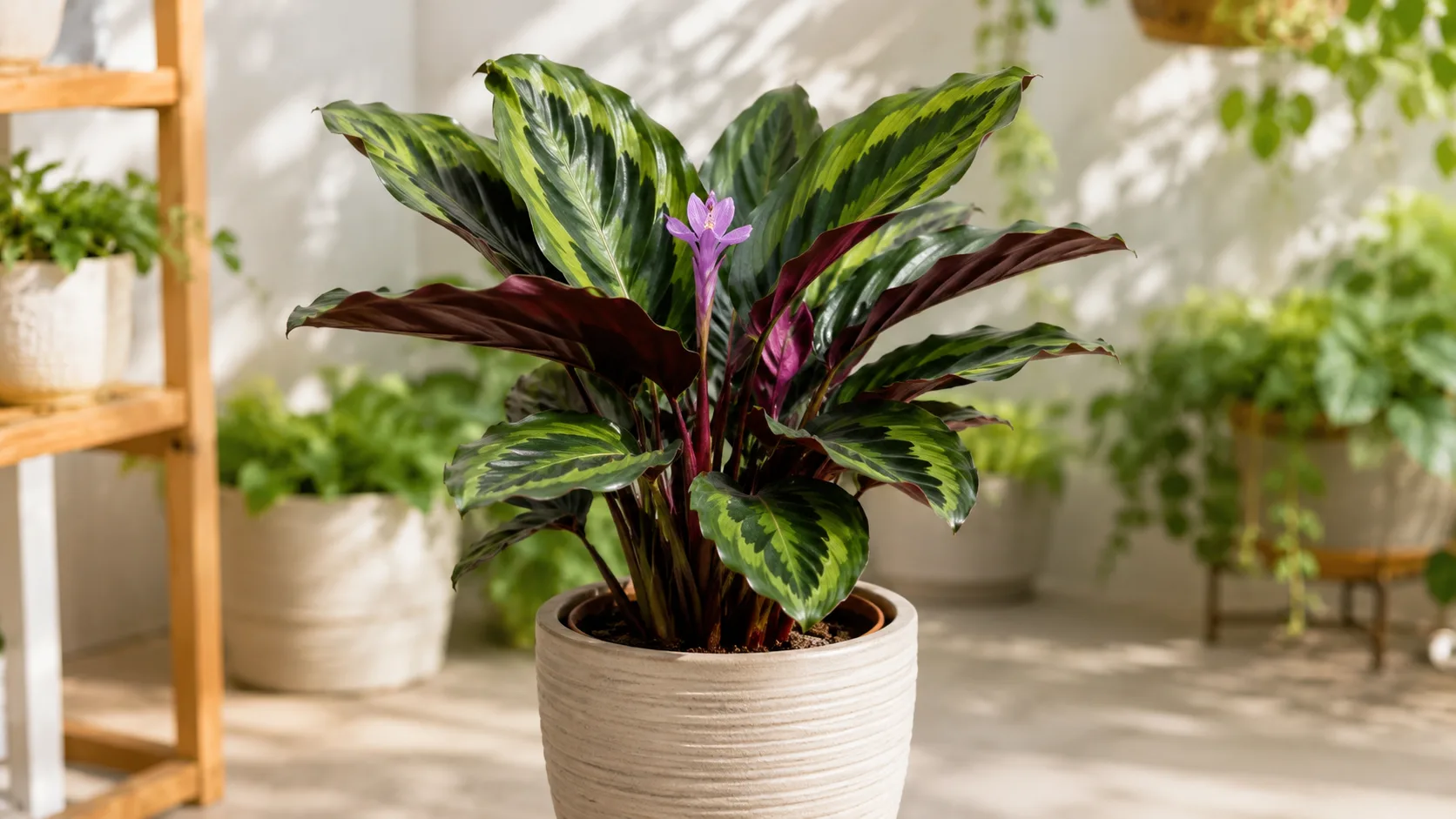
Calathea Peacock Propagation: Division Method Guide
Calathea Peacock Propagation: Division Method Guide
Why Feathered Makoyana Foliage Tells You Division Is the Only Path
Calathea Peacock (Calathea makoyana, now often classified as Goeppertia makoyana) is sold under names that describe the leaves, not the roots: Peacock Plant for the feathered green pattern on pale oval blades, and cathedral windows for the purple-red undersides that show when leaves fold upward at night. That nightly movement - nyctinasty - is one reason growers fall in love with makoyana. It is also why failed propagation attempts look so discouraging: a stressed Peacock curls its patterned leaves, hides the purple flash, and can make the whole clump look doomed before roots have had time to recover.
Propagation for this species is not about rooting a pretty leaf in water. It is about respecting a horizontal rhizome that spreads slowly underground, sending up thin leaf stalks and fine fibrous roots into loose, humid litter on the forest floor of Espírito Santo, Brazil. The Missouri Botanical Garden describes makoyana as a compact herbaceous perennial with broad-oval leaves to 12 inches long, pale cream backgrounds, dark green feathered markings, and pinkish-purple reverses - a cultivar identity worth preserving when you split the plant. Every viable new Peacock comes from a rhizome section that still carries leaves and roots together, usually during a scheduled spring repot.
Retail Peacock Plants often sit as a single soft mound for twelve months or more before they develop a second natural clump worth separating. That slower clumping habit - softer and more upright than broad-leaf Calathea Medallion offsets - sets realistic expectations: propagation rewards patience, not aggressive splitting on a young nursery pot. When you do divide a mature makoyana, the goal is clean sections that keep the feathered pattern intact through recovery, not maximum plant count from undersized fragments.
Reviewed by the LeafyPixels Review Board against extension and botanical garden references. See our Calathea Peacock overview for full species care.
Why Division Is the Only Practical Method
Every reliable source on Calathea makoyana propagation agrees: division during repotting is the method that works indoors. Seed propagation exists botanically but is impractical for home growers who want a second cathedral windows plant from a healthy parent. Division succeeds because each new piece keeps rhizome, roots, and leaves connected the way the plant evolved to grow - you redistribute clumps the plant already formed rather than asking severed tissue to regenerate an entire body.
The Royal Horticultural Society advises dividing calathea clumps in spring, cutting the rootball into sections each with several leaves, then potting divisions into individual containers kept warm, humid, and moist until growth resumes. That is the entire practical toolkit for Peacock Plant. Water propagation, stem cuttings, and leaf cuttings dominate social feeds because they work on pothos and philodendrons, but makoyana lacks adventitious rooting nodes on petioles. Accepting that early saves you from the most common Calathea Peacock propagation mistake: weakening a good plant to test a method that will not work.
Tying division to repotting matters because you disturb roots once instead of twice. You need the plant out of the pot to see rhizome architecture, confirm each section has fibrous roots, and seat divisions immediately into fresh airy mix. Done at the right time with adequately sized pieces, one well-grown Peacock becomes two or three full clumps without changing the species’ character - a humidity-loving prayer plant whose value lives in clean alternating leaf markings.
Why Stem and Leaf Cuttings Fail on Makoyana
A Calathea Peacock leaf cutting - a patterned leaf with petiole stuck in water or soil - may stay green for weeks because the leaf tissue itself is alive. It will not, however, produce a new rhizome, crown, or sustained root system under normal indoor conditions. What looks like a stem is a leaf petiole emerging from rhizome tissue below the soil line. Marantaceae species spread through rhizome division, not detached leaf regeneration. Without rhizome meristem attached, the cutting has no growth center to organize new shoots.
Stem cuttings fail for the same structural reason. Water propagation only keeps doomed tissue hydrated longer. The failure is predictable biology, not user error - and it is why generic houseplant propagation videos mislead Peacock owners.
Propagation Method Comparison
| Method | Works for Peacock Plant? | Typical outcome |
|---|---|---|
| Rhizome division at repotting | Yes | High success with 2–3 leaves + roots per section |
| Leaf cutting | No | Petiole rots; no new plant |
| Stem / petiole cutting | No | No adventitious roots or rhizome formation |
| Water propagation | No | Leaf persists briefly, then fails |
| Seed sowing | Rarely indoors | Impractical; makoyana rarely flowers at home |
If you want more Peacock Plants, grow the parent well until natural offsets appear at repotting - or buy a second plant while a young clump matures. Both are valid; forcing leaf-cut experiments on a healthy makoyana is not.
Understanding the Rhizome Before You Divide
Every division decision starts below the soil line. The rhizome is a modified underground stem - not a root - that stores energy, produces shoots, and sends fine roots outward. Leaves do not sprout randomly from potting mix; they arise from rhizome segments, each capable of becoming its own plant if it carries roots and enough foliage to fuel recovery. Peacock rhizomes are relatively shallow and spread horizontally. Over time, a mature plant forms distinct clumps: groups of leaf stalks sharing one rhizome branch. Those clumps are your propagation units.
The best divisions follow natural boundaries between clumps rather than forcing a geometric cut through active growth. NC State Extension describes makoyana as a clumping, rhizomatous perennial and recommends division of rhizomatous roots in late spring as the preferred propagation approach - aligned with when you would already refresh mix and inspect roots during repotting.
How Leaves, Stems, and Roots Connect Underground
Above soil, Calathea makoyana shows thin stalks supporting oval leaves with feathered green patterning and purple-red undersides. Below soil, each stalk attaches to the rhizome. Fine, fibrous roots extend into surrounding mix. They are delicate compared with peace lily or monstera roots, which is why makoyana responds badly to bare-rooting, aggressive teasing, and repeated disturbance. When you divide, each section needs rhizome plus roots plus at least two to three leaves. The leaves supply energy during recovery. The roots absorb water once potted. The rhizome holds meristematic tissue for the next rolled leaf.
The crown - where leaf bases meet rhizome - must sit at the same soil level after repotting, not buried deeper. Burying the rhizome traps moisture against tissue that expects airy rainforest litter and invites fungal problems. That rule matters twice on fresh divisions with open wounds.
Makoyana-Specific Stress Signatures During Recovery
Peacock Plant shows division stress differently from narrow-leaf Calathea siblings. Watch these makoyana-specific signals during the first month:
- Pattern fade on new or recovering leaves - often means too much direct light or inconsistent moisture; check light placement before assuming the division failed.
- Purple underside visible during prolonged nyctinastic curl - normal briefly at night, but leaves that stay folded by day usually signal low humidity or root stress; see low humidity guidance.
- Edge crisp on oval blades while center tissue stays green - classic underwatering on Calathea Peacock Plant or dry air on a root-reduced division; use the watering guide finger test at root depth, not leaf posture alone.
- Fine root breakage during teasing - makoyana roots snap more easily than thicker houseplant roots; work slowly and keep some original mix around each core.
The finger test at mid-depth is more trustworthy than leaf curl on Peacock divisions because prayer-plant foliage exaggerates stress visually while roots are still reconnecting.
When Your Peacock Plant Is Ready to Divide
Divide Calathea Peacock when the root ball has enough mass that each resulting section can meet minimum survival requirements without stripping the parent bare. A full, soft mound with many leaf stalks usually indicates multiple rhizome branches below. Roots circling drainage holes or a pot that feels tight suggest repotting - and possibly division. If the plant is still small with only a handful of leaves from one cluster, wait. Calathea makoyana fills pots slowly; repot every two to three years rather than dividing every season.
Minimum Leaf Count and Root Mass for Each Section
The safe standard for Calathea makoyana division is at least two to three healthy leaves plus a functional root system on every section. Each leaf is photosynthetic surface; with only one leaf, a division has almost no margin if that leaf curls, crisps, or yellows during transplant shock. Root mass does not need to be dramatic, but each section should have visible fibrous roots attached to its rhizome segment - not a bare rhizome chip with leaves and hope.
When you expose the root ball, look for white or tan, firm roots. Mushy, black, or sour-smelling roots should be trimmed before division, and severely affected sections should not become propagation material - route to root rot recovery first. If natural separations only produce one strong clump and one weak shoot, take the strong split and leave the remainder intact. Uneven division is acceptable when both pieces remain viable.
Best Timing for Division at Repotting
The best time for Calathea Peacock propagation is spring through early summer, when the plant enters active growth and can repair root damage. NC State Extension lists late spring division as the preferred propagation approach. The RHS similarly recommends spring division when repotting calatheas every few years once the clump has filled the pot.
Combining division with repotting is the correct workflow - you need the plant out of the pot to see rhizome architecture and fresh mix ready for each section. Avoid division in late fall and winter unless severe root rot forces immediate repotting. Cooler temperatures and dry indoor air slow recovery; if spring is weeks away and the plant is healthy, wait.
Water the plant one to two days before repotting and division. Penn State Extension notes that lightly watering before repotting helps the root ball hold together and reduces breakage when sliding the plant from its container. The goal is evenly hydrated mix, not soggy soil - moist roots separate more cleanly than dust-dry or waterlogged ones.
Tools and Pre-Division Preparation
Gather a sharp knife or pruning shears, isopropyl alcohol for sterilizing blades, a hand trowel, fresh well-draining potting mix per our soil guide, new pots with drainage holes sized to each division’s root mass, and optionally a clear plastic bag or humidity dome for recovery. Sterilize cutting tools before touching living tissue. Calathea rhizomes are soft; a dull blade crushes instead of slicing, leaving ragged wounds that heal slowly.
Prepare pots before you split. Each container should be only slightly larger than the division’s root ball - roughly one to two inches (2.5–5 cm) wider than the section. Oversized pots hold excess wet mix around small root systems, the classic setup for post-repot rot on Calatheas. Fill pots partway with moistened mix so you can seat divisions at the correct depth quickly and minimize air exposure for fine roots.
Choose a work surface with bright ambient light - not direct sun on exposed roots. If your home is dry, run a humidifier nearby or plan to cover divisions after potting. Rushing preparation shows up later as curled leaves and stalled new growth.
How to Divide Calathea Peacock Step by Step
Calathea Peacock propagation by division follows a straightforward sequence once the plant is mature and the season is right. Pre-water. Remove the plant. Inspect and clean roots. Separate at natural clumps. Pot each section. Provide humid, bright indirect conditions. Wait for new leaf rolls before resuming normal care intensity.
- Slide the plant out. Tip the pot gently and support foliage with one hand while easing the root ball free. Loosen roots at drainage holes first rather than ripping.
- Remove excess soil. Crumble or rinse away old mix until rhizome segments and root directions are visible. Work slowly; fine roots break easily.
- Identify natural divisions. Look for distinct clumps of leaf stalks sharing one rhizome branch. Map where gentle pulling might separate them without cutting.
- Separate by hand first. Many mature Peacock Plants offer clear offsets you can tease apart with fingers. Use a sterilized knife only when rhizomes are genuinely fused.
- Inspect each section. Confirm two to three leaves minimum, firm rhizome, and healthy roots. Trim black or mushy root tissue with sterile tools.
- Pot immediately. Center each division in its prepared pot, fill with fresh mix, settle soil lightly, and water until a little drains from the bottom.
If the parent was thriving before division - steady new leaves, no active spider mite outbreak, no chronic crisping from severe underwatering - each section should recover after a settling period. If the parent was already stressed, stabilize it first or accept that propagation multiplies problems rather than solving them.
Where to Split and What Each Division Needs
The best split location is a natural gap between rhizome branches where two clumps have grown slightly apart. Each resulting plant should stand on its own root mass with leaves radiating from a single rhizome center. Avoid cutting through the middle of an active leaf cluster or slicing a rhizome so thin that neither side retains adequate roots.
When a knife is necessary, cut once, cleanly, through the minimum rhizome bridge required. Do not saw back and forth. After cutting, both faces should show firm, pale interior tissue - not mush. Each division needs at least two to three leaves, attached fibrous roots, and firm rhizome planted so the crown sits at the previous soil level. Position divisions where they receive bright indirect light - the same quality the parent tolerated per our light guide, not brighter sun to “encourage growth.” Direct sun on a recovering Peacock accelerates pattern fade and edge burn.
Potting Mix and Container Choices
After division, Calathea makoyana needs mix that holds even moisture without staying waterlogged. NC State Extension recommends a moist, well-drained potting mix with high organic matter and perlite. The RHS suggests free-draining, moisture-retentive peat-free compost - either a houseplant mix or multi-purpose compost with around ten percent potting grit. Target slightly acidic to neutral conditions around pH 6.0–6.5, consistent with our Peacock soil guide.
Do not reuse old mix - it may be compacted or carry pests. Fresh medium gives fine roots a clean interface. Drainage holes are non-negotiable; empty saucers after watering. Choose shallow pots proportional to root ball size, not leaf spread width.
Aftercare: Watering, Humidity, and Light
After division, the job shifts to stability and observation. Newly potted Calathea Peacock divisions need steadier humidity, slightly guarded watering, and no fertilizer until you see evidence of new growth. They need the same conditions the species already demands - held more consistently while wounds close and roots re-establish.
Water the first time thoroughly so mix settles around roots, then let the top inch dry slightly before the next watering. Divisions with fewer roots absorb water more slowly than the parent did. The classic post-division error is watering on the old schedule because leaves look droopy, when the real issue is transplant shock rather than dry soil. Follow the watering guide finger test at root depth.
Humidity above 60% materially improves recovery. A humidity dome or clear bag propped on stakes raises local humidity without soaking soil - refresh air every few days to prevent mold. Light should remain bright and indirect. Keep temperatures in the 65–75°F (18–24°C) range away from drafts and radiators.
Hold fertilizer for at least four weeks, often longer until a new leaf unfurls. When you resume, use a diluted balanced fertilizer at half strength per our fertilizer guide.
First Three to Six Weeks Recovery Timeline
Week one often looks underwhelming. Leaves may curl slightly, older edges may crisp, and nothing appears to happen above soil. That is normal if rhizomes feel firm and mix moisture stays even. Do not repot again, divide further, or pull divisions to inspect roots.
Weeks two to four are when white root tips may appear against pot sides, or when the division feels slightly more anchored when you tug gently on a leaf base. Some plants push a new rolled leaf during this window; that unfurling cylinder - often showing pinkish-red undersides on makoyana - is the most reliable success signal.
Weeks four to six consolidate establishment. If a new leaf has opened with reasonable pattern color and older foliage looks stable, gradually reduce humidity domes and approach normal care rhythms. If after six weeks the division shows worsening yellowing, sour-smelling mix, or collapsing stems, treat as failure: inspect roots, trim rot, repot into fresh mix in a smaller pot, and adjust humidity - rather than assuming slow means successful. Persistent wet soil with limp leaves may indicate overwatering or advancing rot.
Recovery timelines stretch in cool, dim conditions and compress in warm, humid, bright-indirect setups. Comparing your division to an undivided plant on the same shelf is more useful than internet “two week” claims.
Common Division Mistakes and How to Fix Them
The same mistakes recur in Calathea Peacock propagation: dividing too small, dividing too often, bare-rooting aggressively, overpotting, overwatering, bright-sun recovery, and attempting division on a sick parent.
Divisions too small - one leaf, tiny rhizome, few roots - stall or rot. Fix: next time keep larger sections; for current weak pieces, use smallest pots possible, maintain high humidity, and accept that some fragments will not make it.
Overwatering after division keeps mix soggy while root mass is reduced. Fix: let top layer dry slightly between waterings, ensure drainage, discard saucer water. If mix smells sour, repot into fresh dry-ish mix and trim mushy roots per root rot guidance.
Overpotting surrounds small root systems with unused wet soil. Fix: downsize to a pot fitting the root ball with only an inch of new space.
Too much direct sun during recovery fades feathered patterning and burns margins. Fix: move to bright indirect light.
Dividing unhealthy stock spreads spider mites, rot, or chronic dehydration into every new pot. Fix: stabilize the parent first, then propagate from clean tissue only.
Over-dividing means splitting into more sections than root and leaf mass can support. Mild shock for one to two weeks is normal; shock worsening beyond three weeks usually indicates watering error, low humidity, rot, or sections that were too small. Do not fertilize into shock.
Do not propagate as a first response to every problem. If the plant has active pests, rot, or arrived from shipping last week, stabilize first. Do not divide immature nursery pots with one rhizome cluster and four to five leaves total. Propagation is a reward for good long-term care, not a rescue tool for neglect.
What to Do When You Have Only One Central Crown
Many growers buy a single-stem Peacock and later wonder whether propagation is possible. If the plant is mature with a substantial root ball but only one visible crown, you can still divide - carefully. Slice the crown and root mass in half through the center, ensuring each half retains leaves, rhizome tissue, and roots. This is more stressful than separating natural offsets, so the plant should be healthy, pre-watered, and actively growing before you attempt it.
Each half needs at least two mature leaves and a fair share of the root system. Asymmetrical halves where one side keeps most of the roots will show uneven recovery. Expect more leaf curl and possible older-leaf loss than with natural clump separation. Maintain elevated humidity for three to four weeks and avoid fertilizer until new growth appears.
If your single-crown plant is still young - under roughly a year old or in a pot smaller than 6 inches - wait. Grow it on until side shoots or a second rosette emerges naturally. Makoyana is not a fast multiplier; forcing a halving on a juvenile plant often yields two struggling halves instead of one strong specimen.
Conclusion
Calathea Peacock propagation is straightforward once you accept what makoyana will and will not do. Divide at spring repotting, give each section rhizome tissue, healthy roots, and at least two to three leaves, then pot into fresh well-draining mix and hold humidity steady while the plant recovers. Leaf cuttings, stem cuttings, and water propagation are not viable paths indoors.
For your next step after a successful split, place divisions in the same bright indirect light the parent tolerated - details in our light guide - and keep watering disciplined until a new rolled leaf unfurls with its feathered pattern intact. That single new leaf is proof the rhizome survived; everything before it was just cathedral windows holding its breath.
Related peacock plant care: overview · repotting · soil · light · watering · fertilizer · root rot · overwatering · low humidity · spider mites
Guide recommendations were checked against NC State Extension Goeppertia makoyana, Missouri Botanical Garden Calathea makoyana, the RHS Calathea growing guide, and Penn State Extension houseplant repotting guidance, then aligned with LeafyPixels plant-care data and practical indoor constraints. Author: sai-ananth. Reviewer: LeafyPixels Review Board. Reviewed: 2026-06-15.
When to use this page vs other Calathea Peacock Plant guides
- Calathea Peacock Plant overview - Start here for whole-plant context before deep-diving this topic.
- Calathea Peacock Plant problems hub - Jump to symptom-specific fix guides when this care topic does not resolve the issue.