Calathea Peacock Fertilizer: When, How, and Mistakes
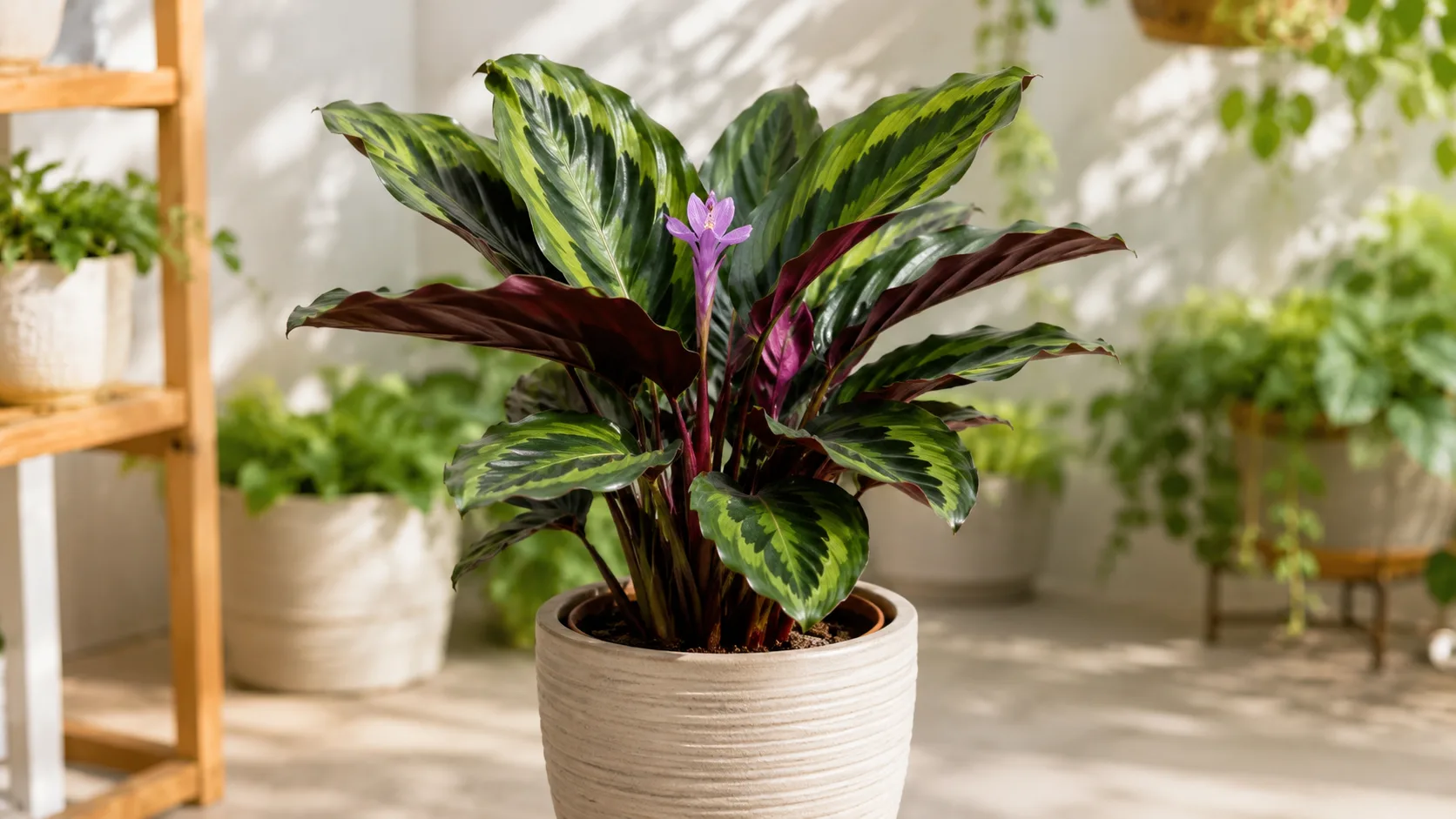
Calathea Peacock Fertilizer: When, How, and Mistakes
Calathea Peacock Fertilizer: When, How, and Mistakes
Calathea peacock fertilizer is one of those care topics where the plant’s reputation works against you. Calathea makoyana - the Peacock Plant - is famous for patterned leaves, nightly leaf movement, and a low tolerance for rough handling. That same sensitivity extends to the root zone. These are understory tropical plants adapted to steady moisture, filtered light, and modest nutrient availability in leaf litter - not to concentrated synthetic salts sitting in a 6-inch plastic pot for months.
The practical goal is straightforward: support healthy new foliage and preserve the feathered green pattern during active growth, without building up soluble salts that crisp leaf margins and damage fine roots. For most indoor Peacock Plants, that means a balanced liquid fertilizer at quarter to half the label strength, applied about once every four weeks from spring through early fall, with a full pause in late fall and winter. Water onto moist soil, never onto dry roots, and stop feeding immediately if you see brown tips, a white crust on the soil surface, or sudden leaf drop after a feed.
This guide covers when to fertilize, how much to use, which products work best, how to read deficiency vs burn, and the mistakes that cause more damage than skipping a month ever would.
Why Fertilizer Matters for Calathea Peacock
A Peacock Plant grows from rhizomes that push up patterned leaves on upright stems. Those leaves are the whole reason you bought the plant - the translucent green “feather” markings on Calathea makoyana fade quickly when care is off, long before the plant looks obviously sick. Fertilizer does not create that pattern from nothing. It replaces macronutrients that watering, root growth, and continuous leaf production pull out of the potting mix over time.
Missouri Botanical Garden describes Calathea makoyana as a clump-forming tropical perennial that needs consistently moist, organically rich, well-drained soils in part shade to full shade outdoors, with high humidity and protection from cold drafts indoors (Missouri Botanical Garden - Calathea makoyana). The entry does not emphasize heavy feeding, which matches what most experienced growers report: Peacock Plants tolerate lean conditions far better than they tolerate salt stress.
Because Calatheas evolved on the forest floor, their roots are thin and easily burned by concentrated fertilizer solutions. Label rates on many houseplant fertilizers assume thicker-rooted plants like pothos or philodendrons. Applying full label strength to a Peacock Plant often damages root tips within days; brown leaf margins follow one to two weeks later as the plant loses its ability to move water efficiently through stressed tissue.
Think of feeding as maintenance for an already healthy plant - not a rescue tool for a plant that is yellowing because it sits in direct sun, dries out repeatedly, or struggles in low humidity. If light, water, and humidity are wrong, fertilizer frequently makes the problem worse. Peacock Plant has a feathered, almost translucent green pattern that rewards even light and steady humidity. If the plant looks dull, clean the leaves and improve filtered light before increasing fertilizer.
When to Fertilize Calathea Peacock: Active Growth vs Rest
Timing is the first decision, and it is simpler than the conflicting schedules scattered across care blogs. Feed when the plant is actively producing new rolled leaves and extending stems, and stop when growth slows sharply. Indoors, that rhythm usually follows the calendar more than the plant’s evergreen appearance.
Peacock Plants keep their foliage through winter in most heated homes. That can trick you into thinking they are in full growth year-round. In practice, lower light, cooler room temperatures, and shorter days reduce the rate of new shoots even when old leaves stay upright. Feeding on a summer schedule through December is one of the most common ways houseplant owners burn Calatheas.
Spring and Summer Feeding Window
Start feeding when you see fresh lime-green leaf rolls unfurling at the center of the clump - usually mid-spring through late summer. In bright homes with east or north windows, growth may begin in early spring and stay steady into early fall. Peacock Plant grows most intensively from March through October and slows noticeably when days shorten and room humidity drops from indoor heating.
During this active window, a monthly quarter-strength feed is enough for most potted plants. NC State Extension recommends fertilizing every four weeks with a balanced fertilizer during the growing season. Both are reasonable if the plant looks steadily green, new patterning stays crisp, and you are not stacking other nutrient sources on top - compost top-dressing, slow-release pellets, and monthly liquid all at once.
If you move the plant to a brighter summer spot - still no direct sun, which washes out the pattern before it looks scorched - you may see faster water use and slightly faster growth. Continue feeding while new leaves are forming, but do not increase strength. Calathea responds to frequency adjustments more safely than dose increases.
Fall Taper and Winter Pause
Taper feeding in early to mid-fall as growth slows. One practical approach: give a final quarter-strength feed in early fall, then stop entirely from late fall through winter. Most indoor Peacock Plants do fine with no fertilizer from November through February, especially in cooler rooms or north-facing windows.
Winter rest is not full dormancy like a deciduous outdoor plant, but metabolic demand drops. Unused nutrients sit in the mix and raise salt levels while roots absorb water more slowly. University of Maryland Extension notes that excessive or frequent fertilizer use is a primary cause of high soluble salts in indoor plants, and that symptoms include brown leaf tips and marginal necrosis (University of Maryland Extension - Fertilizer Toxicity). Winter feeding on a plant that is not using nutrients is an easy way to create exactly that problem.
Exception: if you grow under strong supplemental grow lights and the plant keeps producing new shoots all winter, you can feed lightly - still at quarter strength - but extend the interval to six to eight weeks and watch closely for salt crust. Even then, skipping winter feeds is safer than forcing growth with nutrients.
Best Fertilizer Type for Calathea Peacock
The best Calathea peacock fertilizer for most homes is a complete, water-soluble, balanced houseplant formula with a slight nitrogen lean. You want nitrogen for green leaf color and pattern contrast, phosphorus for root function, and potassium for overall stress tolerance. Micronutrients on the label - especially iron and magnesium - matter for foliage plants that show chlorosis when trace elements are missing.
Avoid shopping by the word “Calathea” on the bottle unless you already trust the brand’s dosing guidance. Many prayer-plant owners do better with a standard indoor foliage formula used conservatively than with a product marketed for “heavy feeders” that assumes label-strength application.
Balanced Liquid Formulas and NPK Ratios
A 10-10-10 or 20-20-20 water-soluble fertilizer diluted to quarter or half strength is the default recommendation for Peacock Plant across horticultural sources. Equal ratios keep feeding simple when your main goal is steady foliage, not flowers or fruit.
Many experienced Calathea growers prefer a 3-1-2 ratio - slightly higher nitrogen relative to phosphorus and potassium - because nitrogen supports leafy expansion and helps maintain the vivid green backdrop behind the peacock markings. UF IFAS research documents that excess phosphorus from superphosphate can cause foliar damage on Calathea from fluoride contamination, though in practice over-concentration and salt buildup cause more tip burn than the middle number on the label alone. If you already own a balanced formula, use it confidently at low strength rather than buying a specialty product you will also need to dilute.
Liquid formulas win for control. You mix, dilute, and apply a known dose to moist soil. That matters in small pots where precision prevents localized hot spots of concentrated salts. For a typical indoor Peacock Plant in a 6- to 8-inch pot, mix the fertilizer at quarter to half the label’s recommended strength for houseplants, then apply until a little water drains from the bottom. Discard saucer water so the roots are not sitting in concentrated runoff.
Organic, Slow-Release, and What to Skip
Organic liquid fertilizers such as diluted fish emulsion, worm-casting tea, or seaweed blends can work if diluted to one-quarter strength or weaker. They smell, can attract fungus gnats if overapplied, and vary in strength by batch. They are fine for growers who already use them successfully; they are not inherently safer for the plant if applied too often or too strong.
Slow-release granular fertilizer is where many Calatheas get into trouble. A few pellets pressed into a small pot can release nitrogen in a concentrated zone near the rhizome while the rest of the pot stays lean. Because Peacock Plant prefers evenly moist soil, slow-release products can also dump nutrients during wet cycles and stall during dry ones - unpredictable in a home environment. If you mixed slow-release into fresh potting mix at Calathea Peacock Plant repotting guide, skip liquid feeding for two to three months unless the plant shows clear hunger on otherwise perfect care.
Skip foliar feeding as a default. Calathea leaves are not built like epiphytes that absorb nutrients efficiently through foliage. Fertilizer on patterned leaves can leave residue, burn tissue in brighter light, and adds little compared with a proper soil application.
Also skip fertilizer plus pesticide combo products unless you have a specific pest issue and follow label directions exactly. Routine feeding should not include unnecessary chemicals. The ASPCA lists Calathea species as non-toxic to cats and dogs (ASPCA - Calathea), but that does not make concentrated fertilizer safe for pets to ingest from dripped solution or crusty soil.
How Much Fertilizer to Use on Calathea Peacock
If you remember one number, make it quarter strength - half strength at the absolute maximum for a healthy plant in Calathea Peacock Plant light guide with no salt history.
Houseplant fertilizer labels assume a range of plants and pot sizes. Peacock Plants sit among the more sensitive - not as dramatic as maidenhair ferns, but less forgiving than pothos - and their fine roots plus preference for moist soil punish overdosing quickly. Cutting the label rate to one-quarter is the safest default for monthly feeding during active growth. Half strength is reasonable for growers who feed every two to four weeks and flush salts regularly.
Example: if the bottle says 1 teaspoon per gallon for indoor plants, use ¼ teaspoon per gallon for your Peacock Plant at monthly intervals, or ½ teaspoon per gallon if you feed every two weeks and leach salts monthly. Measure. “Eyeballing” concentrates errors because different products use different scoops and cap sizes.
For a final fall feed, quarter strength is enough - a light nudge before rest, not a full meal.
Signs you might need to go weaker still: white mineral crust on the soil surface, brown tips that appeared shortly after feeding, or a plant that stays wet for a long time because the pot is oversized. A large pot with modest root mass holds water and salts longer; weaker doses spaced farther apart are safer.
Signs you might cautiously test half strength on a monthly schedule - never full label strength - include pale new growth on a plant in bright indirect light, healthy roots, fresh potting mix, and a full season without fertilizer after repotting into nutrient-poor mix. Even then, increase gradually and watch the newest leaf pattern first. Faded markings on new leaves often mean light or water stress, not hunger.
How Often to Fertilize Calathea Peacock
Frequency should follow growth rate and salt management, not guilt about whether you are “doing enough.”
For most indoor Peacock Plants:
- Every 4 weeks with quarter-strength balanced liquid from mid-spring through early fall
- Every 2 to 4 weeks with half-strength liquid only if you flush salts monthly and the plant is actively unfurling leaves
- Once in early fall at quarter strength if growth is still visible, then stop
- No fertilizer from late fall through winter for typical room-grown plants
- Optional light feed every 6 to 8 weeks only if the plant keeps actively growing under bright light or grow lights in winter
That monthly quarter-strength schedule beats weekly weak feeding for most owners because it is easier to track and less likely to stack salts unnoticed. Weekly feeding at low dose can work for experienced growers who leach the soil every four to six weeks, but it is not the better default for a beginner with one plant on a humidity tray.
| Situation | Suggested frequency | Strength |
|---|---|---|
| Active growth, bright indirect light | Every 4 weeks | Quarter label strength |
| Active growth, moderate light | Every 4–6 weeks | Quarter label strength |
| Active growth, experienced grower flushing monthly | Every 2–4 weeks | Half label strength |
| Early fall, slowing growth | Once, then pause | Quarter strength |
| Winter indoors, low light | Skip | - |
| Winter under grow lights, new shoots | Every 6–8 weeks | Quarter strength |
| After repotting into fresh mix | Wait 4–6 weeks | Then resume quarter strength |
| Recovering from over-fertilizing | Pause 8–12 weeks | Flush; resume at quarter strength |
The table is a starting framework. Your room, pot size, water quality, and watering habits matter. A plant that dries every five to seven days in a warm room uses water - and eventually nutrients - faster than one in a cool back bedroom. Peacock Plant is also sensitive to hard tap water, which adds its own mineral load. If you already use filtered or rainwater for watering, fertilizer salts become the main mineral source in the pot - another reason to stay conservative.
Step-by-Step: How to Feed Calathea Peacock Safely
Safe feeding is mostly about order of operations. The fertilizer brand matters less than whether the soil was moist first, whether the plant was stressed, and whether salts were already accumulating.
Here is a reliable routine:
- Check the calendar and the plant. Confirm you are inside the active growth window and see new leaf rolls forming. If it is winter and nothing is growing, stop here.
- Inspect for salt crust or tip burn. White residue on the soil or pot rim means skip feeding and flush instead.
- Water with plain filtered or rainwater if the top layer feels dry. Bring the root zone to evenly moist before any fertilizer touches it. Never pour fertilizer onto dry soil - salts concentrate at the root surface and burn tissue.
- Mix fertilizer at quarter strength in room-temperature water in a watering can with a narrow spout.
- Apply slowly and evenly across the soil surface, not over the leaf crown. Stop when a little water drains from the bottom.
- Discard drainage from the saucer or cachepot within 30 minutes.
- Mark the date on a calendar or plant note so you do not double-feed in a enthusiastic week.
Pre-Feed Checks and the Moist-Soil Rule
Before every feed, run a quick three-point check: soil moisture, newest leaf color, and season.
Soil moisture comes first. Stick a finger into the top 2 cm. If it is dry, water with plain water and fertilize the next day if you are still inside your feeding window. If the pot is heavy and the mix is wet, wait - fertilizing waterlogged soil does not help nutrient uptake and keeps salts in solution longer around the roots.
Newest leaf color tells you whether the plant is actually building tissue. Healthy Peacock Plant unfurls leaves with crisp patterning and deep green backing. If new leaves are pale, small, or washed out, check light and humidity before assuming hunger. Peacock Plant suits medium indirect light where the full crown is visible; direct sun fades the pattern before obvious scorch appears.
Season is the gatekeeper. Active growth gets food. Slow winter metabolism gets plain water and humidity support. That sounds rigid, but Calatheas are consistent about punishing off-season feeding with tip burn that takes months to outgrow.
Signs Your Calathea Peacock Needs More Nutrition
Under-fertilizing is real but less common than over-fertilizing on Peacock Plants. Most “hungry” diagnoses are actually low light, inconsistent watering, low humidity, or hard water damage.
When a plant truly needs more nutrients, signs are gradual and appear on new growth while older leaves still look reasonably healthy:
- Slower unfurling during peak spring and summer despite good light and moisture
- Uniformly paler new leaves, not patterned yellow spots from pest or virus issues
- Smaller new leaves than the previous generation, with thinner stems
- Overall lack of vigor after more than a year in the same depleted mix with no feeding
If only older lower leaves yellow while new growth looks fine, suspect natural senescence or watering imbalance before fertilizer. Calathea Peacock drops older leaves periodically; that is not automatically a nutrient call.
When you do increase feeding, move from quarterly quarter-strength to monthly quarter-strength for one season - not from quarterly to half-strength overnight. Prayer plants reward patience more than correction doses.
Signs of Over-Fertilizing and Salt Buildup
Over-fertilizing is the dominant fertilizer problem on Calathea makoyana. Symptoms often appear one to two weeks after a too-strong or too-frequent feed, or gradually when salts accumulate from winter feeding, hard water, and never flushing.
Watch for these signals:
- Brown, crispy leaf tips and margins, especially on newer leaves or after a recent feed
- White or yellowish crust on the soil surface, pot rim, or drainage holes
- Sudden leaf curl, wilt, or drop despite moist soil - roots are damaged and cannot take up water effectively
- Stunted new growth with burnt leaf edges on the smallest unfurling leaves
- Sour or musty smell from the mix when salts and anaerobic conditions combine in an oversized pot
University of Maryland Extension explains that high soluble salts reduce a plant’s ability to absorb water - osmotic stress - which is why burn looks like drought even when the soil is wet (University of Maryland Extension - Fertilizer Toxicity). That mismatch confuses many growers into watering more, compounding root stress.
Hard water plus fertilizer creates a double mineral load. If you see tip burn while feeding modestly, test your water or switch to filtered or rainwater before increasing fertilizer. Fixing water quality often clears marginal necrosis faster than changing NPK ratios.
How to Flush Calathea Peacock After Over-Feeding
If you suspect burn, stop fertilizing immediately and leach the soil. Flushing is not optional maintenance for Calatheas - it is the rescue tool when salts get ahead of you.
Flush protocol:
- Move the pot to a sink or tub. Remove decorative cachepots.
- Run room-temperature filtered or distilled water through the soil steadily for two to three minutes - roughly three to four times the pot’s volume.
- Let the pot drain fully. Do not let it sit in runoff.
- Repeat the flush once more the same week if crust is heavy or tips browned sharply after a recent feed.
- Pause all fertilizer for 8 to 12 weeks. Peacock Plant recovers slowly; new roots must form before feeding resumes.
- Resume at quarter strength on the normal monthly schedule only when you see healthy new leaf rolls without burnt edges.
Trim crispy leaf tips with clean scissors if they bother you aesthetically. Those tissues will not green up again, but trimming does not fix the underlying salt problem - flushing does.
If white crust is thick, roots smell sour, or the plant wilts repeatedly after flushing, repot into fresh mix and skip fertilizer for another four to six weeks. Choose moisture-retentive but well-draining potting mix with pH around 6.0–7.5, the same baseline Peacock Plant wants for everyday care.
Going forward, leach the soil every four to six weeks during the feeding season - on the weeks you are not fertilizing - to prevent buildup. Think of flushing as part of the feeding system, not a sign you failed.
Seasonal and Situational Adjustments
Seasonal rhythm is the backbone, but a few situations demand an explicit pause even in spring and summer.
Summer heat and AC: Air conditioning lowers humidity and can slow growth even when temperatures feel comfortable to you. Do not compensate with stronger fertilizer. Mist or use a humidifier if humidity drops below 60%, and keep feeding at quarter strength on a monthly schedule only if new leaves are still forming.
Relocated plants: Moving Peacock Plant closer to a window or into a brighter room increases photosynthesis and water use. Wait two weeks after a major move before feeding so the plant is not handling relocation stress and nutrient uptake at once.
Filtered-water households: If you never use tap water, the pot depends on you for nearly all minerals. Light feeding during growth is appropriate, but flushing is still required because synthetic fertilizer salts accumulate even when tap minerals are absent.
After Repotting, Stress, and New Growth Pause
After repotting: Fresh commercial potting mixes often contain starter fertilizer. Wait four to six weeks after repotting before the first liquid feed unless the plant was repotted into a clearly inert mix with no nutrients and shows hunger on perfect care. Repotting damages fine root hairs; feeding too soon pours salts into an open wound.
After pest or disease stress: Spider mites, thrips, and fungal issues weaken the plant. Fix the underlying problem, stabilize new growth, then feed lightly. Nutrients do not replace pest control or humidity recovery.
After drought stress: If the plant wilted from dry soil, rehydrate with plain water over a few days. Fertilizing drought-stressed roots is a reliable way to get tip burn on the next unfurling leaf.
New plant quarantine: Retail plants are often over-fertilized for nursery display. Give a new Peacock Plant six weeks of plain water and stable humidity before starting your conservative schedule. The first month at home should be boring - quarantine, learn the drying rhythm, and inspect for pests before stacking fertilizer on top of acclimation stress.
Fertilizer and Other Calathea Peacock Care
Fertilizer only works when the rest of the routine is in range. Peacock Plant is a humidity-sensitive prayer plant where water quality, light quality, and air moisture show on leaf edges before roots complain loudly.
Light: Medium to bright indirect light drives nutrient demand. A plant in a dim corner uses less fertilizer; one in a bright east window may need the monthly quarter-strength schedule but not higher concentration. Direct sun washes out the peacock pattern - fix placement before chasing nutrients.
Water: Every 5–7 days in the growing season when the top 2 cm begins to dry, and 7–10 days in winter, using filtered or rainwater. Hard tap water adds salts that interact with fertilizer. If tips brown despite weak feeding, water quality is the prime suspect.
Humidity: Target 60% or higher. Low humidity crispens margins independently of fertilizer. A humidifier beats misting alone for consistent results in heated rooms.
Soil: Moisture-retentive but well-draining mix with pH 6.0–7.5 holds nutrients in the root zone without staying waterlogged. Dense, stale mix makes both overwatering on Calathea Peacock Plant and salt accumulation worse.
Temperature: 65–75°F (18–24°C) supports steady metabolism. Cold drafts and temperatures below 60°F (15°C) slow growth; pause feeding when the plant is cold-stressed.
Treat fertilizer as the last lever, not the first. When Peacock Plant looks off, inspect light, watering, humidity, and roots before changing the feed. Medallion is broader and more dramatic; Peacock is softer and more clump-forming. Peacock can hide minor older-leaf wear inside the mound, but faded new patterning is still an early warning - usually light, not fertilizer.
Common Calathea Peacock Fertilizer Mistakes
These errors cause most of the fertilizer damage seen on Peacock Plants:
Feeding on a calendar without looking at growth. March 1 on the schedule means nothing if the plant is still recovering from repotting or sitting in a cold draft. Feed active growth, not the date.
Using full label strength because “indoor plants need food.” Calathea roots are not pothos roots. Quarter strength exists because the label assumes a different tolerance profile.
Fertilizing dry soil. Concentrated salts at the root surface burn fine roots before the solution disperses. Water first, feed second.
Winter feeding because the plant is still green. Evergreen foliage does not equal active growth. Unused winter nutrients become salts.
Slow-release pellets in small pots. Unpredictable release plus limited soil volume equals localized burn. If you use them at repot, skip liquid for months.
Chasing brown tips with more fertilizer. Tip burn usually means salts, water quality, or humidity - not hunger. More nutrients deepens the burn.
Ignoring the flush. Regular leaching is part of Calathea care, especially with synthetic liquids and filtered water. Skipping flushes for a year then wondering why tips crisp is a pattern, not bad luck.
Combining stress events. Repotting, moving, pruning, and feeding in the same week stacks shocks. Space interventions by at least two weeks.
When in doubt, skip a month. Peacock Plant tolerates a lean season far better than it tolerates a salt crisis that takes half a year of leaf turnover to visually erase.
Conclusion
Calathea peacock fertilizer success comes down to restraint tied to real growth. Feed Calathea makoyana with a balanced or slightly nitrogen-lean liquid formula at quarter to half label strength, about monthly from spring through early fall, on moist soil using the same filtered or rainwater you rely on for everyday watering. Stop in winter, flush salts every four to six weeks during the active season, and pause after repotting, pest stress, or any tip burn.
Peacock Plant rewards growers who treat nutrients as quiet maintenance for an already stable plant - bright indirect light, steady humidity, even moisture - not as a shortcut around those basics. Watch the newest leaf pattern and the soil surface more than the calendar. If both look clean, your schedule is working. If tips crisp or white crust appears, flush, wait, and resume weaker rather than doubling down. That rhythm keeps the peacock markings vivid without trading leaf beauty for a few weeks of forced growth.
When to use this page vs other Calathea Peacock Plant guides
- Calathea Peacock Plant overview - Start here for whole-plant context before deep-diving this topic.
- Calathea Peacock Plant problems hub - Jump to symptom-specific fix guides when this care topic does not resolve the issue.
Related Calathea Peacock Plant guides
- Calathea Peacock Plant overview
- Calathea Peacock Plant watering
- Calathea Peacock Plant light
- Calathea Peacock Plant soil
- Calathea Peacock Plant propagation
- Calathea Peacock Plant repotting
- Calathea Peacock Plant problems
Related tool
Try the Fertilizer Dilution Calculator with calathea-peacock pre-selected to estimate needs for your setup.