Fungus Gnats on Calathea Peacock Plant: Causes, Checks &
Quick answer
Fungus gnats on Calathea Peacock mean the soil surface stays wet too long-a moisture alarm, not a random pest invasion. First step: let the top inch dry and set yellow sticky traps before reaching for harsh sprays on painted leaves.
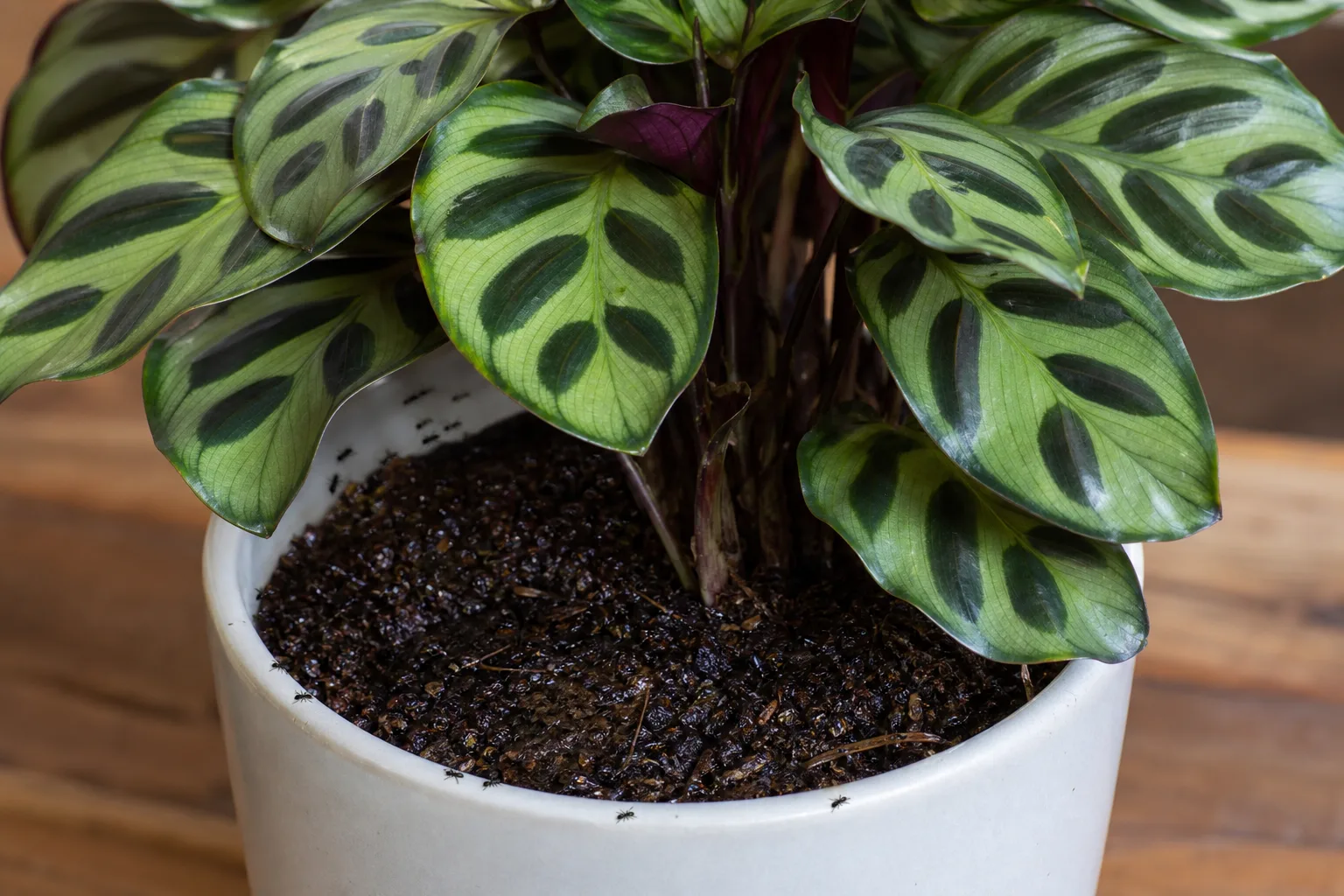
Fungus Gnats on Calathea Peacock Plant: Causes, Checks & Fixes
This guide covers fungus gnats on Calathea Peacock Plant. See also the general Fungus Gnats guide, watering, and light pages for this plant.
Fungus Gnats on Calathea Peacock Plant: Causes, Checks & Fixes
Quick answer
Fungus gnats on Calathea Peacock (Goeppertia makoyana) are a moisture signal, not a random pest invasion. Adults are tiny dark flies that hover near the pot when you water or walk past the shelf. Their larvae live in the damp top layer of organic mix, feeding on fungi and decaying matter-and sometimes fine roots.
First step: let the top inch of soil dry before the next drink and place yellow sticky traps near the pot rim. Break the wet cycle before stacking harsh chemicals on delicate painted foliage. Spraying Peacock blades will not reach larvae in soil and can leave permanent water spots on the cathedral-window pattern.
Peacock plant creates a hidden trap: owners keep the surface moist out of fear of brown crispy edges, but constant top-layer wetness is exactly what fungus gnats need. For the full moisture balance, see our Peacock watering guide. Wet-soil hub: overwatering on Calathea Peacock.
Gnats vs. overwatering vs. mold on soil on Peacock Plant
These three problems often appear together on moisture-loving prayer plants-but they need different first responses.
| What you notice | Most likely cause | First check |
|---|---|---|
| Flies hovering at soil only | Fungus gnats | Larvae in top inch; potato-slice test |
| Limp patterned leaves, heavy wet pot, no flies | Overwatering | Finger to 1–2 inches; pot weight; root firmness |
| White or gray fuzz on surface, few or no flies | Mold on soil | Scrape test; sour smell; crown firmness |
| Flies + sour wet soil + yellow lower leaves | Overwatering + gnats | Dry-down first; inspect roots if decline continues |
| Flies + surface fuzz on damp peat | Wet organic surface | Fix dry-down; see mold on soil |
Gnats alone rarely kill an established Peacock. Chronic wet soil that supports them eventually overlaps with overwatering stress and root rot-treat the moisture environment, not just the flies.
Why Calathea Peacock gets fungus gnats
Fungus gnats need moist organic soil to reproduce. Adults lay eggs in cracks of growing media, especially peat-rich mixes that hold surface moisture. Larvae stay in the top 2 to 3 inches, feeding on fungi, algae, and decaying organic matter.
Peacock plant invites gnats through species-specific care tensions:
The moisture paradox
Goeppertia makoyana evolved on shaded Brazilian forest floors where roots stay moist but still breathe in loose organic soil. Indoors, the goal is consistently moist but never soggy mix-a narrower band than most beginner advice allows. Broad painted leaves show drought stress quickly through curl and crisp edges. Many growers respond with frequent light top waterings instead of thorough drinks separated by partial dry-down-creating ideal gnat habitat at the surface without fully hydrating roots below.
That fear-of-crisp-edges loop is the core Peacock gnat trigger. Raising humidity with a humidifier supports clean new growth; keeping soil surface wet “for humidity” breeds gnats and root stress. See low humidity on Calathea Peacock for leaf-level fixes that do not require soggy peat.
Chronically wet surface and dense peaty mix
Adult fungus gnats lay eggs in moist organic potting media. If the top inch never dries between waterings, larvae hatch and feed continuously. Nursery peacock plants often arrive in 4–6 inch containers with moisture-retentive peat blend. Without perlite and airflow per our soil guide, the surface stays damp long after the owner thinks the plant has “used” the water.
Bottom-watering without dry-down
Bottom-watering can protect painted leaves from spotting-but only when the top layer dries between sessions. Refilling saucers before the surface has dried, or leaving a nursery pot sitting in standing water overnight, keeps the upper inch hospitable for egg-laying even when roots below are drinking.
Low light, cool winter, and cachepot traps
A Peacock in a dim corner uses less water but may receive the same watering schedule as a plant in bright indirect light per the light guide. Cool winter rooms slow evaporation further. The summer rhythm that dried the top inch in five days may leave it wet for two to three weeks in January.
Decorative cachepots without drainage hold saucer water against rhizomes. The top layer stays wet while only the patterned leaves above are visible.
New plant introductions
Fungus gnats commonly arrive on newly purchased houseplants. One infested nursery pot can spread adults across a Marantaceae shelf before you notice larvae in the mix.
What fungus gnats look like on Calathea Peacock
Adult flies:
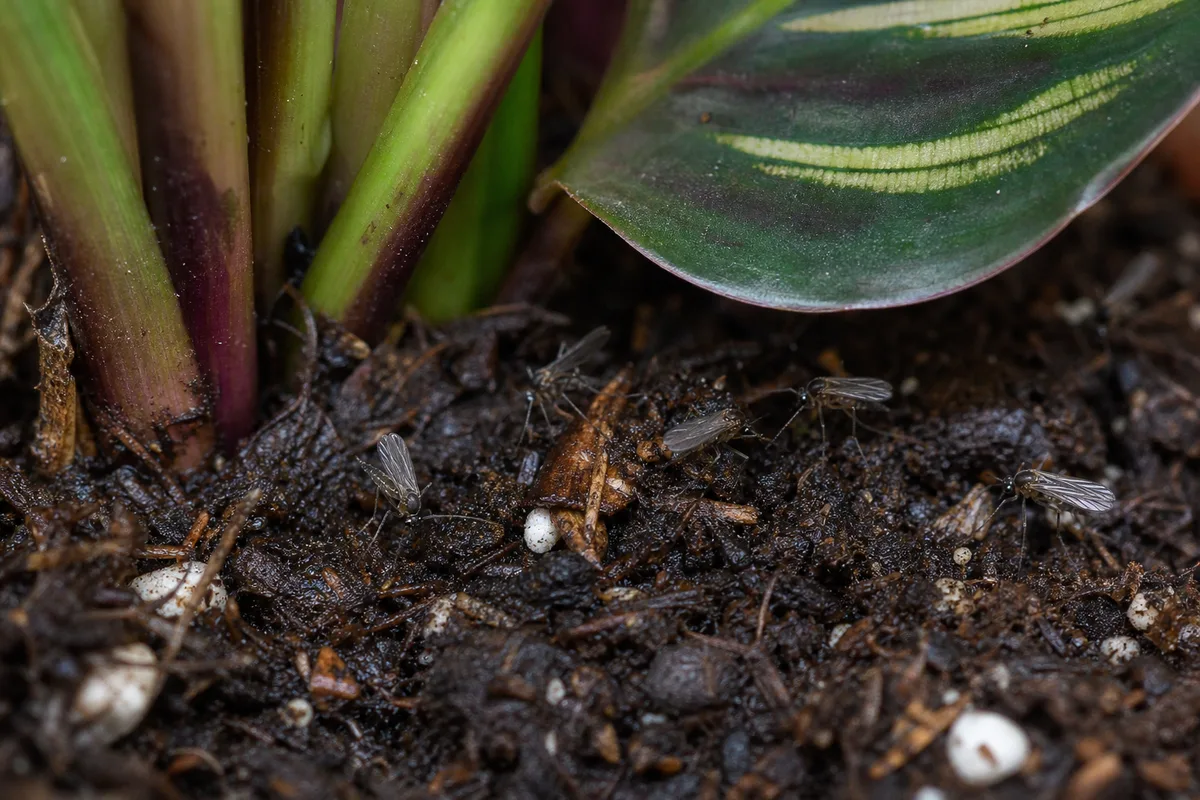
Fungus Gnats symptoms on Calathea Peacock Plant - compare with healthy tissue on the same plant.
- Tiny black or gray mosquito-like insects, roughly 1/8 inch long
- Rise in a small cloud when you water, repot, or bump the pot
- Rest on soil surface, pot rim, or lower leaf bases-not on painted blades
- Do not bite people or pets
Larval stage in soil:
- Translucent wormlike larvae with dark head capsules in the top inch of mix
- Visible when you scrape back wet surface soil or lift a potato test slice
- Sometimes green algae film on constantly wet soil surface
Plant symptoms:
Peacock foliage may show no direct gnat damage at first. Indirect signs include yellow lower leaves, stalled new growth, and a musty smell from wet mix-overlapping with overwatering, not insect feeding on leaves alone.
What gnats are not:
- Whiteflies (waxy, on leaf undersides)
- Spider mites (fine webbing, stippling on patterned leaves)
- Mealybugs (white cotton clusters at nodes)
- Fruit flies from kitchen compost-larger, near food, not tied to one pot
Gnats stay near soil. Painted Peacock blades are damaged by spray chemistry and water spots, not adult flies hovering at the rim.
How to confirm the cause
Five-step confirmation checklist
- Disturbance test - Water or gently stir the soil surface. If flies appear within seconds, gnats are active.
- Dry-down test - Allow the top inch to dry for 7–10 days. Adult counts should drop sharply when the surface stays dry.
- Larval check - Scrape the top quarter-inch of mix into a white saucer and look for tiny worms with dark heads.
- Root cross-check - Unpot only if yellow leaves, limp foliage, or sour smell accompany gnats. Firm pale roots with surface gnats mean fix moisture first; mushy roots mean escalate to root rot protocol.
- Watering history - Calendar watering, full saucers, or cachepots without drainage strongly support gnat-friendly conditions.
Gnats are confirmed when flies appear after watering, larvae are present in the top layer, and soil has stayed wet for extended periods.
Potato-slice larva test
Press a raw potato chunk cut-side down onto wet surface soil overnight. Fungus gnat larvae migrate to the potato to feed. After 24–48 hours, lift the slice and inspect the underside for translucent worms with dark heads. Unpeeled chunks resist drying better than thin peels. Replace slices every two days if you use them to monitor larval decline-not as your only control measure.
Gnat vs. fruit fly differential
Fungus gnats cluster around houseplant pots, rise when you disturb moist soil, and tie to one chronically wet container. Fruit flies are larger, often near kitchen fruit bowls or compost bins, and appear in multiple rooms regardless of plant watering. If flies follow food, not pots, look elsewhere. If they rise only from your Peacock saucer, treat the soil moisture cycle.
First fix for Calathea Peacock
Let the top inch of soil dry before the next watering. This single change breaks the gnat life cycle more reliably than sprays alone.
Then:
- Set yellow sticky traps horizontally near the soil surface to catch adult flies and reduce egg-laying.
- Bottom-water carefully - Only after the surface has dried; empty the saucer within 30 minutes.
- Apply BTI drench if larvae persist - Bacillus thuringiensis israelensis kills fungus gnat larvae in soil without contacting Peacock leaves. Follow label rates; repeat every five to seven days for two to three cycles to catch overlapping generations.
Do not spray broad pesticides on prayer-plant foliage-water spots and chemical burn on painted leaves are permanent. Do not keep soil wet to “help” a stressed plant; use a humidifier instead.
Step-by-step recovery
- Week 1: Dry top inch between drinks; set sticky traps at pot rim; stop light daily sprinkles that only wet the surface
- Week 2: Count flies on traps-numbers should drop; run potato-slice test to monitor larvae
- Week 3: BTI drench if larvae remain on fresh potato slices; confirm no sour smell from soil
- Week 4+: Resume normal Peacock watering rhythm-moist root zone, dry surface between drinks per the watering guide
- Ongoing: Quarantine new plants two weeks; check surface moisture before every drink; refresh top inch of mix if peat has degraded
Recovery success: fewer adults on traps, no larvae on fresh potato slices, firm new patterned leaves unfurling from the center-not just fewer gnats.
Recovery timeline
Adult gnat counts usually drop within one to two weeks once the surface stays dry between waterings. Full larval control may take three to four weeks because of overlapping gnat generations-continue dry-down and BTI until no flies appear when you disturb the soil.
Plant recovery from any associated overwatering stress takes longer-watch for firm new leaves unfurling from the center with clear cathedral-window pattern, not just fewer gnats.
Lookalike symptoms
| Sign | Fungus gnats | Overwatering alone | Low humidity |
|---|---|---|---|
| Flying insects near soil | Yes | No | No |
| Wet top inch for days | Yes | Yes | No |
| Crisp leaf edges | No | Sometimes | Yes - see low humidity |
| Sour soil smell | Sometimes | Yes | No |
| Larvae in top inch | Yes | No | No |
| Surface white fuzz | Sometimes - mold on soil | Sometimes | No |
What not to do
- Keep soil constantly moist to compensate for dry air-invites gnats and root stress; humidify leaves instead
- Use hydrogen peroxide soil drench as your only fix without drying the surface
- Repot into a larger peat-heavy pot without perlite-that usually worsens wet centers
- Spray pesticides on painted Peacock blades for soil gnats-misses larvae and spots foliage permanently
- Ignore gnats when yellow leaves and wet soil appear together-inspect roots per the root rot guide
- Mist leaves frequently instead of fixing soil moisture-does not kill larvae and can spot patterned blades
Care cross-check during recovery
| Factor | Peacock need during gnat treatment |
|---|---|
| Top soil | Dry 1 inch between waterings |
| Root zone | Moist but not anaerobic |
| Humidity | 60%+ via humidifier, not wet soil surface |
| Light | Bright indirect per light guide |
| Water method | Bottom water preferred to protect painted leaves |
| Mix | Well-draining peat-perlite per soil guide |
How to prevent fungus gnats next time
Match watering to the Peacock watering guide: water when the top 1–2 inches begin to dry, use well-drained mix, and empty saucers within thirty minutes of every session.
Remove fallen patterned leaf debris from the soil surface promptly-decaying organic matter feeds larvae.
Quarantine new Marantaceae for two weeks before shelf placement. Check every plant on the same shelf when one pot shows flies.
Slide nursery pots out of decorative cachepots after watering so runoff does not pool against rhizomes.
Reduce watering volume in fall and winter when evaporation slows in cool, dim rooms.
In persistent cases, refresh the top inch of mix after the gnat cycle breaks. Replace degraded peat that holds surface moisture for days.
Raise humidity with a humidifier or pebble tray-not wet soil-to break the brown-tips fear loop that drives surface overwatering.
When to worry
Escalate when gnats persist after four weeks of corrected dry-down, soil smells sour, patterned leaves go limp on wet mix, or rhizomes feel soft when you unpot. Those patterns overlap with overwatering and possible rhizome rot-inspect roots and adjust Calathea Peacock Plant repotting guide plan before the foliage collapses entirely.
A mature Peacock with firm rhizomes, only a few flying adults, and no yellowing on wet mix can follow the standard dry-and-trap path without emergency repotting.
Surface gnats on firm roots with healthy new spears unfurling are a moisture-habit fix, not a death sentence. Act when inspection shows root-zone failure, not when you see a single fly after watering.
Conclusion
Fungus gnats on Calathea Peacock are a moisture signal, not a leaf disease. Let the top inch dry, trap adults, and break the wet-surface cycle before reaching for sprays that spot painted foliage. Fewer flies on traps, clean potato-slice checks, and firm new patterned leaves tell you the fix worked; persistent clouds with sour soil and limp blades mean the root environment-not just the pests-needs deeper correction.
Related Calathea Peacock problems
- Calathea Peacock overview - species care hub
- Watering - top 1–2 inch dry-down rhythm
- Soil - peat-perlite mix and drainage
- Light - evaporation and seasonal dry-down
- Overwatering - wet-soil primary hub
- Root rot - mushy rhizome escalation
- Mold on soil - surface fuzz on damp peat
- Brown tips - crisp-edge fear loop
- Low humidity - leaf dryness without wet soil
- Spider mites - stippling on blades, not soil flies
- Mealybugs - cotton clusters on stems
When to use this page vs other Calathea Peacock Plant guides
- Calathea Peacock Plant watering guide - Use for routine moisture checks before assuming fungus gnats is the main issue.
- Calathea Peacock Plant problems hub - Browse all 16 common issues on this species.
- Overwatering on Calathea Peacock Plant - Different entry point when symptoms overlap with fungus gnats.
- Mold on Soil on Calathea Peacock Plant - Different entry point when symptoms overlap with fungus gnats.
- Root Rot on Calathea Peacock Plant - Different entry point when symptoms overlap with fungus gnats.
Related Calathea Peacock Plant guides
- Calathea Peacock Plant overview
- Calathea Peacock Plant watering
- Calathea Peacock Plant light
- Calathea Peacock Plant soil
- Overwatering on Calathea Peacock Plant
- Mold on Soil on Calathea Peacock Plant
- Root Rot on Calathea Peacock Plant
- Slow Growth on Calathea Peacock Plant
- Calathea Peacock Plant problems