7 Best Large Indoor Plants for Statement Rooms and Easy Care
Compare large indoor plants for homes, including light needs, care difficulty, size, styling and beginner-friendly picks.
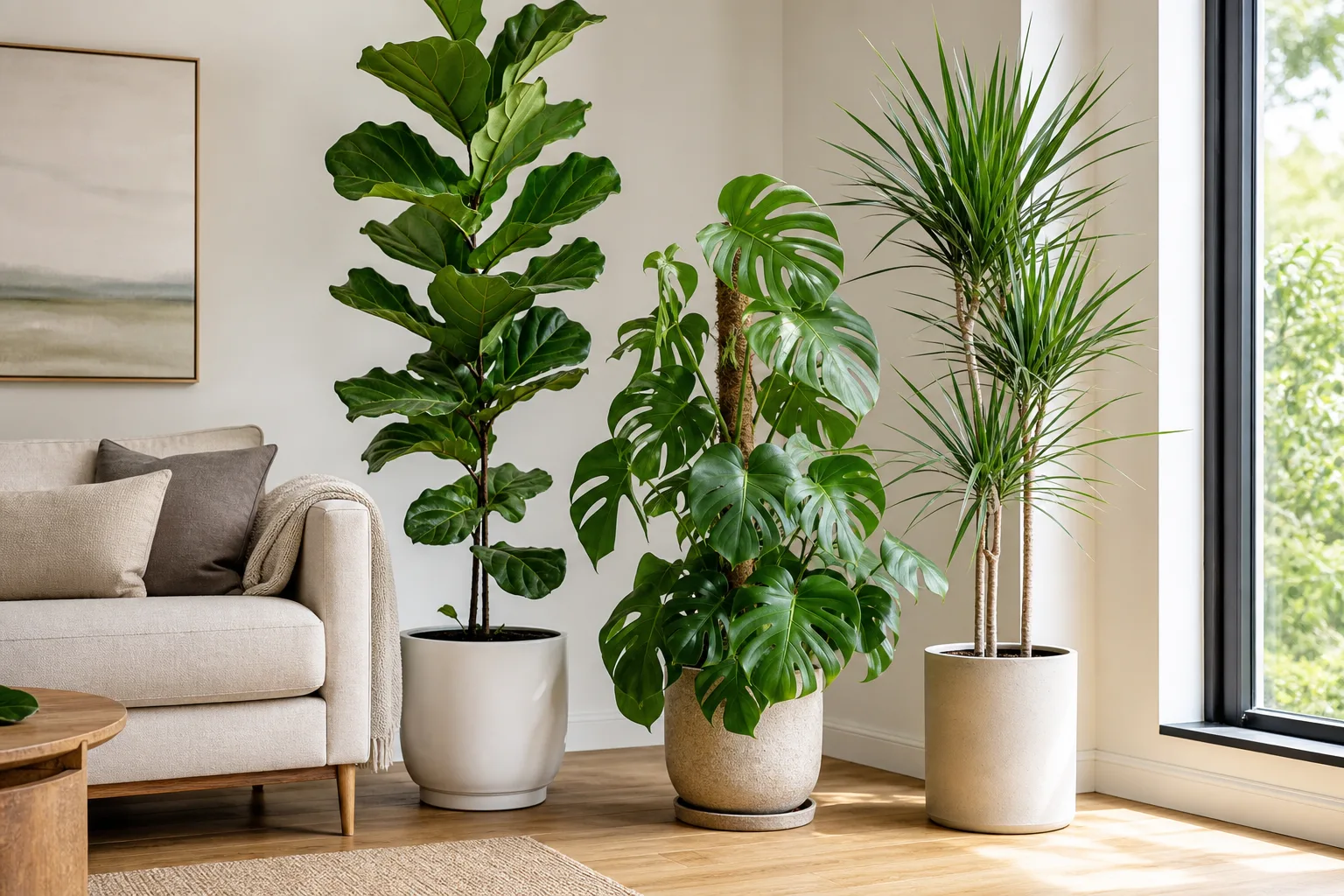
A large indoor plant should do more than fill an empty corner. It should fit the light you actually have, survive your care habits, suit your room size, and not become a constant source of yellow leaves, pests, or regret. The best choice is not always the trendiest plant. It is the plant whose natural growth habit matches your home.
If you want a filterable quick list from LeafyPixels plant metadata, start with Best Large Indoor Plants. This guide goes deeper: Quick Pick routing by room type, mature indoor size ranges, pet-safety notes with ASPCA anchors, and links to full species care on LeafyPixels.
The 7 best large indoor plants for most homes are Monstera deliciosa, fiddle leaf fig, rubber plant, white bird of paradise, areca palm, kentia palm (full LeafyPixels hub coming soon), and Dracaena marginata. They all bring height, structure, and strong visual impact, but they are not interchangeable.
One claim deserves clearing up early: large indoor plants are beautiful, calming, and useful for styling a room, but they should not be treated as serious air purifiers. NASA’s well-known indoor plant research showed VOC removal in controlled chamber conditions, but later analysis found potted plants do not meaningfully improve indoor air quality in normal buildings at realistic plant numbers. Treat houseplants as living decor and a gardening hobby, not a replacement for ventilation or proper air filtration. (NASA Technical Reports Server)
Quick Pick: Best Large Indoor Plant for Your Situation
For the best all-rounder, choose Monstera deliciosa. It grows large, looks lush, handles normal indoor conditions better than many statement plants, and gives you that dramatic split-leaf look without being as temperamental as a fiddle leaf fig. It does need space because mature leaves and stems spread outward, especially when the plant is trained up a moss pole or coir support.
For the boldest architectural look, choose white bird of paradise. Its upright banana-like leaves give a room instant height and a clean tropical feel. It is best for bright rooms, sunrooms, large living rooms, and homes with enough floor space for a plant that can become wide as well as tall.
For a beginner-friendly large plant, choose rubber plant or Dracaena marginata. Rubber plants tolerate normal indoor humidity and recover better from small mistakes than many fashionable foliage plants. Dracaena marginata is slim, sculptural, and useful in tighter corners where broad plants would crowd the room.
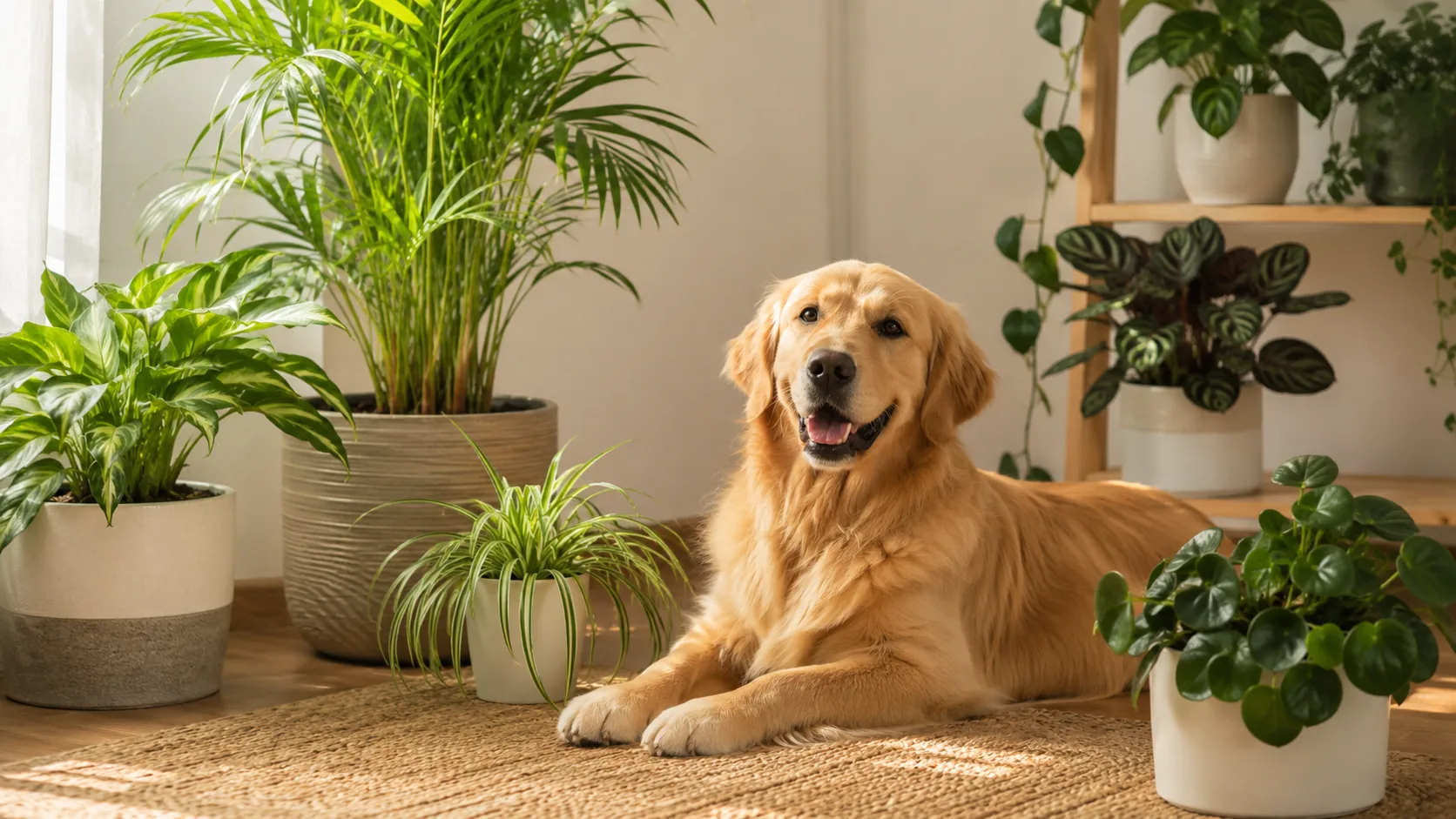
For pet-aware homes, start with areca palm or kentia palm. The ASPCA lists areca palm and kentia palm as non-toxic to dogs and cats, which makes them safer choices than monstera, ficus, dracaena, and bird of paradise in homes with chewing pets. “Non-toxic” does not mean a pet should eat the plant freely, because any plant material can still upset the stomach. If a pet ingests any houseplant and shows symptoms, contact your veterinarian or ASPCA Animal Poison Control at 888-426-4435. (ASPCA areca palm listing)
For a bright living room with a design-led look, choose fiddle leaf fig only if you can give it what it wants: strong light, stable placement, careful watering, and minimal moving around. If your room is dim or drafty, a rubber plant or kentia palm will usually be a better long-term decision.
How to Choose the Right Large Indoor Plant
Buying a large indoor plant is different from buying a small tabletop plant. A six-foot floor plant is harder to shift, more expensive to replace, and more disruptive when it starts dropping leaves. Before choosing, judge the plant against four practical factors: light, space, care difficulty, and safety.
University extension guidance on houseplants consistently points to light, water, temperature, humidity, nutrition, and soil as the core factors behind indoor plant success. Of those, light is usually the first limiting factor indoors. Watering problems often show up later because a plant placed in too little light uses water slowly, leaving soil wet for longer and increasing root rot risk. (CAES Field Report)
Match the Plant to Your Light
Most large tropical houseplants prefer bright indirect light. That means the room is bright enough to read comfortably during the day without switching on a lamp, but the leaves are not sitting in harsh afternoon sun for hours.
“Low light” is often misunderstood. Low light usually means a plant may survive, not that it will grow strongly, hold its best shape, or produce large leaves. If you want a large plant to remain full and impressive, do not buy a high-light plant for a dark corner and hope it adapts.
Artificial lighting can help when natural light is weak. The University of Maryland Extension notes that artificial light can improve the quality of light indoor plants receive, with red, far-red, and blue wavelengths being important for plant development. For large plants, a proper full-spectrum grow light placed close enough to the canopy is more useful than a small decorative bulb across the room. See Grow lights complete guide for indoor plants for placement and intensity basics. (University of Maryland Extension)
Window Direction and Distance Matter
Distance reduces light quickly indoors. A plant placed six or eight feet from a bright window may be receiving far less usable light than it appears to the human eye. Use the shadow test as a rough guide. If your hand casts a soft but clear shadow near the plant during the brightest part of the day, many bright-indirect plants can work. If there is barely a shadow, choose a more tolerant plant or add a grow light.
Check the Real Space the Plant Needs
Always measure the floor area, not just the height. Dracaena marginata grows upright and slim, making it useful for corners. Monstera deliciosa becomes broad and unruly unless trained. Bird of paradise grows upright at first but eventually needs elbow room because its leaves fan outward.
Choose the Right Care Difficulty
Rubber plant, Dracaena marginata, areca palm, and kentia palm are generally more forgiving than a fiddle leaf fig, provided they receive suitable light and drainage. Monstera sits in the middle: not difficult, but it needs support, pruning, and space as it matures.
The New York Botanical Garden’s fiddle leaf fig guidance emphasizes strong light, protection from direct harsh rays, a stable environment, watering restraint, and some humidity. That is manageable for attentive owners, but frustrating for people who want a plant they can mostly ignore. (NYBG LibGuides)
Factor in Pets, Kids, and Plant Toxicity
The safest choices on this list for pet-aware homes are areca palm and kentia palm, both listed by the ASPCA as non-toxic to dogs and cats. Monstera, ficus-type rubber plants, dracaena, and bird of paradise are better avoided or kept fully out of reach. Always check the exact botanical name before buying. “Rubber plant” can refer to different plants, and not all are pet-safe. (ASPCA kentia palm listing)
How We Selected These Seven
These seven were chosen for a balance of visual impact, indoor adaptability, nursery availability, care practicality, and usefulness in real homes—not because they are the only large houseplants worth growing.
We prioritized species with deep LeafyPixels care clusters so you can follow one purchase with ongoing watering, light, and problem guides. That is why yucca, philodendron selloum, money tree, Norfolk Island pine, majesty palm, and corn plant appear on the Best Large Indoor Plants quick list but not here: this guide focuses on seven editorially distinct profiles with the strongest on-site follow-up care today. Kentia palm is included for pet-safe elegance even though its dedicated /plants/kentia-palm/ hub is still in development—ASPCA safety data and nursery availability justify the pick.
The 7 Best Large Indoor Plants
1. Monstera Deliciosa
Best for: lush tropical impact, bright living rooms, plant owners who can provide width and support.
Difficulty: Medium
Light: Bright indirect
Water: When upper soil dries
Best placement: Living room corner with moss pole
Pet safety: Toxic if ingested—keep out of reach
Typical indoor size: 6–8 ft tall with support; 3–4 ft leaf spread
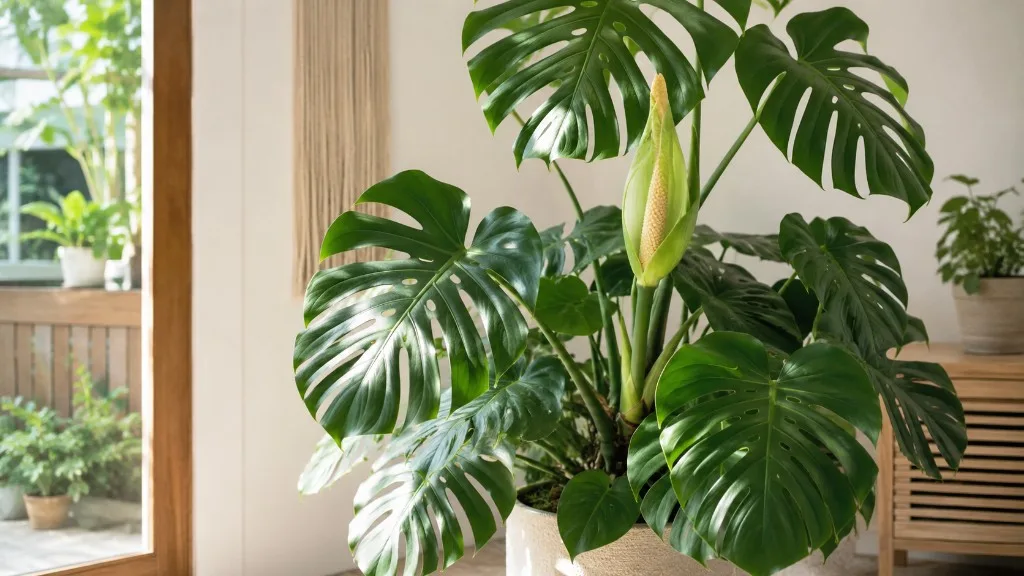
Monstera deliciosa is one of the best large indoor plants because it gives you dramatic foliage without demanding the precision care of a fiddle leaf fig. Its mature leaves develop natural splits and holes when the plant receives enough light and maturity. Indoors, it often grows as a climbing vine, so it performs best with a moss pole, coir pole, or sturdy trellis.
The main mistake with monstera is underestimating its size. Without support, stems lean outward and the plant occupies more floor space than expected. Train it early rather than waiting until the stems are heavy.
Monstera is not a good free-access choice for pets that chew foliage. Monstera contains irritating compounds that can cause mouth and digestive irritation when eaten.
Why it works: Bold split leaves with moderate care demands compared with fiddle leaf fig.
Care tip: Let the upper soil dry before watering; use a chunky mix.
Common mistake: Buying for a dark corner—leaves stay small and stems stretch.
Avoid this plant if: You cannot provide width, support, or pet-safe placement.
Useful care guides:
2. Fiddle Leaf Fig
Best for: bright rooms, modern interiors, owners who enjoy attentive plant care.
Difficulty: Medium to hard
Light: Strong bright indirect
Water: Steady but restrained when upper soil dries
Best placement: Near large east- or south-facing window, stable spot
Pet safety: Toxic if ingested
Typical indoor size: 6–10 ft tall; 2–3 ft canopy width
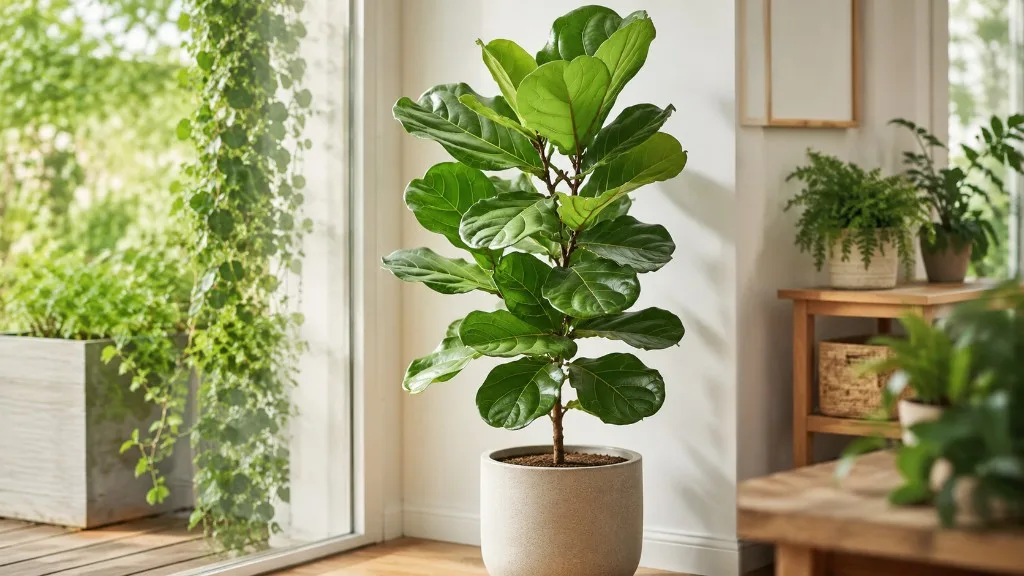
The fiddle leaf fig creates a strong vertical silhouette, and a healthy tree can make a plain room look designed. Its downside is sensitivity to light changes, drafts, and irregular watering. RHS guidance for ornamental figs describes them as generally long-lasting when given bright indirect light and warm, even temperatures without large fluctuations. (RHS ornamental figs)
Water thoroughly when the upper soil has dried enough, let excess water drain fully, and never leave the pot sitting in a water-filled saucer.
Why it works: Unmatched modern architectural silhouette in strong light.
Care tip: Do not move it after it settles—stability matters as much as water.
Common mistake: Buying for a dim apartment because it looked good in the nursery.
Avoid this plant if: Your room cannot provide bright, stable conditions.
Useful care guides:
- Fiddle leaf fig care guide
- Fiddle leaf fig watering guide
- Fiddle leaf fig light guide
- Fiddle leaf fig problems guide
3. Rubber Plant
Best for: beginners who want a large glossy plant, medium-to-bright rooms.
Difficulty: Easy to medium
Light: Medium to bright indirect
Water: When upper soil dries
Best placement: Living room, bedroom, office entry
Pet safety: Ficus rubber plants are toxic to cats and dogs
Typical indoor size: 6–10 ft tall; 2–3 ft spread
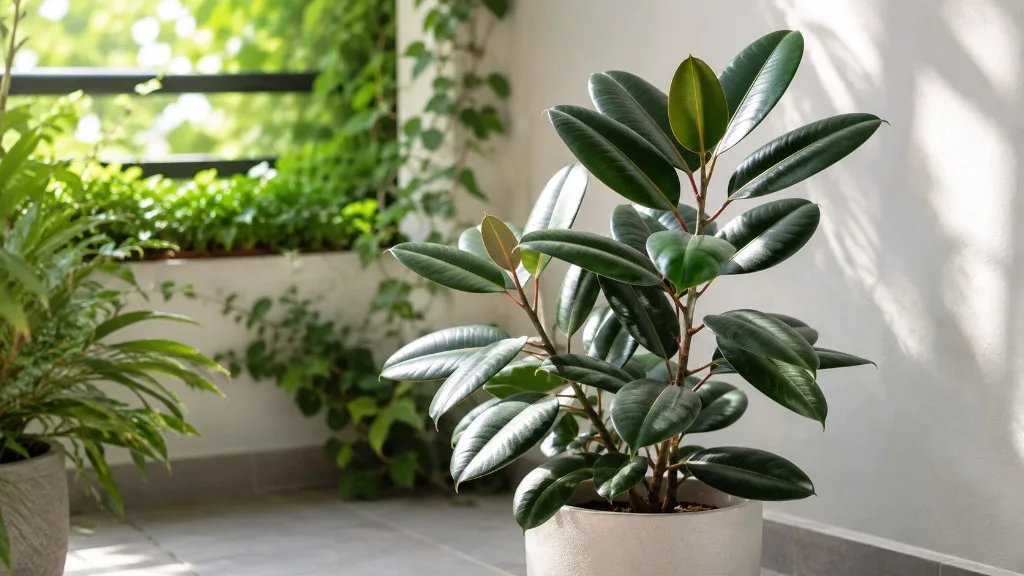
The rubber plant looks polished without being overly delicate. Its thick, glossy leaves come in deep green, burgundy, and variegated forms. Variegated varieties need brighter light to maintain their patterning.
Pet safety needs careful naming. The common name “rubber plant” is not the same as the pet-safe baby rubber plant, Peperomia obtusifolia. The ASPCA lists Indian rubber plant under toxic plants for dogs and cats. (ASPCA Indian rubber plant)
Why it works: Forgiving glossy tree for medium light without fiddle-leaf drama.
Care tip: Wipe leaves monthly—dust blocks light on broad glossy surfaces.
Common mistake: Confusing ficus rubber plant with pet-safe peperomia “baby rubber plant.”
Avoid this plant if: Chewing pets have access to foliage.
Useful care guides:
- Rubber plant care guide
- Rubber plant watering guide
- Rubber plant light guide
- Rubber plant problems guide
4. White Bird of Paradise
Best for: bright rooms, high ceilings, tropical styling, big empty corners.
Difficulty: Medium
Light: Bright indirect to gentle direct sun
Water: Consistent moisture without soggy soil
Best placement: Bright living room or sunroom with clearance
Pet safety: Toxic to cats and dogs per ASPCA
Typical indoor size: 5–7 ft tall indoors; 3–5 ft leaf spread
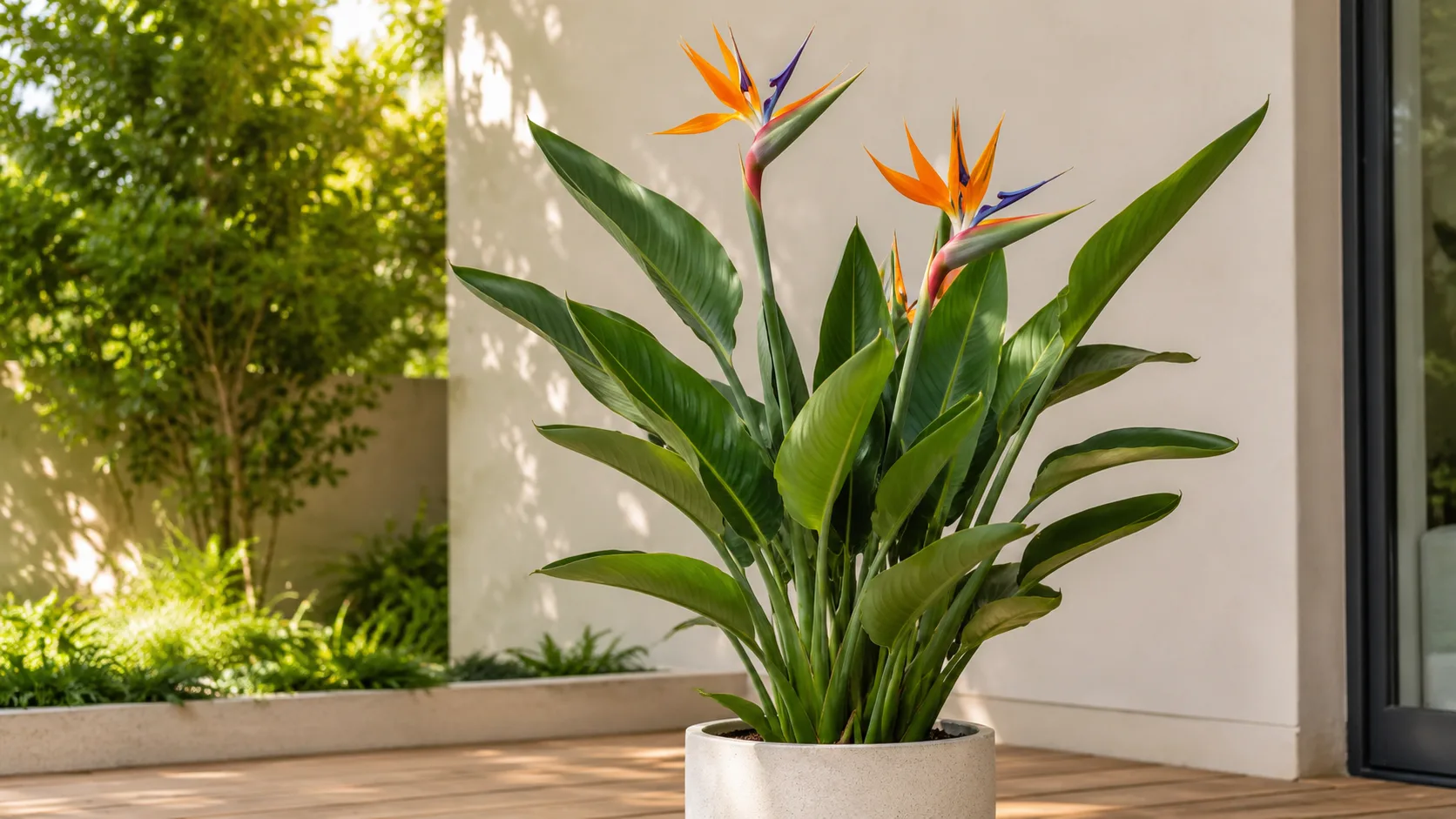
The white bird of paradise has tall stems, broad paddle-shaped leaves, and a clean architectural look. It does need brightness—give it the brightest indirect light you can. Its leaves naturally split over time indoors; this is not always a sign of poor health.
The ASPCA lists bird of paradise flower (Strelitzia) as toxic to dogs and cats, with GI irritation possible if ingested. (ASPCA bird of paradise flower)
Why it works: Maximum vertical drama in bright rooms with ceiling height.
Care tip: Check mature spread before buying—width matters as much as height.
Common mistake: Treating leaf splits as failure rather than normal indoor behavior.
Avoid this plant if: The room is dim, cramped, or pet-accessible.
Useful care guides:
- Bird of paradise care guide
- Bird of paradise watering guide
- Bird of paradise light guide
- Bird of paradise problems guide
5. Areca Palm
Best for: pet-aware homes, soft tropical texture, bright indirect light.
Difficulty: Medium
Light: Bright indirect
Water: Consistent moisture; avoid long dry spells
Best placement: Living room corner with filtered window light
Pet safety: ASPCA-listed non-toxic
Typical indoor size: 6–8 ft tall; 3–4 ft frond spread
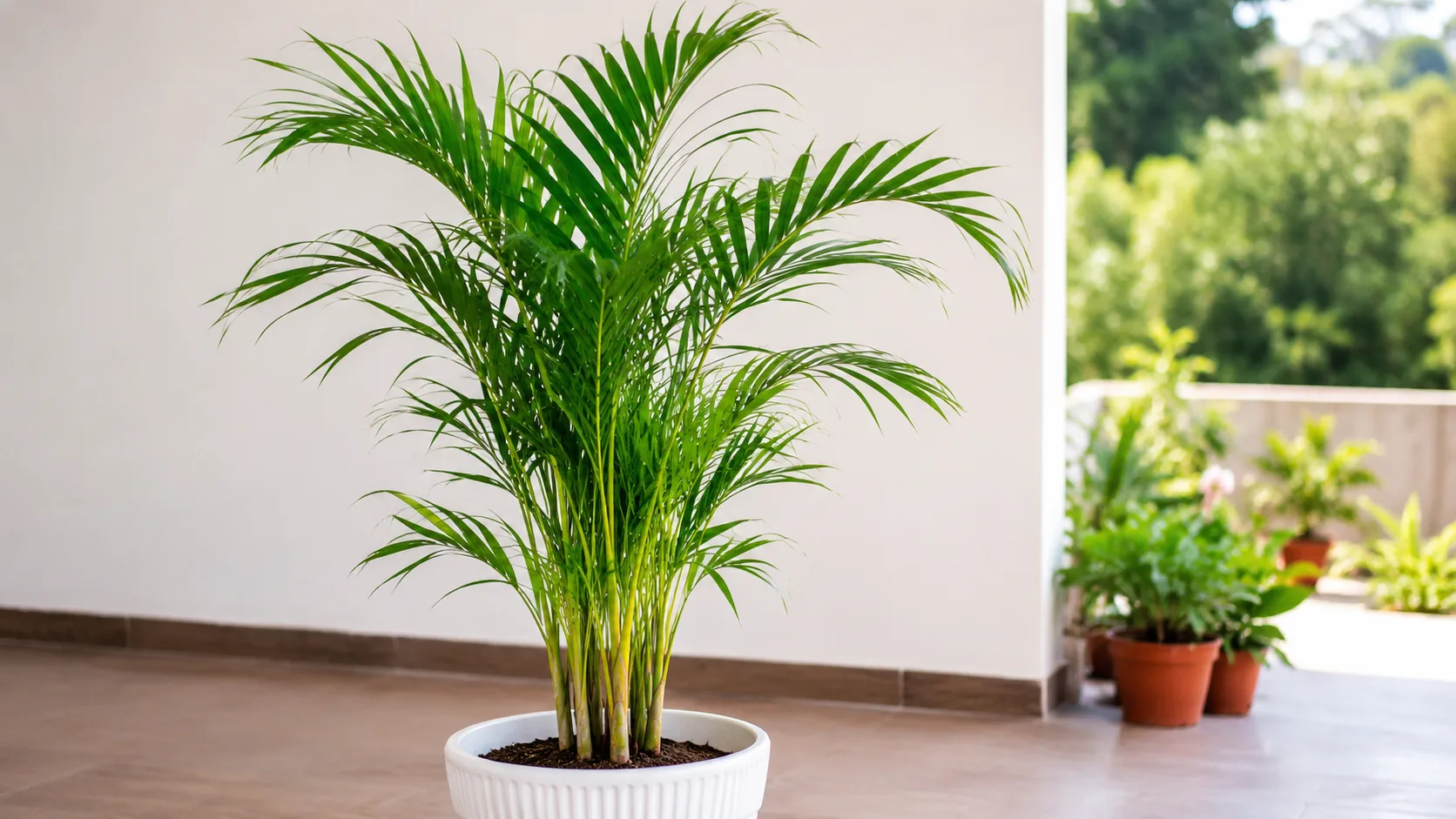
The areca palm gives a softer look than ficus, monstera, or bird of paradise. Its arching fronds create movement and volume. The ASPCA lists areca palm as non-toxic to dogs and cats—one of the better large choices for pet owners who still want height and fullness.
Care is moderate. Areca palms like bright indirect light and more consistent moisture than a rubber plant or dracaena. Dry air, underwatering, or hot sun can lead to brown tips.
Why it works: Pet-safe fullness when most statement plants are toxic.
Care tip: Inspect dense fronds for spider mites at purchase and monthly.
Common mistake: Letting the root ball swing between bone dry and soggy.
Avoid this plant if: You want a sculptural single-trunk look—try dracaena instead.
Useful care guides:
6. Kentia Palm
Best for: elegant interiors, pet-aware homes, slower growth, lower-drama palm lovers.
Difficulty: Easy to medium
Light: Medium to bright indirect
Water: When top soil dries; avoid extremes
Best placement: Formal living room, bedroom with good light, office lobby style
Pet safety: ASPCA-listed non-toxic
Typical indoor size: 5–10 ft tall over years; 2–4 ft frond spread
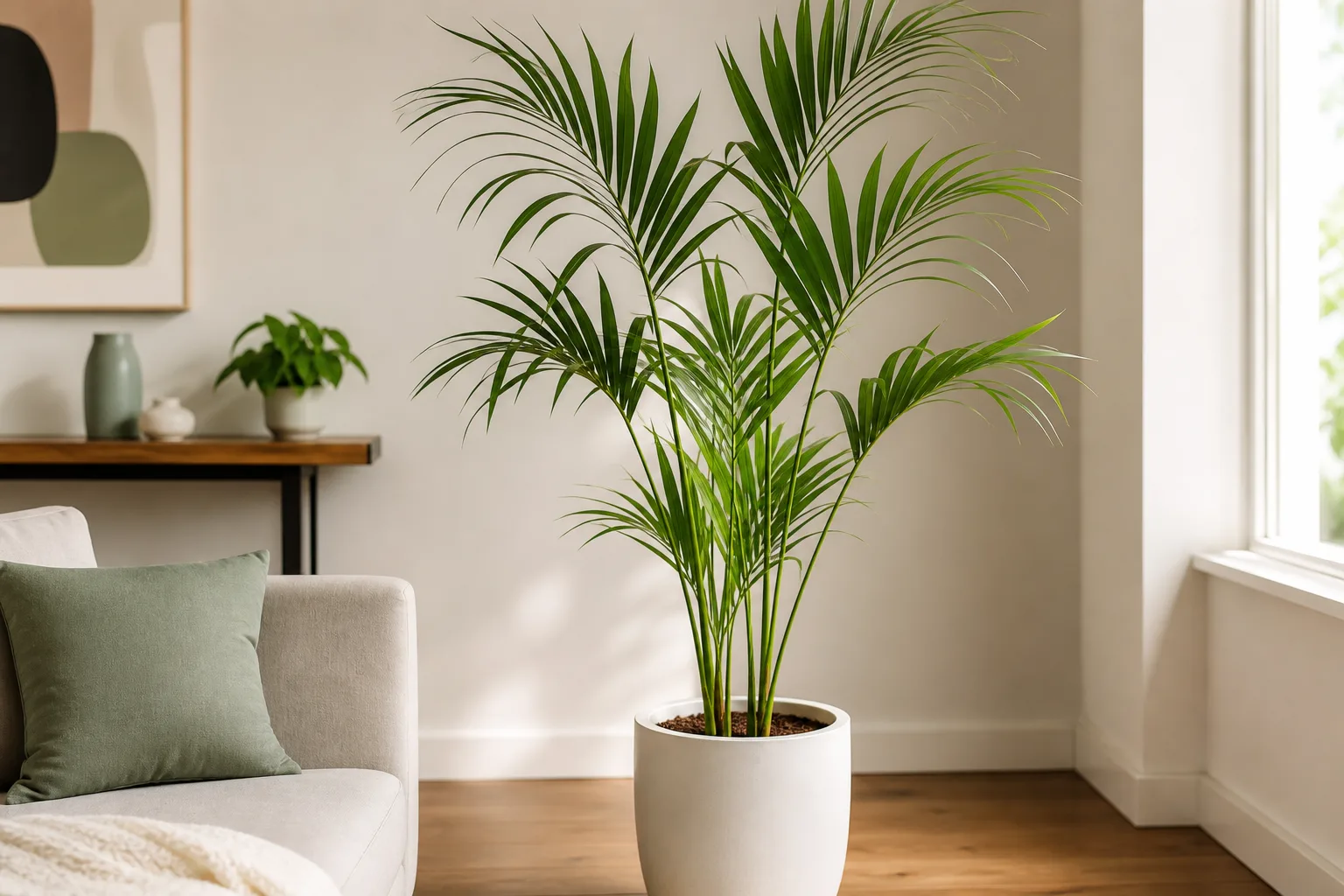
The kentia palm is the refined option among large indoor palms. It has long arching fronds and a calmer look than the bushier areca palm. Kentia palm is listed by the ASPCA as non-toxic to dogs and cats. It is typically slower-growing and often more expensive, but that slower growth can be an advantage indoors.
Why it works: Elegant, pet-safe palm that stays handsome without fast outgrowing the room.
Care tip: Avoid hot dry air from vents—brown tips often trace to airflow, not thirst.
Common mistake: Expecting fast jungle growth; kentia rewards patience.
Avoid this plant if: You need instant floor-to-ceiling impact on a budget—areca fills faster.
Note: LeafyPixels is building a dedicated kentia palm hub—until then, use ASPCA safety data above and compare with areca palm care for palm watering rhythm.
7. Dracaena Marginata
Best for: narrow corners, beginners, apartments, sculptural height without width.
Difficulty: Easy
Light: Low to bright indirect
Water: Partial dry-down between waterings
Best placement: Tight corner, hallway, bedroom nook
Pet safety: Toxic to cats and dogs per ASPCA
Typical indoor size: 4–6 ft tall; 1–2 ft spread
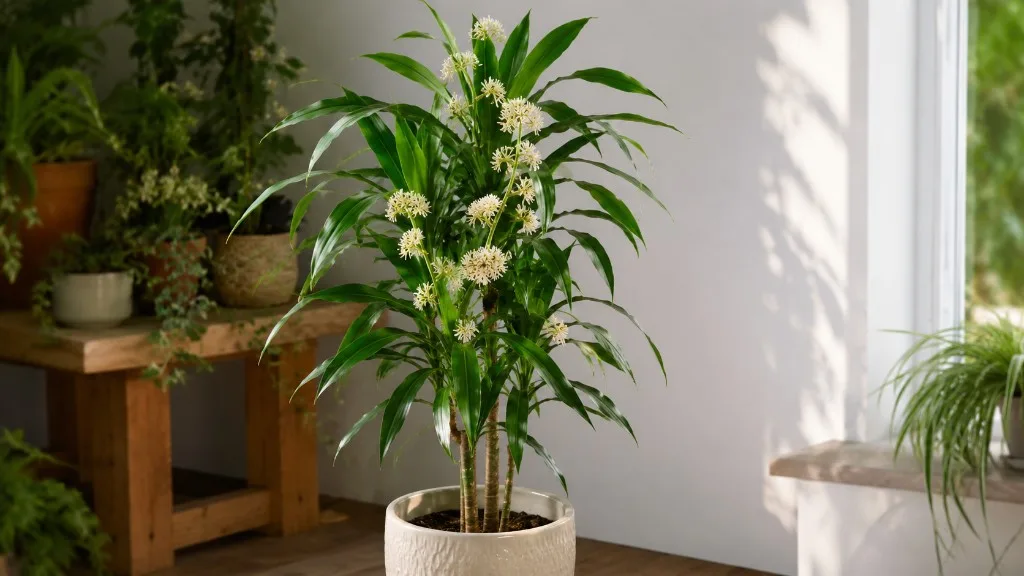
Dracaena marginata grows on slim canes with narrow strappy leaves, so it gives height without demanding the floor space of monstera or bird of paradise. It can handle average indoor humidity and moderate light better than many large tropical plants.
Dracaena species are listed by the ASPCA as toxic to cats and dogs. (ASPCA dracaena listing)
Why it works: Maximum height per square foot of floor space.
Care tip: Overwatering kills dracaena faster than underwatering—check soil depth.
Common mistake: Placing in a cachepot with no drainage exit.
Avoid this plant if: Pets chew leaves within reach.
Useful care guides:
Large Indoor Plant Comparison Table
| Plant | Best For | Typical Indoor Size | Light | Care Level | Pet Safety | Main Trade-Off |
|---|---|---|---|---|---|---|
| Monstera deliciosa | Lush tropical foliage | 6–8 ft × 3–4 ft spread | Bright indirect | Moderate | Toxic | Needs width and support |
| Fiddle leaf fig | Bold modern statement | 6–10 ft × 2–3 ft | Strong bright indirect | Moderate to demanding | Toxic | Sensitive to change |
| Rubber plant | Glossy beginner tree | 6–10 ft × 2–3 ft | Medium to bright indirect | Easy to moderate | Toxic | Needs pruning to shape |
| White bird of paradise | Tall architecture | 5–7 ft × 3–5 ft spread | Bright indirect | Moderate | Toxic | Needs room and brightness |
| Areca palm | Pet-aware fullness | 6–8 ft × 3–4 ft | Bright indirect | Moderate | Non-toxic (ASPCA) | Brown tips if stressed |
| Kentia palm | Elegant pet-safe palm | 5–10 ft × 2–4 ft | Medium to bright indirect | Easy to moderate | Non-toxic (ASPCA) | Slower, often pricier |
| Dracaena marginata | Narrow corners | 4–6 ft × 1–2 ft | Low to bright indirect | Easy | Toxic | Leggy in low light |
Use this table as a shortlist tool, not a final verdict. If your home is bright and spacious, bird of paradise or monstera can excel. If you want safer options around pets, areca or kentia palm move up the list. If you need height in a narrow space, Dracaena marginata is hard to beat.
Care Routine for Large Indoor Plants
Large indoor plants usually fail for predictable reasons: too little light, too much water, poor drainage, sudden environmental changes, pests, or unrealistic placement. Start with placement away from cold drafts and heating vents. Clean broad leaves monthly. Inspect for pests when you water.
Watering, Drainage, and Soil
Do not water on a fixed calendar without checking the soil. The University of Florida IFAS Extension gives a useful general rule: water indoor plants when the soil is dry to the touch, and expect that this may be less often than many people think. (Gardening Solutions IFAS)
Drainage is non-negotiable. Water thoroughly, let excess drain, and empty the saucer. For species-specific rhythm, open How to Water Indoor Plants the Right Way before you settle on a schedule.
Repot only when needed—step up one pot size at a time during active growth.
Where to Go Next
Open the next page based on what you picked:
Species deep care
- Monstera deliciosa hub
- Fiddle leaf fig hub
- Rubber plant hub
- Bird of paradise hub
- Areca palm hub
- Dracaena hub
Related guides
- How to Water Indoor Plants the Right Way
- Grow lights complete guide for indoor plants
- Low-maintenance indoor plants for busy homes
- Best Large Indoor Plants — filterable quick list with overlapping picks
Conclusion
Start with conditions you cannot change: light, then space, then care style, then pet safety. A bright spacious room can handle bigger, thirstier plants; a dim apartment corner needs tolerance and restraint; a home with chewing pets should prioritize ASPCA-listed non-toxic palms. Once you shortlist one or two names, open that species hub and buy for the room you have—not the room in the nursery photo.