Watering Fiddle Leaf Fig: Schedule, Soil Checks
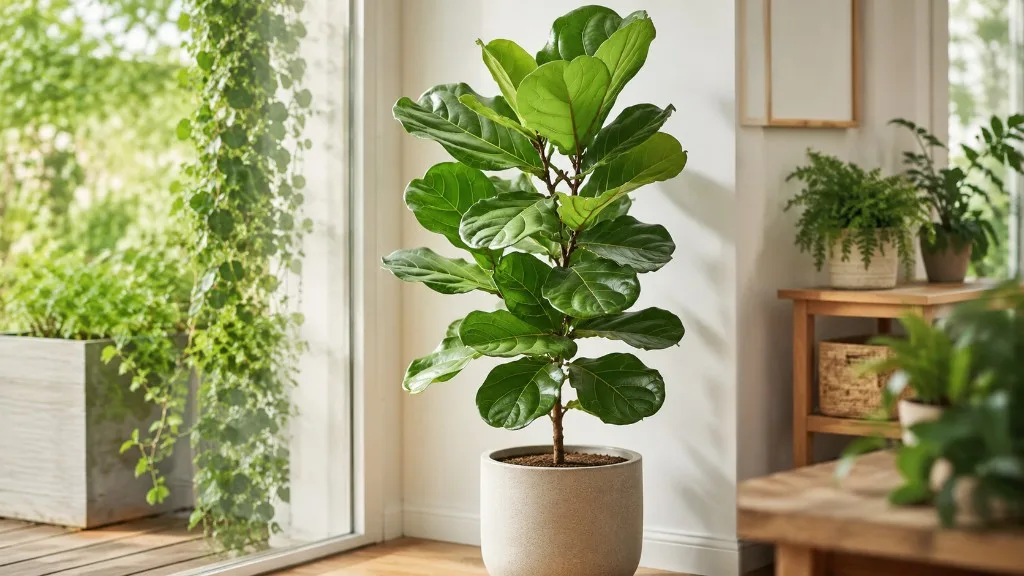
Watering Fiddle Leaf Fig: Schedule, Soil Checks, and Mistakes
Watering Fiddle Leaf Fig: Schedule, Soil Checks, and Mistakes
Your fiddle-leaf fig does not want a calendar. It wants a rhythm - and the rhythm is simpler than the internet makes it sound. Water when the top 2 inches of soil are dry. Water thoroughly until excess runs from the drainage holes. Empty the saucer so the roots are not sitting in stale runoff. Adjust the interval for season, light, and pot size. That is the whole framework. Everything else in this guide exists to help you execute those four steps without turning a beautiful Ficus lyrata into a brown-spotted, leaf-dropping cautionary tale on Instagram.
The plant comes from lowland tropical rainforests in western and central Africa, where soil drains quickly between rains and roots breathe in the gaps between downpours. Indoors, we often replicate the worst part of that ecology: permanently damp mix and a decorative pot holding stale runoff. root rot on Fiddle Leaf Fig kills more fiddle-leaf figs than drought. When you are unsure, waiting two extra days and checking again is almost always the safer call.
Why Fiddle Leaf Fig Watering Trips Up Even Careful Growers
Fiddle-leaf figs send contradictory signals on purpose - or at least it feels that way when you are standing over a seven-foot tree with a watering can. Leaves can droop from thirst and from drowning. Brown spots can mean old mechanical damage, sun scorch, or fungal infection triggered by wet soil. A plant can drop one leaf after a move - normal - or drop six leaves because the roots are rotting - urgent. The overlap is why beginners either water on autopilot every Sunday or freeze up and let the mix go bone dry until the edges crisp.
The core confusion comes from treating fiddle-leaf fig like a moisture-loving fern or a drought-tolerant succulent. It is neither. North Carolina State Extension describes Ficus lyrata as preferring moist, well-drained, loamy, acidic soils while also noting the species is sensitive to overwatering on Fiddle Leaf Fig. (NC State Extension) Those two requirements must stay paired: moist means the root ball gets a full drink on a predictable cycle, not that the soil stays shiny-wet on the surface all week. Well-drained means excess water leaves the pot and air returns to the mix before the next session.
Fiddle-leaf fig also reacts to change before it reacts to gradual bad care. Watering well means reading the pot’s current dry-down speed in its current spot, not memorizing one interval from a chart built for a different climate and pot size.
How Much Water a Fiddle Leaf Fig Actually Needs
A useful starting principle is a full soak that wets the entire root ball, followed by a partial dry-down before the next drink. In practice, that means watering slowly and evenly across the soil surface until water exits the drainage holes - not a half-cup dribbled on the top every morning. The New York Botanical Garden advises watering thoroughly, allowing water to run from the bottom of the pot, and checking back after fifteen minutes to remove any water sitting in the runoff dish. (NYBG) That flush-and-drain pattern mimics a tropical downpour followed by fast drainage through porous forest soil.
The volume per session matters less than coverage and drainage. A small six-inch nursery pot might take a pint to saturate; a fourteen-inch floor tree might need several quarts or more. What both should share is even moisture from top to bottom of the mix, then a drying phase at the surface and upper root zone before you repeat. Tiny daily sips keep the top wet while the center stays dry, which produces a plant that looks thirsty, gets more sips, and never develops a healthy root architecture.
During active growth - typically spring through early fall when light is strong and new leaves are forming - fiddle-leaf fig uses water predictably. You want consistent moisture in the sense that the plant is never shocked by long drought and never suffocated by constant saturation. Consistent does not mean constantly wet. It means the dry-down window stays in a narrow band: top two inches dry, water, drain, repeat. In winter, the same volume applied on the same calendar day can leave the mix waterlogged for weeks because uptake slows and evaporation drops.
The Top 2-Inches-Dry Rule Explained
The most reliable trigger for watering fiddle-leaf fig is this: wait until the top two inches of soil in the center of the pot feel dry before watering again. NYBG specifies checking the center of the pot rather than only the edges, where mix dries fastest and can mislead you into watering too soon. (NYBG) Alternatively, insert a soil moisture meter near the roots and water when it reads almost dry - a useful backup when you cannot easily reach deep into a large container.
Why two inches and not the surface? Peat-based and bark-based indoor mixes often look pale and cracked on top while remaining damp several inches down, especially in a large pot or a plastic container. Watering because the surface looks dry is one of the fastest paths to root rot. Waiting until your finger or probe confirms dryness at depth protects the lower root zone from sitting in anaerobic mud.
The two-inch rule also scales across seasons without rewriting your entire routine. In summer, top two inches might dry in five to seven days in bright light and warm air. In winter, the same pot might take fourteen to twenty-one days. The check stays constant; the interval flexes. That is why “water every week” fails as a rule but works as a reminder to run the test.
Finger Test, Moisture Meter, and Pot Weight
The finger test is the fastest check. Insert your index finger two to three inches into the mix near the pot’s center, not against the trunk where water runs off stems and stays artificially wet. If the soil feels cool and clings slightly, wait. If it feels dry and crumbly at that depth, water. If only the top half-inch is dry but your finger comes up with damp particles below, wait - surface colour lies.
A soil moisture meter helps with large floor trees where your arm does not reach mid-pot depth. Insert the probe halfway between trunk and pot wall, read the dial, and water when it trends toward the dry end of the scale. Meters vary in accuracy; calibrate against your finger test for two weeks until you trust the readings on your specific mix.
The pot weight test is the most reliable signal for repeat growers. Lift the pot right after a thorough watering and notice the heft. Lift it every few days. A pot that feels dramatically lighter has lost much of its available moisture. Combine weight with the finger test when you are unsure: light pot plus dry top two inches equals water; heavy pot plus drooping leaves equals trouble, not thirst.
A wooden skewer or chopstick works as a low-tech backup. Push it to mid-pot depth, wait sixty seconds, pull it out. Damp wood means wait; dry with a light pot means water.
How Often to Water Fiddle Leaf Fig Indoors
Indoor fiddle-leaf figs typically need watering every 7–10 days during the growing season and every 10–21 days in winter, but the honest answer is always “when the top two inches of soil feel dry.” A bright south or west window in summer may push you toward the shorter end of that range. A cool north-facing room in January may stretch toward three weeks in a large pot. A small ‘Bambino’ cultivar in a six-inch terracotta pot on a warm sill can surprise you by drying in four or five days.
Check indoor fiddle-leaf fig at least twice a week during active growth and once a week in winter - not to water by default, but to run the moisture checks. After two weeks in the same spot, you will know whether your plant behaves like a seven-day fig or a twelve-day fig. That personal baseline is more accurate than any chart because it accounts for your pot material, your mix, your light, and your HVAC habits.
Indoor humidity changes the interval more than beginners expect. Fiddle-leaf fig performs best in medium relative humidity - NYBG suggests keeping humidity above forty percent to prevent brown leaf tips, which often get blamed on watering when the real stressor is dry air pulling moisture from leaf margins. (NYBG) Do not compensate for low humidity by leaving the soil constantly wet. High humidity plus soggy mix plus weak airflow invites fungal problems on a plant NC State Extension already flags as sensitive to overwatering.
Light intensity is the other hidden multiplier. A fiddle-leaf fig in Fiddle Leaf Fig light guide transpires more water than the same specimen in moderate light across the room. If you recently moved the plant closer to a window for growth, expect the dry-down window to shrink and recheck your interval before the old schedule overwaters it.
Consistent Moisture During the Growing Season
Growing season for indoor fiddle-leaf fig usually means spring through early fall when daylight lengthens, temperatures stay above roughly 65°F (18°C), and new leaves unfurl from buds at the stem tips. This is when the plant can handle - and benefits from - a steadier water supply tied to active root and shoot growth. You are aiming for a repeatable cycle: dry-down to two inches, thorough watering, full drainage, brief period of evenly moist (not waterlogged) mix, dry-down again.
Consistent moisture during growth supports the large, leathery leaves that make the plant worth the fuss. A fiddle-leaf fig pushing a new leaf every few weeks is using water and nutrients at a higher rate than a dormant winter specimen. Letting the mix go completely desiccated between drinks during peak growth can stall new leaves mid-unfurl and produce brown, torn edges on expanding foliage. That does not mean keeping the soil wet at all times. It means shortening the gap between checks and not letting the root ball stay dust-dry for long stretches while the plant is clearly growing.
What Steady Moisture Means Without Soggy Soil
Steady moisture is one of the most misunderstood phrases in houseplant care. For fiddle-leaf fig, it means the middle and lower root zone stay lightly damp between waterings while the upper two inches cycle through dry and wet. It does not mean the saucer always has water in it. It does not mean the surface stays dark and glossy seven days a week. It does not mean misting the leaves compensates for dry roots.
Think of the root ball like a sponge in a colander: fully saturated after you water, then gradually losing free water while still holding some internally, then reaching the point where the top layer is dry enough to admit air before you saturate again. Soggy soil collapses those air pockets and keeps roots in anaerobic conditions where pathogens like Pythium and Phytophthora thrive - the organisms most commonly associated with fiddle-leaf fig root rot in waterlogged mix.
If you are unsure whether your “consistent” routine is too wet, ask one question: how long does the pot stay heavy after watering? If it never feels noticeably lighter within ten to fourteen days in summer, something is wrong - usually too little light, too large a pot, too dense a mix, or a cachepot trapping runoff.
Seasonal Watering Adjustments
Seasonal adjustment is not optional for fiddle-leaf fig. The same watering volume on the same weekday can be perfect in June and catastrophic in January. NYBG notes that in low-light winter conditions from roughly October through February, the plant may take up water more slowly than during the active growing season, and growers should watch for that change and adjust accordingly. (NYBG) Shorter days, cooler room temperatures, and slower metabolism all extend the dry-down window.
Spring Through Winter Frequency Changes
Spring is the transition period. As light increases and new growth appears, shorten the interval gradually. A plant that needed water every fourteen days in February might need every ten days by April - but confirm with the top-two-inch check rather than jumping to a summer schedule overnight.
Summer is peak uptake. Bright light, warm rooms, and active leaf production pull water faster. Most indoor fiddle-leaf figs land in the 7–10 day range if they sit in good light and a appropriately sized pot. Terracotta dries faster than plastic; unglazed clay can shave a day or two off the interval compared to a sealed composite pot.
Fall and winter demand the most discipline. As growth slows and light drops, stretch the interval even if the heat is still on - the plant responds to photoperiod, not just thermostat settings. Expect 10–21 days between waterings in many homes, sometimes longer for a large pot in a cool room. The top-two-inch rule still applies; winter is not permission to ignore the plant until leaves curl, but bone-dry mix for weeks damages fine roots. Cold glass near windows can slow root activity further, so check at center depth, not only at the rim.
How to Water Fiddle Leaf Fig Properly
The best default method for fiddle-leaf fig is top watering with full saturation and immediate drainage. Use room-temperature water and apply it slowly in a spiral from the outer soil surface toward the trunk, letting the mix absorb rather than flooding so fast that water channels through cracks and exits the bottom without wetting the center.
Water until you see a steady stream from the drainage holes, then stop. Wait fifteen to thirty minutes and empty the saucer or cachepot completely. NYBG’s fifteen-minute check is a minimum; thirty minutes is safer for large pots that drain slowly. Never let the tree sit in accumulated runoff - that single habit prevents more root rot than any product marketed as a “root supplement.”
Avoid splashing water on the large leaf surfaces if you can. Wet foliage in a dim corner with poor airflow is an invitation for fungal spotting. Direct the stream at the soil line. If dust accumulates on leaves, wipe them with a damp cloth on a warm day rather than using the watering can as a shower.
Bottom watering - setting the pot in a basin of water and letting the mix wick moisture upward - can help a severely dehydrated plant or a specimen where the mix has dried into a hydrophobic lump that sheds top water. Use it occasionally for recovery, not as the primary method. Regular bottom watering without occasional top flushes can allow salt buildup from fertilizer and tap water to accumulate in the upper soil layer, and it does not confirm that the entire root ball rewetted evenly.
Top Watering, Drainage, and Saucer Discipline
Every watering session should end with three confirmations: water reached the bottom of the pot, the saucer is empty, and the top two inches will be allowed to dry before the next session. If your fiddle-leaf fig lives inside a decorative cachepot with no drainage, either remove the nursery pot to water at the sink or treat the outer pot as a temporary saucer and empty it religiously. A beautiful ceramic shell that holds an inch of stale water is one of the most common root-rot setups in design-forward living rooms.
Drainage holes are non-negotiable for long-term health. If you fell in love with a pot without holes, use it as a cover and keep the plant in a functional inner pot. NC State Extension lists good drainage as a core cultural requirement for Ficus lyrata, alongside moist soil - again, the pairing matters. (NC State Extension)
Root Rot Prevention and Watering Discipline
Root rot is the central watering failure mode for fiddle-leaf fig. Ask Extension field questions frequently describe brown and black leaf spots, mid-branch leaf loss, and sour-smelling mix in specimens receiving fixed weekly water volumes regardless of soil condition - classic signs that drainage, pot size, or watering frequency has failed. (Ask Extension) The pathogens involved often live harmlessly in soil until overwatering or poor drainage creates anaerobic conditions that let them attack roots.
Prevention starts with the same habits this guide repeats: check before you pour when the top two inches are dry, use fast-draining perlite-amended mix, right-size the pot so excess soil is not staying wet for weeks, and confirm bright indirect light so the plant actually uses water at a reasonable rate. Ask Extension lists too-large containers, wrong soil, and too much water as the classic root-rot trio. (Ask Extension) Never reuse sour mix - trim black mushy roots, repot into fresh blend, and reduce frequency. If soil stays wet more than ten days in summer despite moderate light, stop watering, improve airflow, and consider brighter placement before the damage spreads.
Signs You Are Overwatering Fiddle Leaf Fig
Overwatered fiddle-leaf figs often show dark brown or black spots in the middle of leaves, not only at edges - a pattern distinct from the crisp brown margins typical of underwatering on Fiddle Leaf Fig or low humidity. Multiple leaves may drop within a short window, sometimes from the center of branches rather than the oldest lowest leaves. Stems near the soil line can feel soft or look discolored. The mix may smell sour or stay wet to the touch two weeks after you last watered.
NC State Extension notes that leaf drop may occur from too much or too little water and that brown spots can follow temperature fluctuations - so treat symptoms as a cluster, not a single data point. (NC State Extension) Overwatering suspicion rises when the pot is heavy, the soil is cool and clinging at two inches depth, and new spotting appears despite stable light.
Limp leaves with wet soil are a red flag, not a call for more water. Damaged roots cannot transport moisture upward, so the plant droops while the mix stays damp - the opposite of thirst.
Signs Your Fiddle Leaf Fig Is Underwatered
Underwatered fiddle-leaf figs typically show crisp brown edges or tips, soil pulling away from the pot sides, and dramatic leaf droop on a very light pot. The oldest lower leaves may yellow and drop after prolonged drought, but acute underwatering more often presents as wilting that improves within an hour or two after a thorough soak - the hallmark of a plant that still has functional roots and simply ran out of available water.
Dry potting mix sometimes becomes hydrophobic - it shrinks and sheds water rather than absorbing it. Fix with bottom soaking for thirty to sixty minutes, then resume top watering once the mix re-expands. Underwatering is less common than overwatering, but the top-two-inch rule protects against both extremes: dry at depth means water; damp at depth means wait.
Pot Size, Soil, and Drainage as Hidden Watering Factors
Watering frequency is not only about the plant - it is about the container and substrate holding the roots. A fiddle-leaf fig repotted from an eight-inch pot into a fourteen-inch decorative container may need water less often for months even though the canopy doubled, because the extra soil volume holds moisture the sparse root system cannot yet extract. Many post-repot deaths are overwatering deaths disguised as transplant shock.
Pot material changes dry-down speed - terracotta breathes; plastic and glazed ceramic retain moisture longer. Soil mix is the other half: NC State Extension recommends moist, well-drained, loamy, acidic conditions, which indoors means quality potting blend with perlite or bark, not compacted peat or garden soil. (NC State Extension) If the pot stays wet beyond ten days in summer with moderate light, diagnose mix, pot size, and light before blaming the plant.
Water Quality, Temperature, and Timing
Fiddle-leaf fig is not as sensitive to tap water as some calatheas, but cold water shock can stress roots, especially in winter when the plant is already slow. Room-temperature water is the safe default. If your tap water is extremely hard or heavily chlorinated and you notice white crust on the soil surface, occasional top-watering flushes or filtered water can help - but fix drainage and frequency first; water chemistry is rarely the primary issue.
Timing matters less than technique, but morning watering gives any accidental splashes on foliage time to dry during the day. If you water in the evening, keep the stream at soil level. Do not mist leaves as a substitute for proper root-zone watering - the effect on humidity is fleeting, and wet leaves in stagnant air contribute nothing useful to a tree that needs two inches of dry soil, not a spa day.
Common Fiddle Leaf Fig Watering Mistakes
Mistake: Watering every Sunday because the app said so. Fix: Use the calendar as a reminder to check soil, not as permission to pour. The top two inches decide.
Mistake: Leaving water in the saucer “so it can drink later.” Fix: Empty saucers within fifteen to thirty minutes. Roots do not benefit from standing runoff; pathogens do.
Mistake: Daily half-cups to “keep humidity up.” Fix: Water thoroughly on a dry-down cycle. Address humidity with a tray of pebbles or a humidifier if needed.
Mistake: Watering a drooping plant without checking soil. Fix: Light dry pot plus droop equals thirst. Heavy wet pot plus droop equals root stress - do not add water.
Mistake: Using a pot with no drainage because it matches the sofa. Fix: Double-pot with a functional inner container or drill drainage holes if the material allows.
Building a Simple Weekly Watering Routine
You do not need a spreadsheet. You need a repeatable loop that respects how Ficus lyrata actually behaves in your home.
Twice a week in growing season: Finger-test or probe the top two inches at pot center. Lift the pot if unsure. Water thoroughly only when dry at depth. Empty saucers.
Once a week in winter: Same checks, longer expected intervals. Do not assume dormancy means “ignore until leaves curl” - bone dry for weeks damages roots.
When you change light or repot: Reset expectations and watch closely for four weeks before trusting an old schedule again.
Conclusion
Watering fiddle-leaf fig well comes down to principles that never change even when the calendar does: check the top two inches before you pour, water thoroughly until the root ball is saturated, drain and discard all runoff, and adjust for season, light, and pot size. Growing season calls for consistent moisture in the sense of a steady soak-and-dry cycle - not soggy soil that never breathes. Winter calls for patience and longer dry-down windows without letting the mix go dust-dry for weeks. Root rot prevention is not a separate chore; it is the natural result of respecting dry soil at depth, fast drainage, and empty saucers.
Fiddle-leaf fig rewards observation more than fussiness. Learn your pot’s weight, trust the two-inch rule over social-media schedules, and respond to what the tree and soil tell you each check - not what you watered last Tuesday. Do that and you will spend less time diagnosing brown spots and leaf drop, and more time enjoying the large, violin-shaped foliage that justified the floor space in the first place.
When to use this page vs other Fiddle Leaf Fig guides
- Fiddle Leaf Fig overview - Start here for whole-plant context before deep-diving this topic.
- Fiddle Leaf Fig problems hub - Jump to symptom-specific fix guides when this care topic does not resolve the issue.
- Overwatering on Fiddle Leaf Fig - Escalate here when watering adjustments are not enough.
- Underwatering on Fiddle Leaf Fig - Escalate here when watering adjustments are not enough.
- Root Rot on Fiddle Leaf Fig - Escalate here when watering adjustments are not enough.
Related Fiddle Leaf Fig guides
- Fiddle Leaf Fig overview
- Fiddle Leaf Fig light
- Fiddle Leaf Fig soil
- Fiddle Leaf Fig propagation
- Fiddle Leaf Fig fertilizer
- Fiddle Leaf Fig repotting
- Overwatering on Fiddle Leaf Fig
- Underwatering on Fiddle Leaf Fig
- Root Rot on Fiddle Leaf Fig
- Wilting on Fiddle Leaf Fig
- Drooping Leaves on Fiddle Leaf Fig
- Mold on Soil on Fiddle Leaf Fig
Related tool
Try the Plant Watering Calculator with fiddle-leaf-fig pre-selected to estimate needs for your setup.