Fiddle Leaf Fig Light Needs: Best Window, Sun & Warning
Fiddle Leaf Fig Light Needs: Best Window, Sun & Warning Signs
Fiddle Leaf Fig Light Needs: Best Window, Sun & Warning Signs
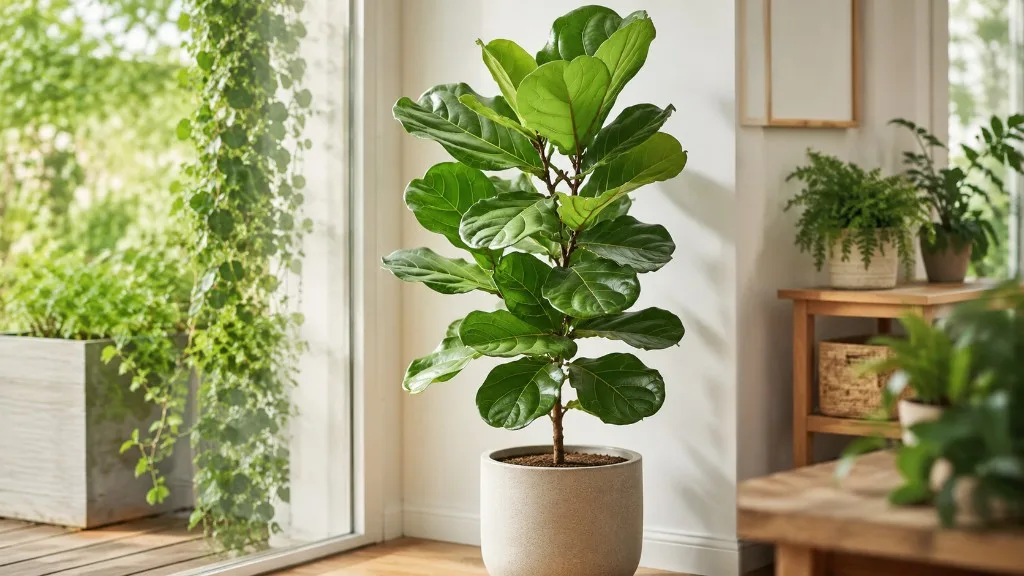
A fiddle leaf fig does not ask for complicated care - it asks for consistent, bright light in a stable spot. Ficus lyrata is the statement tree of modern interiors because of those wide, violin-shaped leaves, but those same leaves make the plant a harsh critic of placement mistakes. Too dim, and stems stretch while older foliage drops off one by one. Too bright without acclimation, and sun-facing tissue bleaches or crisps at the edges. Move the pot across the room on a whim, and you may trigger a leaf-drop episode that has nothing to do with root rot on Fiddle Leaf Fig and everything to do with how Ficus species read environmental change.
The workable indoor target is bright indirect light for most of the day, with some direct morning sun through an east window or filtered south exposure when the plant is acclimated. NC State Extension lists Ficus lyrata as suited to bright indirect light or partial shade, with limited tolerance for direct sun - a description that matches real homes better than the vague “medium light” label on many nursery tags. (NC State Extension) This guide focuses on the decisions that keep large leaves firm and glossy: how much light the plant actually uses, why east and south windows behave differently, how to add morning sun safely, what leaf drop after a move means, and how to read warning signs before a placement error becomes a bare trunk.
How Much Light a Fiddle Leaf Fig Actually Needs
Fiddle leaf figs are not low-light tolerant foliage plants dressed up as trees. In their native range - lowland tropical rainforests from Sierra Leone to Cameroon, according to the Missouri Botanical Garden - they grow as understory and edge trees where light is bright but filtered, not the flat gray of a distant north corner. (Missouri Botanical Garden) Indoors, that translates to roughly six to eight hours of strong ambient brightness at the leaf canopy, with direct rays limited to gentle morning exposure on many specimens once they have been adjusted.
Light intensity at the leaves matters more than how bright the room feels to your eyes. Growers and reference guides often cite a practical band around 200 to 400 foot-candles (roughly 2,000 to 4,000 lux) at canopy level for healthy indoor growth, with younger or recently moved plants benefiting from the upper half of that range once acclimated. You do not need a meter to start - you need a window where the plant receives clear sky brightness on the leaves, not just on the floor beside the pot. A fiddle leaf fig sitting five feet from glass in an otherwise sunny room is often still under-lit because large leaves intercept light vertically, not horizontally across a coffee table.
The plant’s photosynthetic demand also scales with leaf size. Mature indoor specimens carry leaves 12 to 18 inches long on stems that may reach 6 to 10 feet over time. Larger canopies consume more energy to maintain, which is why a spot that worked for a young nursery pot fails silently two years later as the tree fills out. Judge light by new growth, not by whether the old leaves still look green. Old tissue is history; the youngest leaf tells you whether today’s placement is adequate.
The Short Answer for Busy Growers
If you only remember five rules, use these. Default placement: an east-facing window with the pot 1 to 2 feet (30 to 60 cm) from the glass, where the plant receives bright indirect light plus up to a few hours of direct morning sun if leaves are acclimated. South-facing windows can outperform east in winter but often need sheer curtains or 2 to 4 feet (60 to 120 cm) of setback in summer to prevent midday scorch through glass. Do not chase “medium light” corners - chronic under-lighting produces stretch, small new leaves, and progressive lower leaf drop. After any move, hold placement for six to eight weeks before deciding the spot failed; fiddle leaf figs commonly drop leaves during acclimatization even when the new location is objectively better. Change one variable at a time - light, then Fiddle Leaf Fig watering guide, then pot or feed - because overlapping edits make diagnosis guesswork when leaves fall.
Give any new placement two to three weeks minimum before reading results, and six to eight weeks if multiple leaves dropped after a relocation. The plant is not being dramatic for sport; it is reducing transpiring surface while it reassesses conditions.
Why Fiddle Leaf Figs React So Sharply to Light Changes
Ficus species share a reputation among houseplant growers for reacting to change before they react to slow neglect. Fiddle leaf figs amplify that trait because they combine large leaf surface area with indoor environments that shift light angle, humidity, and airflow every time you roll the pot six inches toward a sofa. Light is the variable that most directly controls growth rate, leaf size, and water use - but it is also the variable most often changed casually after purchase, during cleaning, or when rearranging furniture.
When light intensity or direction shifts suddenly, the plant may trigger leaf abscission - the controlled shedding of older leaves - to lower water demand while roots and remaining foliage adjust. That response is commonly called relocation shock or acclimatization shock, and it is distinct from the gradual decline of a plant parked in a dim hallway for months. Both produce fallen leaves on the floor; the timeline, leaf position pattern, and accompanying growth signs differ. Treating shock like underwatering on Fiddle Leaf Fig - by watering more, Fiddle Leaf Fig repotting guide, or fertilizing - often deepens stress because you add root-zone change on top of light change.
Light also governs how fast the potting mix dries. A fiddle leaf fig in correct bright light may need water every 7 to 10 days in active growth; the same plant in dimmer light can sit wet for weeks while still dropping leaves from insufficient energy capture. Brighter light increases transpiration; dimmer light reduces it. If you move the plant and only adjust placement without adjusting watering, you can create a second problem while the first is still resolving.
Rainforest Origins and Indoor Expectations
Missouri Botanical Garden describes Ficus lyrata as a tree of West African tropical forests, where mature wild plants can reach 40 feet with large, heavily veined leaves adapted to filtered canopy light and seasonal consistency rather than the swinging drafts of heating vents. (Missouri Botanical Garden) Indoors, you are not recreating a rainforest - you are offering enough photons for firm new leaves without the leaf-tissue heat load of unfiltered afternoon sun on window glass.
That origin explains two practical expectations. First, the plant tolerates bright indirect light better than deep shade long term, even though it is sometimes sold as a “living room plant” for any corner with a lamp. Second, it tolerates some direct sun better when exposure builds gradually - the way a forest edge tree might receive morning sun before midday cloud cover or canopy shade - rather than when a greenhouse-grown specimen jumps to a hot west window in July. Your job is not to mimic Sierra Leone precisely; it is to keep canopy-level brightness stable enough that new leaves emerge at full size without the plant shedding half its older foliage every time you vacuum behind it.
Bright Indirect Light Explained
Bright indirect light means the plant sees a bright sky or sunlit wall, receives strong reflected and ambient light on the leaf surface, and is not hit by unfiltered midday beams long enough to heat tissue past its tolerance. For fiddle leaf figs, that usually looks like the brightest non-scorching zone near a window - close enough that you would not choose that exact spot to read a paperback in direct glare, but bright enough that print is easily readable at noon without a lamp.
Confusion comes from human vision. Our eyes adapt to dim rooms within minutes, so a north-facing office with white walls can feel “fine” while the fig on a stand across the room receives a fraction of the light it needs. A simple field check used by many experienced growers: at midday on a clear day, stand where the top of the plant’s canopy will sit. If you struggle to read normal print comfortably without squinting, the location is likely too dark for robust Ficus lyrata growth - not necessarily instant death, but a slow slide toward stretch and leaf loss.
Bright indirect is not the same as dappled shade outdoors, which often delivers higher total daily photons than a dim indoor shelf because open sky fills in from multiple angles. Indoors, window direction, overhangs, neighboring buildings, and sheer curtains all subtract intensity. A fiddle leaf fig directly in front of the right window outperforms one in the same room near the window almost every time.
What Bright Indirect Looks Like in Your Home
In practice, bright indirect for a fiddle leaf fig often means within 1 to 3 feet (30 to 90 cm) of an east or filtered south window, with no opaque furniture blocking the sky view from the top of the canopy. You should see defined shadows on the floor at midday, but the leaves themselves should not feel hot to the touch or show shiny bleached patches on the sun-facing side. If the plant is so close to south glass that leaves press against the pane, heat magnified by glass can scorch even when the light level looks “perfect” to you.
Sheer white curtains transform harsh direct beams into usable brightness - one of the most underrated tools for south and west exposures. Light-colored walls and floors bounce additional flux toward the lower canopy, which helps trees that are beginning to drop lower leaves from directional starvation. Dust on leaves reduces effective light capture; Penn State Extension recommends wiping large foliage periodically with a damp cloth so blocked stomata and coated surfaces do not waste the window you fought to secure. (Penn State Extension)
Rotate the pot a quarter turn every one to two weeks during active growth so one side does not dominate toward the glass. Fiddle leaf figs will lean; mild lean is cosmetic, hard lean with long internodes is a light deficit signal.
Best Window Placement: East and South Exposures
Compass labels are starting guesses, not verdicts. A “south window” blocked by a porch roof may lose to an open east window. Still, east and south exposures deserve first consideration because they align with the plant’s tolerance for morning direct sun and high total daily brightness without the late-afternoon heat spike that west glass often delivers.
The goal is canopy-level photons for most of the day, with direct rays controlled by time of day, distance, and diffusion. A fiddle leaf fig used as a design anchor in a dim interior vignette will survive longer than a fern in desert sun - and still slowly fail while looking “fine” from across the room.
East-Facing Windows and Morning Sun
An east-facing window is the most reliable default for fiddle leaf figs in many homes. Morning sun is bright but cooler than afternoon sun, which means the plant can receive one to three hours of direct early rays on acclimated leaves, then bright indirect light for the rest of the day without the combined heat-and-glare stress west and unfiltered south panes impose at peak hours. NC State Extension’s partial-shade classification maps cleanly to this pattern: strong brightness with limited direct exposure, not all-day beam.
Placement starting points for east windows:
- Young or recently moved plants: 2 to 4 feet (60 to 120 cm) back from the glass for bright indirect only until new growth looks firm for two weeks, then move closer in 6-inch (15 cm) steps if you want to test morning direct sun.
- Established, acclimated plants: 1 to 2 feet (30 to 60 cm) from the pane, or directly in front if leaves do not touch hot glass and no bleach appears on the east-facing leaf surface.
- Winter: move slightly closer if stretch appears; lower sun angle often reduces intensity even at the same compass window.
East exposures rarely cause instant scorch, which makes them ideal for nursery-to-home transitions - still expect some leaf drop after purchase, but you are less likely to add sunburn to shock on day one.
South-Facing Windows Without Leaf Scorch
A south-facing window delivers the strongest year-round brightness in the northern hemisphere and can produce the fastest, firmest new growth when managed well. It can also scorch leaves in summer when midday sun passes through clear glass at a high angle and heats tissue faster than the plant can acclimate, especially if the pot was grown in lower light and is shoved against the pane on the first sunny weekend.
South window management for fiddle leaf figs:
- Summer peak: use sheer curtains at midday, or place the pot 3 to 5 feet (90 to 150 cm) back from the glass so the canopy sits in bright indirect rather than continuous direct beam.
- Fall through spring: many specimens tolerate closer placement or short direct sun patches as angle and intensity drop; watch for bleach on the south-facing leaf side and pull back if crisp edges appear.
- Large trees: a mature fig may shade its own lower leaves; south light from above still helps if the top canopy receives open sky brightness even when lower stems thin - a separate pruning and rotation issue, but light direction matters.
South beats east for total daily photons; east beats south for forgiving direct sun. If you have both, east is the safer permanent home and south is the growth accelerator when diffusion or distance is dialed in.
Direct Sun Tolerance and Gradual Acclimation
Fiddle leaf figs are often described as indirect-light-only plants, which oversimplifies what they handle in real homes. Many acclimated specimens tolerate direct morning sun and even short midday patches when glass is filtered or distance is correct. The limit is not a moral rule - it is leaf tissue heat and photon load relative to what that specific plant was built under.
Leaves formed in lower light are thinner in protective habit than leaves formed under brighter conditions. Moving a greenhouse-grown fig from indirect bench light to unfiltered south glass in one afternoon can produce white or tan bleached zones, crisp brown edges, and sudden wilt on moist soil as damaged tissue loses function. The fix is not emergency repotting; it is pulling back to bright indirect and increasing direct exposure over 7 to 14 days in small steps while watching new leaves only.
A workable acclimation sequence:
- Hold at bright indirect until active leaf drop from a recent move slows and new growth appears.
- Move 6 inches (15 cm) closer to the target window, or add one hour of early direct sun, then wait 7 to 10 days.
- Inspect the youngest leaf for bleach, cupping, or crisp margins before advancing again.
- Increase watering slightly as brightness rises because transpiration rises - but never on a calendar that ignores soil moisture.
Outdoor summer shade-hardened plants moved indoors in fall may stretch in the same south window that scorched a low-light nursery plant - genetics and history matter. Acclimation is always from current state to target state, not from an internet default to maximum sun.
West, North, and Dim Indoor Corners
West-facing windows supply strong afternoon direct sun - high risk for bleach and edge crisping on fiddle leaf figs unless the pot sits several feet back or behind diffusion. West can work in cool seasons or when trees outside filter late rays, but west is rarely the best first choice if east or filtered south is available.
North-facing windows provide the lowest total brightness in the northern hemisphere. A fiddle leaf fig may persist near north glass in high-latitude summer - especially if the canopy is close and walls are light - but long-term vigor usually requires supplemental LED light. Expect longer internodes, smaller new leaves, and gradual lower leaf loss if you treat north as a permanent solution without a grow lamp.
Dim interior corners - far from windows, blocked by shelves, or in rooms with deep overhangs - produce the classic “healthy from afar, failing up close” fig: lean toward the brightest vector, sparse lower leaves, and watering confusion because the mix stays wet while the plant still drops foliage from energy deficit. No fertilizer fixes that geometry. Either move the plant, add a grow light, or accept a slow decline.
Hallways, bathrooms with frosted glass only, and “statement spots” chosen for furniture symmetry rather than sky view are the most common long-term low-light traps. If design demands a low-light location, smaller-leaved Ficus varieties often tolerate it better than a full-size lyrata - but that is a plant-choice decision, not a light hack.
Grow Lights When Natural Light Is Not Enough
When the brightest window in your home still produces stretch, small new leaves, or winter stall, a full-spectrum LED grow light is the most reliable upgrade. Fiddle leaf figs respond well to supplemental light in north rooms, short winter days, and office environments where windows are distant or tinted.
Choose a horticultural full-spectrum white LED rated for plants, not a standard room bulb optimized for human lumens. The goal is photosynthetically active radiation across the canopy for a long enough photoperiod to replace missing natural flux - not pink novelty spectra unless you already know your setup.
Distance, Duration, and What to Watch For
A practical starting setup:
- Position the fixture 12 to 24 inches (30 to 60 cm) above the top of the canopy - close enough for intensity, high enough to avoid hot spots on upper leaves.
- Run the lamp 12 to 14 hours daily on a timer to approximate a long bright day; irregular on-off cycles stress rhythm less than chronic under-lighting but more than a consistent schedule.
- Combine overhead LED with window light when possible so growth is not one-sided; a single-sided lamp produces lean just as a single window does.
- Raise the fixture 2 to 3 inches if upper leaves bleach or curl only under the lamp; lower slightly or add an hour if new leaves stay small after two weeks.
Winter supplementation prevents the double hit of lower sun angle and shorter days. A plant that thrived 18 inches from an east window in June may need closer placement or a lamp by January in the same spot. Treat seasonal drift as normal, not as sudden bad luck.
Leaf Drop From Low Light or Sudden Moves
Leaf drop is the symptom that sends most fiddle leaf fig owners into panic - and the symptom most often misread. Ficus lyrata drops leaves for several reasons, but light-related drop usually falls into two buckets: relocation shock after a sudden environmental change, and chronic insufficient light that forces the plant to shed older foliage it can no longer afford to maintain.
Relocation shock commonly follows bringing the plant home from a nursery, moving it to a new room, rotating it drastically, or changing window exposure in one step rather than gradually. Multiple leaves may fall within one to three weeks, often older lower leaves first, while the plant reduces transpiring area during adjustment. The correct response is boring: keep the new spot if brightness is objectively adequate, maintain consistent watering matched to the new light level, avoid repotting and heavy feeding, and wait six to eight weeks for stabilization. Moving it again because leaves fall restarts the shock cycle.
Chronic low-light drop is slower and paired with visible stretch - longer gaps between leaves, smaller new foliage, pale or thin emerging leaves, and persistent lean toward the brightest source. Lower leaves may yellow and fall progressively over months as the plant reallocates resources to the top growth trying to escape shade. Fixing this requires more brightness, not less water alone. Move toward an east or filtered south window, add a grow light, or both; then judge by new leaf size over the next month.
Relocation Shock vs Chronic Under-Lighting
The hardest part of fiddle leaf fig leaf drop is that both problems drop leaves and both tempt you to move the pot again - which restarts shock if relocation was the original trigger. Shock tends to arrive soon after a single event (purchase, room change, big rotation, window swap) and may occur even when the new light is objectively stronger. Chronic under-lighting tends to build slowly, with leggy structure visible before the floor is covered in foliage. If you recently moved the plant to a darker spot, the two overlap: fallen leaves reflect shock, and the next new leaves will confirm darkness unless you brighten.
How to tell them apart in practice:
| Pattern | Timing | Growth habit | Best first move |
|---|---|---|---|
| Relocation shock | Starts within 1–3 weeks of a move | May occur even in a brighter spot; new growth may pause briefly | Hold placement; match watering; wait 6–8 weeks |
| Chronic low light | Gradual over weeks to months | Leggy stems, small new leaves, hard lean | Increase brightness; add grow light; adjust watering down if soil stays wet |
If you recently moved the plant to a darker spot, shock and under-lighting can overlap - the dropped leaves are shock, and the small new leaves to come will confirm darkness unless you brighten. Do not interpret shock as proof the old dim corner was fine.
Warning Signs Your Fiddle Leaf Fig Has the Wrong Light
Fiddle leaf figs report light problems on new tissue first. Old scorch marks and old stretch do not heal; the youngest leaf and the next node after a stem tip tell you whether today’s placement works. After any change, wait 10 to 14 days minimum before stacking another edit - especially watering, fertilizer, or repotting.
Too Little Light - Stretch, Small Leaves, Drop
Long internodes and visible stretching toward the window mean the plant is escaping insufficient flux - the indoor version of reaching for a forest gap, except the gap never arrives. Smaller, thinner new leaves compared with older foliage confirm chronic deficit, not a bad week. Hard lean to one side shows directional starvation when rotation or supplemental overhead light is missing. Progressive lower leaf yellowing and drop on moist soil often couples dim light with overwatering on Fiddle Leaf Fig because the plant uses less water while roots stay wet. Slow or stalled new growth in growing season, with buds that abort or leaves that open undersized, means the canopy is energy-limited.
Fixes: move closer to east or filtered south glass, remove obstructions, rotate regularly, add a 12–14 hour full-spectrum LED, and reduce watering frequency if the pot stays wet in the new dimmer spot - but prioritize adding light, not starving the roots in shade.
Too Much Light - Bleach, Scorch, and Curl
White or tan patches on the sun-facing leaf surface indicate photobleaching - tissue damage from excess light or leaf heat, not nutrient deficiency. Crisp brown edges appearing suddenly after a move closer to glass suggest scorch, especially on afternoon west or unfiltered south exposures. Downward cupping or curling during peak hours can be a protective response before visible bleach shows. Wilting on moist soil at midday near hot glass may signal leaf temperature stress rather than drought. Sudden leaf drop immediately after a large brightness jump can follow scorch damage as the plant sheds compromised tissue.
Fixes: pull back from the pane, add sheer diffusion, shift toward east, acclimate gradually over 7–14 days rather than jumping from dim shelf to south glass, and avoid leaf contact with hot window panes. Once acclimated, many figs handle morning direct sun beautifully - the damage pattern almost always points to afternoon intensity, heat, or too-fast moves, not to brightness itself.
Conclusion
Fiddle leaf fig light needs boil down to a stable, bright placement - not a perfect Instagram corner. The practical band is bright indirect light for most of the day, with some direct morning sun on acclimated plants at east windows or filtered south exposures where distance and sheer curtains prevent midday scorch through glass. East is the most forgiving default; south is the brightest accelerator when you manage summer intensity.
Leaf drop after a move is often acclimatization shock, not an automatic sign your new spot is wrong - hold placement, match watering to the new light level, and avoid stacking repots and fertilizer while the tree stabilizes. Chronic low light tells a different story: stretch, small new leaves, and slow progressive loss mean the canopy needs more photons, not less water anxiety. Read new growth, rotate for even exposure, clean dust from large leaves, and add a full-spectrum LED when windows cannot carry the plant through winter or back-room placements. Get light and stability right, and Ficus lyrata rewards you with firm, glossy leaves that actually look like the tree you bought; chase dim corners and repeated moves, and even perfect soil will not stop the slow lean toward the window and the pile of fallen foliage on the floor.
When to use this page vs other Fiddle Leaf Fig guides
- Fiddle Leaf Fig overview - Start here for whole-plant context before deep-diving this topic.
- Fiddle Leaf Fig problems hub - Jump to symptom-specific fix guides when this care topic does not resolve the issue.
- Not Enough Light on Fiddle Leaf Fig - Escalate here when light adjustments are not enough.
- Leggy Growth on Fiddle Leaf Fig - Escalate here when light adjustments are not enough.
- Leaf Drop on Fiddle Leaf Fig - Escalate here when light adjustments are not enough.
Related Fiddle Leaf Fig guides
- Fiddle Leaf Fig overview
- Fiddle Leaf Fig watering
- Fiddle Leaf Fig soil
- Fiddle Leaf Fig propagation
- Fiddle Leaf Fig fertilizer
- Fiddle Leaf Fig repotting
- Not Enough Light on Fiddle Leaf Fig
- Leggy Growth on Fiddle Leaf Fig
- Leaf Drop on Fiddle Leaf Fig
- Fiddle Leaf Fig problems
Related tool
Try the Plant Problem Diagnosis Tool with fiddle-leaf-fig pre-selected to estimate needs for your setup.