Fiddle Leaf Fig Soil: Mix, Drainage & pH
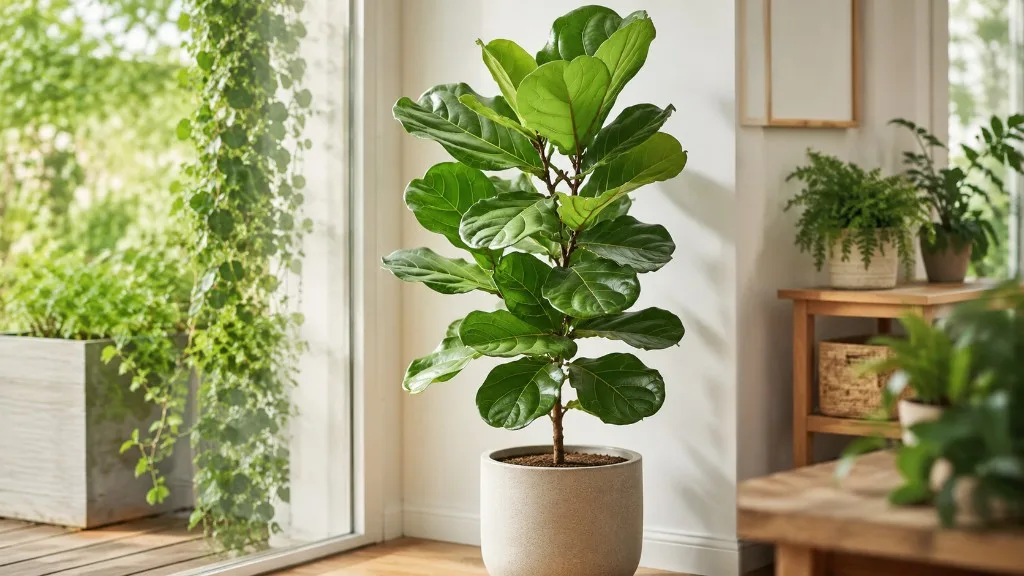
Fiddle Leaf Fig Soil: Mix, Drainage & pH
Fiddle Leaf Fig Soil: Mix, Drainage & pH
Why Soil Determines Whether Your Fiddle Leaf Fig Thrives or Rotts
Most fiddle leaf fig failures that get blamed on light, humidity, or “bad luck” start in the root zone long before the largest leaf shows a brown spot. Ficus lyrata is a tree from lowland tropical rainforests in western and central Africa - Sierra Leone through Cameroon and into Nigeria - where roots grow in moist, well-drained, loamy, acidic soil with steady oxygen around them. Indoors, you are not recreating a rainforest floor; you are building a small engineered system inside a pot. That system decides how fast water leaves after you pour, how much air stays in the mix between waterings, and how reliably nutrients stay available to roots that support leaves measuring 12 to 18 inches long.
The practical mistake is treating soil as a one-time purchase instead of a living structure. Peat, bark, and perlite all shift over months: organic components decompose, fine particles migrate downward, pore space collapses, and drainage slows even if your Fiddle Leaf Fig watering guide never changed. When that happens, the same weekly watering that worked last spring keeps the center of the pot wet for days - and Ficus species are notoriously sensitive to overwatering on Fiddle Leaf Fig, according to NC State Extension. Leaves drop when conditions change, yes, but chronic wet mix produces edema, brown spots, and root rot on Fiddle Leaf Fig that no fertilizer or brighter window fixes on its own.
Soil also connects directly to container choice. A chunky, well-aerated mix in an oversized pot with poor drainage still fails. A slightly moisture-retentive mix in a correctly sized pot with free drainage can work beautifully. The goal of this guide is not a magic bag of dirt - it is a repeatable mix, a drainage check you can run in one watering, and clear decision rules for when pH, Fiddle Leaf Fig repotting guide, or ratio adjustments actually matter.
How Ficus lyrata Uses Soil Indoors
What Lowland Tropical Roots Expect
In its native range, Ficus lyrata grows as a large tree - up to 60 to 100 feet tall outdoors - with roots spread through forest soil that drains well despite regular rainfall. The canopy filters light; the soil stays structurally open because organic matter breaks down in a living ecosystem, not in a sealed plastic pot on a windowsill. As a houseplant, the same species typically reaches 2 to 10 feet tall in a container, with a root ball confined to a fraction of its natural volume. That compression makes aeration and drainage speed more important indoors than in the ground, because every watering replaces air in pore spaces unless the mix drains fast enough for fresh air to return.
NC State lists good drainage and acidic soil pH (below 6.0 in their hardiness profile) among the plant’s cultural requirements, alongside Fiddle Leaf Fig light guide and protection from afternoon sun. Indoors, most quality peat-based or coir-based mixes land in a slightly acidic to neutral band around 6.0 to 7.0, which supports nutrient uptake for the large-leaf growth fiddle leaf figs are grown for. The roots themselves are relatively thick compared with fine fibrous feeder roots on many houseplants; they still need continuous access to oxygen between waterings, and they punish anaerobic conditions quickly.
The Three Properties Every FLF Mix Must Balance
Every workable fiddle leaf fig soil mix balances three properties at once: drainage speed, moisture retention, and structural stability. Drainage speed is how quickly excess water exits the pot after a thorough soak. Moisture retention is how long the mix holds a usable moisture band in the root zone without staying waterlogged. Structural stability is how well the mix resists compaction over months so those first two properties do not collapse mid-season.
If drainage is too slow, roots sit in saturated mix, oxygen is displaced, and fungal pathogens gain the upper hand. If retention is too low, the large leaf surface transpires moisture faster than fine roots can access it, and you enter a stressful wet-dry swing that shows up as crisp brown edges, leaf drop, and stalled new growth. If structure collapses - common with old peat-heavy mix that has been watered for two years without refresh - water runs down the gap between soil and pot wall while the center stays dry or sodden in unpredictable patches. Healthy fiddle leaf fig care depends on reading the pot, not the calendar, and soil is what makes that reading reliable.
The Best Fiddle Leaf Fig Soil Mix Recipe
Standard Peat-Perlite-Bark Formula
A reliable starting mix for most indoor fiddle leaf figs in bright indirect light:
- 50% quality indoor potting mix or peat-based base - moisture retention and organic structure
- 25% perlite (medium grade, #2 or #3) - aeration and fast drainage
- 20% orchid bark or pine bark fines - long-lasting chunky pore spaces
- 5% horticultural charcoal (optional) - helps keep mix fresh and absorbs some impurities
Blend thoroughly in a tub before potting so perlite and bark distribute evenly. The finished mix should feel light, slightly springy, and visibly chunky - not like dense garden soil or straight bagged potting mix from a shelf. When you squeeze a moist handful, it should hold together briefly then fall apart; if it forms a tight mud ball, add more perlite and bark.
For growers who prefer metric-style thinking, the same recipe works as 5 parts base, 2.5 parts perlite, 2 parts bark, and 0.5 part charcoal. Scale up for large repots; a 12-inch tree may need 8 to 12 liters of mixed soil depending on root ball size and pot depth. Always prepare slightly more than you think you need so you are not tempted to backfill with unamended potting soil around the edges.
Ingredient Roles and Substitutions
The base supplies organic matter and initial nutrient-holding capacity. Peat-based mixes acidify naturally over time and retain moisture efficiently; coco coir is a sustainable alternative with similar structure but slightly different wetting behavior - coir can look dry on top while still holding moisture deeper, so moisture checks at finger depth matter more. Either base works if amended heavily enough; neither works straight from the bag for a long-lived fiddle leaf fig.
Perlite is expanded volcanic glass. It holds almost no water itself but creates durable air pockets. Medium grade resists the gradual migration toward the pot bottom that fine perlite can show after repeated watering. Orchid bark or pine bark fines add larger chunks that stay porous longer than peat alone - critical for a plant that may live in the same pot for 18 to 24 months between repots. Horticultural charcoal is optional but useful in sealed indoor environments where slow organic breakdown can produce stale-smelling mix; think of it as insurance, not a substitute for drainage holes.
Adjust ratios when your room conditions differ from the “average” bright living room. In lower light where transpiration is slower, shift toward 45% base, 25% perlite, 25% bark, 5% charcoal so the mix dries faster between waterings. In very bright, warm, dry rooms where pots shrink quickly, 55% base, 20% perlite, 20% bark, 5% charcoal can reduce watering frequency slightly without eliminating aeration. These are starting points - your drainage test after the first full watering tells you whether to tweak further.
Choosing Your Base: Peat, Coco Coir, or Bagged Potting Mix
Regular unamended potting soil is too dense for Ficus lyrata long term. Commercial indoor mixes are formulated for a wide range of plants, many of which tolerate more sustained moisture than a fiddle leaf fig should see. Using straight bagged soil is one of the most common routes to slow drainage, sour-smelling root zones, and brown spots from overwatering that NC State Extension identifies among primary cultural problems for Fiddle Leaf Fig overview. If you only have bagged mix on hand, treat it as the 50% base in the recipe above - not as the finished product.
Peat-based mixes are the traditional choice for acid-loving tropical houseplants. They are lightweight, hold moisture evenly when fresh, and naturally trend slightly acidic, which aligns with NC State’s acidic soil notation for this species. Peat also compacts over time as organic structure breaks down; plan to refresh or repot every 18 to 24 months for actively growing specimens, sooner if you water heavily or use hard tap water with frequent fertilizer.
Coco coir is renewable and resists some of peat’s extreme shrink-when-dry behavior, though it requires calcium and magnesium supplementation in some fertilizer programs because coir can bind micronutrients early in its life. For soil structure purposes, coir substitutes one-to-one for peat in the base percentage. Whichever base you choose, avoid mixes with wetting agents intended for outdoor beds, heavy garden compost, or added water-retention crystals unless you deliberately want a wetter root zone - which fiddle leaf figs rarely do indoors.
Drainage Amendments: Perlite, Bark, and Charcoal
Perlite and bark solve different problems, and using both is deliberate redundancy. Perlite improves immediate drainage and fine-scale aeration throughout the mix. Bark creates macro-pores that remain open even as finer particles settle. Together they prevent the “brick in a pot” outcome that kills more fiddle leaf figs than nutrient deficiency ever does.
Do not substitute sand for perlite in indoor containers. Sand adds weight and can cement fine particles into a tighter matrix unless ratios are carefully calibrated. Horticultural grit has niche uses in arid plants; for Ficus lyrata, perlite plus bark is the safer, better-tested pairing. Charcoal at 5% is optional; more is not better and does not fix a pot without holes.
When mixing, wear a dust mask while handling dry perlite and peat or coir - both generate fine particles. Pre-moisten the base slightly before blending if dust is a concern; the final mix should be uniformly moist but not dripping before you pot.
Container Drainage and Pot Selection
Drainage Holes, Saucers, and Cachepots
A drainage hole is non-negotiable for long-term fiddle leaf fig health. NC State Extension and University of Minnesota Extension stress the same point: roots need oxygen, and water that cannot exit the pot displaces that oxygen within hours. At least one hole is required; two or more holes on larger pots improve flow on tree-sized specimens. Decorative pots without holes are cachepots only - the grow pot inside must drain freely, and you must empty runoff after every watering, not let the plant sit in a hidden reservoir.
The myth of gravel or pot shards in the bottom “for drainage” persists, but it does not create the hydraulic effect most people imagine. A perched water table still forms at the bottom of the soil column; gravel mainly reduces the volume of quality mix available to roots while adding weight. Spend your effort on chunky amended mix and correct hole size instead. Mesh over holes to prevent mix escape is fine; a thick gravel layer is not a substitute for perlite and bark throughout the profile.
Saucers protect floors; they should be emptied. A fiddle leaf fig standing in half an inch of stale water behaves like a pot with no drainage - the bottom roots stay wet even when the top inch feels dry. Cachepots look excellent in design photos and cause root rot in real apartments when runoff is forgotten. If you use one, lift the inner pot, water at the sink, let it drain completely, then return it to the display container.
Matching Pot Size to Root Ball
Pot size and soil work together. Choose a container only 1 to 2 inches (2.5 to 5 cm) wider than the root ball when repotting - not sized to the height of the leaves. Oversized pots surround roots with a large volume of mix that stays wet long after the root ball has had enough, which is a direct path to rot even with excellent soil. Depth matters too: fiddle leaf figs often arrive in tall nursery pots; moving to a slightly wider but not dramatically deeper pot keeps the lower soil profile from becoming a permanently wet zone with no roots to pull moisture.
Plastic pots dry slightly faster than glazed ceramic; unglazed terra-cotta dries faster still. That does not change the mix formula much, but it changes how often you water. A terra-cotta grower in a bright room may use slightly more base in the mix; a plastic pot in dimmer light may need more bark. Read the pot weight after watering once and again three days later - that delta becomes your personal moisture calendar.
pH for Fiddle Leaf Fig: Range, Nutrients, and Adjustments
The 6.0–7.0 Target and What Happens Outside It
Target pH for fiddle leaf fig soil is slightly acidic to neutral: roughly 6.0 to 7.0, with many growers seeing best leaf color and steady growth near 6.0 to 6.5. In that band, macronutrients (nitrogen, phosphorus, potassium) and micronutrients such as iron and manganese remain soluble enough for roots to absorb. NC State’s hardiness profile lists acidic soil (below 6.0) as the native preference; most amended indoor mixes naturally sit close to that range without chemical adjustment.
When pH drifts above 7.5, iron and manganese availability drops - new leaves may show interveinal chlorosis (yellow tissue between green veins) even when fertilizer is present. When pH falls well below 5.5, other nutrients can become excessively available or calcium and magnesium availability can drop, depending on the mix and water chemistry. In practice, chronic overwatering and mineral salt buildup from hard water and fertilizer cause more fiddle leaf fig distress than raw pH drift in a fresh, well-draining mix.
University of Minnesota Extension notes that pH problems are rarely the primary cause of indoor plant distress compared with poor drainage, improper light, and softened tap water - which can introduce sodium over time. That does not mean pH is irrelevant; it means you should fix drainage, watering rhythm, and water quality before chasing pH with lime or sulfur unless testing confirms a clear problem.
How to Test and Correct pH Safely
If you test, use a digital pH meter on moistened mix inserted 2 to 4 inches below the surface, or send a sample to a soil lab for a reliable reading. Cheap meters work reasonably in uniform potting media if calibrated and used in moist - not flooded - soil. Test every 6 to 12 months on older pots, or when new growth shows persistent chlorosis despite corrected watering and appropriate fertilizer.
If pH is too high, repotting into fresh acidic-leaning mix is usually safer than heavy-handed sulfur doses indoors. Small elemental sulfur applications follow product labels for container volume. If pH is too low, dolomitic lime at conservative rates - for example, roughly 1 tablespoon per gallon of mix as a starting reference, adjusted to label instructions - can raise pH gradually. Change pH slowly; dramatic swings stress roots already sensitive to change.
Do not use vinegar, baking soda, or unmeasured home remedies in a living container - the dose is uncontrolled and root burn is likely. If your tap water is very alkaline, filtered or rainwater for watering slows upward drift more safely than constant sulfur. When in doubt, fresh well-amended mix plus proper drainage solves more “mystery” fiddle leaf fig problems than pH tweaking alone.
Store-Bought Mixes That Work (and What to Amend)
Several commercial “indoor” or “houseplant” potting mixes work as the 50% base in the recipe above if you add 25% perlite and 20% bark before potting. Products marketed specifically for fiddle leaf figs, Ficus, or aroid-style plants often arrive closer to ready-to-use, but read the label - some are still peat-heavy and need extra perlite in low-light rooms. Cactus or succulent mix alone is too lean for a large-leaf tropical tree unless you blend it 50/50 with peat or coir base to restore moisture retention; straight cactus mix in a big FLF pot often leads to hydrophobic dry pockets and chronic underwatering on Fiddle Leaf Fig stress followed by panic overwatering.
Avoid outdoor garden soil, topsoil, or “moisture control” mixes with water-retention gel in a decorative indoor container. They compact, introduce pathogens, and hold water inconsistently. If you buy a premium FLF-branded mix, still verify drainage with the one-minute test: water until runoff, and confirm the surface is not pooling after 60 seconds and the pot weight drops noticeably within a day in normal room conditions.
When and How to Repot or Refresh the Mix
Repot when roots circle drainage holes, the plant dries out within a day of watering in normal conditions, water runs straight through without soaking in, or the mix smells sour or looks like fine mud. Extension guidance also recommends repotting when overwatering is hard to avoid despite careful checks - often because old mix has compacted and lost pore space. Spring and early summer are ideal timing when growth is active, but a clear root-zone problem should not wait for a calendar if the plant is declining.
To repot, choose the next pot size up only slightly, gently loosen the root ball, trim brown mushy roots with clean shears, and remove old compacted soil from the outer third of the root ball without destroying all fine roots. Set the plant at the same depth as before - burying the stem deeper invites stem rot. Backfill with fresh mix, water thoroughly once, then hold fertilizer for four to six weeks while roots heal. Expect some leaf drop after repotting; Ficus reacts to change. Persistent decline with wet mix means inspect roots again rather than assuming acclimation.
Top-dressing - scraping and replacing the top 2 inches of mix - helps with mineral crust and gnats but does not fix compacted center soil. Full repot or root pruning is required when the core has collapsed. Refresh at least every two years for fast-growing specimens in bright light; slow growers in stable conditions may stretch to three years if drainage tests still pass.
Soil-Related Problems and How to Diagnose Them
Use symptoms to trace back to the root zone before changing light or fertilizer. Water sitting on the surface more than a minute after watering means compaction or hydrophobic dry peat - aerate with a chopstick, top-water slowly in cycles, or repot. Musty or sour smell means anaerobic conditions - stop watering, inspect roots, repot into fresh mix, remove rot. Fungus gnats often indicate persistently wet top layer; let the top 2 inches dry between waterings and add bark to speed surface drying.
Brown spots with soft yellow halos on lower leaves frequently pair with overwatering and poor drainage, not isolated “humidity problems.” Edema - small brown corky spots from cells bursting - shows water uptake exceeded transpiration, often from wet mix in cooler or lower-light conditions. Crisp brown edges on otherwise firm leaves can mean underwatering, salt buildup, or low humidity, but check whether the center of the pot stays dry while you water the surface - a split root-zone problem from poor structure.
If the plant wilts but the mix is wet, roots may already be damaged - do not water again until you inspect. If wilts on dry mix, water thoroughly and watch recovery by the next day. Soil diagnostics only work when paired with hole drainage, pot size, and honest moisture depth checks - not surface color alone.
Conclusion
Ficus lyrata rewards a root zone that mimics the essentials of its native loamy, acidic forest soil - steady moisture without waterlogging, continuous oxygen, and stable structure that does not collapse in year two. Build a peat- or coir-based mix with roughly 25% perlite and 20% bark, optionally 5% charcoal, and verify performance with a drainage test after every repot or ratio change. Pair that mix with a pot only slightly larger than the root ball, mandatory drainage holes, and empty saucers, and most “mystery” decline becomes manageable.
Keep pH in the 6.0 to 7.0 band as a guideline, but prioritize drainage speed, mix freshness, and water quality before aggressive chemical adjustment - extension experts are right that pH meters matter less than drainage for most indoor fiddle leaf figs. Refresh or repot when compaction, salt crust, or root crowding appears, and read brown spots and leaf drop in context rather than panicking into stacked changes. Get the soil system right, and light and watering decisions finally make sense instead of fighting a soggy foundation.
When to use this page vs other Fiddle Leaf Fig guides
- Fiddle Leaf Fig overview - Start here for whole-plant context before deep-diving this topic.
- Fiddle Leaf Fig problems hub - Jump to symptom-specific fix guides when this care topic does not resolve the issue.
- Root Rot on Fiddle Leaf Fig - Escalate here when soil adjustments are not enough.
- Mold on Soil on Fiddle Leaf Fig - Escalate here when soil adjustments are not enough.
Related Fiddle Leaf Fig guides
- Fiddle Leaf Fig overview
- Fiddle Leaf Fig watering
- Fiddle Leaf Fig light
- Fiddle Leaf Fig propagation
- Fiddle Leaf Fig fertilizer
- Fiddle Leaf Fig repotting
- Root Rot on Fiddle Leaf Fig
- Mold on Soil on Fiddle Leaf Fig
- Fiddle Leaf Fig problems
Related tool
Try the Soil Mix Calculator with fiddle-leaf-fig pre-selected to estimate needs for your setup.