How to Propagate Fiddle Leaf Fig: Cuttings & Air Layering
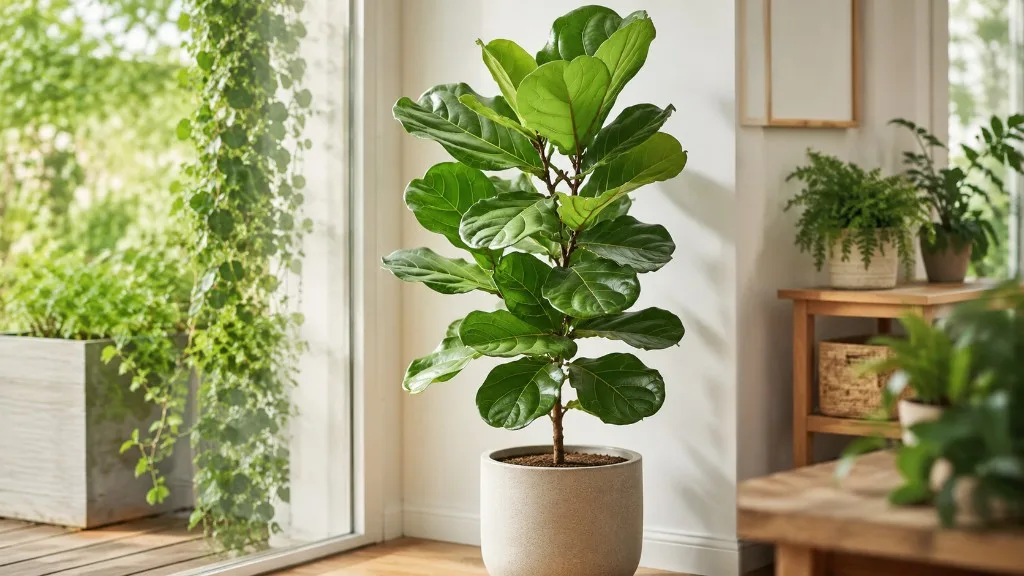
How to Propagate Fiddle Leaf Fig: Cuttings & Air Layering
How to Propagate Fiddle Leaf Fig: Cuttings & Air Layering
Fiddle leaf fig propagation is one of those projects that looks effortless on social media and feels much slower in real life. A glossy leaf floating in a glass jar makes a beautiful photo. It rarely makes a new plant. Ficus lyrata roots from stem tissue that includes at least one node - the joint where a leaf attaches to the woody stem - and from nowhere else in any reliable way. Get that wrong and you can wait months for roots that never arrive. Get it right, handle the plant’s milky latex sap with respect, and choose between stem cuttings and air layering based on how tall and leggy your specimen has become, and you can clone a prized fiddle leaf fig without gambling the whole plant on a bare chop.
The two home methods that actually work are stem cuttings with nodes (in water or a very airy perlite mix) and air layering for tall plants that have outgrown their space or lost lower foliage. Leaf cuttings, petiole-only segments, and stem sections with no node are dead ends. This guide walks through the biology, the safety basics, both propagation workflows, timing, aftercare, and the failures growers hit most often - so you can propagate with eyes open rather than hope alone.
Why Fiddle Leaf Figs Are Tricky but Worth Propagating
Fiddle leaf figs earned their finicky reputation for everyday care - light shifts, drafty windows, and inconsistent watering all trigger leaf drop - but propagation adds a separate layer of difficulty. The stems are firmer and woodier than soft herbs like coleus or pothos. Individual leaves are enormous, which means an unrooted cutting loses water fast through transpiration unless you trim strategically. Rooting takes weeks to months, not days, and success rates drop sharply when you propagate in cool, dim winter conditions rather than during active spring and summer growth.
That patience tax is worth paying for several practical reasons. Propagation lets you duplicate a healthy cultivar without buying another expensive tree. It turns mandatory pruning - when a plant hits the ceiling or goes bare below - into an opportunity rather than pure loss. Air layering in particular gives you a substantial rooted top section while the parent stump branches from nodes below the cut, which is often the best outcome for a six-foot leggy specimen that has become a single lollipop on a stick. Stem cuttings work well when you have manageable top growth to spare, a warm bright setup, and realistic expectations about timeline.
North Carolina Extension’s Gardener Plant Toolbox notes that Ficus lyrata is commonly propagated by stem cutting, and that the plant’s milky stem sap can irritate skin - a detail many beginner guides skip until someone learns the hard way. Treat propagation as a deliberate project, not a rainy-afternoon experiment, and your odds improve immediately.
How Fiddle Leaf Fig Propagation Actually Works
All viable fiddle leaf fig propagation routes depend on adventitious roots - roots that form from stem cells rather than from an existing root system. When you wound or isolate a stem section that includes a node, hormone signals and moisture trigger those cells to reorganize into root initials. The node matters because it carries the meristematic tissue and leaf-scar anatomy where roots can emerge. Internode-only stem - the smooth bark between nodes - lacks that capacity in any dependable way for home growers.
Air layering exploits the same biology while the stem remains attached to the parent plant. By removing a ring of bark and cambium on a living branch, you interrupt downward transport of carbohydrates and auxins, which accumulate at the wound. Packed in moist sphagnum moss, that concentration encourages roots to form before you sever the branch. The parent continues supplying water and nutrients throughout, which is why air layering outperforms bare cuttings on large, energy-heavy sections.
Stem cuttings sever that lifeline immediately. The cutting must survive on stored stem energy and whatever moisture you provide until its own roots function. That is doable with sound material and stable conditions, but it explains why a two-leaf tip cutting roots more easily than a three-foot bare trunk with one leaf at the top. Match method to how much stem mass you are asking to re-root.
Nodes, Stems, and Why Leaves Alone Fail
A node on fiddle leaf fig is the slightly swollen point where a leaf petiole meets the stem. You may see a thin horizontal scar or a dormant bud bump. Roots emerge from this zone or immediately adjacent tissue - not from the leaf blade, not from the petiole alone if it detached without stem, and not from internode bark with no scar nearby.
This is why leaf cuttings do not work for fiddle leaf fig, despite countless water-jar photos suggesting otherwise. A single leaf with a long petiole may stay green for weeks or even grow a root-like nub from the petiole base, but without stem node tissue it cannot produce shoots or build a tree. You get a rooted leaf ornament, not a clone. The same failure mode hits stem sections trimmed between nodes: the cutting might callus and resist rot briefly, yet never branch into a plant.
For stem cuttings, aim for material that includes at least one node on the portion that will sit in water or bury in medium - two nodes is safer. Many growers take a section with one or two leaves attached plus one or two bare nodes below. On a large FLF, reducing total leaf area by halving oversized leaves horizontally lowers water loss without removing all photosynthetic surface. The rule is simple: no node, no plant. Verify before you cut, not after the sap is already flowing.
Understanding Fiddle Leaf Fig Latex Sap
Cut any Ficus stem and milky white latex flows almost immediately. On fiddle leaf fig, that sap is more than a messy inconvenience. NC State Extension lists Ficus lyrata sap among plant parts that can cause oral irritation, drooling, vomiting, and difficulty swallowing if ingested by humans, cats, or dogs. Contact with skin can produce irritation as well, and extension sources recommend gloves when pruning or propagating.
The sap also affects propagation technique directly. Liquid latex can block rooting hormone absorption and form a quick seal over the cut face. On woody Ficus species including F. lyrata, experienced propagators press a clean tissue against fresh cuts and wait 10 to 15 minutes before applying hormone or placing the stem in water. That pause lets surface latex coagulate without fully closing the wound. Do not rinse cuts with water to “clean” sap - it spreads irritants and does not improve rooting.
Work on a protected surface you can wipe down. Keep pets and children away from trimmings. Discard leaves and stem pieces promptly rather than leaving sap-coated debris where it can be chewed or stepped on. If sap contacts skin, wash with soap and water. If it gets in eyes, flush with water and seek medical guidance. Propagation is low risk with basic precautions; ignoring sap handling is how people learn unpleasant lessons.
Safe Cutting and Cleanup Habits
Gather gloves, tools, moss, and containers before the first cut so you are not scrambling while latex runs. Disinfect pruner blades with 70% isopropyl alcohol between plants if pests or rot have been an issue. Make cuts in one clean motion with sharp bypass pruners or a knife - crushed stems heal poorly and rot faster in wet media.
After cutting, blot the wound, wait for the latex film, then proceed with your chosen method. Bag trimmings and wipe the work area when finished. If you are air layering mid-stem, sap exposure is limited to the small wound ring, but gloves still help when packing moss and wrapping plastic. Treat sap discipline as part of the technique, not an optional extra.
Choosing the Best Time and Material
Propagate fiddle leaf fig during active growth, typically late spring through summer in temperate climates, when warmth and longer days support rooting. NC State Extension recommends taking stem cuttings during the growing season when carbohydrate levels are high and water stress can be minimized under humidity cover. Winter propagation in a cold, dim room often stalls for months; it is not impossible with supplemental heat and grow lights, but it is a lower-percentage bet for beginners.
Material quality matters as much as calendar timing. Start from a healthy parent with firm stems, clean foliage, and no active pest outbreak, root rot on Fiddle Leaf Fig, or severe drought stress. Weak plants produce weak cuttings. If your FLF is struggling, stabilize care first - correct light, watering, and drainage - then propagate from the healthiest new growth you can spare. The best cutting is a terminal or near-terminal section with plump nodes and unblemished leaves, not a brittle lower internode from a bare trunk unless you are air layering with realistic patience.
For air layering, choose a branch or trunk segment roughly pencil-thick or larger with at least one node in the target zone and enough foliage above the wound to justify the effort. Ultra-thin new growth layers poorly; hard old wood without green cambium layers poorly too. The sweet spot is mature but still green under the bark when you scrape lightly.
Tools and Materials You’ll Need
Core tools are modest: sharp bypass pruners or a grafting knife, nitrile or garden gloves, rubbing alcohol for disinfection, and labels if you run multiple projects. For stem cuttings in water, use a clear glass jar or vase that supports the stem without submerging leaves - narrow openings help hold large cuttings upright. For soil or perlite rooting, prepare small pots with drainage holes and a propagation mix heavy on perlite - straight perlite or half perlite and half peat or coco coir - rather than dense potting soil that stays wet too long.
Optional but useful items include rooting hormone powder or gel (especially for direct-soil cuttings), a clear plastic bag or dome to raise humidity around soil-rooted cuttings, a heat mat set around 21–24°C (70–75°F) if your room runs cool, and bamboo stakes to keep plastic off large leaves. For air layering, add long-fiber sphagnum moss, clear plastic wrap, twist ties or soft wire, and optionally a toothpick or moss sliver to hold the wound open.
Have your setup ready before wounding the plant. Fiddle leaf fig does not pause while you hunt for moss in the garage.
Method 1: Stem Cuttings With Nodes
Stem cuttings are the most familiar fiddle leaf fig propagation route and the right choice when you have a manageable top section to remove - after topping a young plant for branching, for example, or when air layering feels like overkill for a two-foot specimen. The workflow is straightforward once you accept that nodes are mandatory and timelines are measured in weeks.
Select a healthy stem with at least one node on the rooting portion. Many growers cut 12 to 15 inches (30–38 cm) from the tip of a branch, leaving one or two leaves at the top and removing lower leaves so one or two nodes sit bare. Make the bottom cut just below a node at a slight angle to expose more surface area without crushing tissue. Blot latex, wait 10 to 15 minutes, then optionally dip the cut end in rooting hormone.
If rooting in water, submerge one node (two is fine) while keeping all leaves above the waterline. Change water when it clouds, roughly every few days to weekly, and keep the jar in Fiddle Leaf Fig light guide - not harsh south-window sun that cooks leaves. NC State Extension advises maintaining high humidity around cuttings and keeping the medium moist until roots form; first root bumps often appear in two to four weeks during warm active growth, with usable roots 2 to 4 inches (5 to 10 cm) long typically taking four to eight weeks, sometimes longer on woody winter cuttings.
If rooting in perlite or a light mix, pre-moisten medium until it feels like a wrung-out sponge, poke a deep hole, insert the cutting so at least one node is buried, and firm gently. Tent with clear plastic propped on stakes so it does not touch foliage. Keep medium lightly moist, never soggy, in the same bright indirect conditions. Test progress with a gentle tug after several weeks: slight resistance suggests roots forming. Full rooting may take six to ten weeks.
Water Versus Perlite or Soil Rooting
Water propagation wins on visibility - you see roots form and know when to pot. That transparency helps beginners who might pull soil cuttings too early or leave them too long in anaerobic mix. The trade-off is a harder transition to soil: water roots are adapted to low oxygen and can shock when moved to mix if rushed or if roots are still thin.
Perl-heavy direct rooting skips the transition but hides progress until you tug or carefully unpot. It reduces rot risk versus heavy peat potting soil if you maintain light moisture and airflow. For fiddle leaf fig specifically, many experienced growers prefer perlite or a perlite-dominant mix over straight water for long-term root quality, while still using water when they want to monitor a valuable cutting closely.
Neither method works without a node. Neither method compensates for a cold dark room. Choose based on whether you value monitoring (water) or fewer transplant steps (perlite), then commit to stable warmth and light either way.
Method 2: Air Layering for Tall Plants
Air layering is the method to reach for when your fiddle leaf fig has hit the ceiling, grown a bare trunk with leaves only at the top, or become too tall to root confidently as a bare cutting. Because the stem stays attached to the parent until roots form, the developing plant draws water and nutrients throughout the process - a massive advantage when you are trying to root a large section with substantial leaf mass. NC State Extension describes air layering as a reliable way to propagate large, overgrown houseplants while the stem remains attached to the parent.
The technique works on an intact branch or main trunk. Select a node zone roughly 12 to 24 inches (30 to 60 cm) below the growth you want to keep as the new plant - adjust based on how much height you need to remove. Remove any leaf at that node so the stem is bare for wrapping. Make two shallow parallel cuts about 1 inch (2.5 cm) apart through the bark, then connect them with vertical scores or peel away the bark ring between them. Scrape the green cambium beneath until you expose lighter wood; if cambium remains, the wound may heal over instead of rooting.
Soak sphagnum moss for 10 to 15 minutes, squeeze until moist but not dripping, and pack it firmly around the wounded zone. Hold moss in place with clear plastic wrap taped or twist-tied above and below the ball, creating a sealed humid pocket. Check weekly: moss should stay moist, not dry or sour. Roots typically appear against the plastic in four to eight weeks, with a root ball ready to sever in eight to sixteen weeks depending on stem thickness, warmth, and light.
When roots fill the moss and look white and branching, cut the stem just below the moss ball with clean tools. Pot the new plant without stripping moss - disturbing the root mass tears fine root hairs. Use a pot sized to the root ball, well-draining mix, and bright indirect light. Tent lightly for a few days while the plant adjusts to independent life.
Step-by-Step Air Layering on a Leggy Fiddle Leaf Fig
Picture a common scenario: a six-foot FLF with a leafless lower trunk and a canopy at the ceiling. You want a shorter, bushier parent and a free rooted top for another room. Mark a node on the trunk where the new top’s height should begin - often 2 to 3 feet (60 to 90 cm) above the pot if you want a table-height tree after pruning. Strip the leaf at that node, wound the bark ring, pack moss, wrap plastic, and wait.
While waiting, continue normal parent care: do not let the moss dry out, but also do not overwater the main pot because roots are forming above. When you sever the top, the stump remains in the original pot. Within weeks, buds often break from nodes below the cut, producing lateral branches that restore a fuller silhouette - documented behavior extension guides describe for air-layered overgrown houseplants. You gain a new plant and a better-shaped parent, which is why air layering beats simply chopping and hoping a bare stick roots.
Air layering demands more setup than a water jar, but on tall specimens it is often the highest-success path and the only method that yields a sizable rooted plant without months of wilt anxiety.
What Happens to the Parent Plant After You Cut
Propagation is not only about the cutting. Ficus lyrata responds to decapitation by activating dormant buds on the remaining stem, especially at nodes below the wound. After air layering or a hard top prune, expect new shoots within several weeks during active growth - sometimes slower in winter. That branching is how you fix a leggy single-stem plant without buying a replacement.
The parent may drop a few older leaves after major surgery; that stress response is common and does not always signal failure if the stem stays firm and new buds swell. Avoid stacking stressors: do not repot, fertilize heavily, and relocate simultaneously with a major cut. Keep light bright but indirect, water on the plant’s normal rhythm once the top inch or two of mix dries, and wait for new growth before judging the outcome.
If you took only a side branch cutting rather than topping, the main trunk continues unchanged - useful when you want a small clone without altering the parent shape. Match your cut location to the long-term silhouette you want, not only to what fits in a propagation jar today.
Building the Right Rooting Environment
Fiddle leaf fig roots want warmth, bright indirect light, and stability - the same themes as mature plant care, only more unforgiving while tissues are wounded. Aim for roughly 18 to 24°C (65 to 75°F) day and night; a heat mat beneath propagation trays helps in air-conditioned rooms. Light should be strong but filtered: an east window, a few feet back from a south window, or supplemental grow lights if natural light is weak. Direct midday sun on unrooted cuttings accelerates leaf burn and desiccation.
Humidity helps large-leaf cuttings more than it helps small succulents. For soil or perlite methods, a loose humidity tent reduces transpiration stress. For water jars, humidity is less critical if leaves are intact and light is moderate. Airflow still matters - sealed plastic touching leaves for weeks invites fungal spots. Prop sticks or a frame that tents without contact solve that.
Patience is an environmental factor too. Fiddle leaf fig is not pothos. Checking daily and Fiddle Leaf Fig repotting guide at the first white bump often kills progress. Set a weekly rhythm: refresh water or check moss moisture, look for rot or pests, otherwise leave the project alone.
Light, Warmth, and Patience
If roots stall beyond eight to ten weeks in warm active-season conditions, audit temperature first, then light, then node presence. Cuttings in basements at 15°C (59°F) can sit dormant indefinitely. Cuttings in hot dry window sills crisp leaves before roots form. Move projects to the brightest stable spot you have without sunburn, and consider bottom heat before declaring failure.
Document your start date and method. FLF propagation rewards boring consistency more than heroic intervention.
When to Pot, Sever, or Transplant
Timing triggers differ by method. For water-rooted stem cuttings, pot when roots are about 2 to 4 inches (5 to 10 cm) long with some branching - not at the first millimeter nub, and not after roots circle the jar into a tangled mat. Use a small pot 2 to 4 inches (5 to 10 cm) wider than the root mass, well-draining mix with perlite, and water once to settle soil. Keep humidity slightly elevated for the first week while soil roots develop.
For perlite-rooted cuttings, transplant when a gentle tug meets firm resistance throughout the stem base, indicating roots anchored in medium. Unpot carefully if you need visual confirmation; white, spreading roots are the green light. For air layers, sever only when the moss ball is filled with visible roots, then pot intact as described above.
Do not fertilize immediately. Wait until new growth appears on the rooted plant - often several weeks after potting - then use a dilute balanced fertilizer if your general FLF care routine includes feeding during active growth. Early fertilizer on fragile roots burns more often than it helps.
Aftercare for New Fiddle Leaf Figs
Newly rooted fiddle leaf figs need boring stability. Keep the pot in bright indirect light, water when the top 2 inches (5 cm) of mix dry, and avoid repotting again until the plant clearly outgrows its container - often many months. Leaf drop on a fresh cutting is stressful but not always fatal if the stem stays plump and buds remain green. Resist repotting, moving rooms, and cranking fertilizer to “help.”
Support tall thin cuttings with a bamboo stake loosely tied if they wobble; rooting does not instantly stiffen a long stem. Rotate the pot slightly each week for even light if one side presses toward the window. Watch for pests - spider mites and mealybugs love stressed foliage - and isolate new propagations from your main collection for the first few weeks as a quarantine habit.
The first new leaf on a rooted cutting is the milestone that matters more than root length in a jar. Once that leaf hardens off, your propagation has effectively succeeded; everything after is standard fiddle leaf fig care at a smaller scale.
Common Propagation Failures and Fixes
Most failures trace back to a short list of causes. No node on the cutting is the leading complete miss - verify before cutting. Leaf-only jars produce the same zero-plant outcome with extra Instagram content. Cold or dim conditions stall rooting until cuttings rot or desiccate; add heat and light rather than waiting indefinitely. Over-wet perlite or soil blackens the stem base; reduce watering and improve airflow, or restart with dry-ish medium and a fresh cut if rot advanced.
Liquid latex smothering hormone or cut faces slows callusing on Ficus; wait after cutting before hormone and water placement. Disturbing air-layer roots at severing or potting tears fragile hairs; keep the moss ball intact. Premature potting from water with ½-inch roots leads to collapse after transplant; wait for length and branching. Pest-infested parent material imports mealybugs into your propagation setup; treat the parent or take clean tissue from uninfected zones only.
If a cutting blackens from the base upward while leaves stay green briefly, discard and restart with cleaner material rather than nursing rot for months. Propagation stock is renewable if the parent is sound.
Air Layering Versus Stem Cuttings: Which to Choose
Use stem cuttings with nodes when the section is moderate in size - roughly under two feet of stem with manageable leaf load - you want a simple setup, and you can provide stable warmth and light for several weeks. Water or perlite both work; water suits beginners who need visual feedback.
Choose air layering when the plant is tall and leggy, when the section you need to remove is large with heavy foliage, when you want higher success odds on woody material, or when you need the parent stump to branch while producing a sizable clone. Air layering costs more setup time upfront and takes longer overall, but it is the professional-grade answer to the question “My FLF hit the ceiling - now what?”
Do not choose leaf cuttings - ever, for Fiddle Leaf Fig overview. Do not skip latex handling because you are indoors and in a hurry. Match method to plant architecture, verify nodes, protect your skin, and give the timeline room to work.
Conclusion
Fiddle leaf fig propagation succeeds when you respect how Ficus lyrata actually grows: roots from nodes on stems, not from detached leaves; slower timelines than soft-stemmed houseplants; and milky latex that demands gloves and a brief wait before rooting steps. Stem cuttings with nodes - in water for visibility or perlite for direct rooting - fit moderate sections taken during active growth. Air layering fits tall leggy plants where keeping the stem attached until roots fill sphagnum moss dramatically improves odds and lets the parent branch below the cut.
Gather tools first, start from healthy material, keep conditions warm and bright without direct scorch, and pot or sever only when roots are genuinely ready. Failures are usually explainable - missing nodes, leaf-only attempts, cold rooms, over-wet media, sap-sealed cuts - which means they are also avoidable. Propagate with nodes, handle sap with care, pick the method that matches your plant’s size, and you can turn a mandatory prune into a second fiddle leaf fig worth keeping.
When to use this page vs other Fiddle Leaf Fig guides
- Fiddle Leaf Fig overview - Start here for whole-plant context before deep-diving this topic.
- Fiddle Leaf Fig problems hub - Jump to symptom-specific fix guides when this care topic does not resolve the issue.
Related Fiddle Leaf Fig guides
- Fiddle Leaf Fig overview
- Fiddle Leaf Fig watering
- Fiddle Leaf Fig light
- Fiddle Leaf Fig soil
- Fiddle Leaf Fig fertilizer
- Fiddle Leaf Fig repotting
- Fiddle Leaf Fig problems
Related tool
Try the Propagation Success Calculator with fiddle-leaf-fig pre-selected to estimate needs for your setup.