Leggy Growth on Fiddle Leaf Fig: Causes, Checks & Fixes
Quick answer
Leggy growth on fiddle leaf fig is etiolation-long bare internodes and small distant leaves from too little light. First step: move the tree within one to three feet of bright indirect light or add a grow light, then wait for compact new leaves before notching or head pruning bare stems.
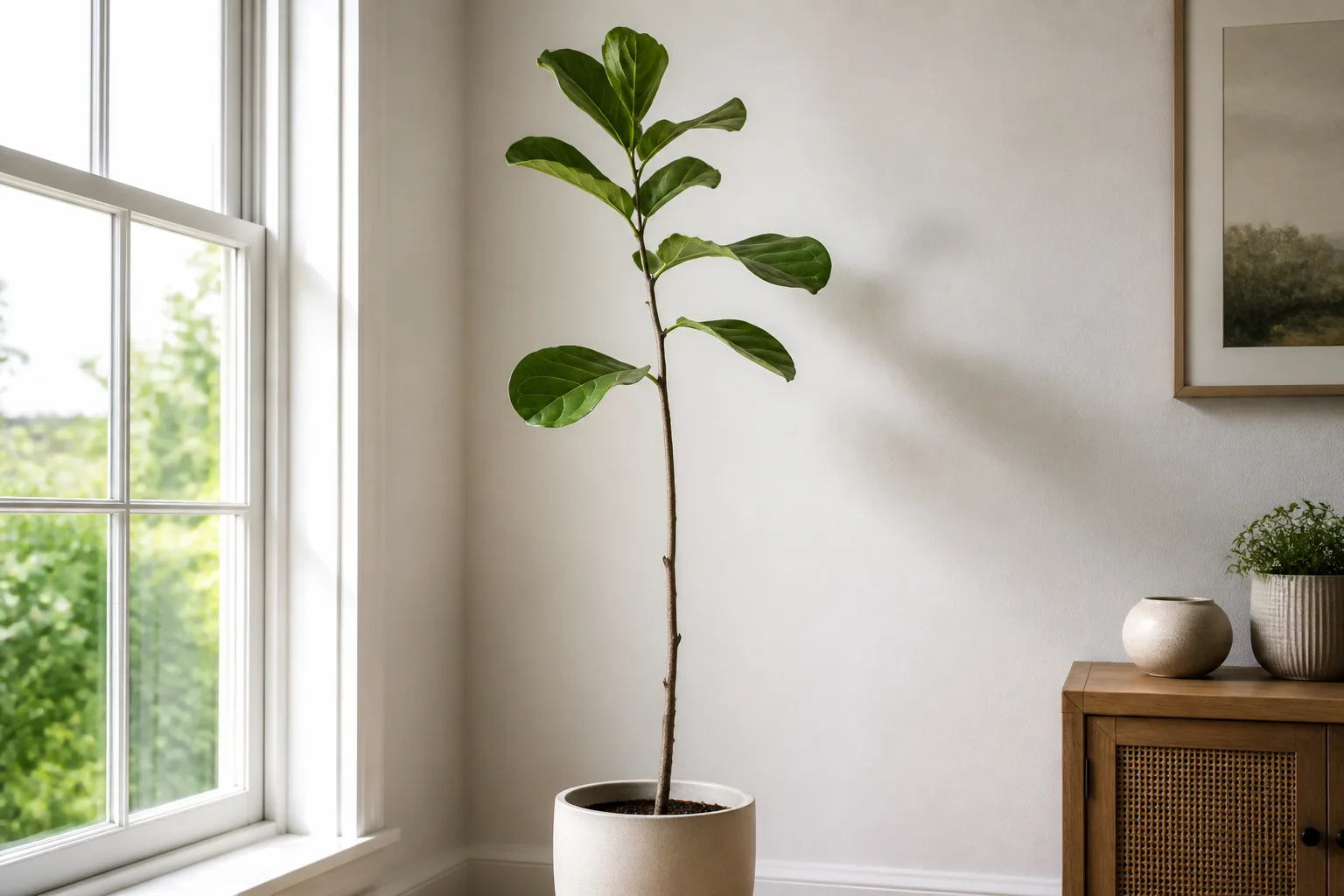
Leggy Growth on Fiddle Leaf Fig: Causes, Checks & Fixes
This guide covers leggy growth on Fiddle Leaf Fig. See also the general Leggy Growth guide, watering, and light pages for this plant.
Leggy Growth on Fiddle Leaf Fig: Causes, Checks & Fixes
Quick answer
Leggy growth on fiddle leaf fig (Ficus lyrata) is etiolation-the plant elongates internodes and petioles toward usable light because it cannot photosynthesize enough to support compact, large-leaf architecture indoors. In native tropical lowland rainforests of western and central Africa, mature trees grow under open canopy with bright filtered daylight; a dim hallway or room-center placement produces survival stretch instead. When light is too weak, stems gap widely, new violin-shaped leaves emerge small, and the tree develops the classic lollipop silhouette-bare trunk below, leaf cluster at the top.
First step: brighten the tree before any structural cut. Move within one to three feet of an east window or filtered south or west exposure, or mount a full-spectrum grow light twelve to twenty-four inches above the canopy for twelve to fourteen hours daily. Do not notch, head-prune, or fertilize on the same day. Fix light first; judge success by the next leaf set, not by old stretched internodes shortening.
This page focuses on leggy etiolation-what long internodes look like, how to confirm them, and when pruning, notching, or pinching helps reshape bare stems. For broader low-light diagnosis including hand-shadow testing, stalled growth, and wet-soil patterns in dim corners, see not enough light on fiddle leaf fig. For window placement and grow-light distance, see the fiddle leaf fig light guide.
What leggy growth looks like on Fiddle Leaf Fig
Leggy growth on Ficus lyrata shows up as structure problems on the trunk and internodes, not soft vine-like flop. Each large leaf sits on a stiff petiole attached at a node; when energy is scarce, the bare sections between nodes lengthen and the plant leans toward the brightest direction.
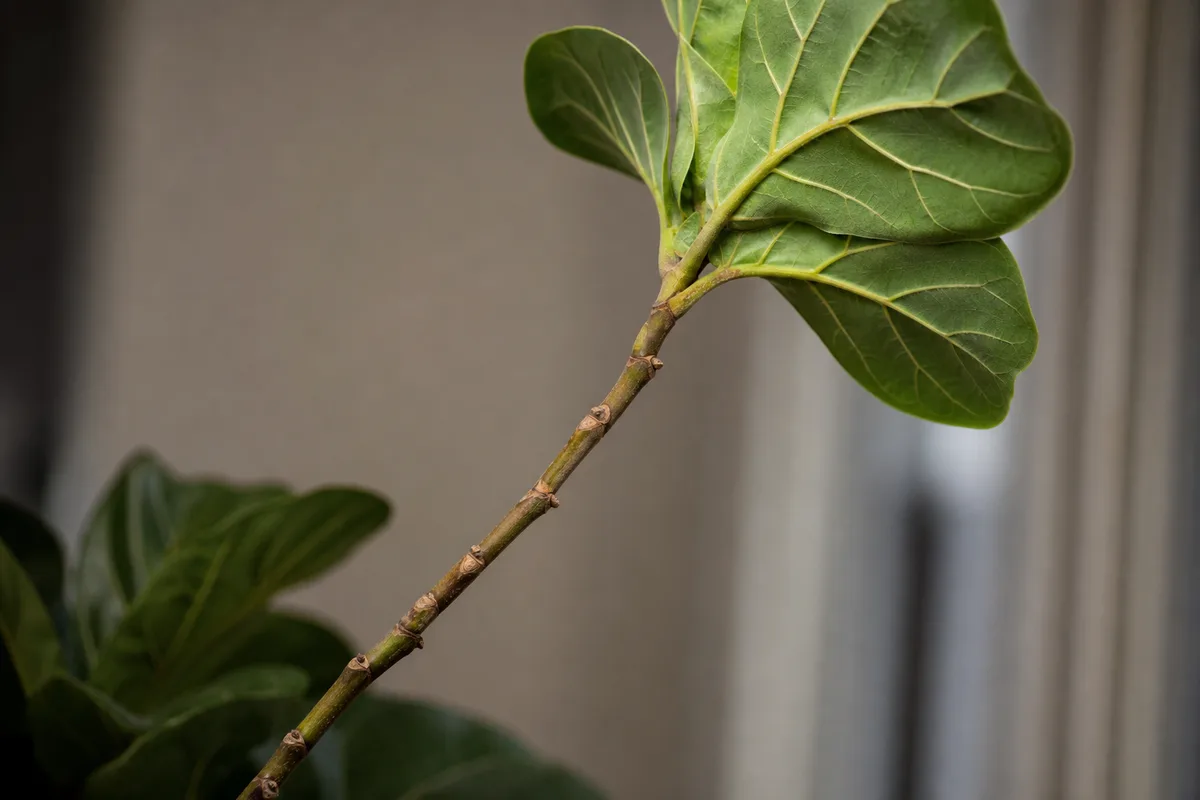
Leggy Growth symptoms on Fiddle Leaf Fig - compare with healthy tissue on the same plant.
Typical patterns include:
- Elongated internodes with three to six inches of bare stem between leaves on the newest growth-noticeably longer than sections formed in brighter months
- Smaller new violin-shaped blades on the longest, most recent stems; healthy indoor leaves often reach twelve to eighteen inches, while etiolated new foliage may be half that size
- Strong window lean-new leaves cluster on the glass-facing side with the longest petioles there
- Top-heavy lollipop form-several feet of bare woody trunk with foliage only at the crown after years in a dim corner
- Thin, pale petioles on the reaching stems while older canopy leaves may still look dark green (the plant is surviving, not thriving)
What leggy growth usually is not: crisp bleached patches on sun-facing tissue after a sudden move to hot glass (sun scorch-see the light guide); widespread yellowing with sour wet soil (overwatering or root stress); or a tall tree in bright light with large leaves at the top and short internodes-that is intentional single-trunk form, not etiolation.
Leggy etiolation vs. normal tall tree shape
A fiddle leaf fig allowed to grow upright in adequate light often becomes a floor tree six to ten feet tall with leaves concentrated toward the top-that is apical dominance, not necessarily legginess. The diagnostic split is internode length and new leaf size: in good light, even a tall trunk carries large leaves on relatively short gaps; in etiolation, the newest section shows disproportionate stretch and undersized blades regardless of overall height.
Why Fiddle Leaf Fig gets leggy indoors
Primary cause: insufficient bright indirect light intensity or duration. Low light levels produce spindly, lanky growth as indoor plants stretch toward the sun. Fiddle leaf fig is classified among high-light houseplants-the same category as weeping fig and schefflera, not snake plant or ZZ plant territory. NC State Extension lists Ficus lyrata for bright indirect light or partial shade indoors, with limited tolerance for direct sun.
Each large leaf is expensive to build and maintain. When daily light at the canopy falls too low-common more than six feet from glass, behind heavy sheers, or in winter when photoperiod shrinks-the plant enters survival mode. It stretches toward photons, produces smaller leaves, and may shed lower foliage it cannot afford to feed. Unlike weeping fig, fiddle leaf fig will not replace leaves lost indoors even when moved back to brighter conditions-bare trunk sections stay bare unless you force lateral buds with notching or a head cut.
Common triggers:
- Distance from the window. Light intensity drops sharply as you move away from glass, often halving every two to three feet. A décor placement across the room receives a fraction of what large leaves need.
- Single-direction exposure without rotation. One-sided phototropism produces curved stems with the longest internodes on the window side.
- Winter daylight shrink. Heated rooms with short December–February days maximize stretch even when the pot has not moved since summer.
- Overfertilizing in low light. Nitrogen drives soft elongation without photons-worse legginess, not compact recovery.
Secondary causes that compound stretch but rarely cause it alone:
- Chronic overwatering in a dark corner. Dim plants drink slowly; wet soil plus weak light produces yellow lower leaves and stalled buds-an urgent compound pattern covered on the not-enough-light page, not cosmetic legginess alone.
- Recent relocation to a darker spot. Ficus species drop leaves when environment shifts; stretch toward a new light source may follow within weeks.
Leggy growth vs. related problems
| Pattern | Likely cause | First check |
|---|---|---|
| Long internodes, small new leaves, window lean, firm stems | Leggy etiolation (low light) | Window distance; brighten before pruning |
| Same stretch plus hand-shadow test fails, wet soil for ten-plus days | Chronic insufficient light | Not enough light + light guide |
| Bare trunk, want branches lower down after light is fixed | Apical dominance on etiolated stem | Notching or head prune per pruning guide |
| Yellow leaves, sour wet soil, soft base | Root stress + weak light | Overwatering before more light |
| Permanent tilt, pot listing, roots at surface | Structural lean from uneven weight or root-bound pot | Stake and rotate; distinguish from active phototropism toward light |
| Pale tan patches after one-day sun move | Sun scorch | Pull back; acclimate over seven to fourteen days |
Leggy growth and not enough light overlap on fiddle leaf fig-etiolation is often the visible signature of chronic under-lighting. This page goes deeper on internode stretch, the old-tissue persistence rule, and pruning or notching timing; the sibling page covers the full low-light picture including placement tests and watering rhythm in dim rooms.
How to confirm the cause
Work through these checks before repotting, feeding, or mass pruning:
- Internode comparison. Measure or eyeball the gap between the last two leaves on the growing tip against a section from last summer or from a brighter window month. Leggy growth adds bare stem length-not just overall tree height from age.
- New vs. old leaf size. Compare the youngest blade to mature foliage six months old. Smaller blades on longer petioles confirm stretch from insufficient light.
- Window direction and distance. Note exposure and feet from glass. Measure whether the top of the crown receives sky brightness or only reflected room light.
- Lean direction. If every new leaf opens toward the same window and that side carries the longest internodes, the plant is actively reaching-not randomly floppy.
- Two-week placement trial. Move closer to the brightest safe window without changing water, fertilizer, or pot size. If the next emerging leaf shows a shorter internode and larger blade, light was limiting growth.
- Soil moisture rhythm. Stick a finger two inches deep. Surface damp for ten-plus days plus stretch points to low light slowing dry-down-pair light correction with adjusted watering per the watering guide.
If light is adequate but internodes still elongate toward one bulb only, rotate every two to three weeks and check grow-light distance in the light guide.
First fix for Fiddle Leaf Fig
Move the tree to corrected bright indirect light-or add a grow light there-and hold placement stable for at least fourteen days.
Pick a final spot within one to three feet of an unobstructed east window, or three to five feet back from south or west glass with a sheer curtain to block hot afternoon rays. If no window passes a hand-shadow test at canopy height, install a full-spectrum LED twelve to twenty-four inches above the top of the tree on a twelve- to fourteen-hour timer.
Hold everything else steady while you test the move:
- Do not repot on the same day.
- Do not apply fertilizer to a stressed plant.
- Do not notch or head-prune all bare stems hoping for compact regrowth in the same dim spot.
- Do not increase watering because leaves look limp-check soil first.
If the plant lived in deep shade for months, increase light gradually over seven to fourteen days so leaves do not scorch from a sudden jump into hot afternoon glass. Fiddle leaf figs react to relocation with temporary leaf drop even when the new site is better-moving twice in two weeks compounds stress.
When to prune, notch, or pinch leggy stems
Structural shaping is a second step, not the first fix for legginess. Pruning cannot replace missing photons; cutting in dim conditions produces weak single shoots that stretch again.
After light is adequate
Wait until four to six weeks of improved light produce at least one new leaf with normal size and a shorter internode. Then choose a method based on your goal:
- Head pruning - Cut the main stem cleanly five to ten millimeters above a visible node at the height where you want branching. Removing the apical bud lifts apical dominance at nodes immediately below; expect one to four new shoots within four to eight weeks during spring or summer active growth. Best when you want to reduce height or restart the canopy lower. Limit each session to one-third of living foliage. Details and sterilization in the pruning guide.
- Notching - On woody bare trunk, make a shallow horizontal cut about one-third of the stem depth just above a dormant node where you want a lateral branch-without removing the growing tip. This disrupts auxin flow to awaken that bud. Works best on mature stems in bright light during late spring through early summer; success is less consistent than head pruning. Make two or three notches above different nodes rather than one if you want multiple branches.
- Pinching - Remove only the softest new tip tissue with fingers or snips for light maintenance on young plants. Produces a milder response than a full head cut-useful for slightly bushier tips, not for filling feet of bare trunk.
What bare trunk cannot do on its own
Lower leaves shed from chronic dim placement do not regrow at the same nodes. The bare woody section stays bare unless dormant buds activate through notching or a head cut redirects energy. This is why many indoor fiddle leaf figs become lollipops-the plant will not backfill old bare stem automatically, even in perfect light.
Safety when cutting
Wear gloves when pruning. Milky latex sap irritates skin and fiddle leaf fig is toxic to pets if ingested-bag trimmings out of reach of cats and dogs.
Step-by-step recovery
Once light is corrected, support recovery in this order:
- Hold placement stable for fourteen days minimum - No repotting, no heavy pruning, no fertilizer the same week as the move.
- Adjust watering to match new light - Brighter spots dry faster; water when the top two inches of soil are dry, not on the old dim-corner calendar.
- Rotate the pot a quarter turn every two to three weeks - Even growth prevents permanent lean; rotation redistributes light but does not create it.
- Dust large leaves gently - Blocked stomata reduce the benefit of corrected placement.
- Stake thin top-heavy stems temporarily if the crown outweighs a weak etiolated trunk-remove the stake once new growth stiffens.
- Notch or head-prune bare sections only after new leaves prove light is adequate-spring through early summer is the safest window.
- Hold fertilizer until new growth looks normal in size and color for two weeks.
Skip propagation as a panic fix unless you deliberately want a fresh compact plant from a healthy tip cutting-the parent still needs light correction regardless.
Recovery timeline
Two to four weeks: The next leaf should emerge with a noticeably shorter internode and larger blade than the most recent stretched section. Some leaf drop after a move is normal-not proof the new spot failed.
Four to eight weeks: In warm, bright conditions during spring or summer, many trees push a second compact leaf where one stretched leaf appeared before. Notching or head-prune results may show visible bud swelling within this window.
Old stretched tissue: Permanent. Judge success only by new internode length and leaf size, not by old bare stem shortening. A severely leggy tree may take four to eight months to look balanced again after light plus selective pruning, even when care is correct.
Worsening signs after a light increase: Continuing mass drop after twenty-one days of stable bright placement, soft stems, or soil that stays sour and wet-audit for root problems rather than moving again.
Lookalike symptoms
- Phototropism without full etiolation - Strong lean toward one window but moderate internode length elsewhere. Fix with weekly rotation and slightly more total light; see not enough light if growth also stalls.
- Normal age and single-trunk form - Tall tree with large leaves and short gaps in bright light. Legginess adds disproportionate internode length and small new blades, not just height.
- Overwatering in a dim corner - Yellow or drooping leaves with moist, sour-smelling soil. Fix drainage and dry-down before blaming light alone.
- Slow growth without active stretch - Dim light but stable internode length from years ago. May need the same light fix but presents as stalled buds rather than active reaching.
- Sudden relocation shock - Rapid leaf fall within days of any move, even to a brighter window. Stabilize one spot fourteen days; judge by new buds, not floor leaves.
What not to do
Do not notch or head-prune heavily in low light-cuts produce weak shoots that stretch again. Do not fertilize heavily to compensate for stretch-excess nitrogen pushes more soft foliage without fixing the energy deficit. Do not jump from deep shade to harsh midday sun without acclimation. Do not strip all long green leaves immediately-they still photosynthesize, even weakly. Do not repot on day one hoping to spark compact growth-relocation plus repotting stacks stress on this stability-sensitive species. Do not confuse cosmetic etiolation with root rot when wet soil and mass leaf drop coincide-audit roots before more light alone.
How to prevent leggy growth next time
Match placement to the plant’s light hunger before décor. Fiddle leaf fig belongs where bright indirect light is realistic most of the day-not where the pot fills an empty corner.
- Place within one to three feet of the brightest safe window; read the light guide for exposure by direction.
- Rotate the pot every two to three weeks for even internode length.
- Use grow lights in winter or dim apartments-twelve to fourteen hours daily when natural sun is weak.
- Catch elongation on the second long internode, not the fifth-prevention beats reshaping a bare trunk.
- When light increases, adjust watering only after confirming the mix dries faster per the watering guide.
- Accept that cosmetic stretch on old internodes persists-prevention means bright stable light before structural intervention.
Healthy fiddle leaf fig in adequate light grows large violin-shaped leaves on short, stiff internodes even when the tree is tall. In weak light it becomes a stretched lollipop that never matches the nursery photo. Brighten first; notch or prune later; everything else follows from usable light on the leaves.
Related Fiddle Leaf Fig guides
- Not enough light - full low-light diagnosis including hand-shadow test, wet-soil patterns, and relocation shock
- Light guide - window placement, acclimation, grow-light distance
- Pruning - head cuts, notching technique, node placement, sap safety
- Watering - dry-down rhythm after you increase light
- Overview - species context and stable placement basics