Fiddle Leaf Fig Pruning: When, How, and Mistakes to Avoid
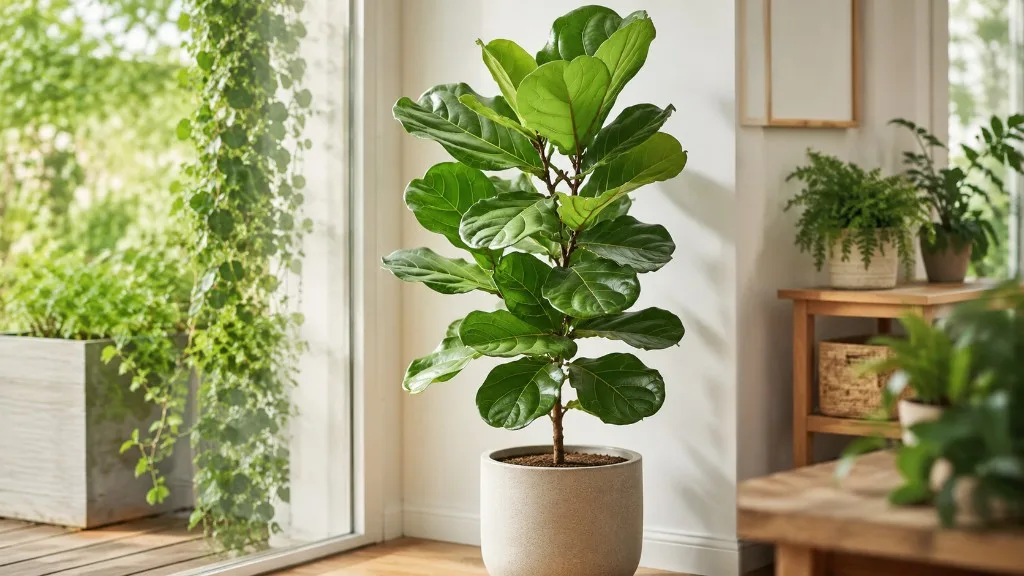
Fiddle Leaf Fig Pruning: When, How, and Mistakes to Avoid
Fiddle Leaf Fig Pruning: When, How, and Mistakes to Avoid
Quick Answer - First Cut and Seasonal Window
First, remove only dead, damaged, or clearly diseased leaves and stems with clean sharp scissors - snip the petiole near the stem or cut just above the next healthy node below declining tissue. Do not reshape a healthy canopy until that cleanup is done and the plant looks vigorous. For structural work - head cuts, notching, or shortening multiple branches - wait until late spring through early summer, when Ficus lyrata is actively unfurling new leaves and bright lengthening days support bud break. Cut and notch 5–10 mm above a visible node, never mid-internode. Remove no more than one-third of living foliage per session. Wear gloves: milky latex sap irritates skin and is toxic if ingested by pets.
What Pruning Does for Fiddle Leaf Fig
Indoor fiddle leaf figs often grow as a single upright trunk with foliage clustered at the top - a shape that looks fine for a year, then becomes leggy, ceiling-bound, and bare on the lower stem. Pruning redirects growth hormones so lateral buds along the trunk can wake up. The goals are almost always shape, height control, bushiness, and sanitation - not flowering, because houseplant specimens rarely flower or fruit indoors.
A healthy Ficus lyrata in Fiddle Leaf Fig light guide responds to well-placed cuts by pushing new shoots from nodes within weeks during active growth. A stressed, underlit, or recently repotted plant may sit unchanged for months after the same cut. Pruning cannot fix root rot on Fiddle Leaf Fig, chronic underwatering on Fiddle Leaf Fig, or a north-facing window - it reallocates energy on a plant that already has energy to spare.
Inspect Before You Cut
Walk the plant before blades touch tissue. Check stem bases for firmness, soil moisture at two inches depth, leaf undersides for scale, mealybugs, or spider mites, and whether new growth at the tip is actively expanding. Postpone structural cuts if the plant was repotted within six weeks, recently moved, drooping, or showing widespread brown spots - stabilize care first.
Nodes, Internodes, and Apical Dominance
Nodes are the slight swellings along the stem where leaves attach (or once attached). Each node carries dormant lateral buds that can become branches when the dominant tip is removed or when auxin flow is disrupted. Internodes are the bare sections between nodes. Fiddle leaf figs branch from nodes, not from random points on bare stem.
The apical bud at each stem tip produces auxin, a growth hormone that suppresses many side branches below through apical dominance. A head cut removes that tip and lifts suppression at the nodes immediately below. Notching disrupts auxin flow without removing the tip. Pinching removes only the softest top tissue for a lighter response.
Internode length signals growing conditions. Long internodes and small new leaves usually mean the plant is reaching for light. Short internodes and stiff large leaves mean conditions are closer to ideal. Pruning can improve silhouette temporarily, but without adequate light the next flush will stretch again.
When to Prune Fiddle Leaf Fig
Timing splits into urgent cleanup and planned shaping.
Dead, fully brown, blackened, mushy, or pest-ridden leaves and stems can be removed whenever you see them. The plant recovers no useful energy from senesced tissue, and decaying material can harbor fungus gnats or hold moisture against stems.
Structural shaping - head cuts, notching, shortening multiple branches, or removing up to one-third of healthy foliage - belongs in the active growing season. For most indoor specimens that means late spring through early summer (roughly April through June in the Northern Hemisphere), when a new leaf is unfurling at the tip and the plant drinks on a predictable rhythm. NC State Extension notes fiddle leaf fig is a relatively low-maintenance houseplant that may be pruned as needed - but heavy reshaping during fall and winter, when growth slows and light drops, leaves wounds sitting without new branches for months.
Year-Round Cleanup vs Spring Shaping
Year-round cleanup covers individual damaged leaves, tips killed by cold draft or breakage, and clearly diseased sections - low-risk cuts that barely change the energy budget. Spring shaping covers head cuts for branching, notching lower trunks, shortening stems for balance, and planned thinning up to one-third of foliage. If you must address an overgrown tree in winter, limit yourself to dead tissue and schedule structural work for the first warm growth flush.
Tools, Gloves, and Sterilization
Match tools to stem size. Sharp bypass pruning shears handle most branches up to about half an inch. Heavy-duty pruners or a sharp utility knife may be needed for woody head cuts and notching on mature trunks. Fine scissors work for individual damaged leaves at the petiole. Keep 70% isopropyl alcohol, nitrile or rubber gloves, and a disposal bag nearby.
Sterilize blades before starting, between plants, and between cuts on diseased tissue. Iowa State University Extension recommends wiping or dipping equipment in alcohol after removing visible sap and debris. Work in good light, rotate the pot, and remove dead material first to open sightlines before live shaping cuts. Do not use wound sealant, pruning paste, or cinnamon - clean open cuts heal naturally.
Latex Sap and Skin Protection
NC State Extension notes stems contain milky sap that can irritate skin and recommends gloves when handling the plant, especially during pruning. Sap carries ficin and insoluble calcium oxalates common across Ficus species. Contact may cause redness, itching, or dermatitis; eye contact causes sharp irritation - rinse immediately.
Wear gloves for any session beyond one or two leaf removals. Long sleeves help on tall specimens where sap drips down the trunk. Wash exposed skin promptly with soap and water. If you have latex allergy, use nitrile gloves rather than latex ones.
Remove Dead and Damaged Leaves First
Start every session with declining tissue before touching healthy growth. Brown spots can mean sun scorch, inconsistent watering, bacterial infection, or mechanical damage - pruning alone does not fix root rot or chronic underwatering. One partially brown leaf on a vigorous plant may stay if most of the blade is still green and photosynthesizing. Widespread spotting or yellowing means pause heavy pruning and check soil moisture, drainage, light, and pests.
Remove a damaged leaf by snipping the petiole near where it meets the stem, or by cutting just above the node below if the entire petiole is declining. Do not tear leaves by hand - tearing creates ragged wounds and more sap exposure. For stem damage from cold, rot, or breaks, trace downward to firm green or woody tissue and cut just above the next healthy node below the damage.
Brown edges alone on an otherwise green leaf do not always require full removal. If only the margin is crisp and the rest of the blade is firm, the leaf may still contribute energy while you correct watering or light.
Cut Just Above the Node
The reliable placement for structural cuts is 5–10 mm (about ¼ inch) above a healthy node - close enough that no long dead stub remains, far enough that you do not crush the node. Below-node cuts remove bud tissue that would produce branches. Mid-internode cuts leave a stub that often dies back brown and rarely branches as hoped.
When removing an entire unwanted branch, cut back to the trunk just outside the branch collar where it joins the main stem, or shorten to a lower node with healthy leaves. Step back after each major removal and assess balance before continuing.
Shaping the Canopy
Shaping means preserving a balanced tree silhouette without stripping the plant. A healthy fiddle leaf fig naturally wants an upright form - central leader with occasional side branches - not a tight round shrub. Aim for balanced fullness: slightly wider at the base or midsection than a single whip, open enough in the center for air movement, short enough for the room.
Identify stems that throw the profile off - lopsided weight, crossing branches, competing leaders, or bare lower trunks with foliage only at the top. Shorten overlong branches just above lower nodes with healthy leaves. Remove entire stems only when duplicate, badly crossing, or bare with no useful side shoots. Rotate the pot weekly during growth so all sides receive similar light. Selective node cuts heal cleaner than shearing into a ball.
Head Cuts to Force Branching
When growers ask how to make a fiddle leaf fig branch, they usually mean a head cut - removing the growing tip of the main trunk or a tall branch to awaken buds below. This is the most reliable branching method on a healthy, well-lit plant in active growth.
Choose a height where you want the canopy to divide - often 12–18 inches below the ceiling or wherever the trunk has enough diameter to support multiple shoots. Make one clean cut 5–10 mm above a visible node. On soft green tips, the cut often produces one or two shoots from the topmost node below. On woody trunks at least half an inch in diameter, growers frequently see two to four branches emerge over four to six weeks - though results vary with health, light, and genetics. The Missouri Botanical Garden describes Ficus lyrata as a broadleaf evergreen tree that responds to pruning with new growth from nodes near the cut when conditions favor active growth.
Leave lower leaves in place during a head cut - they fuel recovery. Hold stable bright indirect light afterward and avoid fertilizing for two to three weeks. If no buds break within six to eight weeks during spring, the plant was likely stressed, underlit, or cut out of season.
Notching for Lower Branches
Notching encourages a lateral branch lower on the trunk without removing the top. Make a shallow horizontal incision approximately one-quarter to one-third of the way through the stem diameter, positioned about ¼ inch above a target node. The cut disrupts auxin flowing downward from the apical bud without eliminating the dominant tip.
Select a firm node on lignified tissue - typically a few feet above soil on a mature plant. Use a sharp clean blade for one decisive horizontal stroke; do not saw back and forth. The incision should breach vascular tissue carrying auxin but not sever a narrow trunk entirely.
Placement matters: a notch just above a node disrupts hormone flow before it fully suppresses the bud at that node. A notch below the node leaves the bud downstream of uninterrupted auxin. Success is not guaranteed - notching works only when hormone flow is disrupted at the right point above a viable bud. Spring timing, bright indirect light, firm trunk tissue, and an unstressed plant improve outcomes. Skip notching on drooping, recently repotted, pest-ridden, or low-light specimens.
When Notching Beats a Top Cut
Choose notching when the plant has good height but lacks side branches on the lower or middle trunk and you want to keep vertical growth. Choose a head cut when the plant has hit the ceiling, when top growth is leggy and you want to restart the canopy lower, or when you need the strongest branching signal. Spread aggressive work across months - do not notch and decapitate the same week.
Notching on very young pencil-thin green stems is risky; wait until the stem has meaningful diameter. The dwarf cultivar Ficus lyrata ‘Bambino’ follows the same biology on a smaller scale - adjust notch depth proportionally.
Pinching Soft Tips
Pinching is the lightest form of pruning. When a new leaf is unfurling at the tip, remove the tiny apical stipule and the softest top tissue with fingers or snips - eliminating the primary auxin source without a large wound. The one to three nodes immediately below often push two shoots instead of one straight extension.
Pinch only during active growth on healthy plants. It suits specimens that branch already but need denser tips, or young plants where you want early lateral shoots without a dramatic head cut. Pinching alone rarely transforms a six-foot single-trunk tree into a bushy specimen - head cuts or successful notching handle that - but it is useful maintenance from spring through summer.
If the tip has hardened into stiff tissue with a fully expanded top leaf, switch to a snip just above the top node rather than crushing hardened stem.
Step-by-Step Pruning Routine
- Inspect the whole plant - stem firmness, soil moisture, pests, overall vigor. Postpone structural work if stressed.
- Gather tools - sharp shears or knife, nitrile gloves, alcohol, disposal bag.
- Sterilize blades - wipe with 70% isopropyl alcohol and let dry.
- Remove dead and damaged tissue first - brown leaves, blackened stems, diseased sections.
- Plan structural cuts - mark mentally where head cuts, notches, or shortening cuts will go. Visualize the result.
- Execute shaping cuts one at a time - cut just above nodes; make notches with single decisive strokes.
- Pause and reassess - stop before the plant looks hollow; additional cuts can wait two to three weeks.
- Wipe sap from stems, pot rim, and floor. Bag trimmings securely.
- Clean tools and wash hands and forearms.
- Return the plant to stable light and normal watering - hold fertilizer for two to three weeks after moderate to heavy work.
Do not water on schedule after every prune - check soil moisture. Do not move the plant to a new window the same day as a head cut.
How Much You Can Safely Remove
The one-third rule is the safe ceiling per session: remove no more than one-third of living foliage at once. Fiddle leaf figs depend on large leaves to photosynthesize and fuel new growth. Stripping half the canopy in a dry winter room removes capacity while roots still consume reserves.
If the specimen is severely overgrown or leggy, rejuvenate in stages over two or three spring sessions spaced two to three weeks apart. A hard cutback to lower nodes can work when the base is firm, roots are healthy, and conditions are warm and bright - but a plant with mushy stems at the soil line or severe root rot will not respond. Fix roots and watering before cosmetic reshaping.
Aftercare and Recovery Timeline
After pruning, keep bright indirect light and watering stable - do not shift to harsh sun or a dim corner the same week. Hold fertilizer for two to three weeks after moderate to heavy sessions; resume diluted feeding when new leaves unfurl at cut points. Water based on soil moisture, not habit, and avoid overwatering on Fiddle Leaf Fig “to help recovery.”
During active spring and summer growth, visible new buds often appear within two to four weeks of a head cut or successful notch. Full branching structure commonly takes six to eight weeks if light and watering stay steady. Pinching shows results faster - often within one to two weeks. Out-of-season pruning can delay any visible response until the next spring flush.
Sap dripping for a day or two after a cut is normal. Excessive ongoing drip with wilting may signal a cut too deep on a stressed plant or an underlying hydration problem. Slight temporary droop on remaining leaves immediately after a large head cut is common and usually resolves as new growth establishes.
Pruning and Toxicity
Pruning spreads milky sap, cut stems, and detached leaves beyond the pot. NC State Extension classifies Ficus lyrata as toxic to humans, cats, and dogs if ingested, with oral irritation, excessive drooling, and vomiting among possible symptoms. The ASPCA lists fig species as toxic to dogs and cats, with gastrointestinal upset from ingestion and skin irritation from sap contact.
Wear gloves, bag trimmings immediately, and keep debris off floors where pets forage. If sap contacts pet fur or paws, wash with mild soap and water. If a pet ingests plant material, contact your veterinarian or animal poison control with the plant identity and symptoms.
Common Mistakes
The most damaging errors: cutting below the node or mid-internode, dull or dirty tools, winter structural pruning, notching or head-cutting stressed plants, ignoring inadequate light, using wound sealant, shearing the canopy, and leaving sap-soaked trimmings within pet reach. Aim 5–10 mm above a visible node every time.
Removing too much at once shocks the plant more than any single misplaced cut. Stage major reshaping across spring sessions rather than one heroic session.
Conclusion
Fiddle leaf fig pruning works when you align cuts with how Ficus lyrata actually branches - not when you hack whenever leaves look messy. Remove dead and damaged tissue anytime, save head cuts, notching, and major shaping for late spring through early summer, and never take more than one-third of healthy growth in one session. Cut and notch just above nodes, wear gloves for latex sap, sterilize blades, and improve light before blaming technique for a stubborn single trunk. Choose a head cut for height control and strong branching; choose notching for lower lateral growth without losing the top. Hold fertilizer briefly after significant cuts, keep conditions stable, and bag trimmings safely in homes with pets. Done this way, pruning helps your fiddle leaf fig grow into a balanced indoor tree - fuller, healthier, and proportioned to the room - without the months of silence that follow overambitious winter cuts on a stressed plant.
When to use this page vs other Fiddle Leaf Fig guides
- Fiddle Leaf Fig overview - Start here for whole-plant context before deep-diving this topic.
- Fiddle Leaf Fig problems hub - Jump to symptom-specific fix guides when this care topic does not resolve the issue.
- Leggy Growth on Fiddle Leaf Fig - Escalate here when pruning adjustments are not enough.
- Slow Growth on Fiddle Leaf Fig - Escalate here when pruning adjustments are not enough.
- Brown Tips on Fiddle Leaf Fig - Escalate here when pruning adjustments are not enough.