Slow Growth on Fiddle Leaf Fig: Causes, Checks & Fixes
Quick answer
Slow fiddle leaf fig growth usually means insufficient bright indirect light, root-bound large pots, relocation shock, or normal winter rest-not always a fertilizer shortage. First step: test light at canopy height with a hand shadow, then check whether the top two to three inches of soil dry at a realistic pace and whether roots circle a heavy floor tree.
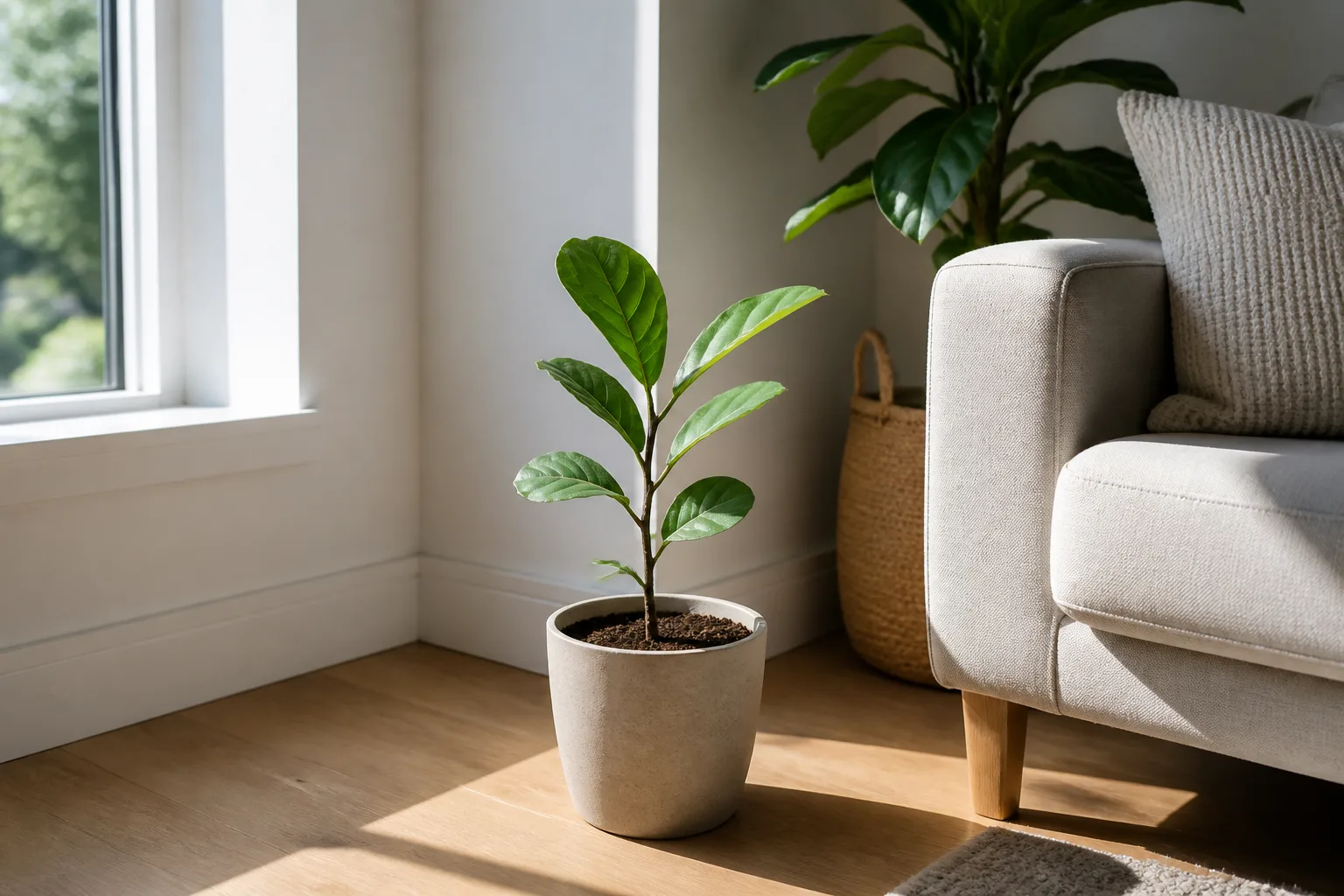
Slow Growth on Fiddle Leaf Fig: Causes, Checks & Fixes
This guide covers slow growth on Fiddle Leaf Fig. See also the general Slow Growth guide, watering, and light pages for this plant.
Slow Growth on Fiddle Leaf Fig: Causes, Checks & Fixes
Quick answer
Slow growth on fiddle leaf fig (Ficus lyrata) usually means insufficient bright indirect light, a root-bound large pot, relocation shock, chronic overwatering in a dim corner, or normal cool-season rest-not always a fertilizer shortage. First step: test light at canopy height with a hand shadow, then check whether the top two to three inches of soil dry at a realistic pace and whether roots circle a heavy floor tree.
Fiddle leaf fig is a small tropical tree with large, metabolically expensive leaves that can reach up to eighteen inches long indoors. Growth is moderate in a typical bright home-faster when light and warmth align, slower when either slips. A tree that looks healthy but adds no full-size leaves for months is usually hitting a care bottleneck you can fix once you identify it. This page covers general stall (roots, relocation, season, fertilizer timing). For chronic dim-room stretch with long bare stems, see not enough light on fiddle leaf fig; for directional lean and etiolation, see leggy growth.
What slow growth looks like on Fiddle Leaf Fig
Read the newest growth first. Slow growth on Ficus lyrata shows up as:
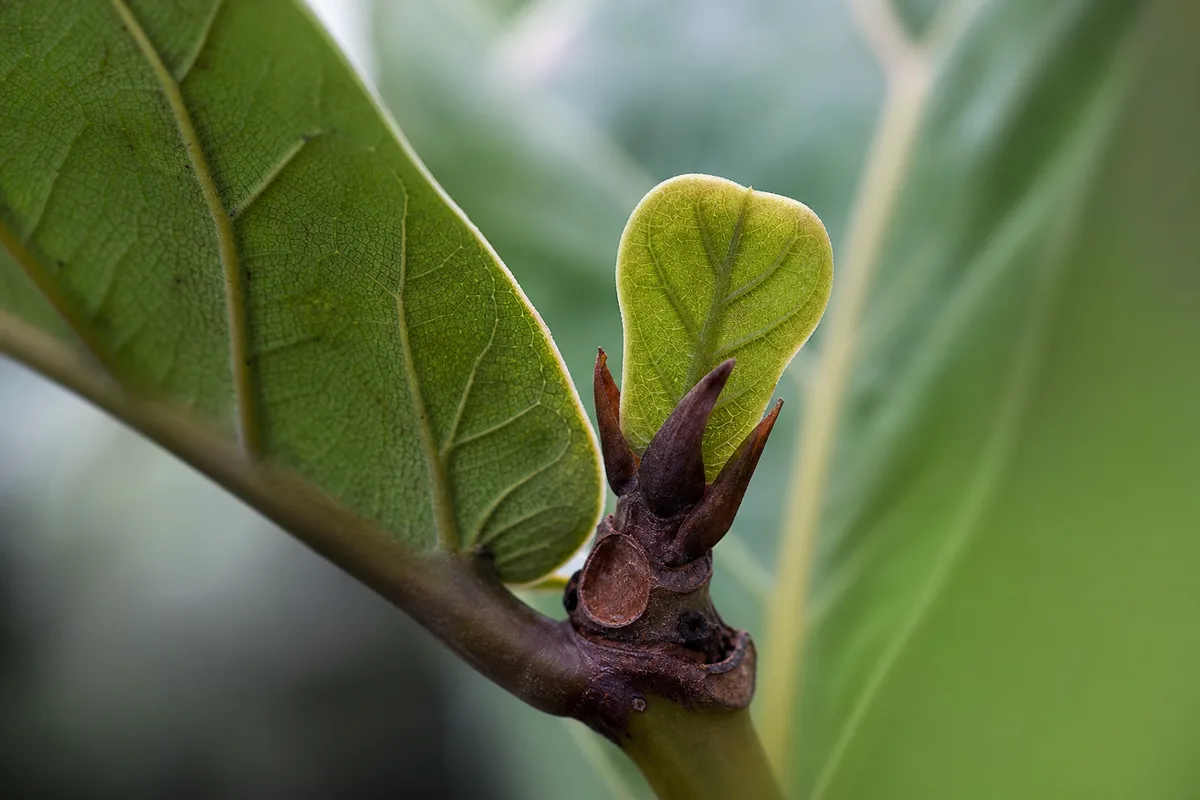
Slow Growth symptoms on Fiddle Leaf Fig - compare with healthy tissue on the same plant.
- No new leaf for eight or more weeks during spring or summer while stems stay firm and green
- Small new leaves-often half the size of mature violin-shaped foliage on the same stem
- Static canopy height on floor trees: the trunk grows taller in shops but your tree has not added a leaf tier in a full warm season
- Long bare lower trunk with foliage only at the top-the classic lollipop silhouette on tall specimens
- Apical bud sitting dormant while older leaves hold color; no visible bud swell at the stem tip
- Soil that stays wet ten-plus days between checks even though you have not watered recently-dim plants drink slowly and growth stalls alongside moisture stagnation
Normal winter pause: Few or no new leaves from late fall through early spring when daylight shortens and room temperatures dip toward 60°F (15°C). NC State Extension notes fiddle leaf fig performs best above about 55°F; cool-season quiet with firm wood and appropriately drying soil is expected-not a care emergency.
Not slow growth alone: Rapid leaf drop within days of a move (relocation shock), yellow leaves on persistently wet soil with soft stems (root rot), or fine stippling with webbing on undersides (spider mites in dry heat).
Why Fiddle Leaf Fig grows slowly
Insufficient bright indirect light is the most common limiter. Ficus lyrata evolved in tropical lowland rainforests of western and central Africa under bright filtered daylight-not deep interior shade. Clemson Extension classifies fiddle leaf fig among high-light houseplants suited to bright western or southern exposures with curtain filtering. Each large leaf costs energy to build and maintain; without enough photons, the tree survives on old foliage but stalls new production. Light intensity drops sharply as you move away from glass-a floor tree placed for décor in a room center may receive reflected brightness sufficient for survival but not for full-size new leaves.
Root-bound large floor trees restrict uptake even when light is adequate. After years in the same decorative pot, roots circle densely, mix breaks down, and the plant has little room for new root tips. Soil may dry within a day after watering because the root mass channels moisture through the outer ring-yet growth stalls because the root system cannot expand. Tall specimens are awkward to inspect; probe drainage holes and note whether water runs straight through without moistening the center.
Overwatering and root decline pause growth while the tree redirects energy to survival. NC State Extension lists fiddle leaf fig as sensitive to overwatering; chronic wet mix in a dim corner is especially common because the plant drinks slowly. Wet anaerobic roots cannot support new tissue-growth stalls, lower leaves may yellow, and owners often water again thinking the static canopy needs food.
Relocation shock after a recent move-even to a technically brighter spot-can pause new leaves for two to six weeks while the tree sheds foliage calibrated to the old environment. Ficus lyrata is stability-sensitive; repeated moves compound the stall. See leaf drop if mass shedding followed a placement change.
Cool drafts and autumn slowdown reduce metabolism. Temperatures below about 55°F (13°C), cold window glass, or HVAC vents blowing on the canopy slow growth without other symptoms. University of Maryland Extension notes that insufficient light and cool conditions both produce poor growth indoors-check both variables in fall and winter.
Under-fertilization matters only after light and roots are addressed. A tree in adequate light with healthy roots may add pale, undersized leaves if mix has not been refreshed in years-but fertilizer on a dark, root-stressed plant produces weak growth and salt buildup without solving the real limiter.
Spider mite stress on large leaf undersides drains vigor in dry winter air. Stippling and fine webbing may appear before dramatic leaf loss; growth slows while pests feed. NC State Extension recommends monitoring for spider mites on houseplant Ficus.
Recent repotting can pause growth for three to six weeks while roots settle-expect quiet after a move even when care is correct. Do not repot again or double fertilizer during this window.
How this differs from leggy growth and not enough light
These three pages overlap because light limits growth-but the primary reader question differs:
| Pattern | What you see | Best next page |
|---|---|---|
| Slow growth (this page) | Firm tree, few or small new leaves, possible root-bound stall, relocation pause, winter rest, wet soil in dim corners | Start here |
| Not enough light | Long petioles, small new leaves, permanent lean toward one window, soil wet ten-plus days from slow uptake | Light placement fix |
| Leggy growth | Bare lower trunk, stretch toward glass, etiolated internodes | Structural stretch correction |
A dim fiddle leaf fig often shows both slow leaf production and leggy stretch. Fix light first; then reassess whether roots or season still limit new full-size leaves.
How to confirm the cause
Work through this checklist in order:
- Hand-shadow test at canopy height - On a bright day, hold your hand at the top of the tree. Soft, readable shadow = usable indirect light. Faint or absent shadow = too dim for active growth on this species.
- New leaf size and timing - Compare the last two leaves on the growing tip to mature foliage six months old. Half-size new blades for multiple cycles confirm stress. No bud swell for eight-plus weeks in warm months points to a real bottleneck.
- Season and temperature - Is it November through February, or is the pot near a cold draft? Cool rest explains stall without yellow leaves on wet soil.
- Soil dry-down rhythm - Check the top two to three inches per the watering guide. Mix wet ten-plus days while growth stalls suggests low light slowing uptake or overwatering-not thirst.
- Root inspection - Slide smaller plants from the pot; on floor trees, probe drainage holes and lift the nursery pot if it sits inside a cachepot. Dense circling roots, little visible mix, or roots poking from holes mean repotting is due.
- Recent changes - Repotting, moving homes, or new furniture within the last six weeks can pause growth independently of chronic care errors.
- Pest scan - Wipe a white cloth across leaf undersides; stippling and fine webbing suggest spider mites. Scale and mealybugs also slow vigor on Ficus.
- Stem firmness and smell - Soft wood at the base with sour wet soil suggests root decline, not seasonal rest.
If brighter light for three weeks produces a bud swell, light was a primary limiter. If roots are dense and light is already strong, repotting is the next test.
First fix for Fiddle Leaf Fig
Confirm bright indirect light at the canopy and healthy root-zone oxygen-then make one change and wait.
For most stalled trees, that means moving to the brightest spot that still qualifies as bright indirect light (within one to three feet of an east window, or three to five feet back from filtered south or west glass) or adding a full-spectrum grow light twelve to twenty-four inches above the canopy on a twelve- to fourteen-hour timer if no window passes the hand-shadow test. Pair the light correction with a dry-down check: water when the top two to three inches dry, not on a calendar from a dim corner.
Do not jump to fertilizer, heavy pruning, or repotting on day one unless roots are clearly rotting (soft stems, sour soil). Ficus lyrata reacts badly to stacked stressors. Make one placement or watering rhythm correction, hold stable for fourteen days, and read the apical bud.
If light is already strong and roots circle densely, schedule repotting into a container only two to four inches wider with drainage holes-after the tree has acclimated if you just moved it.
Step-by-step recovery
After the first fix, support recovery in this order:
- Hold placement stable for at least fourteen days - No second move, no repotting, no fertilizer on the same week as a relocation.
- Adjust watering to match new light - Brighter spots dry faster; dim corners dry slower. Check soil depth twice weekly until you learn the rhythm.
- Dust large leaves gently - Blocked stomata reduce photosynthesis; wipe with a damp cloth every few weeks so corrected light reaches the leaf surface.
- Repot root-bound plants in spring or early summer - Use airy, well-drained mix; loosen circling roots gently. Expect three to six weeks of quiet after repotting.
- Treat spider mites if confirmed - Rinse undersides, improve humidity, and treat pests after light is adequate; weak trees recover slowly in shade.
- Add fertilizer only after new growth looks normal - Once a full-size leaf opens and holds green for two weeks, feed lightly during active season per the fertilizer guide. Skip feed on stressed trees.
Recovery timeline
Light upgrade during spring or summer: First viable bud swell within three to six weeks after placement improves is common. Full-size new leaf opening may take another two to four weeks.
After repotting: Expect three to six weeks of quiet while roots establish. Canopy height may not change until the next active season on large floor trees.
Winter correction: Fixes made in late fall may show no new leaf until March or April when day length increases-even if light and roots are now correct.
Relocation shock: Temporary stall two to six weeks after any move is normal. Judge by new buds, not floor leaves shed during acclimation.
Signs of success: Apical bud swell, next leaf approaching mature size on the same stem, soil drying at a realistic pace, and firm green wood at the base.
Worsening signs: Continuing mass leaf drop after twenty-one days of stable bright placement, soft stems, soil that stays sour and wet, or no bud activity through an entire warm growing season after light and repotting fixes.
Lookalike symptoms to rule out
- Chronic low light with stretch - Long petioles and lean toward one window. Response: see not enough light for placement depth.
- Root rot - Yellow leaves on wet soil, soft stems, mushy roots. Response: stop watering, inspect roots, repot dry-bright light alone will not fix rotting tissue.
- Sudden relocation shock - Rapid leaf fall within days of any move. Response: stabilize one spot fourteen days; do not move again hunting for perfection.
- Normal cultivar pace on a young plant - Small specimens naturally produce smaller leaves until the trunk lignifies. Compare against the same plant’s history, not a mature showroom tree.
- Post-repot pause - Temporary stall for three to six weeks after repotting is expected. Do not repot again during this window.
What not to do
Do not fertilize heavily on a dark or root-stressed tree-salts accumulate while the plant cannot use them. Avoid repotting into an oversized decorative pot hoping to force growth; excess wet soil around a small root ball worsens stall. Do not water less as the only fix when soil stays wet in a dim room-correct light so the tree uses moisture again.
Resist moving the plant weekly; each relocation retriggers leaf drop on this stability-dependent species. Do not stack repotting, heavy pruning, and fertilizer in the same week after a move. Do not confuse cool-season rest with a care failure and panic-feed in January.
How to prevent slow growth next time
Place fiddle leaf fig where bright indirect light is realistic all day-not where the pot fills an empty corner. Repot every one to two years or when roots emerge from drainage holes; refresh compacted mix on large trees before it holds water for weeks.
Match watering to dry-down rate per the watering guide, not a fixed calendar. Maintain stable temperatures between 65 and 75°F (18 and 24°C) and avoid cold drafts on the canopy. Run a humidifier or pebble tray in dry winter air to reduce spider mite pressure on large leaves.
Feed lightly during active growth only after light and roots support new tissue. Rotate the pot a quarter turn every two to three weeks during stable periods-not immediately after a move.
When to worry
Slow growth alone is low urgency. Escalate when:
- Yellow leaves spread while soil stays wet for days-suspect root rot, not season
- Stems soften at the base or the pot smells sour
- No new growth through an entire warm growing season after light and repotting fixes
- Pest colonies cover undersides despite rinsing
- Multiple leaves drop weekly for more than three weeks after a single stable relocation
A firm, green, static tree in winter is usually fine. A wilting, yellowing, or smelly tree needs root and moisture diagnosis immediately-see wilting and root rot.
Related Fiddle Leaf Fig guides
- Overview - species biology, moderate growth habit, and placement basics
- Light - bright indirect targets and window placement
- Watering - top-two-to-three-inch rule and seasonal rhythm
- Fertilizer - when to feed after light and roots are corrected
- Not enough light - dim-room stretch and small new leaves
- Leggy growth - bare trunk and directional etiolation
- Root rot - wet-soil stall with soft stems
- Leaf drop - relocation shock and acclimation
Conclusion
Fiddle leaf fig slow growth is rarely mysterious once you separate seasonal pause from real bottlenecks. Start with a hand-shadow test at the canopy, read dry-down pace at depth, and inspect roots on large specimens before reaching for fertilizer. Most stalled trees respond within one to two growing seasons once light and root space align-judged by the next full-size leaf at the stem tip, not by old foliage that will never enlarge. Get placement stable, adjust water to match, and let the apical bud prove the fix before stacking more changes.