Wilting on Fiddle Leaf Fig: Causes, Checks & Fixes
Quick answer
Wilting on fiddle leaf fig means large violin-shaped leaves have lost turgor and gone limp. First step: lift the pot and check whether the top two inches of mix are wet or dry-a heavy wet pot with wilt means root stress, not thirst; a light dry pot means drought. Do not add water until you know which.
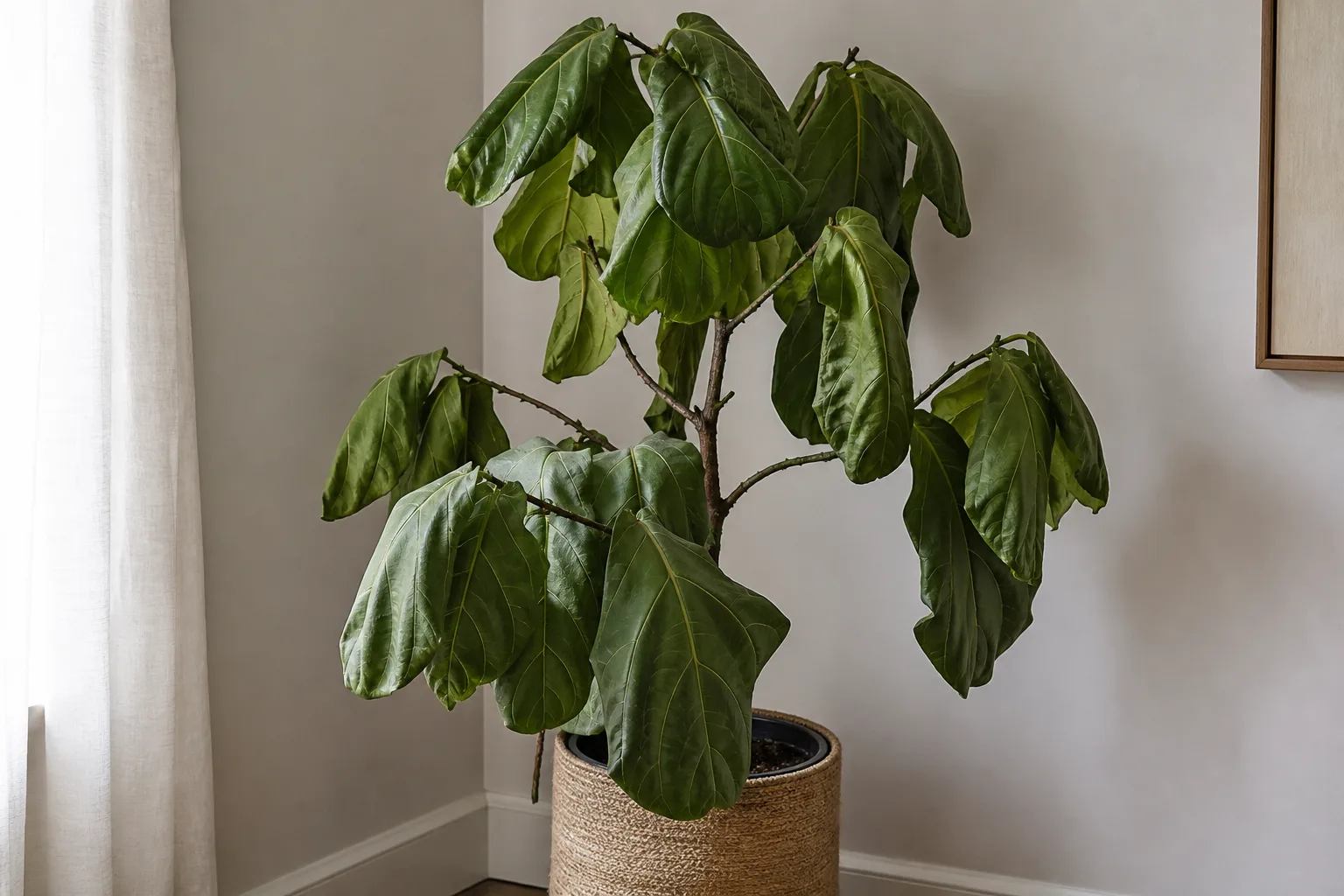
Wilting on Fiddle Leaf Fig: Causes, Checks & Fixes
This guide covers wilting on Fiddle Leaf Fig. See also the general Wilting guide, watering, and light pages for this plant.
Wilting on Fiddle Leaf Fig: Causes, Checks & Fixes
Quick answer
Wilting on fiddle leaf fig (Ficus lyrata) means the large, leathery violin-shaped leaves have lost turgor-they hang limp and soft instead of holding their usual stiff posture. Because each leaf can span twelve to eighteen inches indoors, the plant shows stress fast; small watering or light mistakes become visible within days.
First step: do not water on sight. Lift the pot and stick your finger two inches into the mix at the center, not only at the rim. A heavy wet pot with limp leaves means root stress or overwatering-the damaged roots cannot move water even though soil is damp. A light dry pot with limp leaves means drought. Those two scenarios need opposite fixes, and adding water to a wet wilted tree is the most common way owners turn a recoverable stress into root rot on Fiddle Leaf Fig.
This page focuses on acute limp collapse and the wet-pot versus dry-pot diagnostic. For the full watering framework-top-two-inch rule, seasonal intervals, and saucer discipline-see the fiddle leaf fig watering guide. For gradual sag without the wet-soil paradox, see drooping leaves on fiddle leaf fig.
What wilting looks like on Fiddle Leaf Fig
Wilting on Ficus lyrata is a turgor failure-the leaf blade and petiole lose internal pressure and flop downward or inward instead of standing at their normal angle. On a healthy tree, new leaves emerge stiff and gradually harden; wilted tissue feels soft and yields easily when you lift an edge.
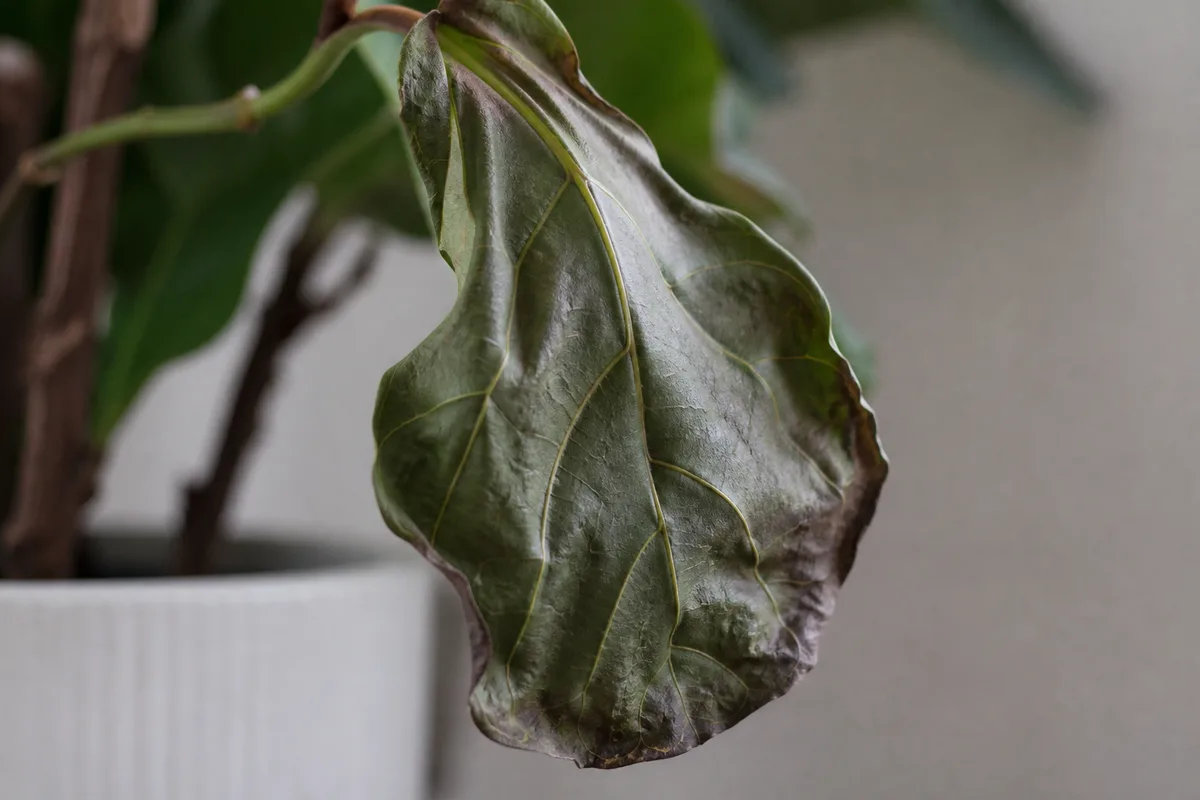
Wilting symptoms on Fiddle Leaf Fig - compare with healthy tissue on the same plant.
Typical patterns include:
- Whole-leaf limpness - the violin shape collapses along the midrib; petioles may bend sharply where they meet the stem
- Inward curl on dry pots - drought-stressed blades often curl slightly at margins while feeling papery or crisp at edges
- Soft limpness on heavy wet pots - leaves hang despite dark, clinging mix; sometimes paired with dark brown or black spots in the middle of the blade, not only at tips
- Sudden multi-leaf wilt after a move - one to two weeks after relocation, several leaves may droop or drop while soil dry-down otherwise looks normal
- Lower-leaf wilt first - prolonged underwatering or root decline often starts at the oldest foliage before spreading upward
What wilting usually is not: a single bottom leaf yellowing and dropping over months (normal senescence-see yellow leaves); crisp bleached patches on sun-facing tissue after a sudden window move (sun scorch); or fine stippling with webbing on undersides (spider mites in dry heat).
Wilting vs. drooping on fiddle leaf fig
Wilting here means acute turgor loss-leaves go limp quickly and may affect much of the canopy at once. Drooping often describes a slower sag: stems lean, petioles angle down, but the plant may still feel structurally firm if roots are healthy. The diagnostic overlap is real-both can follow thirst or root damage-but this page prioritizes the first-hour decision: wet pot or dry pot, water or wait. The drooping-leaves guide covers gradual flop, phototropism, and chronic under-lighting patterns in more depth.
Why Fiddle Leaf Fig wilts
Fiddle leaf fig wilts when the water supply chain breaks somewhere between soil moisture, functional roots, and the large transpiring leaves. The species evolved in tropical regions of western and central Africa where soil drains quickly between rains; indoors, the same large leaf surface area pulls water fast while oversized pots and dim corners keep roots too wet for too long. NC State Extension describes Ficus lyrata as preferring moist, well-drained soils while also noting the species is sensitive to overwatering-those requirements must stay paired.
Overwatering and root-zone oxygen loss
The paradox that confuses most owners: limp leaves on wet soil. When roots sit in anaerobic, waterlogged mix, they lose the ability to absorb water and nutrients. The plant wilts from thirst at the leaf even though the pot is heavy. NC State Extension lists leaf drop as a symptom of too much or too little water; wet-soil wilt clusters with dark mid-leaf spotting and sour-smelling mix point toward the too-much side. See overwatering on fiddle leaf fig for root inspection steps.
Underwatering and large-leaf transpiration demand
A fiddle leaf fig in bright light transpires heavily through its large blades. When the root ball dries too far, available water cannot reach the leaf margins fast enough and turgor collapses. Underwatered wilt usually comes with a dramatically light pot, mix pulling away from pot sides, and crisp brown edges that may appear before full limpness. Functional roots can often recover within hours of a proper soak-unlike root-rot wilt, which worsens if you keep pouring.
Relocation shock and sympathy watering
Ficus species commonly drop or wilt leaves when environment shifts. A tree moved from a nursery bench to a dim living room may wilt within days even when soil moisture looks fine. The trap is sympathy watering-seeing limp leaves after a move and soaking a pot that has not dried down, stacking relocation stress onto wet roots. Stabilize Fiddle Leaf Fig light guide, run the top-two-inch check, and wait before adding volume.
Insufficient light and gradual decline
In chronic low light, fiddle leaf fig grows weakly, drinks slowly, and may show limp newer leaves or stalled buds while soil stays damp at the surface for ten-plus days. That compound pattern-wet rim, wilted top, long internodes-points to not enough light slowing evaporation more than a single missed watering. Brightening placement often matters as much as adjusting water.
How to confirm the cause
Work through these checks in order before changing anything else.
- Pot weight - Lift the container right now. Heavy and hard to tilt with limp leaves suggests wet-soil root stress. Noticeably light with limp leaves suggests drought.
- Top-two-inch probe - Insert your finger two to three inches into the mix at the pot’s center, not against the trunk. NYBG advises checking center depth because rim soil dries faster and misleads you into watering too soon. Cool clinging soil at depth means wait; dry crumbly soil at depth on a light pot means water.
- Leaf pattern - Dark spots in leaf centers plus wet soil point to overwatering. Crisp edges plus dry soil point to underwatering. Sudden wilt after a recent move with otherwise normal dry-down points to shock.
- Stem base - Soft or discolored tissue at the soil line on a wet pot is urgent. Firm wood with dry soil is less alarming.
- Recent care changes - New pot without drainage, repot into oversized container, HVAC vent blasting cold air on leaves, or a shift from summer to winter watering volume without adjusting interval.
| What you find | Most likely cause | First action |
|---|---|---|
| Heavy wet pot, limp leaves, mid-leaf dark spots | Overwatering / root stress | Pause water; empty saucer; see overwatering |
| Light dry pot, limp leaves, crisp edges | Underwatering | Thorough soak until drainage runs; see underwatering |
| Wilt 1–2 weeks after move, normal dry-down | Relocation shock | Stabilize light; avoid sympathy watering |
| Limp new growth, wet surface for 10+ days, long stems | Low light + slow uptake | Brighten first; adjust watering per watering guide |
| Stippling + fine webbing on undersides | Spider mites | Isolate; rinse undersides; not a soak-first problem |
The first fix to try
Your first action depends entirely on the wet versus dry split-there is no universal “water the wilted fig” rule.
If the pot is light and the top two inches are dry: Water thoroughly at the soil line until excess runs from drainage holes. Wait fifteen to thirty minutes and empty the saucer completely. Recheck leaf posture in two to four hours. Drought wilt on healthy roots often perks noticeably after one good session.
If the pot is heavy and the top two inches are damp: Do not add more water. Empty any standing runoff, move the plant off a cold draft or AC vent, and let the upper root zone dry. If leaves keep declining after the top two inches have been dry for several days in summer, inspect roots for mushy brown tissue before resuming any watering rhythm.
If wilt followed a recent move: Place the tree in bright indirect light within one to three feet of an east window or filtered south or west glass. Run the moisture check; water only when the top two inches are genuinely dry-not because leaves look tired. Expect one to three weeks of adjustment leaf loss; mass drop with sour wet soil is a different emergency.
Make one correction, then wait five to seven days before stacking Fiddle Leaf Fig repotting guide, pruning, fertilizer, or pesticide.
Recovery timeline and what to watch
Drought wilt on firm roots often shows visible improvement within one to four hours after a proper soak. Full leaf posture may take one to three days. Old crisp edge damage does not reverse; watch for stiff new growth at stem tips.
Overwatered wilt moves slower. Roots need time to regrow fine feeder hairs once oxygen returns to the mix. Expect two to four weeks before decline stops; spotted or mushy leaves may drop rather than re-firm. Judge recovery by stable new leaves and a pot that cycles from heavy after watering to noticeably lighter within ten to fourteen days in summer-not by old blade posture alone.
Relocation shock may last one to three weeks. Worsening signs after twenty-one days of stable placement, soft crown tissue, or soil that stays sour while you have stopped watering point toward root decline-escalate to root inspection rather than another move.
Improving: Leaves feel stiffer by afternoon, no new spotting, dry-down speed matches light level, new buds stay green.
Worsening: Rapid multi-leaf drop, soft stem at base, mix wet ten-plus days after last water in warm bright conditions, dark spots spreading to new leaves.
Mistakes to avoid
- Watering because leaves look limp without checking soil-folks often mistake wilting for lack of water and add more to an already wet plant, converting root stress into rot.
- Sympathy soaking after a move when the mix has not dried down.
- Fertilizing a wilted tree before confirming moisture and roots; stressed Ficus lyrata does not need feed.
- Repotting into a larger pot to “help drying”-extra soil holds moisture longer and deepens wilt cycles.
- Stacking treatments - repot, prune, and spray on the same day obscures which fix worked.
- Misting leaves instead of fixing roots - surface moisture does not restore turgor when the root zone is wrong.
Wear gloves if you trim roots or stems. Milky latex sap irritates skin, and fiddle leaf fig is toxic to cats and dogs if ingested-bag trimmings out of pet reach.
How to prevent wilting next time
Prevention on fiddle leaf fig is mostly rhythm, not calendar. Water when the top two inches of center mix are dry, soak until drainage runs, empty the saucer within thirty minutes, and adjust interval for season-often every seven to ten days in active growth and every ten to twenty-one days in winter for large pots. Combine the finger test with occasional pot-weight checks so you recognize heavy versus light before leaves collapse.
Place the tree where it receives bright indirect light so it uses water at a predictable rate; dim corners slow dry-down and invite wet-soil wilt. Avoid oversized pots that hold damp mix for weeks. After any move, stabilize light first and let dry-down guide watering rather than leaf appearance alone.
For species context, stable placement, and humidity basics, see the fiddle leaf fig overview.
When to worry
Escalate beyond basic dry-down correction if:
- The crown feels soft or stems mushy at the soil line on a wet pot
- More than three to four leaves drop within a week while soil stays heavy
- Mix smells sour or fermented or stays wet ten-plus days after last watering in summer bright light
- Dark mid-leaf spots spread to newly unfurling leaves after you have paused water for two weeks
- Wilt worsens after a thorough soak on a previously dry pot-possible root damage needing inspection
A light dry pot with afternoon limp that recovers after one soak is uncomfortable but manageable at home. Advanced root decline with soft crown tissue may need a local extension office or experienced grower if unpotting feels beyond your comfort level.
Related tool
Use the Plant Watering Calculator to narrow causes for wilting on this plant before changing multiple variables at once.
Related guides
- Watering - top-two-inch rule, pot-weight test, seasonal intervals
- Overwatering - wet-soil wilt, mid-leaf spots, root inspection
- Underwatering - dry-soil wilt, hydrophobic mix recovery
- Drooping leaves - gradual sag vs. acute wilt
- Yellow leaves - lower-leaf aging vs. stress yellowing
- Overview - species biology and placement basics
When to use this page vs other Fiddle Leaf Fig guides
- Fiddle Leaf Fig watering guide - Use for routine moisture checks before assuming wilting is the main issue.
- Fiddle Leaf Fig problems hub - Browse all 17 common issues on this species.
- Underwatering on Fiddle Leaf Fig - Different entry point when symptoms overlap with wilting.
- Overwatering on Fiddle Leaf Fig - Different entry point when symptoms overlap with wilting.
- Root Rot on Fiddle Leaf Fig - Different entry point when symptoms overlap with wilting.