Drooping Leaves on Fiddle Leaf Fig: Causes, Checks & Fixes
Quick answer
Drooping on fiddle leaf fig usually traces to thirst on dry mix, root stress on wet mix, or recent move/repot shock-not a single disease. First step: lift the pot and stick your finger two inches into the center of the soil-light dry pot plus droop means soak; heavy wet pot plus droop means pause watering and inspect roots.
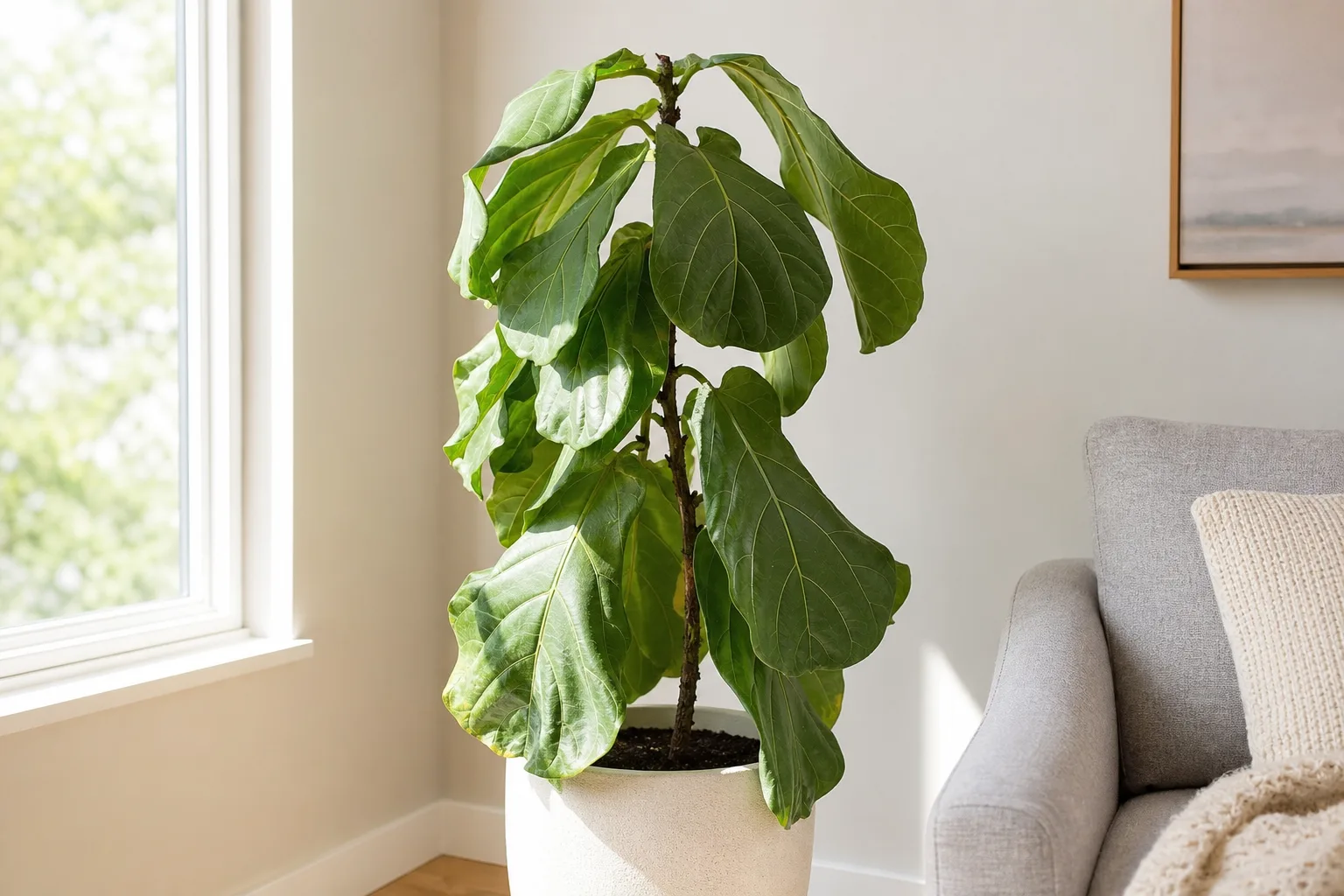
Drooping Leaves on Fiddle Leaf Fig: Causes, Checks & Fixes
This guide covers drooping leaves on Fiddle Leaf Fig. See also the general Drooping Leaves guide, watering, and light pages for this plant.
Drooping Leaves on Fiddle Leaf Fig: Causes, Checks & Fixes
Quick answer
Drooping leaves on fiddle leaf fig (Ficus lyrata) look dramatic because each blade is large, heavy, and full of water under pressure-when turgor drops, the whole canopy sags visibly. On this species, droop almost always comes down to how wet the root zone is, whether you moved or repotted recently, or drafts and light stress-not a mystery leaf disease.
First step: lift the pot and check moisture two inches deep at the center of the mix-not only the rim. A light pot with dry soil plus limp leaves means thirst; water thoroughly and drain the saucer. A heavy pot with damp soil plus limp leaves means damaged roots cannot move water-do not add more water. See our watering guide for the full top-two-inches-dry rule and pot-weight test.
What drooping looks like on Fiddle Leaf Fig
Healthy fiddle-leaf fig leaves stand at a slight upward angle from thick petioles, with firm leathery tissue and prominent veins. NC State Extension describes leaves that can exceed six inches long and wide-indoors they often reach 12 to 18 inches-so when turgor fails, the visual change is immediate.
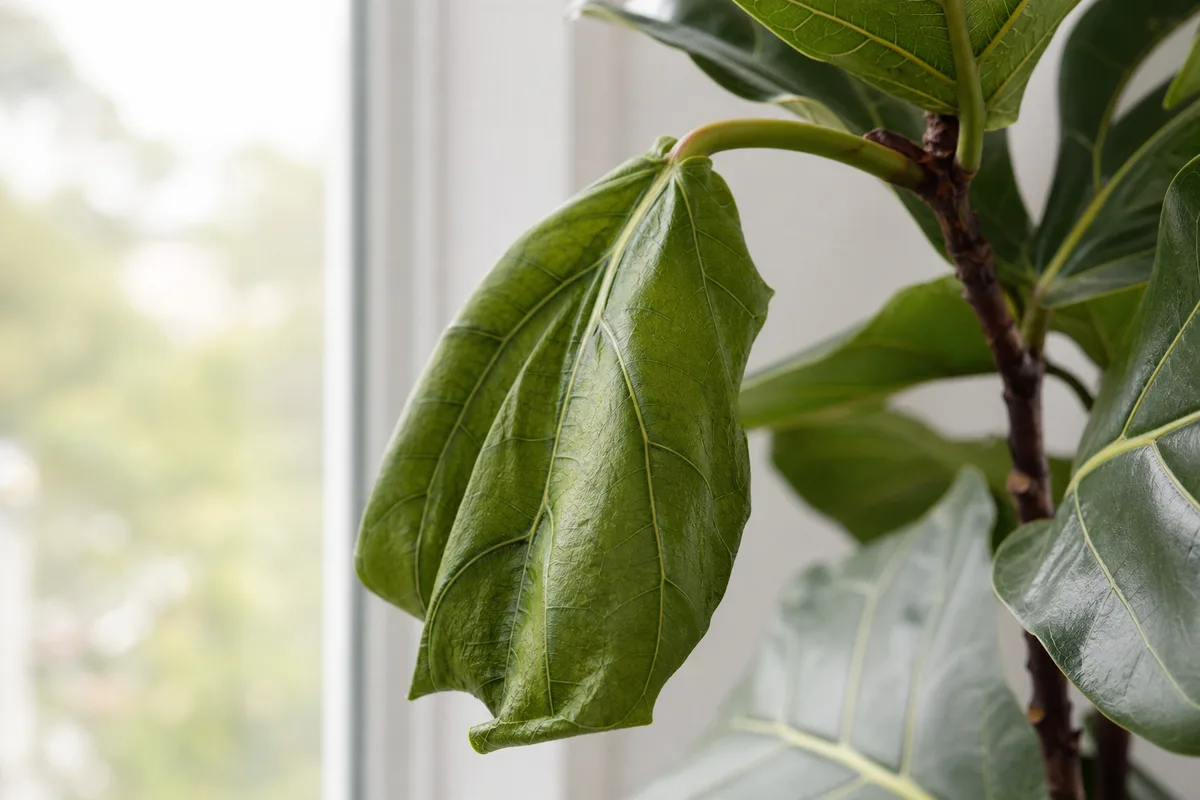
Drooping Leaves symptoms on Fiddle Leaf Fig - compare with healthy tissue on the same plant.
Limp blade hang vs. whole-leaf drop vs. post-move collapse
Thirst droop - Blades hang downward along the petiole while still green. Soil pulls slightly from pot edges or feels dusty two inches down. The pot feels noticeably lighter than right after watering. Leaf edges may crisp brown on prolonged drought. Many plants perk within one to four hours after a thorough soak if roots are still healthy.
Wet-soil droop - Leaves limp despite mix that stays damp for days. The pot feels heavy. Lower leaves may yellow; stems near the soil line can soften. A sour smell at the surface suggests root rot overlap-see our root rot guide. This is the paradox NC State flags when noting Ficus lyrata is sensitive to overwatering yet needs moist, well-drained soil: the plant droops while sitting in water it cannot use.
Post-move or post-repot sag - Whole plant or one side collapses within days of relocation or root disturbance without immediate mushy stems. Soil moisture may be normal. Purdue Extension describes transplant shock as reduced root function after disturbance-large fiddle-leaf fig leaves lose turgor faster than roots rebuild. Stop moving the plant while you diagnose.
Draft or cold limpness - Leaves droop after exposure to cold air below about 55°F (13°C)-from winter windows, frequently opened doors, or AC vents. NC State Extension notes the species performs best with temperatures above 55°F (13°C). Damage may appear overnight without soil going fully dry.
This page covers limp attached leaves. If whole leaves detach, read our leaf drop guide. If stems feel uniformly limp with rapid collapse, compare with wilting-drooping here emphasizes heavy blade hang on an otherwise upright tree.
Why Fiddle Leaf Fig gets drooping leaves
Large violin-shaped leaves transpire heavily in dry indoor air. When roots cannot replace lost water fast enough-or when damaged roots fail despite wet soil-petioles soften and blades hang. Fiddle-leaf fig also reacts sharply to environmental change, so droop after a move can look like drought even when watering is unchanged.
Underwatering (light dry pot, crisp margins)
Chronic dry-down or a missed watering cycle on a bright window specimen depletes the root ball. Soil shrinks from pot sides; the container feels light. Leaves droop from the top downward because water must travel farthest to upper blades. Crisp brown edges often follow if drought persists. This pattern overlaps our underwatering guide-recovery after one thorough watering is the hallmark of intact roots.
Overwatering and root rot (wet mix, limp despite damp soil)
Saturated mix drives out oxygen; roots suffocate and die. Dead roots cannot transport water, so leaves droop while soil stays wet-a pattern NYBG troubleshooting guidance associates with both over- and under-watering confusion on Ficus lyrata. Dark brown spots in leaf centers, multiple leaves dropping quickly, and sour-smelling mix point toward rot. Pause watering and inspect before the next pour.
Relocation shock
Moving to a new room, rotating to a very different exposure, or bringing a nursery plant home triggers acclimation stress. The plant may droop and drop lower leaves even when soil moisture is acceptable. If you moved the tree within the last four to six weeks, treat relocation as a leading cause: stabilize placement, match our overview light and watering baseline, and avoid stacking repotting or heavy pruning on the same timeline.
Repot transplant shock
Root teasing, fresh mix, and pot geometry changes temporarily limit uptake. Mild drooping for several days to two weeks after repotting is normal on large-leafed specimens. Our repotting guide documents four-to-six-week spring recovery when technique and pot size are correct. Misreading shock as thirst and watering daily into wet mix is the fastest way to turn droop into rot.
Insufficient Fiddle Leaf Fig light guide
In dim corners, weak roots and slow metabolism still support heavy leaves poorly. Growth stalls; lower leaves yellow and hang. Leggy stems with small new leaves mean light is insufficient-drooping may persist until placement improves. This is gradual, not the sudden sag of thirst or shock.
Cold drafts and temperature swings
Heating and cooling vents, winter glass, and door drafts expose Ficus lyrata to temperatures it dislikes. NC State Extension lists leaf drop from too much or too little water and brown spots from temperature fluctuation near vents-droop often precedes drop when cold and wet combine.
Root-bound stress
When roots circle densely and water runs straight through or dries in days, the canopy can wilt between cycles even without classic underwatering crust. Repot in spring only when multiple crowding signs align-see repotting-not as a first response to one droopy afternoon.
How to confirm the cause
Work through these checks in order. Do not move the plant again while diagnosing-each relocation can add leaf drop on this species.
- Pot weight - Lift the container. Light versus heavy compared to post-watering memory separates thirst from saturation faster than looking at leaves alone.
- Top two inches at center depth - Insert a finger or skewer two to three inches into the mix mid-pot, not at the rim where soil dries first. Dry at depth with light pot supports underwatering; damp at depth with heavy pot supports root stress.
- Recent timeline - Move, repot, or nursery arrival within six weeks? Shock rises on the list even if soil feels normal.
- Stem base firmness - Soft, dark tissue at the soil line with sour smell escalates to rot protocol. Firm stems with limp blades fit thirst, shock, or drafts.
- Leaf pattern - Crisp edges and pulled-away soil fit drought. Yellow lower leaves on wet mix fit overwatering. Whole-plant sag after repot fits shock.
- Light and draft audit - Note vents, winter glass, and whether the plant recently gained harsh direct sun without acclimation.
- New growth check - Firm upright tip leaves mean roots are functioning despite older blade droop.
Lookalike table: droop vs. wilt vs. leaf drop
| Pattern | Likely cause | Key differentiator on fiddle-leaf fig |
|---|---|---|
| Limp green blades, light dry pot | Underwatering | Perks after thorough soak within hours |
| Limp blades, heavy wet pot | Overwatering / root stress | Worsens if you add water |
| Sag within days of move/repot | Relocation or transplant shock | Stable moisture; stop moving |
| Crisp margins, soil pulled from edges | Chronic drought | See underwatering |
| Whole leaves falling, not just hanging | Leaf drop / severe stress | See leaf drop |
| Uniform limp collapse, rapid | Wilting overlap | See wilting |
| Drooping after cold night near window | Draft / cold damage | Temperature below ~55°F (13°C) |
First fix for Fiddle Leaf Fig
Check pot weight and top-two-inch soil moisture at the center of the mix before you touch the watering can.
If the pot is light and dry at depth, water thoroughly until excess runs from drainage holes, then empty the saucer within twenty to thirty minutes. Recheck in two to four hours-healthy roots often restore turgor the same day.
If the pot is heavy and damp at depth, do not water. Improve airflow, confirm bright indirect light, and inspect roots if lower leaves yellow or stems soften-follow our root rot protocol if mushy tissue appears.
If you repotted or moved within six weeks and moisture is balanced, change nothing except stability-same window, same orientation, cautious watering when top two to three inches dry. One care change at a time.
Recovery timeline
Thirst correction - Noticeable firming within hours to forty-eight hours after a proper soak on dry mix with healthy roots.
Relocation shock - Drooping may persist one to three weeks while lower leaves drop; new firm tip growth within four to eight weeks under stable care means success.
Repot shock - Mild droop days to two weeks is normal; canopy turgor often returns over four to six weeks in spring, longer after off-season repots per our repotting guide.
Root rot recovery - Weeks to months depending on damage; old limp leaves may not fully recover-watch for new upright leaves and stable dry-down rhythm.
Draft damage - Temporary droop may resolve when warmth returns; browned tissue on affected blades is permanent cosmetic damage.
Judge recovery by new firm growth at the stem tip and a predictable soak-and-dry cycle-not by every old leaf springing upright.
What not to do
Do not water a drooping fiddle-leaf fig without checking depth moisture and pot weight-the most expensive mistake is drowning roots that already fail on wet mix.
Do not move the plant repeatedly while leaves hang-relocation triggers additional drop on Ficus lyrata.
Do not fertilize, repot, prune heavily, or pesticide-stack on the same week you first notice droop unless rot forces emergency repotting.
Do not mist leaves as a substitute for correct root-zone watering-wet foliage in dim corners adds little humidity and can invite fungal spotting on broad blades.
Do not assume drooping equals wilting and treat every case identically-this slug focuses on limp blade hang; rapid whole-plant collapse may need the wilting differential.
How to prevent drooping leaves next time
Keep the tree in a stable spot with bright indirect light once acclimated-see our overview for placement basics.
Water only when the top two inches of soil are dry at pot center; use pot weight as a backup per our watering guide.
Empty saucers after every session so roots never sit in stale runoff.
Avoid cold drafts below 55°F (13°C) and direct heat blasts on large leaves.
After repotting, stay one pot size up, return the plant to the same orientation, and pause fertilizer four to six weeks.
Check soil twice weekly in growing season, once weekly in winter-calendar dates are reminders to test, not rules to pour.
Pet safety when handling drooping foliage
Fiddle-leaf fig is toxic to cats and dogs if ingested, and milky latex sap irritates skin. When removing fallen or damaged drooping leaves, keep debris away from pets, wear gloves if sap flows from petiole cuts, and contact your veterinarian if ingestion is suspected. NC State Extension also lists Ficus lyrata as toxic to humans with oral irritation possible after chewing leaves.
Fiddle Leaf Fig care cross-check
Drooping is a stress signal, not a standalone disease. Stable fiddle-leaf fig care pairs bright indirect light, top-two-inch dry-down watering, fast drainage, and minimal relocation. When droop appears, soil moisture branch logic comes first-dry versus wet-before light or repot experiments. Our watering and repotting guides are the deeper references for rhythm and shock timelines; use this page to decide which branch you are on today.
When to worry
Escalate if drooping spreads while stems soften at the base, soil smells sour despite pausing water, or multiple leaves drop within days after you already corrected thirst. Crown collapse, black mushy roots on inspection, or pest coating on new growth needs immediate isolation and targeted treatment-not another soak.
Stable droop after a recent move with firm stems and balanced moisture is lower urgency-give four weeks of stillness before repotting or relocating again.
Conclusion
Fiddle-leaf fig drooping leaves usually tell a simple story once you read the pot: dry and light means water; wet and heavy means stop watering and check roots; recent move or repot means stay still. Large violin-shaped blades make every mistake visible-use that visibility to confirm cause before stacking fixes. Match recovery expectations to the branch you confirmed, cross-check wilting if collapse is rapid, and judge success by new firm top growth-not by old leaves magically standing at attention again.
Reviewed by LeafyPixels Review Board, 2026-06-15. Methodology: botanical and extension references plus LeafyPixels plant-care data.
When to use this page vs other Fiddle Leaf Fig guides
- Fiddle Leaf Fig watering guide - Use for routine moisture checks before assuming drooping leaves is the main issue.
- Fiddle Leaf Fig problems hub - Browse all 17 common issues on this species.
- Underwatering on Fiddle Leaf Fig - Different entry point when symptoms overlap with drooping leaves.
- Overwatering on Fiddle Leaf Fig - Different entry point when symptoms overlap with drooping leaves.
- Root Rot on Fiddle Leaf Fig - Different entry point when symptoms overlap with drooping leaves.