Leaf Drop on Fiddle Leaf Fig: Causes, Checks & Fixes
Quick answer
Fiddle leaf figs often drop large violin-shaped leaves after a move, cold draft, or watering change. First step: stop moving the plant, check whether the top 2–3 inches of soil are wet or dry, and confirm stems are firm at the base. Stabilize placement and expect new growth in six to twelve weeks once conditions hold steady.
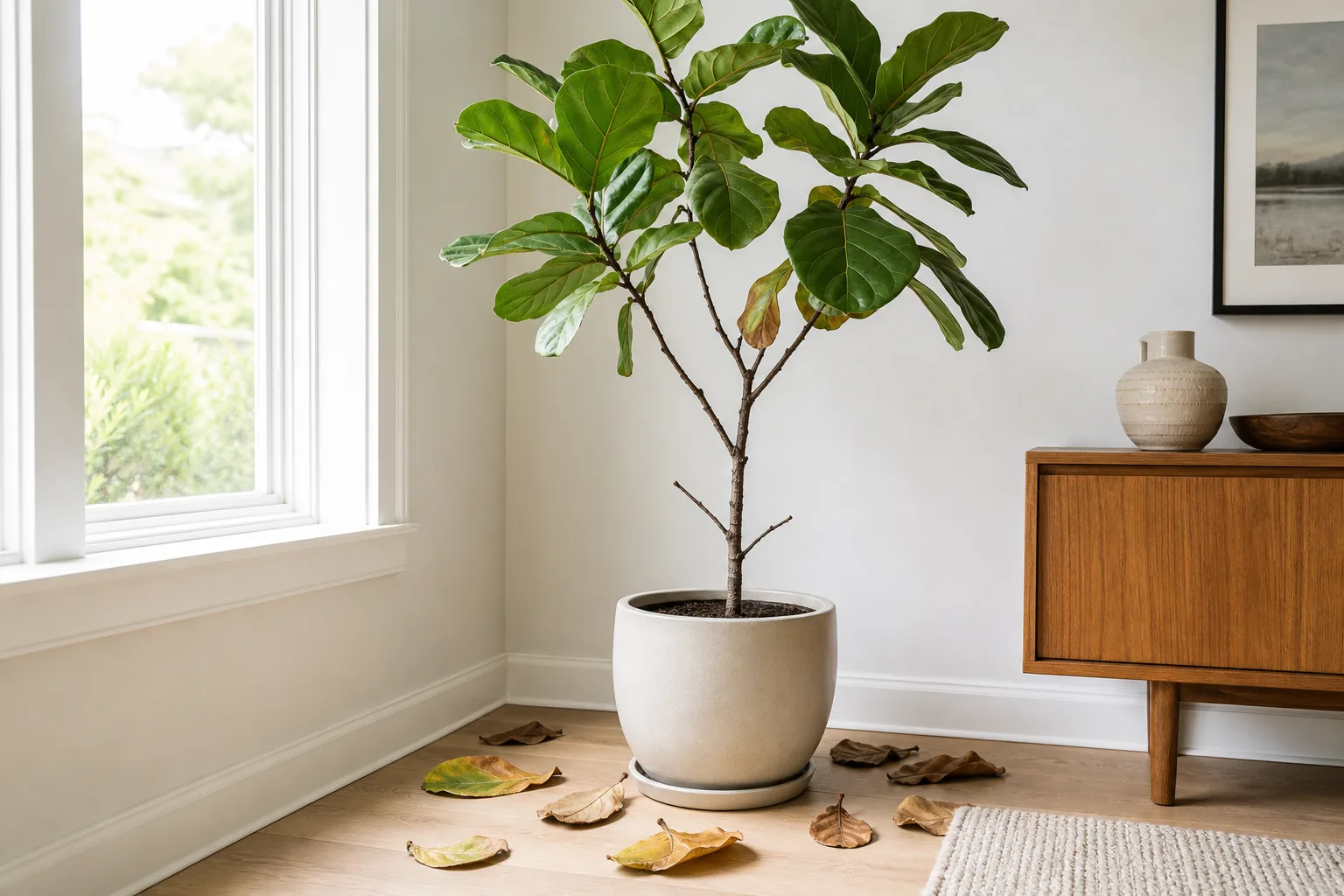
Leaf Drop on Fiddle Leaf Fig: Causes, Checks & Fixes
This guide covers leaf drop on Fiddle Leaf Fig. See also the general Leaf Drop guide, watering, and light pages for this plant.
Leaf Drop on Fiddle Leaf Fig: Causes, Checks & Fixes
Quick answer
Problematic leaf drop on fiddle leaf fig (Ficus lyrata) is usually environmental stress, not a random disease. The most common triggers are recent relocation, cold drafts below about 55°F (13°C), inconsistent watering, insufficient light, and root failure from overwatering-often in combination on a species sensitive to overwatering with large violin-shaped leaves that can reach 12 to 18 inches indoors.
First step: stop moving the plant and check soil moisture 2–3 inches deep before you water again. Lift the pot for weight, pinch the stem base for firmness, and note whether shedding started after a move, repot, or draft exposure. A heavy wet pot with yellow lower leaves points to root stress; a light dry pot with firm stems points to underwatering; mass drop within days of a move with otherwise normal moisture points to acclimation shock-not thirst.
What leaf drop looks like on Fiddle Leaf Fig
Normal aging shows one or two older lower leaves turning yellow-brown and detaching while the apical bud stays firm and new growth looks healthy. Stress drop looks different: multiple large violin-shaped blades fall within days or weeks, sometimes while still partially green, and the pattern often follows a recent environmental change.
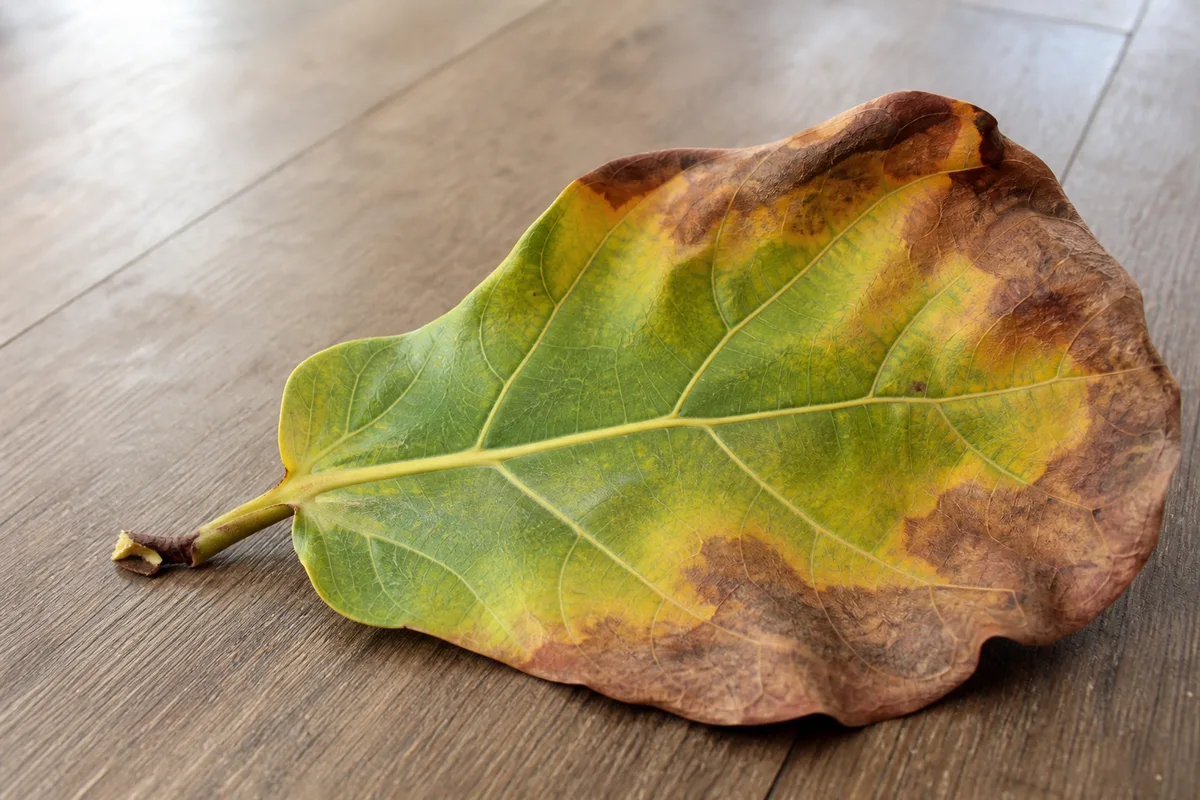
Leaf Drop symptoms on Fiddle Leaf Fig - compare with healthy tissue on the same plant.
Typical patterns on Ficus lyrata:
- Relocation shock: Shedding starts within 24–72 hours to two weeks after a move, repot, or major rotation-even when soil moisture looks normal and stems stay firm. Lower and outer leaves often go first.
- Cold-draft drop: Leaves nearest a window, door, or AC vent detach suddenly with little yellowing; may follow a cold night or heating season startup.
- Overwatering drop: Lower leaves yellow first, pot stays heavy for days, new growth may look pale or limp, and stems can soften at the base if rot advances. See overwatering on fiddle leaf fig and root rot when wet soil pairs with soft wood.
- Underwatering drop: Less common but real-crisp edges, light pot, dry mix several inches down, and limp large leaves before they detach.
- Low-light thinning: Inner and lower leaves shed while the tree leans toward a window; new leaves stay small. Chronic dim placement is covered in not enough light.
Because each leaf presents a huge transpiration surface, fiddle leaf fig shows stress faster than small-leaf houseplants. A tree can look fine at the tip while several lower violin-shaped blades litter the floor-that uneven pattern is common when roots fail or a draft hits one side of the canopy.
Why Fiddle Leaf Fig drops leaves
Moraceae shock response and large-leaf cost
Fiddle leaf fig belongs to the Moraceae family alongside weeping fig and rubber plant-genera that share latex sap, dislike sudden change, and shed foliage when the cost of maintaining large leaves exceeds what roots and light can supply. Moving indoor plants between environments can cause leaf drop when light or temperature shifts faster than the tree acclimates. Ficuses often continue dropping for weeks after the original trigger because abscission hormones and resource reallocation lag behind your fix-stable care matters more than a single perfect watering.
Relocation and repotting shock
Even a move to a better window triggers temporary shedding. Owners hunting brighter light week after week compound the problem-the relocation-for-light paradox documented on the not-enough-light guide. Repotting disturbs fine roots and can trigger drop for several weeks; see the repotting guide for acclimation timing. Sudden dropping leaves signal that something changed in the plant’s micro-environment-draft, watering rhythm, light, or temperature.
Cold drafts and temperature swings
Ficus lyrata performs best at temperatures greater than 55°F and prefers stable indoor warmth. Brief exposure below that threshold-from a winter window, frequently opened door, or HVAC blast-can trigger rapid leaf loss. Brown spots may occur with fluctuation from heating or cooling vents, and leaves nearest the stress source usually fall first.
Overwatering and root failure
This is the most dangerous misread. When roots sit in saturated mix, they cannot function normally and the plant sheds leaves it can no longer support-even though the pot feels wet. Leaf drop may occur from too much or too little water; wet-soil drop with yellow lower leaves and soft stems escalates toward root rot, not a thirst problem.
Insufficient light
In dim corners, the tree produces smaller leaves and sheds foliage it cannot fuel. Low-light thinning overlaps with leaf drop but shows long bare stems, directional lean, and persistently wet soil from slow water use-see not enough light for the hand-shadow test and placement fix.
Watering inconsistency
Alternating drought and flood stresses roots on a plant that wants moist, well-drained soil with a partial dry-down between thorough soakings per the watering guide. Extended dry spells during active growth deplete turgor in heavy blades; heavy soaking on already wet mix accelerates rot.
Lookalike symptoms to rule out
| Pattern | Soil at 2–3 inches | Stem base | Most likely cause |
|---|---|---|---|
| One or two lower leaves yellow and fall slowly | Normal dry-down | Firm | Normal aging |
| Mass drop 1–14 days after move or repot | Normal | Firm | Relocation or transplant shock |
| Lower yellow leaves, heavy pot days after watering | Wet | Firm to slightly soft | Overwatering stress |
| Limp leaves on wet soil, sour smell | Wet | Soft | Root rot - see root rot |
| Crisp edges, light pot, dry throughout | Dry | Firm | Underwatering |
| Small new leaves, lean toward window, slow growth | Often wet too long | Firm | Chronic low light |
| Sudden drop near vent or cold window | Normal | Firm | Draft or temperature shock |
Yellow leaves without immediate detachment often mean the problem is still developing-see yellow leaves. Drooping with wet soil and drop together suggest root failure-see wilting.
How to confirm the cause
Work through these checks in order:
- Timing - Did a move, repot, window change, or seasonal heating shift occur within the last six weeks? Recent change with firm stems and normal moisture strongly suggests shock first.
- Pot weight - Lift the container. Light and dry suggests underwatering; heavy and wet suggests root stress.
- Soil moisture at depth - Push your finger 2–3 inches into the center of the mix, not just the surface. Wet several days after watering confirms overwatering risk; evenly dry with firm stems confirms thirst.
- Stem firmness - Pinch the trunk at the soil line. Soft, mushy tissue means stop watering and inspect roots per the root rot guide.
- Draft and light exposure - Note AC vents, cold windows, and whether the canopy receives bright indirect light most of the day. Leaves nearest vents or dim inner canopy sections tell you which stress dominated.
If the pot is heavy, mix is soggy, and lower leaves are yellowing, treat overwatering as the working diagnosis. If shedding started after a move with otherwise normal moisture and firm stems, stabilize placement for at least four weeks before any other experiment.
First fix for Fiddle Leaf Fig
Make one correction matched to what you confirmed-then stop changing variables.
- Shock or draft path: Leave the tree in one stable spot with bright indirect light. Keep temperature steady and move the pot at least three feet from vents and cold glass. Do not repot, fertilize, or relocate again for four to six weeks.
- Overwatering path: Pause watering until the top 2–3 inches dry. Empty standing saucer water after every future soak. If yellowing continues on a heavy pot after one full dry-down cycle, inspect roots before the next drink-adding water to wet mix is the fastest way to lose more leaves.
- Underwatering path: Water thoroughly once until excess runs from the drainage hole, then resume checking moisture at depth rather than following a calendar.
- Low-light path: Plan one final move to bright indirect light-or add a grow light-and acclimate over seven to fourteen days. Do not chase brighter spots weekly.
- Post-repot path: Hold stable light and conservative watering for three to four weeks while cut roots heal; see repotting for detail.
Do not stack repotting, heavy pruning, and fertilizer during active drop unless stems are softening or soil smells sour.
Recovery timeline and signs of improvement
Mild drop from a single overwatering episode or recent move often slows within one to two weeks once conditions stabilize. Environmental shock drop should ease within about three weeks if care stays consistent-though Ficus lyrata may shed additional leaves during that window as older abscission completes. New firm violin-shaped leaves at the apical bud within six to twelve weeks in bright growing-season light confirm recovery; winter recovery in dim rooms may take longer.
Judge success by fewer leaves falling each week, firm stem tissue at the base, and healthy new bud color-not by whether every fallen lower leaf regrows. Old bare trunk sections may never refill; that is normal as the tree allocates energy upward.
Worsening signs: Rapid multi-leaf drop continues more than a month after stabilization, mix stays sour ten-plus days after last water in bright light, or soft stem spreads upward-escalate to root inspection.
What not to do
- Water because leaves are falling when soil is wet at depth-folks often mistake wilting for thirst and deepen rot.
- Move the plant repeatedly hunting perfect light or humidity-each relocation retriggers Moraceae shock.
- Fertilize a shedding tree to force new growth; feed only after stable new leaves appear.
- Repot, prune heavily, and treat pests on the same day during active drop unless root rot requires emergency unpotting.
- Ignore cold drafts because the thermostat reads 68°F-leaf-level air near glass can be far colder.
How to prevent leaf drop next time
Keep bright indirect light, stable placement, and water when the top 2–3 inches dry per the watering guide-not on a fixed calendar. Reduce watering frequency in winter when growth slows. Sit the tree away from AC vents, radiators, and single-glazed winter windows. When a light upgrade is necessary, acclimate over one to two weeks rather than jumping to a hot south sill. Scout weekly during summer when large new blades unfold quickly.
For species biology, placement basics, and cluster-wide troubleshooting, see the fiddle-leaf-fig overview.
Pet safety when leaves fall
Fiddle leaf fig is toxic to cats and dogs if ingested, with oral irritation, drooling, and vomiting among possible signs per NC State Extension and the ASPCA. Milky latex sap irritates skin on contact-wear gloves when bagging fallen leaves. Keep dropped foliage out of pet reach on floor trees, and contact your veterinarian or the ASPCA Animal Poison Control Center at (888) 426-4435 if ingestion is suspected. This is general information, not veterinary advice.
Related Fiddle Leaf Fig guides
- Overview - species biology, placement, and troubleshooting hub
- Watering - top 2–3 inch dry-down and seasonal rhythm
- Light - bright indirect placement without scorch
- Not enough light - relocation-for-light paradox and acclimation
- Overwatering - wet-soil stress before full rot
- Yellow leaves - color change before drop
- Wilting - limp leaves on wet vs. dry soil
- Root rot - soft stems and sour mix escalation
- Repotting - transplant shock and recovery timing