Yellow Leaves on Fiddle Leaf Fig: Causes, Checks & Fixes
Quick answer
Yellow leaves on Fiddle Leaf Fig are a symptom, not one diagnosis. First step: check whether the top 2 to 3 inches of mix are wet or dry and whether the pot feels heavy or light-overwatering and underwatering both yellow foliage on this large-leaf tree, and they look different when you read the root zone.
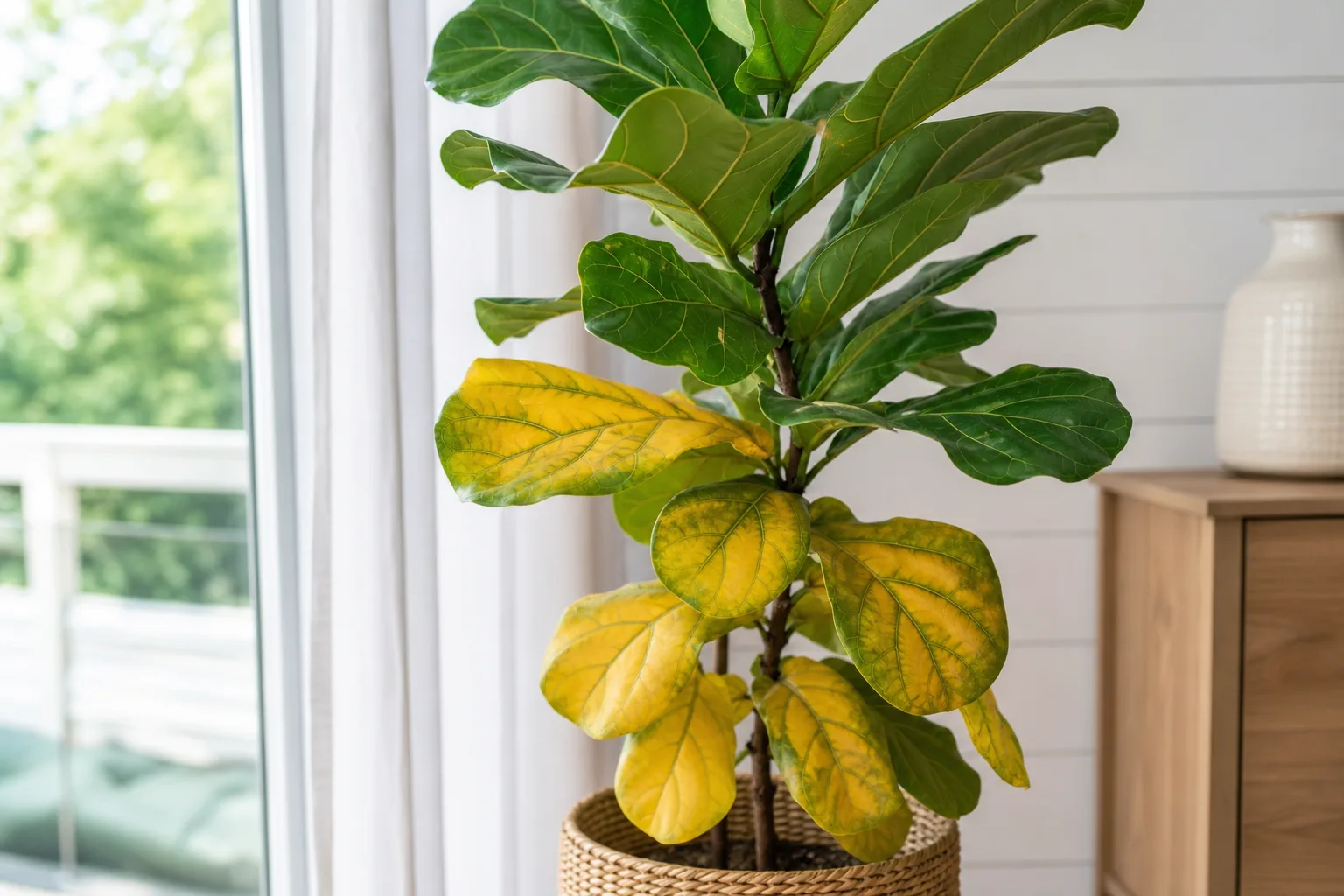
Yellow Leaves on Fiddle Leaf Fig: Causes, Checks & Fixes
This guide covers yellow leaves on Fiddle Leaf Fig. See also the general Yellow Leaves guide, watering, and light pages for this plant.
Yellow Leaves on Fiddle Leaf Fig: Causes, Checks & Fixes
Quick answer
Yellow leaves on Fiddle Leaf Fig (Ficus lyrata) are a symptom, not a single diagnosis. This is a woody Moraceae tree with large violin-shaped leaves on an upright trunk-not a rosette succulent and not a shade-tolerant foliage plant. Indoors, yellowing most often traces to soil that stays wet too long, chronic dryness, insufficient bright indirect light, relocation shock, cold drafts, or normal aging of the lowest canopy leaves.
First step: check soil moisture at the top 2 to 3 inches in the center of the pot and whether the container feels heavy or light. Push your finger or a chopstick into the mix near the trunk, lift the pot by the rim, and note whether you moved the plant in the last six weeks. Wet heavy soil with multiple soft yellow lower leaves points to overwatering or root stress. Dry light soil with crisp yellow edges points to underwatering. Pale yellow-green upper leaves on long leaning petioles usually means low light-even if you water on a fixed schedule.
Do not fertilize, repot, or move the tree into harsh direct sun on day one. Match the first fix to what you find. Full species context: Fiddle Leaf Fig overview.
What yellow leaves look like on Fiddle Leaf Fig
Yellowing on Ficus lyrata follows recognizable patterns tied to its tree architecture and large leathery leaves.
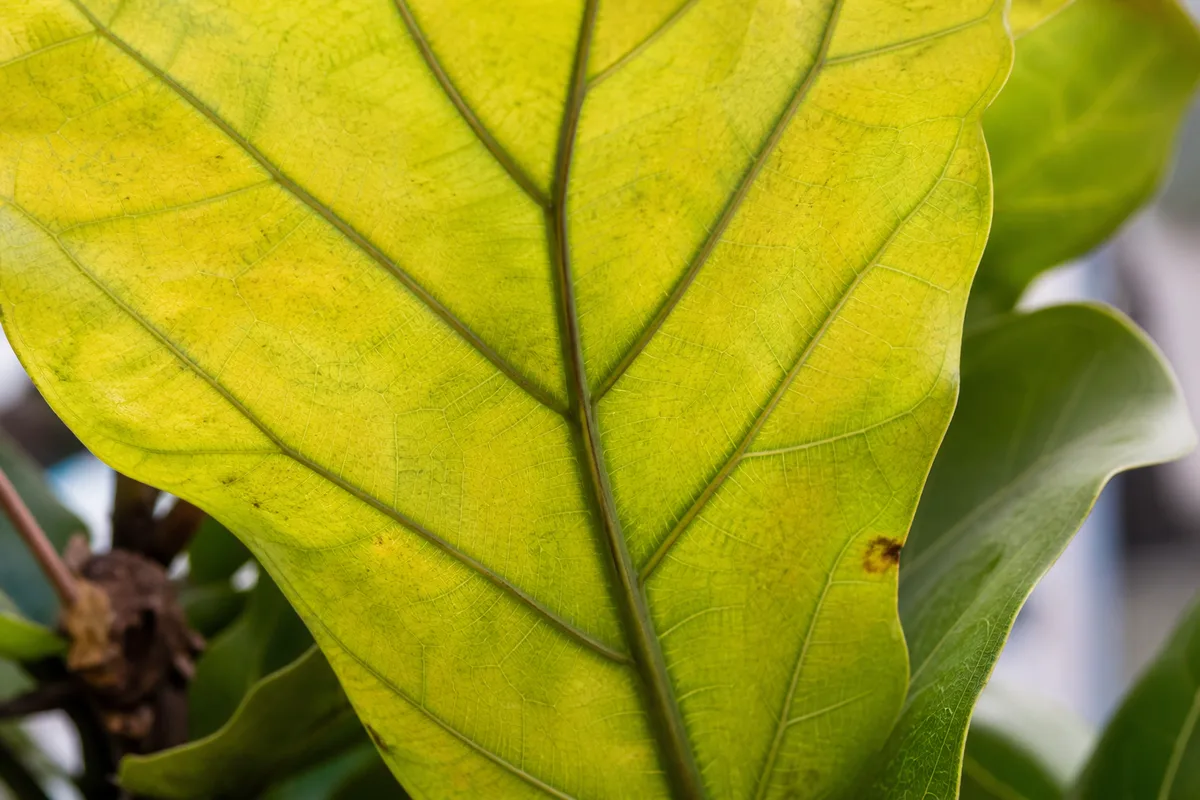
Yellow Leaves symptoms on Fiddle Leaf Fig - compare with healthy tissue on the same plant.
Overwatering and root stress (most common indoor cause):
- Lower canopy leaves yellow first, often soft and limp while mix is wet or cool at depth
- Pot feels heavy for days after the last watering; surface stays dark
- Crown tips may still look green while lower leaves fail-until rot advances
- Fungus gnats, sour smell, or soft darkened tissue at the base in advanced cases-see overwatering and root rot
Underwatering:
- Leaves may turn bright yellow with crisp brown edges or feel less rigid
- Pot feels noticeably light; top 2 to 3 inches of mix are dusty dry
- Soil may pull slightly away from pot sides on chronic drought
- Yellowing often appears on outer lower leaves first because they are farthest from active roots-but dryness at depth confirms thirst, not wetness
Low light:
- Pale yellow-green wash across multiple leaves, sometimes smaller new leaves at crown tips
- Long petioles leaning toward the brightest window; new violin-shaped leaves smaller than older growth from brighter months
- Mix that stays damp 10+ days in summer despite modest watering-metabolism is too slow to use water
- See not enough light for the full light–watering trap
Relocation shock:
- Widespread yellowing or leaf drop within six weeks of moving from nursery, repotting, or changing rooms
- Often follows a placement change, not months of gradual fade
- Soil moisture may look correct; the tree is shedding leaves it can no longer support in new light or airflow
- Overlaps with leaf drop-assume relocation first if timing fits
Cold or draft damage:
- Yellowing or browning after nights near a drafty winter window, frequently opened door, or AC vent blowing on the canopy
- Sudden exposure below about 55°F (13°C) can trigger rapid leaf loss
- Distinct from slow low-light chlorosis-this follows a temperature shock, not gradual fade
Normal lower-canopy senescence:
- One or two lowest leaves on the trunk fade from base to tip over weeks to months
- Crown tips and upper branch nodes stay green and firm; new leaves continue emerging from the top
- No widespread limpness, no sour wet soil, no rapid multi-leaf collapse within two weeks
Fiddle Leaf Fig growth form: trunk and crown tips, not rosettes
Understanding where leaves age helps you separate harmless senescence from stress.
Fiddle-leaf fig is a small tropical tree with large alternate leaves on a woody stem-not a basal rosette plant. New leaves emerge from crown tips and branch nodes at the top of the upright frame; the lowest leaves on the trunk are the oldest and naturally yellow, brown, and drop as the tree replaces them. That is normal on a healthy specimen with one or two fading lower leaves.
What is not normal: three or more leaves yellowing within two weeks, yellowing climbing up the trunk toward active buds, or yellow lower leaves paired with wet soil and a soft crown. Those patterns mean the root zone or environment is failing-not routine leaf turnover.
Why Fiddle Leaf Fig leaves turn yellow
Overwatering tops the list indoors. Fiddle-leaf fig is sensitive to overwatering and prefers moist, well-drained mix-not constant sogginess. Calendar watering in a cool dim room keeps peat-heavy nursery mix waterlogged; roots lose oxygen, lower leaves yellow, and crown tissue can soften if rot advances.
Underwatering yellows foliage too. Large leathery leaves transpire heavily; when roots cannot replace moisture, outer leaves yellow and crisp while the pot feels light. Chronic underwatering is less common than overwatering but equally capable of leaf loss over time.
Insufficient bright indirect light slows metabolism so the same potting mix stays wet longer than you expect-roots sit in stale soil, lower leaves yellow, and the plant looks overwatered even when you followed a reasonable schedule. Pale stretched upper growth is the tell.
Relocation shock is signature Ficus lyrata behavior. Moraceae figs shed leaves after environmental change-new window exposure, repotting, or even rotating the pot sharply. Yellowing often precedes drop; stabilizing placement matters more than extra water or feed.
Cold drafts stress tropical foliage. Temperature swings from heating vents, winter windows, or sudden drops below about 55°F (13°C) yellow and drop leaves faster than gradual care mistakes.
Natural senescence removes spent lower canopy leaves on mature trees. One fading lower leaf with firm green crown growth is usually harmless.
Nutrient issues after years without repotting or from salt buildup can yellow margins-but do not reach for fertilizer on wet soil or a recently moved tree until moisture and light are stable.
Lookalike symptoms to rule out
| What you see | More likely cause | Quick check |
|---|---|---|
| Soft yellow lower leaves + wet heavy pot | Overwatering / root stress | Top 2–3 in. damp at center; sour smell |
| Crisp yellow edges + light dry pot | Underwatering | Mix dusty dry; pot lifts easily |
| Pale small new leaves + long stems | Low light | Shadow weak at midday near plant |
| Yellowing within 6 wk of a move | Relocation shock | Recent room/window/repot change |
| Yellow after cold night near window | Draft / chill | Vent or frosty glass in path |
| One lowest leaf fading over months | Normal aging | Crown tips firm green; soil neutral |
Brown spots with yellow halos on wet mix may indicate edema or infection-not simple thirst. Dark brown crisp edges alone often trace to low humidity or salt buildup rather than classic yellowing. Pest stippling (spider mites, thrips) shows as speckled yellow patches with fine webbing or scarring on new growth-inspect crown tips before assuming watering error.
How to confirm the cause
Work through this checklist in order-do not skip to fertilizer or repotting.
- Recent move? If you relocated, repotted, or changed windows within six weeks, note relocation shock as a leading cause even when soil looks fine.
- Top 2 to 3 inches at center depth - Push a finger or chopstick into the mix near the trunk, not just the pot edge. Damp cool soil vs. dusty dry confirms wet vs. dry branches.
- Pot weight - Lift the container by the rim. Heavy for days after watering suggests slow dry-down or oversize pot. Noticeably light means drought stress.
- Which leaves yellow - Lowest trunk leaves only vs. widespread upper canopy vs. pale new tips at crown.
- Crown firmness - Press the top growth gently. Firm green tips with yellow lowers often mean aging or early overwatering. Soft mushy crown with wet soil is urgent-see root rot.
- Light at midday - Hold your hand between plant and window. A sharp shadow means direct sun is hitting foliage; weak diffuse light in a dim corner suggests insufficient brightness for this species.
- Draft path - Note AC vents, radiator blasts, and winter window chill within a few feet of the canopy.
- Smell and pests - Sour mix, fungus gnats, or mushy roots confirm wet-soil failure. Fine webbing points to spider mites in dry air.
Write down wet vs. dry, heavy vs. light, and recent move yes/no before choosing a fix.
First fix for Fiddle Leaf Fig
Match one first action to your checklist result-do not stack repotting, fertilizer, and relocation on day one.
If soil is wet and the crown is still firm
Pause watering until the top 2 to 3 inches of mix are dry at center depth. Empty any standing water in saucers or cachepots. Confirm drainage holes are open. Brighten indirect light slightly if the tree sits in a dim corner-slow evaporation worsens wet soil. Do not fertilize while mix is saturated.
If soil is dry and the pot is light
Water thoroughly until a little runs from drainage holes, then empty the saucer within 20 to 30 minutes. Soak the entire root ball once-not repeated small sips that wet only the surface. Recheck dry-down in a week before trusting an old calendar schedule.
If the crown is soft or mix smells sour
Stop watering immediately and inspect roots at the drainage holes or by sliding the root ball out if the pot is manageable. Trim mushy brown roots, repot into fresh well-drained mix only if tissue is actively rotting-see root rot. This is not a wait-and-dry situation.
If the plant sits in a cold draft
Move it away from the vent, frosty window, or frequently opened door-not into a new room across the house. Shift one to two feet if possible while keeping bright indirect light. Avoid repotting until foliage stabilizes.
If only lower leaves fade slowly over months
Remove the spent leaf once it is mostly yellow and monitor crown-tip growth. No watering or light change needed if one lowest leaf ages out while new top leaves stay firm and green.
If yellowing followed a recent move
Stop moving the plant. Place it in stable bright indirect light, keep a consistent watering rhythm based on dry-down checks, and avoid fertilizer and repotting for at least four weeks. Expect some continued yellowing while it acclimates-judge recovery by firm new crown leaves, not old blade color.
Step-by-step recovery by cause
Overwatering recovery: After mix dries at depth, resume watering only when the top 2 to 3 inches are dry again-often every 7 to 10 days in active growth and every 14 to 21 days in winter as starting intervals, adjusted to your room. Improve light if the tree sat in shade. Inspect roots if multiple lower leaves yellow while soil stays wet.
Underwatering recovery: One thorough soak, then establish a check-at-depth habit. Large pots in bright rooms may need water weekly in summer; winter stretches longer. If soil has shrunken away from sides, water slowly in passes so mix rehydrates evenly.
Low-light recovery: Move closer to your brightest indirect window or add a grow light-acclimate gradually if the tree lived in deep shade for months. As light improves, dry-down speeds up; recalibrate watering so you do not swing from chronic wet soil to drought.
Relocation recovery: Same spot, same watering check, no experiments for four to six weeks. Remove fully yellow leaves to reduce pest hiding spots. Do not compensate with extra water unless mix is genuinely dry.
Cold-draft recovery: Eliminate the chill source first. Leaves that yellowed from cold may drop; new crown growth tells you the tree survived.
Recovery timeline
Fully yellow leaves usually drop within one to three weeks after you correct the cause-they do not re-green. Judge success by new leaves at crown tips and branch nodes staying firm and adequately sized, not by old lower blades recovering color.
- Watering correction: New clean growth often appears within two to four weeks once dry-down stabilizes.
- Light improvement: Pale foliage may take several weeks to produce normal-sized green replacements; old yellow leaves may still drop.
- Relocation shock: Yellowing can continue four to six weeks even with correct care-stability matters more than speed.
- Root rot rescue: Timeline stretches to months if crown tissue was damaged-see the root-rot guide for realistic expectations.
What not to do
- Do not fertilize a yellowing fiddle-leaf fig when soil is wet, after a recent move, or while crown tissue is soft.
- Do not increase watering on a heavy wet pot because leaves look limp-limp plus wet soil often means damaged roots, not thirst.
- Do not assume all yellow lower leaves are aging-check pot weight and crown firmness first.
- Do not repot or relocate during active yellowing stress unless root rot is confirmed.
- Do not move the plant again while yellowing from recent relocation-stabilize placement first.
- Do not place a recovering tree in harsh direct midday sun to “give it energy”-leaf scorch adds a second injury.
How to prevent yellow leaves on Fiddle Leaf Fig
Prevention is the same discipline as good fiddle-leaf fig care: check the top 2 to 3 inches at center depth before every pour, soak until drainage runs, empty all runoff, and adjust interval for season and light.
- Keep the tree in bright indirect light most of the day so it uses water at a reasonable rate.
- Use a right-sized pot with open drainage and fast-draining mix-oversized containers hold excess wet mix around roots.
- Avoid cachepots that trap water unless you empty them after every watering.
- Pause calendar schedules in winter when low light slows uptake-the same summer rhythm waterlogs mix in October through February.
- Minimize moves once the tree is placed; acclimate new purchases gradually rather than shuffling weekly.
- Keep temperatures stable above about 55°F (13°C) and away from heating and cooling blasts.
- Remove spent lower leaves promptly so pests cannot hide in dying tissue.
For the full watering and light workflow, see watering and the overview.
When to worry
Most yellow-leaf problems on indoor fiddle-leaf figs are manageable once you match the fix to wet vs. dry soil, light, relocation, or normal aging. Escalate if:
- Crown tips feel soft or mushy while soil is wet-advancing rot, not thirst
- Multiple leaves yellow within one to two weeks on wet heavy soil with sour smell
- Yellowing climbs upward toward active buds while mix stays damp
- Roots are brown and mushy when you inspect through drainage holes
- Yellowing continues six+ weeks after relocation with no firm new crown growth
- Whole canopy pales while soil cycles wet and dry unpredictably-possible pest, disease, or severe root decline
A mature tree with firm wood and several healthy leaves below the problem zone almost always survives corrected watering or light once roots are intact. Loss becomes likely when the crown collapses on waterlogged mix or repeated environmental shocks stack without recovery time.
Fiddle Leaf Fig care cross-check
Yellow leaves often mean another care pillar is out of sync:
| Care factor | Fiddle-leaf fig baseline | Yellow-leaf link |
|---|---|---|
| Light | Bright indirect most of the day | Dim rooms slow dry-down and pale new growth |
| Water | Top 2–3 in. dry at center before soak | Wet soil yellows lowers; dry soil crisps edges |
| Temperature | Stable 65–75°F; avoid below ~55°F | Drafts yellow and drop leaves fast |
| Placement | Stable spot; minimize moves | Relocation shock yellows before drop |
| Pot / mix | Drainage holes; fast-draining mix | Oversize wet pots yellow lower canopy |
| Humidity | 40–60% helps large leaves | Low humidity browns edges; rarely sole yellow cause |
Related Fiddle Leaf Fig guides
- Overwatering - wet heavy pot, limp lower leaves
- Underwatering - light dry pot, crisp yellow margins
- Root rot - soft crown on saturated mix
- Leaf drop - relocation shock overlap
- Not enough light - pale stretched growth
- Wilting - wet-pot versus dry-pot diagnostic
- Watering - top 2–3 inch rule and seasonal rhythm
- Overview - species biology and placement basics