Areca Palm Light Needs: Best Window & Warning Signs
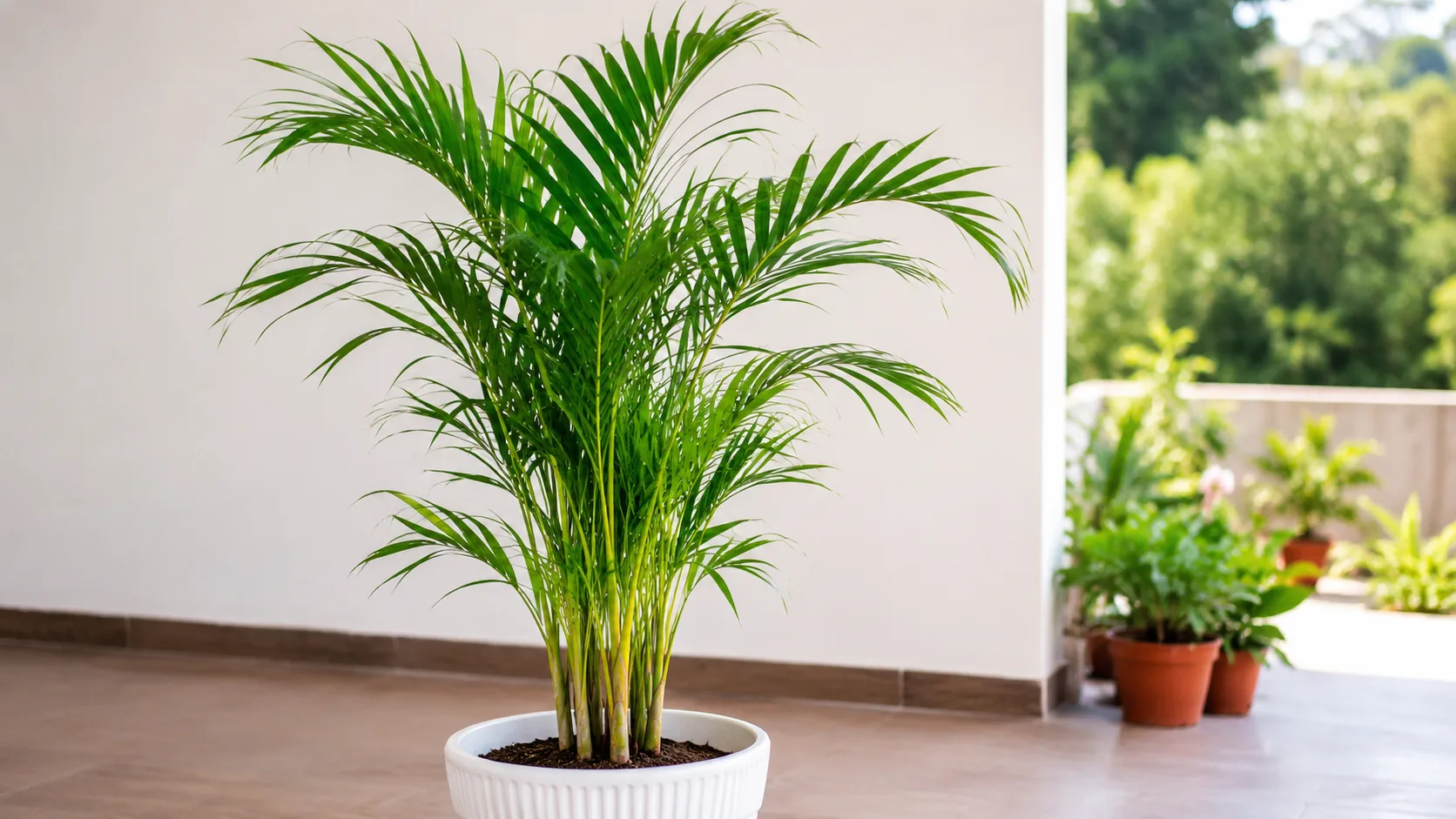
Areca Palm Light Needs: Best Window & Warning Signs
Areca Palm Light Needs: Best Window & Warning Signs
Areca palm light requirements come down to one rule: give Dypsis lutescens bright, filtered light for most of the day, protect unacclimated fronds from harsh direct sun, and read the newest growth instead of guessing from room brightness. The most common placement mistake is not a wrong compass direction-it is putting a decorative floor planter six feet from the nearest window so the pot looks perfect while the fronds sit in ambient room dimness. Too little light produces pale, stretched fronds; too much sun bleaches and scorches leaflets within days. This guide covers how much light an areca palm needs, which window works best, whether direct sun is acceptable, grow-light setup, and the warning signs that tell you placement needs to change. For full-plant context, see the areca palm overview.
Quick Answer - Lux, Duration, and Filtered Light
An indoor areca palm performs best with bright indirect light for 6 to 8 or more hours daily. As practical editorial starting targets-not species-specific constants published by botanical gardens-aim for roughly 1,000 to 3,000 lux (about 100 to 300 foot-candles) at frond height. UF/IFAS Gardening Solutions places the 500–1,000 foot-candle band in its “high light” category for houseplants near windows with softened or filtered direct exposure. Areca palms sit toward the upper end of that range because Missouri Botanical Garden describes houseplant specimens as preferring mostly sunny exposures with high humidity, while warning that direct full sun indoors may scorch the foliage.
The easiest reliable placements: directly at an east-facing window, 3 to 5 feet back from a bright south- or west-facing window behind a sheer curtain, or under a full-spectrum grow light positioned 12 to 24 inches above the canopy (distance varies with fixture wattage) for 10 to 14 hours on a timer. The best window is whichever one produces full-sized, evenly green new fronds without bleaching or stretch.
Why Light Controls Everything Else for Areca Palms
Light is not one variable among many for an areca palm. It is the variable that controls how fast the plant photosynthesizes, how quickly the potting mix dries, how densely new fronds emerge, and how resistant the plant is to pests and root problems. An areca palm in strong, appropriate light can push visible new growth during active seasons, maintain upright arching foliage, and tolerate normal indoor humidity swings. The same plant in dim light may survive for months while slowly losing vigor, dropping lower fronds, and developing a thin, leggy silhouette that no amount of fertilizer will fix.
Frond Architecture and Clustering Canes
The reason light matters so much is structural. Areca palms produce long pinnate fronds-each with dozens of narrow leaflets along a central midrib-and grow as multi-stemmed clustering palms with several canes in one pot. NC State Extension notes the species is a clustering or clumping palm that can reach considerable size in its native Madagascar habitat. Outermost fronds intercept most window light; inner canes and lower fronds often receive far less, which is why a pot can look full while the center thins. Rotate the container and avoid crowding furniture that blocks one side of the canopy.
Missouri Botanical Garden captures the indoor tension in one line: mostly sunny exposure, but direct full sun through glass may scorch foliage. Filtered, ambient, or morning-direct light supports the frond architecture. Hot afternoon sun through glass concentrates heat and UV in ways that damage tissue the plant cannot repair.
Light-Water-Pest Coupling
Light also sets the pace for watering and feeding. A brighter palm dries its mix faster; a dimmer one sits wet longer and risks root rot on Areca Palm-a pattern covered in depth in the areca palm watering guide. Getting light right first stabilizes the entire care rhythm. Stressed palms in dim corners also attract spider mites more easily because slow transpiration and stagnant air favor pest buildup.
What “Bright Indirect Light” Means in Lux
Bright indirect light is accurate horticultural language and vague room advice until you translate it into something measurable. For indoor areca palms, the editorial target zone is roughly 1,000 to 3,000 lux at the top of the frond canopy for 6 to 8 or more hours per day. Lux measures light intensity at a surface. Human eyes adapt to dim rooms quickly, so a space that feels adequately lit for reading may still fall below 500 lux at plant height-too weak for a tropical palm that evolved in forest-edge brightness.
Bright indirect light is not the same as “near a window.” Distance matters enormously. A plant one foot from an unobstructed south-facing window may receive 5,000 to 10,000 lux at midday-often too intense unless filtered. The same plant six feet into the room may receive 200 to 400 lux-too dim for vigorous growth. The workable zone usually falls 3 to 5 feet back from a bright window, directly at an east-facing window, or at a south- or west-facing window behind a sheer curtain.
Human-Eye Fallacy and Distance from Glass
Indirect means the sun does not strike the fronds directly for extended periods, or that any direct exposure is limited to gentler morning hours. NC State Extension lists dappled sunlight and partial shade (2–6 hours of direct sun) among outdoor cultural conditions-the outdoor equivalent of bright filtered indoor light. Indoors, recreate canopy-filtered brightness, not cave shade and not desert noon. A free lux app at frond height gives a directional reading; treat numbers as placement guides, not laboratory precision.
Place the pot close enough that fronds receive the light, not just the pot rim. Areca palms are often sold in nursery pots and moved to decorative floor planters far from glass, where fronds sit in ambient brightness while the grower wonders why growth stalled. For most homes, target within 3 to 6 feet of the window for south and west exposures, directly at or within 2 feet of an east window, or as close as practical to a bright north window in summer with grow-light backup for winter.
Daily Light Requirements Indoors
An indoor areca palm performs best with 6 to 8 hours of usable bright light daily, and many healthy specimens receive effectively more when they sit in a bright room where ambient light remains strong outside peak sun hours. NC State Extension recommends a bright location in a warm to average room with high humidity for houseplant culture. Penn State Extension notes that palms generally crave bright, indirect light near a south- or east-facing window with filtered sunlight.
Daily duration matters alongside intensity. Consistency reduces stress, and areca palms dislike sudden light shifts-moving from a dim shop floor to a blazing south window in one step is one of the fastest ways to trigger frond drop or scorch. Outdoors in USDA Zones 10–11, the species tolerates full sun but prefers partial shade; indoors, the equivalent is bright filtered light-not an unprotected west window at summer noon. Aim for the brightest spot in your home where fronds never feel hot during the peak sun hour.
What Madagascar Tells Us About Light Preferences
Dypsis lutescens is native to moist forest areas in Madagascar, where it grows as a clustering understory and forest-edge palm. Missouri Botanical Garden notes the species is endangered in the wild even though it is widely cultivated. That ecology explains the light preference: forest-edge plants receive bright, filtered light for much of the day-far more intense than a dim interior corner, but far less harsh than open-field midday sun.
The practical takeaway is to imitate canopy-filtered brightness. Indoors, use a bright window plus a sheer curtain, a position off-center from the direct sunbeam, or outdoor trees that soften window exposure. Dark interior corners may deliver only 100 to 200 lux-far too weak. Clustering palms store energy in their canes and coast on reserves for weeks, which makes light mistakes insidious until lower fronds yellow and new spears emerge smaller than the last.
Best Window Placement
The best window for an areca palm is whichever one delivers bright, filtered light for most of the day without trapping fronds against hot glass. Compass direction is a starting point, not the whole answer. Trees, buildings, overhangs, tinted glass, latitude, and season all change actual light. A south window in a Chicago winter behaves nothing like a south window in a Phoenix summer. The plant’s response-new frond size, color, and spacing-is the final judge.
Rotate the pot a quarter turn every one to two weeks if growth leans toward the glass. Leaning is a real-time report that light is stronger on one side. If the plant leans aggressively within days of rotating, it wants more total light-move closer to the window or add a grow light on the dim side.
East, Filtered South-West, and North with Supplement
An east-facing window is often the easiest high-performance placement. Morning sun is cooler and less intense than afternoon sun, so the plant may receive direct rays during the gentlest hours and bright ambient light for the remaining day. Many acclimated areca palms tolerate one to three hours of early-morning direct sun. East windows reduce the scorch risk that makes south and west placements tricky for beginners. Watch for winter slowdown when morning exposure shortens-supplement from November through February if new growth stalls.
South- and west-facing windows deliver the strongest indoor light in the Northern Hemisphere-excellent when managed, dangerous when casual. Missouri Botanical Garden states plainly that direct full sun indoors may scorch foliage. The workable setup uses a sheer curtain during peak hours, a position 3 to 5 feet back from the glass, or light-filtering film. A south window in winter often works without filtering; the same window in June may need a curtain from late morning through mid-afternoon. Treat south and west as seasonal placements.
A north-facing window avoids scorch but often under-lights the plant. An areca palm on a north sill may look acceptable in summer and decline from October through March. North windows work in otherwise bright rooms with white walls and minimal obstructions. If north is your only option, plan a grow light from autumn through spring and treat the window as supplemental. The RHS notes that Chrysalidocarpus (Dypsis lutescens) needs good light levels compared with more shade-tolerant parlor and kentia palms, and that most palm leaves will be scorched by direct bright sunlight through glass.
Lux-by-Window Reference Table
The lux values below are editorial starting estimates for temperate indoor homes, not published species constants. Verify with a phone lux app at frond height on a clear midday. UF/IFAS uses foot-candle bands to describe window zones; multiply foot-candles by roughly 10.8 to approximate lux.
| Window / placement | Typical midday lux at frond height (editorial estimate) | Season notes |
|---|---|---|
| Unobstructed east sill, acclimated plant | 2,000–5,000 lux (brief morning direct) | Often ideal year-round; may need winter supplement in far north |
| Filtered south, 3–5 ft back | 1,500–3,500 lux | Reduce filtering in winter; add curtain in summer |
| Filtered west, 3–5 ft back | 1,200–3,000 lux | Highest scorch risk June–August |
| North sill, unobstructed | 400–800 lux | Usually needs grow light Oct–Mar |
| Bright room, 6+ ft from any window | 200–500 lux | Survival possible; vigorous growth unlikely |
| Full-spectrum LED, 12–24 in above canopy | 1,500–2,500 lux (fixture-dependent) | Adjust height after 2–3 weeks of new-growth watch |
Direct Sun - Limits and Acclimation
Yes, with limits and acclimation. Established areca palms can handle some direct sun-particularly gentle morning exposure from an east window-but prolonged harsh direct sun, especially hot afternoon rays through south- or west-facing glass, scorches fronds and causes irreversible tissue damage. NC State Extension lists both dappled sunlight and full sun outdoors, with a preference for partial shade. Indoors, glass magnifies heat and air movement is lower.
Direct sun becomes acceptable when fronds were formed under similar or brighter light, exposure is morning or filtered rather than peak afternoon, and the plant is acclimated gradually over 7 to 14 days. A nursery palm grown under shade cloth will burn in an unfiltered west window on day one. Bleached patches, crispy tips within 48 hours of a move, and fronds that curl during the brightest hours mean pull back immediately. Old scorched tissue does not green up; only new fronds grown under corrected light will look healthy.
Low Light - Survival vs Healthy Growth
Areca palms can survive in lower light longer than many flowering tropicals, but survival and healthy growth are different outcomes. Below roughly 500 lux for most of the day-an editorial threshold, not an institutional species constant-the plant may retain existing fronds for months while producing smaller new ones. Lower fronds yellow and drop. The canopy thins. Growth stalls.
Low light also creates a watering trap. A plant photosynthesizing slowly uses less water, so mix stays wet longer. Growers who maintain the same weekly schedule in a dim corner often overwater without realizing it. If you must keep an areca palm in a lower-light lobby or office, treat a full-spectrum grow light as required equipment. The honest verdict: the plant tolerates shade better than a fiddle-leaf fig, but it is not a low-light plant by nature. For stretch-specific diagnosis, see not enough light.
Compared with other common indoor palms, areca palms need more light than parlor or kentia palms but are somewhat more forgiving than majesty palms in marginal brightness. NYBG Plant Information Service recommends bright but indirect sunlight for palm houseplants and notes palms in poor light slowly deteriorate even when they do not die immediately.
Grow Light Setup
Full-spectrum LED grow lights fill the gap when windows cannot deliver enough daily brightness. Position a fixture 12 to 24 inches above the tallest fronds-an editorial starting distance that varies with wattage and beam angle-and run it 10 to 14 hours daily on a timer. Start at the longer end of the distance range and observe new growth for two to three weeks before moving closer.
Choose a full-spectrum LED near 5,000 to 6,500 Kelvin rather than a warm-white ambiance bulb. Aim for roughly 1,500 to 2,500 lux at frond height as an editorial calibration target. If new spears emerge pale or compact, the light may be too close. If fronds stretch toward the fixture, increase duration or move the light closer incrementally. Grow lights work as supplements to a window or as primary light in offices without suitable natural exposure.
Seasonal Light Shifts
Indoor light is not static. Winter brings shorter days and weaker intensity even at the same window. Summer brings longer days and stronger heat load through south and west glass. A placement that works in March may scorch in July or starve the plant in December.
In autumn, watch for slowing new frond emergence and slightly paler color. Move the pot 6 to 12 inches closer to the window, add a grow light on a 12-hour timer, or both. In late spring, watch for bleaching on the sun-facing side-add a sheer curtain or move slightly back. Avoid changing light, watering, and fertilizer simultaneously. Monitor soil moisture for two weeks after any move before adjusting the watering schedule per the watering guide.
How Light Changes Watering
Every light change changes watering. Areca palms prefer consistently moist but well-drained soil-water when the top 1 to 2 inches of mix are dry-and the interval between waterings depends heavily on light. A plant in a bright south window may need water every 5 to 7 days during active growth as an editorial estimate; the same plant in a dim office may need water every 14 to 21 days because transpiration slows. After any light change, check soil moisture every two to three days for three weeks instead of relying on a fixed calendar. Light is the upstream variable; watering is the downstream response.
Acclimating to a New Position
Sudden light moves are a common cause of areca palm stress. Change exposure gradually over 7 to 14 days, watch new growth, and do not simultaneously repot, fertilize, or overhaul watering.
If moving from dim to bright, place the plant in the new location for one to two hours on day one, then return it to the original spot. Increase exposure by one to two hours daily until the plant stays full time. If moving from bright to dim-rarely ideal-reverse the process. During acclimation, watch the newest emerging frond (the spear) rather than older leaves. If the spear browns or stops opening, pause at the last successful exposure level for three to five days, then resume more slowly.
Warning Signs - Too Little, Too Much, and Scorch
Too little light develops slowly: smaller new fronds, pale yellow-green color on new growth, long thin petioles with wider leaflet spacing, strong lean toward the window, stalled spear emergence, and accelerating lower-frond yellowing when soil moisture has been correct. The fix is more light, delivered gradually-never compensate with extra fertilizer.
Too much sun damages faster: bleached white or pale yellow patches on window-facing leaflets, crispy brown tips and margins after a move, frond curling during brightest hours, dry papery texture despite moist soil, and spear burn after a sudden bright move. The fix is immediate shade-move back, reinstall a sheer curtain, or shift to an east exposure.
Scorch is physical tissue death from excessive light and heat-tan-to-brown patches on sun-facing surfaces, often starting at tips and margins. Bleaching is chlorophyll breakdown before tissue fully dies. Heat stress adds another wrinkle: fronds pressed against hot glass can scorch even when ambient room light seems moderate. Scorched tissue does not regenerate. When trimming damaged tips, follow the natural leaflet curve and leave a thin margin of brown rather than cutting into green.
Reading New Growth - The Spear Check
The single most useful light test is the new-growth check. Old fronds carry history from every previous placement; they will not tell you whether today’s spot is correct. The newest spear and most recently matured frond will.
A well-lit areca palm produces new fronds that are upright, evenly green, full-sized relative to the previous frond, and open cleanly without browning at the tip. If new growth matches that description, placement is working even if older lower fronds show legacy damage. If the newest frond is smaller, paler, stretched, or slow to open, adjust light-but make one change at a time and wait two to three weeks before evaluating again. Pair the spear check with soil dry-down speed: faster drying confirms brighter light; slower drying confirms dimmer conditions.
Related Areca Palm Care
Light sits upstream of almost every other areca palm problem. When placement is wrong, watering, feeding, and pest pressure all look broken.
- Areca palm overview - quick-start care, toxicity, and species basics
- Watering - moisture rhythm that must track every light change
- Not enough light - diagnosis when fronds stretch and the canopy thins
- Leggy growth - when low light produces long, sparse fronds
- Fertilizer - feed only after light supports active growth
How We Wrote and Verified This Guide
By Sai Ananth · Reviewer: LeafyPixels Review Board (tropical foliage care) · Last reviewed: 2026-06-15
Guide recommendations are reviewed against botanical or extension references, LeafyPixels plant-care data, and practical indoor growing constraints before publication. This page was cross-checked against Missouri Botanical Garden Plant Finder, NC State Extension Plant Toolbox, UF/IFAS ST165, UF/IFAS Gardening Solutions - Light for Houseplants, RHS indoor palms advice, Penn State Extension - Palms as Houseplants, NYBG Plant Information Service, and LeafyPixels sibling pages linked above. Lux and grow-light distance figures are editorial estimates unless tied to a cited institutional source.
Light Setup Checklist
Run this before you walk away from the pot:
- Measure or shadow-test at frond height on a clear midday. Target the 1,000–3,000 lux editorial band (or UF/IFAS high-light foot-candle range) unless new spears show scorch-then filter or move back.
- Choose the window strategy: east sill for easiest success; filtered south/west at 3–5 ft; north only with autumn–spring grow-light backup. Confirm fronds-not just the pot-sit in the light path.
- Run the spear test for 2–3 weeks after any move. Judge full-sized, evenly green new fronds-not old yellow leaflets. Adjust watering per the watering guide when dry-down speed changes.
Get light correct first, and watering and feeding become easier to calibrate. Filter smart, read the spears, and adjust with the seasons.
When to use this page vs other Areca Palm guides
- Areca Palm overview - Start here for whole-plant context before deep-diving this topic.
- Areca Palm problems hub - Jump to symptom-specific fix guides when this care topic does not resolve the issue.
- Not Enough Light on Areca Palm - Escalate here when light adjustments are not enough.
- Leggy Growth on Areca Palm - Escalate here when light adjustments are not enough.