Root Rot on Areca Palm: Causes, Checks & Fixes
Quick answer
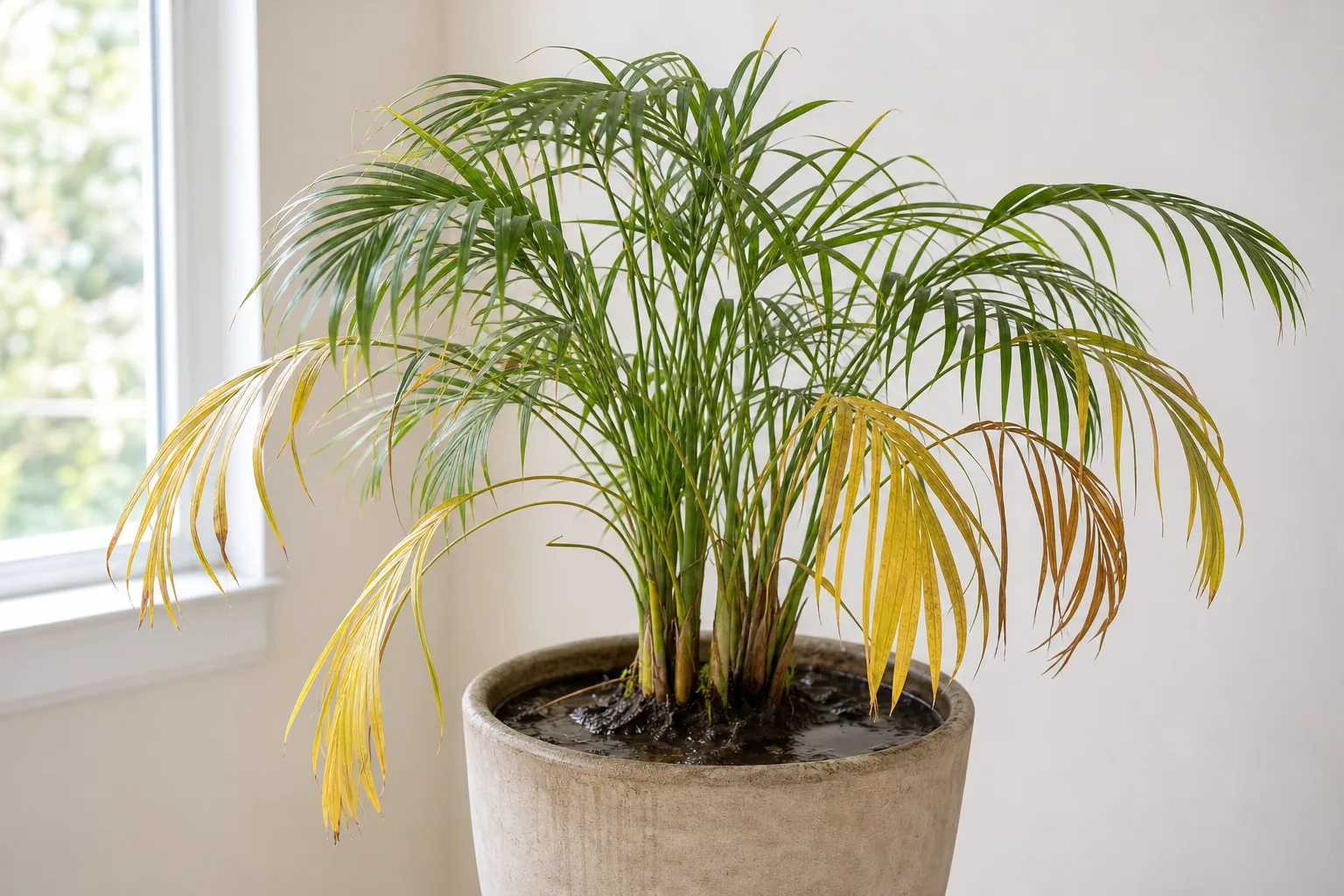
Root rot on Areca Palm follows chronically wet mix around shallow fibrous roots-limp fronds on damp soil are the classic trap. First step: stop watering, lift the pot, and check whether lower fronds are yellowing while the top 1–2 inches stay wet before you unpot.
Root Rot on Areca Palm: Causes, Checks & Fixes
This guide covers root rot on Areca Palm. See also the general Root Rot guide, watering, and light pages for this plant.
Root Rot on Areca Palm: Causes, Checks & Fixes
Quick answer
Root rot on Areca Palm (Dypsis lutescens) is almost always a watering and drainage failure around shallow fibrous roots-not a mysterious palm disease. This clumping Madagascar palm wants evenly moist mix, but its multi-stem root mass suffocates quickly when soil stays wet for days. Limp fronds on heavy damp soil is the signature trap: growers water again, and rotting roots lose even more function.
First step: stop watering immediately. Lift the pot. If the mix is wet and heavy, press your finger 1–2 inches deep near the pot edge. Wet clinging soil plus yellow lower fronds or a sour smell means treat root rot as likely. Check whether stems feel firm at the soil line on each cane in the clump before you unpot, trim, or repot.
Root rot vs. other Areca Palm problems
The wilt-on-wet-soil paradox separates root rot from thirst on areca palms better than any single frond symptom. Underwatered Dypsis lutescens wilts on a light, dry pot and often perks after a thorough soak. Root rot produces the opposite: collapse on heavy wet mix with no rebound after watering-wilting with moist soil often means roots cannot absorb water because they are decaying.
| Pattern | Pot weight | Soil at 1–2 inches | Stems at soil line | What it usually means |
|---|---|---|---|---|
| Root rot | Heavy | Wet, cool, clings to finger | Soft or darkening on one or more canes | Failed roots on saturated mix |
| Underwatering | Light | Dry and crumbly | Firm green canes | Turgor loss from drought |
| Winter overwatering (early) | Heavy | Damp for 10+ days | Firm but limp fronds | Rot risk building; roots may still be salvageable |
| Fluoride or salt tip burn | Normal on schedule | Dry on schedule | Firm | Brown leaflet tips without sour soil or mush |
| Natural aging | Normal | Dry on schedule | Firm | Older lower fronds yellow individually, not in wet-soil clusters |
For the full dry-pot versus wet-pot wilt workflow, see the wilting guide and watering guide.
What root rot looks like on Areca Palm
On this clumping palm, rot rarely starts at the newest spear. Multiple slender stems share one fibrous root mass, so damage builds quietly while lower fronds fail first.
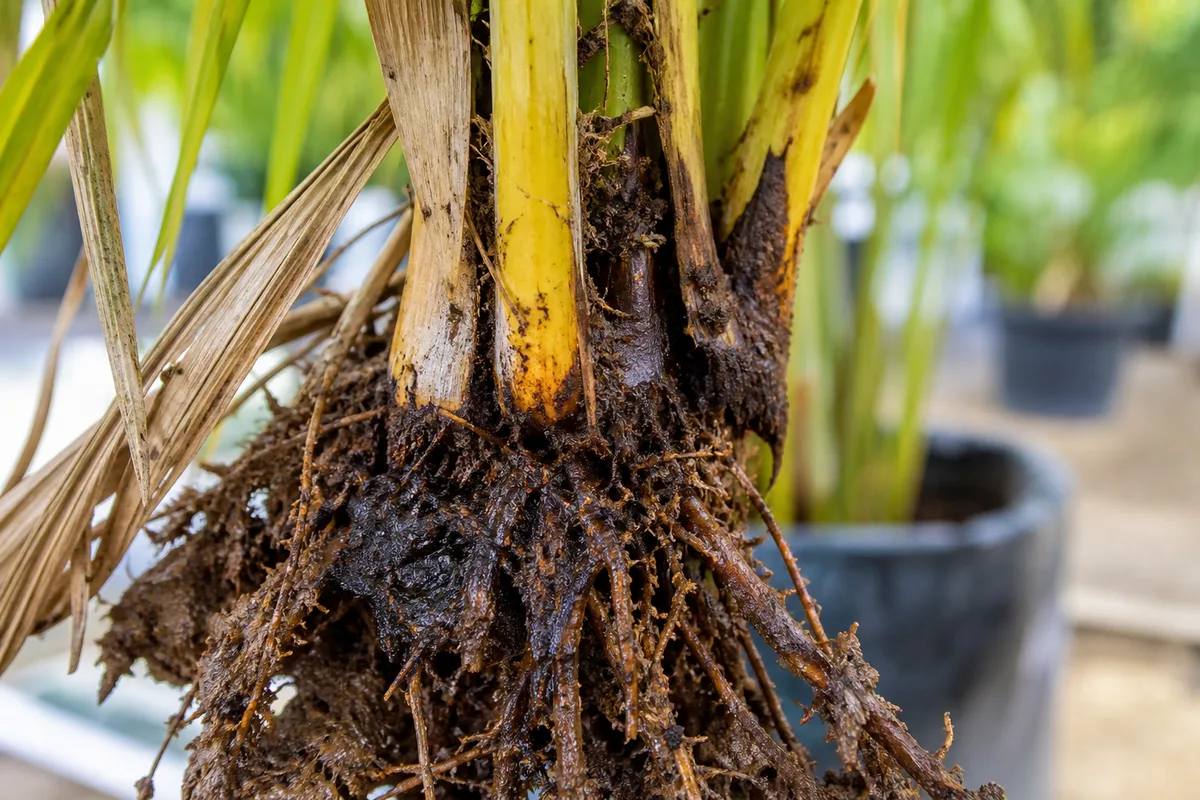
Root Rot symptoms on Areca Palm - compare with healthy tissue on the same plant.
Early signs
- Yellow lower fronds in clusters while mix stays damp-not the slow fade of a single aging frond
- Limp, drooping fronds on wet soil that do not firm up after you water
- Sour or musty smell when you lift the pot or press the surface
- Green algae on the soil surface in a pot that has not dried down in a week
- Slowed or stunted new spear growth from the center of the clump
Advanced signs
- Soft stems at the soil line on one or more canes in the clump
- Brown collapsing fronds that turn papery despite moisture in the pot
- Roots that slip off when touched-healthy palm roots stay firm and light colored
- Spear failure-no new frond emerges for weeks while existing fronds brown from the bottom up
Compare with underwatering: a dry lightweight pot, crispy leaflet tips, and fronds that recover after a full soak point away from rot. Compare with low humidity tip burn: brown edges on firm fronds with soil that dries on a normal schedule and no sour smell.
Why Areca Palm gets root rot
Areca palms evolved in Madagascar’s humid forests, where rainfall is regular and soils drain quickly through organic layers. Indoors, dense peat in an oversized plastic pot recreates the rain but not the drainage-and calendar watering in winter finishes the job.
Winter calendar watering and cold-season evaporation
Overwatering in winter is one of the most common areca palm killers because feedback is delayed. Growth slows as daylight shortens; the same mix that dried in six days in August may take 10–14 days or longer in December. Owners who keep a summer weekly schedule drown roots while the plant shows almost no immediate distress. NC State Extension recommends keeping areca palm moist but not soggy during active growth-a line that shifts sharply toward longer dry-down intervals in cool months.
Oversized pots and heavy peat mixes
Areca palms produce shallow, fibrous roots that explore the pot quickly and die fast when oxygen drops. An oversized pot holds excess wet mix around a small root ball for weeks; the surface may look dry while the center stagnates. Heavy unamended peat compacts over time, and soil that stays too long without oxygen smells sour or rotten-exactly the anaerobic condition that triggers root decay. Cachepots and full saucers trap runoff the same way blocked drainage holes do.
The limp-frond paradox
When roots fail, the plant cannot transport water to fronds even though the pot feels wet. That is why limp fronds on damp soil confuse beginners into watering more. Overwatering leads to root death and loss of vigor as damaged roots decay and stop supplying the canopy-transport failure, not thirst.
How to confirm root rot
Work through these checks in order before you repot. Each step narrows the diagnosis without stacking unnecessary treatments.
Soil moisture and pot weight
Press your finger 1–2 inches deep near the pot edge, not into the crown where stems cluster. Wet clinging soil on a heavy pot after days without intentional watering strongly suggests chronic saturation. A wooden skewer inserted toward the bottom third that comes out with damp particles clinging confirms moisture below the surface.
Lift the pot right after a known good watering to learn what “heavy” feels like, then compare when you suspect rot. Heavy plus wilt equals trouble, not thirst.
Unpot and inspect fibrous roots
Gently knock the clump out of its pot. Healthy roots are firm, pale, and hold their shape when pressed. Rotted roots are brown to black, translucent, slimy, or hollow-and they smell sour. Because multiple stems share one root mass, inspect the entire ball, not just one cane. Trim a small sample only after you have photographed or noted extent if you need to decide whether rescue is worth the stress.
Check each stem where it meets the mix. Canes should feel firm like a firm vegetable stalk, not squishy. Soft tissue at the base of one stem can spread through shared roots to neighbors in the clump.
Lookalikes to rule out
- Underwatering - Light pot, dry mix at depth, recovery after soak; frond tips crisp rather than uniformly limp on wet mix
- Overwatering without advanced rot - Wet mix and yellow lower fronds but mostly firm pale roots when you inspect; corrected dry-down and drainage may be enough without full repot
- Fluoride or salt tip burn - Brown leaflet margins on otherwise firm fronds; soil dries normally; no sour smell
- Low light plus slow dry-down - Mix stays damp longer than your summer rhythm; rot may follow if pattern continues-see overwatering for early saturation signs
First fix - step-by-step rescue
Make one clear first move: stop watering and move the plant to bright indirect light with good airflow-not a dark corner. Do not fertilize. Do not repot on day one unless stems are already mushy and you need to trim immediately.
Once you have confirmed wet mix with failing roots, follow this numbered rescue workflow:
- Unpot the entire clump and rinse roots gently with lukewarm water so you can see color and texture on the shared root mass.
- Trim all mushy, brown, or hollow roots with clean scissors or pruners until only firm tissue remains. Sterilize blades between cuts if rot was advanced.
- Remove completely rotted stems at the soil line if any cane is soft through the base; leave firm canes in place.
- Let cut root surfaces air-dry for one to two hours on a paper towel in shade-not direct sun, which desiccates palm roots quickly.
- Repot into fresh rescue mix-three parts perlite, one part peat or coir, one part potting soil or bark-in a pot one to two inches wider than the trimmed root mass, not sized to the frond height. See the soil guide for full mix ratios and when to shift back to standard blend after recovery.
- Wait about one week before the first light watering so cut surfaces callus and new root tips can start without fresh saturation.
- Resume watering only when the top 1–2 inches of recovery mix feel dry, using the finger or skewer checks from the watering guide. In winter, that may mean 10–14 days or longer between drinks.
Fungicide is usually unnecessary if you remove rotted tissue, discard old mix, and fix the wet culture that caused decay. Focus on drainage, pot sizing, and seasonal frequency instead of chemical rescue sprays.
Do not divide a severely rotted clump on day one unless you must remove dead stems-stabilize remaining roots first, then consider division next spring if the clump is overcrowded and fully recovered.
Recovery timeline
Recovery is judged by new spears and firm fronds from the center, not by old yellow fronds re-greening. Damaged lower fronds rarely recover their color; they may drop while the clump stabilizes.
- Mild rot with mostly firm roots - Stabilization within one to two weeks after repot and corrected watering; first new spear in three to six weeks
- Moderate rot with heavy root trim - Six to eight weeks before consistent new spear growth; expect lower frond loss
- Advanced stem mush at multiple canes - Often fatal; if one or two firm canes remain with healthy root tips, partial clump survival is possible but not guaranteed
- Spear failure with no new growth after six weeks in bright indirect light with correct dry-down - Treat as likely loss; avoid repeated repotting that adds stress
Signs of improvement: firm stems at the soil line on all remaining canes, a new spear unfurling, roots holding firm pale tips when you gently check after a month, and mix that dries down between waterings on your winter or summer schedule.
Signs the problem is worsening: spreading soft tissue at stem bases, wilt on wet soil after repot, sour smell returning within days, or spears that brown before opening.
What not to do
- Do not water because fronds look wilted when soil is already wet-watering a plant with rotting roots makes the problem worse.
- Do not fertilize until new spear growth resumes; stressed roots cannot use nutrients safely.
- Do not repot into garden soil, a much larger pot, or a container without drainage hoping it will dry faster.
- Do not leave the plant in the same sour mix without trimming damaged roots-the anaerobic conditions remain.
- Do not resume summer watering frequency in winter after rescue; evaporation drops and rot returns quietly.
How to prevent root rot next time
Prevention on Areca Palm is mostly rhythm and pot setup, not luck:
- Allow the top 1–2 inches of mix to dry before watering again-roughly every 5–7 days in active growth and every 10–14 days or longer in fall and winter in most homes.
- Use well-drained potting soil kept moist but not soggy amended with perlite and bark; match pot size to root mass.
- Empty saucers within 30 minutes of every watering. Lift inner pots out of cachepots to drain at the sink.
- Reduce frequency in cool months before fronds tell you something is wrong-check soil, do not obey a calendar.
- Refresh mix every two to three years before peat collapses and holds water unevenly.
The watering guide covers finger tests, pot weight, seasonal shifts, and the overwatered-palm symptom set in depth. The soil guide covers standard and rescue mix recipes, drainage checks, and repot timing.
Related Areca Palm guides
- Watering - dry-down protocol and wilt-on-wet-soil diagnosis
- Soil - mix recipes, pot sizing, and rescue blend after root trim
- Overwatering - early saturation before roots fail
- Drooping leaves - dry-pot vs wet-pot first checks
- Yellow leaves - lower-frond yellowing patterns
- Brown tips - fluoride and salt burn vs rot