Yellow Leaves on Areca Palm: Causes, Checks & Fixes
Quick answer
Yellow leaves on areca palm (Dypsis lutescens) are a symptom, not one diagnosis. On this clustering feather palm, one or two lowest fronds fading over months is often normal senescence; widespread yellowing with wet soil points to root stress; broad yellow bands on oldest fronds suggest magnesium deficiency. First step: note which fronds are yellow, probe soil moisture at 1–2 inches, and check whether new spears at the crown stay green before you fertilize or repot.
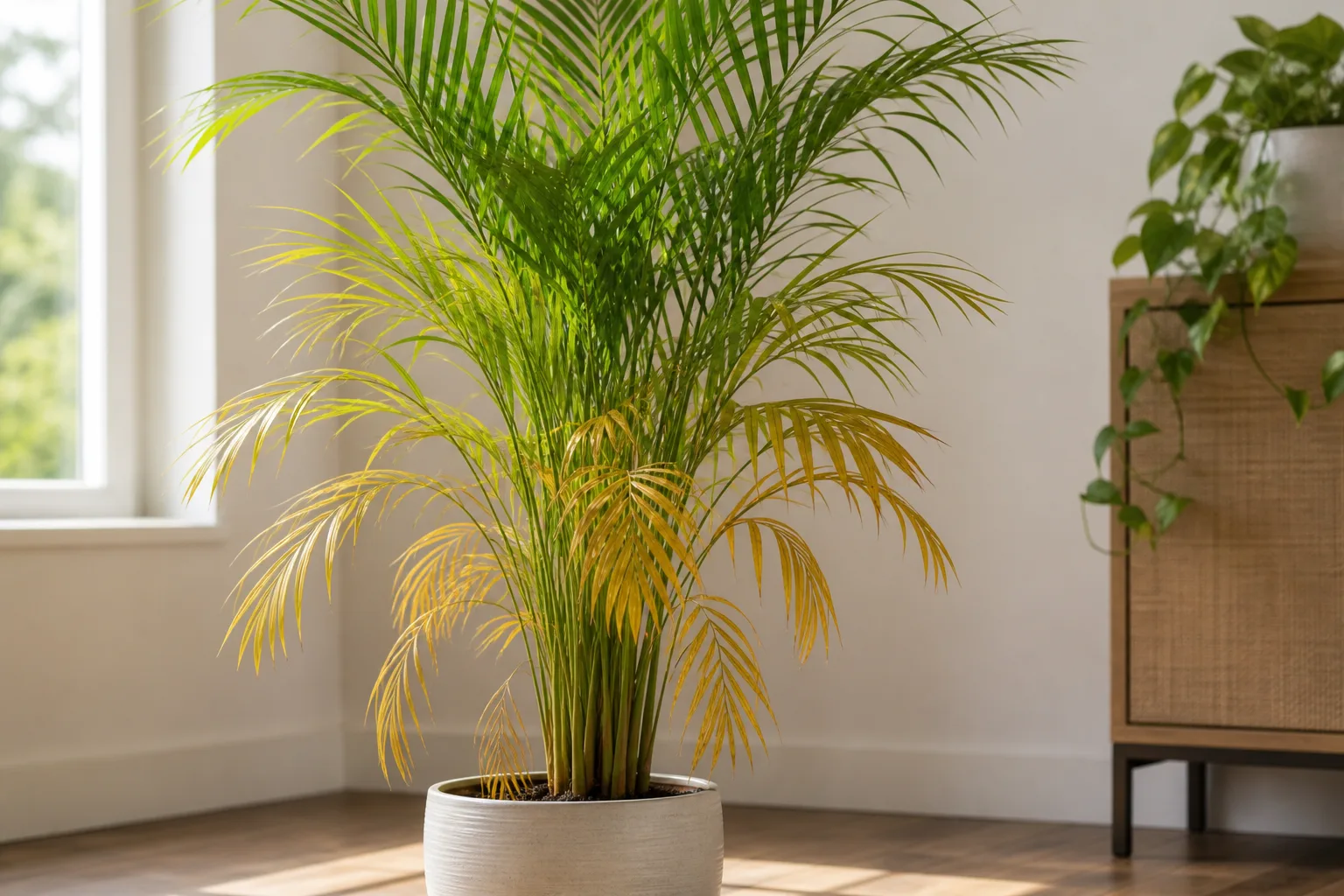
Yellow Leaves on Areca Palm: Causes, Checks & Fixes
This guide covers yellow leaves on Areca Palm. See also the general Yellow Leaves guide, watering, and light pages for this plant.
Yellow Leaves on Areca Palm: Causes, Checks & Fixes
Quick answer
Yellow leaves on areca palm (Dypsis lutescens) are a symptom, not one diagnosis. This clustering feather palm pushes new spears from a shared crown while the oldest lower fronds age out-so yellowing on one or two bottom fronds over months is often harmless senescence, not a crisis.
First step: note which fronds are yellow, probe soil moisture at 1–2 inches, and check whether new spears at the crown stay green. If only the lowest one or two fronds fade evenly while new growth above stays deep green and soil dries normally between waterings, aging is the likely branch. If multiple fronds yellow within two weeks on wet, heavy soil, suspect overwatering or root rot before you add fertilizer. Broad yellow bands along oldest frond margins with green centers point to magnesium deficiency-see the fertilizer guide. Pale, stretched upper fronds in a dim room point to not enough light.
Do not fertilize, repot, or increase watering until you know which pattern fits. The areca palm overview covers baseline care; this page walks through yellow-frond diagnosis on a multi-stem clump.
What yellow leaves look like on areca palm
Areca palm grows as multiple yellow-green canes topped with arching pinnate fronds-each frond a central rachis lined with narrow leaflets. Yellowing shows up in distinct patterns:
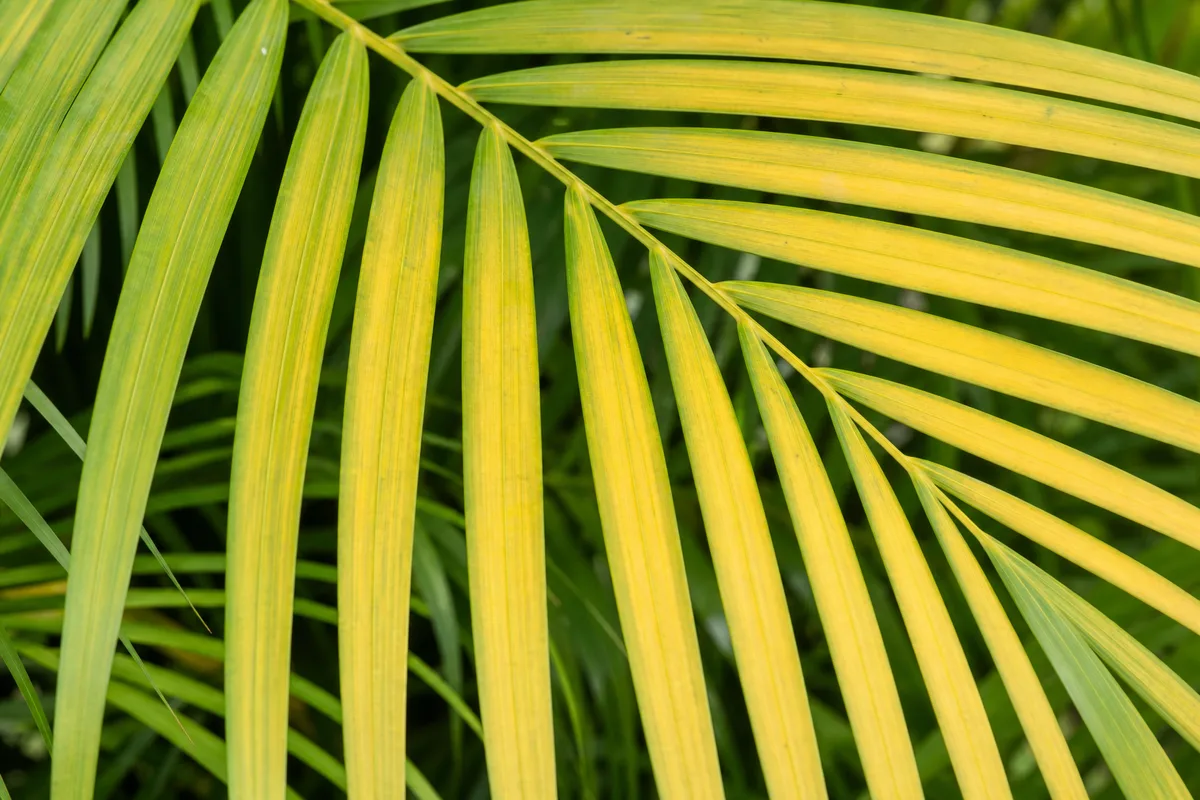
Yellow Leaves symptoms on Areca Palm - compare with healthy tissue on the same plant.
- Normal lower-frond aging - One to three lowest fronds turn evenly yellow from leaflet tips inward over weeks to months. Canes stay firm, soil dries on your normal schedule, and new spears above stay green. The clump simply sheds old solar panels as it produces fresh ones from the crown.
- Overwatering / root stress - Several lower and mid-canopy fronds yellow within days to two weeks, often with limp texture while soil stays wet for many days. May pair with sour smell, algae on the mix surface, or softening at cane bases. Differs from aging because the rate is fast and soil moisture is wrong.
- Underwatering - Crisp yellow or tan fronds on a lightweight pot with bone-dry top 1–2 inches of mix. Fronds may droop between waterings. See underwatering when drought stress is the main branch.
- Low light - Pale yellow-green upper fronds with long, weak petioles and reduced new-spear output in a dim room. Not the same as uniform lower-frond fade; the plant stretches toward windows. Compare with not enough light.
- Magnesium deficiency - Broad yellow bands along margins of oldest fronds while the center of each leaflet stays distinctly green. Common on palms held in the same container six months or longer without feeding. Magnesium deficiency never causes necrotic spotting alone.
- Potassium deficiency - Translucent yellow or orange spotting on oldest leaflets, progressing to tip necrosis that may look frizzled. On Dypsis lutescens, K deficiency often appears as marginal or tip necrosis with little yellow spotting at first.
- Tap-water / salt stress - General paling or yellowing paired with brown crispy tips on newer leaflets and possible white crust on soil. Often chronic rather than sudden. Cross-check brown tips when edge burn accompanies yellowing.
- Spider mites - Fine stippling and bronzing on frond undersides, sometimes with delicate webbing at leaflet bases. Uniform yellowing without stippling is usually not mites-see spider mites when pests are suspected.
Worry when yellowing hits most of the canopy, new spears open pale, or wet soil pairs with soft canes-not when a single old frond near the pot rim fades on an otherwise stable clump.
Why areca palms get yellow leaves
Normal lower-frond senescence in clumping palms
Unlike rosette houseplants where leaves radiate from a single crown, Dypsis lutescens is a multi-stem clustering palm native to Madagascar. Missouri Botanical Garden describes it as a palm with multiple cane-like stems topped with pinnate fronds. Each stem produces fronds sequentially; the oldest fronds on the lowest stems yellow and drop as the clump channels energy into new spears from the center. Mature indoor specimens commonly carry dozens of fronds-losing one or two lower ones per quarter is routine maintenance, not decline.
This pattern confuses owners because both aging and nutrient stress start on oldest fronds. The differentiator is speed and soil context: aging is slow and even on one to three bottom fronds with green new growth; stress yellows faster, often across multiple fronds, and usually pairs with wrong watering, poor light, or feeding history.
Overwatering and root stress
Areca palms want moist but well-drained soil-not a permanently wet root zone. NC State Extension recommends growing areca palm in well-drained potting soil kept moist but not soggy during the growing season. When air spaces in the mix stay filled with water, fine roots die. Once root function drops, the plant cannot move water and minerals to fronds even though the pot feels wet-lower leaves yellow first because the palm sheds tissue it can no longer support.
Indoor areca palms in cool, low-light rooms are especially vulnerable: slow evaporation keeps mix damp longer, and owners interpret limp yellow fronds as thirst rather than drowning. Adding water to already-wet soil accelerates decline. See overwatering and root rot when wet soil and rapid multi-frond yellowing align.
Underwatering and drought stress
The same species wilts when the entire root ball goes dry for too long-especially during active summer growth. Tips and margins crisp, fronds yellow or tan, and the pot feels light. Light daily splashes that wet only the surface while the center stays dry cause chronic drought stress even in a pot that “got watered yesterday.” True underwatering shows dry deep mix; align with the watering guide rhythm before assuming deficiency.
Low light and pale upper fronds
Houseplant specimens prefer consistent moisture in mostly sunny exposures with high humidity, per Missouri Botanical Garden culture notes. In dim offices or north rooms, photosynthesis drops, new fronds emerge smaller and paler, and older fronds may yellow as the plant reallocates resources. Bright indirect light keeps frond production steady; too little light produces stretched, yellow-green canopy tissue rather than the deep green arching fronds this palm is known for.
Magnesium and potassium deficiency
Palms have distinct nutrient signatures that generic houseplant advice misses. UF/IFAS Extension documents magnesium deficiency on palms as broad chlorotic bands along margins with the central portion of leaves remaining distinctly green, always most severe on oldest fronds. Magnesium deficiency never causes necrotic spotting by itself.
Potassium deficiency on Dypsis lutescens often appears as marginal or tip necrosis with little yellow spotting at first, progressing to translucent yellow or orange spotting on oldest leaflets. K and Mg deficiencies both hit oldest fronds first-the same real estate as natural aging-so check fertilizer history and leaflet pattern, not just frond position. Container palms held in the same pot beyond six months without feeding are prime candidates for magnesium limitation when dolomite in the original mix is exhausted.
Do not feed a waterlogged or fluoride-stressed palm until you fix the primary stressor. The fertilizer guide covers half-strength balanced liquid or palm-specific formulas with extra potassium and magnesium.
Tap water fluoride and salt buildup
Areca palms are sensitive to fluoride in tap water, which can cause leaf tip burn on many houseplants as minerals accumulate in tissue over repeated watering. Chronic exposure can pale fronds and cause edge burn that owners read as generic yellowing. Resting tap water overnight reduces chlorine but does not remove fluoride. If yellowing pairs with crispy new leaflet tips, switch to rainwater or filtered water for four weeks and compare against the brown-tips guide before chasing nutrients.
Spider mites and pest-related yellowing
Missouri Botanical Garden lists spider mites among insect pests to watch on Dypsis lutescens. Mites thrive in warm, dry indoor air-common near winter heating-and cause stippling, bronzing, and fine webbing on frond undersides rather than uniform whole-frond yellowing. Tap a suspect leaflet over white paper; slow-moving specks confirm mites. Treat pests before fertilizing a stressed clump.
Lookalike symptoms to rule out
Before Areca Palm repotting guide or feeding every yellow frond, rule out these common misreads:
| Pattern | Soil moisture | New spears | Likely cause | First direction |
|---|---|---|---|---|
| 1–2 lowest fronds, even yellow, slow fade | Normal dry-down | Green and regular | Normal aging | Remove spent fronds; monitor crown |
| Multiple fronds yellow in <2 weeks | Wet for days | Pale or limp | Overwatering / root stress | Dry down; inspect roots |
| Crisp yellow, light pot | Bone-dry top 2 in. | May be stunted | Underwatering | Deep soak; fix rhythm |
| Broad yellow bands, green centers, oldest fronds | Normal | Green | Magnesium deficiency | Half-strength feed on moist soil |
| Orange spotting + tip necrosis, oldest fronds | Normal | Green | Potassium deficiency | Palm-specific fertilizer |
| Pale upper fronds, long petioles | Normal | Small, pale | Low light | Brighter indirect exposure |
| Stippling + webbing on undersides | Normal | May be clean | Spider mites | Rinse; treat; raise humidity |
| Yellow + brown new tips, white crust | Moist | Tips crisp on new growth | Tap-water / salt stress | Filtered water; flush pot |
If multiple rows seem to fit, fix watering first-wrong moisture kills roots faster than any fertilizer corrects.
How to confirm the cause
Work through this inspection in order-the same sequence used in the areca palm overview:
- Count and position - How many fronds are yellow? Only the lowest one or two, or half the clump? Are upper spears still green?
- Soil moisture - Probe the top 1–2 inches. Wet and heavy for three or more days after watering points to overwatering. Bone-dry and a light pot points to drought.
- Cane firmness - Press the base of yellowed canes. Firm is reassuring; soft or mushy needs root inspection.
- Leaflet pattern - Even yellow across the frond (aging) vs. broad marginal bands (magnesium) vs. stippling on undersides (mites) vs. tip necrosis with spotting (potassium).
- New spear color - The next one or two unfolding fronds should stay green when the cause is fixed. Pale or browning new spears mean active stress.
- Feeding and water history - Same pot six months without feed? Months of straight tap water with tip burn? Recent repot into wet mix?
If wet soil pairs with multiple yellow leaves at once, inspect roots before fertilizing or repotting into a larger pot.
First fix for areca palm
Match one change to the most probable cause-do not stack fertilizer, repotting, and watering adjustments on day one.
- If only 1–2 lowest fronds yellow slowly on firm canes with normal soil - Remove spent fronds at the petiole base per the pruning guide. No other treatment needed; watch the next spear.
- If soil is wet and heavy with rapid yellowing - Stop watering until the top 1–2 inches dry. Empty saucer runoff. Confirm drainage holes are open. If several fronds yellow within a week, unpot and inspect roots for brown mushy tissue before the next soak. See overwatering.
- If soil is bone-dry and the pot is light - Water deeply once until a little drains from the bottom, discard runoff, then resume the watering check rhythm.
- If oldest fronds show broad marginal yellow bands with green centers and you have not fed in months - Apply half-strength balanced liquid fertilizer or palm-specific formula to already-moist soil during active growth. Do not feed a dry or waterlogged plant.
- If upper fronds are pale and stretched in a dim room - Move the clump to bright indirect light; avoid direct midday sun that scorches leaflets.
- If stippling and webbing are present - Rinse frond undersides, isolate the plant, and treat per the spider mites guide before feeding.
Secondary steps come after the first branch shows improvement in new spear color-not when old yellow tissue is still present.
Recovery timeline
Fully yellow fronds do not re-green. They brown, dry, and drop-or you remove them once the cause is addressed. Recovery is measured by new growth, not old leaflet color.
After you correct watering or light, expect the next one or two spears to open greener within two to four weeks in warm, bright conditions. Nutrient correction on magnesium- or potassium-deficient palms may take several months because each new frond must replace damaged older tissue-palm deficiency recovery is gradual. Winter low light slows frond replacement; judge progress by spring spear quality, not December color.
Signs you are winning: firm canes, normal dry-down between waterings, and green new spears unfolding on schedule. Signs you are losing: yellowing climbing toward the crown, new spears browning before opening, or soft cane bases despite corrected watering.
What not to do
- Do not fertilize a waterlogged palm - Salts on stressed roots worsen yellowing. Fix moisture first.
- Do not increase watering when soil is already wet - Limp yellow fronds in soggy mix are drowning, not thirsty.
- Do not assume every yellow frond needs fertilizer - Aging, overwatering, and low light are more common than deficiency indoors.
- Do not repot on day one unless roots are clearly rotting or the mix has failed-repotting stacks stress on a yellowing clump.
- Do not pull living fronds - Cut only fully spent tissue with clean shears at the petiole base.
How to prevent yellow leaves on areca palm
- Water on dryness, not calendar - Check the top 1–2 inches every time. Active growth may mean every 7–10 days; winter often means every 14–21 days-confirm with the watering guide.
- Feed during active growth only - Half-strength balanced or palm-specific fertilizer on moist soil every two to four weeks in spring and summer; pause in winter unless strong grow lights keep new spears coming. Details in the fertilizer guide.
- Use filtered or rainwater if tips burn - Reduces fluoride and salt stress that can pale fronds over time.
- Keep bright indirect light - Prevents pale stretched canopy tissue.
- Remove spent lower fronds promptly - Reduces pest hiding spots and clarifies whether new yellowing is fresh stress.
- Flush salts every few months if you feed frequently or use hard tap water-run several pot volumes of plain water through the mix and discard runoff.
Areca palm care cross-check
If yellow fronds keep returning after one fix, compare your routine to what Dypsis lutescens needs:
| Checkpoint | Healthy target | Yellow-frond risk when wrong |
|---|---|---|
| Soil moisture | Moist but not soggy; top 1–2 in. dry before soak | Wet roots or chronic drought |
| New spears | Green, regular emergence | Pale spears signal active stress |
| Light | Bright indirect; no direct midday sun | Dim rooms pale upper fronds |
| Feeding | Half-strength during active growth | Mg/K bands on oldest fronds when underfed |
| Water quality | Clean new leaflet tips over months | Fluoride/salt paling and tip burn |
| Frond turnover | 1–2 lowest fronds per quarter | Mass fast yellowing is not normal aging |
Fix the failing row before stacking more treatments.
Related areca palm problems
- Areca palm overview - Baseline light, water, humidity, and frond diagnostics
- Watering areca palm - Moist-but-not-soggy rhythm and tap-water sensitivity
- Areca palm fertilizer - Magnesium, potassium, and half-strength feeding
- Brown tips - Fluoride and salt stress vs. yellowing patterns
- Overwatering - Wet soil, yellow fronds, and root stress
- Root rot - Mushy roots when yellowing spreads fast
- Spider mites - Stippling and webbing on frond undersides
- Not enough light - Pale stretched fronds in dim rooms
- Areca palm pruning - Removing spent yellow fronds safely
When to use this page vs other Areca Palm guides
- Areca Palm watering guide - Use for routine moisture checks before assuming yellow leaves is the main issue.
- Areca Palm problems hub - Browse all 16 common issues on this species.
- Overwatering on Areca Palm - Different entry point when symptoms overlap with yellow leaves.
- Underwatering on Areca Palm - Different entry point when symptoms overlap with yellow leaves.
- Not Enough Light on Areca Palm - Different entry point when symptoms overlap with yellow leaves.