Underwatering on Areca Palm: Causes, Checks & Fixes
Quick answer
Areca Palm underwatering shows as limp arching fronds, a very light pot, and dry mix when the top 1–2 inches have been dry too long-especially in bright rooms or root-bound clusters. First step: water thoroughly until excess drains out, then wait for the top inch to dry again before the next drink.
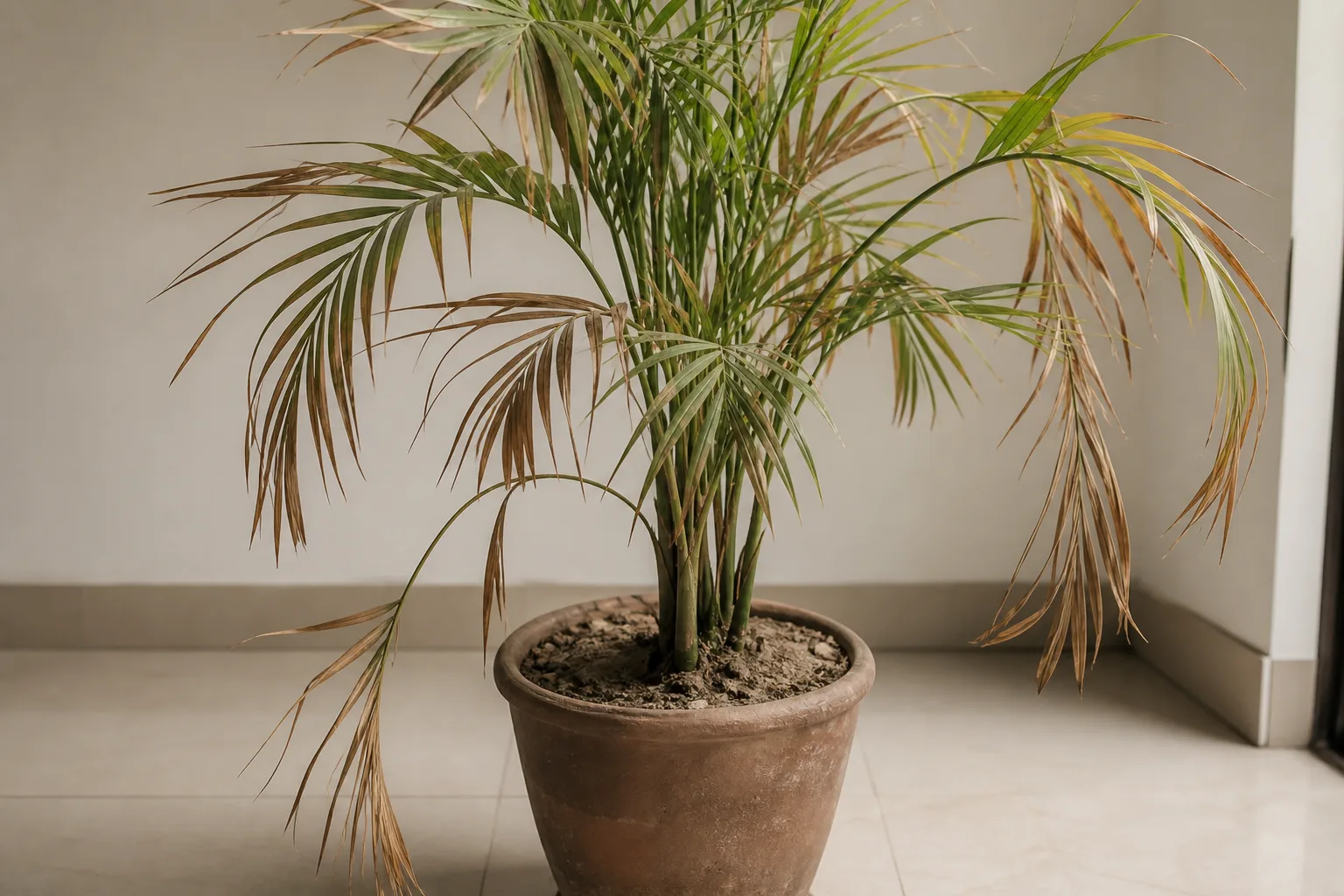
Underwatering on Areca Palm: Causes, Checks & Fixes
This guide covers underwatering on Areca Palm. See also the general Underwatering guide, watering, and light pages for this plant.
Underwatering on Areca Palm: Causes, Checks & Fixes
Quick answer
Areca Palm (Dypsis lutescens) evolved in Madagascar’s moist forest understory and expects steady root-zone moisture-not a strict weekly calendar, but also not long dry spells between drinks. When the top 1–2 inches of mix stay dry too long, arching fronds lose turgor, the pot feels light, and leaflet tips can crisp before you notice a problem.
First step: water thoroughly until excess runs from the drainage hole, then empty the saucer. That single deep soak is the correct response when the top inch is dry and the container feels light. Do not switch to daily shallow splashes, and do not panic-soak a plant whose soil is already wet at depth.
What underwatering looks like on Areca Palm
On this multi-stem cane palm, drought stress usually shows on the outer, most exposed fronds first. Watch for these patterns:
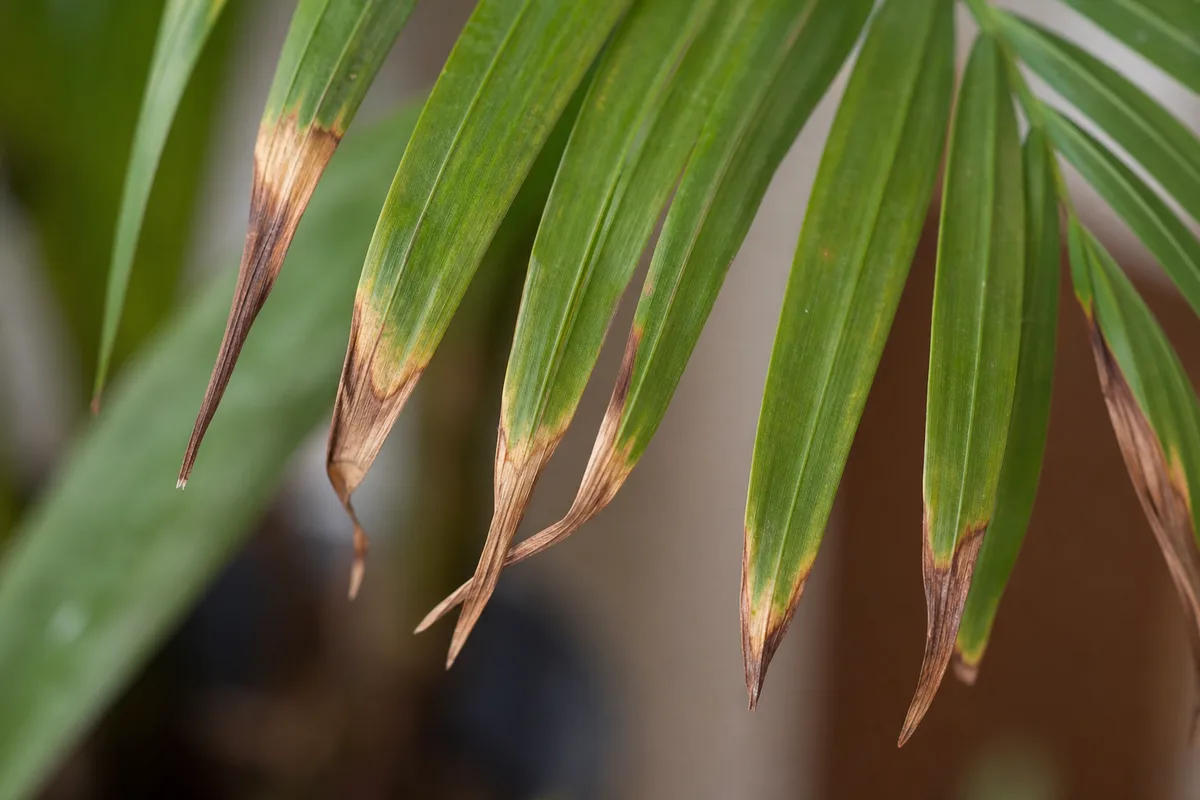
Underwatering symptoms on Areca Palm - compare with healthy tissue on the same plant.
- Drooping, limp fronds - Graceful arching leaflets hang lower than normal and feel soft instead of springy. Plants wilt when roots cannot supply sufficient moisture to stems and leaves; when soil is dry to the touch, drooping fronds are a strong underwatering clue.
- Dry, crispy leaflet tips - Margins brown and crack while midribs may still look green. On areca palms, tip browning also happens from low humidity or fluoride in tap water, so pair this sign with soil dryness-not tip color alone.
- Dull, gray-green foliage - Fronds lose their bright yellow-green sheen and look flat rather than glossy.
- Very light pot - Lift the cluster; a dramatic weight drop compared with right after watering points to dry mix through much of the root zone.
- Dusty dry top 1–2 inches - Soil feels hard, pulls slightly away from the pot wall, or repels water when you irrigate from the top.
- Slowed spear growth - New central spears stall while older lower fronds may yellow and drop after repeated dry cycles.
Crisp brown leaflet tissue will not turn green again, but healthy areca palms typically bounce back once roots can take up water-new spears and firm fronds should look normal within two to three weeks during warm months.
Why Areca Palm gets underwatering
Areca palms are native to moist forest areas in Madagascar and, as houseplants, prefer consistent moisture in mostly sunny exposures with high humidity. That background explains why they wilt faster than succulents when a busy schedule, fear of overwatering on Areca Palm, or calendar watering leaves the root ball chronically dry.
Bright light speeds drying. Areca palms grow best in Areca Palm light guide, but more light means faster transpiration across many long fronds. A cluster near a sunny window or under grow lights can need water several days sooner than the same plant in medium light.
Multiple canes drink from one pot. Retail areca palms are often sold as clumps of several cane stems sharing one root mass. More foliage per container means the top layer dries quickly-especially when the plant is slightly root-bound, which areca palms tolerate but which also shrinks the water reservoir.
Calendar watering misses seasonal swings. Watering every seven days year-round ignores how areca palms use less moisture in winter when growth slows and heated dry air pulls water from leaves faster in summer. The same schedule can leave an actively growing palm chronically dry in spring while being correct in December.
Hydrophobic old mix - Peat-heavy palm mix that has gone bone dry can repel water. You may pour from the top and see runoff while the root ball inside stays dry-a classic underwatering trap on neglected floor palms.
Heat, AC drafts, and travel gaps - Heating vents, air-conditioning airflow, and forgotten vacation watering all concentrate drought stress on outer fronds that dry out first. Spider mites also thrive in dry heated winter air on palm fronds, but that is a separate problem-misting leaves without soaking roots will not fix underwatering.
Underwatering is less immediately deadly on areca palms than chronic overwatering, which invites root rot on Areca Palm in cool, wet mix. The species’ popularity and forgiving reputation make some growers wait too long to water during peak growth-but repeated extreme dryness during active season can still shed lower fronds and stall new spears.
How to confirm the cause
Work through these checks before you change anything else:
- Top 1–2 inch moisture - Insert your finger about 2.5–5 cm (1–2 inches) deep. Dusty, hard, or visibly shrunken mix from the pot edge supports underwatering.
- Pot weight - Compare how heavy the container feels now versus right after your last thorough watering. As potting mix dries out, the container becomes lighter in weight-a very light pot with limp fronds is a strong drought clue.
- Cane base firmness - Gently press stems at the soil line. Firm, dry cane bases with limp frond tips fit underwatering. Soft, mushy bases with wet mix suggest overwatering or rot-do not add more water.
- The recovery test - Water once deeply. If fronds perk within 24–48 hours, thirst was the problem. Wilting that does not recover after thorough watering points to damaged roots from past overwatering-inspect roots before soaking again.
- Overwatering cross-check - Yellow lower fronds with soggy soil and soft brown tips that feel wet, not crisp, usually mean too much water, not too little. Areca palms show different leaf patterns for each extreme.
- Humidity context - Crispy tips on otherwise firm, well-watered fronds may be low humidity or fluoride burn. Underwatering usually includes a light pot and dry top inch together.
If soil is wet several centimeters down, cane bases are mushy, or the pot smells sour, treat as overwatering or root rot-not underwatering.
First fix for Areca Palm
Water thoroughly until excess drains freely from the bottom of the pot, then discard saucer water within 30 minutes.
Use room-temperature water and irrigate slowly enough that the whole root zone rewets-not just the surface. For large floor clusters, roll the pot to a tub or shower so water can run through without flooding the saucer. Water plants thoroughly so that water comes out of the bottom of the pot.
If mix has pulled away from the pot sides or water runs straight through:
- Bottom-soak - Set the pot in a basin of warm water halfway up the container for 30–60 minutes so dry peat can reabsorb moisture, then let it drain fully.
- Repeat if needed - Severely dehydrated media may need a second slow top-watering once the first pass softens the surface.
After the soak, resume your normal rhythm: water again only when the top 1–2 inches feel dry. One deep drink fixes acute drought; the schedule prevents repeat episodes.
Step-by-step recovery
Once the plant has had its first thorough watering, support recovery in this order:
- Wait 48 hours before judging - Give turgor time to return across long fronds. Do not water again just because a few old leaflet tips still look crisp.
- Trim only fully dead tissue - Snip brown, brittle leaflet tips or fully yellow fronds at the cane if they bother you cosmetically. Leave any green tissue that can still photosynthesize.
- Hold fertilizer - Rehydrate first. Feeding drought-stressed palm roots can burn tender root tips; wait until you see firm new spear growth.
- Stabilize light - Keep bright indirect light without moving the cluster between extremes. Direct full sun indoors may scorch the foliage on areca palms already stressed from dryness.
- Monitor pot weight for two weeks - Learn how many days your cluster takes to go from soaked to top-inch dry in current conditions.
- Raise humidity if air is very dry - A pebble tray or humidifier supports recovery after rehydration, especially in heated winter rooms-but humidity alone does not replace soil moisture.
If large sections stay limp after a proper soak, slide the cluster out and check roots. Firm, pale roots confirm you simply need better timing. Mushy brown roots mean rot from past overwatering-address that separately rather than continuing deep soaks.
Recovery timeline
Hours 0–48: Limp fronds often visibly firm and lift after a deep soak when roots are intact. Severely crispy leaflet margins stay brown.
Days 3–14: New spear growth should resume during spring and summer. Stalled spears after two weeks in warm light suggest root damage or chronic hydrophobic mix, not a single missed watering.
Weeks 2–4: Fresh fronds fill in sparse sections if light and watering stay consistent. Old yellowed lower fronds may drop; that is normal after repeated dry cycles on palms that shed from the bottom up.
When to worry: Entire cluster stays wilted 48 hours after thorough watering, cane bases soften, or yellowing spreads while soil stays damp-these point to root rot or another problem, not ongoing drought.
Lookalike symptoms
- Overwatering and root rot - Yellow lower fronds, soggy soil, soft brown tips, and wilting that does not recover after watering. Healthy roots should be light-colored and firm; mushy roots mean rot, not thirst.
- Low humidity or fluoride burn - Crispy leaflet tips with otherwise firm fronds and moist soil. Areca palms are sensitive to dry indoor air and chemicals in tap water; fix humidity and water quality, not watering frequency.
- Spider mites - Stippling, webbing, and pale fronds with normal soil moisture. Dry winter air encourages mites on palm undersides; rinse and treat pests-watering more will not clear an infestation.
- Cold stress - Areca palms dislike temperatures that drop below 60°F. Chilled roots uptake water poorly and fronds can look wilted even when mix is moist.
- Normal winter slowdown - Reduced watering in cool months is correct. Do not interpret slower dry-down as permission to ignore a bone-dry cluster for weeks.
What not to do
Do not water on a fixed calendar without checking the top 1–2 inches-watering on a schedule can lead to too much or too little water.
Do not switch to daily shallow splashes after one dry spell. Light surface moisture evaporates before roots deep in a large palm cluster drink enough.
Do not overcorrect into constantly wet soil because fronds looked sad. Areca palms are more vulnerable to root rot in waterlogged cool mix than to occasional dryness.
Do not mist fronds instead of soaking roots - Misting raises humidity briefly but does not replace soil moisture for a dry root ball.
Do not fertilize until new spear growth looks healthy for at least two weeks after rehydration.
Do not repot on day one unless mix is hydrophobic beyond repair or roots are visibly rotting. A simple deep soak fixes most underwatering cases.
Areca Palm care cross-check
Match watering to how Areca Palm overview actually grows in your home:
- Light: Bright indirect light. More light = more frequent checks in summer.
- Water trigger: Test soil with your finger to a depth of about two inches; when dry, soak until drainage. Areca palms prefer consistent moisture without waterlogging.
- Temperature: Roughly 18–27°C (65–80°F); avoid sustained exposure below 16°C (60°F).
- Humidity: Target 50–70% for best frond quality; dry air worsens tip browning alongside drought.
- Container: Drainage holes required; large clustered pots dry unevenly-check the top inch, not just the saucer.
- Mix: Well-draining, fertile palm potting media; refresh peat-heavy soil that repeatedly goes hydrophobic.
Houseplants prefer consistent moisture in mostly sunny exposures with high humidity-that tolerance for brief dryness is not a license to ignore an actively growing cluster in a bright living room.
How to prevent underwatering next time
- Weigh the pot after watering and again when the top inch feels dry; muscle memory beats a calendar.
- Adjust for season - Water more often in spring and summer when new spears push, less in winter when growth slows.
- Group care with light changes - Moving a palm closer to a brighter window shortens the dry-down interval immediately.
- Bottom-soak neglected clusters before vacation return if soil has shrunk from pot walls.
- Watch lower fronds - Areca palms shed from the bottom up; repeated yellowing of oldest fronds often traces back to inconsistent moisture, not random aging alone.
Track one cluster through a full week in your conditions. Once you know its dry-down rhythm, underwatering becomes easy to spot before fronds collapse.
When to worry
Treat promptly when:
- Soil has pulled away from pot sides and fronds are fully collapsed
- Repeated dry cycles have stripped most lower fronds from several canes
- The plant stays wilted 48 hours after a confirmed deep soak
Escalate to root inspection when wilting persists despite wet soil, cane bases soften, or non-recovery after watering suggests rot rather than thirst. For severe dieback on otherwise firm roots, trim dead fronds and stabilize moisture before considering division of healthy offshoots-but only after you have ruled out mushy roots.
When to use this page vs other Areca Palm guides
- Areca Palm watering guide - Use for routine moisture checks before assuming underwatering is the main issue.
- Areca Palm problems hub - Browse all 16 common issues on this species.
- Wilting on Areca Palm - Different entry point when symptoms overlap with underwatering.
- Brown Tips on Areca Palm - Different entry point when symptoms overlap with underwatering.
- Yellow Leaves on Areca Palm - Different entry point when symptoms overlap with underwatering.