Drooping Leaves on Areca Palm: Causes, Checks & Fixes
Quick answer
Drooping areca palm fronds usually mean the plant cannot move water to its long leaflets-most often from underwatering, overwatering/root failure, low humidity, or cold drafts. First step: stick a finger or skewer 1–2 inches into the mix and check whether soil is wet or dry before adding any water.
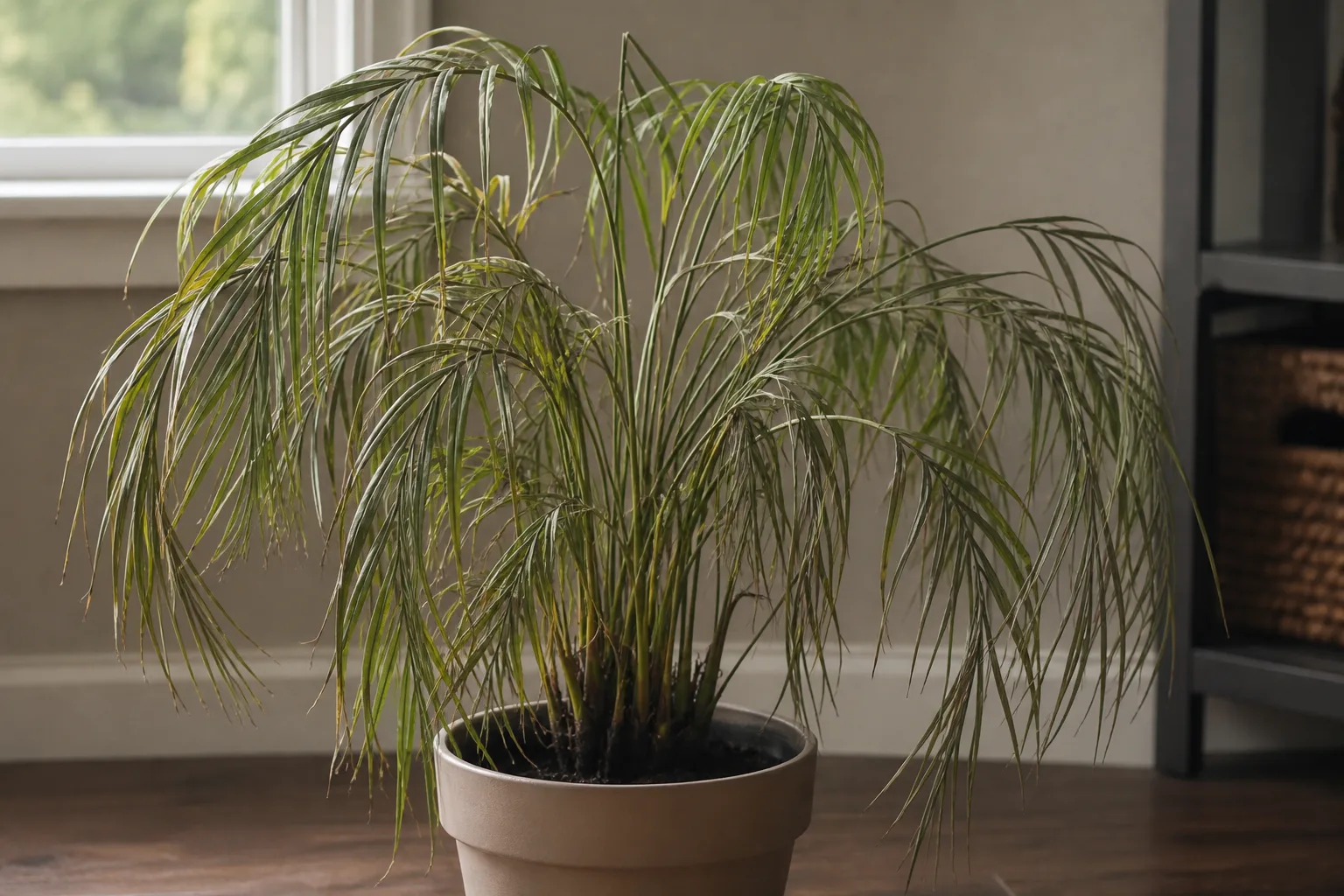
Drooping Leaves on Areca Palm: Causes, Checks & Fixes
This guide covers drooping leaves on Areca Palm. See also the general Drooping Leaves guide, watering, and light pages for this plant.
Drooping Leaves on Areca Palm: Causes, Checks & Fixes
Quick answer
Drooping leaves on areca palm (Dypsis lutescens) mean the plant cannot keep turgor pressure in its long, arching fronds-not that one single care mistake always applies. This clustering palm from Madagascar pushes water up through relatively shallow, fibrous roots to leaflets that may span several feet on each cane. When roots fail, humidity crashes, or cold air hits the clump, the whole canopy can look limp at once.
First step: check whether the potting mix is wet or dry before you water. Insert a finger or dry skewer 1–2 inches into the mix near the pot edge. A light pot with dry top inches means underwatering; a heavy pot with damp mix that has stayed wet for days means pause watering and inspect roots-not another soak. For the full watering rhythm, see the areca palm watering guide.
Drooping vs. wilting on areca palm
Owners use “drooping” and “wilting” interchangeably on areca palms. Both describe limp, arching fronds, but the terms point to different severity and intent on this site:
| Term | Typical look | Stems | When to use this page |
|---|---|---|---|
| Drooping leaves | Fronds hang lower; leaflets lose spring but stay mostly green | Canes usually firm | Mild limpness, first notice, humidity or thirst questions |
| Wilting | Canopy collapses; fronds feel soft; may yellow quickly | May soften at base in advanced rot | Severe turgor loss, wet-soil collapse, urgent root checks |
The wet-vs-dry soil fork decides the first fix for either word. If fronds are fully collapsed with wet soil and spreading yellow, read wilting on areca palm for escalation steps alongside root rot and overwatering guidance.
What drooping looks like on Dypsis lutescens
On a healthy clump, multiple bamboo-like canes carry upright-arching pinnate fronds with leaflet pairs forming a distinct V along each rachis-NC State Extension describes semi-erect pinnae on clustering stems. Drooping changes that silhouette:
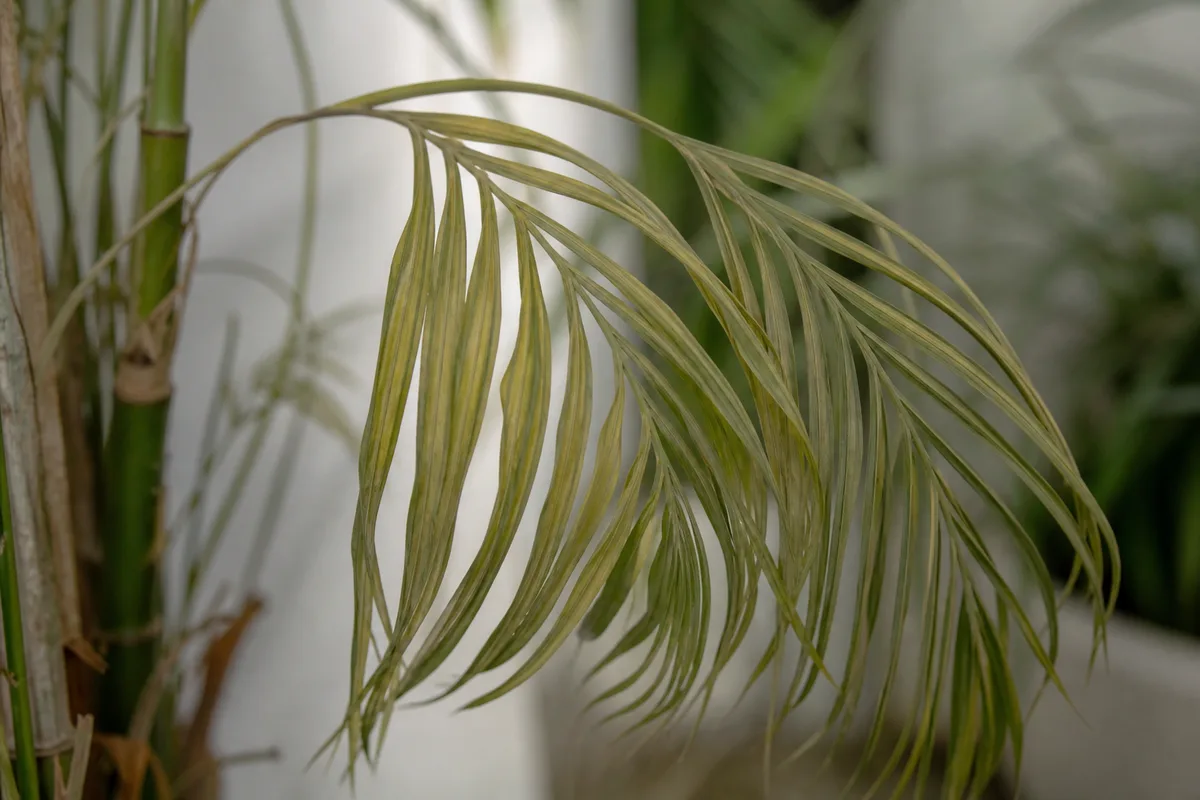
Drooping Leaves symptoms on Areca Palm - compare with healthy tissue on the same plant.
- Even limpness across most fronds, pot light, dry surface → underwatering or hydrophobic dry root ball (underwatering)
- Limp fronds on heavy, wet mix for a week or more → overwatering or early root rot (overwatering, root rot)
- Droop plus widespread brown leaflet tips in heated winter air → low humidity stress, often with soil still moderately moist (low humidity)
- Sudden flop after repot or division with firm canes → transplant shock; roots disturbed but not mushy
- Stippled undersides with webbing in a warm dry corner → spider mite stress compounding frond flop (spider mites)
- One-sided yellow lower fronds on wet soil → root stress overlap; do not water again until roots are checked
Because several canes share one root ball, one stressed cane can make the entire clump look collapsed even when other spears are firm.
Misidentification note: Chrysalidocarpus lutescens is often confused with bamboo palm (Chamaedorea seifrizii) at nurseries-both are clustering indoor palms, but areca has thicker yellow-green cane stems and longer feathery fronds. NC State notes the lookalike. Ravenea rivularis (majesty palm) is another common mix-up: it wants much wetter soil and shows droop differently when kept too dry. If your “areca” sits in constantly soggy mix and still collapses, confirm the species tag before changing care.
Why areca palm fronds droop - the wet-vs-dry fork
Areca palms show droop in both drought and root failure, which confuses owners who treat limp leaves as thirst every time. The mechanism differs:
Underwatering: Roots still function but cannot supply enough water. The pot feels light. Top 1–2 inches of mix are dry. Fronds lose rigidity evenly; leaflet tips may crisp. A thorough soak often restores firmness within hours.
Overwatering / root stress: Mix stays wet. Roots lose oxygen and rot. The plant cannot absorb water even though soil is saturated-classic overwatering damage when roots cannot breathe. Fronds droop on wet soil. Lower fronds yellow. A sour smell may rise from the mix.
NC State Extension recommends keeping areca palm soil moist but not soggy during the growing season in a bright, humid room. Missing either side of that band produces the same visible flop.
Humidity, drafts, and transpiration loss
Even with correct soil moisture, areca palms transpire heavily from compound fronds. Houseplants prefer consistent moisture in mostly sunny exposures with high humidity, per Missouri Botanical Garden. Winter heating, AC blasts, and radiator-adjacent placement drop humidity and pull water from leaflets faster than roots replace it-fronds go limp without soil being bone dry.
Cold drafts cause a different droop. MBG notes areca palm houseplants dislike temperatures below 60°F. Prolonged chill damages tissue; fronds may not fully recover their arch.
How to confirm the cause
Work through these checks in order:
- Soil moisture fork - Finger or skewer 1–2 inches deep. Wet vs. dry determines your first action; never skip this on limp areca palms.
- Pot weight - Lift after watering once to learn the feel. Unexpected lightness confirms drought; persistent heaviness confirms saturation.
- Drainage audit - Saucer empty? Cachepot trapping water? Drain holes clear?
- Yellowing pattern - Lower fronds yellow on wet soil supports root stress, not thirst.
- Smell and root peek - Sour mix or mushy roots when you slide the root ball out slightly means rot overlap-do not water. Healthy roots stay white and firm; rotting roots turn soft and brown.
- Humidity and placement - Below 40% humidity with winter heat, or fronds in direct AC airflow, supports transpiration droop.
- Temperature - Night temps below 60°F near a leaky window fit cold-draft droop.
- Recent repot timeline - Limpness within two weeks of Areca Palm repotting guide may be shock if roots are firm and white.
- Pest check - Wipe frond undersides; fine webbing in dry heat points to spider mites that thrive in hot, dry indoor air.
Symptom lookalike table
| Pattern | Soil | Other clues | Likely cause |
|---|---|---|---|
| Limp fronds, light pot, dry top 1–2 in. | Dry | Crispy tips possible | Underwatering |
| Limp fronds, heavy pot, wet days | Wet | Yellow lower fronds, sour smell | Overwatering / root rot |
| Limp fronds, moist soil, winter heat | Moist | Brown tips, no yellow cascade | Low humidity |
| Limp fronds near window/vent | Variable | Cold night location | Draft / chill |
| Limp after repot, firm canes | Moist | Recent division or upsize | Transplant shock |
| Limp + stippling on undersides | Often dry | Webbing in warm room | Spider mites |
| Full canopy collapse, soft base | Wet | Fast yellow spread | Wilting / advanced rot |
First fix for drooping areca palm
Apply one primary correction based on what you confirmed-do not stack repot, fertilizer, and pesticide the same day.
If soil is dry: Water thoroughly at the soil surface until runoff drains freely. Empty the saucer. Recheck frond firmness in two to four hours. One deep drink beats daily splashes that wet only the top. Follow the soak-and-drain method in the watering guide.
If soil is wet: Do not water. Move the plant to brighter indirect light if it sits in dim shade-low light slows dry-down and compounds root stress. Let the top half of the mix approach dryness while you confirm drainage. If lower fronds yellow rapidly or stems soften, unpot and trim mushy roots before repotting into fresh, well-drained mix one size appropriate to the clump. See root rot for the full unpot protocol.
If humidity or drafts are the driver: Relocate away from AC vents and radiators. Run a humidifier or group with other tropicals to target 50–60% humidity. Cold-window placement may need a warmer spot above 60°F.
If spider mites confirmed: Rinse frond undersides, raise humidity, and treat per the spider mites guide-mites and dry air often arrive together on areca palms.
Make one primary correction first-water OR dry-down OR humidity-so you can read the plant’s response over the next week.
Recovery timeline
Underwatering recovery often shows in frond firmness within hours and stable new spear growth within two to three weeks. Overwatering recovery takes longer: one to three months if roots were damaged but crown tissue stays firm. Humidity-related droop eases when air moisture rises within one to two weeks, though browned tips remain cosmetic.
Old fronds that hung limp for weeks may keep a downward arch. Success means new spears open upright, soil moisture rhythm stabilizes, and yellowing stops spreading. Judge recovery by new growth, not by old leaves re-firming.
Signs the problem is getting worse: spreading yellow across the clump while soil stays wet, soft crown, sour smell intensifying, or no new spear movement after three weeks of corrected care.
What not to do
Do not pour water onto wet, limp areca palms-that accelerates root rot. Do not fertilize, repot, and prune heavily on the same day while diagnosing droop. Do not mist as a substitute for soil moisture; wet fronds in stagnant air invite fungal spotting. Do not assume drooping equals wilting from thirst-the wet-soil flop is the dangerous misread on this species.
Do not compensate for dry air by keeping soil constantly wet-that invites the soggy droop cycle described in overwatering while tips still crisp from humidity loss.
How to prevent drooping next time
Match watering to dry-down: top 1–2 inches dry, then soak and drain per the watering guide. Reduce frequency in winter when growth slows. Keep Areca Palm light guide so the clump transpires and dries predictably. Maintain humidity near 50–60% and stable warmth above 60°F. Repot only in spring when roots circle the pot-oversized pots stay wet too long and invite the soggy droop cycle.
When fronds first look tired, check soil before any other intervention. Inspect frond undersides weekly in heated winter air for early mites.
For full baseline care, see the areca palm overview, plus related problem pages: wilting, underwatering, overwatering, root rot, low humidity, and spider mites.
When to worry
Escalate if soil stays wet for a week while the whole canopy collapses, cane bases soften, or most roots are mushy on inspection-advanced rot may not be saveable. Dry-soil droop that does not perk within 48 hours after a full soak suggests root loss or hydrophobic mix needing repot and soak.
Fine webbing spreading despite treatment, or droop plus widespread stippling in dry air, needs aggressive mite control and humidity-not more water.
Conclusion
Areca palm drooping is a water-movement signal, not a mystery disease. Split wet soil from dry soil before you touch the watering can. Correct thirst with one deep drink; correct saturation with pause, drainage, and root checks. Layer humidity and draft fixes when mix moisture is already appropriate. Judge recovery by new spear quality, not by whether old fronds return to perfect arch-and use wilting guidance if limpness escalates to full canopy collapse.
When to use this page vs other Areca Palm guides
- Areca Palm watering guide - Use for routine moisture checks before assuming drooping leaves is the main issue.
- Areca Palm problems hub - Browse all 16 common issues on this species.
- Underwatering on Areca Palm - Different entry point when symptoms overlap with drooping leaves.
- Overwatering on Areca Palm - Different entry point when symptoms overlap with drooping leaves.
- Root Rot on Areca Palm - Different entry point when symptoms overlap with drooping leaves.