Low Humidity on Areca Palm: Causes, Checks & Fixes
Quick answer
Areca palm (Dypsis lutescens) needs roughly 50–60% relative humidity indoors; winter heating and vent drafts often push rooms below 40% and crisp frond tips. First step: move the pot off radiator covers and out of forced-air paths, then check whether soil moisture is correct before adding water.
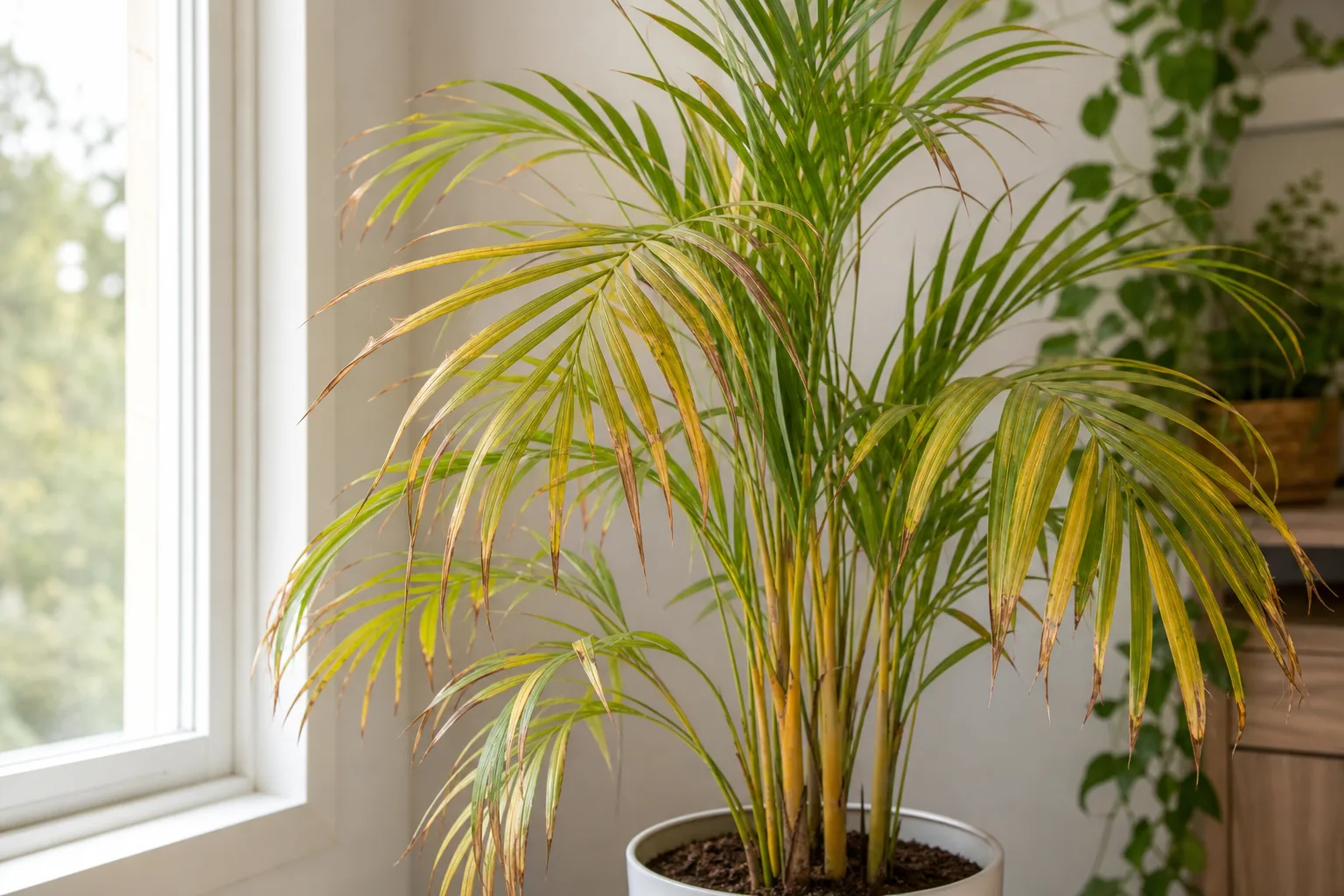
Low Humidity on Areca Palm: Causes, Checks & Fixes
This guide covers low humidity on Areca Palm. See also the general Low Humidity guide, watering, and light pages for this plant.
Low Humidity on Areca Palm: Causes, Checks & Fixes
Quick answer
Low humidity on areca palm (Dypsis lutescens) shows up as papery brown leaflet tips, dull fronds, and slowed new spear growth-especially in winter when indoor air drops to 30–40% RH. This species evolved in moist forest areas in Madagascar and prefers high humidity indoors. Missouri Botanical Garden notes houseplant specimens want consistent moisture in mostly sunny exposures with high humidity.
First fix: move the pot off radiator covers, heating vents, and AC blast zones. Scan a metre around the plant for rising heat columns or cold drafts from windows. Areca palms lose water fast through long pinnate fronds-each with dozens of narrow leaflets-so a hot dry microclimate at one side of the clump crisps tips before the rest of the room feels “dry.”
After relocation, check soil moisture before watering more. Dry air damage often mimics thirst, but overwatering wet soil is a common mistake when leaves look tired. For baseline humidity and temperature targets, see the areca palm overview. If tips brown while soil feels right, compare areca palm watering dry-air guidance and brown tips on areca palm before stacking fixes.
Does areca palm need high humidity?
Yes-more than snake plants, ZZ plants, or cast iron plants, and roughly on par with other Madagascar understory palms sold as houseplants. Dypsis lutescens carries 3- to 6-foot pinnate fronds with 40 to 60 leaflets per side. That large transpiring surface sheds water continuously. When ambient humidity falls, the plant closes stomata to conserve moisture, growth slows, and leaflet margins desiccate from the tips inward.
Practical indoor targets:
| Parameter | Recommended | Stress zone |
|---|---|---|
| Relative humidity | 50–60% (survivable to ~40%) | Below ~40% near heat vents in winter |
| Temperature | 65–75°F (18–24°C) | Below 60°F; hot dry blast from registers |
| Placement | Bright indirect light, stable air | Direct line of forced-air heat or AC |
NC State Extension advises growing areca palm in a warm room with high humidity and bright indirect light, increasing humidity with a humidifier if needed. BBC Gardeners’ World recommends misting or a pebble tray for areca palms and notes the species likes a humid environment. Most North American and European homes run 30–40% RH in winter-comfortable for people, marginal for this palm.
What low humidity looks like on Dypsis lutescens
Dry-air stress on areca palm has a recognizable pattern if you know what to compare.
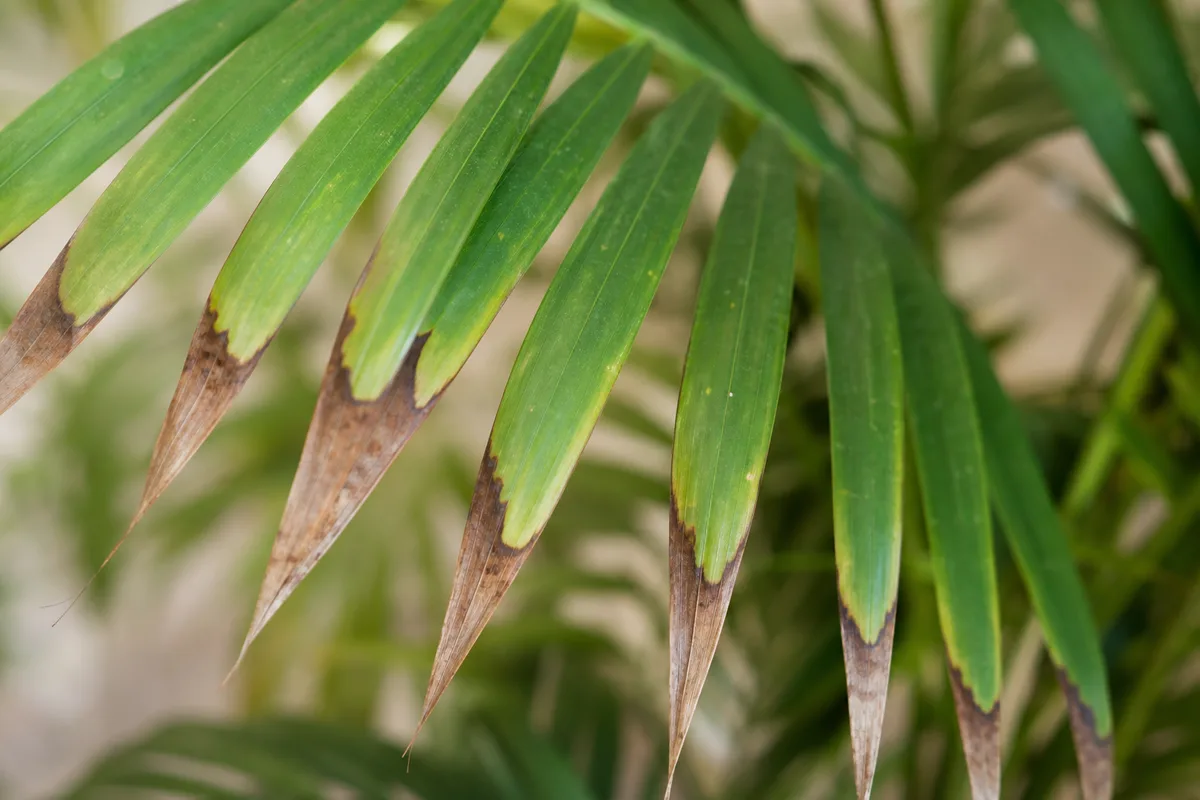
Low Humidity symptoms on Areca Palm - compare with healthy tissue on the same plant.
Frond leaflet tips turn papery brown or tan, starting at the outermost points of individual leaflets. Damage often appears on multiple fronds at once rather than one random blade. Tips feel dry and crisp, not slimy or dark.
Side bias near heat sources. Fronds on the side facing a radiator, floor register, or space heater crisp first. The opposite side may still look greener-a strong clue the problem is a local dry microclimate, not whole-plant disease.
Lower fronds may yellow in prolonged dry heat as the palm sheds older tissue it cannot support. New spear growth may stall or emerge smaller when humidity stays low for weeks.
Dull, slightly gray-green foliage in an otherwise well-watered plant-leaves lose gloss before tips fully brown.
Spider mite overlap. Dry, heated indoor air encourages spider mite infestations on frond undersides. Fine stippling, bronzing, and delicate webbing on leaflets often follow low humidity-see spider mites on areca palm if you find specks or silk.
What dry air does not look like: uniformly wet, heavy soil with yellow lower fronds and a sour smell-that is overwatering, not humidity. A lightweight pot with dusty-dry mix and limp fronds points to underwatering even in a humid room.
How to confirm dry air vs. other causes
Work through these checks in order. Stop when one diagnosis fits clearly.
- Map vents, radiators, and drafts. Note floor registers, radiator covers, fireplace proximity, and whether fronds sit in a heat column or winter window draft. Indoor plants are sensitive to heat from registers and sudden temperature changes.
- Read local humidity (optional). A hygrometer near the pot helps. Room averages of 45% can still mean 25–30% in the leaf canopy above a running register. Act on microclimate, not thermostat comfort alone.
- Check soil moisture and pot weight. Push a finger 1–2 inches into the mix. If soil is appropriately moist and the pot feels moderately heavy, tip crisping is unlikely to be solved by more water. If the pot is light and dry throughout, rule out underwatering before blaming humidity alone.
- Inspect newest vs. oldest fronds. Widespread tip burn on mature fronds near a heat source supports dry air. Browning concentrated on the newest unfolding leaflets across the plant, even away from vents, raises fluoride or salt suspicion-see brown tips.
- Tap-test for mites. Hold white paper under a leaflet and tap the blade. Moving specks plus stippling mean pest pressure layered on dry air-treat both.
- Review recent care changes. New winter heating, a furniture move beside a register, or AC aimed at the palm often precede symptoms by two to four weeks.
Vent, radiator, and AC draft check
Walk a slow circle around the pot at frond height. Feel for warm rising air from floor vents or radiator covers. In summer, note whether AC blows directly across the canopy-cold dry air desiccates leaflet tips similarly to winter heat.
Fix placement before buying equipment. Moving the pot one to two metres off the register path often stops tip burn within one to two weeks if soil moisture was already correct. Keep bright indirect light; do not trade humidity relief for a dark corner-see areca palm light needs if relocation reduces exposure.
Symptom lookalike table
| What you see | Soil moisture | Location clue | Likely cause | First lever |
|---|---|---|---|---|
| Papery brown leaflet tips on several fronds | Normal, not soggy | Near radiator or vent | Low humidity / dry microclimate | Move pot; add humidifier |
| Crispy tips, lightweight dry pot, slight droop | Dry throughout | Any placement | Underwatering | Deep soak; fix schedule |
| Yellow lower fronds, wet heavy soil, sour smell | Wet days after watering | Any placement | Overwatering / root stress | Pause water; check drainage |
| Brown tips on newest leaflets only | Normal | Away from heat sources | Fluoride / salt in tap water | Filtered water; flush pot |
| Fine stippling + webbing on undersides | Normal | Warm dry room | Spider mites in dry heat | Rinse; raise humidity; treat mites |
| Bleached tan patches on window side | Normal | Direct sun through glass | Sun scorch | Filter light; move back from glass |
First fixes for low humidity on areca palm
Move the pot off forced-air paths
This is the single highest-impact step and costs nothing. Slide the container off radiator covers, away from floor registers, and out of the direct path of space heaters or AC vents. Keep the plant in bright indirect light-within a few feet of a filtered window is fine if no hot or cold blast hits the fronds.
Wait seven to ten days after moving before adding a humidifier. If tips stabilize and new spears look clean, the microclimate was the main problem.
Raise local humidity
If room RH stays below 40% in winter or tips keep crisping after relocation, add sustained moisture to the air-not to the soil.
Cool-mist humidifier (most effective). Run one on a humidistat targeting 50–60% RH in the room or near the plant grouping. NC State Extension explicitly recommends increasing humidity with a humidifier for this species indoors. Place the unit several feet away so fronds are not constantly wet.
Plant grouping. Cluster the areca with other tropicals. Grouping plants raises humidity in their shared area through collective transpiration-a large areca clump already releases substantial moisture, but one palm alone in a dry room may not be enough.
Pebble tray. Set the pot on a tray of pebbles and water so the pot base sits above the waterline. Placing pots on pebble trays increases humidity around plants. Helpful as a supplement; rarely sufficient as the only fix in a furnace-heated room.
Bright bathroom or kitchen (optional). Steam from showers and cooking can lift local RH if light levels stay adequate.
What not to do
Do not overwater when frond tips look “thirsty” but soil is already moist. Areca palms prefer moist but not soggy soil; chronic wetness in low light causes root failure while tips still crisp from dry air. Follow areca palm watering checks instead.
Do not rely on daily misting as your humidity plan. Misting is questionable as a reliable humidity fix and constantly wet fronds in cool rooms can invite leaf spotting. A humidifier changes ambient RH for hours; misting changes it for minutes.
Do not fertilize a stressed palm to “green it up.” Salts accumulate in leaflet tips and mimic burn. Feed only after humidity and watering stabilize.
Do not stack Areca Palm repotting guide, heavy pruning, pesticide, and a new humidifier on the same weekend. Make one care correction at a time so you can read the plant’s response.
Recovery timeline
Cosmetic leaflet tip damage does not heal. Brown tissue stays brown; trim only if it bothers you, following the natural curve of the leaflet and stopping before green tissue.
Expect one to two weeks for tip burn to stop spreading after the pot leaves the vent path. Four to eight weeks of stable 50–60% RH and correct watering before you judge new spear quality-clean unfolding fronds mean the fix worked.
If stippling or webbing appears during recovery, dry air has likely invited spider mites. Spider mites prefer warm, dry environments with low humidity. Treat mites while maintaining humidity; lowering humidity to fight pests will worsen areca palm stress.
Escalate if yellowing spreads on wet soil, the crown softens, or new spears collapse despite good humidity-those patterns point to root trouble, not dry air alone.
How to prevent dry-air stress next winter
Prevention is mostly placement and equipment, not panic-watering.
- Relocate the pot before heating season so it is not beside registers when furnaces start.
- Run a humidifier on a humidistat from first dry heating through spring; target 50–60% RH.
- Wipe frond undersides monthly when heat runs-dusty leaves in warm dry indoor air favor spider mites.
- Maintain normal watering dry-down rhythm; use filtered or rainwater if tips persist after humidity improves.
- Quarantine new houseplants in winter; mites often arrive on other plants and exploit dry rooms.
- Keep night temperatures above 60°F; houseplants dislike temperatures below 60°F, which compounds humidity stress.
When to worry
Low humidity alone rarely kills a healthy areca palm quickly, but combined with heat blast and mites it can strip a clump within a season. Act promptly if:
- Tip burn marches down leaflets on multiple new spears weekly despite relocation
- Fine webbing coats new growth-mite populations explode in warm, dry indoor conditions
- Fronds yellow cluster-style while soil stays wet after humidity-motivated overwatering
- The crown feels soft or new spears pull out easily-root failure, not humidity
Firm green fronds with static old tip burn after moving off a vent is low urgency. Clean new growth over the next month is the success signal.
Conclusion
Areca palm is a humidity-demanding indoor palm, not a set-and-forget survivor. When leaflet tips crisp in winter, scan for vent and radiator placement first, confirm soil moisture is appropriate, then raise ambient RH to roughly 50–60% with a humidifier or grouping-not extra watering or daily misting. Differentiate dry air from fluoride burn and underwatering before stacking treatments, and watch frond undersides for spider mites in dry heat. For full care context, return to the areca palm overview humidity section after stabilizing this plant.
When to use this page vs other Areca Palm guides
- Areca Palm watering guide - Use for routine moisture checks before assuming low humidity is the main issue.
- Areca Palm problems hub - Browse all 16 common issues on this species.
- Brown Tips on Areca Palm - Different entry point when symptoms overlap with low humidity.