Overwatering on Areca Palm: Causes, Checks & Fixes
Quick answer
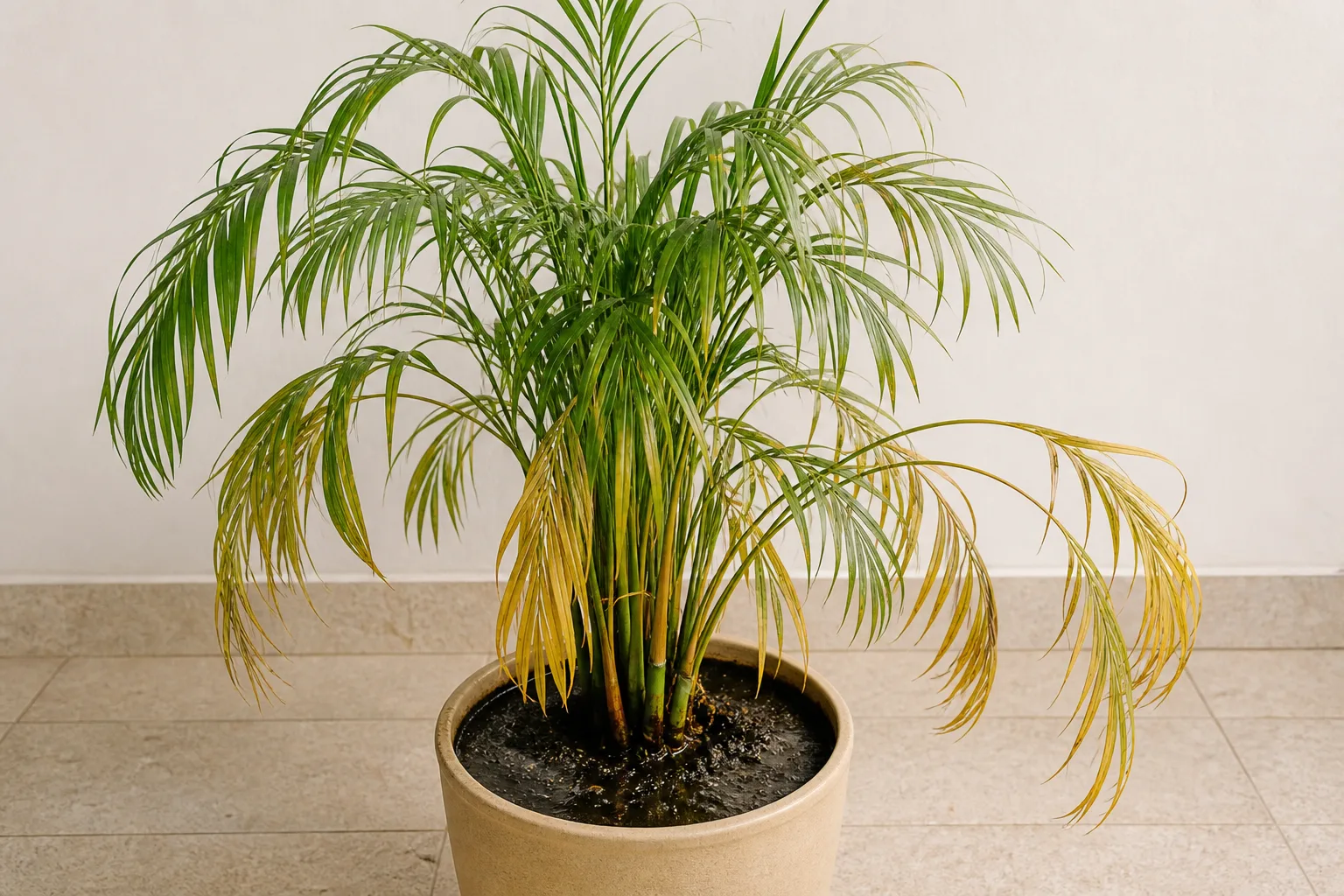
Areca Palm overwatering shows as limp arching fronds on heavy wet mix, yellow lower leaves from the bottom up, and sometimes fungus gnats-especially in cool winter rooms when growth slows. First step: stop watering until the top 1–2 inches dry and the pot feels noticeably lighter.
Overwatering on Areca Palm: Causes, Checks & Fixes
This guide covers overwatering on Areca Palm. See also the general Overwatering guide, watering, and light pages for this plant.
Overwatering on Areca Palm: Causes, Checks & Fixes
Quick answer
Overwatering on Areca Palm (Dypsis lutescens) means the root zone stays wet too long for this Madagascar moist-forest palm to breathe. Areca palms want steady moisture between drinks, but when mix stays saturated-especially in cool, dim winter rooms-fine roots lose oxygen and stop moving water upward. The paradox looks like thirst: long arching fronds go limp while soil is already wet.
First step: stop watering until the top 1–2 inches of mix dry and the pot feels noticeably lighter. Do not add more water because fronds look sad on wet soil-that pattern damages roots further and can slide into rot within days. For baseline watering rhythm and seasonal targets, see the areca palm watering guide.
What overwatering looks like on Areca Palm
On a multi-cane cluster palm, overwatering usually starts at the oldest, lowest fronds and pairs with a heavy, slow-drying pot. Watch for these patterns:
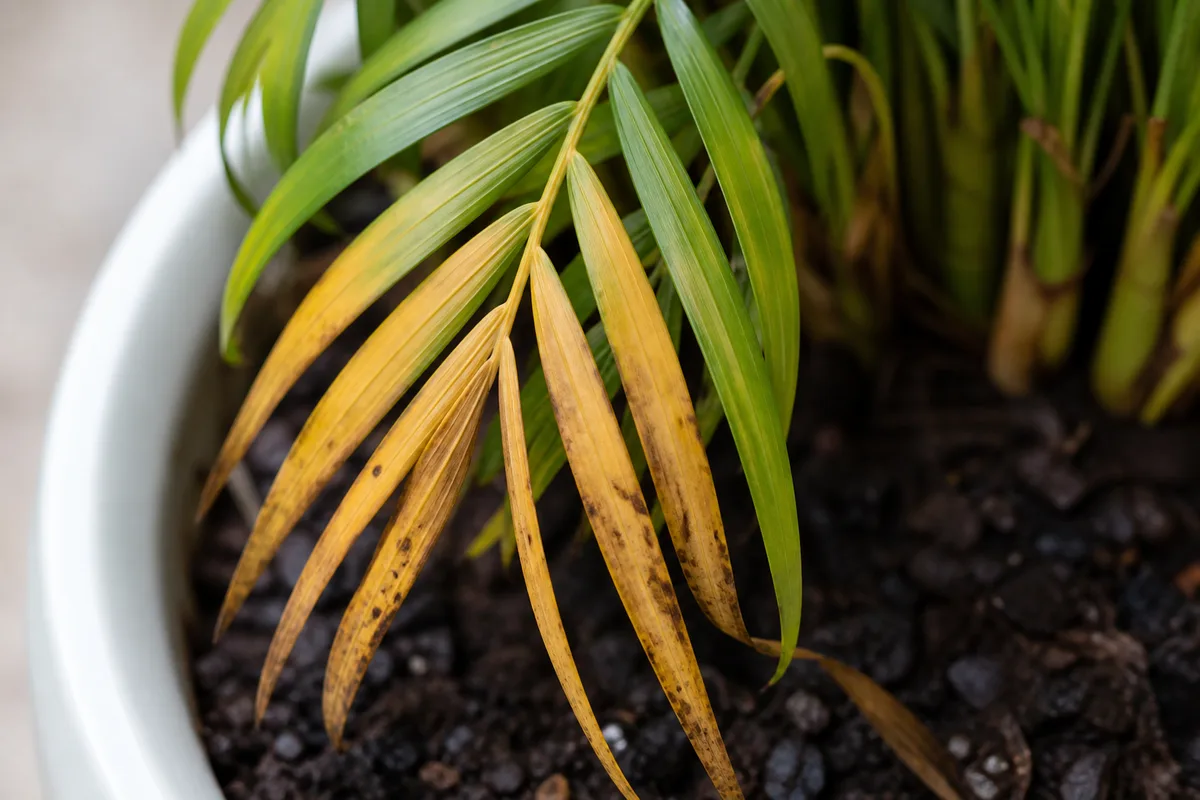
Overwatering symptoms on Areca Palm - compare with healthy tissue on the same plant.
- Limp, arching fronds on wet mix - Fronds hang lower than normal and feel soft even though the surface is damp. Damaged roots cannot supply water efficiently, so the plant wilts while standing in moisture.
- Yellow lower fronds from the bottom up - Oldest leaflets turn pale or yellow while newer spears may still look green-for a while.
- Heavy, cool pot days after watering - The cluster container stays noticeably heavier than when the top inch is dry.
- Dark, clinging surface mix - Soil looks wet at the top for many days; a probe or finger comes out cold and damp.
- Sour or swampy smell - Anaerobic odor from the drainage hole suggests the root zone has been wet too long.
- Fungus gnats on Areca Palm - Small flies hover near the pot when soil stays wet and organic matter breaks down.
- Green algae or white mold on the soil surface - A sign the top layer rarely dries between waterings.
- Stalled spear growth - New central fronds emerge smaller, pale, or stop opening while lower leaves decline.
What it does not look like: A light pot with dusty-dry top 1–2 inches and limp fronds usually means underwatering-water once deeply after confirming dryness. Crispy brown leaflet tips on otherwise firm fronds with appropriate dry-down often trace to low humidity or tap-water salts, not overwatering alone.
Yellow lower fronds will not turn green again, but healthy areca palms can push new spears once roots recover-judge success by firm cane bases and fresh growth, not by old yellow tissue re-coloring.
Why Areca Palm gets overwatered
Areca palms are native to moist forest areas in Madagascar and, as houseplants, prefer consistent moisture without waterlogging. That background explains why they tolerate brief dry spells better than chronic sogginess-but owners often interpret limp fronds as thirst and water again exactly when the plant needs the opposite.
Calendar watering and winter dormancy
The leading trigger is watering on schedule instead of checking soil. Areca palms slow growth in cool, short-day months. Evaporation drops, root uptake falls, and the same weekly soak that worked in summer keeps the root zone anaerobic for weeks. Winter overwatering is one of the most common silent killers on floor palms because the plant looks merely “a little sad” while roots decline underground.
Multi-cane cluster and oversized pot traps
Retail areca palms arrive as clumps of several cane stems sharing one root mass in a large decorative container. More foliage per pot means slower dry-down-especially when the cluster sits in an oversized floor pot where the center stays wet long after the surface looks acceptable. Root-bound clusters dry the top quickly in summer but can hold moisture deep in cool months, masking a soggy core.
Heavy mix, cachepots, and blocked drainage
Dense nursery peat, pots without open drainage holes, decorative cachepots that hide standing saucer water, and blocked holes at the base all keep mix saturated. Overwatering is among the most common indoor plant problems-areca palms in dim corners with unchanged watering are especially vulnerable because transpiration is slow and soil rarely dries.
Cool rooms below about 16°C (60°F) compound the problem: chilled roots function poorly and wet mix persists longer. Areca palms dislike sustained cold combined with saturated soil.
How to confirm the cause
Work through these checks in order before changing anything else:
- Pot weight - Lift the cluster. Heavy and cool several days after watering supports overwatering. A dramatically light pot with limp fronds may mean drought instead.
- Top 1–2 inch moisture - Insert your finger or a wooden skewer about 2.5–5 cm (1–2 inches) deep. Cold, clinging mix with limp fronds fits overwatering. Dusty dry mix with a light pot points to underwatering.
- Leaf pattern - Yellowing starting on lower fronds with wet mix fits overwatering. Even yellowing with dry mix may mean underwatering, age, or nutrient stress.
- Smell - Sour odor at the drainage hole suggests anaerobic soil; mild damp smell alone may still be recoverable overwatering.
- Cane-base firmness - Gently press stems at the soil line. Firm tissue with wet mix is overwatering you can fix with dry-down. Soft, mushy cane bases mean unpot immediately-you are past simple overwatering into root rot.
- Light and season - Dim winter rooms and cool drafts slow evaporation. Have you watered on calendar anyway?
- The 48-hour recovery test - After the top inch dries, wait. If fronds firm within 48 hours once soil oxygen returns, early overwatering was likely. Wilting that persists on drying mix suggests damaged roots-inspect before watering again.
- Underwatering cross-check - Dry top inch, light pot, and fronds that perk within 24–48 hours of one deep soak confirm thirst, not excess water. See the underwatering guide for the full wet-vs-dry fork.
If soil is wet several centimeters down, cane bases are mushy, or the pot smells sour, treat as overwatering advancing toward rot-not a schedule tweak alone.
First fix for Areca Palm
Stop watering until the top 1–2 inches of mix feel dry and the pot feels noticeably lighter.
That single dry-down is the correct first response when mix is wet, fronds are limp, and cane bases are still firm. Check soil moisture before watering again-do not pour because leaves look limp on already-wet soil.
While you wait:
- Empty the saucer if water has pooled after the last watering.
- Move to brighter indirect light if the cluster sits in deep shade-slow evaporation worsens wet soil, but avoid harsh direct sun on stressed fronds.
- Improve airflow around the pot base without blasting cold AC directly on foliage.
Do not repot, fertilize, or prune heavily on day one. Most early overwatering cases resolve once the root zone dries and oxygen returns.
Step-by-step recovery
Once you have paused watering, support recovery in this order:
- Wait for the dry-down trigger - Let the top 1–2 inches go dry before any next drink. On a large floor cluster, that may take one to two weeks in winter.
- Verify drainage - Confirm holes are open and no cachepot is holding standing water.
- Judge frond response at 48 hours post-dry surface - Limp fronds often firm once mix breathes again if roots are intact. Crispy or fully yellow lower fronds stay that way-cosmetic trim only after the plant stabilizes.
- Resume watering with a soak-and-drain rhythm - When the top inch is dry, water thoroughly until excess runs out, then discard saucer water within 30 minutes. Water plants thoroughly so water comes out of the bottom of the pot-then wait for dry-down again.
- Hold fertilizer - Feeding waterlogged roots can burn tender tissue; wait until you see firm new spear growth for at least two weeks.
- Monitor pot weight for two to three weeks - Learn how many days your cluster takes to go from soaked to top-inch dry in current light and season.
- Inspect roots if decline continues - If yellowing spreads, fronds stay limp on drying mix, or cane bases soften, slide the cluster out. Healthy roots should be light-colored and firm; brown mushy roots need rot treatment described in the root rot guide, not another dry-down cycle alone.
Recovery timeline
Days 1–3: Surface mix dries; pot weight drops. Do not water during this phase unless you misread and soil was actually dry throughout.
Days 3–7: Limp fronds often visibly firm once the upper root zone regains oxygen. Fully yellow lower fronds remain yellow.
Weeks 2–3: New spear growth should resume during spring and summer if roots were only stressed, not rotted. Stalled spears after three weeks in warm bright light suggest root damage-unpot and inspect.
Weeks 4–8: Fresh fronds fill sparse sections if light and watering stay consistent. Old lower fronds may drop; areca palms shed from the bottom up after repeated stress cycles.
When to worry: Entire cluster stays wilted 48 hours after the top inch has dried, cane bases soften, sour smell intensifies, or yellowing spreads while mix stays damp-these point to root rot or overlap with wilting from root failure, not ongoing simple overwatering.
Lookalike symptoms
| What you see | Wet or dry mix? | Likely cause | First direction |
|---|---|---|---|
| Limp fronds, heavy pot, yellow lower leaves | Wet days after watering | Overwatering / early root stress | Dry-down; check drainage |
| Limp fronds, light pot, dry top 1–2 inches | Dry | Underwatering | Deep soak once (underwatering) |
| Crispy brown tips, firm fronds, normal dry-down | Moist but not soggy | Low humidity / fluoride | Humidity and water quality |
| Stippling, webbing, pale fronds | Normal moisture | Spider mites | Rinse and treat pests |
| Wilt with moist mix, mushy cane bases | Wet | Root rot | Unpot, trim, repot smaller (root rot) |
| Wilt in cool room below 60°F | May be moist | Cold-stressed roots | Warm placement; reduce water |
The dangerous misread on areca palms is watering limp fronds when soil is already wet-that converts recoverable overwatering into advancing rot.
What not to do
Do not pour more water because fronds look limp on wet soil-that worsens root damage when roots cannot breathe.
Do not repot into a larger pot to “help drying”-extra soil volume holds moisture longer and usually makes overwatering worse.
Do not fertilize a waterlogged palm before roots and moisture stabilize.
Do not water on a fixed calendar without checking the top 1–2 inches-watering on a schedule can lead to too much or too little water.
Do not move a stressed palm into harsh direct sun to dry soil faster-that scorches fronds and increases water loss without fixing roots.
Do not mist fronds instead of fixing soil moisture-surface humidity does not replace a soggy root ball.
How to prevent overwatering next time
- Weigh the pot after watering and again when the top 1–2 inches feel dry; muscle memory beats a calendar on large cluster palms.
- Adjust sharply for season - Cut frequency in winter when growth slows; increase checks in bright summer rooms when multiple canes transpire heavily.
- Use well-drained palm mix in a pot with open drainage holes; keep moist but not soggy during active growth.
- Empty saucers within 30 minutes of every thorough watering.
- Right-size the container - Areca palms tolerate slightly root-bound clusters better than swimming in an oversized wet zone.
- Pair light with watering - Dim corners slow dry-down; if you cannot move the plant, extend the interval between drinks rather than keeping soil constantly damp.
Track one cluster through a full winter and summer in your home. Once you know its dry-down rhythm, overwatering becomes easy to prevent before lower fronds yellow.
When to worry
Treat promptly when:
- Cane bases feel soft or collapse at the soil line
- Mix smells sour and fronds continue declining on wet soil
- Unpotting shows brown, mushy roots with little firm white tissue remaining
- Most lower fronds yellow across several canes while the pot stays heavy
Escalate to root inspection and possible repot into fresh, well-drained mix in a same-size or slightly smaller pot-never oversized. For severe cluster decline, see the root rot guide and wilting escalation steps. For full baseline care, see the areca palm overview and watering guide.
One yellow lower frond on an otherwise firm cluster with appropriate dry-down is often normal senescence, not an emergency-adjust timing before panicking.
When to use this page vs other Areca Palm guides
- Areca Palm watering guide - Use for routine moisture checks before assuming overwatering is the main issue.
- Areca Palm problems hub - Browse all 16 common issues on this species.
- Root Rot on Areca Palm - Different entry point when symptoms overlap with overwatering.
- Yellow Leaves on Areca Palm - Different entry point when symptoms overlap with overwatering.
- Wilting on Areca Palm - Different entry point when symptoms overlap with overwatering.