Wilting on Areca Palm: Causes, Checks & Fixes
Quick answer
Areca palm wilting usually traces to wet soil and failing roots or dry soil and drought-opposite fixes. First step: push a finger 1–2 inches into the mix and lift the pot; wet and heavy means stop watering and inspect roots, light and dry means soak thoroughly.
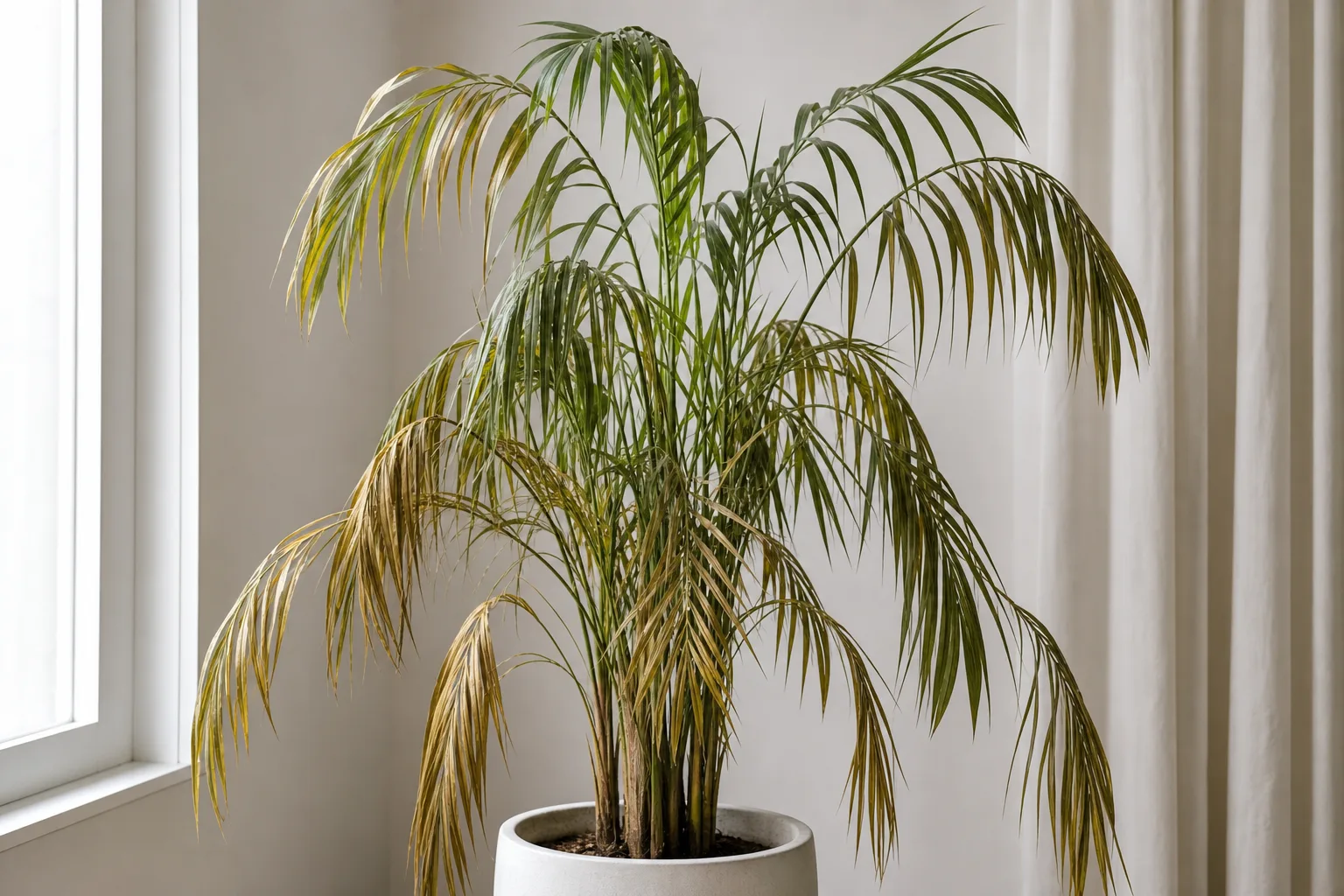
Wilting on Areca Palm: Causes, Checks & Fixes
This guide covers wilting on Areca Palm. See also the general Wilting guide, watering, and light pages for this plant.
Wilting on Areca Palm: Causes, Checks & Fixes
Quick answer
Wilting on areca palm (Dypsis lutescens) means the fronds lost turgor-the stiff, upright feel healthy palms maintain. On this clustering indoor palm, that usually shows as arching, limp pinnae on multiple canes at once, not a single droopy leaflet.
The critical fork is soil moisture, not calendar watering. Wilted leaves may indicate the soil is too dry or too wet-rotting roots cannot take up water. Areca palms prefer soil kept moist but not soggy during the growing season, which makes them prone to both drought wilt and the paradoxical wet-soil wilt when roots suffocate.
First step: push a finger 1–2 inches into the mix at the pot edge and lift the pot. Wet, heavy soil with limp fronds means stop watering and inspect roots. Light, dry soil with a lightweight pot means water thoroughly until runoff drains, then empty the saucer.
What wilting looks like on Areca Palm
On a healthy areca, pinnate fronds arch upward from bamboo-like cane stems. Wilting removes that spring: entire fronds hang lower, leaflets may curl inward, and the canopy looks uniformly tired rather than crisp.
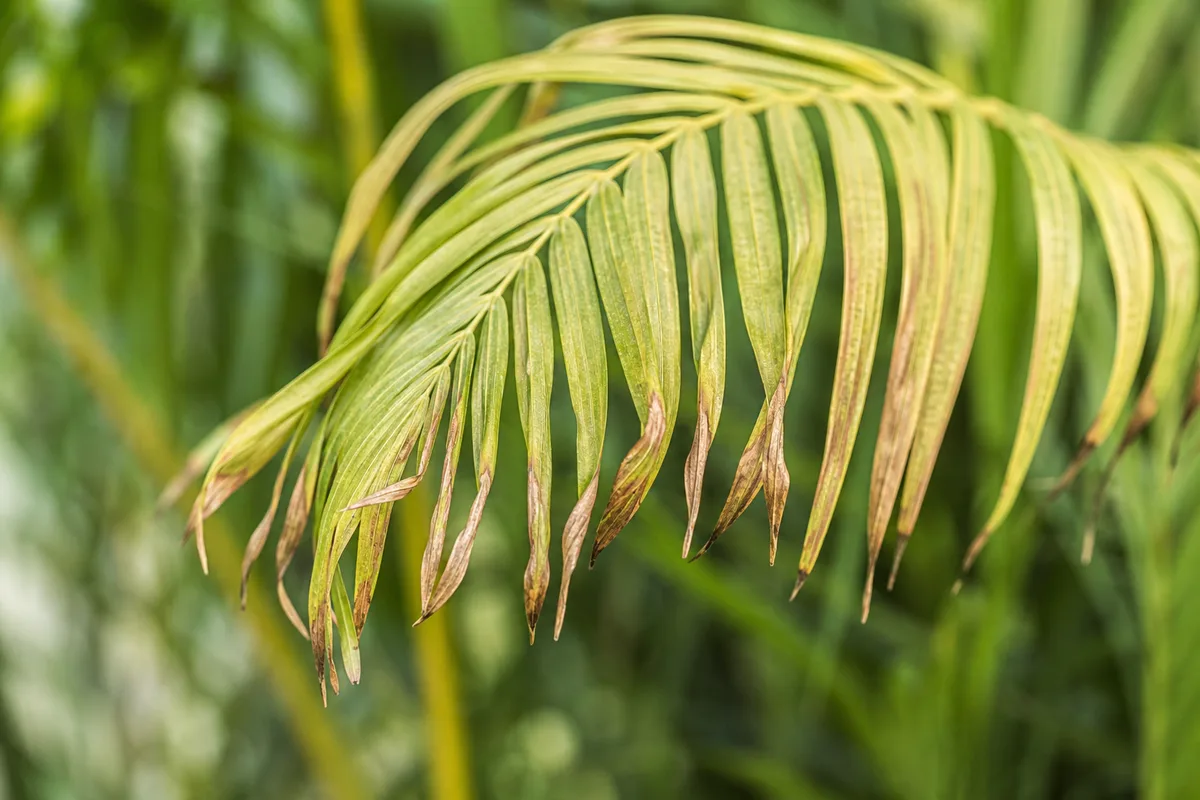
Wilting symptoms on Areca Palm - compare with healthy tissue on the same plant.
Common patterns by cause:
- Wet-soil wilt - Soil surface stays dark and cool for many days. Lower fronds yellow first. Fronds feel soft and limp despite moisture. A sour smell from the pot or fungus gnats at the soil line often appear together. Crown tissue may still look green while roots fail below.
- Dry-soil wilt - Pot feels noticeably light. Top 1–2 inches are dusty or pull away from the pot wall. Frond tips brown and crisp while the whole frond arches. Recovery can be rapid after one deep drink if roots are still firm.
- Humidity-related limpness - Soil moisture reads correct but frond tips crisp and new spears stall in heated winter air. Stems stay firm; wilt is milder than root failure.
- Cold or draft wilt - Dark water-soaked patches on fronds after exposure below about 60°F (15°C). Often follows placement near AC vents, leaky winter windows, or a cold porch move.
Areca palms show stress on many fronds at once when the root zone or air is wrong. Single-frond collapse with firm soil and healthy neighbors is less typical for watering problems-look at mechanical damage or isolated pest colonies instead.
Why Areca Palm wilts
Overwatering and root rot (most common wet-soil cause)
Areca palms need steady moisture but roots in saturated soil lose oxygen and function. When air spaces stay filled with water, fine roots die. The plant cannot move water to the fronds even though the pot feels wet-creating wilt while standing in moisture.
Winter overwatering is especially dangerous. Growth slows, evaporation drops, and the same weekly schedule that worked in summer keeps the root zone anaerobic for weeks. Oversized pots, heavy peat mix, blocked drainage holes, and decorative cachepots holding runoff all accelerate the pattern described in the overwatering guide and root rot guide.
Underwatering and drought stress
The opposite failure is letting the entire root ball go dry for too long. Areca’s fibrous roots pull water quickly through long fronds; a missed week in a bright, dry room can collapse the canopy. Hydrophobic peat that repels water after drying out worsens this-surface watering runs down the pot wall while the center stays dry.
Low humidity and spider mites
Dypsis lutescens evolved in humid forest understory in Madagascar and wants high humidity indoors. Dry heated air forces the plant to lose water faster than roots replace it. NC State notes areca palms are susceptible to spider mites-mites thrive in that same warm, dry air and add stippling, bronzing, and fine webbing that weaken fronds. See the spider mites guide if you find specks on a white paper tap test.
Cold drafts, AC, and transplant shock
Houseplant arecas dislike temperatures below about 60°F. Cold air from windows or AC vents chills frond tissue and slows root activity. Recent Areca Palm repotting guide or division disturbs roots temporarily; wilt for one to two weeks after a spring repot is common if moisture and humidity stay steady.
Fluoride and tap-water stress
Areca palms are sensitive to fluoride and chlorine in tap water. Chronic exposure browns tips and weakens fronds over months, which can look like gradual wilt during dry winter heating even when soil moisture is technically correct. Filtered or rain water helps when tips burn despite good watering-details in the overview guide and watering guide.
Wet soil or dry soil? The first fork
Run this before any other treatment:
- Finger test at 1–2 inches - Cool, damp, clinging soil = wet fork. Dry, dusty, or gap-separated soil = dry fork.
- Pot weight - Lift the pot. Heavy for its size with limp fronds = wet fork. Noticeably light = dry fork.
- Smell at drainage hole - Sour or rotten odor confirms wet fork with likely root decay.
- Skewer or chopstick - Push to the bottom. Wet core days after the last watering confirms poor dry-down.
| What you find | Likely cause | First action |
|---|---|---|
| Wet, heavy mix; limp soft fronds; yellow lower leaves | Root rot / overwatering | Stop watering; inspect roots (overwatering, root rot) |
| Dry top 1–2 inches; light pot; crispy tips | Underwatering | Deep soak until runoff; empty saucer (underwatering) |
| Moist correct soil; stippling + webbing | Spider mites | Rinse undersides; raise humidity (spider mites) |
| Moist correct soil; crisp tips only; dry room air | Low humidity | Humidifier or pebble tray (low humidity) |
| Recent repot; moist soil; firm roots on check | Transplant shock | Hold steady moisture; avoid moving again |
| Fronds near vent/window; dark patches | Cold draft | Move off vent; stable 65–75°F |
Do not water again on the wet fork until you know roots are firm. Do not let the dry fork sit another week hoping fronds recover on their own.
Wilting with wet soil (root rot risk)
When soil stays soggy, healthy roots should be white and firm; rotting roots turn soft and brown or black. Gently unpot the areca and rinse away old mix. Trim mushy roots with sterile shears. Repot only into fresh, well-drained palm mix in a pot with open drainage-same size or slightly smaller, never oversized “to help drying.”
Soft crown tissue with wet soil is urgent. If the stem bases feel spongy or smell foul, salvage healthy cane divisions if any roots remain firm; severe crown involvement may not be recoverable.
Wilting with dry soil (underwatering)
Water until excess runs from drainage holes-bottom-soak if the mix repels water. Wait until the top 1–2 inches approach dry before the next full drink, matching the rhythm in the watering guide. Mild drought wilt often perks within hours to one day; fronds that stayed limp for weeks may stay bent.
How to confirm the cause - step-by-step checks
Work through these in order after the wet/dry fork:
- Drainage audit - Are holes open? Is the pot sitting in a full saucer or cachepot? Standing water explains wet-soil wilt without any mystery disease.
- Root inspection - Slide the root ball out. Firm pale roots with dry surface soil = underwatering or recent drought. Brown slimy roots with wet mix = rot confirmed.
- New spear condition - A firm emerging frond while older leaves wilt suggests partial root damage or one-sided dry-down, not total plant failure.
- Leaf undersides - Tap a frond over white paper. Moving specks and webbing mean mites, not just thirst.
- Room humidity and vents - Below 40% RH with winter heating fits humidity wilt. Direct AC or cold window glass fits draft damage.
- Water source - Chronic tip burn on an otherwise well-watered palm points to fluoride; switching water is a parallel fix, not a substitute for the soil fork.
- Recent care timeline - Repot, move, or division within the last month? Temporary wilt with firm roots often resolves with stable care.
First fixes ranked by what you found
Apply one primary fix based on confirmation-do not stack repot, fertilizer, and pesticide the same day.
Wet soil / root rot confirmed: Stop watering immediately. Trim decayed roots, repot into fresh mix if more than a third of roots are mushy, and place in Areca Palm light guide with good air movement. Hold fertilizer until new spears appear.
Dry soil / underwatering confirmed: One thorough watering (or bottom soak until the root ball is evenly moist). Empty the saucer. Recheck weight in 24 hours-fronds should begin to stiffen if roots were intact.
Spider mites confirmed: Isolate the plant. Rinse frond undersides with lukewarm water, then treat with horticultural oil or insecticidal soap labeled for mites. Raise humidity-mites explode in dry air.
Low humidity confirmed: Run a humidifier targeting 50–60% near the plant, or group tropicals on a pebble tray. Do not compensate by keeping soil constantly wet.
Cold draft confirmed: Move the pot away from vents and cold glass. Trim severely damaged fronds only after the plant stabilizes in stable warmth.
Transplant shock: Keep moisture even-not soggy-for two weeks. Avoid another repot or heavy pruning until new growth resumes.
Recovery timeline
Mild underwatering wilt often improves within hours to one day after a proper soak. Overwatering wilt takes longer: one to three weeks after the root zone dries and damaged roots are removed before you judge success. Damaged leaves may not fully recover; watch for stable new growth from the center of each cane.
Old fronds that yellowed or went fully limp usually stay bent-remove them only once new spears are opening. Spider mite recovery needs one to two weeks of repeated treatment plus higher humidity. Cold-damaged tissue does not green up; trim dead fronds after the plant stops declining.
Signs the problem is getting worse: spreading yellow across the clump while soil stays wet, soft crown, sour smell intensifying, or no new spear movement after three weeks of corrected care.
What not to do
Do not pour more water because fronds look limp when soil is already wet-that worsens root rot. Do not repot into a larger pot as a wilt “fix”; extra soil volume holds moisture longer. Do not fertilize a stressed palm before roots and moisture are stable. Do not move a wilted plant into harsh direct sun to “dry it out”-that scorches fronds and increases water loss.
Avoid stacking repotting, pruning half the canopy, miticide, and fertilizer on the same day. Make one care correction at a time so you can read the plant’s response.
How to prevent wilting next time
Match everyday care to areca biology: bright indirect light, moist but not soggy mix, humidity near 50–60%, and watering when the top 1–2 inches dry-not on a fixed calendar. Empty saucers after every drink. Reduce winter frequency when growth slows.
Inspect weekly during heating season: soil finger test, pot weight, and a quick look at frond undersides for mites. Use filtered or rain water if tip burn persists. Keep the palm off AC vents and cold window glass.
For full baseline care, see the areca palm overview, watering guide, and related problem pages: drooping leaves (mild limpness overlap), overwatering, underwatering, root rot, low humidity, and spider mites.
When to worry
Escalate if soil stays wet for a week while the whole canopy collapses, crown tissue softens, or most roots are mushy on inspection-advanced rot may not be saveable. Dry-soil wilt with a plant that does not perk within 48 hours after soaking suggests root loss or hydrophobic mix needing repot and soak.
Fine webbing spreading despite treatment, or wilt plus widespread stippling in dry air, needs aggressive mite control and humidity-not more water.
Conclusion
Areca palm wilting is a diagnostic problem, not a single disease. The wet-vs-dry soil fork separates the two most common killers: drowned roots versus drought. Confirm with pot weight, root firmness, and frond undersides for mites. Fix one cause at a time, judge recovery by new spears, and align daily care with this palm’s need for evenly moist-not waterlogged-soil and humid, stable indoor air.
When to use this page vs other Areca Palm guides
- Areca Palm watering guide - Use for routine moisture checks before assuming wilting is the main issue.
- Areca Palm problems hub - Browse all 16 common issues on this species.
- Underwatering on Areca Palm - Different entry point when symptoms overlap with wilting.
- Overwatering on Areca Palm - Different entry point when symptoms overlap with wilting.
- Root Rot on Areca Palm - Different entry point when symptoms overlap with wilting.