Areca Palm Watering: Schedule, Soil Checks, and Common
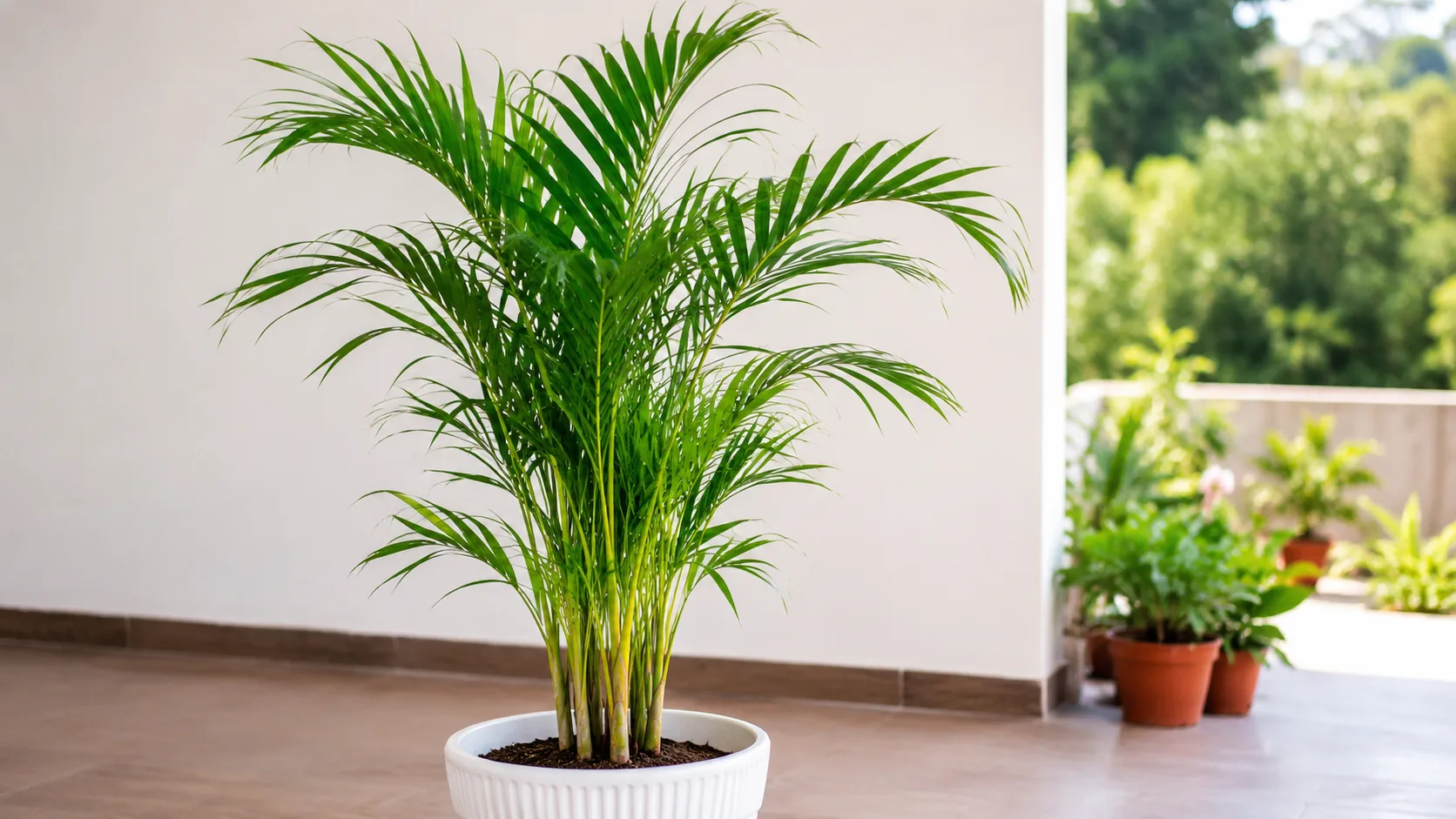
Areca Palm Watering: Schedule, Soil Checks, and Common Mistakes
Areca Palm Watering: Schedule, Soil Checks, and Common Mistakes
The fastest way to lose an areca palm indoors is not neglect. It is watering on autopilot. Dypsis lutescens - sold as bamboo palm, butterfly palm, and golden cane palm - wants a steady supply of moisture around its roots, but it suffocates quickly when the mix stays wet for days. That narrow band between “too dry” and “too wet” is why watering causes more indoor palm problems than light, fertilizer, or pests combined. This guide gives you a repeatable system: when to check the soil, how often to water in summer versus winter, the deep-watering method that actually reaches the root zone, and the water-quality issue that turns healthy fronds brown even when your schedule looks perfect.
Why Watering Areca Palm Is Not a Calendar Job
Every ranking page offers a number - water every seven days, every ten days, every two weeks - and every experienced grower ignores the number until the soil confirms it. Areca palms do not drink on a clock. They drink according to how fast their potting mix dries, and dry-down speed changes with light intensity, room temperature, humidity, pot size, root mass, and season. A plant six feet from a bright south-facing window in July may need water twice as often as the same plant in a cool north room in January, even though both are Dypsis lutescens in the same home.
The calendar can still serve as a reminder to check the plant, not as permission to pour water. Set a phone alert for twice a week if that helps you build the habit. When the alert fires, run the soil checks below. Only water when the checks say the root zone is ready. Treating “Tuesday” as watering day is how people drown palms in winter and drought-stress them in summer without ever noticing the pattern.
How Dypsis lutescens Uses Water Indoors
Areca palms evolved in the moist understory and forest edges of Madagascar, where rainfall is regular and humidity stays high. Indoors, the plant loses water through transpiration from its long, feathery fronds while pulling moisture up through a relatively shallow, fibrous root system. Missouri Botanical Garden notes that houseplant specimens prefer consistent moisture in mostly sunny exposures with high humidity - a combination that is harder to replicate in a living room than in a greenhouse. The Spruce describes the species as preferring moist but well-draining soil and recommends checking weekly with a moisture meter or finger test rather than watering on a fixed schedule.
That biology explains the core tension. The palm needs continuous access to moisture in the root zone, but its roots also need oxygen in the air spaces between soil particles. When those air spaces fill with water and stay full, fine roots die. Once root function drops, the plant cannot move water to the fronds even though the pot feels wet - which is why limp, drooping leaves sometimes appear in soggy soil, not only in dry soil. Understanding that mechanism turns watering from guesswork into diagnosis.
The Core Rule - Moist Mix, Not Soggy Roots
If you remember one sentence, make it this: water thoroughly when the top 1 to 2 inches of mix feel dry, then let excess drain and never leave the pot sitting in runoff. NC State Extension recommends growing areca palm in well-drained potting soil kept moist but not soggy during the growing season. That is the entire philosophy. Everything else in this article - schedules, soil checks, water quality, seasonal shifts - exists to help you apply that rule consistently in your specific home.
“Areca palms like moist soil” does not mean “keep the soil wet at all times.” It means avoid letting the entire root ball go bone dry for long stretches, especially during active growth. It also means avoid the opposite extreme: a permanently damp center that never gets oxygen. The goal is a dry-down cycle - a full drink, then a gradual approach toward dryness in the upper root zone, then another full drink. Light daily splashes on the surface break that cycle because they wet the top layer while leaving the middle dry, which trains you to water again tomorrow even though the deeper roots are thirsty.
What “Evenly Moist” Actually Means
Evenly moist describes the middle state of the potting mix after a proper watering and partial dry-down. When you push a finger into the top inch, it should feel lightly dry or just approaching dry. When you probe an inch or two deeper - with a finger at the edge of the pot or a wooden skewer - the mix should feel cool and slightly damp, not muddy and not dusty. The pot should feel moderately heavy, lighter than it did right after watering but heavier than a plant that has gone too long without a drink.
If the entire pot, from surface to drainage hole, feels uniformly wet days after watering, something in the setup is wrong: oversized pot, compacted mix, insufficient light, low temperature, or a decorative cachepot trapping runoff. If the surface looks dark but a skewer pulled from the center comes out completely dry, the mix may have become hydrophobic - peat-based palm mixes can repel water once they dry too far, and water then runs down the inside wall of the pot without rewetting the root ball. That condition needs a slow, thorough soak, not another sprinkle on top.
How Often to Water Areca Palm
There is no universal day count, but there are useful starting ranges. In most indoor homes, an areca palm in a appropriately sized pot with drainage, Areca Palm light guide, and a well-draining palm mix will need water roughly every 5 to 7 days during spring and summer active growth, and every 10 to 14 days - sometimes longer - in fall and winter when growth slows and evaporation drops. Some growers in dry, warm apartments with strong light report needing water every four or five days in midsummer. Others in cool, humid rooms may go three weeks in January without the mix drying enough to warrant a full drink.
Use those ranges as hypotheses, not commands. For the first month with a new plant, check soil moisture every two or three days and note how many days pass between when you water and when the top 1 to 2 inches feel dry again. Within two or three weeks you will know your plant’s rhythm in your room. Write it down if you tend to forget - “usually 6 days in summer, 12 in winter” is a personal schedule built on evidence, which is entirely different from “I water on Sundays.”
Spring and Summer Watering Frequency
From late spring through summer, areca palms push new spears and fronds when light and warmth are adequate. Higher transpiration and faster microbial activity in warm mix mean the pot dries more quickly. NC State Extension advises keeping areca palm moist but not soggy and Areca Palm repotting guide every two or three years in bright, warm rooms. In practice, that often translates to one full watering per week for many indoor plants, with faster-drying setups needing water midweek.
Summer also brings air conditioning, which lowers humidity and can increase water use even when temperature feels comfortable to you. If frond tips crisp despite soil that seems adequately moist, the plant may be losing water to dry air faster than roots can replace it - a humidity problem that mimics underwatering on Areca Palm. Before increasing watering frequency, confirm the mix is actually drying on schedule and consider raising humidity to 50% or higher with a humidifier rather than keeping the soil constantly wet.
Fall and Winter Watering Frequency
Growth slows as daylight shortens and indoor temperatures drop, especially near windows. The same volume of mix that dried in six days in August may take twelve to twenty-one days in December. NC State Extension notes that areca palms prefer warm rooms and high humidity indoors, which slows evaporation in winter. overwatering on Areca Palm in winter is one of the most common areca palm killers because the plant gives almost no immediate feedback; roots decay quietly until spring growth fails or lower fronds yellow in clusters.
Reduce frequency by checking more carefully, not by giving less water per session. When you do water in winter, still water thoroughly until runoff appears, then empty the saucer. Shallow sips every few days keep the surface damp while the center stagnates - exactly the condition cold-season palms cannot recover from easily. If you are unsure whether to water in January, waiting an extra two or three days is usually safer than watering early.
Soil Checks That Tell You When to Water
The best watering schedule is a set of checks you run before every drink. No single method is perfect; combining two or three takes less than a minute and prevents most mistakes. Run the checks in the same order each time so the results become intuitive - finger or skewer first, pot weight second, plant posture third as a confirming signal rather than the primary trigger.
The Finger Test and Skewer Method
The finger test remains the standard for a reason. Insert your finger into the mix near the edge of the pot - not directly into the crown - to a depth of 1 to 2 inches. If the mix feels cool and clings slightly to your skin, wait. If the top layer feels dry and the material below feels barely damp rather than wet, it is time to water. If your finger comes up clean and dusty and the mix feels hard, the plant has gone too dry and needs a patient rehydration soak rather than a rushed pour.
The skewer method helps when the pot is deep, the root mass is dense, or you prefer not to disturb the surface. Push a dry bamboo skewer or chopstick toward the bottom third of the pot, leave it for two minutes, and pull it out. Damp streaks or bits of mix clinging to the wood mean moisture remains. A clean, dry skewer means the root zone is ready for water. Skewers are especially useful after repotting, when you are still learning how a new mix holds moisture.
Moisture meters can supplement these tests but should not override them in peat-heavy palm mixes, where probes sometimes read “dry” while the center stays wet or “wet” while the surface has crusted. If you use a meter, treat it as one data point and verify with finger or skewer until you trust how it behaves in your specific pot.
Pot Weight, Saucers, and Cachepots
Pot weight is the check experienced growers rely on most once they know the feel. Lift the pot immediately after a thorough watering - note the heft. Lift it every day or two as the mix dries. When the pot feels noticeably lighter and the top inch is dry, water again. Weight catches situations the finger test misses, especially when the surface dries faster than the center or when a dense root ball holds moisture unevenly.
Always inspect the saucer and any decorative cachepot. Water must drain freely from the nursery pot’s holes. If a cachepot has no gap for air and holds an inch of stale runoff, roots sit in anaerobic conditions regardless of how carefully you top-water. Empty saucers within thirty minutes of watering. If you must use a cachepot for aesthetics, lift the inner pot out to water at the sink, let it drain completely, then return it - never pour water into the gap between pots hoping it will wick upward correctly.
The Right Way to Water an Areca Palm
Method matters as much as timing. Areca palms respond best to deep, infrequent watering that rewets the entire root ball, followed by a proper dry-down - not to frequent shallow splashes that keep the surface damp and train you into a daily habit. Use room-temperature water. Cold water straight from the tap shocks roots in winter; hot water damages them year-round. Water slowly enough that the mix absorbs rather than sheds liquid down the sides of a dry, shrunken root ball.
Deep Watering Technique Step by Step
Start at the soil surface, not by showering the fronds. Areca palm crowns can collect water where stems meet, which invites fungal issues over time. Use a narrow-spout watering can or a sink faucet with gentle pressure. Pour in stages: wet the surface, wait ten seconds for absorption, then continue until water runs steadily from the drainage holes. For a large floor palm in a ten- to twelve-inch pot, that may mean a quart or more per watering session - far more than the quarter-cup recommendations sometimes printed on decorative plant tags.
If water runs through immediately without the mix darkening, the soil may be hydrophobic or the root ball may have separated from the pot wall. Bottom-water the plant for twenty to thirty minutes in a basin of room-temperature water, then top-water to flush salts downward. After the pot finishes draining, empty the saucer and return the plant to its spot. Do not leave it sitting in a filled pebble tray; pebble trays raise ambient humidity slightly, but they are not substitutes for drainage.
Bottom watering alone is acceptable for routine care if you top-water every month or two to leach accumulated salts. Many growers alternate methods. What bottom watering cannot do is flush fertilizer salts and tap-water minerals from the upper mix, which is why periodic top-watering or flushing remains important for long-term palm health.
Water Quality - Tap Water, Fluoride, and Salt Buildup
You can water an areca palm with tap water and grow a beautiful plant - many people do. You should also know that areca palms are more sensitive to water chemistry than pothos, snake plants, or ZZ plants. NC State Extension lists acid to neutral soil pH and good drainage as cultural requirements; chronic mineral buildup from tap water can contribute to brown leaflet tips over months of repeated watering.
Fluoride is the stubborn one. Letting tap water sit overnight allows some chlorine to off-gas, but it does not remove fluoride, which many municipal systems add. Over time, fluoride and salts concentrate at the frond tips - the final exit point for transpired water - and burn the leaf cells, producing the crispy brown edges that make growers think they underwatered when they actually watered faithfully with the wrong water. Fertilizer salts add to the same problem, which is why a white crust on the soil surface often appears alongside tip burn.
When Filtered or Rainwater Is Worth It
Switch water sources when brown tips persist despite correct soil moisture, adequate humidity, and no direct sun scorch. Rainwater collected from a clean roof or container is ideal where regulations allow. Distilled water and reverse-osmosis filtered water remove the problematic minerals entirely. Filtered pitcher water helps somewhat depending on the filter type, but check whether it removes fluoride - many do not.
If tap water is your only practical option, flush the pot every three to six months by running three to four pot volumes of water through the mix and letting it all drain away. Reduce fertilizer frequency slightly if tip burn appears mid-season. Some growers report success alternating tap water with one flush month using distilled water - you do not need an all-or-nothing switch unless symptoms demand it.
Signs You Are Overwatering Areca Palm
Overwatering kills more indoor areca palms than underwatering because the early signs look like general “unhappiness” rather than a clear SOS. Watch for yellowing lower fronds that spread upward, brown tips combined with soft, dark base tissue, soggy mix that stays wet for a week or more, a sour or musty smell from the pot, green algae on the soil surface, and limp, drooping fronds despite wet soil. That last sign confuses beginners: the plant wilts because damaged roots cannot transport water, not because it lacks water in the pot.
If several overwatering signs appear together, stop watering and inspect. Slide the plant partway out of the pot if possible and look for brown, mushy roots - healthy palm roots should be firm and light colored. Trim clearly rotten roots with clean shears, repot into fresh well-draining mix only if necessary, and place the plant in bright indirect light without fertilizer until new growth confirms recovery. Do not pour more water on a wilting palm until you know whether the soil is wet or dry; that single check prevents the most expensive mistake.
Signs You Are Underwatering Areca Palm
Underwatering shows up more honestly, which is almost easier to fix. Look for brown crispy frond tips and margins, fronds drooping on a lightweight pot, mix pulled away from the pot walls, dusty, hard soil that repels water, and slow or stunted new spear growth. A single dry episode rarely kills an established areca palm; repeated drought cycles damage fine roots and make the plant react badly when water finally returns - new tips burn, older fronds yellow, and the whole clump looks stressed for weeks.
Recovery means one thorough soak, not a week of daily teaspoons. Water slowly until the mix fully rewets and excess drains. If water channels through dry peat, bottom-water first. Trim fully brown fronds at the base if they are mostly dead; do not cut into green tissue when removing tip burn. After rehydration, rebuild a consistent check routine so the mix never swings from desert to flood again.
Seasonal, Light, and Pot-Size Adjustments
Watering frequency is a function of the whole environment, not an isolated habit. Light drives photosynthesis and transpiration - a palm moved closer to a window in spring may need water days earlier than before. Temperature above roughly 75°F (24°C) accelerates dry-down; prolonged exposure below 60°F (16°C) slows it and increases rot risk if soil stays wet. NC State Extension notes that areca palm houseplants need warm to average room temperatures and high humidity.
Humidity changes how fast fronds lose water independently of soil moisture. Dry winter air can crisp tips even when you water correctly, which tempts people to overwater the soil while ignoring the air - the fix is humidity, not more pot water. Pot material matters too: unglazed terra-cotta dries faster than plastic or glazed ceramic, which can be an advantage in low-light, cool rooms and a disadvantage in hot, dry windows.
How Repotting and Soil Change the Schedule
Fresh repotting resets the clock. New, loose palm mix with more root space holds moisture differently - often more slowly until roots grow into it. After repotting, check every few days instead of assuming your old schedule still applies. An oversized pot is the classic post-repotting trap: excess mix stays wet around a small root ball for weeks, and conscientious owners keep watering on their old calendar because the surface looks dry while the center rots.
Match pot size to the root mass, not to the height of the fronds. Areca palms tolerate being somewhat root-bound better than sitting in a swamp of empty wet mix. If you recently repotted and the plant yellows despite careful watering, suspect pot volume before suspecting disease. Pair watering adjustments with the right mix - well-draining, fertile palm potting medium with perlite or coarse sand - so that each full drink drains within hours rather than pooling for days.
Conclusion
Watering an areca palm well comes down to a short loop you repeat until it becomes instinct: check the top 1 to 2 inches of mix, confirm with pot weight or a skewer, water deeply until runoff appears, empty the saucer, and adjust your interval as seasons and light change. Start with roughly weekly checks in summer and less frequent checks in winter, but let the soil - not the calendar - make the final call. Watch for the split personality of watering mistakes: limp fronds in wet soil mean stop; limp fronds in a light, dry pot mean soak. Address brown tips with water quality and humidity as often as with frequency. Get that rhythm steady and Dypsis lutescens rewards you with arching green fronds for years; miss it and the plant declines slowly enough that you only notice when half the lower canopy has yellowed. Check before you pour. That is the whole job.
When to use this page vs other Areca Palm guides
- Areca Palm overview - Start here for whole-plant context before deep-diving this topic.
- Areca Palm problems hub - Jump to symptom-specific fix guides when this care topic does not resolve the issue.
- Overwatering on Areca Palm - Escalate here when watering adjustments are not enough.
- Underwatering on Areca Palm - Escalate here when watering adjustments are not enough.
- Root Rot on Areca Palm - Escalate here when watering adjustments are not enough.
Related Areca Palm guides
- Areca Palm overview
- Areca Palm light
- Areca Palm soil
- Areca Palm propagation
- Areca Palm fertilizer
- Areca Palm repotting
- Overwatering on Areca Palm
- Underwatering on Areca Palm
- Root Rot on Areca Palm
- Wilting on Areca Palm
- Drooping Leaves on Areca Palm
- Mold on Soil on Areca Palm
Related tool
Try the Plant Watering Calculator with areca-palm pre-selected to estimate needs for your setup.