How to Propagate Areca Palm: Division and Offsets Guide
How to Propagate Areca Palm: Division and Offsets Guide
How to Propagate Areca Palm: Division and Offsets Guide
If you bought an areca palm from a nursery, you probably did not buy one plant. You bought a tight clump of cane-like stems sharing a single root system - and that clump is exactly why areca palm propagation works differently from propagating a pothos or a snake plant. The reliable method is not a stem in a jar of water. It is division: separating part of the clump - either a natural offset at the base or a section of stems with their own roots - and potting it on its own.
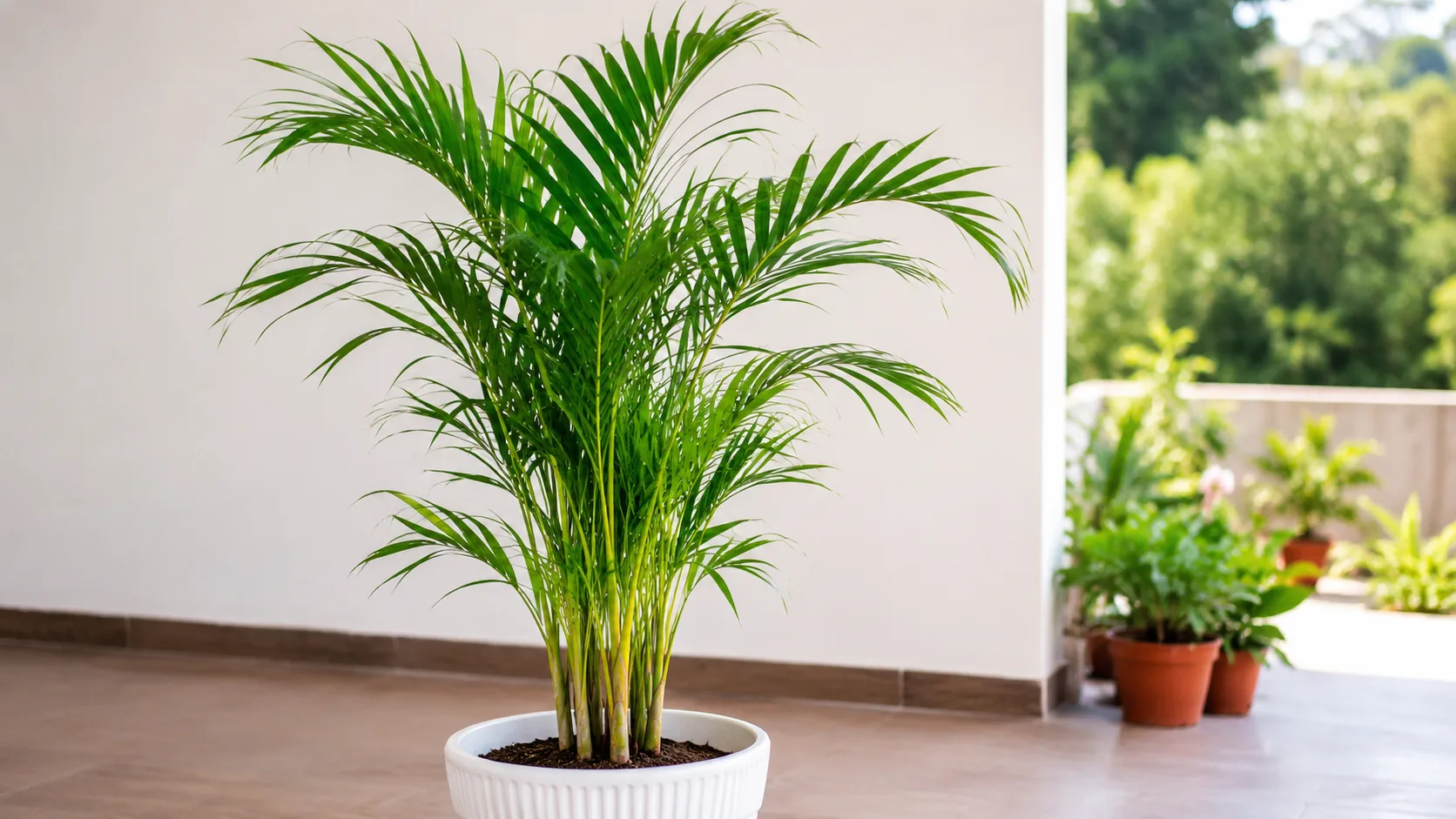
Dypsis lutescens, still sold under older names like Chrysalidocarpus lutescens, is a clustering palm native to Madagascar. Missouri Botanical Garden describes it as a multi-stemmed palm with cane-like stems and pinnate, light green fronds, winter-hardy only in USDA Zones 10 to 11 and therefore grown almost exclusively as a houseplant elsewhere. That clustering growth habit is the key to propagation. New stems emerge from the base as offsets (sometimes called suckers or pups), and over time a single pot holds four, eight, or a dozen stems rooted together. When those stems are mature enough and the root ball is large enough, you can split the clump and end up with two or more independent plants.
This guide covers the methods that actually work - division of the root ball and separation of offsets - plus the methods that do not, the best timing, a full step-by-step workflow, aftercare for the first two months, and the honest truth about seed propagation. The goal is simple: help you multiply a healthy areca palm without killing the parent or wasting months on a cutting that was never going to root.
What Areca Palm Propagation Actually Means
Areca palm propagation means creating new areca palm plants from an existing plant. For home growers, that almost always means physically separating part of a clumping palm and giving it its own pot. You are not rooting a detached frond or a cut cane. You are dividing living tissue that already has stems, an active growing point on each stem, and - critically - its own roots or a share of the shared root mass.
Most people propagate areca palms for practical reasons. The nursery pot is overcrowded and the plant has outgrown its space. A friend wants one. You want a backup before Areca Palm repotting guide a large specimen. Or you simply prefer two medium palms to one giant bushy clump. Division is also the method professional growers use for Areca Palm overview because it preserves the exact plant - same frond form, same growth habit - whereas seed-grown palms may vary and take years to reach a useful size.
NC State Extension lists division and seed as the recommended propagation strategies for this species, and Adams Fairacre Farms and the BBC Gardeners’ World propagation walkthrough both describe root division as the practical home method.
Why Division and Offsets Are the Only Reliable Home Methods
Palm stems are structurally different from the stems of most common houseplants. Each areca cane has a single apical bud - the growing point at the top of the stem where new fronds emerge. If you cut a cane below that bud and stick it in water or soil, the cut stem has no mechanism to produce a new bud and restart growth. It may linger for weeks, but it will not become a new plant. The same limitation applies to individual fronds: a leaf cutting without stem tissue and a viable bud cannot regenerate a full palm.
Division works because you keep intact stems with their apical buds plus enough roots to support those stems after the split. Offsets work for the same reason - a sucker at the base is already a small stem with its own bud and, if you are lucky, its own emerging root tissue. You are transplanting a miniature plant, not asking dead tissue to reinvent itself. That is why division and offset separation are the only propagation paths worth investing time in for Dypsis lutescens indoors.
Understanding Areca Palm Growth Habit Before You Divide
Before you grab a knife, it helps to understand what you are looking at when you pull the plant from its pot. An areca palm is not one trunk with branches. It is a clumping palm: multiple slender, ringed canes arising from a shared base, each cane topped with a crown of arching, feather-like fronds. The canes are connected underground by rhizome-like tissue and a dense mat of fibrous roots.
New growth starts at the base. A healthy mature clump constantly produces offsets - young canes that begin as tight spears near the soil line and gradually unfurl into full fronds. In a well-grown plant, you can see a range of sizes: tall established canes, medium canes, and pencil-thin new shoots still furled. That layered age structure is normal and actually tells you the plant has the energy to tolerate division, provided you leave enough mature tissue on each section.
Indoors, areca palms typically reach about 6 to 8 feet tall with a spread of 3 to 5 feet, growing at a moderate pace of roughly six inches per year under good conditions. They prefer Areca Palm light guide, consistently moist but well-drained soil, and humidity above 40% - ideally closer to 50–60%. Those same preferences apply doubly to newly divided plants, which have a reduced root volume and cannot afford the stress of dim corners, drought, or soggy mix while they re-establish.
Clumping Stems, Rhizomes, and Natural Offsets
When you wash or shake soil from the root ball, look for natural separation lines - places where a group of two to four canes emerges from a distinct section of root mass with less tangling to neighboring stems. These are your division points. Forcing apart stems that are tightly fused may tear roots unnecessarily; following natural clusters minimizes damage.
Offsets at the outer edge of the clump are often the easiest propagation targets. A young offset with three to six inches of cane height, firm green tissue, and visible white or cream-colored roots of its own can sometimes be separated with minimal surgery to the parent plant. If the offset is still entirely dependent on the mother rhizome with no independent roots, wait. Patience here prevents a common failure mode: a cute little sucker that dies because it had nothing to drink with after separation.
Propagation Methods That Do Not Work (and Why)
This section exists because search results and social media still suggest methods that waste time on areca palms. Understanding why they fail saves you months and protects a plant you may not be able to replace easily.
Stem cuttings do not work. Cutting a cane and rooting it in soil or water fails because the severed stem lacks an apical bud and cannot branch or produce a new crown. Palms are not Dracaena; they do not sprout side shoots from a bare stick. You may see the cut end callus or even push a bit of root tissue in water, but without a bud you will never get fronds - and the cutting will eventually rot. The palm’s vascular architecture lacks adventitious root primordia along the stem, so callus formation and root initiation from isolated stem sections does not occur.
Leaf or frond cuttings do not work. A single leaflet or even an entire frond removed from a cane has no path to becoming a plant. Unlike African violets or begonias, areca palms do not regenerate from leaf tissue.
Water propagation of detached canes does not work. Putting a cut stem in a jar looks satisfying and feels like propagation, but for areca palm it is an extended way to watch tissue decline. The Spruce and multiple palm-care references agree: root division is the propagation method for this species indoors.
Air layering is not practical. Some woody plants can be air-layered; clustering palms are not standard candidates, and there is no common, reliable air-layer protocol for areca palm in home settings.
If someone tells you they “propagated areca palm in water,” ask what they actually did. In nearly every case they either divided a rooted section, separated an offset while roots were still attached, or misidentified the plant species. Save the water jars for pothos.
Each areca cane is a single-stem unit with one growing point. The plant expands by adding new canes at the base, not by branching existing canes. Propagation therefore means increasing the number of rooted stem units, not regenerating from severed pieces. Once you internalize that, the correct method - division - becomes obvious and the incorrect methods stop looking tempting.
When to Propagate an Areca Palm
Timing is not superstition. It is root recovery speed. Areca palms divide most successfully when they are in active growth, with warm soil, long daylight, and the metabolic capacity to repair torn roots and push new white root tips.
The best window is late spring through early summer - roughly April through June in the Northern Hemisphere - when temperatures are consistently above 65°F (18°C) and the plant is producing visible new spears. The Spruce notes that root division can technically be done at any time of year but the plant will be at its strongest in spring, which matches what most growers observe: spring divisions settle in four to eight weeks, while winter divisions sit stagnant and stay vulnerable to rot in cold, damp mix.
You can also divide in early fall if your indoor conditions remain warm and bright, but avoid late fall and winter unless you have grow lights and stable warmth. A divided palm in a dim, cool room with wet soil is a palm waiting for root rot on Areca Palm.
Best Season, Plant Size, and Worst Times to Divide
Do not divide a palm that is already in crisis. If the plant was just shipped, recently repotted, fighting spider mites, recovering from root rot, or showing widespread yellow fronds, stabilize it first. Propagation adds stress; it is not a rescue technique. The worst times to divide are during pest outbreaks, immediately after a harsh repotting that removed half the roots, during a heat wave when the plant cannot hydrate fast enough, and in mid-winter when growth has stalled.
Minimum size matters. A single-cane seedling in a four-inch pot is not a division candidate - there is nothing meaningful to split, and removing the only stem kills the plant. Practical guidance from experienced growers and nursery practice suggests waiting until the clump has at least four to six mature canes and visible offsets before attempting a full division. Smaller plants can still yield one offset separation if a sucker has independent roots, but full clump splits need mass to spare.
Choosing a Parent Plant Worth Dividing
The parent plant does most of the work before you ever touch a knife. A vigorous clump with firm green fronds, active spears emerging from the center, and no sign of mushy stems at the soil line will tolerate division well. A tired clump with brown-tipped fronds, collapsed lower canes, and sour-smelling soil may not survive being split in two.
Inspect the plant a week before you plan to divide. Check leaf undersides for spider mites - the most common areca palm pest indoors. Look at the soil surface for fungus gnats or chronic wetness. Gently wiggle canes at the base; they should feel anchored, not loose or rotting. If multiple canes pull away from the center with no resistance, you may have crown or root decline that division will spread rather than solve.
Stem count per division is a balance between survivability and yield. Many growers aim for three to four canes minimum per new plant, each with a healthy apical spear or recently unfurled frond. Fewer canes can work if root mass is generous, but a single cane with a small root ball is fragile for months. More canes per division is safer but reduces how many new plants you get from one split. For a first attempt, err toward fewer, larger divisions rather than many tiny ones.
Health Checks, Stem Count, and Offset Quality
A good offset candidate has its own stem, visible roots when you expose the base, and firm tissue - not yellowed, mushy, or paper-thin. Offsets that are still tightly pressed against the parent with no roots visible are immature. Give them another growing season. The health of the parent matters as much as the size of the offset: a sucker on a declining mother plant is not a free new palm; it is a shared problem waiting for a new pot.
Supplies and Setup Before You Start
You do not need a greenhouse, but you do need clean tools and the right pots before the root ball is exposed. Running around mid-surgery with dirty scissors is how infections start.
Gather a sharp knife or pruning saw for thick rhizomes, clean snips for fine root trimming, rubbing alcohol or bleach solution to sterilize blades between cuts, fresh potting mix appropriate for palms, pots with drainage holes sized to each division’s root mass, labels if you track dates, and optionally cinnamon or sulfur-based fungicide powder for cut surfaces on large rhizome wounds. Gloves help because palm roots are fibrous and abrasive.
Mix preparation: areca palms prefer moist but well-drained, slightly acidic to neutral peat-based mix. A practical blend is two parts quality potting soil, one part perlite, and one part coarse sand, or a commercial palm/cactus mix amended with extra perlite. Adams Fairacre Farms suggests a 2-to-1 mixture of regular potting soil and coarse sand for divided stems. Pre-moisten the mix so it is evenly damp - like a wrung-out sponge - before potting. Dry mix pulled against torn roots wicks moisture away from fragile tissue.
Choose pots that fit the root ball, not the frond spread. Newly divided areca palms establish faster in slightly snug containers. A division with a six-inch root mass belongs in a six- to eight-inch pot, not a twelve-inch bowl “so it has room to grow.” Excess soil holds water the reduced root system cannot use, and that is the fastest route to post-division rot.
How to Propagate Areca Palm by Division: Step by Step
Full clump division is the standard propagation method. Work on a tarp or outdoors if weather allows - areca root balls are messy. Plan thirty to sixty minutes for a large clump and accept that some root damage is normal; your job is to minimize it, not eliminate it.
Step 1: Water the day before. Thoroughly water the parent plant twenty-four hours before dividing. Hydrated roots are flexible and less brittle; dry roots snap and tear when manipulated. This single step prevents a disproportionate amount of propagation failure.
Step 2: Remove the plant and expose roots. Slide the palm from its pot, tapping the sides if needed. Shake off loose soil or rinse roots gently with lukewarm water until you can see which roots belong to which cane clusters. Do not blast roots with a hose at high pressure - you need visibility, not denuding.
Step 3: Identify division points. Look for natural groups of canes and the rhizome sections connecting them. Mark mentally where you will cut before you cut. Each division needs stems with apical buds plus roots.
Step 4: Separate or cut. Where roots pull apart easily by hand, tease gently - patience beats force. Where the rhizome is solid, use a sterilized knife to slice cleanly through connecting tissue. Avoid ripping, which creates long ragged wounds. Trim obviously dead, black, or mushy roots with sterile snips.
Step 5: Pot each division. Place each section in its prepared pot at the same depth it grew before - burying the crown too deep invites stem rot; leaving roots exposed dries them out. Backfill with moist mix, firm lightly to eliminate large air pockets without compacting.
Step 6: Water and place. Water each new pot until drainage runs clear, empty saucers, and set plants in bright indirect light - not direct sun, which will stress torn roots and scorch fronds. Maintain warm temperatures and elevated humidity for the first two weeks.
That ordered workflow is the answer to “how do you propagate areca palm” in practice: divide rooted stems, do not cut stems and hope.
Preparing the Root Ball and Identifying Natural Splits
Lay the exposed root ball on its side if the plant is large and work systematically from the outside inward. Outer offsets are often the least entangled. Center sections may require a deliberate cut through shared rhizome tissue. If the clump is so dense that you cannot see anything, divide into two halves first, then evaluate each half for a second split later - two healthy divisions beat four dead ones.
Root washing is optional but useful for beginners who have never seen a palm root mass. Clear water lets you confirm that each section has white, firm roots at least two inches long anchoring its canes. Cream-colored new root tips are an excellent sign. Brown, hollow, or odor-producing roots should be trimmed off before potting.
Separating Offsets and Making Clean Cuts Through the Rhizome
When cutting rhizome tissue, one clean slice beats sawing back and forth. Disinfect the blade between divisions if you hit discolored tissue - you do not want to spread potential pathogens. Large wounds can be dusted lightly with cinnamon or a labeled fungicide powder; this is optional for small indoor splits but reasonable on thick cuts.
If an offset resists separation, stop. Forcing it may leave you holding a stem with three roots total. Either cut a larger section that includes the offset plus neighboring canes, or wait another season. Propagation should feel like gentle surgery, not a tug-of-war.
Potting, Watering, and Placing New Divisions
After potting, fronds may droop slightly for a few days - transpiration continues while roots are disrupted. Do not compensate by flooding the pot daily. Even moisture means the mix stays lightly damp throughout, never waterlogged and never bone dry for long stretches. A humidity dome, clear bag propped on stakes, or placement near a humidifier reduces water loss through leaves while roots heal.
Keep divisions out of air-conditioning drafts and away from radiators. Stable 65–80°F (18–27°C) and 50–60% humidity is the target range during establishment. Direct south-window sun is too much; an east window or filtered west light is ideal.
Propagating a Single Offset Without Splitting the Whole Clump
Not every propagation attempt requires dismantling the entire parent plant. If your areca palm is otherwise happy but has one or two well-rooted offsets at the edge, you can remove just those and leave the main clump intact. This is the lowest-risk propagation option and the one closest to how the plant reproduces naturally in clump form.
Expose the base by brushing away top soil until you see where the offset’s roots enter the mix. If roots clearly run into the offset’s own small mass rather than only into the parent center, slice connecting rhizome tissue with a sterile knife, keeping maximum root length on the offset. Pot the offset in a small container - often four to six inches - and care for it exactly as you would a larger division, with extra humidity and no fertilizer for six to eight weeks.
If removing one offset would damage the parent structurally or the offset has no roots, do not proceed. The parent plant’s appearance and health matter if you intend to keep it as your main specimen. A lopsided clump recovers slowly; a decapitated root mass may not recover at all.
Aftercare for Newly Divided Areca Palms
The first eight weeks after division are an establishment phase, not normal areca palm care at full strength. Your divided plants have fewer roots relative to frond surface area, so they cannot tolerate the same watering lapses or fertilizer loads as a mature specimen.
Expect four to eight weeks before new white root tips are actively growing into the fresh mix, and several months before you see a new spear unfurl on a divided section - longer if the division was small or conditions were cool. That timeline is normal. A plant that looks static but has firm green fronds and no stem softness is usually alive and working underground.
Do not fertilize for the first six to eight weeks. Fertilizer on torn roots causes burn and encourages top growth the root system cannot support. When you resume feeding, use a diluted palm-appropriate formula at half strength during active growth season.
Watch for transplant shock signs: widespread yellowing, sudden brown tips on multiple fronds, or stem softness at the soil line. Mild tip browning on one frond is not emergency; systemic decline is. If soil stays wet and stems go mushy, reduce watering, improve airflow, and confirm the pot is not oversized.
Water, Humidity, Light, and Fertilizer During Establishment
Water when the top inch of mix approaches dry - typically more frequently than a mature areca in the same room because the root volume is smaller relative to pot size, but never on a rigid calendar without checking soil. Use room-temperature water; cold water shocks tropical roots. If your tap water causes brown tips on established palms, use filtered or rainwater on divisions from day one - stressed plants show tip burn faster.
Humidity matters more after division than at almost any other life stage. If you have a humidifier, run it. If not, group divisions together on a pebble tray and away from heating vents. Misting provides only minutes of relief; it is supplementary, not sufficient alone in dry winter homes.
Light should be bright and indirect. Divisions in too little light fail to photosynthesize enough to fuel root repair; light that is too harsh scalds fronds that cannot draw water to cool themselves. An east-facing window or a few feet back from a sheer-curtained south window is the sweet spot for most homes.
Most failed divisions trace back to a short list of mistakes worth avoiding from the start. Dividing too small - one cane and a handful of roots - leaves insufficient photosynthetic capacity to rebuild the root system. Overpotting after division surrounds roots with wet, oxygen-poor soil. overwatering on Areca Palm while roots are inactive in cool conditions causes stem rot at the base. Dividing a sick plant spreads decline to two pots instead of one. Less common but real: dividing during peak summer heat without adequate humidity, placing new divisions in direct sun immediately, and fertilizing too early to force growth the roots cannot support. If a division fails - stems go mushy, fronds collapse entirely, roots turn black - discard it cleanly rather than nursing rotting tissue for months. Signs propagation is succeeding include firm stems at the base, fronds that remain green without progressive yellowing, new white root tips visible at drainage holes after several weeks, and eventually a new spear beginning to emerge from the center of a cane.
Seed Propagation: Possible in Theory, Impractical at Home
Dypsis lutescens can be grown from seed - commercial nurseries do it - but home seed propagation is slow, finicky, and rarely worth the effort when division works quickly on an existing plant. Seeds must be fresh; dried or old seeds germinate poorly. The fruit must be fully ripe, pulp cleaned away, and seeds sown promptly in warm, humid conditions around 75–85°F (24–29°C).
Even under ideal conditions, seed-grown areca palms take twelve to twenty-four months to reach a transplantable seedling size, and individual seedlings may vary in vigor. The Spruce explicitly advises home gardeners not to bother with seed for this reason. If you do not already own a mature clump to divide, buying a second small plant is almost always faster and cheaper than a seed-starting project that may never germinate.
Seed propagation belongs in this guide only so you recognize it as a legitimate botanical method - and immediately cross it off your personal to-do list unless you are deliberately experimenting.
Conclusion
Areca palm propagation is straightforward once you accept what the plant is: a clustering palm that multiplies by adding stems at the base, not by rooting cut pieces. Division of the root ball and separation of rooted offsets are the only reliable methods for home growers working with Dypsis lutescens. Stem cuttings, frond cuttings, and water propagation will not produce new plants because palm canes do not regenerate from severed tissue without an apical bud.
Divide in spring or early summer when the parent is healthy and the clump has enough canes to spare. Water the day before, use sterile tools, follow natural split lines, give each section adequate stems and roots, pot at the correct depth in well-drained mix, and place new plants in bright indirect light with steady warmth and humidity. Skip fertilizer for six to eight weeks, keep soil evenly moist but never soggy, and expect several months before dramatic new growth appears.
Done correctly, division turns one crowded nursery clump into two or more graceful indoor palms - the same feathery fronds, the same species, and a propagation success rate that stem-cuttings fantasies never match. Save the jar of water for another plant. Your areca palm already knows how to make more of itself; you just have to split the clump the way the plant’s biology demands.
When to use this page vs other Areca Palm guides
- Areca Palm overview - Start here for whole-plant context before deep-diving this topic.
- Areca Palm problems hub - Jump to symptom-specific fix guides when this care topic does not resolve the issue.
Related Areca Palm guides
- Areca Palm overview
- Areca Palm watering
- Areca Palm light
- Areca Palm soil
- Areca Palm fertilizer
- Areca Palm repotting
- Areca Palm problems
Related tool
Try the Propagation Success Calculator with areca-palm pre-selected to estimate needs for your setup.