Spider Mites on Areca Palm: Causes, Checks & Fixes
Quick answer
Spider mites on areca palm (*Dypsis lutescens*) show up as fine stippling on pinnate fronds-often on lower leaflets first-when indoor humidity drops below the 50–60% this palm prefers. First step: isolate the clump and rinse every frond underside with lukewarm water before adding soap or oil.
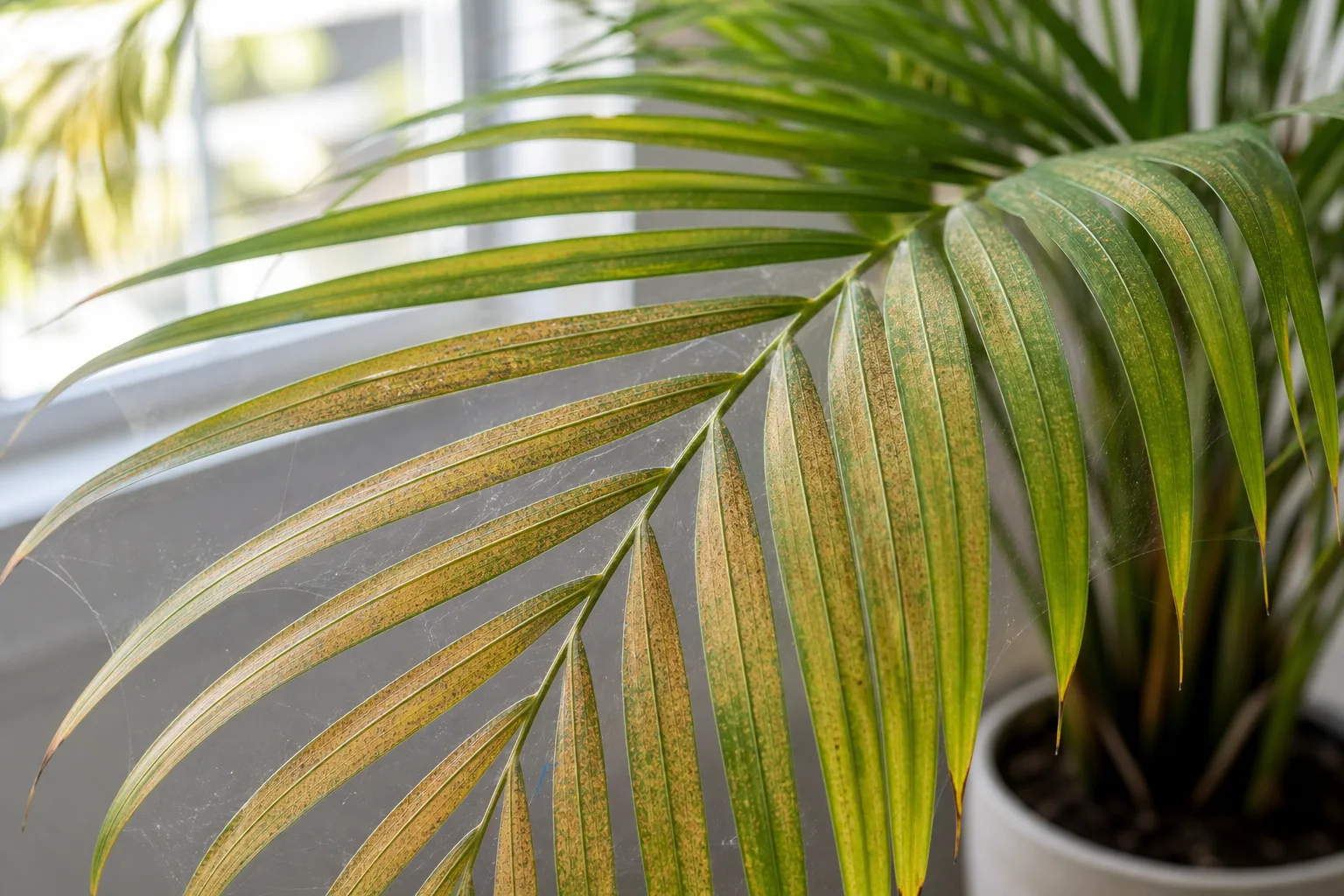
Spider Mites on Areca Palm: Causes, Checks & Fixes
This guide covers spider mites on Areca Palm. See also the general Spider Mites guide, watering, and light pages for this plant.
Spider Mites on Areca Palm: Causes, Checks & Fixes
Quick answer
Spider mites on areca palm (Dypsis lutescens) are almost always a dry-air pest flare-up, not a watering mistake. This clustering Madagascar palm wants roughly 50–60% relative humidity and pinnate fronds with 40–60 leaflets each-yet winter heat, sunny glass, and AC vents strip moisture from the canopy while two-spotted spider mites multiply on the undersides where sap is easy to reach.
On a multi-cane indoor clump, stippling often appears on older lower fronds first while new crown spears stay clean until humidity drops further near a heating vent. Fine silk webbing shows at frond bases and cane axils before it is obvious across the whole canopy.
First step: move the plant away from neighbors and rinse every frond underside with lukewarm water. Knock down live mites and webbing before you reach for sprays. Only after you see moving specks or fresh stippling should you add insecticidal soap or horticultural oil-and plan on repeating every five to seven days, because mite eggs survive a single pass.
What spider mites look like on areca palm
Early damage is easy to miss on feathery areca fronds because many narrow leaflets hide pale feeding marks until the colony spreads. By the time webbing is obvious across several fronds, mites have usually been feeding for weeks.
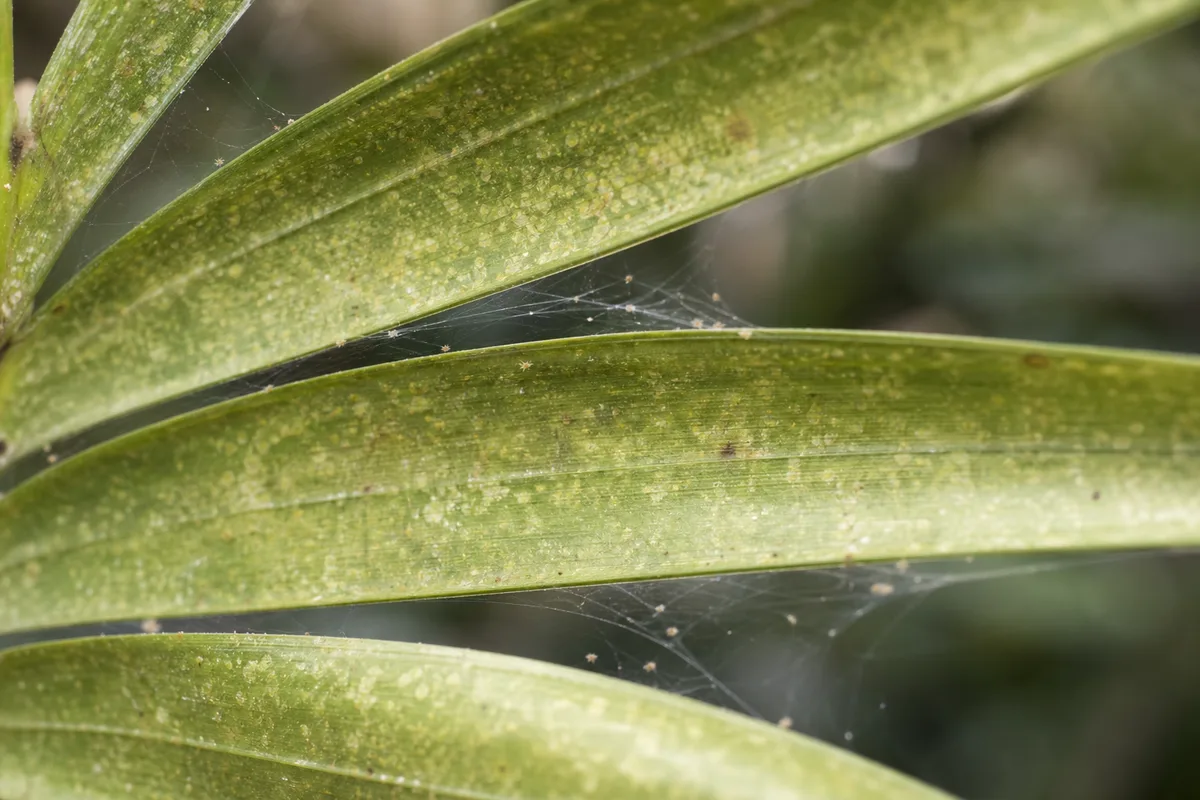
Spider Mites symptoms on Areca Palm - compare with healthy tissue on the same plant.
Typical signs on Dypsis lutescens include:
- Fine yellow or white stippling on the upper leaflet surface-each dot is a dead cell where mites pierced and drained sap.
- Dull, bronzed patches on heavily fed leaflets; severe feeding can yellow entire frond sections and trigger drop on lower blades.
- Silk webbing at the base of pinnate fronds, between overlapping leaflets, or where fronds meet yellow-green canes-often visible only when you spread the canopy apart.
- Tiny moving dots on the paper test-mites look like grains of pepper that crawl slowly, not jump.
Areca palms carry arching pinnate fronds on multiple slender canes. Mites concentrate on undersides along the rachis and at frond bases where leaflets overlap and stay dry. Lower, outer fronds often show damage first because they sit longest near heat sources and are hardest to inspect during a quick watering pass.
Why areca palm gets spider mites
Winter heating, sunny glass, and the humidity paradox
Areca palm is marketed as a humidity-loving tropical, yet most homes run 30–40% RH in winter-well below the 50–60% band that keeps frond tips healthy on this species. Spider mites prefer warm, dry conditions and reproduce quickly when leaflet surfaces stay dry for hours. The paradox: a palm that wants moist air becomes mite-prone exactly when heating season crashes humidity.
Placement magnifies the risk. Pots on sunny window sills, above radiators, or in the path of forced-air vents lose canopy moisture faster. Areca in Areca Palm light guide may look structurally fine while the microclimate next to glass stays hot and dry enough for mites-even when the rest of the room feels comfortable.
Dense multi-cane structure creates hiding spots. Several canes in one nursery pot mean dozens of fronds overlapping at the crown. Mites feed in sheltered axils that a casual glance misses-exactly why NC State Extension lists spider mites among pests to watch on Chrysalidocarpus lutescens / Dypsis lutescens.
Spread from neighbors. Mites walk between touching fronds and ride on hands, tools, or draft airflow. A new palm from a shop display can introduce them before any symptom shows on your established clump.
Stress lowers resistance but dry air is the main trigger. Chronic underwatering on Areca Palm, cold drafts below about 60°F (15°C), or direct sun scorch can weaken fronds, but mites often appear on otherwise healthy areca palms when humidity crashes-not because you missed one watering.
Lookalike symptoms to rule out
Not every pale mark on pinnate fronds is a mite. Areca owners often confuse stippling with fluoride brown tips or dry-air margin burn-both covered in depth on the areca palm overview and brown-tips guide.
| What you see | Likely cause | Quick check |
|---|---|---|
| Upper-surface stippling plus webbing or moving specks | Spider mites | Paper tap test; magnifier on undersides |
| Crispy brown tips only, no upper-surface dots | Brown tips from tap water or low humidity | No webbing; margins match dry-air or fluoride pattern |
| Silvery scarring and distorted new spears | Thrips | Slender adults jump when disturbed; no fine mite webbing |
| White cottony clusters in cane axils | Mealybugs | Crush pink on a swab; no pepper-like moving dots |
| Bleached patches on sun-facing leaflets | Sun scorch | Damage faces window; no stippling progression or webbing |
| Single bottom frond yellowing, firm canes | Normal aging | No stippling on upper fronds; remove spent frond only |
Confirmed mites show stippling plus either moving specks or webbing-one sign alone is not enough if you cannot find live pests.
How to confirm the cause
Work through this inspection in order:
- Isolate the clump on a tray away from other houseplants before handling fronds.
- Hold white paper under a suspect frond and tap the rachis sharply. Slow-moving specks that streak when smeared confirm mites.
- Flip fronds and use a 10× magnifier on undersides-look for amber eggs, cast skins, and fine silk along the rachis.
- Check lowest fronds and frond bases first-areca mites often start where many leaflets overlap and stay dry near cane axils.
- Note the environment - heat vent within a metre, winter sun on glass, or a room humidifier turned off recently all support a mite diagnosis. Cross-check low humidity on areca palm if edges are crispy but the paper test is clean.
- Inspect neighbors even if they look clean; stippling on a parlor palm or ficus on the same shelf means quarantine the whole group.
If you find webbing and stippling but no live mites after a thorough rinse, treat anyway-eggs hatch in cycles and colonies rebound within days in dry air.
White-paper tap test on pinnate fronds
Choose a lower frond with visible stippling. Support the rachis with one hand, hold typing paper beneath with the other, and tap firmly two or three times. Mites dislodged from 40–60 leaflets per side may take a moment to appear as moving specks-wait ten seconds before deciding the test is negative.
First fix for areca palm
Rinse frond undersides thoroughly with lukewarm water. This single physical step removes adults, nymphs, and much of the silk that protects them.
Keep the clump isolated after rinsing. Do not repot, fertilize, and spray on the same day. You need to see whether knocking mites down with water slowed new stippling before adding chemicals.
Shower-rinse technique for a multi-frond clump
Large indoor areca palms fit awkwardly in sinks, but a shower or bathtub works well:
- Cover or lightly wrap the pot so mix does not wash out; a plastic bag around the root ball with the cane bases exposed is enough for most pots.
- Tilt the clump so water runs down and through fronds, not pooling at the crown where cane bases meet.
- Spray undersides of every frond until water runs clear and webbing loosens-start with lowest fronds and work up so runoff does not re-contaminate cleaned leaflets.
- Let fronds dry in bright indirect light, not direct south-window sun. Soaps and oils applied later can mark heat-stressed foliage that sits in hot window light while wet.
- Empty saucers after the pot returns to its stand; do not leave the crown area soaked overnight.
Raising humidity with a humidifier helps prevent new outbreaks but does not replace direct mite removal on an active infestation.
Step-by-step recovery
When rinsing alone is not enough, add contact sprays in sequence:
- Days 1 and 2 - Two thorough water rinses, five to seven days apart, targeting undersides.
- Day 7 onward - If stippling spreads, apply a labeled insecticidal soap or horticultural oil spray, coating undersides until runoff.
- Repeat every five to seven days for at least three cycles-mite eggs survive single applications and hatch on staggered schedules. Mississippi State Extension recommends treating spider mites on houseplants two to three times at five-day intervals when using soap or oil.
- Re-check with the paper test on one lower frond before each spray. Stop the cycle when no moving specks appear for two consecutive checks and no fresh webbing forms.
- Hold fertilizer until new spears emerge clean and you finish the treatment cycle.
Move treated palms out of direct sun until foliage dries. Avoid homemade dish-soap mixes; commercial insecticidal soaps are formulated to reduce burn risk on foliage plants.
If soap and oil fail after three cycles
Inspect again for thrips or mealybugs before switching chemistry. Persistent stippling with confirmed mites may require a miticide labeled for spider mites on ornamentals-general insecticides for aphids often miss mites and can kill predators, spiking mite populations. Follow label rates, ventilate indoor spaces, and keep pets away from wet foliage until dry.
Recovery timeline
Week 1: Stippling should stop spreading after the first rinse plus one follow-up wash or soap treatment. Fresh webbing on new spears means the cycle is not broken-keep treating.
Weeks 2–3: With weekly contact sprays, live mite counts drop. Old stippled leaflets stay marked permanently; they will not re-green.
Weeks 4–6: Clean new fronds emerging from the crown mean the clump is winning. Areca grows at a moderate pace, so full canopy recovery can take a full growing season if lower fronds were heavily bronzed.
Judge success by new growth and absent webbing, not by old leaflet color. Remove only fronds that are mostly bronze and crisp-keep partially stippled foliage if the clump is sparse, because areca palms recover faster with some photosynthetic surface intact.
What not to do
Do not use general insecticides labeled only for aphids or beetles-mites need miticides, horticultural oils, or insecticidal soaps that contact the pest directly.
Do not spray only the upper leaflet surface. Mites feed underneath; top-only treatment leaves most of the colony alive on pinnate fronds.
Do not stop after one good-looking week. A single missed egg batch restarts the outbreak when dry air returns.
Do not increase fertilizer on a mite-stressed palm hoping for faster regrowth. Feed only after new fronds look healthy and you have finished the treatment cycle.
Do not leave the crown soaked overnight after shower-rinsing a multi-cane clump. Areca has smooth pinnate fronds-not fuzzy foliage-but water pooling where canes cluster can invite fungal problems without reliably killing mites.
Do not apply soap or oil to heat-stressed fronds in direct south-window sun while wet. UC IPM notes that soaps and oils can injure foliage above about 90°F or on water-stressed plants-move the pot to filtered light until sprays dry.
Do not confuse mite stippling with fluoride brown tips on new growth. If margins crisp without upper-surface dots and the paper test is clean, fix water quality and humidity before launching chemicals-see brown tips on areca palm.
How to prevent spider mites on areca palm
Prevention targets the dry conditions mites prefer:
- Hold humidity near 50–60% at canopy height-not just at the pot rim. A small humidifier on a humidistat beats occasional misting for this species; see low humidity on areca palm when winter air drops below about 40%.
- Quarantine new plants for two weeks and inspect frond undersides before placing them with your areca collection.
- Rinse or wipe frond undersides monthly during heating season, especially on clumps near windows or vents.
- Space pots so fronds do not touch; mites walk across contact points overnight.
- Check weekly in winter with the paper tap test on one lower frond-early colonies are cheapest to stop on a palm with dozens of leaflets per frond.
Regular underside checks fit naturally into the same routine as confirming whether the top 1–2 inches of mix have dried per the watering guide.
When to worry
Treat as urgent when:
- Webbing covers multiple fronds or climbs toward new crown spears.
- New spears stay pale and small while stippling spreads on older fronds.
- Mites appear on several plants from the same shelf-isolate the whole group and treat every pot on the same schedule.
- Most fronds bronze within two weeks despite rinsing-escalate to labeled miticides after confirming technique.
Consider discarding a severely defoliated, low-value plant in a shared indoor collection-bag it before moving so mites do not scatter during disposal. Most healthy areca clumps recover with consistent washing and repeated contact sprays if canes stay firm.
Monitor pet safety during treatment. Areca palm is non-toxic to cats and dogs per the ASPCA, but spray residue is not food. Keep treated plants off floors where animals chew dropped leaflets; ventilate during application. This is general information, not veterinary advice.
If stippling persists after three weekly treatments with confirmed technique, inspect again for a different pest or environmental burn before switching to stronger pesticides.
Areca palm care cross-check
Spider mites and brown tips can both mar feathery fronds, but the patterns differ. Mites leave speckled upper leaflet surfaces and webbing while soil moisture may be normal. Fluoride or dry-air burn affects margins and tips without upper-surface stippling or moving specks on paper.
A firm multi-cane clump with stippled foliage means pests, not root rot. Fix the mite cycle first; only reassess watering if soil stays soggy after you stop rinsing fronds in the shower.
For species context, humidity targets, and tap-water sensitivity, see the areca palm overview.
Related areca palm problems
- Areca palm overview - Baseline light, water, humidity, and pest risk
- Brown tips - Fluoride and dry-air margin burn without stippling
- Low humidity - Dry winter air that favors mites and tip burn
- Mealybugs - White cottony clusters in cane axils
- Yellow leaves - When frond yellowing is not mite stippling
- Watering areca palm - Moist-but-not-soggy rhythm during recovery
When to use this page vs other Areca Palm guides
- Areca Palm watering guide - Use for routine moisture checks before assuming spider mites is the main issue.
- Areca Palm problems hub - Browse all 16 common issues on this species.
- Low Humidity on Areca Palm - Different entry point when symptoms overlap with spider mites.
- Slow Growth on Areca Palm - Different entry point when symptoms overlap with spider mites.