Slow Growth on Areca Palm: Causes, Checks & Fixes
Quick answer
A healthy indoor areca palm grows at a moderate pace-often one to two new fronds per cane per active season-not weekly. Months without a spear opening in warm, bright weather is a true stall. First step: measure light at frond height and confirm the clump gets bright indirect exposure before fertilizing or repotting.
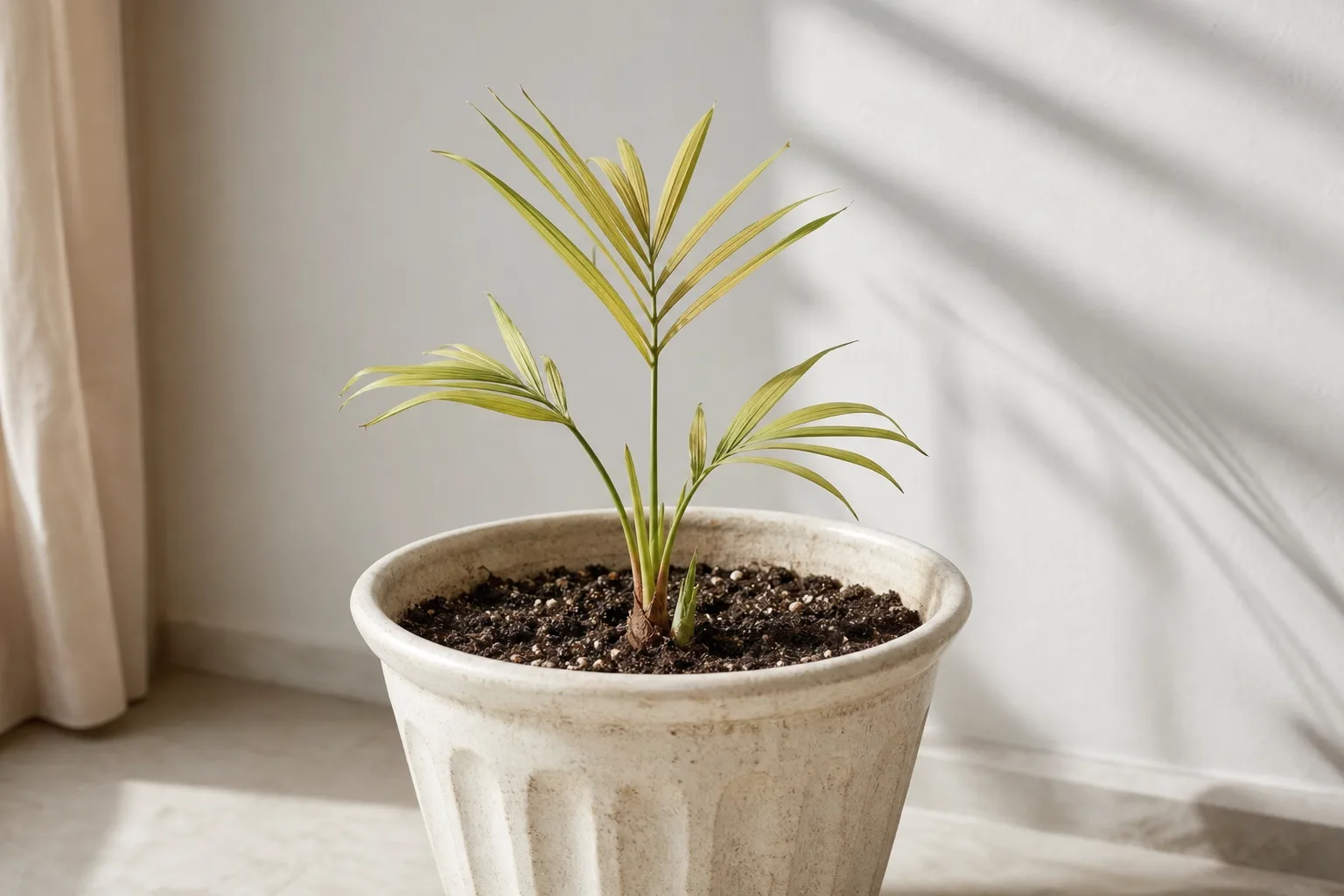
Slow Growth on Areca Palm: Causes, Checks & Fixes
This guide covers slow growth on Areca Palm. See also the general Slow Growth guide, watering, and light pages for this plant.
Slow Growth on Areca Palm: Causes, Checks & Fixes
Quick answer
Slow growth on areca palm (Dypsis lutescens) is not always a problem. This clustering palm with medium growth rate naturally pushes new fronds in bursts during warm, bright months and rests when light and temperature drop. Owners worry when a floor palm looks unchanged for months-but true stall means no new spear opens through a full spring or summer while the clump sits in what should be active conditions.
When growth stalls abnormally, insufficient bright indirect light indoors is the most common limiter-not fertilizer, not repotting, and not humidity alone. Areca palm survives dim corners while metabolism drops, soil stays wet longer, and new spears stop emerging. That wet-soil pairing is easy to miss: a dim palm transpires slowly, so mix stays damp and growth stall compounds with overwatering risk.
First step: measure light at frond height, not room brightness. Missouri Botanical Garden notes that houseplant areca palms prefer consistent moisture in mostly sunny exposures with high humidity. Move the clump to the brightest indirect spot you can sustain-east window, filtered south or west window, or a grow light 12–18 inches above the canopy. Do not repot, fertilize, or soak heavily on the same day. Fix placement first, then reassess watering once transpiration picks up. See our Areca Palm light guide for window placement and lux targets.
Why areca palm grows slowly (and when that is normal)
Dypsis lutescens evolved in moist forest areas of Madagascar as a clustering palm beneath taller canopy with filtered brightness-not the deep shade of a hallway shelf. Indoors it tolerates less light than it prefers, but tolerance shows up as fewer new fronds, smaller leaflets, and longer gaps between spears rather than obvious wilt.
Normal slow periods include:
- Winter quiet. Short days and cooler rooms slow metabolism even in a decent window. Minimal or zero new fronds from late fall through early spring is expected in most homes without supplemental lighting.
- Recent repotting. After upsizing or division, the clump often redirects energy into roots for four to eight weeks before pushing a new spear. That pause is normal, not failure.
- Species pace indoors. NC State classifies areca palm as a medium-growth palm with multiple bamboo-like stems from one base. Even in good light, height gain is measured in inches per year, not feet. A spear may take two to four weeks to unroll fully once it emerges.
Abnormal slow growth - the kind this page addresses - means no meaningful new fronds through an entire spring and summer while the plant sits in moderate or dim light, chronically wet soil, cold drafts, or a severely root-bound pot. That pattern differs from a winter rest or a month-long post-repot pause.
What slow growth looks like on Dypsis lutescens
On areca palm, slow growth has a recognizable signature in spear cadence and frond quality, not a single browned leaflet tip:
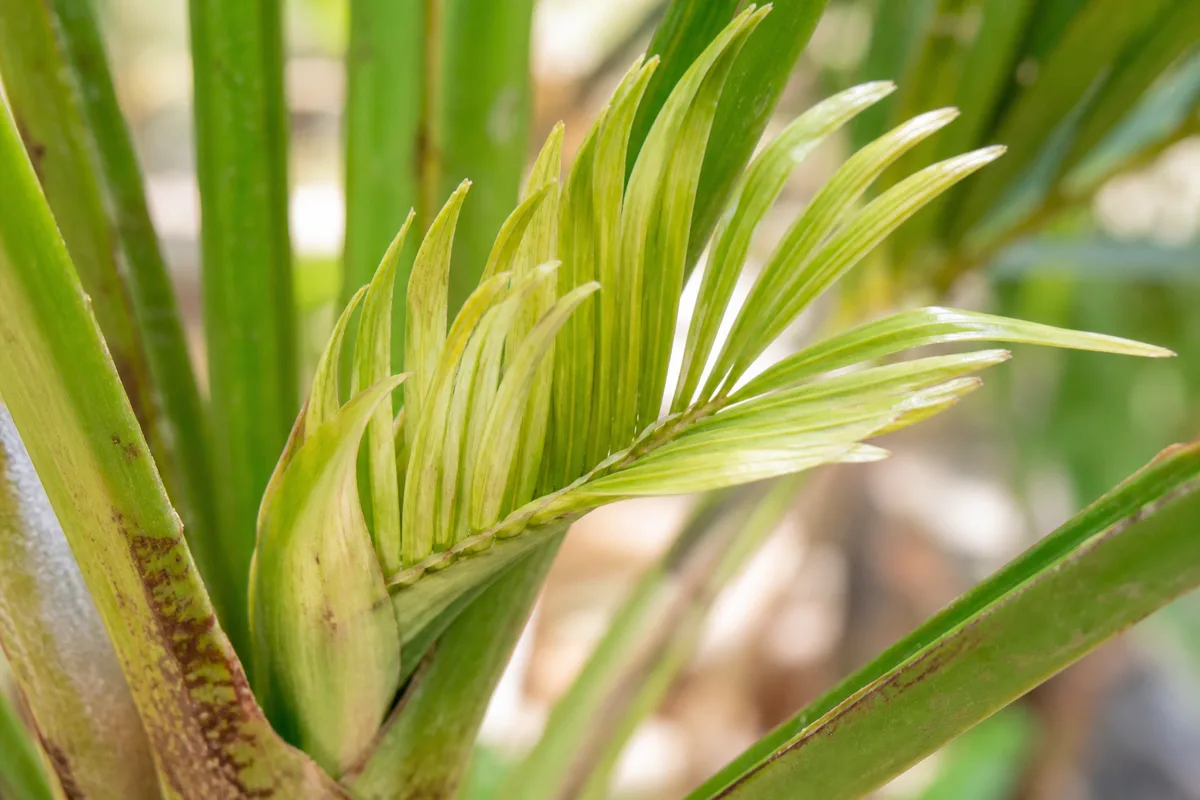
Slow Growth symptoms on Areca Palm - compare with healthy tissue on the same plant.
- Months without a central spear unrolling on one or more canes during spring or summer
- Only one or two new fronds per warm season per cane in a dim room - far below what the same clump produces at a bright window
- Smaller new fronds with sparse leaflet rows compared with mature fronds above
- Wide gaps between fronds on each cane as lower leaves drop without replacements
- Pale, dull green new tissue instead of bright yellow-green rachises typical of healthy spears
- Stable pot weight and slow dry-down when light alone limits growth; heavy wet pot when dim placement pairs with unchanged watering
- Clump density frozen - no new cane offsets at the base for a year or more in otherwise bright conditions
Brown leaflet tips alone usually trace to tap-water salts or humidity, not growth rate. Tip burn on compact fronds in a bright window points to water or humidity - see brown tips - not placement.
This page focuses on growth cadence and stall diagnosis: “Is my palm’s pace normal?” Not enough light goes deeper on stretch, lean, and etiolation mechanics when long arching fronds reaching toward the window dominate the picture. Leggy growth covers the same light deficit when spacing and thin fronds are the main complaint. Light limitation is usually the root cause of slow, leggy, and low-light symptoms indoors - but the confirmation checks differ.
Areca palm vs. majesty palm growth expectations
Two palms sold in similar floor-planter sizes confuse slow-growth expectations. Mixing them up leads to false alarms.
Areca palm (Dypsis lutescens) is a multi-stem clustering palm with yellow-green bamboo-like canes and arching pinnate fronds. NC State notes multiple stems arising from one base with a medium growth rate. Indoors, a healthy clump in bright indirect light typically adds one to two fronds per cane per warm season and may produce new cane offsets at the base over years. Growth is measured in spear frequency and clump fullness, not rapid vertical sprinting.
Majesty palm (Ravenea rivularis) is a single-trunk palm with darker green, less feathery fronds and a faster juvenile habit in nurseries - then often stalls hard indoors in dry air and moderate light. Majesty palms frequently arrive lush from greenhouse conditions and lose lower fronds without replacements when home humidity and brightness fall short. Comparing a struggling majesty to a moderate areca makes the areca look “slow”; comparing a healthy areca in a bright window to a majesty in a dim corner reverses the story.
If you are unsure which species you own, count stems at soil level: several clustered canes = areca; one main trunk = majesty or another solitary palm. Areca slow-growth troubleshooting assumes the clustering Dypsis habit - not majesty’s single-stem decline pattern.
How this differs from related problems
| Pattern | Likely issue | Where to read next |
|---|---|---|
| Long thin fronds, strong lean toward window | Insufficient light with stretch | Not enough light |
| No spears, firm plant, winter months | Normal dormancy or light limit | This page + light guide |
| No spears, wet heavy pot, yellow lower fronds | Overwatering / root stress | Overwatering or root rot |
| No spears after spring repot | Transplant pause | Repotting guide |
| Small pale new fronds in bright window, no feed all year | Under-fertilization in active season | Fertilizer guide |
| Slow but stretching, wide frond spacing | Leggy light-seeking | Leggy growth |
Slow growth is the baseline hub question: “Is my areca’s frond pace normal?” Sibling pages go deeper on specific symptoms that often share the same first fix - brighter indirect light at frond height.
Why areca palm growth stalls abnormally
Insufficient bright indirect light indoors
This is the primary indoor limiter. NC State recommends bright indirect light and high humidity for houseplant culture. Missouri Botanical Garden lists areca palm among plants for mostly sunny indoor exposures. A clump on a sofa six feet from a south window is under-lit even if the window looks sunny - light intensity drops rapidly with distance from windows.
Low light reduces photosynthesis below what dozens of leaflets per frond cost to maintain. The palm lives on stored reserves, opens fewer new spears, and transpires less - so soil stays wet longer, which can invite secondary root stress. Fixing light without adjusting water is a common reason slow growth persists after a window move.
Lux benchmark at frond height: Use a phone light meter app at midday with the sensor at the tallest fronds. 1,500–3,000 lux for most of the day supports normal indoor frond production. Below roughly 1,000 lux through spring and summer fits a true growth stall. 500 lux or less is survival mode - expect zero to one frond per cane per year. A soft diffuse hand shadow on the leaflets confirms usable indirect light; no shadow at frond height means the spot is too dim for normal pace. Full measurement detail lives in our light guide.
Winter growth pause
Short days and cooler room temperatures slow metabolism even in a good window. Areca palm may produce no new fronds from late fall through early spring while existing foliage stays firm. Do not fertilize or water heavily to force winter growth in a dim spot; maximize window light or add a grow light, reduce water slightly, and wait for lengthening days.
Cool temperatures and drafts
Root zones on cold window ledges often run colder than the room thermostat reads. Prolonged chill below about 65°F (18°C) stalls new spear emergence and yellows older fronds even when light is otherwise adequate. Pull pots back from cold glass in winter.
Root-bound or oversized pot
Mild root constriction is normal - NC State suggests repotting every two or three years. Severe binding - water running straight through a dense root ball, mix drying in two days, no new cane offsets for years - can stall growth until repotting. Conversely, a recent move into an oversized pot leaves excess wet soil around a small root mass and pauses above-ground growth for a full season while roots colonize unused volume. See our repotting guide for one-size-up rules.
Under-fertilization during spring and summer
Areca palms consume nitrogen, potassium, and magnesium while pushing compound fronds. Years in the same depleted mix without feeding can produce smaller new leaves in bright conditions - but fertilizer cannot replace missing photons. UF/IFAS research supports an 8-2-12 palm maintenance formula with 4% magnesium for container palms. Feed only after light and watering rhythm look sound - details in our fertilizer guide.
Recent repot shock
Repotting, division, or bare-root work in cold or dim conditions often pauses new fronds for one to two months even when done correctly. Stack repotting with a major light change and feeding, and the stall can last an entire warm season.
How to confirm the cause
Work through these checks in order:
- Season and calendar. Note whether you are in late fall through early winter. Minimal growth then may be normal. If it is May through September and no spears have appeared, treat the stall as abnormal.
- Light at canopy. Measure lux at frond height or use the hand-shadow test at midday. Compare against our light guide targets: aim for 1,500–3,000 lux bright indirect for most of the day; below 1,000 lux through summer fits stall, not rest.
- Spear comparison. Compare the youngest open frond to one from last summer. Smaller blades, fewer leaflets, or slow unfurling point to light limitation.
- Soil moisture rhythm. Press into the top 1–2 inches. NC State advises moist but not soggy soil during active growth. If the surface stays damp ten days or more while growth is zero, check whether the plant sits in low light with unchanged watering - a compound problem. Heavy wet pots with yellow lower fronds suggest overwatering before assuming dormancy.
- Repotting history. If the plant was repotted within the last six weeks, allow four to eight weeks of stable care before diagnosing chronic slow growth.
- Root-bound signals. Roots circling the surface, water running straight through, or a top-heavy clump in an unchanged pot for four or more years limits new cane offsets.
- Nutrient clues. Older fronds yellowing between veins on otherwise moist, bright-grown palms may fit magnesium or potassium gap; new spears stay small despite good light points elsewhere.
- Pest screen. Spider mite stippling on frond undersides in a dim, dry corner can stall growth before obvious wilt - confirm pests separately.
If the plant is firm, pest-free, and stable with no new fronds only in winter or for four weeks after repotting, slow growth is likely expected behavior. If zero warm-season spears appear in moderate light, light correction is the first hypothesis.
First fix for slow growth on Areca Palm
Move the clump to the brightest indirect placement available - then hold everything else steady for six to eight weeks.
Choose an east-facing sill, a spot one to three feet back from a sheer-curtained south or west window, or a full-spectrum grow light 12–18 inches above the canopy for 10–12 hours daily on a timer. North rooms need grow-light support as mandatory, not optional.
While you test the move:
- Do not repot on the same day.
- Do not fertilize a stressed or stalled palm.
- Do not increase watering because fronds look limp - check soil first; brighter light will increase water use over the following weeks.
Acclimate over seven to fourteen days if the palm lived in deep shade. Make this one change, wait through the active season, then reassess spear emergence before repotting or feeding.
Step-by-step recovery
- Acclimate to stronger light over seven to fourteen days if moving from deep shade - shift closer to the window in stages or filter midday heat until leaflets adjust.
- Rotate the pot a quarter turn weekly so all canes receive even exposure.
- Adjust watering after light improves. When transpiration increases, resume watering when the top 1–2 inches of mix dry per our watering guide - not on a calendar from the dim corner.
- Resume light feeding in spring only after one new spear opens cleanly - palm-appropriate fertilizer at half strength March through September per our fertilizer guide. Skip feed entirely in winter unless the plant sits in a very bright warm room with active new growth.
- Repot only if clearly needed - roots circling densely, water running through without soaking, or mix that no longer drains. Use one pot size up in spring, not a dramatic jump. Withhold fertilizer for four to six weeks after repotting.
- Wait one full warm season before declaring failure. New fronds often appear over spring and summer, not within days of a window move.
Recovery timeline
Two to four weeks after a light upgrade in spring or summer: The next emerging spear should unfurl more confidently; new leaflets should look fuller than the most recent pale spears.
Six to eight weeks: Many clumps in corrected light produce a second new frond per cane where they previously added one per season - or resume a every-few-weeks pace across multiple canes in peak summer at a bright window.
One full growing season: Judge success by total new frond count per cane and leaflet density versus the prior year, not by old fronds enlarging. Existing frond tissue does not grow significantly faster after care improves.
Winter: Expect little to no new growth even after a successful light fix. That pause is normal; do not force growth with fertilizer or extra water.
Post-repot: Mild transplant pause of four to eight weeks is common; full recovery to regular spear production may take two to three months in warm bright conditions.
Nutrient correction: New fronds show improvement; older yellow tissue may not fully re-green - UF/IFAS notes some palm deficiencies take months to correct on new foliage only.
Worsening signs: Yellowing with wet soil, sour smell, or spears rotting before opening mean escalate to root inspection - not more light alone.
Lookalike symptoms
Normal winter rest. Firm green foliage, dry-down slows, zero new spears for months. Resume normal spring care when days lengthen; no repot or feed rush needed.
Not enough light with stretch. Long arching fronds and lean dominate. Same first fix - brighter indirect light - but read not-enough-light for stretch-specific recovery detail.
Leggy growth. Wide frond spacing and thin leaflets without months-long zero-spear stall. See leggy growth.
Overwatering stall. Growth stops while soil stays wet and heavy; lower fronds yellow. Roots may be failing - dry-down and inspect before assuming dormancy.
Root rot. Sour wet mix, mushy roots, rapid lower-frond loss. See root rot - light alone will not fix saturated roots.
underwatering on Areca Palm stress. Very light pot, dry mix throughout, wilt with firm tissue except at margins. Deep soak once, then resume rhythm; growth may resume after hydration, unlike light-limited stall with moist soil.
What not to do
Do not leave areca palm in a north room or interior shelf and expect normal warm-season frond production. Do not fertilize heavily in fall or winter to wake a dormant palm - salt buildup stresses roots without producing spears. Do not repot into a much larger container hoping to force growth; excess wet soil stalls roots further. Do not stack repotting, pruning, fertilizing, and window moves on one day - areca palm already pauses when stressed. Do not compare your palm to fast-growing pothos; different metabolism, different timeline. Do not judge recovery by old frond size; watch each cane for new spears only.
How to prevent growth stall next season
Match everyday care to how areca palm actually grows in your home:
- Light: Bright indirect at 1,500–3,000 lux at frond height most days - same target as our light guide, not “near a window” alone in a dim room.
- Water: When the top 1–2 inches of mix dry; faster rhythm in bright summer heat, slower in winter. Details in our watering guide.
- Feed: Half-strength palm-appropriate fertilizer March through September only when new growth is active - see fertilizer guide.
- Repot: Every two to three years in spring when roots clearly need room - one size up, not oversized. See repotting guide.
- Humidity: Toward 50–60% so transpiration and growth stay balanced; re-check window intensity each autumn when days shorten.
Track new spear count per warm season per cane rather than day-to-day changes. A stable areca that adds one to two fronds per cane in a sunny window is doing what the species does indoors; zero spears through summer in moderate light is the signal to fix placement first.
When to worry
Slow growth alone is low severity for areca palm when foliage is firm and green. Escalate if:
- No new spears appear for six or more months through spring and summer in improved light with correct watering
- Soil stays wet and sour while growth is zero - possible root rot
- New spears emerge then rot before opening - overwatering, cold, or pest pressure
- Rapid yellowing spreads while the pot stays heavy
- White crust on soil with stunted spears after heavy feeding - flush and pause fertilizer
Otherwise, patience through winter and one clear light correction in spring resolves most indoor slow-growth complaints.
Areca Palm care cross-check
Slow growth usually means one core input is below what this species uses best. Before adding treatments, align the basics from our cluster guides:
- Overview - clustering habit, seasonal calendar, normal golden petioles
- Light - lux targets, window placement, grow lights
- Watering - dry-down trigger, winter reduction
- Fertilizer - spring-summer feed only, 8-2-12+Mg guidance
- Repotting - one-size-up timing, division pause
Areca palm rewards bright indirect light, consistent moisture without soggy roots, and restrained intervention more than frequent repotting or heavy feeding in dim conditions. Get light at frond height right, match water to the new metabolism, and judge every fix by new spears from each cane - not by whether older fronds suddenly enlarge.
When to use this page vs other Areca Palm guides
- Areca Palm watering guide - Use for routine moisture checks before assuming slow growth is the main issue.
- Areca Palm problems hub - Browse all 16 common issues on this species.
- Not Enough Light on Areca Palm - Different entry point when symptoms overlap with slow growth.
- Leggy Growth on Areca Palm - Different entry point when symptoms overlap with slow growth.
- Yellow Leaves on Areca Palm - Different entry point when symptoms overlap with slow growth.